
Diana Novak Jones and Jonathan Stempel
Updated ,first published
Meta Platforms intentionally sought to addict children to its Facebook and Instagram platforms in pursuit of profit, a lawyer for California said on Tuesday (US time) at the start of a trial that could reshape some of the most popular apps on the planet.
A bipartisan group of 29 US states is suing Meta, seeking potentially tens or hundreds of billions of dollars in penalties and changes to how Meta does business.
Four lead states – California, Colorado, Kentucky and New Jersey – accuse Meta of designing Facebook and Instagram to hook young users, fuelling anxiety, depression and even suicide, and misleading consumers about the platforms’ safety.
Jurors will hear claims by all 29 states that Meta violated federal law by improperly collecting and using personal data of children while they used its platforms.
Megan O’Neill, a deputy attorney general for California, told an eight-person jury in her opening statement that Meta’s business model was to “hook the users, hold them for as long as they can, harvest their data, and then hide the truth from the public.”
“It worked especially well for kids,” O’Neill added. “Meta needed kids, and it needed to reassure the people who cared about those kids that the kids are safe.”
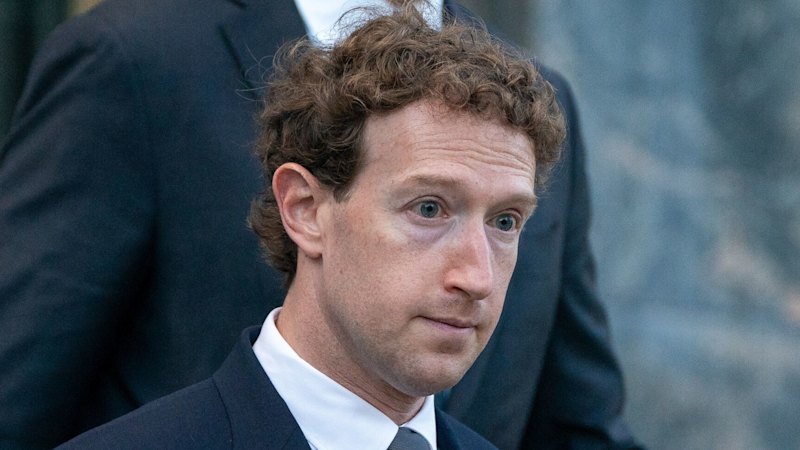
Meta’s lawyer Paul Schmidt countered in his opening statement that the company and its co-founder and chief executive Mark Zuckerberg shared a desire to improve their services, not to make them dangerous.
“They don’t believe they’re going to do well if people don’t like their service,” Schmidt said.
Jurors in the Oakland, California, federal court are expected to issue an advisory verdict, but US District Judge Yvonne Gonzalez Rogers will determine Meta’s liability.
If she finds Meta liable, Rogers could impose civil penalties and order changes to Facebook and Instagram.
Meta has said it did not make misleading statements about safety, and the states failed to show their residents were harmed.
Zuckerberg and Instagram chief Adam Mosseri are expected to testify. The trial is scheduled to last six weeks.
Experts have said the trial is the biggest legal test yet of social media’s effects on young users, and comes amid a broader reckoning across the globe over those effects.
Meta has said penalties could be as high as $US1.4 trillion ($1.97 trillion), close to the Menlo Park, California-based company’s market value.
Attorneys general have yet to specify penalties but said at a hearing last week the amount could be closer to $US200 billion ($282 billion) – equivalent to about three years of after-tax profit for Meta.
California, Colorado, Kentucky and New Jersey also want Meta to implement age restrictions, and eliminate the infinite scroll that encourages users to keep looking at new posts.
O’Neill said the states were not trying to put Meta, or social media, out of business.
“This case is not about whether social media has some benefits for some people. It does,” she said.
But she said Meta exploited children for its own benefit, researching how children’s brains work and would react to online stimuli, and tracking every interaction that children had on its apps.
She showed jurors an internal email sent to Mosseri, which said “teen time spent” was the company’s goal, and said Meta employees viewed Instagram as a “drug” and themselves as “pushers”.
“Meta found the younger a kid is when they start using the app, the better,” O’Neill said. “The more likely they are to remain a user, the more likely they are to make Meta money in the long run.”
Schmidt acknowledged that employees might use “loose” language in private, but jurors would hear what the employee who called Instagram a drug then did to make it safer.
Some critics of Meta spoke outside the courthouse as the trial began.
Among them was Mary Rodee, who said her 15-year-old son Riley Basford was victimised by a predator on Facebook before he died by suicide in 2021.
“They call it spontaneous suicide,” she said. “I call it what it was, the predictable outcome of a system that protects corporations instead of children.”
The lawsuit began in 2023, two years after whistleblower Frances Haugen testified to a US Senate committee that Meta knew its products were unsafe for children and knew how to fix the problem, but did nothing in favour of pursuing higher profits.
Meta and other social media companies including Snap, TikTok parent ByteDance and YouTube parent Alphabet face thousands of lawsuits by states, municipalities, school districts and individuals over whether their products harm young users.
In March, a Los Angeles jury ordered Meta and Google to pay $US6 million to a 20-year-old woman who said she became addicted to Instagram and YouTube media as a child.
Earlier this month, a New Mexico judge ordered Meta to pay $US567 million into a mental health fund for teenagers after that state’s attorney general said the company’s platforms were a public nuisance.
Reuters
From our partners
Discover more from PressNewsAgency
Subscribe to get the latest posts sent to your email.