
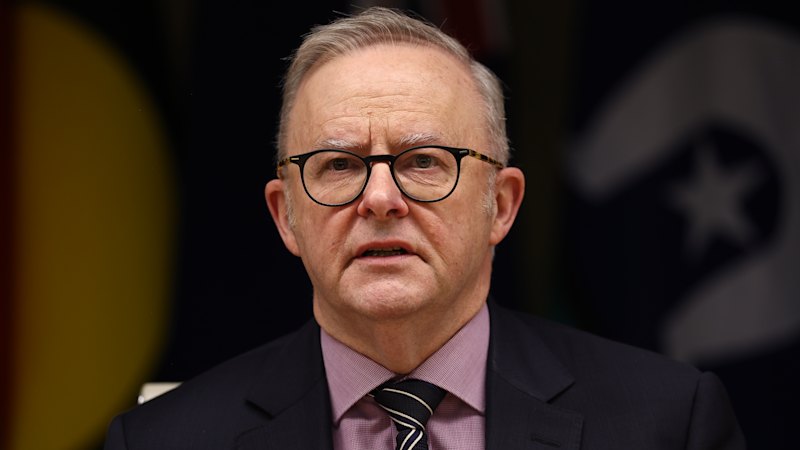
Premiers will demand Prime Minister Anthony Albanese permanently hand over more federal taxpayers’ money to them as the price for his emphatic support for WA’s sweetheart GST deal, while federal Labor has softened its stance on using green energy to power data centres.
Sources inside Sydney’s national cabinet meeting told this masthead the GST was only briefly discussed, after the prime minister recommitted to the special Morrison-government era deal which is on track to cost taxpayers $60 billion but is viewed as key to winning seats in WA.
But the same sources said frustrated premiers, including NSW’s Chris Minns, Victoria’s Ben Carroll, and South Australia’s Peter Malinauskas, have been told by Canberra that the WA deal will be subject to a proper discussion at a national cabinet meeting in February or March next year.
The Productivity Commission’s interim report published earlier this month labelled the deal a mistake that had created perverse fiscal outcomes, almost all of which had benefited Western Australia at the expense of the rest of the federation and federal taxpayers.
It warned the deal could end up costing federal taxpayers $12 billion a year.
But the report, due to be finalised by the end of the year, has sparked a transcontinental war of words with WA Premier Roger Cook attacking the Productivity Commission as a bunch of “east coast clowns” and opponents to the deal as “whingers”.
Albanese, who declared in Perth this week that the deal would not change while he was prime minister, waded into the furore by describing the commission’s report as the work of economic rationalists.
Following Wednesday’s national cabinet meeting, Albanese ducked a question on whether Minns, Carroll or Malinauskas had raised the issue. Asked about NSW’s complaints about the GST, Albanese talked up his relationship with Minns, who faces an election in March next year.
“This bloke here, the premier of New South Wales: I’ll be working hard to make sure he stays the premier after March next year. And under my government, NSW will always get support,” Albanese said.
This masthead understands key premiers plan to press Albanese to make permanent the most expensive feature of the WA deal, which is a “no worse off guarantee”. These payments, worth about $6 billion a year, are made to all states bar WA to ensure no state and territory is financially penalised by the deal.
The guarantee has been extended by the Albanese government to the end of 2030. The states and territories not only want it permanent, but hope to have it bolstered so they receive extra federal assistance.
Outside the meeting, Treasurer Jim Chalmers chided Cook for his criticism of the Productivity Commission, saying some of the commentary about the institution’s report was “unfortunate”.
“I don’t believe that is appropriate. I think you can disagree with the conclusions of the Productivity Commission without denigrating them,” he said.
“I think it is important that even when those conclusions are contested – as they often will be – that we continue to respect the people of the PC and the really important work that they do.”
The national cabinet meeting agreed to push forward a new plan to reduce domestic violence, ban 3D-printed guns, and ban foreigners from holding gun licences, a move prompted by the Bondi massacre. A proposed national gun buyback is still opposed by all administrations bar NSW and the ACT, but leaders agreed to greater intelligence sharing on the same day as the antisemitism royal commission wrapped up its final hearings.
Albanese also got an agreement on his proposed national AI framework, after accommodating the position of conservative states.
The conservative governments of Queensland and NT had baulked at the federal government’s proposal to mandate that data centres must only be powered by green energy. Opposition Leader Angus Taylor backed Queensland’s position.
Wednesday’s agreement gave ground to Queensland, which has a fleet of state-owned coal plants in competition with wind and solar farms. The NT is backing the development of a gas field in the Beetaloo Basin, which it says could fuel an industrial boom.
Albanese acknowledged the different situations facing Queensland and the NT given the public ownership of power generation, transmission and distribution.
Queensland Premier David Crisafulli said his state had a “really big point of difference”.
“We own distribution, transmission, generation, and that enables us to control that energy mix,” he said. “We believe that we can control our data sovereignty, protect the rights of local communities, and enable that energy mix to bring those data centres on.”
The meeting’s official communiqué did not mention renewable energy. Instead, it talked up the “generational opportunity” offered by AI and noted environmental issues surrounding large data centres would be addressed by federal legislation early next year.
Cut through the noise of federal politics with news, views and expert analysis. Subscribers can sign up to our weekly Inside Politics newsletter.
 Paul Sakkal is Chief Political Correspondent. He previously covered Victorian politics and won a Walkley award and the 2025 Press Gallery Journalist of the Year. Contact him securely on Signal @paulsakkal.14.Connect via X or email.
 Shane Wright is a senior economics correspondent for The Sydney Morning Herald and The Age.Connect via X or email.
From our partners
Discover more from PressNewsAgency
Subscribe to get the latest posts sent to your email.