

Writing can be a hugely absorbing and fulfilling hobby and all you’ve got to do is to write… whatever you like – writes Dr Brendan O’Shea
Most clinicians are good communicators. Arguably most of us are. We are also a highly literate crowd, privileged and educated to within an inch of our lives. In our daily routine, we constantly communicate on complex matters to a wide spectrum of other people and agencies. Having a grounding in science, ethics and the humanities, we are very well-placed to do a bit of writing. Do you write? Did you before, but was it squeezed out by the busyness of life? Do you do a bit already, but could extend your work into other formats, seeking a wider readership?
‘The only thing necessary for the triumph of evil is for good people to do nothing’ is a quote variously attributed to Edmund Burke and John Stuart Mill, both from the nineteenth century. Irrespective of its origin, given the volume of information, misinformation and spin-doctoring which saturates our culture, there is a case for people, including ourselves, to contribute by way of writing.
Apart from taking opportunities to highlight the reasonable positives, signpost the evolving science, engage with other people, alleviate their suffering, anxieties or simply entertain and delight them, there are the less worthy but practical personal benefits. Should you develop the habit of writing, it often becomes a deeply absorbing, and therefore relaxing habit. It can become a paying hobby, and there is the visceral satisfaction of seeing yourself in print in one format or another.
The torrent of commentary on social media is off-putting. We are however still in the infancy of social media, and the crude shared intelligence and consciousness that it represents. Suddenly, in the last decade, everybody has a voice, and some of what is expressed is vile. While much on social media can be inspiring, much also is profoundly juvenile, aggressive and foolish. But consider motor cars in 1911 – smelly, small, uncomfortable, expensive, noisy and profoundly unreliable.
 Whether we consider social media, electronic ‘news’ or the still voluminous amount of print media, and whether you choose to write to a medical / healthcare audience, or into the broader domain, it is important that we do not surrender the space to chaos, and that there remains a positive, constructive and useful volume of effective and constructive writing – available for those who may care to read it.
First steps…
You might take a paper pad and start doodling. What could you write about and who would ever read it? The range of readily available opportunities itself creates an obstacle – where would you ever start? Many of us have some workmanlike experience in authoring scientific papers.
 You might choose three or four themes (very broadly selected) that are of interest to you, or regarding which you have a knowledge or relevant experience. You could take these and start a Twitter or Facebook account, subjecting yourself to the discipline of brief short pieces, and build up your technical skills around these platforms.
You might undertake to write 500, 1,000 or 2,000 words for the local parish, community, hospital or college newsletter, initially sticking with safe familiar territory – write a feature or an update on an area of medical interest from within your specialty, and translate it into plain English for the common woman or man. Do a conference report, a film or book review, or a travelogue.
Or you may feel a burning desire to campaign on a topic, including health system reform, equality, biodiversity or gender-based violence. Or you may take a purely creative route, including a line or two of poetry, a tilt at a trashy novel, or a take a run at a great one. The last time I looked, a Mills and Boon author might expect to get up £30,000 for writing 50,000 torrid words for a medical love story, set in a GP Practice or surgical team!
 We clinicians are very good at discipline! Putting aside one to two hours weekly (instead of Netflix!), and jotting down ideas in between times would be the first steps towards generating publishable output. There is a loosely connected but real community of medical writers, or writers with a medical background, and arguably, the world is a rather better place because of them. In Ireland, the legendary dotMD Conference is a key gathering point. Some write columns, and it’s never been easier to contribute a book chapter, or even write your own.
Ones to watch
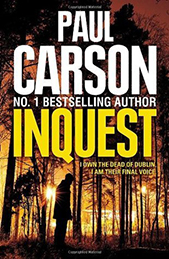
These last years have seen an increase in the output of medical/scientific authors. The work of Luke O’Neill, Dr Chris Luke and Professor Brendan Kelly spring to mind. Health correspondents and columnists including Dr Muiris Houston, Nina Barnes and Jennifer Grant all ensure that the perspective of good and well-grounded clinical opinion is constantly in the public eye. The lifelong work of Dr Paul Carson illustrates how the literary output of a medic can evolve usefully over a lifetime, starting as it did with superbly crafted pieces for his own waiting room (Hay fever and how to beat it, and Norbert Bear, MD,) and up to the later medical crime best-sellers including Scalpel, Inquest, and Final Duty.
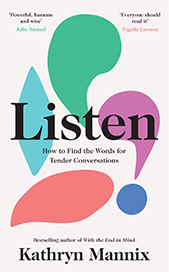
 Further afield, the amazing Dr Kathryn Mannix (With the End in Mind) demonstrates how a lifetime of serious clinical experience in an important field of medicine can be explored and powerfully shared with the reading public in a wholly different way, and with profound impact in re-imagining an important area of care, in this instance the conversations we have around death and dying. There are a score of simply written but powerful autobiographical works which effectively explore some universal truths and challenges which relate to the practice of medicine. The stories on our clinical services are truly and have long been the stuff of good and sometimes great novels. When well captured, they are sometimes very highly regarded by that elusive body, the reading public.
Sharpen those pencils….
So, get started. Jot down a few ideas, your top three themes of greatest interest, and consider who you might write for? Is it for your fellow medics, the broader public, and will you write close to home on medical material or will you make a complete break from the day job and write on something entirely different? Have an informal discussion with a friendly editor, of your local village newsletter, of your local photography Facebook page, of one of our medical newspapers, and pitch them an idea. Are you an early bird or a night owl, and when would be best for you to set aside time for a walk to clear the head, and then write for 90-120 minutes?
There are numerous books and websites giving sound technical advice on writing technique. For a scientific writing style, the relevant irreverent chapters on writing style in Rugg and Petrie’s The Unwritten Rules of PhD Research are wicked, essential and enjoyable reading. 
Discover more from PressNewsAgency
Subscribe to get the latest posts sent to your email.