

The conflict between Armenia and Azerbaijan over Nagorno-Karabakh is considered one of the world’s “frozen conflicts.”
This conflict erupted on September 19, when Azerbaijan launched an offensive and within 24 hours declared victory over the breakaway province of Nagorno-Karabakh. Authorities in the province have now said that the ethnic Armenian enclave would dissolve on January 1, 2024.
Although distant, recent developments in the South Caucasus region have implications for India, in terms of connectivity and ties with the region.
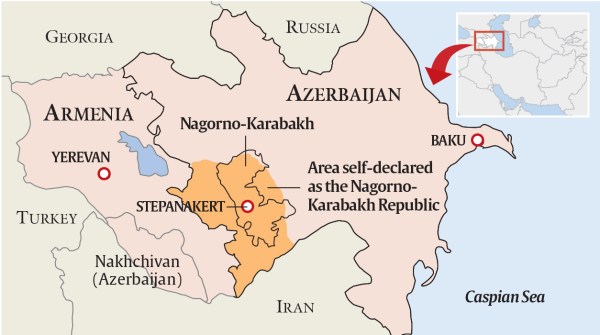
The conflict throughout the decades
Nagorno-Karabakh is a mountainous region officially recognized as part of Azerbaijan. But its population of 1.2 lakh is predominantly ethnic Armenian and has close cultural, social and historical ties with Armenia. Basically, Nagorno-Karabakh is an ethnic Armenian enclave in Azerbaijan. Armenians are Christians, while Azeris are Muslims. The conclave is connected to Armenia through the 5-kilometer-long Lachin corridor.
The region has witnessed conflicts of influence between regional powers since the medieval period: Imperial Russia, the Ottoman Empire (modern-day Turkey) and the Persian Empire (Iran). When Tsarist Russia gave way to the Soviet Union in 1921, Nagorno-Karabakh was part of the Azerbaijan SSR (Soviet Socialist Republic).


In 1923, the USSR established the Nagorno-Karabakh Autonomous Oblast, home to a 95 percent ethnically Armenian population, within the Azerbaijan Soviet Socialist Republic.
When the Soviet Union collapsed, the first round of tensions over Nagorno-Karabakh began in 1988, when its regional legislature passed a resolution declaring its intention to join Armenia, despite being geographically located within Azerbaijan.
When the Soviet Union dissolved in 1991 and Armenia and Azerbaijan achieved statehood, Nagorno-Karabakh officially declared its independence.
Then war broke out between Armenia and Azerbaijan, killing about 30,000 people. By 1993, Armenia had captured Nagorno-Karabakh and also occupied 20 percent of Azerbaijan’s geographic area.
In 1994, Russia negotiated a ceasefire known as the Bishkek Protocol. “This made Nagorno-Karabakh de facto independent with a self-proclaimed government in Stepanakert, but still largely dependent on close economic, political and military ties with Armenia,” a background note on the conflict from the Council on Foreign Relations said.
Sixteen years later, in September 2020, Azerbaijan and Armenia went to war again. This time, Azerbaijan managed to wrest control of the territory around Nagorno-Karabakh. Russian analyst Dmitry Trenin believed that Azerbaijan took advantage of the fact that the United States was busy with its presidential elections and Russia with crises in its Georgia neighborhood.

Russia renegotiated an agreement and provided peacekeeping forces along the Lachin Corridor. But having tasted victory, Azerbaijan wanted more concessions and no peace agreement was signed.
Azerbaijan is said to have received support from Turkey and Pakistan in the form of weapons and personnel. Pakistani military personnel are believed to have assisted Azerbaijani forces and, on the ground, there were also reports of Syrian, Libyan and Afghan fighters.
In December 2022, Azerbaijan blocked the Lachin Corridor, causing severe shortages of essential goods, including food, fuel and water, in Nagorno-Karabakh.
Former International Criminal Court (ICC) chief prosecutor Luis Moreno Ocampo warned there was a “reasonable basis” to believe Azerbaijan was committing genocide in Nagorno-Karabakh and called hunger an “invisible weapon of genocide.”
On September 19, days after an agreement to reopen the Lachin corridor for aid delivery raised hopes of easing the crisis, Azerbaijan launched an “anti-terrorist” offensive in Nagorno-Karabakh and claimed to have regained full control of the region. .
While Azerbaijan’s President Ilham Aliyev is hailed as a hero in his country, Armenian Prime Minister Nikol Pashinyan faces protests at home. The future of around 1.2 lakh Armenians living in Nagorno-Karabakh is at stake, and there are reports that many of them have abandoned and fled to Armenia for fear of persecution.
India’s position
In the conflict, India has always avoided taking sides.
In 2020, after the conflict broke out, he said: “India believes that any lasting resolution to the conflict can only be achieved peacefully through diplomatic negotiations. In this regard, we support the continued efforts of the OSCE Minsk Group for a peaceful resolution of the conflict between Armenia and Azerbaijan.”
This time, after the conflict, Delhi made clear on Thursday that it “encouraged the parties to move forward to ensure long-term peace and security in the region through dialogue and diplomacy, including the security and well-being of all civilians.”
India has ties with both Armenia and Azerbaijan. Importantly, the region is central to its connectivity plans across the South Caucasus region.
India’s ties with Armenia date back millennia. Historians have suggested that when the Assyrian warrior queen Semiramis invaded India in 2000 BC, some Armenians accompanied her. According to literary evidence, Indian settlements in Armenia were established by two princes (Krishna and Ganesh who escaped from Kannauj) in 149 BC.
The first Indian city guide in Armenian was written in the 12th century. Some Armenian traders had arrived in Agra during the Mughal Empire. Emperor Akbar, who is believed to have had an Armenian wife, Mariam Zamani Begum, granted them privileges and considerable religious freedom.
In the 16th century, Armenian communities emerged in Calcutta, Chennai, Bombay and Agra. Today, the vestigial community is settled mainly in Calcutta.
By contrast, historical links between India and Azerbaijan have been more recent: the ‘Ateshgah’ fire temple near Baku is an 18th-century monument, with a much older history, and has wall inscriptions in Devanagari. and gurmukhi. It is surviving evidence of the hospitality enjoyed by Indian Silk Road traders to Europe in Azerbaijani cities like Baku and Ganja.
In modern times, after the collapse of the Soviet Union, India recognized the independence of Armenia and Azerbaijan and established diplomatic relations.
With Armenia, India opened its embassy in 1999, has a treaty relationship and has received up to three Heads of State. There have been two visits from India at the vice-president level.
Prime Minister Narendra Modi He met with his Armenian counterpart in New York in September 2019, which was followed by the Foreign Minister’s visit to Yerevan in 2022.
Armenia publicly supports India’s position on the bilateral resolution of the Kashmir issue and supports India’s aspiration for a permanent seat on the expanded UN Security Council.
In fact, in 2022, the agreement between India and Armenia to supply the Armenian armed forces with PINAKA multi-barrel rocket launchers (MBRL), anti-tank munitions and ammunition and war supplies worth $250 million was seen as Delhi sided with Yerevan.
On the contrary, Azerbaijan’s proximity to Pakistan has been perceived as an irritant in relations. There has not been a single visit at the level of Heads of State or Government between India and Azerbaijan.
India’s Nobel laureate Rabindranath Tagore, former President Dr. S. Radhakrishnan (as Vice President in 1956) and former Prime Minister Jawaharlal Nehru (in 1961) had visited the Azerbaijan Soviet Socialist Republic. In recent years, Vice President M Venkaiah Naidu He visited Baku for the Non-Aligned Movement Summit in 2019, accompanied by External Affairs Minister S. Jaishankar. Former Foreign Minister Sushma Swaraj He also visited Azerbaijan for the NAM ministerial meeting in 2018.
Most read
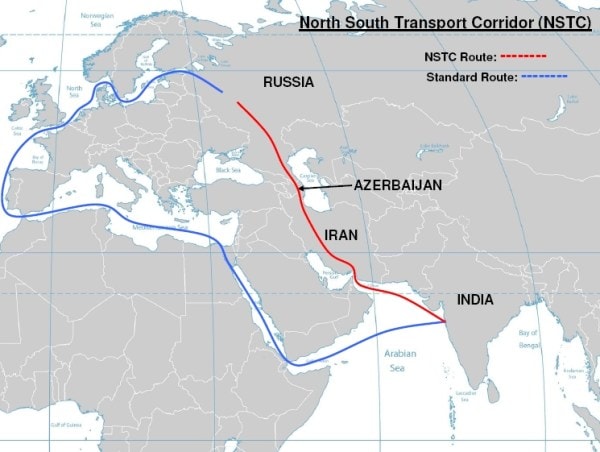
Due to the geographical location of Armenia and Azerbaijan, the region is important as a viable corridor for India’s connectivity with Russia and Europe via Central Asia and Iran.
Armenia and Azerbaijan are members of the International North-South Transport Corridor (INSTC), which India wants to develop. India supports Armenia’s proposal to include the Iranian port of Chabahar in INSTC.
Tensions in the region directly impact India’s plans to bypass Pakistan as a gateway to Europe and Russia. New Delhi has to find a way to solve this problem.
Discover more from PressNewsAgency
Subscribe to get the latest posts sent to your email.