
Luke McNamara
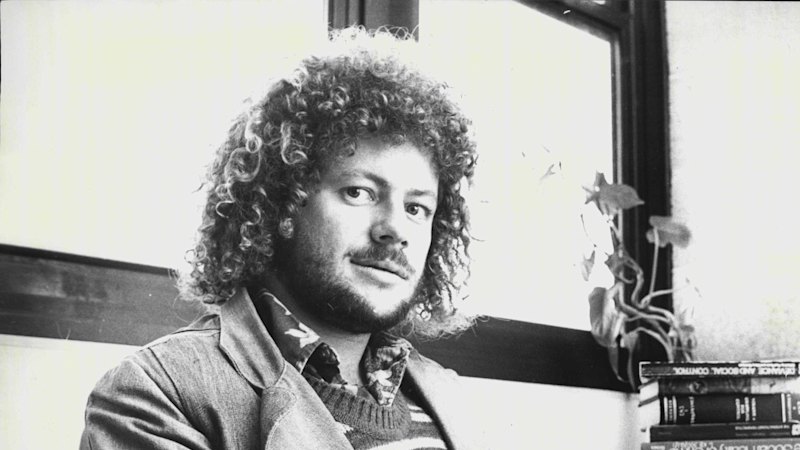
Emeritus Professor David Brown
1948-2026
When Neil Mercer was writing his book, The Kingpin and the Crooked Cop (2024) about Neddy Smith and Roger Rogerson, he was struggling to verify the circumstances of the fatal shooting of Philip Western in 1976.
One of his journalist friends said, “You have to talk to David Brown.” Brown steered Mercer in the direction of the transcript of a largely forgotten inquiry conducted by the NSW Public Service Board, and copies of the Militant newspaper from the 1970s. He soon had the information he needed.
This wasn’t a one-off. David Brown spent most of his life working to reveal police and prison corruption and violence.
Decades before assisting Mercer, Brown was a key player in the Prisoners Action Group, a small group of prisoners, ex-prisoners and academics, whose activism played a major role in the establishment of the Nagle Royal Commission into NSW Prisons (1978).
Brown’s version of being an academic was a marriage of intellect, unwavering political commitment and fearless activism, and this manifested in his published work, including books like The Prison Struggle: Changing Australia’s Penal System (1982), with George Zdenkowski, and Rethinking Law and Order (1998), with his friend and collaborator of more than 50 years, Russell Hogg.
Brown played a leading role in the emergence of critical criminology, a core tenet of which is that theory and research must remain informed by, and connected to, the daily realities of injustice and inequity in the administration of justice, and agitation and campaigns for reform.
He described himself as an “accidental academic”.
Born in India, raised and educated in New Zealand, Brown had a brief period in legal practice in Auckland in the early 1970s. But made the trip to Cambridge to pursue postgraduate studies in criminology. He planned to travel back to New Zealand but in 1974 was offered a job as a lecturer at the new law school at University of NSW in Sydney. That city was to be his home for 52 years.
At UNSW Brown was instrumental in conceiving a new approach to the teaching of criminal law. He and his colleagues created a book that became affectionately known as the “Four Davids” (all four original authors were named David). First published in 1990, the book revolutionised how the topic of criminal law was conceived and taught, by embracing multi-disciplinarity and locating the study of criminal law in its daily practices. In the eighth edition of Criminal Laws, published in 2025, Brown was still at the helm, along with 10 “honorary Davids” – eight women and two men.
When Brown retired from UNSW in 2008, he was honoured with the title of Emeritus Professor. In 2010 he was awarded a Doctor of Laws degree by his alma mater, the University of Auckland. He continued to research and write, including co-authoring four important books: Penal Culture and Hyperincarceration (2013); Justice Reinvestment (2016); Youth Justice and Penality (2020); and Rethinking Community Sanctions (2023).
Although he was a powerful critic of the actions (and inactions) of governments, his expertise was also highly respected within government circles. In 2011 he was appointed as a NSW Law Reform Commissioner, making valuable contributions to the commission’s influential report on bail reform (2012), which recommended wider availability of bail and a reduced remand population in NSW prisons.
Brown was a devoted partner and later husband, of Janice Gray for close to three decades.
When news of his death on February 1, tributes came from some of the world’s biggest names in criminal law and criminology. One correspondent said: “a brilliant scholar, with an enormously generous intellect, and a wonderful man”.
He was an unassuming nurturer of careers and lives, through gentle conversations, suggestions and encouragement, and by his example, he guided many an uncertain young law graduate – and quite a few older ones.
Although avowedly anti-establishment in many ways, and courageous in testing and pushing the bounds of the acceptable in scholarly research, Brown adhered to the view that civility was an undervalued virtue, to be observed when you disagreed as much as when you agreed with other people.
He had a great love of the ocean. And there is some comfort in the fact that on the late summer day that he died, he was walking his dog Bentley on the beach.
Brown is survived by wife, Dr Janice Gray, and his stepdaughters, Isobel and Madeleine Gray. He also had a stepson, James.
Luke McNamara
Get a weekly wrap of views that will challenge, champion and inform your own. Sign up for our Opinion newsletter.
From our partners
Discover more from PressNewsAgency
Subscribe to get the latest posts sent to your email.