

The boat was rocking from side to side and I was struggling to find my legs in the sea as I tripped over my tail for dinner.
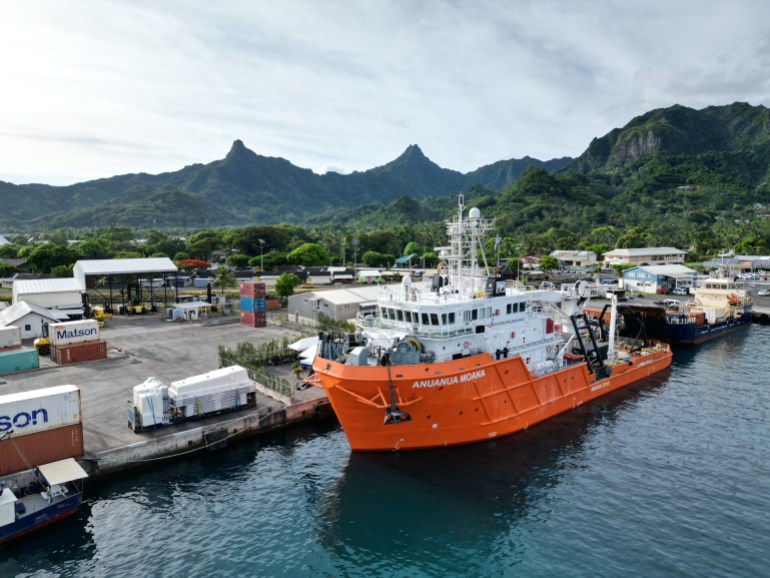
I was standing in the dining room of an exploration ship in the middle of the Pacific Ocean.
Ahead of me in line was the Prime Minister of the Cook Islands, Mark Brown.
She clung to the buffet table with one hand while using the other to scoop spaghetti bolognese onto her plate.
I grabbed a few slices of pizza and sat down at a table bolted to the floor.
“Cutlery?” came a voice from above.
It was the prime minister, offering me a knife and fork.
A seemingly normal question that comes from anyone but a world leader.
With as much grace as possible in four-meter waves, Brown sat next to me without a security guard or member of his entourage in sight.
“These exploration ships are going to do a lot of work in our ocean, I wanted to see firsthand what it was like,” Brown said.
When we flew to the Cook Islands to film Mining the Pacific Ocean, a 101 East investigation into deep-sea exploration and climate change, he had moderate expectations about an on-camera interview with the country’s leader.
We certainly didn’t expect Brown and his wife to come aboard the ship for three days as VIP guests.
“It may be unusual for a prime minister, but it is not for me. I like this kind of stuff. I guess I’m more or less a hands-on type of person,” she commented.
We were on board to observe a survey team that was mapping the ocean floor using sonar technology.
The team from resource company Moana Minerals was looking for “buried treasure,” in the form of potato-sized rocks known as polymetallic nodules.
The pebbles are highly sought after because they contain metals needed in the green energy transition.
The copper, cobalt, nickel and manganese found in these nodules can be used to make batteries for electric cars and storage cells for solar home units.
There are believed to be trillions of these rocks in the waters around the Cook Islands. For resource companies, it’s an untapped gold mine.
Moana Minerals has been granted an exploration license to investigate what lies at the bottom of the ocean. The company’s exploration area only covers one percent of the Cook Islands’ territory, but is estimated to contain about $10 billion worth of minerals.
“These minerals not only provide an income opportunity for our country, but also provide an opportunity to contribute to the global drive toward green energy and reduced carbon emissions,” Brown said.
“We can do our part to help the world.”
An untested industry
The Cook Islands are on the front lines of climate change, experiencing rising sea levels, increased droughts and cyclones.
This nation of 15,000 people is also suffering from the COVID-19 pandemic.
Tourism, the country’s largest industry, came to a halt in 2020 when borders and resorts were closed for two years.
Since then, the country has reopened, but its economy has declined by 25 percent.
These challenges are contributing to mass migration, as four in five Cook Islanders move abroad, often in search of better-paying jobs.
Dozens of houses now lie abandoned in villages on the islands.
The prime minister is well aware that his country cannot function without a sizable workforce and with limited options in a country that is 99 percent water, he has turned to an untested industry: deep-sea mining.
His government has issued exploration licenses to three resource companies, including Moana Minerals.
Permits are not a green light for mining, but rather allow companies to determine whether the industry is viable.
“If we build an industry here at home that is viable and sustainable, we will bring those people back and keep them in the country,” Brown said.
“There is no doubt, for a country to prosper, it must also have people.”
But deep-sea mining carries risks, as well as potential riches.
It involves dredging the seabed 5 km (3 miles) below the surface, a process that scientists say can cause underwater dust storms that move with currents and drown marine life.
And that’s just one of the known repercussions. What alarms scientists even more is what they don’t know.
The deep sea is one of the least explored places on Earth.
Only 25 percent of the world’s oceans have been mapped, and biologists estimate that fewer than 10 percent of deep-sea creatures have been discovered.
‘Drunk with the idea of riches’
Before boarding the scout ship, I took a smaller boat out into the blue waters around the main island of Rarotonga.
The boss was a Spanish backpacker, who thought he had the best job in the world.
It was easy to see why. When I dove below the surface, the clarity in the coral lagoon was extraordinary.
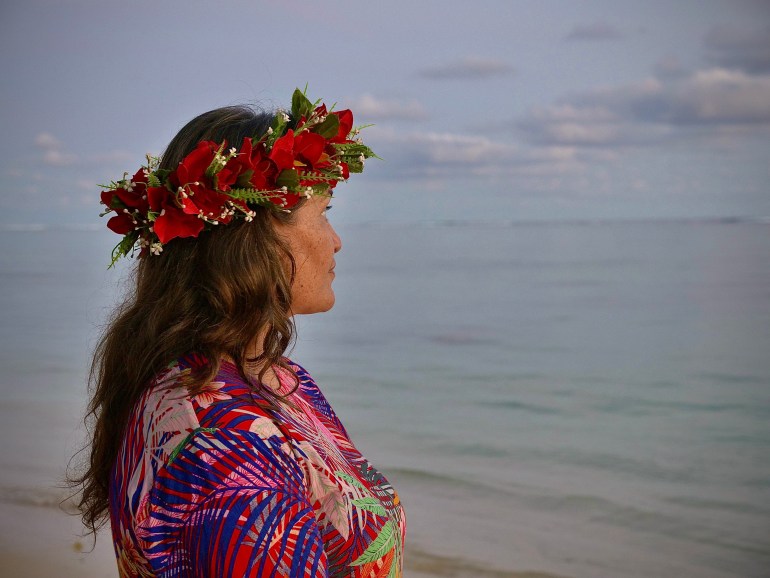
Swimming alongside me was environmental scientist Jacqueline Evans, one of 700 experts who signed a petition calling for a 10-year moratorium on deep-sea mining.
The group wants more independent research to be done before mining begins, arguing that the ocean already faces a host of problems, from plastic pollution to acidification to overfishing.
“Having deep-sea mining, it’s just going to make all these problems worse,” he told me as we hopped up and down the water.
“It doesn’t make sense for me to solve one environmental problem by creating another environmental problem.”
The more time he spent in the Cook Islands, the clearer it became; the ocean is intertwined in all aspects of life in the South Pacific, from livelihoods to cultural traditions.
There’s a joke here, that only lazy people starve. The ocean has always provided food, you just have to catch it.
Evans argues that deep sea mining threatens to destroy this way of life.
“(A healthy ocean) is really important for tourism, but also in terms of our subsistence fishing and our industrial fishing. There are many economic benefits to having a beautiful, pristine environment,” she said.
But Evans fears that the government has already convinced many Cook Islanders that mining could turn the country into the Dubai of the South Pacific.
“They have been talking to communities across the country and they have only given one side of the story,” he said.
“I think there is definitely a part of our community that is drunk on the idea of the riches of mining.”
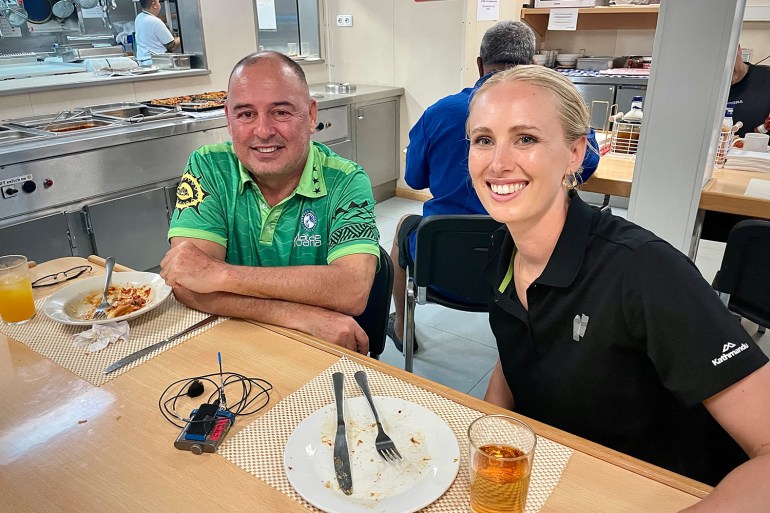
Back at the dinner table aboard the research ship, the prime minister maintained that the government would not grant mining permits unless resource companies show it can be done without significant environmental impact.
But how do you define significant impact? That’s the only question he couldn’t answer directly.
But Mark Brown is prepared to accept some risk, if there is a reward that benefits his country.
“Pragmatism is by nature a necessity when you live in a small island state,” he said.
“We are a country that has very limited resources…to get ahead in this type of environment, sometimes we have to make bold decisions and we have to lead the way.”
His point of view is not shared by everyone in the region. Seven other Pacific nations oppose mining, arguing that because they share the ocean, they also share the risk of environmental damage.
the taro farmer
The morning after this discussion, the cameraman, the producer, and I loaded our gear onto a barge and headed for one of the country’s 15 islands.
Back on the mainland, we meet an old man, a taro farmer tending his property.
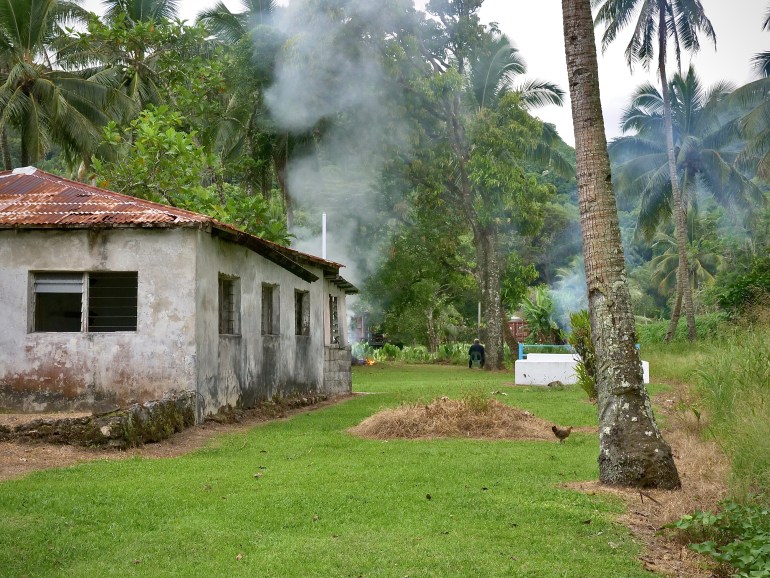
I asked him to explain to me the tombs that lie in front of each house in the town.
He told me that it is common for Cook Islanders to bury loved ones at home, to keep them close.
Detecting my Australian accent, she told me that her children had left the island to work in Melbourne.
Pointing to two graves that lay in front of the abandoned house next to his, the farmer said, “It’s the parents.” His children had also left the island in search of opportunities abroad.
A question that had been on my mind throughout the trip resurfaced: if deep-sea mining goes ahead, will it be the golden ticket that brings young people home? Or could it be the nail in the coffin that destroys the pristine marine environment that has sustained generations of Cook Islanders?
It’s a huge question for one of the smallest nations in the world.
This story is produced in collaboration with SBS Australia and is supported by the Sean Dorney Grant for Pacific Journalism through the Walkley Public Fund.
Discover more from PressNewsAgency
Subscribe to get the latest posts sent to your email.