
BELEM, Brazil (AP) — Leaders of the South American nations that are home to the Amazon on Tuesday challenged the developed world to do more to help stop the mass destruction of the world’s largest rainforest, a task they said cannot fall to them. a few. of countries when the crisis has been spurred on by so many.
Meeting Tuesday and Wednesday in the Brazilian city of Belem, members of the Amazon Cooperation Treaty Organization, or ACTO, also sought to chart a common course on how to combat climate change, hoping a united front could give them an important voice in global conversations. .
The calls from the presidents of Brazil, Colombia and Bolivia came as leaders aim to boost much-needed economic development in their regions while preventing the Amazon’s ongoing disappearance from reaching a “point of no return”: some scientists say when 20% to 25% of the forest is destroyed, rainfall would dramatically decrease, transforming more than half of the rainforest into tropical savannah, with immense loss of biodiversity.
“The forest unites us. It is time to look to the heart of our continent and consolidate, once and for all, our Amazonian identity”, said the president of Brazil, Luiz Inácio Lula da Silva. “In addition to facing the challenges in our region, this will allow us to face an increasingly uncertain global order.”
The summit reinforces Lula’s strategy to take advantage of the global concern for the preservation of the Amazon. Emboldened by a 42% drop in deforestation During his first seven months in office, he has sought international financial support for forest protection. Leaders from Norway and Germany, the largest contributors to Brazil’s Amazon Fund for sustainable development, were invited, as were their counterparts from other crucial rainforest regions: Indonesia, the Republic of the Congo and the Democratic Republic of the Congo.
Yet apart from a general consensus on the need for shared global responsibility, ACTO members, meeting for the third time in the organization’s existence, demonstrated on Tuesday that they still stand apart on their own actions. .
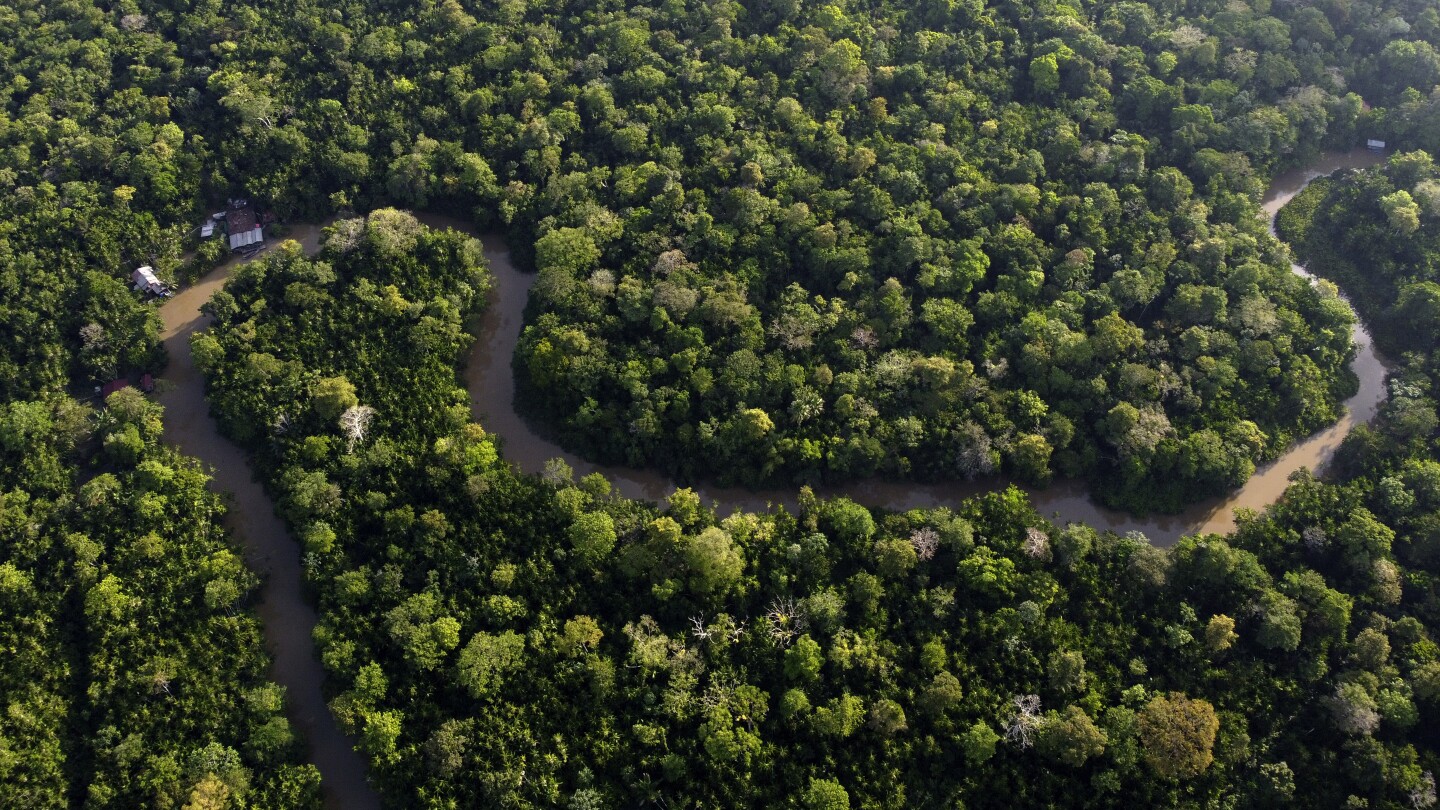
The Amazon stretches across an area twice the size of India. Two-thirds are in Brazil, with seven other countries and one territory sharing the remaining third. Historically, governments have viewed it as an area to be colonized and exploited, with little regard for sustainability or the rights of its indigenous peoples.
With critical problems plaguing the Amazon rainforest, South American presidents and ministers will meet in the city of Belem, near the mouth of the Amazon River, starting Tuesday to discuss how to tackle them and chart a common course. (August 8)
All the countries at the summit have ratified the Paris climate agreement, which requires signatories to set targets to reduce greenhouse gas emissions. But historically there has been little cross-border cooperation, undermined by low trust, ideological differences and a lack of government presence.
Until now, forest protection commitments have been uneven. Brazil and Colombia have pledged to halt deforestation completely by 2030, but other countries have been reluctant to follow through. Although ACTO is a 45-year-old organization, this week marks its first meeting in 14 years.
A key issue that divided them on Tuesday was oil. In particular, left-wing Colombian President Gustavo Petro has called for an end to oil exploration in the Amazon, an allusion to the ambivalent approach of Brazil and other oil-producing nations in the region.
Lula, who has presented himself as an environmental leader on the international stage, has refrained from taking a final stance on oil, citing the decision as a technical matter. Meanwhile, Brazil’s state-owned company Petrobras is looking to explore for oil near the mouth of the Amazon River.
But there have been encouraging signs of increased regional cooperation amid growing global recognition of the importance of the Amazon in halting climate change. Sharing a united voice, as well as funneling more money to ACTO, could help it serve as its nations’ representative on the world stage ahead of the COP 28 climate conference in Dubai, the leaders said.
Lula added that an international system imposed on South America has historically limited the region to being a supplier of raw materials, but said that this can be changed with a “just ecological transition.”
“The Amazon is our passport to a new relationship with the world, a more symmetrical relationship, in which our resources are not exploited for the benefit of a few, but valued and placed at the service of all.”
Bolivian President Luis Arce said that the Amazon has been a victim of capitalism, which is reflected in the uncontrolled expansion of agricultural frontiers and the exploitation of natural resources. And he pointed out that industrialized nations are responsible for the majority of historical greenhouse gas emissions.
“The fact that the Amazon is such an important territory does not imply that all the responsibilities, consequences, and effects of the climate crisis should fall on us, on our peoples, and on our economies,” Arce said.
Colombia’s Petro argued that rich nations should swap Amazon countries’ foreign debt for climate action, saying that would create enough investment to boost the economy of the Amazon region.
Petro also called for the formation of a military alliance similar to the North Atlantic Treaty Organization, saying that such a group could be tasked with not only protecting the Amazon, but also tackling another major problem for the region: organized crime.
Few border areas are seriously policed and there has been little international cooperation as rival organized crime groups compete for drug trafficking routes. Drug seizures have increased in Colombia, Brazil, Bolivia and Peru over the past decade, the United Nations Office on Drugs and Crime (UNODC) reported. in June.
In 2018, Latin American nations signed the Escazú Agreement, which established the public’s right to environmental information and participation in decision-making, and protected environmentalists. However, several countries, including Brazil, have not yet ratified it. The following year, they signed the Leticia Pact to better coordinate environmental protection.
Lula said he hopes a “Belem Declaration” from this week’s summit will turn into a call to arms shared by nations at the COP conference in November.
The summit was also attended on Tuesday by the Prime Minister of Guyana, the Vice President of Venezuela, the Foreign Ministers of Suriname and Ecuador, and the French Ambassador to Brazil, representing the Amazonian territory of French Guiana.
___
Associated Press climate and environmental coverage is supported by several private foundations. See more about AP’s climate initiative here. The AP is solely responsible for all content.
Discover more from PressNewsAgency
Subscribe to get the latest posts sent to your email.