

Sepaku, East Kalimantan – Sernai, 68, lives in a wooden house that once belonged to his great-great-grandparents.
It is a simple house: there is no glass in the windows and it is almost unfurnished.
This is where she has lived her entire life. But her town is no longer the quiet place she associates with her childhood. These days, she wakes up every morning to the sound of heavy machinery in her backyard.
Indonesia is building a new capital in East Kalimantan, on the island of Borneo. The city will be called Nusantara and will replace the current capital Jakarta, an overcrowded and polluted metropolis and the fastest sinking city in the world.
The village of Sernai, where he lives with other Balik Indians, will eventually become part of the new city.
“People come from the capital. They are pushing us. They will eventually take my house,” she told Al Jazeera. He lost part of his house and farmland due to the construction of an inlet reservoir for a dam to service the new capital. “We can’t even get water anymore because the river is blocked. The river used to be our source of life. We drank from it, bathed in it, and used it for cooking. Now we can no longer access it.”
Sernai said the government gave his family, which includes his 17 grandchildren, about $3,000 in compensation.
But he said it’s not enough to make up for the disruption to their lives.
“We used to plant coconuts and plums. There were rows of trees, and they are gone. We had all kinds of fruits that we could sell in the market, like mangoes. Now, there is nothing we can sell,” she said. “We had a good life, we never had to buy things like wood, water or vegetables. Now, we live miserable lives,” Sernai said.
‘Sacrificed in the name of national development’
The Alliance of Indigenous Peoples of Nusantara (AMAN) estimates that at least 20,000 indigenous people will be relocated as construction on Nusantara progresses.
“Indigenous peoples also need development, but this kind of development will destroy them,” said AMAN’s Muhammad Arman. “When the new capital is fully developed, there will be migration of people from other places. The indigenous people will end up evicted from their land, it is only a matter of time. Development must not violate the human rights of indigenous peoples, they cannot simply be sacrificed in the name of national development.”
Advocacy groups like AMAN say one of the main challenges for indigenous peoples is proving ownership of the land to obtain compensation.
“Indigenous peoples’ land ownership is not considered to have strong legality, if there is no certificate. So, they are considered to be staying on land they don’t own,” Arman said. “The inheritance of land in indigenous communities is not considered legal.”
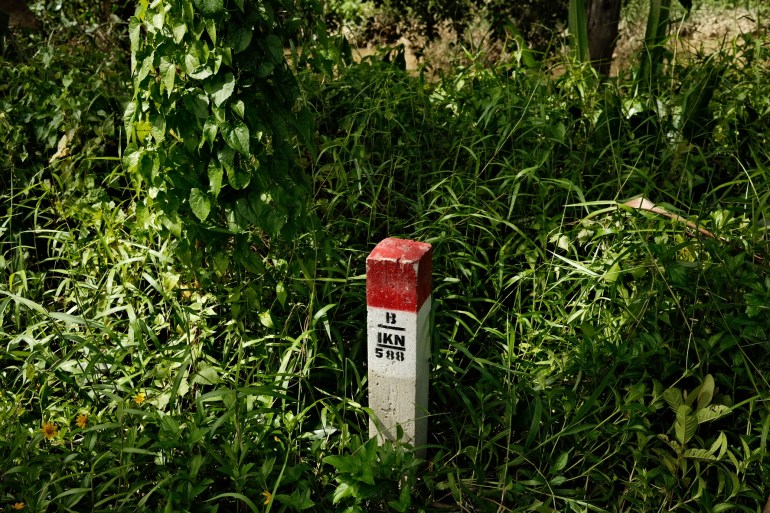
Atim, who is also a Balik, told Al Jazeera that he fears he may soon lose his land due to development.
“My plantation is an inheritance from my ancestors. Many of us do not have documents. Our proof is in our history. Back then things weren’t complicated, people didn’t need written things. Now we have to prove our ownership,” he said. “Many people have already felt the impact of the development of the water intake. They said they only needed a meter or two, but they ended up taking more and more ground.”
Atim said he feels the Indonesian government is disrespecting and disenfranchising his community. A few weeks ago, he found stakes on his plantation with the letters IKN (Ibu Kota Negara, which means the nation’s capital) painted on them. He said no one has told him what the stakes mean.
They act like we don’t exist. They act like we’re not human. I accept the new capital but I do not rule out our rights. They want to build something by destroying what is already here,” he said. “There’s no communication. They involve people from other districts, but never us. We don’t know what’s going on.”
‘Room for dialogue’
The head of the Nusantara Capital Authority is bambang susantonoengineer and economist appointed to lead the project in early 2022.
In an interview with Al Jazeera, he said the government is taking steps to include indigenous people and allow them to participate more. “We have to respect them. The indigenous people, the local wisdom. That should be part of our development process,” she said. “We will give them a space for dialogue, so that they can dialogue with us. Not only with us but with all interested parties. Sometimes, there can be disagreements, so we have to look at the social and anthropological studies related to this and put that as material for these cases.”
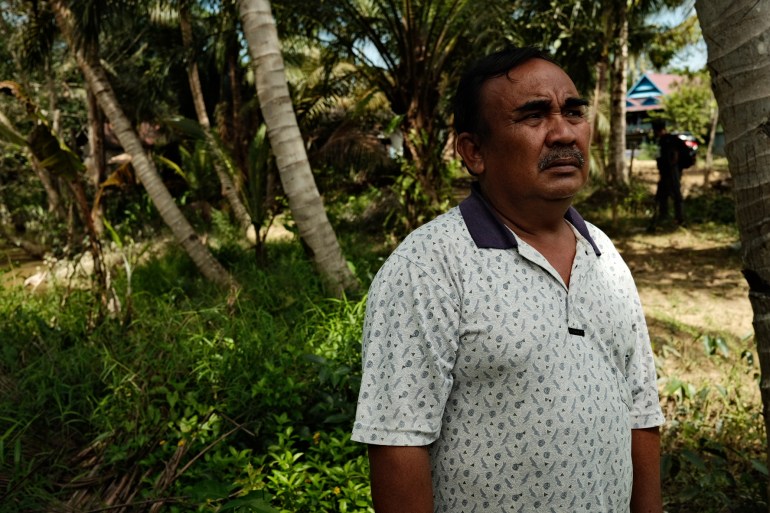
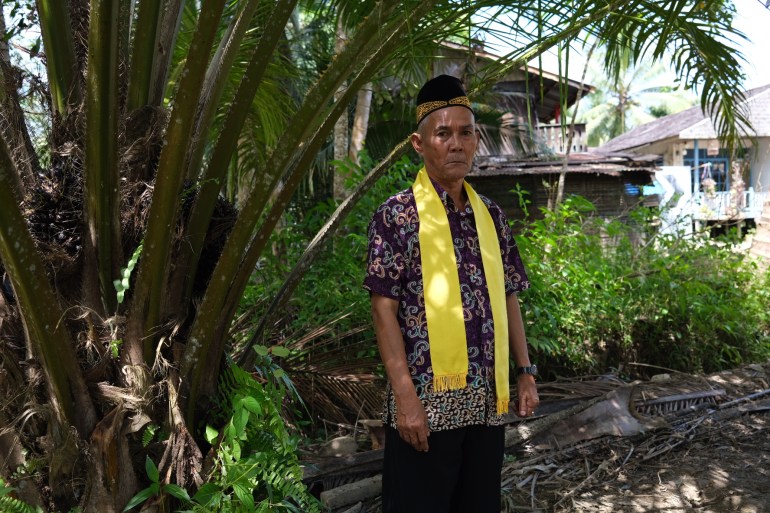
The government has promoted initiatives such as training programs for locals as representation of the benefits that the new capital development will bring to people in East Kalimantan. Some of them include workshops to teach people digital skills or new farming techniques.
Al Jazeera met with some Sepaku residents who were proud to be involved in such shows; they said these initiatives had improved their lives.
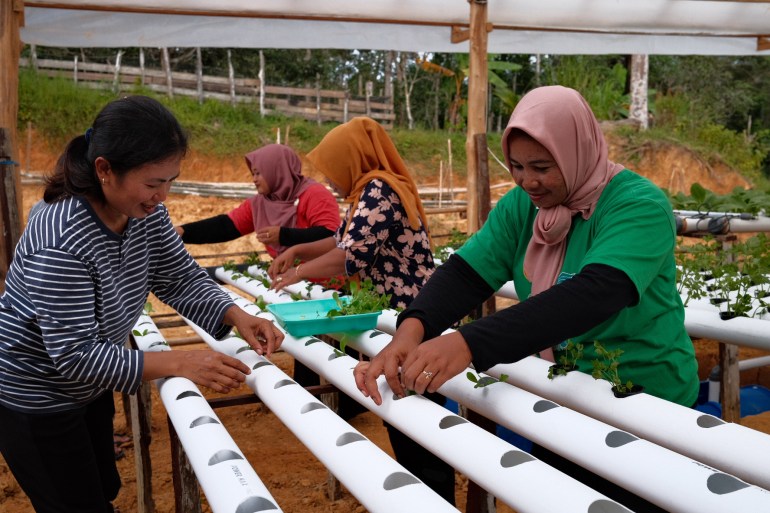
Sri Sudarwati, whose parents immigrated to East Kalimantan in the 1970s, participated in training to learn hydroponic planting techniques with her neighbors. She said the new capital project and the attention it has brought to her town have improved her quality of life.
“With the new capital, they opened up a lot of training opportunities. This hydroponic gardening has helped my family’s income a lot. My life has totally changed,” she said. “Before the new capital plan, we never received attention. People didn’t know where Sepaku was, we were very late. I want to advise other people, do not think too much. Let’s be thankful that Sepaku is part of the capital.”
Such advice is poorly received by the people of Balik, including their leader Sibukdin, who told Al Jazeera that he fears the development spells disaster for his community.
“We don’t want to be relocated from the land of our ancestors. And we feel that our land will be taken over by the government. Did they say that this capital is for the welfare of all Indonesians? But what Indonesians? We don’t feel like it’s for us,” she said. “They can easily erase our rights. Such is the greatness of people in authority. We consider our historic sites to be the source of our power. But they even moved the graves of our ancestors. The new capital persecutes us and also persecutes the future of our children”.
Discover more from PressNewsAgency
Subscribe to get the latest posts sent to your email.