
Niranjan Shrestha and Sibi Arasu
Updated ,first published
Warning: This story contains graphic content.
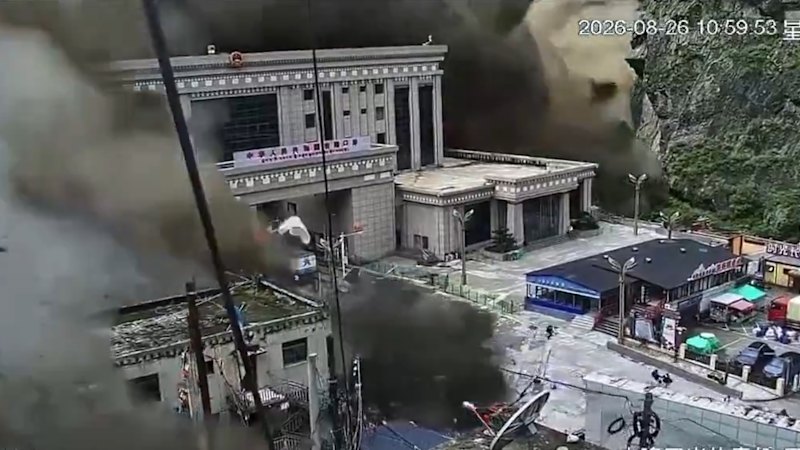
Hundreds of people, including an Australian tourist, were reported missing after an avalanche of ice and rock triggered massive flash floods that swept through parts of Nepal on Wednesday, killing at least 95 people and causing widespread damage to villages and infrastructure.
The Nepal Tourism Board reported 384 tourists were missing as a result of the flash flood, including one Australian. The 291 foreign nationals listed also include visitors from India, the United States, the United Kingdom, South Africa and Malaysia.
Local police confirmed 95 bodies have been recovered from the wreckage so far.
The Bhotekoshi River flooded around 9am on Wednesday (around 1pm AEST), destroying several villages as well as roads and hydropower projects, officials said. They issued warnings to residents of several of Nepal’s districts and asked them to stay away from the banks of Bhotekoshi, Trishuli and Narayani rivers.
Torrential floods swallowed roads, bridges, houses, and power projects in the border areas of Nepal, and triggered a mudslide that hit Gyirong Port, a major land crossing with neighbouring Tibet, cutting roads, communications, and power links to the area.
It is suspected that an earthquake struck the region and triggered an ice-rock avalanche on the Lhende Khola river in Nepal, causing the floods. The river runs through both Nepal and Tibet.
Police and military personnel were engaged in rescue efforts, although officials have said rescue helicopters would not be able to land in the affected areas until the waters recede.
“We have asked both India and China to help us with the rescue efforts,” said Sasmit Pokharel, a spokesperson for the Nepali government.
China has deployed at least 574 rescuers to the land crossing, and India says it was coordinating closely with Kathmandu on rescue and relief efforts.
People living in low-lying regions were being moved to safer places, and those along the river have been advised to remain alert, as authorities warn that a second flood may occur since a blockage is still lodged upstream.
Flood alerts have also been issued in the Indian states of Bihar and Uttar Pradesh, which border Nepal, since several rivers flow down the Himalayas into their plains.
The worst-affected area, Rasuwa district, witnessed similar flash floods to those in August last year, when a glacial lake in neighbouring Tibet overflowed as a result of high temperatures in the mountain region. Nine people lost their lives, and critical infrastructure, including a bridge connecting the two countries, was damaged at the time.
Climate experts at the Kathmandu-based International Centre for Integrated Mountain Development say an avalanche from a glacier likely caused Wednesday’s flash flood.
The Lhende Khola River, a tributary of the Bhotekoshi River, witnessed maximum flooding Wednesday, they said.
“The Lhende Khola has flooded twice in 14 months, this time triggered by an ice rock avalanche from a glacier on the Nepal side that blocked the river and released a sudden surge downstream,” said Saswata Sanyal, a disaster risk reduction specialist at the climate research group.
“In a warming Himalaya, early warning is the first line of adaptation,” he added.
The Himalayan region, which crosses Nepal and several nearby countries including India, is especially vulnerable to heavy rains, floods and landslides because the area is warming up faster than the rest of the world due to human-caused climate change. Research has shown that extreme weather events, including heat waves, heavy rains and melting glaciers, have become more frequent in the region.
Members of the Kathmandu research group found earlier this year that glaciers across the Hindu Kush Himalaya region are melting at an accelerating rate, with ice loss rates doubling since 2000 primarily due to rising global temperatures and climate change.
From our partners
Discover more from PressNewsAgency
Subscribe to get the latest posts sent to your email.