
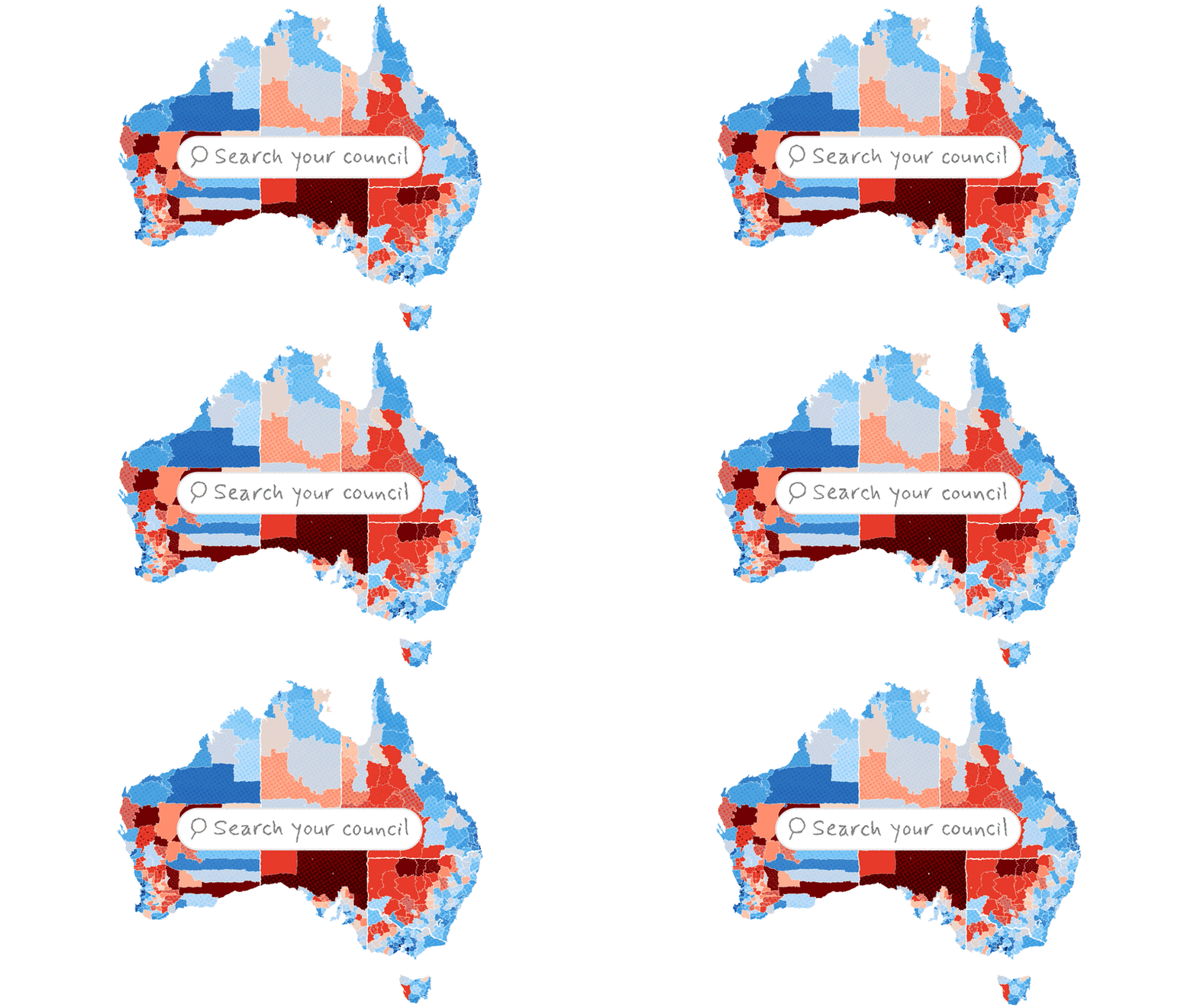
An extra 6 million people have been squeezed into just 10 per cent of the nation’s councils since the turn of the century as new figures show populations in some of Australia’s oldest mining and farming centres are in freefall.
Figures from the Australian Bureau of Statistics released on Thursday reveal the burden of the country’s rapid population growth on the strained infrastructure of our capital cities and their outer suburbs, while rural and regional areas struggle to attract residents.
The same data shows some of the wealthiest parts of the nation have largely avoided the population surge going on around them.
Every year, the bureau estimates the number of people in each of the nation’s 546 council areas while tracking their age breakdown.
Since 2001, Australia’s population has swelled by more than 40 per cent, growing from 19.3 million to 27.6 million.
But the bureau’s data shows that the spread of that 8.3 million jump in residents has not been even.
Four councils in Melbourne, including the city centre and the outer suburban areas of Melton, Wyndham and Cardinia, have grown by a combined 666,000 people. Melton’s population has expanded 341 per cent – the most of any local government area in the country.
The large Brisbane council area has absorbed the most people of any local government area. Together with the Gold Coast, Logan and Moreton Bay councils, the population of these four areas in south-east Queensland has jumped by more than 1.3 million.
In Sydney, a string of councils from Camden in the south-west through Liverpool, Blacktown, Parramatta and The Hills have added more than 605,000 residents over the past quarter-century.
Perth’s northern suburbs and its southern growth centre have had their population swell by more than 350,000.
Including fast-growing councils such as Adelaide, Geelong, Townsville and Cairns, just 10 per cent of the nation’s councils have accepted almost 6 million residents.
Even within this surge, some of the nation’s wealthiest council areas have managed to avoid taking new residents.
In Sydney, there has been little growth in exclusive council areas including Woollahra (4.8 per cent) and Hunters Hill (5.2 per cent) even as neighbouring local governments have added tens of thousands of residents.
It is a similar story in Western Australia, where the population of the nation’s smallest – and one of its richest – councils, Peppermint Grove Shire, has increased by 10 per cent since 2001. In the surrounding councils, the population has grown at least twice that pace.
Despite years of talk about Australians embracing tree-change communities, growth of major regional cities remains well below the country’s urban centres.
Canberra is the fastest-growing inland city and is on track to surpass 500,000 residents in the coming year. Its population has grown by 51 per cent since 2001.
Other inland cities have grown at a slower rate, such as Bendigo and Ballarat in Victoria (both expanding by 40 per cent), Toowoomba in Queensland (38 per cent), Albury-Wodonga on the NSW-Victoria border (36 per cent) and Wagga Wagga in NSW (23 per cent).
Outside the inland cities, populations are falling or flatlining. Since 2001, almost 30 per cent of councils have lost residents, while another 20 per cent have barely grown.
Despite its total population expanding by a nation-leading 60 per cent since 2001, two in five of Western Australia’s councils have suffered population loss. Almost all are across the state’s wheat belt and older mining areas including Mount Magnet (minus 17 per cent) and Coolgardie (minus 9 per cent).
Across NSW, a string of farming-dependent councils stretching from Deniliquin in the south all the way north to Moree have depopulated over the past 25 years despite the nation’s overall surge in residents. Western centres such as Bourke (minus 41 per cent) and Broken Hill (minus 16 per cent) have lost thousands of people.
Councils in Victoria’s west, north and high country have gone backwards, as have numerous councils in Queensland’s west and south-west.
Demographer Liz Allen from the Australian National University said the nation’s population profile was being squeezed as attractive areas around capital cities were forced to absorb large numbers of residents while rural and regional areas became increasingly unviable.
“There is a large group of regional farming and old mining communities which are losing people and getting older, and without some sort of change, they don’t have a future,” she said.
“At the same time, we have certain communities where there is real pressure on infrastructure and services which has just not kept up with demand.
“There’s been a complacency for years, across different governments, about dealing with these issues, but they’ve utterly failed and will continue to fail without change.”
The same figures confirmed the relentless ageing of much of the country.
In the Victorian coastal council of Queenscliffe, the median age of its 3300 residents has soared to a national high of 64.8 years. Almost half the population are now 65, climbing by 8 percentage points since 2019.
More than one in two councils have populations in which at least 30 per cent are aged at least 65. Just ahead of the pandemic, 13 councils had that figure.
The youngest council areas are mostly in WA, the Northern Territory and Queensland, with large Indigenous populations.
The City of Melbourne council is the biggest outlier. Due to its substantial student population, its median age is just 29.4 years, with 6.4 per cent of the population over the age of 65. The Sydney city council area is similar, with 9 per cent of the population around retirement age.
The national median age is 38.4 years, having increased by a full 12 months since 2019.
Cut through the noise of federal politics with news, views and expert analysis. Subscribers can sign up to our weekly Inside Politics newsletter.
 Shane Wright is a senior economics correspondent for The Sydney Morning Herald and The Age.Connect via X or email.
From our partners
Discover more from PressNewsAgency
Subscribe to get the latest posts sent to your email.