

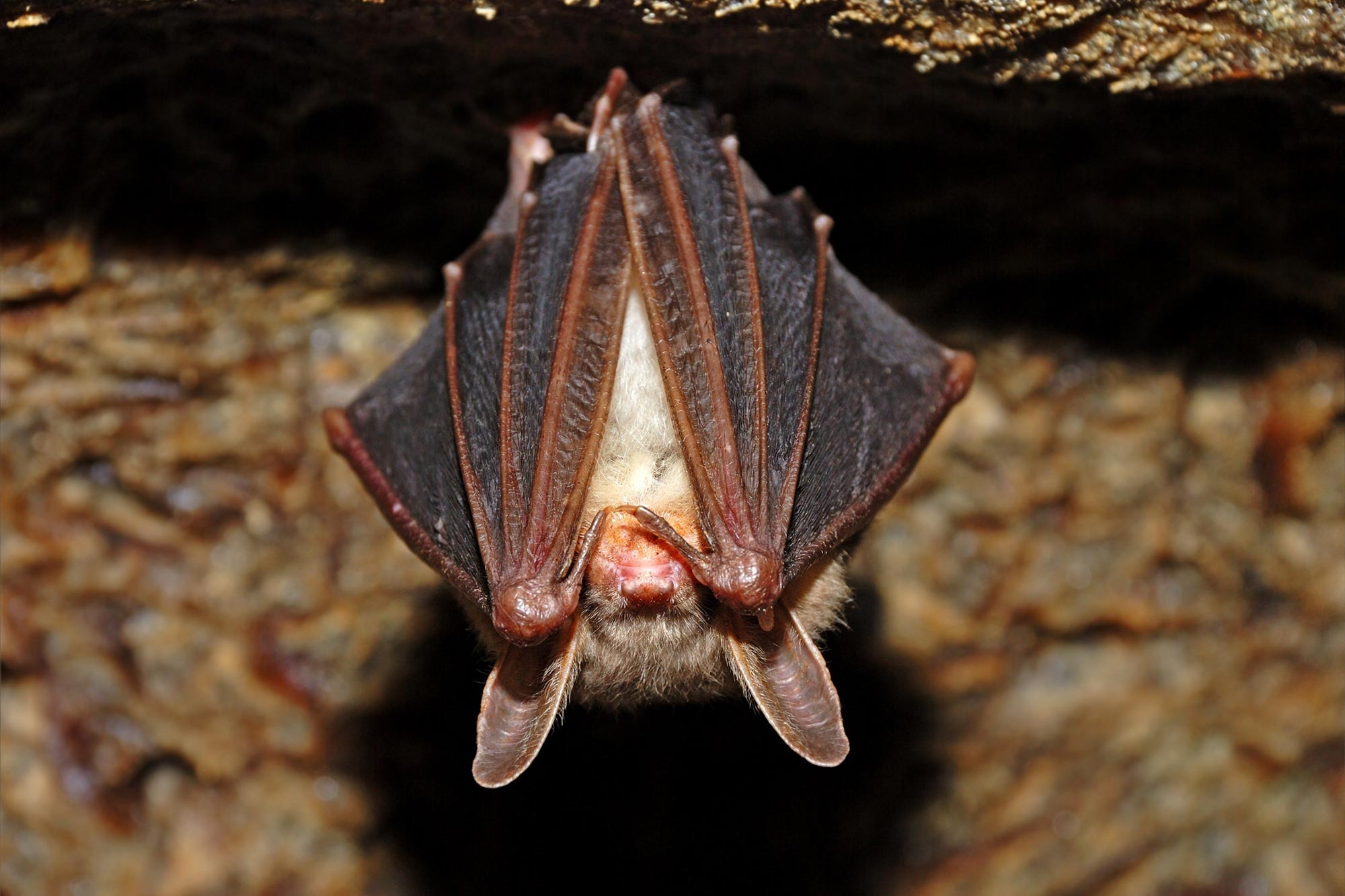
When insect-eating bats died, farmers increased pesticide use—leading to more than 1,000 infant deaths.
Since 2006, the decline in bat populations in North America has led farmers to increase pesticide use by 31%, resulting in higher infant mortality rates and poorer crop quality. This shift has cost society approximately $39.6 billion, underscoring the significant environmental and health consequences of losing natural pest control.
The Role of Bats in Agriculture
Bats are considered a natural pesticide, widely relied on by farmers as an alternative to chemical pesticides to protect their crops from insects. But since 2006, many bat populations have collapsed in counties in North America due to an invasive fungus found in the caves that bats use.
A new study in the journal Science uses their sudden collapse to explore whether farmers turned to chemical pesticides, and whether doing so impacts human health. It finds that farmers did increase their pesticide use, leading to more than 1,000 infant deaths.
Health Consequences of Increased Pesticide Use
“Bats have gained a bad reputation as being something to fear, especially after reports of a possible linkage with the origins of COVID-19,” said study author Eyal Frank, an assistant professor at the Harris School of Public Policy. “But bats do add value to society in their role as natural pesticides, and this study shows that their decline can be harmful to humans.”
Frank compared the effect of bat die-offs due to a fungus known as White-Nose Syndrome on pesticide use in counties that experienced bat population declines to counties that were likely unaffected by the wildlife disease. He found that when the bat populations declined, farmers increased their use of pesticides by about 31 percent.

Because pesticides have been linked to negative health impacts, Frank next tested to see if the increased use of pesticides corresponded with an increase in infant mortality—a common marker to study the health impacts of environmental pollution. When farmers increased their use of pesticides, the infant mortality rate rose by almost 8 percent. This corresponds to an additional 1,334 infant deaths. Or, for every 1 percent increase in pesticides, there was a 0.25 percent increase in the infant mortality rate.
Economic and Environmental Costs
The study also found that pesticides aren’t as good at preventing pests as bats. The quality of the crops likely declined, as farmers’ revenue from crop sales decreased by nearly 29 percent. Combining this revenue loss with the expense of the pesticides, farmers in communities that experienced the bat die-offs lost $26.9 billion between 2006 and 2017. Adding onto those losses the $12.4 billion in damages from infant mortality, the total societal cost from the bat die-offs in these communities amounted to $39.6 billion.
“When bats are no longer there to do their job in controlling insects, the costs to society are very large, but the cost of conserving bat populations is likely smaller,” Frank said. “More broadly, this study shows that wildlife adds value to society, and we need to better understand that value in order to inform policies to protect them.”
Reference: “The economic impacts of ecosystem disruptions: Costs from substituting biological pest control” by Eyal G. Frank, 6 September 2024, Science.
DOI: 10.1126/science.adg0344
Discover more from PressNewsAgency
Subscribe to get the latest posts sent to your email.