

Some countries are experiencing a resurgence in infections, leading authorities to partially reinstate lockdowns, in what experts say could be a recurring pattern in the coming months and into 2021.
North America, Latin America and Europe each account for around 25 per cent of cases, while Asia and the Middle East have around 11 per cent and nine per cent respectively, according to the Reuters tally, which uses government reports.
There have been more than 497,000 fatalities linked to the disease so far, roughly the same as the number of influenza deaths reported annually.
The state of Florida has set another record in daily confirmed coronavirus cases.
Florida health officials today reported more than 9500 new COVID-19 cases, surpassing the previous day’s total by more than 600 confirmed cases. The figures come as officials move to reclose beaches and discourage bar gatherings.
Texas has meanwhile surpassed 5000 hospitalised coronavirus patients for the first time as Gov. Greg Abbott continues a dramatic retreat in his aggressive reopening of America’s second-biggest state.
In Houston, county officials yesterday elevated a public threat warning system to the highest level. Harris County Judge Lina Hidalgo said “We never brought the curve all the way down. We only flattened it”.
Yesterday, California Gov. Gavin Newsom said that he wants an agricultural Southern California county to reimpose stay-home orders amid a surge in positive coronavirus tests there and through much of the state.
Imperial County, with a population of 175,000 people on the state’s border with Mexico, has been the slowest in the state to reopen amid continued high positivity rates, which have averaged 23 per cent in the last week, compared with 5.7 per cent statewide.
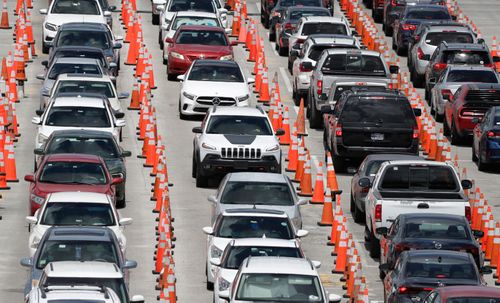
The Health Ministry also reported 384 new deaths, raising the total to 15,685.
The surge prompted authorities in the northeastern state of Assam to impose a two-week lockdown in the state capital of Gauhati. About 700 new cases were reported there in just four days.
Thirty-five of the new cases are in the capital region, which is at the center of a COVID-19 resurgence threatening to erase earlier gains against the virus.
Authorities are struggling to trace contacts and predict infection routes as new clusters pop up. Hundreds of infections have been linked to nightspots, church gatherings, restaurants and low-income workers who couldn’t afford to stay home.
Officials are resisting calls to reimpose stronger social distancing guidelines, concerned about hurting the economy.
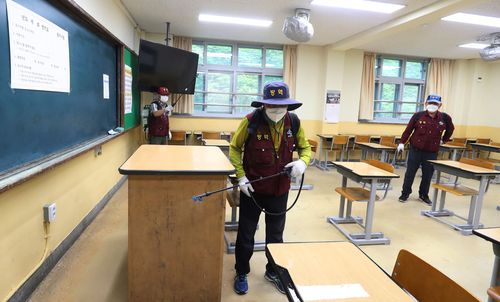
The National Health Commission said today that 21 more cases had been confirmed nationwide in the latest 24-hour period, including 17 in the nation’s capital.
City officials have temporarily shut a huge wholesale food market where the virus spread widely, re-closed schools and locked down some neighbourhoods.
Anyone leaving Beijing is required to have a negative virus test result within the previous seven days. Many Chinese are travelling during a four-day holiday weekend that ends Sunday (local time).
China has reported 83,483 cases and 4,634 deaths in the pandemic. It does not include in the numbers people who test positive but don’t show symptoms.
According to Health Ministry data, there were eight deaths of infected patients since yesterday, raising the nation’s known toll in the pandemic to 34,716.
There were 175 new cases, bringing the overall count of confirmed COVID-19 cases in the country where Europe’s outbreak first exploded to 240,136.
The government is expected to scrap a 14-day quarantine requirement that forced people to self-isolate upon returning home from abroad.
It will be replaced with a traffic light system, with officials placing countries into green, amber and red categories based on the prevalence of the virus.
German Chancellor Angela Merkel cautioned today that the coronavirus pandemic is far from over, as regional outbreaks gave rise to fears of a second wave.
German authorities renewed a lockdown in a western region of about 500,000 people in the past week after about 1300 slaughterhouse workers tested positive for COVID-19, in an attempt to prevent the outbreak from spreading across the area.
Egypt has lifted many of the restrictions put in place to fight the coronavirus pandemic, reopening cafes, clubs, gyms and theaters after more than three months of closure. Authorities also allowed the reopening of mosques and churches.
The government has been eager to resuscitate the Egyptian economy, which was hit hard by the virus outbreak.
Reported with Associated Press, AAP
Discover more from PressNewsAgency
Subscribe to get the latest posts sent to your email.