

Nurse Ivy Little wrote about her time in Pune as “cheerful life in the Land of Rajah”. Another nurse, Veronica Norton, described Pune as a ‘gay place’ but wished that there were more Australian soldiers in the hospital “because we are always arguing (with the British). Annie Low reported back to her family that at Pune hospital they were treating ailments that “we do not see very often in Australia such as Malaria, Plague, Cholera and Dysentery”. A visitor to the hospital reported that the nurses stayed “like a happy family with sympathetic supervision”. There is a marriage notice in the newspapers announcing nurse Ellen Murdoch’s marriage to Clifford Grigg scheduled to take place in Agra.
Although this episode when Pune served as an important venue to treat wounded and ill British soldiers who were fighting in the eastern front during World War I is largely forgotten, its glimpses are still visible in the archival Australian newspapers and family correspondence as a majority of nurses who worked in the Deccan British War Hospital, a temporary medical facility created in Pune between May 1916 and April 1919, hailed from Australia.
Among a number of temporary war hospitals that came up in India to meet the medical needs of the war, the Deccan British War Hospital that came up in Pune (then Poona) was housed in the sprawling campus of the College of Agriculture that was barely a decade old at that time.
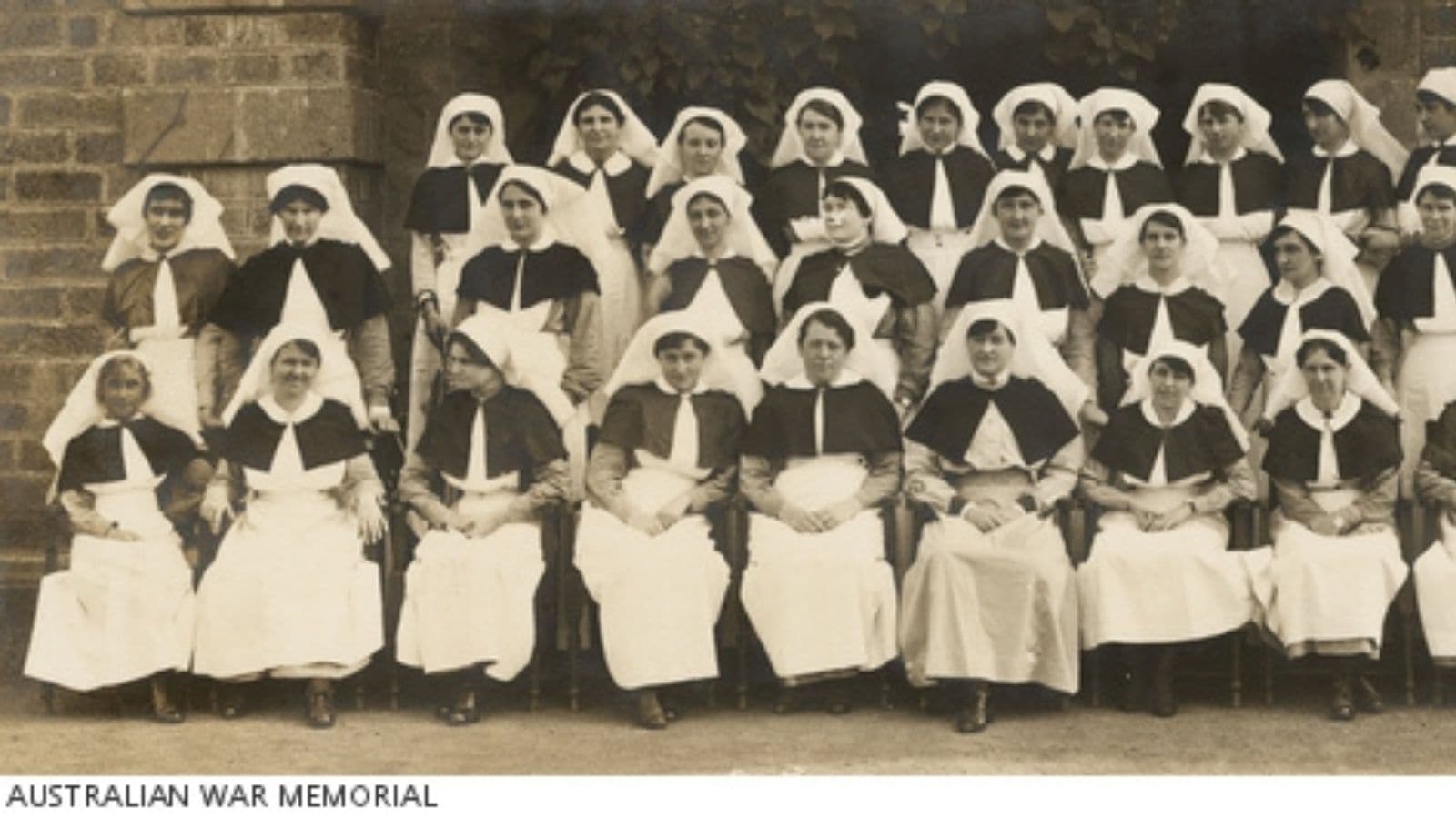 A group of Australian nurses parts of Australian Army Nursing Service (AANS) at College of Agriculture, Pune which housed the Deccan British War Hospital. (Courtsey : Australian War Memorial)
“…It was located near a military camp and had been greatly expanded in 1917 to take 1000 beds. The matron and 50 or so nurses were Australian, the doctors and orderlies were English. The patients were casualties from the fighting between the British and Turks in Mesopotamia (Iraq) brought by hospital ship to India. They were suffering from battle wounds and a range of illnesses including malaria, dysentery, cholera and the effects of severe heat stroke,” Marianne Barker writes in Nightingales in the Mud (published in 1919) that gives an account of Australian nurses’ work in World War I.
Australian nurses in India
In 1914, when Great Britain declared war on Germany, Australia being a British dominion got involved. While men joined the war effort as volunteers for the Australian Imperial Force (AIF), young women enrolled to serve overseas in the Australian Army Nursing Service (AANS). As per records, over 2,000 Australia women served overseas during the World War I.

In India alone, 560 nurses from Australia served. While India wasn’t a primary theatre of war like the Western Front or the West Asia, it played a crucial role in supporting the British war effort. There were several war hospitals in India, some of which were temporary (established in Mumbai, Pune, and Deolali). As per records, approximately 520 trained nurses served in India during World War 1 consisting of over 560 members of the Australian Army Nursing Service (AANS).
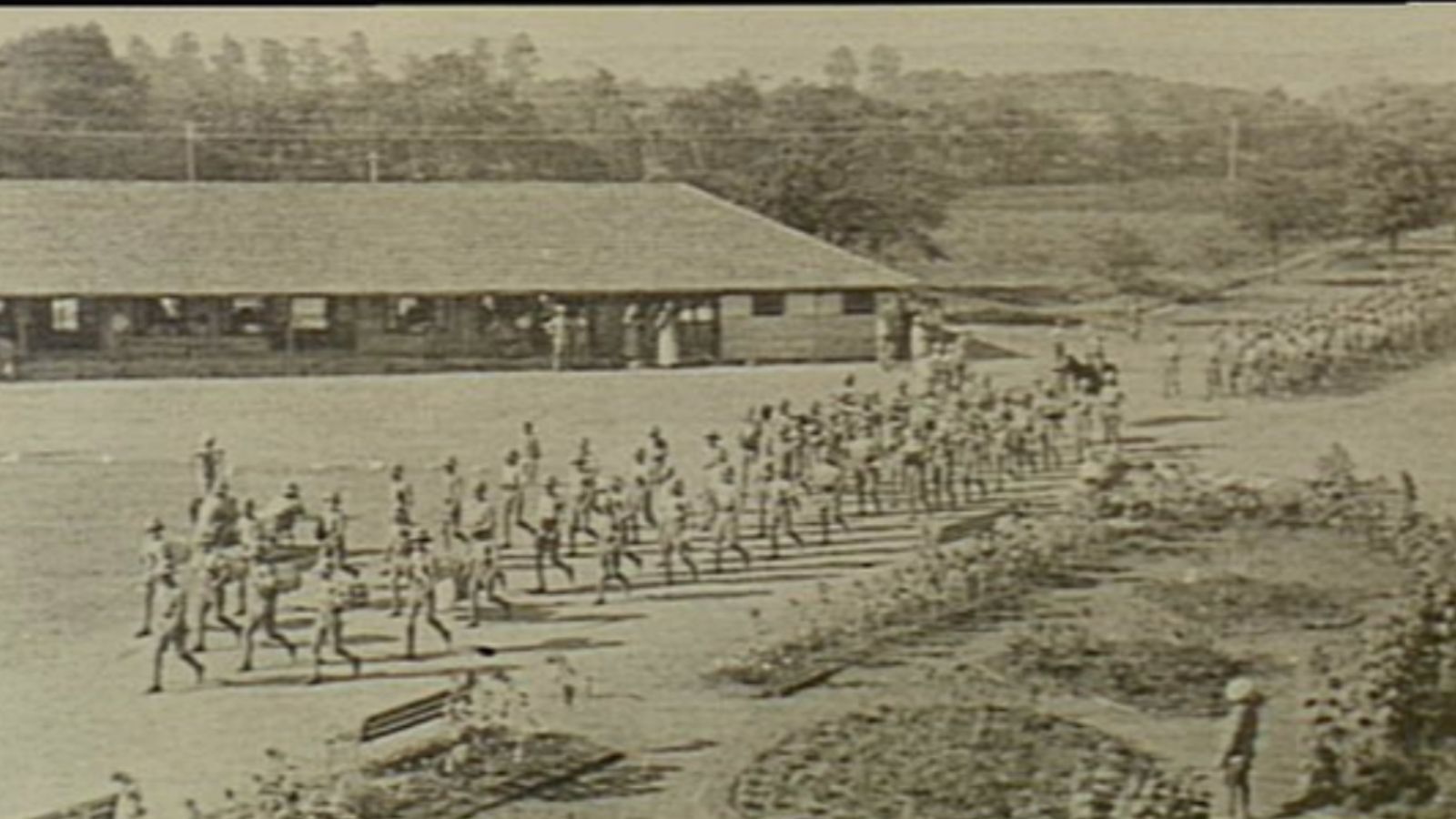 Convalescent British soldiers at Deccan British War Hospital during a parade. (Courtsey : Australian War Memorial)
“Soldiers who were getting injured on the Mesopotamia front were brought to Mumbai in ships and then they were transported to Pune for treatment at the Deccan War Hospital, a temporary hospital created at the College of Agriculture campus. At the peak of the war, the hospital had a capacity of 1000 beds,” historian Avinash Sovani said.
Many Challenges
According to the nurses’ accounts, while India wasn’t a war zone, they faced numerous challenges during their work. They struggled with cultural differences between the local staff and the English Sisters, and had to deal with exotic diseases in underdeveloped medical settings. They were also adjusting to a drastically different climate – something that wasn’t so stark in Pune.
Sister Alma Bennett recorded one of her colleagues at Poona was bitten by a snake but fortunately recovered. At another hospital, when electricity was finally connected the nurses were “all delighted but each Sister still kept her hurricane lamp burning beside her bed at night, as snakes were very prevalent, many deadly ones such as Russell’s Viper, Krait & Cobra having been killed, some in the Sisters’ rooms”.
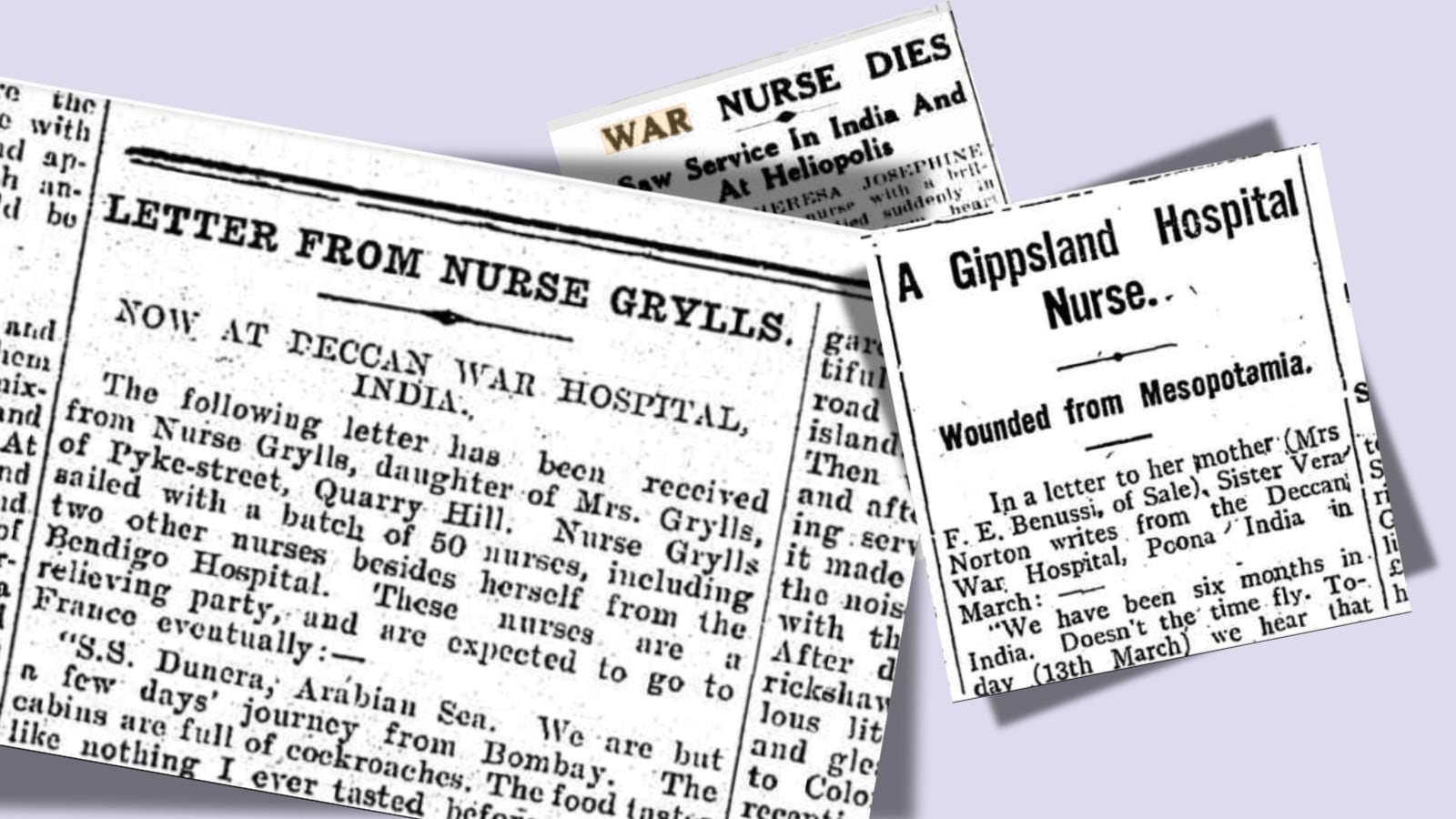 Coverage of Australian newspaper of nurses serving in India. (Courtsey : Australian War Memorial)
‘Agricultural students unhappy’
As the main building of the college and several of the dormitories were occupied by the war hospital and its staff, the students of the College of Agriculture felt that the limitation put by this was adversely affecting the functioning of the college.
“It almost appears as if the government by taking from us our main building to hospital the wounded, is sacrificing their own interests as well as those of India in this respect (by) losing many a may-be successful agriculturist – the savior of the country – among the number of those refused admission, is quite serious enough to challenge the food that’s being done at the Deccan ar Hospital which for the matter of that could be equally done anywhere else,” reads an article in July 1918 edition of the Poona Agricultural College Magazine.
As the World War ended towards the end of 1918, the college campus was vacated as the war hospital was wound up in the next few moths.
As he handed back the occupied college buildings, Lieutenant Colonel H Winter of The Royal Army Medical Corps wrote to the principal of Agriculture College: “I am off course very sorry to part with the hospital but I am extremely glad that you have got back your old home again and I have always sympathized with you for our unavoidable occupation of your very fine college”.
Discover more from PressNewsAgency
Subscribe to get the latest posts sent to your email.