
It is quite possible that when Prime Minister Benjamin Netanyahu pitched his poorly thought-out plan for an air power-delivered regime change in Iran to President Donald Trump, he promised that Iranians would pour into the streets in their hundreds of thousands once the US and Iran had eliminated Iran’s Supreme Leader.
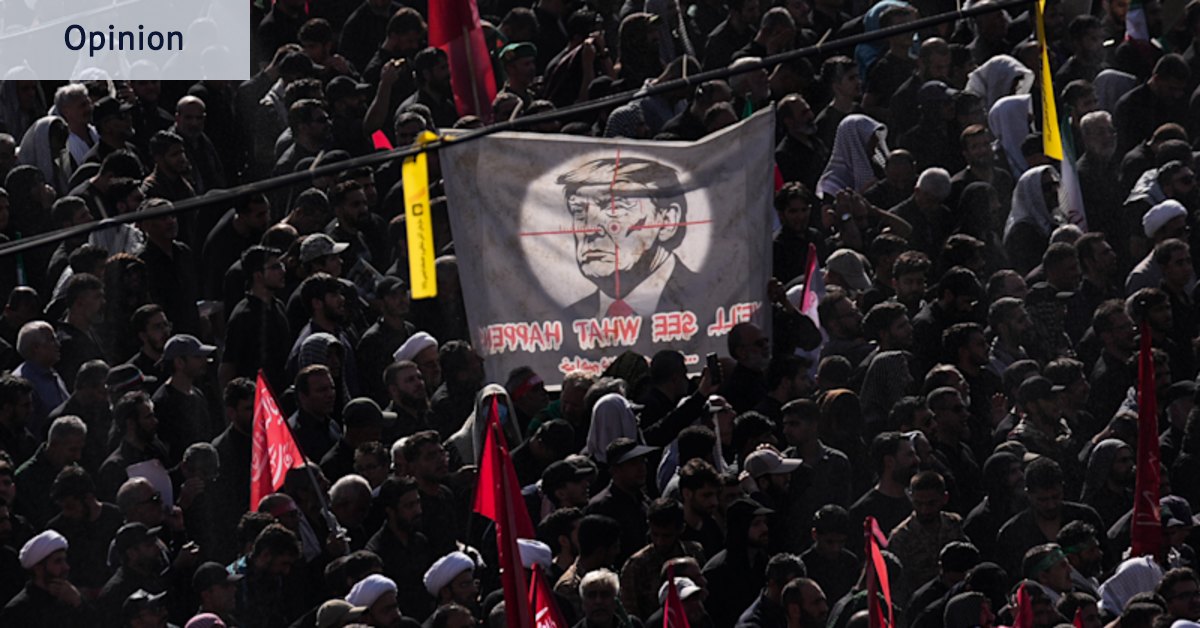
And so it came to pass, only not in the way that the Israeli prime minister envisaged. In recent days there have been multiple outbreaks of conflict between the US and Iran, despite the ceasefire deal that was negotiated amid much fanfare last month. The past week has also seen literally millions of people in the streets of Tehran, Qom, and Mashhad in Iran and in the holy cities of Najaf and Karbala in Iraq. The multi-city funeral procession was a highly orchestrated, and heavily attended demonstration by the Iranian establishment of the durability of its uniquely Iranian theocratic system of government and the support, if not the actual reverence, that the Supreme Leader still commanded, even in death.
The large-scale assassination of the Supreme Leader and a number of other senior leaders imposed a generational change on the Iranian system earlier than it had anticipated. Not only that, the change took place under intense military pressure from an ongoing air campaign from two of the most powerful air forces in the world. The system, and its ability to handle the succession process, has now been proven to be remarkably robust. Not only at the level of the Supreme Leader, but also the Islamic Republic’s ability to replace a large number of senior military and Revolutionary Guard officers and continue to effectively prosecute a defensive military campaign.
Once the promise of a swift victory failed to materialise and the global economy began to feel the effect of a conflict without purpose, Trump realised that the law of diminishing returns dictated that a negotiated settlement was necessary. The Memorandum of Understanding signed in June has bought time for both sides, but both sides entered into the Memorandum believing that they were the defacto winners of the conflict. And as both sides seek to interpret the Memorandum in the way that best suits their purposes and to resort to strikes when it feels the circumstances warrant it, we are left with a situation that is neither peace nor war.
Such a situation is unsustainable in the longer term. But as long as neither side is willing to cede to the other lest they are seen to be acknowledging their own weakness, the situation will remain highly volatile. Tehran has learnt what any country that has survived an attack by a much more powerful opponent knows – while not losing represents a victory of sorts, it is in the subsequent negotiations where the real winners will be decided. And a weaker country understands the value of whatever leverage it has.
In the past, Iran’s leverage was heavily reliant on the pressure that could be exerted by its regional proxy forces. But Hamas’ ill-advised mass terrorist attack on October 2023 and Iran’s response to it has weakened the so-called Axis of Resistance. It is likely one of the reasons why Netanyahu was unusually bullish in his pitch to Trump to initiate the conflict. Hezbollah can tie down Israeli ground forces and lob rockets into northern Israel, but this is of limited use to Iran’s national defence. And with the enormous resources that the US military can bring to bear, Israeli air assets could switch to Lebanon without significantly weakening the air campaign against Iran.
Tehran still finds Hezbollah a key regional partner, as evidenced by the first point of the Memorandum of Understanding that specifically linked a cessation in the fighting in the Gulf with a cessation in the fighting in Lebanon. But Iran has now made clear that it believes its survival relies on regionalising and internationalising any conflict. And the key to achieving that is through its rockets, missiles and drones and through its ability to regulate traffic through the Strait of Hormuz. But it is also more than simply having such capabilities – it is also demonstrating the intent to use them.
The Iranian leadership has clearly decided that the measured responses it undertook against previous attacks made the Israeli and American air campaign against it more, rather than less likely. Having the capability to respond to military action against it but failing to do so led Trump to believe that the Iranian leadership had limited redundancy and it would bend, or even break in the face of a swift decapitation strike against its leadership. The opposite has happened, and the mass mobilisation of people in multiple cities to commemorate the Supreme Leader’s funeral is as much a demonstration of regime strength as attacks against shipping in the Strait of Hormuz or US bases in the Gulf and Jordan.
Negotiating a final peace deal between Washington and Tehran in 60 days under the Memorandum was always going to be a tough ask, particularly between two parties who do not trust each other. For Washington, negotiating an outcome to a war whose aims were never clear in the first place puts them at a practical disadvantage with respect to Tehran, whose desired outcomes are much more straightforward. For Trump there is the added challenge of trying to get an outcome better than president Barack Obama achieved a decade ago without bloodshed. Washington’s opening salvos in its air war against Iran has ushered in a newer, more focused and bolder leadership group who believe that their ability to absorb American military attacks is greater than Washington’s willingness to sustain it. For all of the United States’ military overmatch, in a negotiation such as this Iran’s strategic patience is more likely to win out.
Dr Rodger Shanahan is an author and Middle East analyst.
The Opinion newsletter is a weekly wrap of views that will challenge, champion and inform your own. Sign up here.
From our partners
Discover more from PressNewsAgency
Subscribe to get the latest posts sent to your email.