
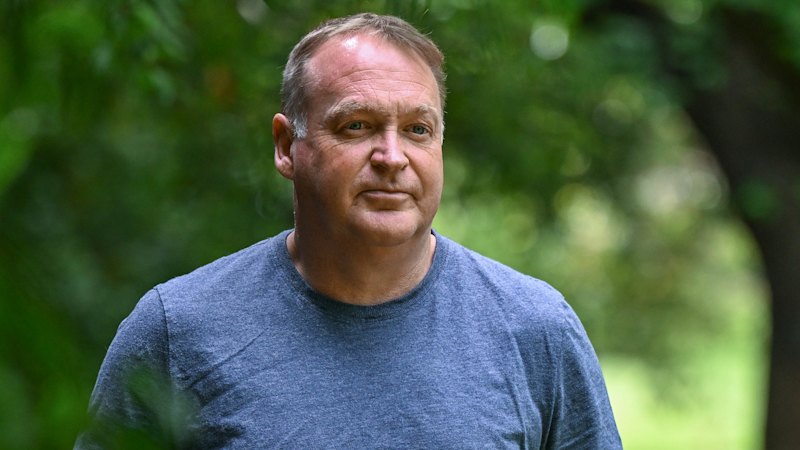
Major sporting codes and media organisations have failed to uphold their social responsibilities in pursuit of commercial interests, the husband of the late gambling reform advocate and Labor MP Peta Murphy says.
Rod Glover welcomed the parliament’s collaboration on the gambling reform package that will head to the Senate on Wednesday, arguing in a time of increased distrust in politics it was important to acknowledge progress. But he said the delay to reform had caused real harm, and the legislation fell well short of the “benchmark” recommendations made in his late wife’s report.
Glover pointed the finger at the sports and media industries for lobbying the government to minimise any losses from gambling advertising revenue.
“The online gambling industry is predatory, but the failure of social leadership among some of our major sporting and media institutions is different,” Glover wrote on LinkedIn.
“Organisations with a privileged place in Australian life have continued to put their commercial interests in gambling ahead of the social responsibilities that come with the influence, standing and trust they hold.”
Murphy’s bipartisan report – her last political act before her death – recommended a total ban on gambling ads and inducements and has been invoked by advocates at every turn in the years-long fight for tougher restrictions.
Labor’s controversial reforms, which will pass parliament and become law after the government struck a deal with the Coalition on Tuesday, will introduce a yet-to-be-developed opt-out regime for gambling advertising, stop companies giving inducements to problem gamblers, and restrict when and how many ads can be broadcast.
Glover called the reforms “a breakthrough of sorts”, and cheered the advocates – including from within the major parties – who pushed Labor and the Coalition into compromising and moving forward “imperfectly, unevenly, but meaningfully”.
“That our political system ultimately found a way to make progress deserves recognition,” he said. “[The package] will reduce harm, particularly for young people and those most vulnerable to the increasingly sophisticated ways gambling is marketed and promoted.”
But the deal was met with dismay by many MPs across the political spectrum. Liberal senator Paul Scarr said on Wednesday he would not support the bill in its current form, after two lower house colleagues crossed the floor on Tuesday to vote against their party’s position.
“This legislation doesn’t go far enough in terms of protecting our kids from advertising, in terms of protecting people from inducements, and in terms of having strong statutory reviews of the outcomes of these laws,” Scarr told reporters in Canberra.
Liberal backbencher Andrew Wallace, who crossed the floor on Tuesday for the first time in his 10-year political career, said a crucial opportunity to usher in meaningful change had been squandered.
“I’ve got to look at myself in the mirror, and I’ve got to look at my constituents in the face, and say that I did what I thought was right,” he told Radio National.
“I fundamentally believe that this was a probably a once-in-a-career opportunity for me to make a stand, and I don’t think the bill went far enough.”
Wallace said he was “sick to death” of seeing gambling ads around sport, and that allowing gambling companies to red-flag problem gamblers was “effectively putting Dracula in charge of the blood bank”.
“These are the same people who are preying upon those same individuals. I do not trust the gambling companies to act with good intent,” he said.
“We’ve really missed an opportunity here.”
Independent senator David Pocock said because the major parties had capitulated to the demands of powerful industries, Australians had been left with laws that would fail to protect them from harm.
“We have four out of five Australians wanting a ban on all gambling ads, and yet the government is trying to sell us this [as] getting the balance right, which is three ads per hour on TV and a fairly unworkable opt-out system online,” Pocock told ABC TV. “This legislation fails on so many different levels.”
But Opposition Leader Angus Taylor insisted on Wednesday the right balance had been struck.
“This is an emotional issue and it’s an important issue,” he said. “I’m very pleased that we have got bipartisan support.”
Cut through the noise of federal politics with news, views and expert analysis. Subscribers can sign up to our weekly Inside Politics newsletter.
 Brittany Busch is a federal politics reporter for The Age and Sydney Morning Herald.Connect via email.
From our partners
Discover more from PressNewsAgency
Subscribe to get the latest posts sent to your email.