
Updated ,first published
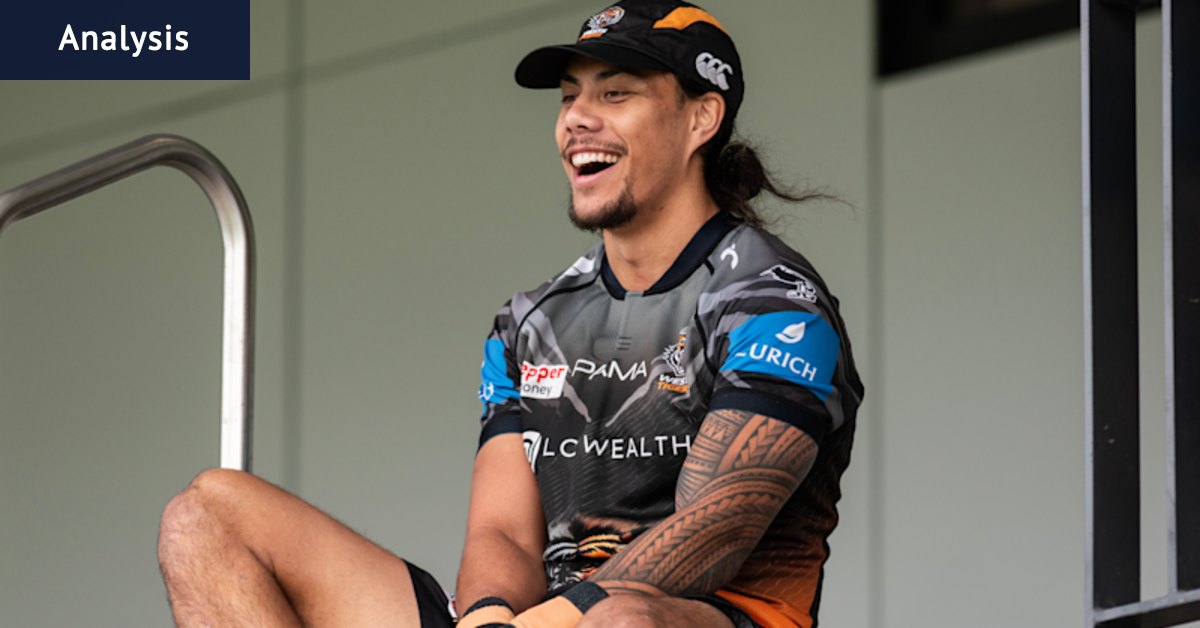
In the increasingly capitalist world that is the NRL, in which players will soon become the biggest beneficiaries of a $5.3 billion broadcasting rights injection, Parramatta-bound Jarome Luai understands his place.
By 2028, Luai will have played for three of the four western Sydney clubs, and then begin collecting pay cheques from PNG, where his net and gross profit will be the same courtesy of the tax-free dollars available to anyone who joins the Chiefs.
Rugby league players have long been commodities to be traded among the clubs, and deserve the right to maximise their earnings in what compared to most professions are short careers.
Luai has benefited as much as anyone, becoming a big business in his own right during a career that will take him from Penrith to the Wests Tigers to the Eels and finally to PNG. It’s a journey that has allowed him to grow his own brand, to the point where he will reportedly receive $3 million in personal sponsorship for ambassadorial roles away from the football field.
But the harsh reality is that when a player’s stocks plummet or the circumstances of his employers change, there is only so much security that a contract can provide.
“It was a bit of a shock, I’ll be honest with you,” Luai said when the Tigers asked their co-captain to leave at the end of the season, with a year still remaining on his contract.
“But as a player at this level, our game is a business. The faster an athlete is able to comprehend that, the better understanding they will have of where and why these decisions are made.”
Indeed, the NRL has become very big business. It’s not quite as ruthless as some American sports, but the commodification of athletes here is catching up.
In recent years, Jayden Sullivan, Onitoni Large, Lachlan Galvin and Luai have been mooted as long-term custodians of the Tigers No.6 jersey that their coach, Benji Marshall, made famous. For various reasons, not one of them has fulfilled their contracts. Even Marshall sought an early release from the club during his playing days, to pursue a stint in rugby union.
Given the average NRL career lasts 35 games across four seasons, players need to get what they can, where they can, while they can. However, it’s not a one-way street. If a club feels it isn’t getting bang for its buck, a tap on the shoulder is inevitable.
The Tigers, after bending over backwards to secure Luai’s signature, have effectively given him his marching orders. All in the name of business. Just like it was business when Luai left the Panthers, or joined PNG, or when Parramatta opportunistically picked up the four-time premiership-winning pivot when he unexpectedly came onto the market. Such is the transactional nature of the game.
Luai understands his role in the trade that is the modern player market. After overcoming the initial shock, the 29-year-old has accepted his lot in being managed out of Concord.
“I’m at peace, brother. I’m at peace,” he said. “I understand where the decision came from, and I’m here to support that decision and support my coach …
“I think it’s human to feel an emotion and then slowly process it to understand why things happen. I’m a man just like you guys, so I’m not going to lie – it took a bit of time to process. But we’re all on board now, man. The main thing I want is to be at my best for the remaining time I’m here, and to have some fun playing footy with the boys.”
How will Luai reflect on his time at the Tigers?
“I think people are quick to point the finger and sometimes quick to forget,” he said during Thursday’s press conference at Concord. “But I’ve enjoyed my time, brother, and I think I’ve grown in a lot of ways that people haven’t seen.
“We’re not getting wooden spoons here any more, so that’s a tick in that box. But like I said, these last couple of weeks or last couple of months, I just want to put my best foot forward and have some fun with the lads.”
The topic of most interest, his impending move to the Eels, was off limits.
“Parra? I’m not at Parra yet, brother,” he said. “I’ll answer those questions on November 1st or when our season is done. Out of respect for my club and the lads, I’m still a Wests Tigers player.”
Losing, Roosters boss Nick Politis famously mused, is bad for business. The days of clubs holding their nerve through a form slump, or having the patience to see through a rebuild, are in the past. It’s all about immediate results. For proof, look no further than the first coach sacking of the season, which came after just three matches.
A contract may guarantee you’ll get your money, but beware the fine print of the modern game.
From our partners
Discover more from PressNewsAgency
Subscribe to get the latest posts sent to your email.