
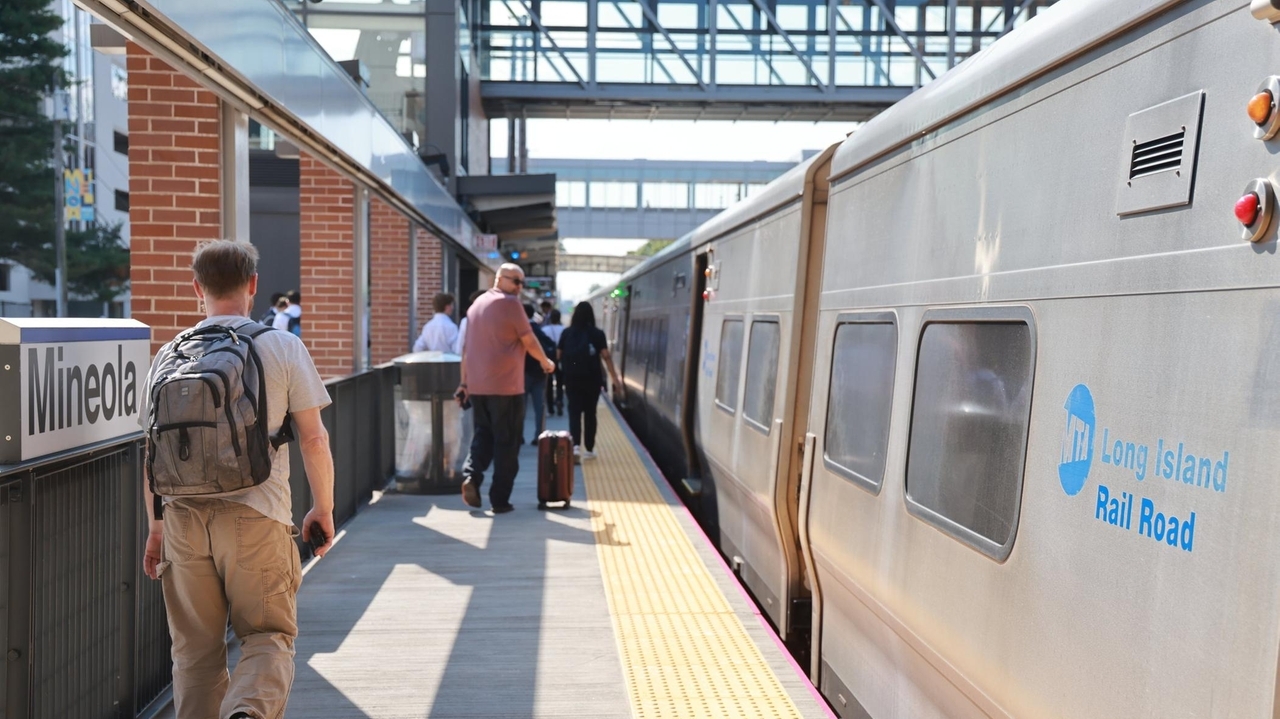
Long Island Rail Road union leaders will ask President Donald Trump to intervene in their ongoing contract dispute with MTA management — a move that will avert the possibility of a strike this week, officials said Monday.
The decision to ask the Trump Administration to appoint a “Presidential Emergency Board” of mediators effectively pushes the deadline for a potential shutdown of the LIRR by at least two months, and possibly into the spring.
“This action does not mean a strike won’t happen, but it does mean it won’t happen now,” said Gil Lang, general chairman for the Brotherhood of Locomotive Engineers & Trainmen (BLET), at a news conference Monday.
The announcement of the request for White House intervention came at a news conference in Manhattan held by the BLET — the union representing LIRR train operators — and attended by officials from unions involved in the contract fight with the Metropolitan Transportation Authority.
The federal Railway Labor Act allows for work stoppages at railroads after efforts to resolve a contract dispute through mediation have failed. The National Mediation Board last month released the parties from mediation, starting a 30-day countdown to a potential strike at 12:01 a.m. Thursday, unless the unions, the MTA, or Gov. Kathy Hochul requests a Presidential Emergency Board, stopping the countdown clock.
Hochul had been unwilling to ask for Trump’s help in averting the first LIRR strike in more than 30 years, even while criticizing the President for not stepping up. In a statement Monday, Hochul said, “The Trump administration can prevent this right now by ordering both sides back to mediation. If they refuse, LIRR riders should know exactly who is to blame.”
The unions’ decision to ask for White House intervention was a reversal from their previous position. Asked Friday if his organization had any plans to request White House intervention, BLET national president Mark Wallace told Newsday: “We will not.”
According to the National Mediation Board’s website, the appointment of a Presidential Emergency Board “delays a strike, lockout or other form of self-help, generally for 60 days,” as federal mediators consider both sides’ arguments, and issue non-binding recommendations to resolve the dispute.
Public hearings, federally-mandated “cooling off” periods, and the possibility of a second Presidential Emergency Board could delay a potential strike until May.
Five labor organizations representing just under half of LIRR union workers are pushing for raises high than the 9.5% over three years already accepted by most other MTA workers, including the LIRR’s largest union, the International Association of Sheet Metal, Air, Rail and Transportation Workers. They say they’re asking for enough to keep up with inflation, match other railroads’ awards and account for the region’s high cost of living.
MTA leaders have said any raises outside of the pattern established by the other unions’ contracts should come with significant concessions, such as the termination of antiquated work rules that can give employees an extra day’s pay for minimal extra work.
At the Manhattan news conference, the engineers’ union also announced that its members had voted in favor of going on a strike, as the other unions have already done.
“We are only asking for a fair contract — one that provides modest wage gains, or at the very least, maintains real wages, our members would not ratify anything short of that,” Gil Lang, general chairman for LIRR engineers, said in a statement. “Wages are the only real issue.”
Discover more from PressNewsAgency
Subscribe to get the latest posts sent to your email.