

MSU internships in South Africa offer immersive wildlife conservation experiences for students
This summer, students from CANR and MSU broadly participated in immersive conservation-based internships in South Africa. These experiences allow participants to work with world-class scientists, develop real-world skills and learn about local cultures.
This summer, students from the College of Agriculture and Natural Resources (CANR) and Michigan State University (MSU) broadly participated in immersive conservation-based study abroad internships in South Africa. Offered through the CANR Department of Fisheries and Wildlife, these internship experiences allow participants to immerse themselves in ongoing conservation work alongside world-class scientists while exploring personal interests, developing real-world skills and learning about local cultures.
The internships are run in collaboration with Field Study Abroad (FSA), an experiential learning organization based in South Africa. FSA has partnered with numerous ethical animal conservation and social development programs across South Africa, allowing participants to receive real-world workplace experience while fulfilling university experiential learning requirements.
The internship programs available — Big 5 Conservation, Marine Biology, Cheetah Conservation and Rhino Conservation — offer students the chance to tailor their experiences to align with their interests in wildlife and environmental protection. These educational programs are hands-on and unique, engaging students in the real work of conservation and animal care.
The Big 5 Conservation program immerses participants in wildlife management within a game reserve, focusing on research and ecological monitoring of various African species, including lions and elephants. The Marine Biology internship at Sodwana Bay emphasizes field techniques and research while catering to those interested in marine conservation and scuba diving. The Cheetah Conservation program provides a unique opportunity to assist in the hand-rearing of cheetahs, allowing participants to engage in daily care and training with the end goal of helping captive-bred cheetahs be successful in the wild. Lastly, the Rhino Conservation internship takes place at the world’s largest rhino orphanage, equipping students with skills in animal husbandry and raising awareness about poaching threats while contributing to the protection of this endangered species. 
Dr. Amber Peters, an associate professor in the Department of Fisheries and Wildlife and the MSU faculty lead of the internship programs, sees immense value in students getting hands-on experience and developing skills applicable to their future careers. She believes the opportunity for students to engage in ongoing conservation work, making a real-world impact alongside dedicated professionals, benefits all parties involved.
“People ask me why I am so excited to work with these programs, and besides the student aspect, these are real conservation programs doing research that has real impact,” said Peters. “We are doing work that helps protect sharks and might save them from extinction. We are putting cheetahs back into the wild and saving rhinos. We are making a difference, and these projects need help. It is a win for the animals. It is a win for MSU students. It is a win for the organizations we work with. It is an awesome thing.”
Peters leads the abroad internship experiences alongside Earl Smith from FSA. Smith believes the programs are beneficial not only for their academic components but also for their personal development opportunities.
“I enjoy seeing the growth of students when they participate in these internship programs,” said Smith. “Both in their learning gains about wildlife conservation, but also the self-confidence they learn by interacting with their peers and colleagues at each program.”
Cheyenne Lenz, a senior Animal Science major with a pre-veterinary concentration, participated in the Cheetah  Conservation internship. Lenz originally applied for the program because she craved the opportunity to learn and hone skills she would not have been able to in Michigan. During the internship, Lenz participated in feeding, cleaning and creating animal enrichment activities. She also had the opportunity to observe veterinary care outside of the traditional office setting, which helped expand her knowledge of practices relevant to her future work in the veterinary space, including sedation and nutrient supplementation. Working alongside dedicated professionals furthered Lenz’s passion for animal welfare while affirming her desire to work in veterinary medicine moving forward.
“This experience deeply inspired and moved me. I witnessed firsthand people whose passion is palpable and shows in their daily work. Seeing people who dedicate their lives to caring for and raising these animals gives me hope for the future of endangered species and animal health in general. This program has broadened my understanding of veterinary medicine and opened my eyes to a world of opportunity I never considered for myself. It also gave me a deep admiration for conservation workers and veterinarians. Working on conservation motivated me to get my doctorate and go out into the world to help as many animals as possible. I am more interested in conservation work than before, and I would love to further that interest one day once I have a greater, more educated skill set.”
One of the added benefits of these internships is their culturally immersive nature. Participants often form strong connections with fellow interns from around the world, onsite researchers and local community members. These interactions create a rich tapestry of cultural exchange, enhancing professional experiences and personal growth while fostering lasting friendships and mutual understanding. Participants are also encouraged to bring clothing or items they no longer need, allowing them to make a direct and meaningful contribution to the community’s well-being.
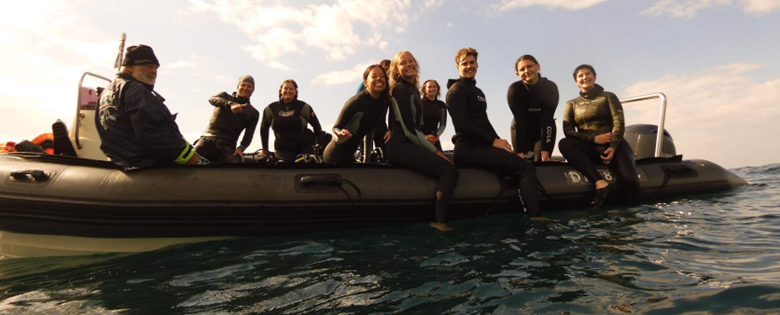
The Marine Biology internship was a dream opportunity for Meredith Bell, a senior majoring in Zoology and a passionate scuba diver for more than half her life. Throughout the internship, she immersed herself in data collection, conservation monitoring and species identification, and even earned her adventure-free diving certification. She also focused on shark conservation, an area she hopes to further engage in. Yet, the unique opportunity to connect with her fellow interns and local community members was perhaps most impactful for Bell, creating an unexpected sense of belonging that complemented her professional journey and personal growth.
“I think my entire life had been molding me into the perfect resident of Sodwana Bay. I have never felt more at home in a place that was entirely foreign to me. I greatly appreciate the South African lifestyle in this little diving community, where you are awake only when the sun is awake and shoes are rarely required. Everyone treats the people around town as if they had loved them in lifetimes before. From their culture, I learned how important respect is for the Earth and the people around us. From the interns, I learned when you find your people, it does not matter where you come from or how long you’ve been together. From the program directors, I learned to live in the moment and take everything step by step, as daunting as it may seem. And I learned from the kids that amazement can be found in the littlest things.”
Did you find this article useful?
Discover more from PressNewsAgency
Subscribe to get the latest posts sent to your email.