

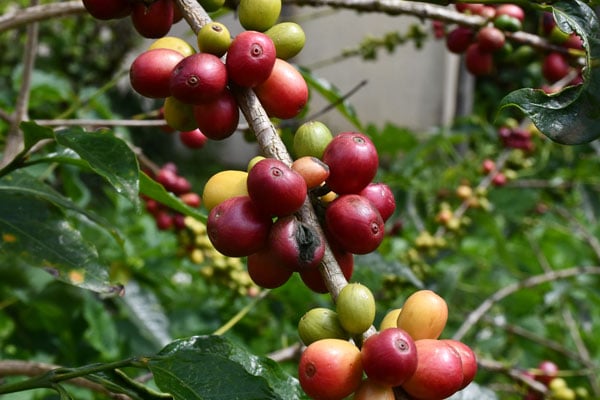
The European Union (EU) has provide you with a regulation that can see Ugandan espresso, cotton, cocoa, palm oil and soya grown in forested areas rejected, Monitor has learnt.
That is contained within the EU Deforestation Regulation (EUDR) 2023, launched final month, which goals at stopping the rampant deforestation which is impacting negatively on the local weather throughout the globe.
In accordance with the doc, between 1990 and 2008, EU consumption was chargeable for 10 per cent of deforestation worldwide; due to this fact, sustaining forests is important to decreasing greenhouse gasoline emissions and sustaining biodiversity.
The doc additional states that deforestation is central to EU worldwide commitments, together with the United Nations (UN) Conference on Organic Range, UN Framework Conference on Local weather Change, UN Sustainable Improvement Targets, New York Declaration of Forests and UN Strategic Plan for Forests.
An official from the Uganda Espresso Improvement Authority (UCDA) says the regulation states that “no product, be it maize, however particularly now for espresso, can be allowed within the EU until there’s proof that it’s deforestation-free and authorized.”
“This suggests that each one espresso that was planted after December 31, 2020 have to be confirmed that that subject was not deforested earlier than planting espresso,” famous UCDA Japanese Uganda supervisor Mike Maliro.
In accordance with Maliro, even when that espresso is included in a selected lot, the EU has mandate to know if it was planted in a deforested space, and it will likely be rejected.
Deforestation”, in response to the EUDR, is a forest that has been transformed to agricultural use, whether or not human-induced or not after December 31, 2020, or the plot of land is just not a “forest”, the place greater than 50 per cent of the land as at December 31, 2020 was used for agricultural manufacturing.
“Authorized” alternatively means the merchandise have to be produced in keeping with the related legal guidelines of the nation of manufacturing.
Subsequently, Maliro says Uganda is ready to adjust to the EU laws with UCDA now registering espresso farmers throughout the nation, together with their espresso fields.
“GeoMaps are being generated with coordinates to point out how large one’s espresso farm is, what is anticipated from the sphere and so forth. So, there isn’t any approach you may deceive,” he additional defined final week.
Talking to Monitor, Maliro added that the EU is supporting the nation to verify we register all espresso farmers throughout the nation so that when registered, the customer is ready to know and hint the place that espresso is coming from, even in a selected batch.
Maliro says 60 per cent of Ugandan espresso goes to the EU along with america, Sudan and West Africa.
“Because the bulk goes to the EU, we have now to abide by the regulation or lose market and our farmers could have nowhere to promote their espresso, implying a value drop,” Maliro noticed final week.
Requested how a lot income Uganda stands to lose, Maliro says: “For instance, we’re exporting about eight million luggage; so, what’s 60 per cent of eight million luggage? It’s some huge cash.
Discover more from PressNewsAgency
Subscribe to get the latest posts sent to your email.