US Secretary of State Mike Pompeo has visited Denmark a year after a diplomatic spat between the United States and the Nordic country over President Donald Trump’s offer to buy Greenland.
Pompeo met his Danish counterpart Jeppe Kofod and the country’s prime minister, Mette Frederiksen, in Copenhagen on Wednesday along with foreign affairs representatives for Greenland and the Faroe Islands, also a Danish autonomous territory.
In Kofod’s words, Denmark considers the US its “absolutely closest ally” and has contributed troops to NATO missions in Afghanistan, Iraq and Libya.
But relations hit some turbulence in August 2019 when Trump floated the idea of the US buying Greenland, an Arctic territory covering more than two million square kilometres (772,204 square miles).
Frederiksen called the proposal “absurd”, leading Trump to cancel a planned visit to Copenhagen over the “nasty” tone of the response.
While the offer was the subject of some ridicule, analysts say it was also indicative of the US’s renewed strategic interest in the Arctic region, which had subsided somewhat after the end of the Cold War.
A few phone calls between the countries have since eased the tensions, and Greenland officials have said they want to put the affair behind them.
“What we said in the past and what we do today are two different things. And what matters is what we do and what we say today,” Greenland foreign affairs representative Steen Lynge told reporters on Tuesday.
The US reopened a consulate in Greenland’s capital Nuuk last month, with approval from Copenhagen, and provided a $12.1m aid package in April.
Greenland is also home to another strategic US asset – the Thule Air Base, which is the US Air Force’s northernmost base.
Russia, China factor
Leading up to the visit a statement from the US Department of State highlighted the importance of a partnership in the Arctic, “particularly as we see increased activity in the region from Russia and the People’s Republic of China”.
But there is another bone of contention: The Nord Stream 2 gas pipeline being built between Russia and Germany.
The US strongly opposes the pipeline, which runs through the Baltic, crossing Danish waters, saying it risks increasing the dependence of NATO countries on Russian gas.
It imposed sanctions on companies working on the project late last year – a move strongly opposed by the European Union – and has recently threatened more.
Denmark was the last country to approve the pipeline, holding up the unveiling by several months, before finally providing the green light in October 2019.
Copenhagen denied any foreign pressure over the issue, but a diplomatic source told the AFP news agency the small Nordic country has faced great difficulty in balancing the interests of its two main allies, the US and Germany.
Researchers at the Carnegie Mellon University demonstrated how robots equipped with “common sense†will be able to navigate more easily, thanks to understanding their environment and recognising the context of objects.
Common sense for robots: A new way to navigate
The CMU research team partnered with Facebook AI Research (RAIR) to design a semantic navigation system, or SemExp system, that utilises artificial intelligence (AI) and machine learning to train robots.
To be clear, this is more complex simple superficial traits and involves more than simply teaching a robot the difference between a chair and a plate.
Instead, researchers want robots to distinguish the difference between, say, an end table and kitchen table to the extent that it will be able to extrapolate in which rooms the different tables are located.
Understanding the context of objects
A fridge is pretty stock standard in this scenario as it is usually restricting to a single room, ie, the kitchen. But by adding “common sense†to the equation, the robot will be able to understand the context of a kitchen table when compared to an end table.
The robot needs to extrapolate data to determine where it needs to go. Machine Learning PhD student Devendra S. Chaplot explains:
“Common sense says that if you’re looking for a refrigerator, you’d better go to the kitchen. Classical robotic navigation systems, by contrast, explore a space by building a map showing obstacles. The robot eventually gets to where it needs to go, but the route can be circuitous.â€
Watch: Common sense guides robots
In essence, a robot travelling from point A to point B will get there faster if it understands that point A is an end table in the lounge and point B is a kitchen table.
Thus, the basis of the semantic navigation system is to ensure the robot knows where it needs to go, even if it is in an unfamiliar place, in the same way a person would apply common sense to navigate around a home.
The semantic navigation system uses machine learning to enable the robot to “think†strategically about how to search for somethingâ€, according to Chaplot.
Interaction
According to the research team, previous attempts to utilise machine learning to improve a navigation system, failed because robots would memorise objects and their locations, without understanding the context.
Chaplot and the research team found a way around that problem by equipping the SemExp with a modular system with semantic insights. This allowed the robot to determine the best of course of action for finding a specific object.
“Once you decide where to go, you ca just use classical planning to get you thereâ€, Chaplot said. The modular approach proved to be efficient
In the long run, semantic navigation will also make it easier for humans to interact with robots. We’d be able to tell a robot to fetch a mug from the kitchen table or direct it to a specific door.â€
An Alliance MLA has urged the Public Health Agency (PHA) to reveal full details after 16 Covid-19 clusters were identified in Northern Ireland.
The Irish News has reported that 16 clusters linked to 133 positive cases of the virus have been identified through contact tracing since May 24.
Alliance health spokesperson Paula Bradshaw said “the nature of those clusters must be revealed”.
Earlier this month a cluster of Covid-19 cases was identified in Limavady, believed to be linked to a house party were a karaoke microphone was passed around.
The PHA has confirmed that another cluster has been identified in Ballymena and they are “monitoring” developments.
A spokesperson said the PHA is “aware of a number of cases in the Ballymena area that may be associated with a cluster”.
A cluster is defined as two or more cases among Covid-19 deriving from the same place with the onset of the illness within 14 days.
Multiple cases of Covid-19 in a single household is not classed as an outbreak.
Ms Bradshaw said she had asked questions about outbreaks in particular locations, but had been told “these were just matters of increased transmission”.
The South Belfast MLA, who earlier this week cancelled a family holiday to Italy after confusion around travel guidance, said it was important to identify what was being learned from contact tracing.
“Now it turns out that the recently publicised case near Limavady is one of sixteen since 22 May. The issue is we have not been informed about the nature of these clusters and, particularly, how they originated,” Ms Bradshaw said.
“A public health emergency needs public support and therefore good public information. That means the public must be fully informed about the types of behaviour which have proven particularly dangerous in terms of leading to super-spreading events.”
The Alliance MLA urged Health Minister Robin Swann to “ensure the Public Health Agency publishes information about the nature of each cluster and what we can learn from it”.
A PHA spokesperson told the Irish News that they did not intend to comment on individual cases.
“As with all cases of Covid-19, the PHA will monitor the situation, look for trends and linked cases and where we need to advise or inform the public of any increased risk to public health we will do so in a timely manner,” the spokesperson said.
“We will not comment on individual cases as this could lead to people being identified and deter others with symptoms coming forward to be tested. We would ask everyone to be mindful of this risk.”
The PHA and the Department of Health has been contacted in relation to this story.
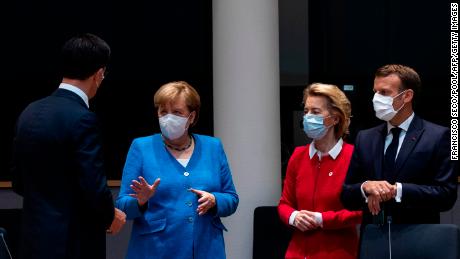
The package, agreed in the early hours of Tuesday morning after four days of talks, comprises the $1.3 trillion seven-year EU budget plus a special $858 billion emergency package. It’s designed to help the bloc recover from the Covid-19 pandemic as one, rather than abandoning poorer countries to their fate as wealthier nations surged back.
Getting all 27 EU states onside for a controversial package over four days of hard negotiating was undoubtedly a huge success. But as the bubbles from the champagne breakfasts evaporate, it will become impossible to ignore the fact that the union has agreed a compromise today that could create massive headaches later.
In recent years, Europe has been forced to acknowledge that the union faces an existential crisis, as some member states backslide on democratic norms. The two most egregious offenders in the eyes of the EU are Hungary and Poland, who in recent years have restricted press freedoms, cracked down on critics, and eroded judicial independence.
The emergency fund, first proposed by French President Emmanuel Macron and German Chancellor Angela Merkel in May, had always been controversial, as the monies would be raised against mutualized EU debt then distributed as a mixture of loans and grants.
Despite the controversy, it was clear to most member states that some kind of EU-level Covid response was inevitable. This created the opportunity to use these funds as an incentive to pull nations like Poland and Hungary back from the brink.
The EU has historically struggled when it comes to bringing delinquent members to heel. The much-discussed Article 7 of the EU’s Lisbon Treaty — which provides a mechanism for sanctioning member states by revoking their voting rights — has always been flawed. The process is cumbersome and ultimately requires unanimous action from all other member states to punish an offending one, which was never likely to happen. There have been active discussions in Brussels since 2018 to creating some kind of external mechanism outside of the treaty, to make the process more effective.
Tuesday’s agreement refers to such a mechanism. But critics feel it does not go far enough: An earlier version of the agreement published on Monday evening contained stronger language than the final document. Instead of a direct, easy way to withhold funds from countries offending member states, officials in Brussels are left with a fudge, contestable and open to interpretation. The only clear line on rule of law in the final document reads: “The European Council underlines the importance of the protection of the Union’s financial interests. The European Council underlines the importance of the respect of the rule of law.”
Some felt the final text had been severely watered down. “The original text was much more promising. [But] it seems that the Hungarian government was in a very good negotiating position,” says Petra Bard, Visiting Professor at the Central European University. “They wouldn’t have minded the whole deal being delayed for another couple of months. That meant other member states had little choice but to agree this vaguer wording that can be interpreted in many different ways.”
This result was probably always inevitable. This EU summit has been described as the most bitterly divided in recent memory.
So, the Tuesday morning fudge didn’t surprise Brussels observers. “The EU has always been reluctant to act when there is a democratic backslide,” says Daniel Keleman, Jean Monnet Chair in European Union Politics at Rutgers University. “They have previously hidden behind the fact that Article 7 doesn’t work and that they don’t have the right toolkit, so try and create new mechanisms. The problem with this new agreement is any mechanism Hungary and Poland will vote for will be so watered down and unenforceable in reality.”
This could mean that in getting this initial agreement, the EU has put out one blazing house fire while overlooking embers further down the street.
“People often forget that the EU isn’t a state in itself with its own powers to enforce laws. The EU’s legal architecture holds the whole thing together in some respects. If member states ignore ECJ rulings, threaten judges who implement EU law, it doesn’t just threaten democracy; it threatens undermining the whole union,” says Keleman.
Ronan McCrea, professor of European Law at University College, London, agrees that this presents a fundamental threat to the integrity of the whole union. “The EU’s bureaucracy is really small compared to that of a local English council. This means the EU relies on national judges and civil servants to implement EU law in their own countries.”
Earlier this year, Poland passed legislation that permitted the government to discipline judges who made rulings that the government disagreed with. “In any European democracy, judicial independence is crucial. However, if judges fear they are going to be disciplined for ruling against their government, how can they independently stand by EU law,” says McCrea.
Keleman goes further: “If judges are in the pocket of the government, how can another EU state extradite a criminal to a fellow member state? They cannot guarantee that person will receive a fair trial, especially in countries where political dissent is being cracked down on.”
While Hungary and Poland might provide much of the focus of concern, they are far from the only EU member states that have flouted some of the EU’s core pinciples. And as Keleman points out, “failing to address this kind of backslide encourages its spread.” And the further it spreads, the more leaders who are happy to play loose with democracy end up in prominent positions.
However much leaders in Brussels were toasting European unity on Tuesday morning, it is simply a fact that leaders with these instincts are becoming more assertive at EU-level. And as Hungary proved, they are getting good at playing politics in Brussels.
“Their goal now is to wield influence within the EU while picking up EU money to run their regimes with it,” says Keleman. The bitter reality for those who most value the EU is that those who seek to twist its values no longer seek to run from it, but to run the show.
Citing the yet to be stabilised infection curve and the Covid-19 caseload in economically key states, Singaporean brokerage DBS on Wednesday forecast deeper distress for the country which will lead to a 6 per cent growth contraction in FY21.
In its earlier forecast, the brokerage had penciled in a minus 4.8 per cent growth for the current fiscal.
According to the report, just 7 per cent of the districts in economically key states of Maharashtra, Tamil Nadu and Gujarat, accounting for 30.5 per cent of the national economic output, and in Karnataka and Andhra Pradesh account for as much as 70 per cent of the caseload.
This will prolong the recovery and the pandemic is set to take a deeper economic bite, it said.
The virus infections have crossed 1.15 million in the country while the death due to the same are close to 29,000 now, making the country the third worst affected by the pandemic after the US with close to 3.9 million infections and Brazil with nearly 2.2 million cases.
“We temper growth forecasts to minus 6 per cent for FY21 due to the prolonged sub-normal reopening as the country is yet to stabilize the infection curve and the pandemic is going to take a deeper economic bite,” DBS economist Radhika Rao said in a note.
The yet to be stabilised infection curve reflects a deeper double-digit contraction in Q1 of FY21 and a shallower pickup in Q2 and a return to growth in Q3, she added.
“Our granular analysis shows that about 7 per cent of the districts account for 70 per cent of the total infection tally in economically key states like Maharashtra (14 per cent of national GDP), Tamil Nadu (8.5 per cent), Gujarat (8 per cent), and Karnataka and Andhra contributing significantly to the national economic output,” she said.
On top of this, localised lockdowns continue even today with Bihar and cities like Pune and Bengaluru still in lockdowns till July-end.
Domestic flights are also selectively restricted by some states and if more states go down this path, this may pose renewed supply chain disruptions as well as uncertainty for manufacturers, including automakers and electronics firms, warned the report.
On recovery, Rao said much depends on the extent to which rural demand and farm output, which is forecast to be at 2 per cent in FY21, will act as counter-balancing buffer for a slump in non-farm output.
She also expects another round of fiscal support package/stimulus in September/October, when the economy is fully opened.
The depth and permanency of the growth shock will also dictate when an upturn in the growth cycle can take root, she added.
Priyanka Chopra is set to celebrate 20 years in the entertainment industry. On July 22, she invited her fans to share 20 monumental moments in her career with her with the hashtag #20in2020.
“It’s time for a celebration… 2020 marks my 20 years in the entertainment industry! What?! How did that even happen? You all have been by my side throughout this journey and your loyalty and support means the world to me! Join me as I take this trip down memory lane and celebrate,†she captioned her video.
Earlier this week, she celebrated her 38th birthday. “Just want to take a second to thank every single person who took the time to wish me a happy birthday. Your thoughtfulness was so heartwarming and truly made the day that much more special. Thank you, thank you! Lots of love to you all,†she wrote on social media thanking everyone for making her day special.
Priyanka Chopra was named Miss World in November 2000. This year, she will complete 20 years since she won the pageant.
On the work front, Priyanka Chopra has inked a two-year multimillion first-look TV deal with Amazon Studios. She has two Netflix productions in the pipeline – We Can Be Heroes and The White Tiger. She is also working on a wedding comedy with Mindy Kaling and biopic on Ma Anand Sheela. Besides these projects, she will star in Keanu Reeves’ The Matrix 4.
A protest called for by the family of Daphne Caruana Galizia outside police headquarters in Valletta in 2019 | Andreas Solaro/AFP via Getty Images
Melvin Theuma was in midst of court testimony against prominent businessman Yorgen Fenech.
Melvin Theuma, the self-confessed middleman in the murder of Maltese journalist Daphne Caruana Galizia, is in a stable condition after being discovered at home with knife wounds to his neck and torso Tuesday night, police said Wednesday.
Theuma told authorities that his injuries were “his own doing and nobody else was there,” Police Commissioner Angelo Gafà said at a press conference, according to Malta Today.
Prior to the incident, Theuma had spent Tuesday in court testifying at a so-called compilation of evidence against prominent businessman Yorgen Fenech, who is accused of being the mastermind behind the 2017 car bombing that killed Caruana Galizia, a journalist who investigated corruption in the highest echelons of Maltese government and society. Theuma was due to return to court on Wednesday to continue testifying.
Gafà said Maltese police had collected evidence for investigation into Tuesday’s incident, and would continue to work alongside the EU’s law enforcement agency Europol.
Fenech was arrested in November 2019 on board his luxury yacht and was later charged with complicity in Caruana Galizia’s murder. The arrest came after Malta’s then-Prime Minister Joseph Muscat offered to pardon Theuma in exchange for his testimony. Fenech denies the allegations.
Muscat was forced to step down amid a backlash over his handling of the Caruana Galizia case.
Before Covid-19, thoughts of the future for Bristol’s Bottle Yard involved lasers and LEDs.How would they incorporate the matter transporter for Crystal Maze contestants to “beam down†to different zones, or the computer-controlled mechanism that makes the set turn? And could they accommodate yet more of the big productions, from Poldark to The Pale Horse, jostling for time at the well-equipped West Country facility?
“We were booming, hosting 10 to 12 productions per year with a full order book until the end of 2021,†says Fiona Francombe, who founded the council-owned studios a decade ago in almost three hectares (seven acres) of Whitchurch warehouses where Casualty was previously filmed, and will soon move to the Bristol Old Vic theatre school as its chief executive and principal. Since then, this quiet corner of south Bristol has been bathed in Hollywood lustre, courtesy of Dennis Quaid and Richard Dormer working there on the Arctic western Fortitude, and blessed with Bafta-winning shows including Broadchurch and The Lost Honour of Christopher Jefferies.
Rita Tushingham, Kathy Kiera Clarke and Sheila Atim in The Pale Horse, made at Bottle Yard studios. Photograph: Ben Blackall/ BBC
When the pandemic hit, thoughts of the future became a lot less fun. “Lights went off, doors were locked, that was it,†says Francombe, whose husband – a production designer on the Sky series Riviera– only just arrived home in time after filming wrapped in Argentina.
After months of uncertainty, production in Bristol has just started up again. However, negotiating the hazardous “new normal†has meant complying with reams of guidance from the British Film Commission, which outline Covid-19-secure measures, ranging from open-air rehearsals to putting coronavirus liaison officers in place.
Needless to say, there’ll be no more morning dips in The Crystal Maze’s 18,000-litre (4,000-gallon) heated water tank, and no sharing of makeup brushes or cutlery, and no communal buffet-style catering. On a Thursday afternoon, everyone’s mucking in.“We’re on all fours drawing dots on floors, endlessly laminating [signage], having in-depth conversations about sanitiser, hooting over how glamorous TV is,†says Francombe.
‘We were booming’ … Bottle Yard founder Fiona Francombe. Photograph: BBC
With supply-chain businesses suffering, it’s encouraging to see cameras being delivered again, taxis coming and going. “It’s the ripple effect, the money we push out into local economy.â€
CBeebies seriesAndy’s Aquatic Adventures was first back at the studios, albeit with a reduced but highly experienced crew. The show incurred minimal extra costs because of the delay and stripping back meant the camera operator doubled up as his own assistant. BBC Studios Natural History Unit series producer Mark Jones served as director, assistant director and script supervisor. It made him appreciate the team he couldn’t bring back all the more, he says.
Working with the presenter Andy Day has been a constant giggle. “His high-spirited antics are motivation for all,†says Jones. With an ample mane that had grown considerably, Andy was concerned for his on-screen appearance. “It took practice to apply his own makeup, using a video tutorial. We pointed out if he needed concealer or should tuck a lock of hair behind his ear, but we let him dress himself in the morning!â€
There has been no huddling round for read-throughs and stunt demosat Bottle Yard unless there is PPE. Output is viewed on individual monitors. “It felt strange at the beginning – like a scene from ET,†says Jones.
Gone is the greenroom, but there’s 25 metres (80ft) of greenscreen, which is used to place the studio-bound presenter over footage from Blue Planet II or Seven Worlds, One Planet, which can then be edited remotely. The Natural History Unit’s children’s department hasn’t slowed down – rather, it has found fresh content opportunities.
Shows based on entertainment formats can put coronavirus-safe systems in place, although there’s no chance the producer RDF will get contestants over for the US version of The Crystal Maze, scheduled to film its second series at Bottle Yard studios but now postponed. While crew can wear masks all day, actors can’t, and it’s easy to see how having to isolate before going on set or rent a house rather than being put up in a hotel could take the fun out of applying to appear in a gameshow. As for drama, Covid-19 poses problems for commissioners of anything but the most up-to-date shows.
“There was a period drama due with us, but unlike the soaps, they can’t refer to the virus or have cast attempt [to create] the hairstyles,†says Francombe. “It would rely on wigs and intricate costumes. It’s all surmountable but more convoluted in terms of organisation and practicalities. Large dance sequences with a lot of supporting artistes wouldn’t be possible.â€
Working through the pandemic is easier for studios than for location shoots, however, as they offer controlled spaces. They may host half the shows that they normally would, owing to time-consuming procedures, but occupancy remains the same at present. “The Bottle Yard has maintained its income, which goes into council coffers to support struggling servicesâ€, Francombe explains. “Location filming, by nature, is slower so it’s all coming off the road; people are only going out for key shots. The last thing the inhabitants of Bristol need is more disruption.â€
Everyone wants more studio space and time, including a Netflix title which has just booked in. Thankfully the vast hangars have the floor space – 28,000 sq metres of it, 60% of which is studio space.
Nickie Sault, producer of Shane Meadows’s The Virtues and the forthcoming Stephen Merchant thriller The Offenders, based on his parents’ work as community service officers, is navigating the changes from the other side.
Twelve days into filming in March, she and her team had to stop production and Sault found herself locked down in vineyard accommodation in a village outside Bristol. Filming is now set to resume in November, but Sault is unsure whether the big US actor who has signed up will still be available. “The floodgates will open and we’ll all be vying for the same cast,†she says.
Happier days … pre-pandemic sets at Bottle Yard. Photograph: Photographer: Justin Yockney/ BBC
The crew have taken a course on coronavirus from the industry body ScreenSkills, so they know what’s expected on set. “Stephen passed with flying colours,†says Sault. “I think he likes isolation, but film is all type-A personalities – we cannot wait to get back. To not work in this industry for months is terrifying.â€
In bubbles, cast and crew will only interact with members of their departments. “If we have a regional lockdown we’re in trouble because this is very Bristol-centric – it’s not something we could just shoot in Birminghamâ€, she adds. “We’ll learn from what’s happening around us and compromise, but not to the show’s detriment, for example using visual effects for crowd replicationâ€.
How much can producers ask of actors? Working with masked crew 2 metres away is strange enough. “They’ve got to act through that awkwardness,†says Francombe. “They want to throw caution to the wind but the advice is to be careful. It’s an internal tussle.â€
Abandoning ship on The Offenders hit hard financially. “[When you] restart you have to go into prep again because you’ll have lost cast, locations – you’re paying for time already paid for,†says Sault. “There are endless calls about how we can take from Peter to pay Paul. Our accountant has miracles to work on the budget.â€
The cost implications for up-and-coming creatives without a bankable reputations like Merchant’s are prohibitive.“Imagine filming inside a council estate flat – it’s security, time to clean, double shooting time. But those costs are nominal alongside building that set in a studio.†And, she agrees, especially when shooting might have to stop halfway through.
Aside from Covid-19 caution, Sault believes the new normal should reflect diversity, an issue that was already in need of action before Black Lives Matter made the news. As well as reaching out to the local community in a bid to diversify the crew, the show’s script has been rewritten to incorporate the toppling of the city’s Edward Colston statue.
The future is uncertain – TV was already risk-averse, and productions will be halted at any sign of a resurgence in infection. However, Francombe believes creativity will out, in whatever guise. “The viewer won’t know a scene had to be relocated from a beautiful mansion; the main thing is the storytelling is as rich as it’s always been,†she says. “This could really push visual effects on.â€
Sault takes a similar view. “As long as you have an amazing script, two actors in one room can transport you. Some people will do something special within this new framework.â€
Could she mean a certain Shane Meadows? They are speaking daily. “We’ve discussed doing something outside the box … It boils down to performance. If you believe the people in front of you, you forgive almost anything else.â€
With the presidential election looming and the coronavirus pandemic raging across the country, polls show strong support for allowing Americans to vote by mail or through drop-off boxes rather than go to the polls in person.
But there have been major delays in reporting results in several states holding primaries this year because of pandemic-related spikes in mailed-in ballots and state laws that don’t allow processing of ballots to begin before Election Day. Pennsylvania took nearly two weeks to report its primary results, and New York, which held its primary June 23, has yet to declare winners in several races.
Voting experts say that eliminating such lengthy delays is essential to maintaining the public’s trust in the integrity of elections and that states still have time to change their laws before Election Day, Nov. 3.
“When voters have to wait so long for results, it erodes trust in the process and leaves room for partisan bad actors to dispute the will of the people,” said Amber McReynolds, CEO of the National Vote at Home Institute, a nonprofit organization.
Opposition to processing ballots early lies in concern that results could be released early and unfairly influence the outcome of the election, say experts, who say such fears are unfounded because there are numerous protocols to prevent premature reporting.
Michigan Senate Majority Leader Mike Shirkey, a Republican who opposed a bill in the Legislature that would have allowed early processing, told reporters in February that he thought it could set a “dangerous precedent” because it would allow the opportunity for early counting.
Ballot processing, experts say, is not the same as counting or tabulating a ballot.
Let our news meet your inbox. The news and stories that matters, delivered weekday mornings.
“Allowing processing in advance means signature verification, the prep for counting by opening envelopes and flattening ballots to run through the scanning machine, prepping for the scanning, but they don’t tally nor do they produce results,” McReynolds said. “But they at least do all the work to make that happen, and that is really critical to getting timely results.”
Signature verification and ballot tracking could also help ensure that ballots are filled out correctly. If that were allowed ahead of Election Day, elections officials would be able to notify voters if something needed to be fixed on their ballots to ensure they are counted, rather than rejected — which was a major issue in several state primaries.
Processing ballots before Election Day would make “a significant difference,” said Wendy Underhill, director of the elections team of the National Conference of State Legislatures. “Americans are used to getting preliminary unofficial election results on Election Night. But depending on the processing plans in place, it could be days extra.”
State processing timelines were determined decades ago, Underhill said, in places where just 3 percent to 5 percent of votes were absentee ballots. Now, because of the pandemic, states are seeing a huge influx of interest in mail-in ballots, which can be returned in the mail or dropped off in person by Election Day.
About 75 percent of voters in Kentucky’s primary this year voted by mail, as did 50 percent in Pennsylvania. Both states widely offered the option to cast an absentee ballot without giving a reason for the first time.
The National Vote at Home Institute has been working with dozens of states to replicate successful mail-in ballot programs used in other states, rather than reinvent their election processes. McReynolds, a former director of elections in Denver, points to Colorado, where election officials begin processing ballots upon receipt, as the gold standard.
In Colorado, which had record turnout in its Democratic Senate primary this year, 99.3 percent of voters voted by mail or drop-off ballot boxes. More than half of the results were reported by the polls’ closing time, and the race was called less than an hour later — largely because of election officials’ ability to process ballots early.
Lawmakers in several states — including Ohio and battlegrounds Pennsylvania and Michigan — have introduced bills that would enable ballots to be processed before Nov. 3. Such early processing, advocates say, could prevent Election Day from becoming Election Week or Month if the presidential race is as close as it was in key states in 2016.
Pennsylvania and Michigan have the opportunity to alter their laws because their Legislatures meet year round. Many other states have shortened or altered their sessions because of the COVID-19 pandemic.
States could call special sessions to address ballot processing or enact rules by executive order. Kentucky Gov. Andy Beshear, a Democrat, issued an executive order during the July primary to allow earlier processing, but it applied only to that election. For the general election, the state has begun forming a bipartisan group that will help present recommendations to the secretary of state and the governor, said Jared Dearing, executive director of the State Board of Elections.
McReynolds said processing ballots early could save money.
“By not allowing states more days ahead of time, it’s going to cost them a lot more money to process those ballots on and post-Election Day,” McReynolds said, pointing to the potential need to hire more workers to process the expected unprecedented volume of mail-in ballots.
“No matter how you slice it, administrative backlog costs voters time and money,” she said.
Download the NBC News app for breaking news and politics
Congress allocated $400 million to elections in the original coronavirus relief bill, which the Brennan Center for Justice at New York University Law School deemed insufficient — arguing that $4 billion would be needed in a future relief bill, especially after representatives from states like Iowa, Georgia and Kentucky testified at a U.S. Election Assistance Commission hearing in early July that they had already used a sizable percentage of the money during their primaries.
The House-passed HEROES Act includes $3.6 billion for states for “contingency planning, preparation, and resilience of elections for Federal office” with the expectation that they will use a large part for mail-in voting, while Senate Republicans and the White House are still negotiating the next coronavirus relief bill they hope to bring to the floor.
We use cookies on our website to give you the most relevant experience by remembering your preferences and repeat visits. By clicking “Accept”, you consent to the use of ALL the cookies.
This website uses cookies to improve your experience while you navigate through the website. Out of these, the cookies that are categorized as necessary are stored on your browser as they are essential for the working of basic functionalities of the website. We also use third-party cookies that help us analyze and understand how you use this website. These cookies will be stored in your browser only with your consent. You also have the option to opt-out of these cookies. But opting out of some of these cookies may affect your browsing experience.
Necessary cookies are absolutely essential for the website to function properly. These cookies ensure basic functionalities and security features of the website, anonymously.
Cookie
Duration
Description
cookielawinfo-checbox-analytics
11 months
This cookie is set by GDPR Cookie Consent plugin. The cookie is used to store the user consent for the cookies in the category "Analytics".
cookielawinfo-checbox-functional
11 months
The cookie is set by GDPR cookie consent to record the user consent for the cookies in the category "Functional".
cookielawinfo-checbox-others
11 months
This cookie is set by GDPR Cookie Consent plugin. The cookie is used to store the user consent for the cookies in the category "Other.
cookielawinfo-checkbox-necessary
11 months
This cookie is set by GDPR Cookie Consent plugin. The cookies is used to store the user consent for the cookies in the category "Necessary".
cookielawinfo-checkbox-performance
11 months
This cookie is set by GDPR Cookie Consent plugin. The cookie is used to store the user consent for the cookies in the category "Performance".
viewed_cookie_policy
11 months
The cookie is set by the GDPR Cookie Consent plugin and is used to store whether or not user has consented to the use of cookies. It does not store any personal data.
Functional cookies help to perform certain functionalities like sharing the content of the website on social media platforms, collect feedbacks, and other third-party features.
Performance cookies are used to understand and analyze the key performance indexes of the website which helps in delivering a better user experience for the visitors.
Analytical cookies are used to understand how visitors interact with the website. These cookies help provide information on metrics the number of visitors, bounce rate, traffic source, etc.
Advertisement cookies are used to provide visitors with relevant ads and marketing campaigns. These cookies track visitors across websites and collect information to provide customized ads.