Thursday, April 30, 2026

Grubhub strikes deal to merge with European food delivery giant

Grubhub struck a deal Wednesday to merge with the European food delivery company Just Eat Takeaway after talks to join forces with Uber fell apart and competition mounts in the industry.

Grubhub, based in Chicago, agreed to merge with Just Eat Takeaway in a deal that gives Grubhub shares an implied value of $75.15, which amounts to an implied total equity value of $7.3 billion on a fully diluted basis.

“Combining the companies that started it all will mean that two trailblazing start-ups have become a clear global leader,” said Matt Maloney, CEO and founder of Grubhub, in a statement. “Supported by Just Eat Takeaway.com, we intend to accelerate our mission to be the fastest, best and most rewarding way to order food from your favourite local restaurants in North America and around the world.”

The deal comes after talks between Grubhub and Uber fell apart over concerns a merger between the food delivery and rideshare company would spur regulatory scrutiny. Several Democratic lawmakers expressed concerns over a deal that would merge two of the biggest food delivery companies.

Sens. Amy Klobuchar, D-Minn., Richard Blumenthal, D-Conn., Patrick Leahy, D-Vt., and Cory Booker, D-N.J., sent a letter to top antitrust officials last month urging them to investigate the proposed merger.

“Consumers should be able to look forward to a future in which online food delivery is more efficient, more innovative, and less expensive,” they said in the letter. “A merger of two of the three biggest rivals in an already concentrated market risks [deprives] consumers of that outcome by potentially eliminating competition between the existing market participants.”

The merger with Takeaway.com is unlikely to draw as much concern among antitrust officials because it brings Grubhub under the wing of a business that operates outside of the U.S.

This will be Takeaway.com’s second merger this year. In January, the Dutch company bought its British peer Just Eat in a $7.8 billion deal. The merged company now has leading positions in three of the world’s four largest profit pools for food delivery: the U.K., Germany and the Netherlands, Just Eat Takeaway.com said in a statement.

Matt Maloney, CEO and founder of Grubhub, will join the Just Eat Takeaway.com management board and will lead the its North American businesses. Grubhub’s two current directors will join Just Eat Takeaway.com’s supervisory board. The companies expect the transaction to be completed in the first quarter of 2021.

Source link

Economics, Dominated by White Men, Is Roiled by Black Lives Matter

0

The national protests seeking an end to systemic discrimination against black Americans have given new fuel to a racial reckoning in economics, a discipline dominated by white men despite decades of efforts to open greater opportunity for women and nonwhite men.

A growing chorus of economists is seeking to dislodge the editor of a top academic publication, the University of Chicago economist Harald Uhlig, after he criticized the Black Lives Matter organization on Twitter and equated its members with “flat earthers” over their embrace of calls to defund police departments.

Days earlier, the profession’s de facto governing body, the American Economic Association, sent a letter to its members supporting protesters and saying that “we have only begun to understand racism and its impact on our profession and our discipline.” A group of economists, mostly from outside academia, last week hosted an online fund-raising effort for the Sadie Collective, an organization that aims to bring more black women into the field.

Black economists say the events have brought some progress to a field that has long struggled with discrimination in its ranks — and with a refusal by many of its leaders to acknowledge discrimination in the country at large. But the profession remains nowhere close to a full-scale shift on racial issues: On Wednesday, the director of the White House National Economic Council, Larry Kudlow, told reporters, “I don’t believe there is systemic racism in the U.S.”

Black Americans are vastly underrepresented among economics students and professors, a wide range of data have shown. There are no black editors of the most prestigious economics journals. There are no black professors in the main economics department at Chicago, Mr. Uhlig’s employer, which is one of the most storied departments in the country.

In a survey of economists released by the American Economic Association last year, only 14 percent of black economists agreed with the statement that “people of my race/ethnicity are respected within the field.”

As protests against discrimination have grown in recent days, a conversation has erupted — often led by black economists — over how the lack of diversity has left the profession ill equipped for a moment where policymakers are seeking ideas on how to combat racial inequality in policing, employment and other areas.

“Hopefully, this moment will cause economists to reflect and rethink how we study racial disparities,” the Howard University economist William Spriggs wrote to colleagues in an open letter that was posted this week on the website of the Federal Reserve Bank of Minneapolis.

“Trapped in the dominant conversation, far too often African American economists find themselves having to prove that African Americans are equal,” he continued. “We find ourselves, as so often happens in these ugly police cases, having to prove that acts of discrimination are exactly that — discrimination.”

Mr. Uhlig’s Twitter posts criticized demonstrators for not coordinating recent protests with law enforcement, before singling out Black Lives Matter over calls to defund the police.

“Look: I understand, that some out there still wish to go and protest and say #defundpolice and all kinds of stuff, while you are still young and responsibility does not matter,” Mr. Uhlig wrote. “Enjoy! Express yourself! Just don’t break anything, ok? And be back by 8 pm.”

The posts drew a swift backlash, including criticism from several white colleagues at Chicago and a petition calling for him to resign his editorship of the Journal of Political Economy, considered one of five journals with an outsize role in the field.

Mr. Uhlig, a 59-year-old German citizen, also faced scrutiny over past writings on his blog — circulated on Twitter by the Slate journalist Jordan Weissmann — that criticize black protesters in the United States.

Those included a 2017 post in which he asked supporters of National Football League players kneeling to protest police brutality, “Would you defend football players waving the confederate flag and dressing in Ku Klux Klan garb during the playing of the national anthem?” Mr. Uhlig also wrote a letter to the editor of The New York Times in 2016, complaining about calls for greater diversity in the motion picture industry at the Academy Awards.

“This whole ‘diversity = more American blacks in Hollywood movies’ thing?” he wrote. “So so strange. Really.”

Janet L. Yellen, the former Federal Reserve chair, said in an email on Wednesday that “the tweets and blog posts by Harald Uhlig are extremely troubling” and that “it would be appropriate for the University of Chicago, which is the publisher of the Journal of Political Economy, to review Uhlig’s performance and suitability to continue as editor.”

Mr. Uhlig apologized on Tuesday evening for his Twitter posts. He said in an email interview on Tuesday night that his “flat earther” comparison “appears to have caused irritation” but disagreed with critics who say his comments “hurt and marginalize people of color and their allies in the economics profession; call into question his impartiality in assessing academic work on this and related topics; and damage the standing of the economics discipline in society.” The reference to the Klan, he said, was a case where “I chose an extreme example” to make a point about free speech.

“Discrimination and racism is wrong,” Mr. Uhlig wrote in an email. Later, he added: “I would love to have more black economists (or is it ‘Afro-American economists’?) among our undergraduate students, Ph.D. students and faculty. It is my impression that the good ones are highly sought after. We also have very few American Indians among our colleagues. We need to find good way to change these numbers.”

Some conservatives hailed Mr. Uhlig as a champion of free speech and a victim of “cancel culture” — although critics said they were not seeking his dismissal from his tenured professorship.

Critics, however, held up Mr. Uhlig as an example of the deeply embedded advantages of white economists, including nearly full control over the journals that determine, in their selections for publication, which economists receive acclaim, tenure and top jobs.

“This is a way in which potentially good ideas, potentially good contributors of ideas to the economics profession, have been thwarted because of a gatekeeper,” Lisa Cook, a Michigan State University economist and one of the profession’s few prominent black women, said in an interview.

Ms. Cook leads the American Economic Association’s Summer Training Program, a decades-old effort to recruit black and Latino students to the profession. She said students often asked her how she overcame discrimination in the field, and whether they would be welcome.

“They’re asking where does this racially hostile environment come from?” she said. “Why does this racial discrimination exist in the pinnacle of the social sciences?”

Economics has a history of discrimination and, in some cases, outright racism. George Stigler, a Nobel laureate and an early leader of the American Economic Association, criticized the civil rights movement in 1962 and wrote that African-Americans’ disadvantages in the labor market stemmed in part from their “inferiority as a worker.”

“Lacking education, lacking a tenacity of purpose, lacking a willingness to work hard, he will not be an object of employers’ competition,” he wrote.

Few scholars today would use such language. But the ideas persist: Economics journals are still filled with papers that emphasize differences in education, upbringing or even IQ rather than discrimination or structural barriers.

Damon Jones, an economist at the University of Chicago’s Harris School of Public Policy, says the lack of diversity in economics affects what is studied and how. “We study things that are related to race and racism all the time, but we are inclined to figure out what other explanations may be at play,” he said.


Source link

Gwyneth Paltrow, Hillary Clinton among white influencers sharing their platforms to amplify black voices

Gwyneth Paltrow, Kourtney Kardashian and Hillary Clinton are among a group of over 50 white women who handed their platforms to black influencers, activists, athletes and writers on Wednesday as part of the #ShareTheMicNow initiative aimed at amplifying the voices of black women.

The movement, announced on Tuesday, is a project co-created by Bozoma Saint John, Luvvie Ajayi Jones, Glennon Doyle and Stacey Bendet — all entrepreneurial women who work across different industries that rely heavily on digital spaces. Amid conversations surrounding the Black Lives Matter movement and racial injustice plaguing the country, they collectively decided to use those spaces to allow black women to tap into the power of the platforms that their white allies hold. In order to do so, each white woman involved in the project was paired with an influential black woman who would use the former’s Instagram account to share their own work, spread their message and to educate followers who aren’t their own of their experiences as a black woman in America. Naturally, the conversations taking place are powerful and emotional.

“I know I’m talking to a whole bunch of white people that have never seen me before and are probably like, ‘Who is this black girl and what is she talking about?’” Julee Wilson, beauty director at Cosmopolitan, shared on Alice + Olivia founder Bendet’s page. “But that’s what this #ShareTheMicNow initiative was all about.”

Through sharing her work as a storyteller in the beauty and fashion industries, Wilson was able to convey both her triumphs and tribulations. While sharing the mic, she even said, “I do fantasize about what my life would be like if I wasn’t a black woman in the spaces that I’m in. I don’t know. Maybe my life wouldn’t be great.”

Other black women shared similar sentiments.

Stephanie Thomas, a disability fashion stylist and the founder of Cur8able, spoke to her unique struggles in the fashion space while taking over Selma Blair’s Instagram. “I’m a solopreneur,” Thomas said, referring to the lack of support and resources she had to build her company. “I’m not trying to convince you that I’m valuable. I just want equity. I want access.”

Nikki Ogunnaike, GQ deputy fashion director, spoke from Arianna Huffington’s page to talk about her evolution in media and how it might look different from that of a white woman. Her sister, fellow journalist Lola Ogunnaike, joined Nikki to provide additional experience to that perspective. “It has never been that easy,” Lola shared. “To have that trust in my talent, in my ability, and to have that support.”

Across the board, many of the women are sharing their experiences from the perspective of being a pioneer in their field, or being a woman pushing for change in a world that’s not as perceptive to the work of black women. With many of the pairings, such as Goop CEO Paltrow and maternal health and birth activist Lathem Thomas, fall within common fields, the communities they’re working for and the issues they’re fighting to bring attention to is different.

The collaborations resulting from #ShareTheMic are taking place all day and night on Wednesday with a multitude of conversations, feed posts and resources to be shared. Below are the names and accounts of the influential women participating.

Read more from Yahoo Entertainment:


Source link

United Airlines Adds A Step To Check-In: Stating You Don’t Have COVID-19 Symptoms

0

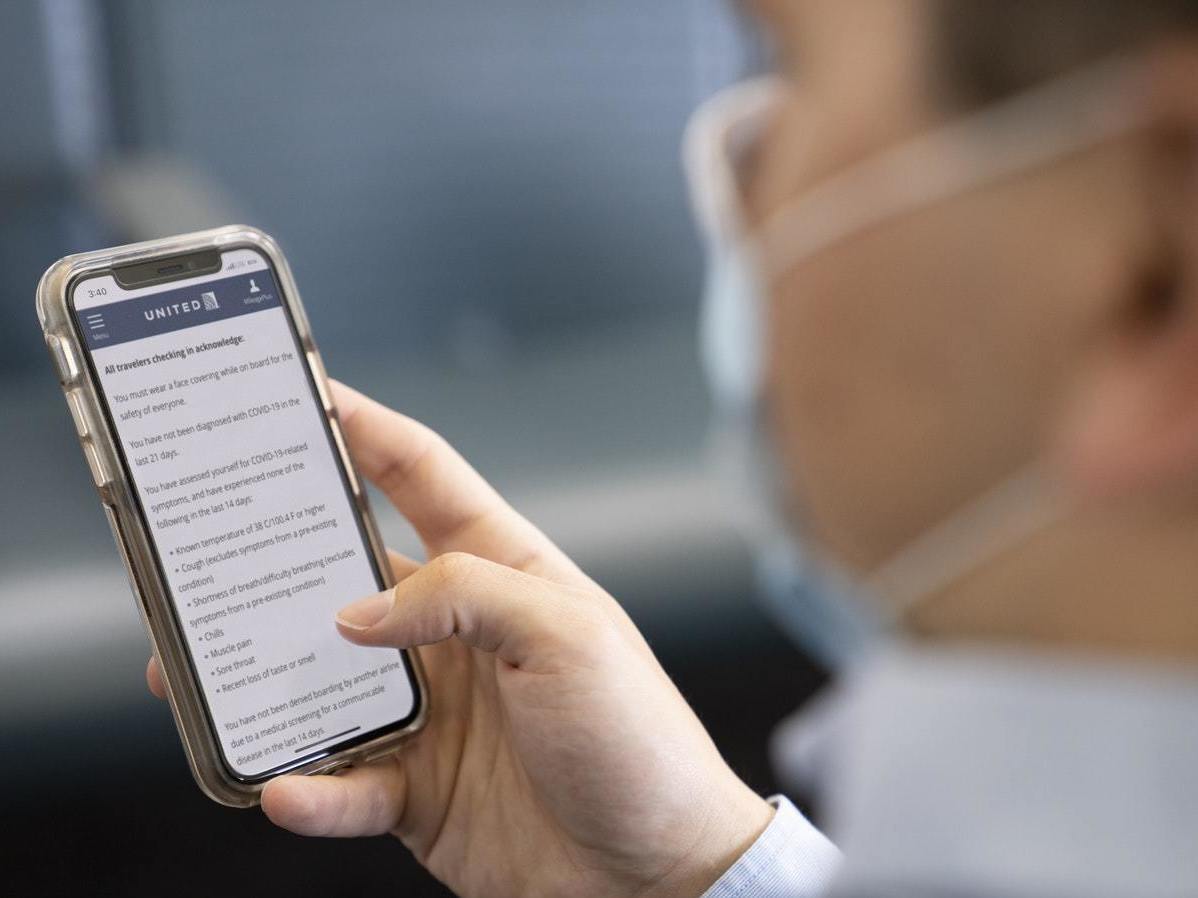
United Airlines will now require passengers to review a health assessment before boarding.

United Airlines


hide caption

toggle caption

United Airlines

United Airlines will now require passengers to review a health assessment before boarding.

United Airlines

United Airlines will now require passengers to complete a “health self-assessment” as part of its check-in process. It’s the latest effort by a U.S. airline to assure passengers that it’s safe to fly as the coronavirus pandemic continues.

The airline’s “Ready-to-Fly” checklist does not involve temperature checks or diagnostic testing for the virus. Instead, travelers must review the checklist when checking in online and click “Accept,” or confirm it verbally to a gate agent — similar to how passengers must affirm they’re not bringing explosives or banned materials on board.

Here’s what’s on United’s checklist before boarding:

  • A reminder you must wear a face mask while on board
  • A list of common COVID-19 symptoms, and a declaration that you have not experienced them in the last 14 days
  • You have not been denied boarding by another airline due to a medical screening in the last 14 days
  • You have not had close contact with someone who tested positive for COVID-19 in the last 14 days

“If anyone does not meet these criteria, we ask that you reschedule your trip,” it says, and directs you to rebook your flight.

United’s Corporate Medical Director Pat Baylis said in statement that the wellness checklist “sets clear guidelines on health requirements for our customers and helps minimize the risk of exposure during the travel experience.”

The airline says the checklist was developed according to guidance from the Cleveland Clinic, the Centers for Disease Control and Prevention and World Health Organization. The CDC says it’s not clear whether one type of travel is safer than another, but that travel in general increases your chances of getting and spreading COVID-19.

Here’s how the CDC summarizes the risks of air travel:

“Air travel requires spending time in security lines and airport terminals, which can bring you in close contact with other people and frequently touched surfaces. Most viruses and other germs do not spread easily on flights because of how air circulates and is filtered on airplanes. However, social distancing is difficult on crowded flights, and you may have to sit near others (within 6 feet), sometimes for hours. This may increase your risk for exposure to the virus that causes COVID-19.”

Since June 1, Frontier Airlines has been conducting temperature screenings on all passengers and crew members using touchless thermometers prior to boarding. Customers running a temperature of 100.4 degrees or higher are not permitted to fly. As we’ve reported previously, temperature screenings are an imperfect method – one large study in New York found that only 30% of people hospitalized for the virus had a fever.

The number of people flying in the U.S. cratered when the coronavirus pandemic took hold in March, and has remained low. On Tuesday, the number of flyers being screened at TSA checkpoints was less than 14% of what it was on the same weekday a year earlier.


Source link

United Airlines Adds A Step To Check-In: Stating You Don’t Have COVID-19 Symptoms

United Airlines will now require passengers to review a health assessment before boarding.

United Airlines


hide caption

toggle caption

United Airlines

United Airlines will now require passengers to review a health assessment before boarding.

United Airlines

United Airlines will now require passengers to complete a “health self-assessment” as part of its check-in process. It’s the latest effort by a U.S. airline to assure passengers that it’s safe to fly as the coronavirus pandemic continues.

The airline’s “Ready-to-Fly” checklist does not involve temperature checks or diagnostic testing for the virus. Instead, travelers must review the checklist when checking in online and click “Accept,” or confirm it verbally to a gate agent — similar to how passengers must affirm they’re not bringing explosives or banned materials on board.

Here’s what’s on United’s checklist before boarding:

  • A reminder you must wear a face mask while on board
  • A list of common COVID-19 symptoms, and a declaration that you have not experienced them in the last 14 days
  • You have not been denied boarding by another airline due to a medical screening in the last 14 days
  • You have not had close contact with someone who tested positive for COVID-19 in the last 14 days

“If anyone does not meet these criteria, we ask that you reschedule your trip,” it says, and directs you to rebook your flight.

United’s Corporate Medical Director Pat Baylis said in statement that the wellness checklist “sets clear guidelines on health requirements for our customers and helps minimize the risk of exposure during the travel experience.”

The airline says the checklist was developed according to guidance from the Cleveland Clinic, the Centers for Disease Control and Prevention and World Health Organization. The CDC says it’s not clear whether one type of travel is safer than another, but that travel in general increases your chances of getting and spreading COVID-19.

Here’s how the CDC summarizes the risks of air travel:

“Air travel requires spending time in security lines and airport terminals, which can bring you in close contact with other people and frequently touched surfaces. Most viruses and other germs do not spread easily on flights because of how air circulates and is filtered on airplanes. However, social distancing is difficult on crowded flights, and you may have to sit near others (within 6 feet), sometimes for hours. This may increase your risk for exposure to the virus that causes COVID-19.”

Since June 1, Frontier Airlines has been conducting temperature screenings on all passengers and crew members using touchless thermometers prior to boarding. Customers running a temperature of 100.4 degrees or higher are not permitted to fly. As we’ve reported previously, temperature screenings are an imperfect method – one large study in New York found that only 30% of people hospitalized for the virus had a fever.

The number of people flying in the U.S. cratered when the coronavirus pandemic took hold in March, and has remained low. On Tuesday, the number of flyers being screened at TSA checkpoints was less than 14% of what it was on the same weekday a year earlier.


Source link

Amazon Pauses Police Use of Its Facial Recognition Software

0

SEATTLE — Amazon said on Wednesday that it was putting a one-year pause on letting the police use its facial recognition tool, in a major sign of the growing concerns that the technology may lead to unfair treatment of African-Americans.

The technology giant did not explain its reasoning in its brief blog post about the change, but the move came amid the nationwide protests over racism and biased policing. Amazon’s technology had been criticized in the past for misidentifying people of color.

In its blog post, the company said it hoped the moratorium on its service, Rekognition, “might give Congress enough time to put in place appropriate rules” for the ethical use of facial recognition.

In the past, Amazon had said its tools were accurate but were improperly used by researchers.

On Monday, IBM said it would stop selling facial recognition products, and last year, the leading maker of police body cameras banned the use of facial recognition on its products at the recommendation of its independent ethics board.

Amazon introduced Rekognition in 2016 as a low-cost, “highly scalable” way to identify images, including people, in vast databases. Soon after, it began pitching the police on the tool to help investigations, and law enforcement agencies began adopting the technology.

In an interview run on the PBS show “Frontline” earlier this year, Andy Jassy, the chief executive of Amazon Web Services, said he did not think the company knew how many police departments were deploying the technology.

This is a developing story. Check back for updates.

Source link

Man taken to hospital after falling 30ft from cliff in Portstewart

0

A man has been taken to hospital after falling 30ft from a cliff at Portstewart.

t is understood the person fell a considerable distance at Portnahapple on the cliff path in the town.

Coastguard teams from Coleraine and Ballycastle, the ambulance service, the PSNI and Portrush RNLI went to the scene at 8.37pm after reports a man had fallen onto rocks.

An RNLI spokesman said: “On arrival on scene it was established that a young male had fallen approximately 30 feet onto rocks near Portnahapple.

“Dr Colm Watters, volunteer lifeboat crew member and consultant at Causeway Hospital Emergency department, was transferred from the all-weather lifeboat to the smaller inshore lifeboat and then ashore to assist the coastguard with the treatment of the casualty and their transferral to ambulance.”

Keith Gilmore, lifeboat operations manager at Portrush RNLI, said: “We had the opportunity to do some training with our Coastguard colleagues last year and this has paid off in terms of our joint working procedures.

“We are fortunate to have a volunteer with Colm’s expertise on crew and this was invaluable in this incident. We wish the casualty well and hope he has a speedy recovery.”

A Coleraine Coastguard spokesperson said: “Coleraine and Ballycastle Coastguard teams were tasked to reports of a person fallen from a cliff at Portstewart.

“Casualty had sustained lower leg injury. With assistance from Portrush RNLI, the casualty was extracted using coastguard water rescue equipment and handed into care of NIAS.

“The PSNI helped to keep back the large crowd of onlookers who were gathering. Great teamwork by all the emergency services.”

Belfast Telegraph

Source link

‘Life-saving’ cancer treatment to be made available at all cancer centres in England

0

A key cancer treatment which could save lives is going to be made available to all cancer centres in England in the next year.

The NHS announcement is in response to an open letter signed by more than 200 cancer experts warning the treatment was being “rationed”, as reported exclusively by Sky News last month.

The experts had said failure to act would be a “tragic lost opportunity”.

Image:
A 4D scan of a tumour with the radiotherapy dose plan. Pic: James Cook University Hospital/Jim Daniel

The stereotactic ablative radiotherapy (SABR) treatment is more precise and uses a higher dose than standard radiotherapy – cutting down the number of hospital visits vulnerable cancer patients will need to make.

NHS chief executive Sir Simon Stevens says the innovative treatment will be “potentially life-saving”.

The treatment is currently used by around half of cancer centres and was going to be fully rolled out by 2022, but experts warned urgent action needed to be taken to help deal with a backlog of cancer cases as a result of the coronavirus pandemic.

Thousands of cancer patients have had treatments cancelled or postponed, while fewer cancers are currently being diagnosed.

A study by the University of Birmingham estimates 36,000 cancer procedures have been cancelled in the UK.

Cancer sufferers who face delays to their treatment are more likely to suffer complications and are more at risk of dying.

Dr Clive Peedell, a consultant clinical oncologist who wrote the open letter along with Action Radiotherapy, said he applauded the decision.

Dr Clive Peedell says the treatment can give people another option
Image:
Dr Clive Peedell says the treatment will help with the backlog

“I think it’s really important during this time because we know there’s going to be a really big cancer backlog and anything we can do to increase our capacity to treat cancer patients during this time will help,” he said.

“There will certainly be patients who can have stereotactic radiotherapy instead of surgery because there’s going to be big surgical waiting lists.”

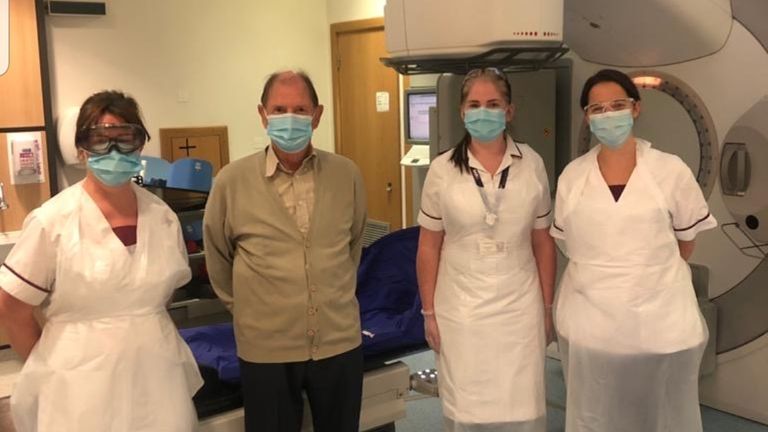
William Robinson, 83, was diagnosed with a tumour on his lung after having a stent put in his heart in March.

The great-grandfather, from Middlesbrough, received one round of the SABR treatment and said: “It was excellent. It went great and I’ve been alright since.”

William Robinson just after his SABR treatment
Image:
William Robinson just after his SABR treatment

He said it was a “big surprise” he had been treated so quickly and praised the staff who looked after him.

SABR will initially be used to treat some tumours in the lungs, lymph nodes and bones, but will later be expanded to treat other cancers.

:: Listen to the Daily podcast on Apple Podcasts, Google Podcasts, Spotify, Spreaker

It will not be suitable for everyone, but the experts are clear it will save lives – and say they already have the capacity to provide the treatment.

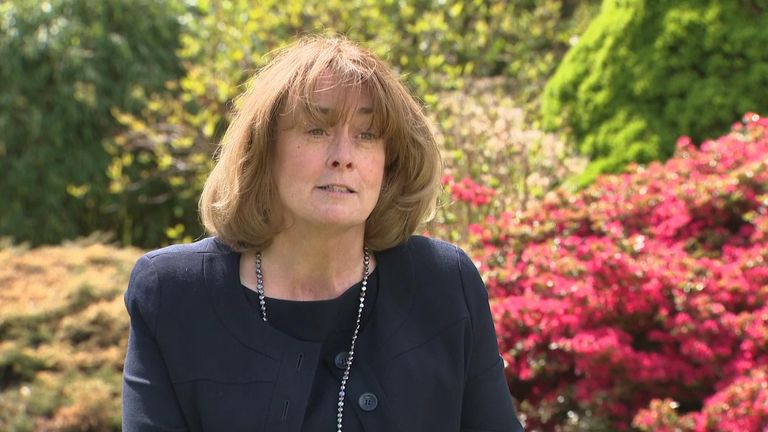
Professor Pat Price, chair of Action Radiotherapy, said she was “delighted” with the decision but warned April is “still an awfully long time away”.

“The trouble is, the backlog is going to start coming in the autumn so April’s going to be too late for some places,” she said.

Professor Pat Price says a backlog of cancer patients could 'overwhelm the service'
Image:
Professor Pat Price says the full roll-out should be done as soon as possible

Professor Price said there are still a number of things which will need to be done to help with the backlog – including updating the IT and machines used to carry out radiotherapy.

“We’re heading for such a problem,” she said.

“Everybody’s quite positive at the moment thinking lockdown is nearly over, but the health problems are just starting.”

Source link

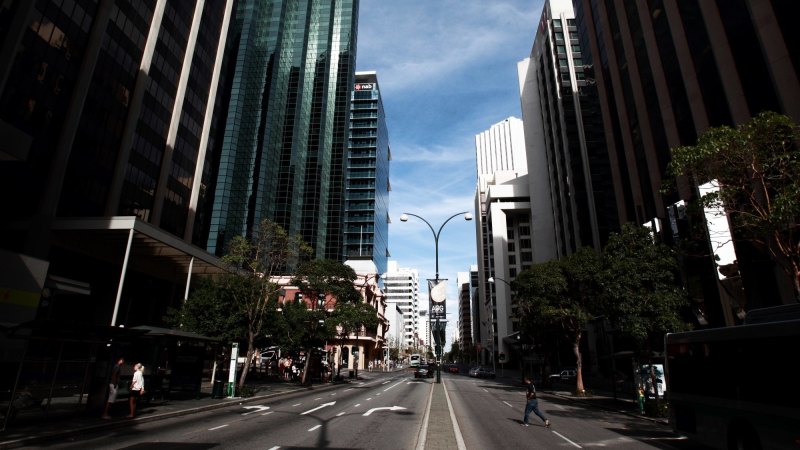
Companies urged to bring staff back to breathe life into Perth CBD ghost town

0

Office workplaces have always been exempt from the heavy non-work gathering restrictions that were ramped up over March and April but governments urged businesses to send staff home if possible.

The pandemic resulted in hundreds of restaurants and cafes shutting their doors and, while many have reopened, it is not uncommon to see the doors of lunchtime favourites firmly closed.

With WA heading towards a full reopening of its domestic economy, Property Council executive director Sandra Brewer said now may be the time for companies to bring their workforces back to help struggling smaller businesses.

Ms Brewer said many members were reporting tenants returning staff in 50/50 arrangements, with half their staff in and half out, with extra spacing, hand hygiene and restrictions on communal areas other measures implemented.

“Given the state government’s health advice that there’s been no community transmission of COVID-19 in WA and that public transport is safe, it may be time for companies to consider safe ways of encouraging more of their workforce to return to their office,” she said.

“In Perth, so far, there do not appear to be any issues with building entry points or lifts.

“Some people may be anxious about returning to work or travelling on public transport, but we’ve been assured it’s safe to travel and we know there are many centrally-based businesses that would benefit from having a greater number of customers.”

“We’ve noticed more people are choosing to return … to reconnect with their colleagues and for meetings and a number of hearings.”

Nick Cooper, Clayton Utz

One of WA’s biggest law firms, Clayton Utz, is one of those companies adopting a cautious approach and is currently in step one of its three-step plan.

Partner-in-charge Nick Cooper said step one allowed 30 per cent of staff on the floor at any one time while step two, expected to be triggered in the next few weeks, would allow 50 per cent of the workforce back in the office and loosened meeting restrictions.

Like many other office-based businesses, Clayton Utz has splurged on hand sanitiser and beefed up its cleaning regime.

Mr Cooper said the process was about being sensible, practical and prepared if restrictions were to be reimposed.

“We’re pretty fortunate that we were already well set up as a firm to work remotely when COVID-19 hit. Around 64 per cent of our people nationally already worked flexibly and, in Perth, most (around 98 per cent) of our 140-plus partners and employees have been working from home these past couple of months without any disruption to client service or matters,” he said.

Mr Cooper said he expected people to mix up their work arrangements post-pandemic but employees also were keen to get back to the office.

“We’ve noticed, however, that more people are choosing to return on their designated days to reconnect with their colleagues and for meetings and a number of hearings,” he said.

“So that sense of connection and being part of the firm – in that sense – is still important.”

ANZ’s Perth office will welcome back about 35 per cent of its workforce from next week and also boost its cleaning and hygiene regime.

Bus and train use is at about 40 per cent of pre-COVID levels, the PTA said.

“ANZ will also work on a minimum of weekly turnarounds so cleaning and any infection can be managed – the health and wellbeing of our staff remains our top priority as we return to offices,” a spokesman said.

Public Transport Authority spokesman David Hynes said several measures had been employed to keep commuters on buses and trains safe, including increased sanitation, contactless payment, encouraging people to exit through the rear door and opening roof vents for fresh air. Front seats on buses have also been taped off.

He said lower patronage also gave passengers more room to socially distance.

“Passengers are encouraged to practise good hygiene and cough etiquette, to observe as much distancing from fellow passengers as possible, and not to travel if they feel sick,” he said.

Most Viewed in National

Loading

Source by [author_name]

Survey Suggests China Influence Over SE Asia Is Rising as America’s Falls

0

The United States is struggling to compete with China’s growing influence in Southeast Asia, according to a new survey of the region’s experts, even though there is strong support among them for democratic values.

China already has far more economic influence than the U.S., and slightly more political power, in Southeast Asia, and the gap is expected to widen in the next decade, the survey by the Center for Strategic and International Studies (CSIS) think tank found.

The survey by the respected Washington-based think tank targeted “strategic elites” – nongovernmental experts or former officials from six Southeast Asian countries. There were 188 respondents from Vietnam, Thailand, Indonesia, Malaysia, Singapore, and the Philippines. Another 13 people in Fiji responded to the survey.

The survey was conducted in November and December 2019, so it does not factor in how the COVID-19 pandemic may have shaped perceptions of the two powers. The coronavirus originated in China, which has been accused of initially trying to cover up the outbreak. As the virus has spread across the globe, the U.S. has recorded the most deaths.

“The results of this survey paint a picture of clearly ascendant Chinese influence in Southeast Asia, complex and diverging views of China, and deep concerns over U.S.-China strategic competition and its impact on the Association of Southeast Asian Nations (ASEAN),” the report describing the survey’s findings says.

Respondents were asked to select up to three countries that hold the most political influence in Southeast Asia. China came up top with 94.5 percent, followed by the U.S. with 92 percent.

But the margin of difference between the two powers grew significantly when the question shifted to who will be the most influential in 10 years’ time, with 94.5 percent choosing China, and 77 percent the U.S. For both questions, Japan and Indonesia came in a distant third and fourth place respectively.

Pat Buchan, director of the U.S. Alliances Project at CSIS and a co-author of the study, said China’s efforts to gain influence in the region have accelerated significantly in the past five years, and the survey results reflect that trend. He said this should serve as a wake-up call for the U.S. as it seeks to compete with China.

“From a historical perspective, the United States has not focused on Southeast Asia largely since the fall of Saigon,” Buchan said in an interview, referring to the end of the Vietnam War in 1975.

“Its efforts in Asia have always been focused on East Asia and Northeast Asia. So that does reflect that there is a sort of lost generation of American influence and American expertise on Southeast Asia,” he said.

When it comes to economic influence, there was virtual unanimity in the survey that China is already the frontrunner by a large measure and will continue to be so in a decade.

Asked which three countries now have the most economic power, some 98 percent named China, 70.6 percent said the U.S. and 66.7 percent said Japan. In 10 years, 96 percent say it will be China, 56.7 percent say the U.S. and 56.2 percent say Japan.

Buchan attributed that outcome to the relative lack of U.S. involvement in multilateral trade deals and institutions like the Trans-Pacific Partnership – which was negotiated by the Obama administration as part of its strategic “pivot” to Asia, but then dropped by President Donald Trump.

Despite the recognition of CCP-governed China’s rising influence, and the authoritarian tendencies of many Southeast Asian governments, respondents voiced near support for democratic values.

Some 85 percent of strategic elites said they were confident democratic values were beneficial to their countries’ stability and prosperity. This was most pronounced from respondents in Thailand and the Philippines – which have seen an erosion of democracy in recent years – and Indonesia, where it has proved more robust.

“That definitely ran through the whole thing, this desire for democratic norms and values,” Buchan said. “If we had ran this poll 30 years ago you would’ve gotten a very, very different answer.”

“The soft power influence of the United States is now showing through two generations later as the accepted norm,” he said.

Some 53 percent of respondents considered China’s role to be beneficial for the region, while 46 percent called it detrimental. The negative views were most pronounced in Vietnam and the Philippines – two nations which also expressed the most concern about the situation in the disputed South China Sea, which China claims in its entirety.

Respondents identified the Association of Southeast Asian Nations as the most important institution for regional order.

Vietnam, however, was an outlier on this, which may be attributed to its frustration over ASEAN’s failure to reach consensus on the South China Sea issue, with pro-China members such as Cambodia foiling attempts at consensus.

Nearly half of respondents identified external pressure from great powers as the biggest threat to ASEAN’s unity, followed by concern that member states were not giving sufficient priority to the 10-nation bloc.


Source link