Thursday, May 14, 2026

Egypt’s top fatwa authority raises controversy after describing Ottoman control of Constantinople as ‘occupation’

Jun 19, 2020

Dar al-Ifta, Egypt’s top institution for fatwas or religious edicts, has sparked widespread controversy when it described the Ottoman control of the city of Constantinople — Turkey’s capital until 1923 when it was renamed Istanbul — as an occupation before it retracted and described it as a “great Islamic conquest.”

On June 7, the media center of Dar al-Ifta published a statement, titled, “Erdogan continues to use fatwa weapons to cement his tyranny at home and justify his colonial ambitions abroad.”

The statement criticized Turkey’s internal politics and suppression of dissent, and said that Turkish President Recep Tayyib Erdogan is taking advantage of religious rhetoric “to achieve internal stability and victory over his political opponents.”

But what made Dar al-Ifta the subject of much criticism is its description in that statement of the fall of Constantinople, or the conquest of what is now called Istanbul, as an “Ottoman invasion,” in a paragraph devoted to condemning calls to convert the Hagia Sophia Museum into a mosque again.

“Hagia Sophia was built as a church during the Byzantine period in A.D. 537, and it remained [a church] for 916 years until the Ottomans occupied Istanbul in 1453; then they turned the building into a mosque,” the statement read.

The Egyptian religious authority’s stance was lashed out at, as it has described one of the most important Islamic conquests as an invasion in order to take a political stance in line with Egypt’s policies against Turkey.

On May 29, Erdogan celebrated the 567th anniversary of the conquest of Constantinople, standing on one of the balconies of the presidential Huber Palace overlooking the Bosporus. Thirty boats, decorated with Turkish flags and banners, passed in front of Erdogan’s palace to greet him.

In his speech, Erdogan considered the conquest of Constantinople as a symbol of “reconstruction, advancement, justice and love,” and asked God to grant the Turkish people “more conquests, victories and successes.”

Ali Erbas, head of Turkey’s Directorate of Religious Affairs, tweeted June 10 that the Dar al-Ifta statement does not fit Muslim beliefs or Islamic morals, confuses minds and falsifies historical facts.

According to the online encyclopedia Britannica, the conquest of Constantinople was carried out by Sultan Mehmed II of the Ottoman Empire. “[The Byzantine Empire] came to an end when the Ottomans breached Constantinople’s ancient land wall after besieging the city for 55 days,” it states, continuing, “[Mehmed II] surrounded Constantinople from land and sea while employing cannon to maintain a constant barrage of the city’s formidable walls.”

“The fall of the city removed what was once a powerful defense for Christian Europe against Muslim invasion, allowing for uninterrupted Ottoman expansion into Eastern Europe,” the online encyclopedia adds.

On June 8, Dar al-Ifta published a post on Facebook, confirming its position on Erdogan and “using the fatwa weapon to confirm his tyranny.”

However, it retracted from the description of the conquest of Constantinople as an invasion, and the post stated that it was “a great Islamic conquest and it was done by the great Ottoman Sultan Mehmed II. Erdogan has no connection with Mehmed.”

Mohamed Abu Hamed, a member of Egypt’s parliament, said that the attack by the Muslim Brotherhood and Turkish media comes after Dar al-Ifta revealed the use of the fatwas weapon by Erdogan to move ahead with his tyranny at home in the name of religion and justify his ambitions abroad in the name of the alleged caliphate.

“The conquest of Constantinople was carried out by Sultan Mehmed II and is an important Islamic conquest. But at the same time, the Turkish president had nothing to do with Mehmed II,” he told Al-Monitor.

He added that Erdogan is using religion to justify his political actions and interference in regional countries, as well as his ambitions to restore the Ottoman Empire.

But critics say that Dar al-Ifta is mixing religion with politics and this may ignite more tensions in the region based on this approach.

Amr Hashem Rabie, deputy head of Al-Ahram Center for Political and Strategic Studies, said that Dar al-Ifta is only concerned with issuing religious edicts and not with commenting on the political policies of presidents and state leaders.

“This kind of attitude politicizes religion and this is the same approach that is usually criticized by the state,” Rabie told Al-Monitor.

He said that Erdogan’s policies should be criticized by a state authority concerned with politics, not with religion. “The religious authorities are only concerned with religious matters, especially if it is large and renowned institutions like Al-Azhar and Dar al-Ifta,” he added.

The Egyptian Dar al-Ifta remains the subject of much political controversy. Less than a month ago, it sparked a similar controversy because of a leaflet calling on Egyptians to watch a TV series called “Al Ikhtiyar” (“The Choice”), which portrays the biography of Egyptian army Col. Ahmed al-Mansi.

Dar al-Ifta wrote in an April 29 post on Facebook, “Islam did not prohibit purposeful art that transcends the soul and elevates feelings unlike the arts that address the instincts and lust.”



Source link

Exclusive: Amazon signals entry into alcohol delivery in India with nod in key state – document- Technology News, Firstpost

0

By Aditya Kalra

NEW DELHI (Reuters) – Amazon.com Inc has secured clearance to deliver alcohol in India’s eastern state of West Bengal, according to a document seen by Reuters, signalling the U.S. e-commerce giant’s first foray into the country’s multi-billion-dollar sector.

In a notice on Friday, West Bengal State Beverages Corp, the authorised agency to carry out online retail of liquor trade in the state, said Amazon was among the companies found to be eligible for registration with authorities.

Alibaba-backed Indian grocery venture BigBasket has also won approval to deliver alcohol in the state, the notice said.

West Bengal is India’s fourth most populous state, with a population of more than 90 million people.

Amazon has been invited to sign a memorandum of understanding with the state, said the notice, which has not previously been reported.

Amazon did not respond to a request for comment. BigBasket also did not respond to a request for comment.

Amazon’s interest in delivering alcohol in West Bengal marks a bold move to make inroads into a market that is worth $27.2 billion, according to estimates by IWSR Drinks Market Analysis.

Over the years, Amazon has expanded its e-commere operations in India as more and more people go online to shop for everything from groceries to electronics. The company has committed $6.5 billion in investments in India, one of its key growth markets.

India’s top two food-delivery startups, Swiggy and Zomato, started delivering alcohol in some cities last month, as they looked to cash in on the high demand for booze as many states come out of a lockdown aimed at tackling the coronavirus.

India restricted liquor sales when it announced a nationwide lockdown in March. Hundreds of people queued up at liquor stores in May when some restrictions were eased, and the liquor industry had been lobbying with many states to allow online deliveries.

Each state sets its own alcohol sales policy. West Bengal last month invited companies to express interest for “handling electronic ordering, purchase, sale and home delivery of alcoholic liquors from licensed retail outlets” to eligible legal-age consumers in the state.

(Reporting by Aditya Kalra; Editing by Euan Rocha and Leslie Adler)

This story has not been edited by Firstpost staff and is generated by auto-feed.

Find latest and upcoming tech gadgets online on Tech2 Gadgets. Get technology news, gadgets reviews & ratings. Popular gadgets including laptop, tablet and mobile specifications, features, prices, comparison.


Source link

PGA restart under scrutiny after Nick Watney tests positive for Covid-19

Intense focus surrounds the status of the PGA Tour’s restart after one of its players, the 39-year-old Nick Watney, tested positive for Covid-19 mid-competition. Watney withdrew from the RBC Heritage in South Carolina before the second round and is now spending at least 10 days in isolation.

This is an obvious blow to the Tour, in the second event of its resumption. As something of a forerunner for the reopening of mainstream US-based sport, golf knows its procedures are firmly in the spotlight.

“On Friday, prior to arriving at the tournament, he indicated he had symptoms consistent with the illness and after consulting with a physician, was administered a test and found to be positive,” said a Tour statement of Watney.

“Nick will have the PGA Tour’s full support throughout his self-isolation and recovery period under CDC guidelines. For the health and well-being of all associated with the tournament and those within the community, the Tour has begun implementing its response plan in consultation with medical experts including working with those who may have had close contact with Nick.”

Luke List and Vaughn Taylor, Watney’s playing partners in South Carolina, continued as a two for the second round.

Last week at the Charles Schwab Challenge, 487 tests were carried out by the Tour, which all returned negative results. Watney missed the cut there, with his exact, subsequent movements for now unclear.

“Watney, who travelled privately to Hilton Head Island for the tournament and was not on the PGA Tour-provided charter flight, tested negative upon arrival,” the Tour added. “He is the first PGA Tour member to test positive for coronavirus. A total of 369 individuals [players, caddies, essential personnel] underwent on-site testing prior to the start of the tournament, with zero positive results.”

In a “return to golf” package issued to competitors and other relevant parties last month, the Tour stipulated that in the case of a positive test any individual “will be required to self-isolate until a minimum of 10 days after the positive test and no subsequent symptoms or two negative test results at least 24 hours apart”.

The same paperwork contained only “strong recommendation” that players and caddies stay in designated hotels. Other guidance stipulated “rental homes will be allowed with proper sanitisation practices approved by Tour”, “local players can stay at their own homes” and “all local constituents on property can stay at their own homes.”

Source link

Summer solstice 2020 heralds changing of Earth’s seasons this weekend

0

Summer will arrive in the Northern Hemisphere on Saturday (June 20) at 5:43:32 p.m. EDT (21:43:32 GMT). The June solstice also marks the beginning of winter for those in the Southern Hemisphere.

It will be a celestial event that will likely get a good deal less attention than April’s so-called “supermoon,” the biggest full moon of the year. After all, you can see the moon, but the solstice is merely a calculation. You can’t even see the change in the span of daylight, which, for those living at mid-northern latitudes is virtually the same on June 20 as the day before and will have diminished by only half an hour by July 23. In short, summer doesn’t arrive with banners and fanfare, and for some places summer heat has already been well established since early May.


Source link

Astronauts and NASA pay homage to Juneteenth

0

Astronauts and NASA have taken to social media to commemorate today’s Juneteenth holiday from Earth and space.

Juneteenth, also known as African American Freedom Day or Emancipation Day, marks the date — June 19, 1865 — when tens of thousands of Africa-Americans in Texas were emancipated. While President Lincoln’s Emancipation Proclamation on Jan. 1, 1863 freed slaves in U.S., many of the Confederate states ignored it. 


Source link

Chip and Joanna Gaines’s daughter asks Emmanuel Acho if he’s ‘afraid of white people’

Chip and Joanna Gaines brought their whole family along to appear on “Uncomfortable Conversations With a Black Man.”

The first couple of home renovation talked with former NFL star turned sports analyst Emmanuel Acho about what they could do as parents to inform and educate their children about race, Black history in America and the Black Lives Matters movement. Their kids — Drake, 15, Ella, 13, Duke, 12, Emmie, 10, and Crew, 1 — participated, even asking tough questions like: Is Acho is “afraid of white people”?

“If we truly want to bring forth change, it not only starts with you and I, but it’s also about the next generation,” Acho said at the top of the show. So that’s why the sports star was happy to continue the conversation about race along with the “next generation.”

And the kids came prepared. Emmie asked Acho, “Are you afraid of white people?” He replied, “That’s what I love about children,” calling it a “phenomenal question. I’m not afraid of white people. I am cautious of white people.”

He explained, “I think about water and electricity. Water is necessary for life. Electricity is also necessary for life. But I do understand if those two have a negative interaction, it could be lethal. … The beautiful thing of children and about children is that we learn things as kids and it develops us as adults, which is why you all being here with your children is the most powerful thing because this conversation could be life-changing — and not necessarily for their lives, but for the life of someone who looks like me.”

Jo shared that she and Chip have been having a dialogue with their kids amid the death of George Floyd and ongoing Black Lives Matter protests.

“The other day, he was wanting to get a pulse on, ‘What are our kids thinking about all of this?’” she recalled. “And so he asked the kids a question: ‘Pretend like you’re at a gas station and you see a Black man and a white man. Are you more threatened by either of those two men?’ And the kids, really quick, all said, ‘No, why?’ They didn’t even think about that.”

She said she and Chip were patting themselves on the back for raising “color-blind” kids, but “then we started kind of pushing back on that.” She asked Acho what he thought about the concept.

Chip and Joanna Gaines appear with their children in Episode 3 of “Uncomfortable Conversations With a Black Man” with Emmanuel Acho. (Image: “Uncomfortable Conversations With a Black Man”/YouTube)

“I think that it’s best that we raise our kids to see color, because there’s a beauty in color and there’s a beauty in culture,” Acho answered.

He continued, “I think that if we don’t see color — if we don’t expose our children to different colors, to different races — then it’ll be the same thing as a white kid who becomes an adult: You won’t be able to decipher the difference between a Black man that’s a threat and a Black man that’s just Black.”

Similarly, “A Black person won’t be able to decipher between a white person that’s a racist and a white person who’s just white and may happen to be racially ignorant,” Acho added. “I think there’s a strength, a beauty in seeing color. I don’t like the concept of color blindness.”

Chip asked how we can get the people who may not view themselves as racially ignorant to come around to see it.

“History is meant to be remembered, but history isn’t always meant to be celebrated,” Acho said. “I think we have racism so ingrained into our culture, we don’t even realize we are blind to it.”

Acho went on to talk about how his white brothers and sisters need to open their eyes to see things like how having schools named after Confederate generals is disturbing for a Black person — especially one who attends that school.

“Maybe having statues littered across campuses that I have to look at of men who would have oppressed and enslaved and potentially executed me, maybe that’s a problem,” Acho said. “So I think that in America we need to do a better job of properly discussing and placing our heroes.”

During the conversation, Chip revealed that he reached out to his fellow Texan Acho after seeing his poignant debut episode of the YouTube show. Last week’s guest, Matthew McConaughey, was similarly touched by the premiere installment.

Read more from Yahoo Entertainment:

Source link

Modi denies Chinese incursion into India before deadly clash

India’s prime minister has said the country is “hurt and angry” at the killing of 20 soldiers by Chinese forces in a disputed Himalayan border region, but appeared to downplay the incident in a public address, denying there had been any incursion into Indian territory.

“Nobody has intruded into our border, neither is anybody there now, nor have our posts been captured,” Narendra Modi said in a televised speech on Friday after he spent the day meeting representatives of parties from across the political spectrum in a bid to build consensus to tackle the rising tensions with China. 

More:

He assured political leaders “that our forces will spare no effort to protect our nation”.

China and India, both nuclear-armed countries, accuse each other of instigating the fight this week in the Galwan Valley. There is little evidence of what led to Chinese and Indian soldiers engage in the brawl on Monday. It was the deadliest incident between the two sides in 45 years, although China has not said whether it suffered any casualties.

Modi’s comments contrasted with his government’s earlier statements on the clash.  

On Wednesday, Foreign Minister Subrahmanyam Jaishankar had told a senior Chinese diplomat that the dispute was triggered after “the Chinese side sought to erect a structure in Galwan valley on our side of the LAC”, according to a ministry statement, referring to the Line of Actual Control, the de facto border.

China on Friday maintained its position that India was to blame. 

“The right and wrong is very clear and the responsibility lies entirely with the Indian side,” Foreign Ministry spokesman Zhao Lijian said. 

On Friday, a source told Reuters news agency that despite daily meetings between Indian and Chinese military officials at the LAC, “the situation remains as it was, there is no disengagement, but there is also no further build-up of forces”.

Questions over intelligence 

Modi spoke following a three-hour all-party meeting. He held a virtual meeting with the heads of more than a dozen top opposition parties. 

Sonia Gandhi, the chief of main opposition Congress party, questioned whether intelligence failures had allowed China to build up forces in the area.

“Does the government not receive, on a regular basis, satellite pictures of the borders of our country? Did our external intelligence agencies not report any unusual activity along the LAC?” Gandhi asked. 

She added the “entire country” would like assurances that China will move its forces back to the LAC. Other opposition leaders echoed her call. 

Defence Minister Rajnath Singh denied there was an intelligence failure on the part of the army. 

Anti-China sentiment grows

While both sides have said they favour a resolution through dialogue, anti-China protests across India and domestic pressure on Modi may make it difficult to calm the situation without more concrete action.

A movement to boycott products from China, India’s largest trading partner, has gained momentum since the clash.

Authorities have cancelled a railways contract with a Chinese firm and at least four Chinese firms involved in other Indian projects also stand to lose business.

Meanwhile, state-run telecom firms have been told to forego Chinese telecommunications equipment in favour of locally sourced material for upgrading 4G mobile networks, Indian media reported, while a major traders’ body, the Confederation of All India Traders, has called for a boycott of Chinese goods. 

Also on Friday, Indian media reported that China had freed 10 Indian soldiers seized in the clash following several rounds of talks late on Thursday.

Hours later, China denied it had detained any Indian soldiers.

China claims about 90,000 square kilometres (35,000 square miles) of territory in India’s northeast, while India says China occupies 38,000 square kilometres (15,000 square miles) of its territory in the Aksai Chin Plateau in the Himalayas, a contiguous part of the Ladakh region.

India unilaterally declared Ladakh a federal territory while separating it from disputed Kashmir region in August 2019. China was among the countries to condemn the move, raising it at forums including the United Nations Security Council. India was elected to the UNSC this week.


SOURCE:
Al Jazeera and news agencies

Source link

Juneteenth Will Be An Official Holiday In New York City Starting In 2021

0

Juneteenth, which marks the effective end of slavery in the United States, will become an official holiday in the country’s largest city beginning next year, New York City Mayor Bill de Blasio declared Friday.

De Blasio called Juneteenth “a day for truth-telling, a day for examination and shining a light.” The day will be an official city and school holiday.

“It’s a celebration of a liberation that never really came. The fact is, it’s also a day of reckoning,” de Blasio, a Democrat, said Friday in his daily news conference. “Every city worker, every student will have an opportunity to reflect on the meaning of our history and the truth and to think about the work that we have to do ahead.”

Juneteenth has added significance and urgency this year, coming amid weeks of large anti-racism and anti-police-brutality protests in cities across the country — including in New York City — in response to the recent killings of George Floyd, Breonna Taylor, Ahmaud Arbery and other Black people over the years. The incidents and subsequent protests have also catalyzed reckonings over systemic racism and white supremacy across industries and institutions.

“Our city has long prided itself as being a beacon, and in many ways we are, to the world,” de Blasio said. “But our city also has a very painful history. Slavery was alive and well in New York City for a long time. New York City gained much of its prominence and wealth from slavery. Redlining, discrimination of every form existed here in liberal, progressive New York City for generations. In too many ways, discrimination is alive and well today. Structural racism pervades this city, in ways that are still not acknowledged or recognized, and we have to change that.”


Protesters chant as they march after a Juneteenth rally at the Brooklyn Museum Friday.

In recent weeks, many companies designated the day as a paid holiday. And after years of activism, there is a growing movement in Congress to make Juneteenth a federal holiday. 

At least 60% of Americans now support making it a federal holiday, according to a HuffPost/YouGov survey published Friday.

Earlier this week, New York Gov. Andrew Cuomo (D) designated Juneteenth a paid holiday for state government employees and said he plans to make it an official state holiday next year.

Demonstrators in dozens of cities on Friday took part in peaceful marches and rallies to mark Juneteenth.

In New York City, organizers held a range of events, including a march from Harlem to Central Park, a rally at the Brooklyn Museum and a march and bike ride across the Brooklyn Bridge, among many other gatherings planned for the day.


Source by [author_name]

Wirecard, a Payments Firm, Is Rocked by a Report of a Missing $2 Billion

0

Wirecard, a Germany company that soared in value in recent years as it provided a widening array of payment services around the world, was suddenly collapsing on Friday amid questions surrounding missing cash balances amounting to 1.9 billion euros, about $2.1 billion.

The scandal caused an 80 percent plunge in the company’s stock price over the last two days, threats of shareholder lawsuits amid an investigation by prosecutors and the German financial regulator, and a dizzying transition in the company’s leadership.

The company’s longtime chief executive, Markus Braun, stepped down on Friday, succeeded by James Freis, a former compliance officer at Germany’s stock exchange who was hired only the day before to serve on the company’s management board.

Wirecard, a fintech company that was founded in 1999 and is based in Munich, boomed in recent years as a provider of digital payment services. It prospered by making contactless payments seemingly effortless for hundreds of thousands of merchants, with customers like Apple Pay, Google Pay and Visa.

In 2016, it ventured into North America by acquiring Citibank’s prepaid card division for an undisclosed sum. Over all, it was praised in Germany as a homegrown tech success, and in 2018 it was propelled into Frankfurt’s blue chip stock index, the DAX, pushing out an aging bank of a different era, Commerzbank.

The crisis at Wirecard stems from an article in The Financial Times, which reported in October that staff appeared to conspire to fraudulently inflate sales and profit and mislead EY, the company’s auditor.

Wirecard, which has denied any wrongdoing, responded to the reports by delaying EY’s annual report for 2019 and hiring KPMG to provide an independent assessment of the company’s books.

KPMG released its report in April, and said it could not provide sufficient documentation to address all allegations of irregularities.

In the most serious finding, covering 2016-18, KPMG said it had been unable to verify the existence of €1 billion in revenue that Wirecard booked through three obscure third-party acquiring partners. The findings led to calls by some investors for Mr. Braun’s ouster.

The KPMG report appeared to attract the attention of Germany’s financial regulator, BaFin, which had previously suspected short-sellers of manipulating Wirecard’s stock price.

On June 5, prosecutors raided the company’s headquarters and opened proceedings against management as part of the inquiry initiated by BaFin. Prosecutors said in a statement that the company was suspected of releasing misleading information that may have affected Wirecard’s share price.

Wirecard said it would cooperate with the investigation. “The board is optimistic that this matter will be resolved and that the accusations will be shown not to be founded,” it said in a statement.

The scandal came to a focus this week because EY was scheduled on Thursday to publish Wirecard’s 2019 annual report, which had been delayed by the KPMG review.

But EY said it would not be able to issue the report because it could not confirm the existence of €1.9 billion in cash balances on trust accounts, representing around a quarter of its balance sheet. As Wirecard’s stock price tumbled, Mr. Braun appeared in a video with other company executives, where he said the bank had been the victim of fraud, and pointed to irregularities at two unnamed banks.

“At present it cannot be ruled out that Wirecard A.G. has become the aggrieved party in a case of fraud of considerable proportions,” he said.

Investors were not convinced. The company had said it was facing a crisis because failure to provide a certified annual report could cause about €2 billion in loans to be called in as soon as Friday.

“We are stunned,” said Ingo Speich, head of corporate governance at Deka Investment, a $350 billion fund manager that owns Wirecard stock, while calling for a change at the top.

On Friday morning, Mr. Braun resigned, saying that “responsibility for all business transactions lies with the C.E.O.”

The company later said it was in “constructive discussions” with its lending banks. But its stock price, which was about 100 euros a share on Thursday morning, fell to €19.56 on Friday before closing at €25.82.

Source link

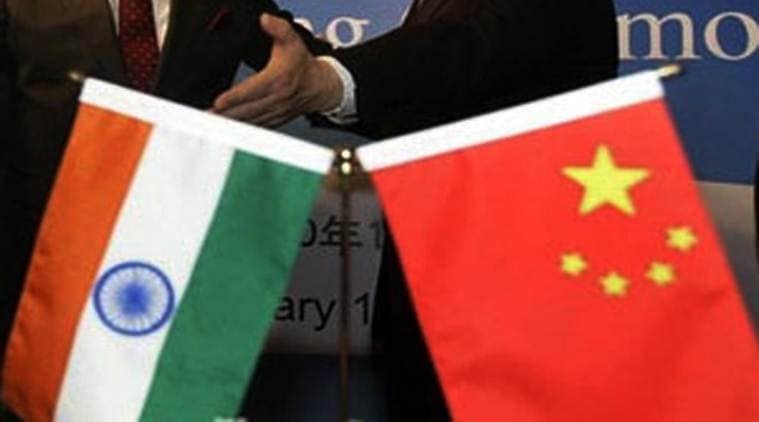
Build global pressure on China, keep talks going: ex-diplomats

0

Written by Manraj Grewal Sharma
| Chandigarh |

Published: June 20, 2020 1:42:40 am


In Punjab’s industrial hub, Ludhiana, manufacturers said that for the campaign to really have an impact it needed serious policy intervention from the government.

India must build up international pressure on China, both politically and economically, while working towards a resolution of the Galwan valley standoff, former diplomats have said.

Calling this standoff one of the biggest challenges faced by the NDA government, K C Singh, a former diplomat, said it calls for a complete rethink of India’s China policy. G Parthasarthy, a former diplomat and strategy expert, said China’s occupation of the Galwan valley has geopolitical consequences and we are in for a long haul.

Terming it PM Narendra Modi’s Nehru moment of 1962, Singh said China has been planning this incursion for a while but India seems to have been caught by surprise.

“Last August, China objected to Article 370 abrogation that led to the notification of Ladakh boundaries in September and upset three neighbours, including Nepal. We ignored the first warning signs. In September, the PM attended a ‘Howdy Modi’ in Houston that signalled our growing ties with the US. This was followed by President Donald Trump’s visit to India this March. Then followed the pandemic and the growing global chorus against China led by Trump who called it the Wuhan virus. Should it be a surprise that PLA, despite pandemic in India, intruded at multiple spots across the LAC in Ladakh?” said Singh.

While former military commanders dismissed any comparison with the Kargil incursion, Singh said it is worse than Kargil. “Unlike Kargil where the Pakistanis claimed the intruders were not their soldiers, PLA troops are at Galwan with heavy weaponry. While Pakistani intruders were trying to dominate the Leh heights, here they are trying to seek dominance over India’s new road to Daulat Beg Oldie, besides the critical Karakoram Pass.”

Parthasarthy said the Chinese are very nervous of India getting near Aksai Chin through infrastructure development. “It is through this link that most of the supplies flow to Baltistan,” he pointed out.

Calling China’s claim on Galwan Valley disingenuous, Parthasarthy said it was part of British India and then India. “We established a post there in 1962.”

Singh said President Xi Jinping may have multiple motives behind this move, including the desire to distract from domestic socio-economic distress. He recounted how most of the Chinese agreements with India had coincided with economic downturn. “They hit a wall in 1989 because of sanctions that followed the Tiananmen massacre, subsequently the economy slowed down in 1989-1990 and that is why they were amenable to the 1993 and 1996 agreements.”

Singh said China is also upset with India’s desire to acquire tactical and strategic advantage by upgrading its infrastructure and wants to stop India from doing that.

“China is wary of India’s emerging alliances with other nations as well. Trump said we don’t want a G-7 but a D-10, there is talk of a Quad Plus, to include other democracies of Indo-Pacific, besides the present members Japan, Australia, India and US. I led the first meeting in 2007, as an additional secretary. In 2017, the plan was revived at the ministerial level,” Singh added.

Pointing out that abrogation of Article 370 gave China a chance to consolidate forces against India, Singh said a country’s domestic policy can’t be its own agenda, and there is a link between domestic politics and international relations. The abrogation worked to the advantage of China by getting two neighbours against us, he said. “They managed to exploit Nepalese concerns. So intruding into Ladakh their left flank has an irate Nepal and to their right runs CPEC through Gilgit Baltistan, the northern fringe of an already anti-India Pakistan.”

On the way forward, Parthasarthy said, “We are in for a long haul. There is no easy way out.”

On Punjab CM Capt Amarinder Singh’s call to take a hard line on China, Parthasarthy, who was an Army captain posted at Pathankot during the 1965 war when Amarinder was, said, “I can never fault him. He is speaking out in anguish at the death of so many men.”

Singh, however, said the government must avoid an emotional reaction. “We should not look for instant retribution, real or projected. The government’s dilemma today is how to keep its hyper-nationalist base patient and not baying for Chinese blood, while it devises a mix of military, diplomatic and economic pressure. As for Galwan valley, the status quo is unacceptable and the nation will reject it. Our defence forces have to be prepared for Kargil II if China does not relent.”

“Also, see where China is vulnerable. Plan something where we have an advantage,” he added.

Both the former diplomats underscored the need to build domestic and international consensus on the issue. Parthasarthy said, “We have to express our displeasure to them internationally. They have been bullying a lot of countries in Asia. Given the arrogance of their behaviour, it is time India joined others in telling China about the illegality of its behaviour, be it seizure of territory in Ladakh, Vietnam or in the Philippines.”

Parthasarthy pointed out that China has been very nervous about being blamed for coronavirus. “We should put a squeeze on them. They can’t eat rats, bats and then put the whole humanity to suffering and pretend they have no responsibility.”

Making a strong case for putting economic pressure on China, Singh said, “China may relent if businesses move away, the markets abroad are affected, and they are unable to keep their growth rate high.”

Cautioning that China doesn’t plan for 10 years but for 100, unlike India where the governments only think of the next elections, he stressed the importance of leaving the back door open for orderly retreat by China without losing face.

Both the diplomats called for encouraging dialogue. As Singh put it, “Keep the talks going, calculating whether delay and winter affect us or China more. But time should not allow China to harden defences selectively, as I am sure they have a fallback position i.e. some locations that they really want for strategic dominance.”

📣 The Indian Express is now on Telegram. Click here to join our channel (@indianexpress) and stay updated with the latest headlines

For all the latest India News, download Indian Express App.

© The Indian Express (P) Ltd

Source link