Sunday, April 19, 2026

Global Anger Grows Over George Floyd’s Death, Hurting U.S. Image

0

In many parts of the world, the death of yet another black man at the hands of the police in the United States is setting off mass protests against police brutality and reviving concerns that America is abandoning its traditional role as a defender of human rights.

On the streets of London and Toronto, in halls of power in Addis Ababa and Beijing, a broad chorus of criticism has erupted alongside the unrest in the United States over the death of George Floyd. Mr. Floyd died last week after he was handcuffed and pinned to the ground by a white police officer in Minneapolis.

In Vancouver, thousands of demonstrators marched through the streets with signs reading, “Black Lives Matter.” In Berlin, newspapers published photos of Derek Chauvin, the former police officer charged in the death of Mr. Floyd, calling him “the killer-cop” who “set America ablaze.” In Lebanon, activists flooded social media sites with messages of support for protesters in the United States.

The widespread condemnation reflects growing unease about America’s rapidly eroding moral authority on the world stage. President Trump already faces criticism across the globe for his response to the coronavirus pandemic that has pushed the United States to relinquish its longtime role as a global leader in times of crisis. Even some of America’s closest allies have shown increasing opposition to his agenda.

The death of Mr. Floyd has brought protests to at least 140 American cities, turning many into tear gas-filled battlefields. Images of police officers and protesters engaged in heated street fights have spread swiftly across social media sites around the world, drawing furious comments and calls for action.

The tensions have also given American rivals an opportunity to deflect attention from their own problems.

In China, the state-run news media heavily featured reports about Mr. Floyd’s death and portrayed the protests as another sign of America’s decline.

When an American official on Saturday attacked the ruling Communist Party on Twitter for moving to impose national security legislation to quash dissent in Hong Kong, a spokeswoman for the Chinese government fired back with a popular refrain among protesters in the United States.

“‘I can’t breathe,’ ” the spokeswoman, Hua Chunying, wrote on Twitter.

In Iran, Javad Zarif, the foreign minister, accused the United States of hypocrisy. He posted a doctored screenshot of a 2018 statement by American officials condemning Iran for corruption and injustice. In his version, the references to Iran were replaced with America.

“Some don’t think #BlackLivesMatter,” Mr. Zarif wrote on Twitter.

The head of the African Union Commission, Moussa Faki Mahamat, said in a statement on Friday that Mr. Floyd’s death was a murder, and he criticized the “continuing discriminatory practices against Black citizens of the United States of America.”

After a weekend of protests in London, Jerusalem and elsewhere, activists around the world have vowed to continue to organize rallies and speak out about Mr. Floyd’s death in the coming days. In many places, demonstrators are taking direct aim at Mr. Trump and his policies. They are also raising concerns about police brutality in their own communities.

Holding signs and clapping their hands, hundreds of protesters gathered in Trafalgar Square in London on Sunday in defiance of stay-at-home restrictions in effect across Britain to fight the coronavirus. They chanted “I can’t breathe,” “black lives matter” and “no justice, no peace” before crossing the Thames to march peacefully to the United States Embassy.

In Berlin, hundreds of protesters gathered outside the American Embassy, some holding signs saying, “stop killing us,” Reuters reported.

In Germany’s top soccer league, two players — the English forward Jadon Sancho and the French striker Marcus Thuram — made references to the killing of George Floyd as part of goal celebrations during matches on Sunday.

The unrest in the United States has prompted activists from around the world to offer advice to American demonstrators on how to keep the movement alive. In Lebanon, a group of activists compiled a document they titled “From Beirut to Minneapolis: A protest guide in solidarity” as a guide for documenting state abuses and escalating demonstrations.

In Australia, where rallies protesting racism are planned for later this week, the images of unrest have reignited debate about the country’s own troubles with police brutality.

While some Australians expressed appreciation for living far from the United States and its problems with race, others quickly pointed out that more than 400 Indigenous Australians have died in police custody since 1991, without a single police officer convicted of abuse.

The hashtag #aboriginallivesmatter was trending on Twitter on Monday, with many Australians expressing outrage and sadness about both the death of Mr. Floyd and the racism in their own country.

The family of David Dungay, an Aboriginal man who said “I can’t breathe” 12 times before he died while being restrained by prison guards in 2015, also said this week that they had been traumatized by footage of Mr. Floyd’s death, prompting them to call for another investigation into Mr. Dungay’s death.

And with tensions rising, Prime Minister Scott Morrison said Monday that while the video of Mr. Floyd’s death was upsetting and shocking, Australians should be careful not to adopt the destructive response seen in some American cities.

“There’s no need to import things happening in other countries here to Australia,” Mr. Morrison told a conservative radio station Monday morning.

“I saw a good meme on the weekend,” he added. “Martin Luther King didn’t change anything by burning anything down or by looting any shops.”

To which many Australians quickly responded: You don’t understand Dr. King.

“What is with all these white people quoting MLK who’ve not read anything of King’s beyond a meme or seen anything beyond a 30-second YouTube clip of ‘I Have a Dream,’” said Benjamin Law, an Asian-Australian writer and essayist, on Twitter.

Damien Cave contributed reporting from Sydney, Australia, Vivian Yee from Beirut, Lebanon, and Elian Peltier from Paris. Albee Zhang contributed research.


Source link

‘Like a film’: Frenchman jailed after elaborate $7.3m diamonds heist

A French national has been jailed for his part in an elaborate international jewellery heist that resulted in the theft of diamonds worth millions of dollars.

Mickael Jovanovic, 27, from the Le Blanc-Mesnil region in north-eastern Paris, was part of an organised group that pretended to be diamond buyers in 2016, the United Kingdom’s Metropolitan Police said in a statement today.

Over several weeks, the group communicated with the owners of the diamonds – including in a meeting held in Monaco in March, 2016 – before a viewing was scheduled in central London.

Frenchman Mickael Jovanovic, 27, has been jailed for three years and eight months over an elaborate diamond heist in London in 2016. (Supplied)

The seller was told a gemmologist named “Anna” – who was secretly part of the group – would assess the jewels, worth £4 million ($7.3m), in a shop in the affluent suburb of Mayfair.

During that meeting, police say the woman – who had travelled to the UK along with Jovanovic and another man – distracted the seller and replaced the diamonds in a padlocked bag with fake jewels.

After leaving the store, the woman met up with the two other men on a London street and handed the jewels over before the three people left in different directions. Within three hours the trio had returned to France.

A UK police investigation that was launched afterwards reviewed the trio’s movements on CCTV footage. Despite that, Jovanovic was not located, extradited from Italy and arrested until January 30 this year.

The Frenchman was today sentenced to three years and eight months in a British jail after he pleaded guilty earlier to conspiracy to steal.

“This was a well-organised theft which evolved over a number of weeks both in London and on the continent,” detective constable William Man from the UK police said in a statement.

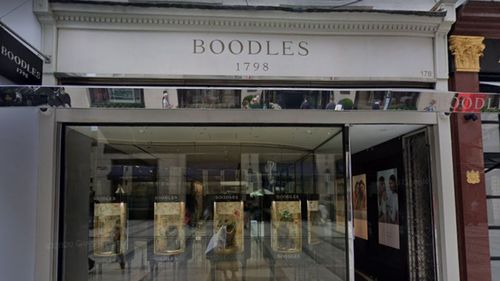
Affluent UK jeweller Boodles is believed to be the seller at the centre of the heist. (Google Maps)

“Like the plot of a film, this was a truly audacious crime. They stole the diamonds and fled in a matter of hours.

“However, they left behind a trail of evidence which led us to where they were staying and the Citroen they had hired in Paris.

“As a result of piecing together all of the bits of information, we knew it was only a matter of time before arrests were made.”

Source by [author_name]

How could watchdogs fail so spectacularly to keep care home residents and staff safe? | John Beer

C

are homes are the focus of the Covid-19 outbreak in England and Wales. At least 40% of all coronavirus deaths have occurred in the very places dedicated to keeping people safe in their later years.

Such carnage points to a catastrophic failure at the highest level to protect care home residents and staff alike. The under-reporting of deaths, the lack of personal protective equipment (PPE) and testing available to staff, and the total focus on the NHS at the expense of the social care sector have all contributed to an estimated 22,000 deaths in care homes – places that government had originally advised were “very unlikely” to experience infection.

But how could care homes have been failed so badly, and what checks and balances should have been in place to prevent this?

Care homes in England are regulated by the Care Quality Commission (CQC). One of its key responsibilities is to carry out inspections and visits to ensure providers meet fundamental standards of quality and safety; however, as of 16 March, the regulator stopped all routine inspections to “focus on supporting providers to deliver safe care during the pandemic”.

While this might sound like a positive move, stopping inspections as the country locked down has left residents of care homes at heightened risk of abuse and neglect, particularly those in homes already designated in need of improvement or inadequate.

We at Hourglass (formerly known as Action on Elder Abuse) have campaigned for nearly 30 years to promote safer ageing in a society where older people are free from abuse. Before the pandemic, it was estimated that nearly two million people aged 60 and over suffer some form of abuse in the UK every year – a horrifying figure in its own right. But we could never have comprehended the level of neglect, indifference and failure by the state to protect so many older people as we’re seeing in this terrifying pandemic.

Calls to our confidential helpline relating to concerns over neglect have increased by more than 25% since the lockdown began. Family members of care home residents have reported being unable to speak to their loved ones for weeks at a time, and to being powerless to act even when they knew that homes were taking in new residents without testing or observing isolation periods.

The biggest issue facing care homes has been their ability to protect vulnerable older people from infection in spaces where outbreaks can prove devastating. Had the CQC continued its inspections, it would have been in a position to challenge cases where PPE was being diverted away from care homes to the NHS, and to aid struggling homes in their battle to secure tests for staff and residents.

Instead, care homes have effectively been left to fend for themselves.

On top of this, the CQC joined similar bodies in Wales, Scotland and Northern Ireland in refusing to publish detailed data on care home deaths, arguing instead for a need to “avoid confusion” and to protect “the privacy and confidentiality of those who have died and their families”.

Families and the wider public have a right to know when and where Covid-19 outbreaks are happening, and this lack of transparency is deeply troubling. Registered care homes are required to report the death of anyone using the service, meaning the CQC would have known from the start that mortality rates were increasing, and which homes were worst affected.

It would be unfair and inaccurate to lay all blame on one organisation. There are a number of watchdogs in England dedicated to ensuring good quality care and safely managed staff in the sector, but at this vital time all have failed to deliver.

The Health and Safety Executive (HSE) could and should have done more to raise the alarm on unsafe working conditions as staff struggled to care for residents. The chief coroner’s office should reverse its baffling decision to instruct coroners to avoid examining systemic failures in provision of PPE when conducting inquests.

And the health and social care committee should ensure its investigation into the management of the coronavirus outbreak is thorough and fair.

Many roots of the national failure to prepare for this pandemic lie in the under-funding and downsizing of health and social care services, much of which took place under the watch of former heath and social care secretary Jeremy Hunt. But with Hunt now chair of the committee, there is a potential conflict of interest. Perhaps in this case he should cede the chair.

Hourglass wants clarity on who is providing oversight to care homes at this crucial time. Care providers need to know where to turn for support and who will be responsible for rectifying failures to protect residents and staff.

The CQC, HSE, chief coroner’s office and select committee all have a clear duty to ensure that our loved ones are safe and well cared for.

They are supposed to be independent of government and where appropriate have a duty to hold those in power to account; but by every conceivable measure, they have failed. With more than 22,000 now dead as a result of Covid-19 in care homes alone, the public and grieving families deserve far, far better.

Source link

501 Domestic Flights Carrying 44,593 Passengers Operated on Sunday, Says Hardeep Singh Puri

0

Representative Image.

Domestic services were suspended in India due to the coronavirus-induced lockdown and resumed after a gap of two months on May 25.

  • PTI New Delhi
  • Last Updated: June 1, 2020, 12:53 PM IST

A total of 501 domestic flights carrying 44,593 passengers operated in the country on May 31, Civil Aviation Minister Hardeep Singh Puri said on Monday.

Domestic services were suspended in India due to the coronavirus-induced lockdown and resumed after a gap of two months on May 25.

Indian carriers operated a total of 3,370 flights till May 31 — 428 on May 25, 445 on May 26, 460 on May 27, 494 on May 28, 513 on May 29 and 529 on May 30.

“Domestic operations on 31st May 2020 (Day 7) till 2359 hrs. Departures 501. 44,593 passengers handled. Arrivals 502. 44,678 passengers handled,” Puri tweeted on Monday.

A departure is counted as a flight during the day.

During the pre-lockdown period, Indian airports handled around 3,000 daily domestic flights, aviation industry sources said.

In February, around 4.12 lakh passengers travelled daily through domestic flights in India, according to Directorate General of Civil Aviation (DGCA) data.

Airports in West Bengal, Andhra Pradesh, Maharashtra, Telangana and Tamil Nadu have been allowed to handle a restricted number of daily flights as these states do not want a huge influx of flyers amid the rising number of Covid-19 cases.

While domestic services resumed in Andhra Pradesh on Tuesday, they restarted in West Bengal on Thursday.


https://pubstack.nw18.com/pubsync/fallback/api/videos/recommended?source=n18english&channels=5d95e6c378c2f2492e2148a2&categories=5d95e6d7340a9e4981b2e10a&query=501,Domestic,Flights,Carrying,44,593,Passengers,Operated,on,Sunday,,Says,Hardeep,Singh,Puri,coronavirus,delhi,&publish_min=2020-05-30T15:46:40.000Z&publish_max=2020-06-01T15:46:40.000Z&sort_by=date-relevance&order_by=0&limit=2

Next Story

Source link

Pak Summons Indian Diplomat Over Expulsion of 2 High Commission Officials on Espionage Charges

0

Pakistan on Monday summoned a senior Indian diplomat to register a strong protest over India’s decision to expel two officials of its High Commission in New Delhi on charges of espionage.

India on Sunday declared two officials of the Pakistan High Commission as “persona non grata” on charges of espionage and ordered them to leave the country within 24 hours, the Ministry of External Affairs (MEA) said.

The two officials, Abid Hussain and Muhammad Tahir, were caught by Delhi Police while they were obtaining sensitive documents relating to India’s security installations from an Indian national in exchange for money, official sources said in New Delhi.

“The government has declared both these officials persona non grata for indulging in activities incompatible with their status as members of a diplomatic mission and asked them to leave the country within 24 four hours,” the MEA said in a statement.

Pakistan’s Foreign Office (FO) said early on Monday that the Indian Charge d’Affaires was summoned for a “strong demarche”, conveying Pakistan’s condemnation of the decision to declare two officials of the Pakistan High Commission in New Delhi persona non grata and rejection of all “baseless” allegations against them.

Pakistan also conveyed that the Indian action was in “clear violation” of the Vienna Convention on Diplomatic Relations and the diplomatic norms, the FO said.

Earlier, Pakistan’s Foreign Office said that the two staff members of the Pakistan High Commission in New Delhi were lifted by the Indian authorities on May 31 on “false and unsubstantiated charges”.

It said the action was “clearly aimed” at shrinking diplomatic space for the working of the Pakistan High Commission in Delhi.

“Pakistan strongly rejects the baseless Indian allegations and deplores the Indian action which is in clear violation of the Vienna Convention on Diplomatic Relations as well as the norms of diplomatic conduct especially in an already vitiated atmosphere,” it said.

The two officials were, however, released on the High Commission’s intervention, it said.

The officials, working at the visa section of the Pakistan High Commission, confessed during the interrogation that they worked for Pakistani spy agency ISI, official sources in New Delhi said.

The punitive action against the two officials came in the midst of frayed ties between the two countries over the reorganisation of Jammu and Kashmir by India.

Pakistan had downgraded diplomatic ties by expelling the Indian High Commissioner in Islamabad following India’s decision to withdraw the special status of Jammu and Kashmir and bifurcate the state into two union territories in August last year.

Pakistan and India were almost on the brink of war in 2019 following the Pulwama terror attack on February 14 that killed dozens of CRPF soldiers and prompted India to carry out air strikes on terror camps in Pakistan.

On February 26, Indian fighter jets entered deep inside Pakistan and bombed JeM terror camps in Balakot. It was for the first time that Indian jets entered inside Pakistan to drop bombs after the 1971 War. The air strike was followed by an aerial combat between air forces of the two countries on February 27 when Pakistan jets entered India.

The MEA said a strong protest was lodged with the Charge de Affairs of the Pakistan High Commission over the activities of its two officials against India’s national security.

The sources said the two officials were handing over Indian money and an iPhone for providing them the sensitive documents.

They initially claimed that they were Indian nationals and even produced fake Aadhaar cards, the sources said.


https://pubstack.nw18.com/pubsync/fallback/api/videos/recommended?source=n18english&channels=5d95e6c378c2f2492e2148a2&categories=5d95e6d7340a9e4981b2e10a&query=Pak,Summons,Indian,Diplomat,Over,Expulsion,of,2,High,Commission,Officials,on,Espionage,Charges,delhi,police,espionage,charges,&publish_min=2020-05-30T20:24:30.000Z&publish_max=2020-06-01T20:24:30.000Z&sort_by=date-relevance&order_by=0&limit=2

Source link

China delayed releasing coronavirus info, frustrating WHO

Throughout January, the World Health Organization publicly praised China for what it called a speedy response to the new coronavirus. It repeatedly thanked the Chinese government for sharing the genetic map of the virus “immediately,” and said its work and commitment to transparency were “very impressive, and beyond words.”

But behind the scenes, it was a much different story, one of significant delays by China and considerable frustration among WHO officials over not getting the information they needed to fight the spread of the deadly virus, The Associated Press has found.

Despite the plaudits, China in fact sat on releasing the genetic map, or genome, of the virus for more than a week after three different government labs had fully decoded the information. Tight controls on information and competition within the Chinese public health system were to blame, according to dozens of interviews and internal documents.

Chinese government labs only released the genome after another lab published it ahead of authorities on a virologist website on Jan. 11. Even then, China stalled for at least two weeks more on providing WHO with detailed data on patients and cases, according to recordings of internal meetings held by the U.N. health agency through January — all at a time when the outbreak arguably might have been dramatically slowed.

WHO officials were lauding China in public because they wanted to coax more information out of the government, the recordings obtained by the AP suggest. Privately, they complained in meetings the week of Jan. 6 that China was not sharing enough data to assess how effectively the virus spread between people or what risk it posed to the rest of the world, costing valuable time.

“We’re going on very minimal information,” said American epidemiologist Maria Van Kerkhove, now WHO’s technical lead for COVID-19, in one internal meeting. “It’s clearly not enough for you to do proper planning.”

“We’re currently at the stage where yes, they’re giving it to us 15 minutes before it appears on CCTV,” said WHO’s top official in China, Dr. Gauden Galea, referring to the state-owned China Central Television, in another meeting.

The story behind the early response to the virus comes at a time when the U.N. health agency is under siege, and has agreed to an independent probe of how the pandemic was handled globally. After repeatedly praising the Chinese response early on, U.S. President Donald Trump has blasted WHO in recent weeks for allegedly colluding with China to hide the extent of the coronavirus crisis. He cut ties with the organization on Friday, jeopardizing the approximately $450 million the U.S. gives every year as WHO’s biggest single donor.

In the meantime, Chinese President Xi Jinping has vowed to pitch in $2 billion over the next two years to fight the coronavirus, saying China has always provided information to WHO and the world “in a most timely fashion.”

The new information does not support the narrative of either the U.S. or China, but instead portrays an agency now stuck in the middle that was urgently trying to solicit more data despite limited authority. Although international law obliges countries to report information to WHO that could have an impact on public health, the U.N. agency has no enforcement powers and cannot independently investigate epidemics within countries. Instead, it must rely on the cooperation of member states.

The recordings suggest that rather than colluding with China, as Trump declared, WHO was itself kept in the dark as China gave it the minimal information required by law. However, the agency did try to portray China in the best light, likely as a means to secure more information. And WHO experts genuinely thought Chinese scientists had done “a very good job” in detecting and decoding the virus, despite the lack of transparency from Chinese officials.

WHO staffers debated how to press China for gene sequences and detailed patient data without angering authorities, worried about losing access and getting Chinese scientists into trouble. Under international law, WHO is required to quickly share information and alerts with member countries about an evolving crisis. Galea noted WHO could not indulge China’s wish to sign off on information before telling other countries because “that is not respectful of our responsibilities.”

In the second week of January, WHO’s chief of emergencies, Dr. Michael Ryan, told colleagues it was time to “shift gears” and apply more pressure on China, fearing a repeat of the outbreak of Severe Acute Respiratory Syndrome that started in China in 2002 and killed nearly 800 people worldwide.

“This is exactly the same scenario, endlessly trying to get updates from China about what was going on,” he said. “WHO barely got out of that one with its neck intact given the issues that arose around transparency in southern China.”

Ryan said the best way to “protect China” from possible action by other countries was for WHO to do its own independent analysis with data from the Chinese government on whether the virus could easily spread between people. Ryan also noted that China was not cooperating in the same way some other countries had in the past.

“This would not happen in Congo and did not happen in Congo and other places,” he said, probably referring to the Ebola outbreak that began there in 2018. “We need to see the data…..It’s absolutely important at this point.”

The delay in the release of the genome stalled the recognition of its spread to other countries, along with the global development of tests, drugs and vaccines. The lack of detailed patient data also made it harder to determine how quickly the virus was spreading — a critical question in stopping it.

Between the day the full genome was first decoded by a government lab on Jan. 2 and the day WHO declared a global emergency on Jan. 30, the outbreak spread by a factor of 100 to 200 times, according to retrospective infection data from the Chinese Center for Disease Control and Prevention. The virus has now infected over 6 million people worldwide and killed more than 375,000.

“It’s obvious that we could have saved more lives and avoided many, many deaths if China and the WHO had acted faster,” said Ali Mokdad, a professor at the Institute for Health Metrics and Evaluation at the University of Washington.

However, Mokdad and other experts also noted that if WHO had been more confrontational with China, it could have triggered a far worse situation of not getting any information at all.

If WHO had pushed too hard, it could even have been kicked out of China, said Adam Kamradt-Scott, a global health professor at the University of Sydney. But he added that a delay of just a few days in releasing genetic sequences can be critical in an outbreak. And he noted that as Beijing’s lack of transparency becomes even clearer, WHO director-general Tedros Adhanom Ghebreyesus’s continued defense of China is problematic.

“It’s definitely damaged WHO’s credibility,” said Kamradt-Scott. “Did he go too far? I think the evidence on that is clear….it has led to so many questions about the relationship between China and WHO. It is perhaps a cautionary tale.”

WHO and its officials named in this story declined to answer questions asked by The Associated Press without audio or written transcripts of the recorded meetings, which the AP was unable to supply to protect its sources.

“Our leadership and staff have worked night and day in compliance with the organization’s rules and regulations to support and share information with all Member States equally, and engage in frank and forthright conversations with governments at all levels,” a WHO statement said.

China’s National Health Commission and the Ministry of Foreign Affairs had no comment. But in the past few months, China has repeatedly defended its actions, and many other countries — including the U.S. — have responded to the virus with even longer delays of weeks and even months.

“Since the beginning of the outbreak, we have been continuously sharing information on the epidemic with the WHO and the international community in an open, transparent and responsible manner,” said Liu Mingzhu, an official with the National Health Commission’s International Department, at a press conference on May 15.

___________

The race to find the genetic map of the virus started in late December, according to the story that unfolds in interviews, documents and the WHO recordings. That’s when doctors in Wuhan noticed mysterious clusters of patients with fevers and breathing problems who weren’t improving with standard flu treatment. Seeking answers, they sent test samples from patients to commercial labs.

By Dec. 27, one lab, Vision Medicals, had pieced together most of the genome of a new coronavirus with striking similarities to SARS. Vision Medicals shared its data with Wuhan officials and the Chinese Academy of Medical Sciences, as reported first by Chinese finance publication Caixin and independently confirmed by the AP.

On Dec. 30, Wuhan health officials issued internal notices warning of the unusual pneumonia, which leaked on social media. That evening, Shi Zhengli, a coronavirus expert at the Wuhan Institute of Virology who is famous for having traced the SARS virus to a bat cave, was alerted to the new disease, according to an interview with Scientific American. Shi took the first train from a conference in Shanghai back to Wuhan.

The next day, Chinese CDC director Gao Fu dispatched a team of experts to Wuhan. Also on Dec. 31, WHO first learned about the cases from an open-source platform that scouts for intelligence on outbreaks, emergencies chief Ryan has said.

WHO officially requested more information on Jan. 1. Under international law, members have 24 to 48 hours to respond, and China reported two days later that there were 44 cases and no deaths.

By Jan. 2, Shi had decoded the entire genome of the virus, according to a notice later posted on her institute’s website.

Scientists agree that Chinese scientists detected and sequenced the then-unknown pathogen with astonishing speed, in a testimony to China’s vastly improved technical capabilities since SARS, during which a WHO-led group of scientists took months to identify the virus. This time, Chinese virologists proved within days that it was a never-before-seen coronavirus. Tedros would later say Beijing set “a new standard for outbreak response.”

But when it came to sharing the information with the world, things began to go awry.

On Jan. 3, the National Health Commission issued a confidential notice ordering labs with the virus to either destroy their samples or send them to designated institutes for safekeeping. The notice, first reported by Caixin and seen by the AP, forbade labs from publishing about the virus without government authorization. The order barred Shi’s lab from publishing the genetic sequence or warning of the potential danger.

Chinese law states that research institutes cannot conduct experiments on potentially dangerous new viruses without approval from top health authorities. Although the law is intended to keep experiments safe, it gives top health officials wide-ranging powers over what lower-level labs can or cannot do.

“If the virologist community had operated with more autonomy….the public would have been informed of the lethal risk of the new virus much earlier,” said Edward Gu, a professor at Zhejiang University, and Li Lantian, a PhD student at Northwestern University, in a paper published in March analyzing the outbreak.

Commission officials later repeated that they were trying to ensure lab safety, and had tasked four separate government labs with identifying the genome at the same time to get accurate, consistent results.

By Jan. 3, the Chinese CDC had independently sequenced the virus, according to internal data seen by the Associated Press. And by just after midnight on Jan. 5, a third designated government lab, the Chinese Academy of Medical Sciences, had decoded the sequence and submitted a report — pulling all-nighters to get results in record time, according to a state media interview.

Yet even with full sequences decoded by three state labs independently, Chinese health officials remained silent. The WHO reported on Twitter that investigations were under way into an unusual cluster of pneumonia cases with no deaths in Wuhan, and said it would share “more details as we have them.”

Meanwhile, at the Chinese CDC, gaps in coronavirus expertise proved a problem.

For nearly two weeks, Wuhan reported no new infections, as officials censored doctors who warned of suspicious cases. Meanwhile, researchers found the new coronavirus used a distinct spike protein to bind itself to human cells. The unusual protein and the lack of new cases lulled some Chinese CDC researchers into thinking the virus didn’t easily spread between humans — like the coronavirus that casues Middle East respiratory syndrome, or MERS, according to an employee who declined to be identified out of fear of retribution.

Li Yize, a coronavirus researcher at the University of Pennsylvania, said he immediately suspected the pathogen was infectious when he spotted a leaked copy of a sequencing report in a group chat on a SARS-like coronavirus. But the Chinese CDC team working on the genetic sequence lacked molecular specialists and failed to consult with outside scientists, Li said. Chinese health authorities rebuffed offers of assistance from foreign experts, including Hong Kong scientists barred from a fact-finding mission to Wuhan and an American professor at a university in China.

On Jan. 5, the Shanghai Public Clinical Health Center, led by famed virologist Zhang Yongzhen, was the latest to sequence the virus. He submitted it to the GenBank database, where it sat awaiting review, and notified the National Health Commission. He warned them that the new virus was similar to SARS and likely infectious.

“It should be contagious through respiratory passages,” the center said in an internal notice seen by the AP. “We recommend taking preventative measures in public areas.”

On the same day, WHO said that based on preliminary information from China, there was no evidence of significant transmission between humans, and did not recommend any specific measures for travelers.

The next day, the Chinese CDC raised its emergency level to the second highest. Staffers proceeded to isolate the virus, draft lab testing guidelines, and design test kits. But the agency did not have the authority to issue public warnings, and the heightened emergency level was kept secret even from many of its own staff.

By Jan. 7, another team at Wuhan University had sequenced the pathogen and found it matched Shi’s, making Shi certain they had identified a novel coronavirus. But Chinese CDC experts said they didn’t trust Shi’s findings and needed to verify her data before she could publish, according to three people familiar with the matter. Both the National Health Commission and the Ministry of Science and Technology, which oversees Shi’s lab, declined to make Shi available for an interview.

A major factor behind the gag order, some say, was that Chinese CDC researchers wanted to publish their papers first. “They wanted to take all the credit,” said Li, the coronavirus expert.

Internally, the leadership of the Chinese CDC is plagued with fierce competition, six people familiar with the system explained. They said the agency has long promoted staff based on how many papers they can publish in prestigious journals, making scientists reluctant to share data.

As the days went by, even some of the Chinese CDC’s own staff began to wonder why it was taking so long for authorities to identify the pathogen.

“We were getting suspicious, since within one or two days you would get a sequencing result,” a lab technician said, declining to be identified for fear of retribution.

___________

On Jan. 8, the Wall Street Journal reported that scientists had identified a new coronavirus in samples from pneumonia patients in Wuhan, pre-empting and embarrassing Chinese officials. The lab technician told the AP they first learned about the discovery of the virus from the Journal.

The article also embarrassed WHO officials. Dr. Tom Grein, chief of WHO’s acute events management team, said the agency looked “doubly, incredibly stupid.” Van Kerkhove, the American expert, acknowledged WHO was “already late” in announcing the new virus and told colleagues that it was critical to push China.

Ryan, WHO’s chief of emergencies, was also upset at the dearth of information.

“The fact is, we’re two to three weeks into an event, we don’t have a laboratory diagnosis, we don’t have an age, sex or geographic distribution, we don’t have an epi curve,” he complained, referring to the standard graphic of outbreaks scientists use to show how an epidemic is progressing.

After the article, state media officially announced the discovery of the new coronavirus. But even then, Chinese health authorities did not release the genome, diagnostic tests, or detailed patient data that could hint at how infectious the disease was.

By that time, suspicious cases were already appearing across the region.

On Jan. 8, Thai airport officers pulled aside a woman from Wuhan with a runny nose, sore throat, and high temperature. Chulalongkorn University professor Supaporn Wacharapluesadee’s team found the woman was infected with a new coronavirus, much like what Chinese officials had described. Supaporn partially figured out the genetic sequence by Jan. 9, reported it to the Thai government and spent the next day searching for matching sequences.

But because Chinese authorities hadn’t published any sequences, she found nothing. She could not prove the Thai virus was the same one sickening people in Wuhan.

“It was kind of wait and see, when China will release the data, then we can compare,” said Supaporn.

On Jan. 9, a 61-year-old man with the virus passed away in Wuhan — the first known death. The death wasn’t made public until Jan. 11.

WHO officials complained in internal meetings that they were making repeated requests for more data, especially to find out if the virus could spread efficiently between humans, but to no avail.

“We have informally and formally been requesting more epidemiological information,” WHO’s China representative Galea said. “But when asked for specifics, we could get nothing.”

Emergencies chief Ryan grumbled that since China was providing the minimal information required by international law, there was little WHO could do. But he also noted that last September, WHO had issued an unusual public rebuke of Tanzania for not providing enough details about a worrisome Ebola outbreak.

“We have to be consistent,” Ryan said. “The danger now is that despite our good intent…especially if something does happen, there will be a lot of finger-pointing at WHO.”

Ryan noted that China could make a “huge contribution” to the world by sharing the genetic material immediately, because otherwise “other countries will have to reinvent the wheel over the coming days.”

On Jan. 11, a team led by Zhang, from the Shanghai Public Health Clinical Center, finally published a sequence on virological.org, used by researchers to swap tips on pathogens. The move angered Chinese CDC officials, three people familiar with the matter said, and the next day, his laboratory was temporarily shuttered by health authorities.

Zhang referred a request for comment to the Chinese CDC. The National Health Commission, which oversees the Chinese CDC, declined multiple times to make its officials available for interviews and did not answer questions about Zhang.

Supaporn compared her sequence with Zhang’s and found it was a 100% match, confirming that the Thai patient was ill with the same virus detected in Wuhan. Another Thai lab got the same results. That day, Thailand informed the WHO, said Tanarak Plipat, deputy director-general of the Department of Disease Control at Thailand’s Ministry of Public Health.

After Zhang released the genome, the Chinese CDC, the Wuhan Institute of Virology and the Chinese Academy of Medical Sciences raced to publish their sequences, working overnight to review them, gather patient data, and send them to the National Health Commission for approval, according to documentation obtained by the AP. On Jan. 12, the three labs together finally published the sequences on GISAID, a platform for scientists to share genomic data.

By then, more than two weeks had passed since Vision Medicals decoded a partial sequence, and more than a week since the three government labs had all obtained full sequences. Around 600 people were infected in that week, a roughly three-fold increase.

Some scientists say the wait was not unreasonable considering the difficulties in sequencing unknown pathogens, given accuracy is as important as speed. They point to the SARS outbreak in 2003 when some Chinese scientists initially — and wrongly — believed the source of the epidemic was chlamydia.

“The pressure is intense in an outbreak to make sure you’re right,” said Peter Daszak, president of the EcoHealthAlliance in New York. “It’s actually worse to go out to go to the public with a story that’s wrong because the public completely lose confidence in the public health response.”

Still, others quietly question what happened behind the scenes.

Infectious diseases expert John Mackenzie, who served on a WHO emergency committee during the outbreak, praised the speed of Chinese researchers in sequencing the virus. But he said once central authorities got involved, detailed data trickled to a crawl.

“There certainly was a kind of blank period,” Mackenzie said. “There had to be human to human transmission. You know, it’s staring at you in the face… I would have thought they would have been much more open at that stage.”

_________________

On Jan. 13, WHO announced that Thailand had a confirmed case of the virus, jolting Chinese officials.

The next day, in a confidential teleconference, China’s top health official ordered the country to prepare for a pandemic, calling the outbreak the “most severe challenge since SARS in 2003”, as the AP previously reported. Chinese CDC staff across the country began screening, isolating, and testing for cases, turning up hundreds across the country.

Yet even as the Chinese CDC internally declared a level one emergency, the highest level possible, Chinese officials still said the chance of sustained transmission between humans was low.

WHO went back and forth. Van Kerkhove said in a press briefing that “it is certainly possible there is limited human-to-human transmission.” But hours later, WHO seemed to backtrack, and tweeted that “preliminary investigations conducted by the Chinese authorities have found no clear evidence of human-to-human transmission” – a statement that later became fodder for critics.

A high-ranking official in WHO’s Asia office, Dr. Liu Yunguo, who attended medical school in Wuhan, flew to Beijing to make direct, informal contacts with Chinese officials, recordings show. Liu’s former classmate, a Wuhan doctor, had alerted him that pneumonia patients were flooding the city’s hospitals, and Liu pushed for more experts to visit Wuhan, according to a public health expert familiar with the matter.

On Jan. 20, the leader of an expert team returning from Wuhan, renowned government infectious diseases doctor Zhong Nanshan, declared publicly for the first time that the new virus was spreading between people. Chinese President Xi Jinping called for the “timely publication of epidemic information and deepening of international cooperation.”

Despite that directive, WHO staff still struggled to obtain enough detailed patient data from China about the rapidly evolving outbreak. That same day, the U.N. health agency dispatched a small team to Wuhan for two days, including Galea, the WHO representative in China.

They were told about a worrying cluster of cases among more than a dozen doctors and nurses. But they did not have “transmission trees” detailing how the cases were connected, nor a full understanding of how widely the virus was spreading and who was at risk.

In an internal meeting, Galea said their Chinese counterparts were “talking openly and consistently” about human-to-human transmission, and that there was a debate about whether or not this was sustained. Galea reported to colleagues in Geneva and Manila that China’s key request to WHO was for help “in communicating this to the public, without causing panic.”

On Jan. 22, WHO convened an independent committee to determine whether to declare a global health emergency. After two inconclusive meetings where experts were split, they decided against it — even as Chinese officials ordered Wuhan sealed in the biggest quarantine in history. The next day, WHO chief Tedros publicly described the spread of the new coronavirus in China as “limited.”

For days, China didn’t release much detailed data, even as its case count exploded. Beijing city officials were alarmed enough to consider locking down the capital, according to a medical expert with direct knowledge of the matter.

On Jan. 28, Tedros and top experts, including Ryan, made an extraordinary trip to Beijing to meet President Xi and other senior Chinese officials. It is highly unusual for WHO’s director-general to directly intervene in the practicalities of outbreak investigations. Tedros’ staffers had prepared a list of requests for information.

“It could all happen and the floodgates open, or there’s no communication,” Grein said in an internal meeting while his boss was in Beijing. “We’ll see.”

At the end of Tedros’ trip, WHO announced China had agreed to accept an international team of experts. In a press briefing on Jan. 29, Tedros heaped praise on China, calling its level of commitment “incredible.”

The next day, WHO finally declared an international health emergency. Once again, Tedros thanked China, saying nothing about the earlier lack of cooperation.

“We should have actually expressed our respect and gratitude to China for what it’s doing,” Tedros said. “It has already done incredible things to limit the transmission of the virus to other countries.”

___

Contact AP’s global investigative team at [email protected]


Source link

Ramaphosa on opening schools: Every effort being made to protect pupils

Amid confusion and concern surrounding the reopening of schools in South Africa, President Cyril Ramaphosa has reiterated that pupil safety remains government’s number one priority.

As the country enters Level 3 lockdown, uncertainty regarding the 2020 school calendar has been intensified following a last-minute turnaround by Basic Education Minister Angie Motshekga. Classrooms were originally ordered to open to Grade 7 and 12 learners on Monday 1 June.

Can Motshekga fix the back to school mess?

Mere hours before pupils were due to get kitted up for a return to class, Motshekga cancelled a media briefing and issued a statement announcing the postponement. Citing a lack of preparedness and concerns raised by several key stakeholders in the education sector, Motshekga revealed that pupils would only be allowed to return to school on 8 June.

The latest announcement follows a period of protracted ambiguity, with teachers, pupils and parents left in the lurch as a result of government’s miscommunication. While some South Africans have called for an immediate reopening of the education sector, civil societies and teachers unions have labelled Motshekga’s 1 June plan as premature and dangerous.

Ahead of Motshekga’s rescheduled address on Monday morning, President Ramaphosa, in his weekly letter, commented on the reopening of schools and the challenges faced by the Department of Basic Education.

Assessing schools’ state of readiness

With 1 June recognised as the International Day for Protection of Children, Ramaphosa thanked parents, grandparents and caregivers who — facing uncertainty as a result of the coronavirus-induced lockdown — had made sacrifices for the wellbeing the country’s youth.

Elaborating on challenges faced by the education sector, the president confirmed that concerns and objection had forced government to rethink its back to school timeline. Ramaphosa said:

“In the last few weeks, as we have prepared to return to school, we have had extensive and detailed discussions with all role-players in the education sphere. These have guided our approach to this complex and challenging task.

Now, in the last few days, several of these stakeholders – including teachers and parents – have expressed concern about the state of readiness in many schools. We have heard them, we welcome their contributions and are taking steps to address their concerns as well as proposals.”

Ramaphosa further acknowledged that the fierce debate surrounding the reopening of schools had divided public opinion.

Ramaphosa reassures parents

The president added that while nervousness was understandable, the right to education could not be undermined. Balancing education — in an attempt to rescue the 2020 school curriculum — with health and safety concerns, Ramaphosa confirmed that schools lacking personal protective equipment (PPE) and adequate hygiene standards, as prescribed by Motshekga, would not be allowed to reopen.

The president called on parents and community leaders to shoulder some of the responsibility associated with educating South Africa’s youth during a time of uncertainty. Explaining that collective cooperation and care would pave the way forward, Ramaphosa noted that government’s obligation to protect pupils would not falter, saying:

“Parents want reassurance that the necessary precautions should be in place to adequately protect learners. The safety of our youngest citizens from a health and physical perspective is not negotiable. It is our foremost priority.

Though we may feel anxious and fearful as our sons and daughters leave our care, we must draw courage from the fact that every effort is being made to protect them.”

While Minister Motshekga is scheduled to address the country at 11:00 on Monday 1 June, the Western Cape Education Department has decided to forge ahead with the initial timetable, announcing that schools which were prepared, in line with government directives, would welcome pupils before 8 June.


Source link

The Most Jaw-Dropping Photos From Protests In The US


  • Scott Olson/Getty Images

    A demonstrator holds her hand up as police advance during a protest against the killing of George Floyd on May 30, 2020 in Minneapolis, Minn. Former Minneapolis police officer Derek Chauvin has been charged with third-degree murder and manslaughter, accused of kneeling on Floyd’s neck as he pleaded about not being able to breathe.

  • Raleigh, N.C.

    AP


  • Houston

    MARK FELIX via Getty Images

    George Floyd’s niece Gabrielle Thompson, centre, cries as she hugs another woman during a “Justice for George Floyd” event in Houston on May 30, 2020.


  • Minneapolis

    John Minchillo/AP

    A police officer prepares to shoot tear gas on on May 29, 2020. in Minneapolis. Protests continued following the death of George Floyd who died after being restrained by Minneapolis police officers on Memorial Day.

  • New York City

    AP

    Police arrest a protester during a solidarity rally for George Floyd on May 30, 2020 in New York. Protests were held throughout the city over the death of George Floyd, a Black man who was in police custody in Minneapolis. 


  • New York City

    Anadolu Agency via Getty Images

    Protesters in New York City clash with police officers during a protest on May 30, 2020.


  • Minneapolis

    ASSOCIATED PRESS

    A protester has her eyes washed after being exposed to tear gas on May 30, 2020 in Minneapolis.


  • Miami

    Wilfredo Lee/AP

    A policeman kicks back a tear gas canister during a demonstration next to the city of Miami Police Department on May 30, 2020.


  • New York City

    The Washington Post via Getty Images

    Officers in New York City chase after protesters on May 30, 2020 as they march downtown.


  • Minneapolis

    CHANDAN KHANNA via Getty Images

    A journalist is seen bleeding after police started firing tear gas and rubber bullets near the 5th police precinct following a demonstration in Minneapolis on May 30, 2020.


  • Washington, DC

    ERIC BARADAT via Getty Images

    A demonstrator holds a sign reading “Stop Killing Us” in front of a police line outside of the White House on May 30, 2020.


  • St. Paul, Minn.

    Scott Olson via Getty Images

    Police in St. Paul, Minn. stand guard at the state capital building on on May 31, 2020 during a protest as unrest continues in the city and around the U.S. following the May 25 death of George Floyd.


  • Los Angeles

    Mario Tama via Getty Images

    On May 31, 2020, U.S. National Guard troops patrol in L.A.’s Fairfax District, which was damaged during unrest the day before. The troops were called in by California Gov. Gavin Newsom following violent demonstrations in response to George Floyd’s death.


  • Charlotte, N.C.

    Anadolu Agency via Getty Images

    A demonstrator in Charlotte, N.C. speaks to police on May 30, 2020.


  • Charlotte, N.C.

    Anadolu Agency via Getty Images

    A demonstrator and a police officer hug in Charlotte, N.C. on May 30, 2020.


  • St. Paul, Minn.

    John Minchillo/AP

    Police fire tear gas and less-lethal rounds at protesters during a demonstration on May 29, 2020 in St. Paul, Minn. 


  • Washington, DC

    MANDEL NGAN via Getty Images

    Demonstrators gather to protest the death of George Floyd, near the White House on on May 31, 2020.


  • New York City

    Anadolu Agency via Getty Images

    Protesters in New York City set a police vehicle on fire on May 30, 2020 during a protest  following the death of George Floyd in Minneapolis.


  • New York City

    Anadolu Agency via Getty Images

    Protesters clash with police officers during a protest on May 30, 2020.


  • Denver

    David Zalubowski/AP

    Denver police fire pepper balls during a protest outside the State Capitol on May 30, 2020.


  • London, U.K.

    Hollie Adams via Getty Images

    People in London hold placards as they join a spontaneous Black Lives Matter march at Trafalgar Square on May 31, 2020.


  • London, U.K.

    Hollie Adams via Getty Images


  • Berlin

    Sean Gallup via Getty Images

    People attend a protest rally against racism on May 31, 2020 in Berlin.


  • Minneapolis

    Anadolu Agency via Getty Images

    Protesters continue to rally in Minneapolis on May 31, 2020.


  • Los Angeles

    Ringo H.W. Chiu/AP

    A police officer prepares to fire rubber bullets during a protest over the death of George Floyd, a handcuffed black man in police custody in Minneapolis, in Los Angeles on May 30, 2020.


  • Minneapolis

    Anadolu Agency via Getty Images

    Protesters continue to rally in response to the death of George Floyd on May 30, 2020. in Minneapolis.


  • Washington, DC

    Anadolu Agency via Getty Images

    Demonstrators, gathered at Lafayette Park across from the White House on May 30, 2020, attempt to breach a police barricade during a protest.


  • Chicago

    Chicago Tribune via Getty Images

    Police officers guarding the Trump International Hotel & Tower in Chicago hold back protesters on May 30, 2020 during a rally and march to remember the May 25 death of George Floyd.


  • Las Vegas

    Denise Truscello via Getty Images

    Protesters attend a demonstration demanding justice for the death of George Floyd on May 30, 2020 in Las Vegas.


  • Philadelphia

    ASSOCIATED PRESS

    Smoke rises from a fire on a police cruiser in Center City during the Justice for George Floyd Philadelphia Protest on May 30, 2020.


  • Minneapolis

    Star Tribune via Getty Images via Getty Images

    Citizen medics help a protester clear her eyes in Minneapolis as police moved in aggressively with tear gas to clear a group of protesters.


  • Minneapolis

    Star Tribune via Getty Images via Getty Images

    Protesters gathered near the Minneapolis police 5th Precinct in the hours before curfew on May 30, 2020.


  • Washington, D.C.

    Alex Wong via Getty Images

    An injured women is tended to near the White House on May 30, 2020 during a protest of the killing of George Floyd.


  • New York City

    BRYAN R. SMITH via Getty Images

    New York Police Department officers arrest protesters on May 30, 2020.


  • Los Angeles

    ASSOCIATED PRESS

    Demonstrators sit in an intersection on May 30, 2020 in Los Angeles.


  • Las Vegas

    ASSOCIATED PRESS

    Protesters rally on May 30, 2020 in Las Vegas.


  • Los Angeles

    ASSOCIATED PRESS

    A Los Angeles police officer threatens demonstrators during a protest over the death of George Floyd on May 30, 2020.


  • Washington, DC

    ASSOCIATED PRESS

    Demonstrators lay on the ground after being exposed to a chemical agent on May 30, 2020 near the White House.


  • St. Paul, Minn.

    Associated Press

    Minnesota national guard stand guard by the State Capitol on May 31, 2020 due to protests and demonstrations after George Floyd’s death.


  • Denver

    Michael Ciaglo via Getty Images

    A woman reacts after being hit by pepper spray next to the Colorado State Capitol on May 30, 2020 in Denver.


  • Washington, DC

    ASSOCIATED PRESS

    Demonstrators gather to protest the death of George Floyd on May 30, 2020 near the White House.


  • Atlanta

    Brynn Anderson/ASSOCIATED PRESS

    Demonstrators protest on May 30, 2020 in Atlanta.


  • Atlanta

    ASSOCIATED PRESS

    Atlanta police detain demonstrators protesting on May 30, 2020.


  • Minneapolis

    ASSOCIATED PRESS

    A protester throws a tear gas canister back at police on May 30, 2020 in Minneapolis.


  • Seattle

    Elaine Thompson/ASSOCIATED PRESS

    Volunteers work side-by-side cleaning graffiti off of a store on May 30, 2020 in Seattle following protests.


  • Aspen, Col.

    ASSOCIATED PRESS

    Erica Joos, left, and Jenelle Figgins comfort each other as they lay on the ground for nine minutes to honour George Floyd during a peaceful protest in Aspen, Col. on May 31, 2020.


  • La Mesa, Calif.

    Gregory Bull/ASSOCIATED PRESS

    A man looks on as a bank burns after a protest over the death of George Floyd on on May 31, 2020 in La Mesa, Calif.


  • Source by [author_name]

    Commission approves measure allowing the creation of a new development finance institution in the Netherlands

    0

    The European Commission has approved, under EU state aid rules, Dutch plans to set up a new development finance institution named “Invest International”. Invest International will be set up as a joint venture between the Dutch State and the existing Dutch development finance institution FMO. The Dutch State would grant start-up capital of up to €800 million and provide yearly subsidies of €9m.

    Invest International will have as objectives to support the foreign trade and international cooperation objectives of the Dutch authorities by supporting entrepreneurs and international projects in low-income, lower-middle-income and upper-middle-income countries. The scope of Invest International’s activities will provide additional financing to companies and projects that otherwise remain underfinanced because of market failures. Concretely, Invest International will focus on improving access to finance to small and medium-sized enterprises (SMEs), certain small-midcaps and local public authorities for the execution of projects that are in line with Invest International’s objectives.

    The Commission found that the creation of Invest International is an appropriate and proportionate solution to provide additional financing to companies and projects that otherwise remain underfinanced because of market failures. Furthermore, Invest International will implement safeguards to ensure that the state-supported institution does not crowd out private financial institutions.

    On this basis, the Commission concluded that the measure is in line with EU state aid rules. More information will be available on the Commission’s competition website, in the public case register, under the case number SA.55465.

    Source by [author_name]

    Urban design: Isolation forces rethink on how we live

    The coronavirus pandemic has drastically changed how many people live.

    And it is forcing a rethink about how cities and towns are built, and how people go about their lives in these communities.

    Architects and urban planners are looking at what this pandemic’s legacy might be.

    Al Jazeera’s Wayne Hay reports from Auckland, New Zealand.

    Source link