Facebook’s employees are taking a stand against the social media platform’s inaction over President Trump’s inflammatory posts.
Several Facebook employees staged a “virtual walkout†today, where they are taking the day off work to show solidarity with the national protests in response to the death of George Floyd, who was killed while under police custody on May 25.
The virtual walkout is in large part a response to Facebook chief executive officer Mark Zuckerberg’s refusal to remove incendiary posts by Trump on the widespread protests and looting that took place over the weekend, specifically a May 29 post where he incites violence by stating “when the looting starts, the shooting starts.â€
Zuckerberg posted a lengthy message on his Facebook page later that day explaining his refusal, stating: “I know many people are upset that we’ve left the president’s posts up, but our position is that we should enable as much expression as possible unless it will cause imminent risk of specific harms or dangers spelled out in clear policies.â€
He went on to state that since the message referenced the National Guard, the post served as a warning on state action that he thought the public should be aware of.
Twitter, on the other hand, flagged Trump’s post with a warning that stated the tweet violated the social media platform’s rules against glorifying violence. The tweet is still up on his account.
On Sunday, Zuckerberg revealed that Facebook is donating $10 million to groups working to fight racial injustice.
The mass protests that have swept the nation in recent days to express outrage at the death of George Floyd have been paired with a flood of financial donations, as hundreds of thousands of Americans have opened their wallets to give to charitable groups, community bail funds and Democratic candidates.
A GoFundMe memorial fund established by Mr. Floyd’s brother had raised more than $7 million from more than a quarter-million contributors.
And on ActBlue, the central online hub that processes money for Democratic candidates and causes, Sunday was the single largest day of giving in all of 2020, with donations of $19 million, according to a New York Times analysis of the site’s donation tracker.
The sum given on ActBlue on Sunday topped all the presidential primary debate nights and election nights in 2020, and was more than double the amount given on the final day of April (monthly deadlines tend to drive online political giving). The previous high for the year was the day in late February when former Vice President Joseph R. Biden Jr. won the South Carolina Democratic primary and revived his campaign for president; donors contributed $18.3 million that day.
The giving timed to the protests was not just a one-day phenomenon: ActBlue processed more than $40 million between Friday and Sunday, a sign that the energy spilling into the streets nationwide might also be matched by a wave of money for Democratic causes. (The closest Republican equivalent of ActBlue, called WinRed, does not have a public donation ticker.)
ActBlue does not disclose in real time how donations to the platform are divided between candidates and causes, but a spokesperson for the site said half of the donations on Sunday went to charitable causes.
One ActBlue page where supporters could split a donation across 37 different bail funds reported more than 20,000 donations worth about $1.5 million as of late Monday morning. Such funds help cover the costs of posting cash bail for those jailed before trials, and are seen as a way to support protesters who have been arrested.
So much money is flowing so fast it is hard to keep track.
On Sunday evening, Senator Bernie Sanders emailed his enormous list of supporters asking them to donate to a different group of charities. The email alone raised $400,000 in its first 12 hours, according to Mike Casca, a spokesman for Mr. Sanders.
One nonprofit in Minneapolis, the Lake Street Council, reported raising $2.25 million as of Monday morning from 27,000 donors. It said it would use the money to help rebuild businesses, “many of which are black- or minority-owned.â€
In Illinois, the Chicago Community Bail Fund reported receiving more than $1.6 million from 30,000 people. An effort in Los Angeles, the People’s City Council Freedom Fund, went viral and jumped from $1,500 raised as of early Saturday to more than $860,000 on Monday from more than 21,000 contributors.
“Watching the numbers climb was surreal,†said Sabrina Johnson, an organizer with the Los Angeles group, which was initially raising funds to pay for tickets people received in April protesting the mayor’s response to the coronavirus. Ms. Johnson said the fund was now partnering with a local chapter of Black Lives Matter and the National Lawyers Guild, a progressive group, to distribute the windfall.
The group posted a cautionary note on Twitter after donating went viral. “If you share it,†it wrote of its GoFundMe page, “please let your followers know it’s not just a bail fund!â€
For the Minnesota Freedom Fund, which posted a note directing people to other organizations on Saturday, the volume of money was staggering. In the group’s most recent tax form available online, from 2018, it reported receiving $110,000 in donations.
“We have been flooded with tens of thousands donations large and small, totaling around $20 million dollars,†the group said in a note. “We did not ask for or anticipate this massive outpouring of support.â€
Google just introduced a number of great updates to Android, but only for its own Pixel product line. While that’s awesome for Pixel users, it shuts out the rest of the Android community from important upgrades.
There was a time when new Android updates brought more than just bug fixes and security patches. Like iOS, Google once handed out new features and enhancements throughout the lifespan of each version of Android to keep devices fresh and clean.Â
For example, this latest drop includes adaptive battery improvements to make your phone last longer, a new bedtime feature in the Clock app that can play ambient noise and automatically limit notifications, and safety features that can alert your emergency contacts if you’re alone and in a potentially dangerous situation.
These aren’t just fancy new filters for the camera or stickers for Messages. They’re useful, important features that the rest of Android is missing out on. At a time when phone makers are working faster than ever to deliver updates as soon as they’re available, Google is keeping the best Android features for its own phones.
It’s not just feature drops, either. The excellent Recorder app is limited to Pixel 4, 3a, 3, and 2 phones. The same goes for the life-saving Personal Safety app that will alert your emergency contact if you’ve been in a crash. The full power of the new Google Assistant is hamstrung on other Android phones. Google Duo is far superior on Pixel phones. And on and on.
Now, it’s entirely possible that most of these features are part of the Android 11 update in the fall. Specifically, Android Police is reporting that the Clock app’s bedtime features “will be coming to all Android phones later this summer, following a short period of Pixel exclusivity.â€Â Google was supposed to provide more details on the next version of its operating system this week, but it decided to postpone the launch due to the ongoing protests across the United States. It’s possible we could have learned more about it then.
Even so, Google is drawing an increasingly thick line in the sand between Pixels and the rest of the Android world—including phones that are part of the Android One program—for no other reason than to make its own phones more attractive.
It’s one thing to make a better camera or a fancy stand, but now Google is using Android against its partners. Google is fully within its rights to release new features for the Pixel, but Android users everywhere could benefit from battery and safety features. Unless you own a Pixel, you’re going to be waiting a while to get them, if they ever come.
Note: When you purchase something after clicking links in our articles, we may earn a small commission. Read our affiliate link policy for more details.
The Environmental Protection Agency finalized a rule on Monday restricting states’ authority over Clean Water Act permits for fossil fuel pipelines and other infrastructure projects.Â
The new rule, first proposed last August, sets a strict one-year deadline for states and tribes to certify or deny permits to build pipelines. It also narrows the scope of what effects states can consider when assessing proposals to water quality alone, prohibiting regulators from factoring in a project’s impacts on climate change. Â
In a half-hour call with reporters on Monday afternoon, EPA Administrator Andrew Wheeler accused states of “holding energy infrastructure projects hostage†and “trapping projects in a bureaucratic groundhog day in hopes that investors become frustrated and end the development.â€Â
“Today’s action puts an end to this abuse of the Clean Water Act,†he said.Â
But former career EPA officials said the rule change is a naked attempt to tilt the application process in favor of fossil fuel companies, and flies in the face of decades of Supreme Court rulings on Section 401 of the Clean Water Act.Â
Pool via Getty Images
EPA Administrator Andrew Wheeler testifies before a Senate oversight hearing last month.Â
The decision amounts to what many see as a fresh assault on states’ rights to regulate pollution, marking yet another example of the Trump administration flipping Republican orthodoxy on environmental federalism on its head.Â
Wheeler singled out New York’s decision last month to reject a permit to build the Northeast Supply Enhancement project ― a controversial fracked gas conduit better known as the Williams Pipeline ― under Lower New York Bay as an example of a state violating the spirit of the law.Â
The statute as it existed previously required states to grant or deny permits in a “reasonable†amount of time within one year. For infrastructure projects in a fixed geographical area, such as a dam, the process could take just a few months.Â
But pipelines ― like the Williams Pipeline, which aimed to carry gas from the fracking fields of western Pennsylvania to homes in New York City and beyond ― “might cross 20, 30, 40 streams, and each stream requires permits,†said Mark Ryan, who specialized in Clean Water Act enforcement and permitting during his 24 years as the former EPA regional counsel for the Seattle area.Â
“With these very, very complex permits like with pipelines, the states will say, ‘OK, we want more information … but we don’t want to deny certification, but you have to withdraw the permit application,’†he said. “This new rule says states can’t do that.â€Â
That means states must either grant or deny permits within 12 months or the EPA will deem the state permit waived. This incentivizes pipeline companies to withhold information states would need to fully assess a projects’ impacts on water “to try to force the state to certify the permit,†Ryan said.
Robert Nickelsberg via Getty Images
Contractors and welders work on the Pennsylvania section of the Williams Pipeline in 2017.Â
At a moment when states are facing steep budget gaps due to the massive, unexpected cost of responding to the coronavirus pandemic, states have even fewer resources than before to carry out swift and comprehensive environmental impact reviews. But denying permits because the state did not have enough time to complete its review would prompt companies to sue, opening the door to costly litigation.
Wheeler sees it differently. He accused states like New York, which tentatively denied a permit for the Williams Pipeline last summer but allowed the company to reapply, of using the previous previous rule “as an excuse to veto a project without vetoing it.â€Â
When HuffPost asked why he believed state regulators would do so arbitrarily, he said: “I don’t know why they would do that.â€Â
It’s unclear how much difference the rule change will make. Corporate analysts told The Wall Street Journal that states still have broad authority to slow permit reviews under the Clean Water Act and other statutes.
The new rule is also likely to face legal challenges, particularly to the guidelines that require states to limit concerns to water quality alone.Â
Opponents of the new rule are likely to cite two Supreme Court decisions on the law. In 1994, the court ruled 7-2 that Washington state regulators acted within the law by requiring a dam to set a minimum downstream flow of water to maintain salmon and other fish populations. A unanimous 2006 ruling over a dam project in Maine affirmed states’ authority to rule broadly on section 401.Â
“We believe this is fully in line with the Supreme Court decision,†Wheeler said of the new policy.Â
Yet the new rule seemed to some observers out of step with the administration’s expressed desire to return regulatory power to states wherever possible.Â
“The initiative that the administration took here is pretty unusual for an administration that says it wants to give deference to the states,†said Stan Meiburg, a former acting deputy EPA administrator who spent 39 years at the agency. “It suggests they only want to give deference to the states when that deference will be exercised in conjunction with their priorities.â€Â
Wheeler has explicitly said as much. Over the past two years, the agency has waged a public battle with California regulators, seeking to revoke the Golden State’s right under the Clean Air Act to set its own standards for carbon dioxide emissions from vehicle tailpipes. The White House finalized its plans in March to weaken car emissions rules last month, despite California’s opposition.Â
Before that, the Department of the Interior proposed — then, amid outcry, later walked back — a sweeping new offshore drilling plan to open most of the Arctic, Atlantic and Pacific coasts to oil exploration. The administration similarly slashed the size of public monuments, despite overwhelming opposition from the public and tribes to the proposal.Â
“There’s not an ideological push here, there’s just, ‘We’re going to do whatever industry wants, and if Obama did anything, it’s bad and we’ll undo it,’†Christine Todd Whitman, who was the EPA administrator from 2001 to 2003 under former President George W. Bush, told HuffPost in 2018. “I don’t think the president has thought through what used to be a basic principle of Republicans, and that’s states’ rights.â€
Calling all HuffPost superfans!
Sign up for membership to become a founding member and help shape HuffPost’s next chapter
The number of Palestinians living below the poverty line could more than double this year, as the coronavirus pandemic continues to exacerbate the existing financial crisis in the West Bank, the World Bank warned in a report June 1.Â
“Going forward, the outlook for the Palestinian economy looks grim especially after the COVID-19 outbreak,†the Washington-based bank said. “At this point, it is not possible to say how long it will take for the economy to recover from the current containment measures.”
The Palestinian Authority (PA) faces a financing gap of more than $1.5 billion this year, due in part to years of decreased donor support, declining revenues and increased spending on health care, the World Bank report said.
The World Bank further warned the Palestinian economy is expected to shrink by at least 7.6% in 2020, and in the event of a slower recovery, up to 11%. The economy grew by just 1% in 2019.Â
Rampant unemployment has worsened amid the COVID-19 crisis in the Palestinian territories, where a lack of tourism and other coronavirus-related restrictions have left many without an income for months. More than 100,000 Palestinians are no longer crossing into Israel for work.Â
Before the COVID-19 crisis, the number of Palestinians in the West Bank living below the poverty line stood at 14%. The bank estimates the percentage of poor households will increase to 30% in 2020.Â
The report said actions by the PA won’t be enough to stimulate the economy, and it called on the government of Israel to do more to support the region’s finances. The World Bank also recommended the Palestinian territories further develop digital infrastructure.Â
With just three deaths out of 450 confirmed cases, the West Bank and the Gaza Strip have recorded relatively low coronavirus numbers compared to neighboring states. Amid a declining number of infections, the Palestinian territories have eased restrictions in recent weeks. All businesses, mosques and churches were given permission to reopen, and public transportation has resumed.
The World Bank forecast comes as Israel prepares to annex parts of the West Bank, which the United Nations warned could trigger a fresh round of violence and “more extremist politics on both sides will inevitably result.”
The UN called on international donors to support the Palestinian economy amid the COVID-19 crisis, writing that “different and bolder action is required to avert economic collapse.”
The Ted Baker founder, Ray Kelvin, has slashed his stake in the fashion retailer by nearly 40%, handing control of the company to an investor known as “the Rottweiler†as part of an emergency £105m fundraising to get the business through the coronavirus pandemic.
The retailer raised £95m through a share placing and on Tuesday will launch a £10m offer for subscription.
The refinancing has so far slashed Kelvin’s stake to 15.8% after he bought just £3.5m of new shares. Investment firm Toscafund – whose founder, Martin Hughes, is nicknamed “the Rottweiler†for his tenacity and strong-arm tactics with target companies – nearly doubled its stake to 26.4%, making it Ted Baker’s biggest shareholder. The offer for subscription is unlikely to dramatically change any shareholders’ position.
The fundraising comes hot on the heels of the sale and leaseback of Ted Baker’s London headquarters, the Ugly Brown Building, which raised £72m to pay back lenders in March.
The coronavirus pandemic has caused revenues to slump by 36% between 26 January 2020 to 2 May 2020, with department stores and branches closed by a government order.
The emergency fundraising comes after a difficult year for the retailer. In delayed results, Ted Baker reported a loss before tax of £79.9m in the year to 25 January, before the pandemic started to affect sales, and a 1.4% fall in revenues. That compares to a £30.7m profit a year before.
The company blamed its struggles in part on the departure of Kelvin, which triggered a round of disruption in the company’s leadership. Amid a tough retail environment, Ted Baker announced a string of profit warnings over the course of the year, as well as an audit error in which it overestimated the value of clothes in its warehouses by £32.4m. Ted Baker on Monday appointed BDO as its new auditor, replacing KPMG after the scandal.
Rachel Osborne, the new chief executive, said the company had strengthened controls in the business to “ensure nothing like this can ever happen againâ€. Osborne said an investigation by accountancy firm Deloitte was on-going.
Osborne’s turnaround plan for the business, launched on Monday, includes broadening the brand’s offering to make its clothing “more relevant to all day/week occasions†and to sell more accessories and shoes.
Sign up to the daily Business Today email or follow Guardian Business on Twitter at @BusinessDesk
The company will also invest more in updating its website , which has offered a bright spot during the lockdown. Online sales have risen by 78% year on year since 22 March, the day before the UK lockdown began.
Written by Shubhajit Roy
| New Delhi |
Updated: June 2, 2020 12:54:45 am
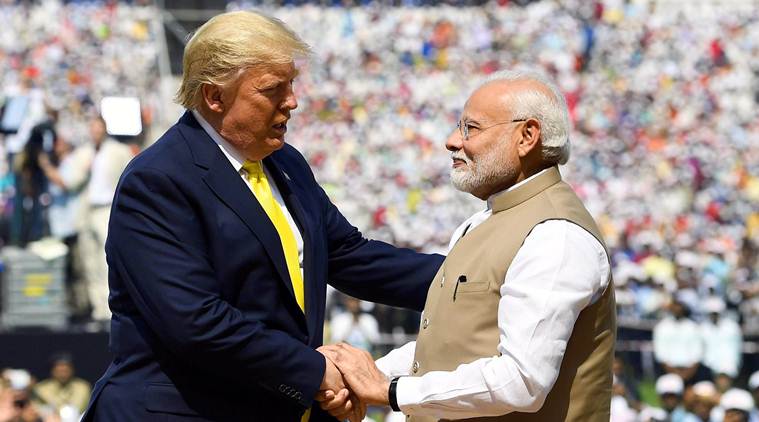
On May 29, Trump had claimed he spoke to PM Modi about the India-China border, but sources in New Delhi said there has been “no recent contact†between the two leaders. (ANI/File)
In the first comments from Capitol Hill on the ongoing tension along the India-China border, a top US Congressman — who heads the powerful House panel on Foreign affairs  — has expressed “concernâ€, called China a “bullyâ€, and “strongly†urged China to “respect norms and use diplomacy†to resolve its border questions with India.
In a statement late on Monday night, US Congress’ House Committee chair Eliot L Engel said, “I am extremely concerned by the ongoing Chinese aggression along the Line of Actual Control on the India-China border.â€
“China is demonstrating once again that it is willing to bully its neighbours rather than resolve conflicts according to international law. Countries must all abide by the same set of rules so that we don’t live in a world where “might makes right,†he said.
“I strongly urge China to respect norms and use diplomacy and existing mechanisms to resolve its border questions with India.â€
“I strongly urge China to respect norms and use diplomacy and existing mechanisms to resolve its border questions with India.†-Chairman @RepEliotEngelhttps://t.co/say45WUhBt
— House Foreign Affairs Committee (@HouseForeign) June 1, 2020
Engel, an influential Democrat Congressman, has long been a supporter of India. However, External Affairs minister S Jaishankar had cancelled a meeting with Engel and other Congress members in Washington DC last December, over Congresswoman Pramila Jayapal’s inclusion into the delegation.
In July last year, after US President Donald Trump had falsely claimed that PM Narendra Modi had asked him to mediate on Kashmir, Engel had spoken with then Indian ambassador to the US Harsh Vardhan Shringla.
“Engel reiterated his support for the longstanding US position on the Kashmir dispute, saying he supported dialogue between India and Pakistan, but reaffirmed that the dialogue’s pace and scope can only be determined by India and Pakistan,†he had said in a statement.
During the call, Engel “reaffirmed that in order for dialogue to be meaningful, Pakistan must first take concrete and irreversible steps to dismantle the terrorist infrastructure†on its soil, the statement had said.
Last week, on May 29, Trump had claimed that he spoke to Prime Minister Narendra Modi about the India-China border, but sources in New Delhi said there has been “no recent contact†between the two leaders and the last conversation took place almost two months ago, on April 4.
Trump had claimed that he had spoken to Modi, who was “not in a good mood†about what’s going on with China. The US President made those remarks in response to questions at the White House.
“They have a big conflict going with India and China. Two countries with 1.4 billion people. Two countries with very powerful militaries. And India is not happy, and probably China is not happy. But I can tell you, I did speak to Prime Minister Modi. He’s not — he’s not in a good mood about what’s going on with China,†the US President had said.
That had been the only comment so far from the US on the ongoing India-China border tension.
Update, June 1, 2020: Sony has just posted on Twitter that it has decided to postpone its previously planned PlayStation 5 reveal event. It was to be held on June 4, but today’s Twitter post contained a terse statement from Sony. It said, †. . . we do not feel that right now is the time for celebration and for now, we want to stand back and allow more important voices to be heard.†Sony did not reveal a new date for the PS5 reveal event.
Original article, May 27, 2020 (3:30 PM ET): It looks like we’re finally going to learn more about the PlayStation 5, which should come out during the holiday season of 2020. Information on the PS5 has been rather scarce, but with the timeframe E3 would typically occupy rapidly approaching, it looks like the PlayStation 5 is going to be officially revealed.
PlayStation 5 reveal event
According to reports from VentureBeat and Bloomberg, Sony is getting ready to announce a special press conference that’ll cover all things PlayStation 5. The event is likely to take place on June 3, which makes complete sense, as that’s right around the time when Sony would typically have a conference to kick off E3, the gaming industry’s now-canceled trade event.
At this point, we don’t know what Sony will show off at the event, but we’d expect the company to hold back some information for future reveals. Generally, console makers show off the hardware and provide some specifications, and then reveal the price and release date at a later time. Doing so allows the company the build hype and anticipation as the release window grows closer.
We’d expect to see some gameplay demonstrated during the PlayStation 5 reveal event, as Sony seems aware of the criticism Microsoft faced when it didn’t show off enough gameplay at the Xbox Series X reveal.
Because of the COVID-19 pandemic, these plans could change, as all companies need to be flexible to deal with the current state of the world. We’d expect the event to take place primarily on the internet without the press in attendance due to social distancing measures.
Without referencing China’s well-documented discrimination against Uighurs and other minorities or the use of police force against protesters in Hong Kong over the past year, the Chinese government condemned the “serious problems†of police brutality and said “racial discrimination against minorities is a social ill in the United States.”
Ignoring the irony, authorities in Hong Kong on Monday refused permission for an annual Tiananmen Square Massacre vigil on June 4 for the first time in 30 years.
The Russian foreign ministry, meanwhile, took the chance Sunday to lecture the U.S. on media freedom after news outlets reported being targeted by police in the course of their work covering the protests in various cities. RIA Novosti correspondent Mikhail Turgiev was pepper sprayed in Minneapolis, prompting the ministry to express concern “about the increased number of police violence cases and unjustified detentions of journalists during their coverage of protests.†The ministry added: “we consider it unacceptable for US law enforcement officials to use special equipment — rubber bullets and tear gas — against media representatives after they present their press cards.â€
Russia and China are also flooding social media with online propaganda targeting the ongoing unrest and violence in the United States, according to an analysis of recent Twitter posts by POLITICO.
Since May 30, government officials, state-backed media outlets and other Twitter users linked to Beijing or Moscow have increasingly piggybacked on hashtags linked to Floyd, the Minnesota man whose death in police custody set off days of nationwide protests, to push divisive messages and criticize Washington’s handling of the unfolding crisis.
Other foreign actors are seeking to use the U.S. protests to advance their domestic agendas.
European Parliament Member Jordan Bardella, a top lieutenant of French far-right party leader Marine Le Pen, tweeted Monday morning that left wing policies in France would bring only, “Whites hunted in the streets, lynchings, arson and looting, is that your revolutionary dream for France?â€
National leaders in democracies have mostly kept their counsel — respecting the long tradition of not commenting on the domestic politics of other nations. Canadian Prime Minister Justin Trudeau told reporters Friday that Canadians are watching the American news with “shock and with horror,†adding that “racism is real. It’s in the United States but it’s also in Canada.â€
Later, as thousands gathered to protest racial injustice in Toronto, Peter Mackay, a candidate to become Canada’s conservative opposition leader, was outspoken. “It has been profoundly sad and troubling,†he said, adding, “The violence is undeniable evidence of the ongoing legacy of racism, pain and deep divisions endured by too many, and unresolved for too long. Anti-black racism, or intolerance and hatred of any kind have no place in our societies — in the U.S., Canada or anywhere. We must all stand up against it, eradicate it.â€
Protests against racism and police violence have cropped up in cities around the world in recent days. Thousands gathered in London on Sunday, with 23 people arrested in a gathering outside the U.S. Embassy, according to the Metropolitan Police. Thousands also protested in Berlin on Saturday and Sunday, and in Amsterdam on Monday.
International sports stars, including members of the Liverpool FC squad that plays in the English Premier League, are also showing solidarity with those in America calling for racial justice.
Even in New Zealand, which has enforced one of the strictest Covid-19 lockdowns, people gathered for a large march Monday in Auckland, calling on Prime Minister Jacinda Ardern to denounce the killing of Floyd.
“It’s painful to follow events in the U.S. these days,†Ambassador Boris Ruge of Germany, now the vice chair of the Munich Security Conference, wrote. “Having lived there for many years, I feel great affection for Americans and for America. No doubt in my mind that the ‘better angels’ will prevail.â€
Some overseas commentators are laying the blame at the feet of the current U.S. president. Tom Switzer, head of Australian right-wing think tank the Center for Independent Studies, wrote in today’s Sydney Morning Herald that “President Donald Trump, far from leading the healing, is fanning the flames of resentments and hatreds while the quiet voices of the thoughtful people of goodwill — the folks who want to build bridges — are in short supply.â€
“Something more is going on here than resentment at police brutality — it is a crisis of confidence that goes beyond Trump — and it’s just not clear how Americans today can resolve their differences,†Switzer wrote.
In Brussels, the headquarters of the European Union, there are worries about what comes next, as the U.S. heads to the polls later this year. There’s been heated debate about how to conduct the election amid the pandemic, with the president and his supporters circulating unfounded suggestions that mail-in voting is subject to significant fraud. One EU diplomat expressed concern to POLITICO about what Trump will do if he narrowly loses the election in November.“Will he accept going?â€
A leading member of the European Parliament said that in addition to posing moral questions, the current turmoil has legal implications for the U.S.-EU relationship. Sophie in ’t Veld, a liberal Dutch politician, wrote on Medium that “Transatlantic relations cannot be business as usual,†saying law enforcement, privacy and data-sharing agreements now need to be reexamined in light of American law enforcement transgressions.
We use cookies on our website to give you the most relevant experience by remembering your preferences and repeat visits. By clicking “Accept”, you consent to the use of ALL the cookies.
This website uses cookies to improve your experience while you navigate through the website. Out of these, the cookies that are categorized as necessary are stored on your browser as they are essential for the working of basic functionalities of the website. We also use third-party cookies that help us analyze and understand how you use this website. These cookies will be stored in your browser only with your consent. You also have the option to opt-out of these cookies. But opting out of some of these cookies may affect your browsing experience.
Necessary cookies are absolutely essential for the website to function properly. These cookies ensure basic functionalities and security features of the website, anonymously.
Cookie
Duration
Description
cookielawinfo-checbox-analytics
11 months
This cookie is set by GDPR Cookie Consent plugin. The cookie is used to store the user consent for the cookies in the category "Analytics".
cookielawinfo-checbox-functional
11 months
The cookie is set by GDPR cookie consent to record the user consent for the cookies in the category "Functional".
cookielawinfo-checbox-others
11 months
This cookie is set by GDPR Cookie Consent plugin. The cookie is used to store the user consent for the cookies in the category "Other.
cookielawinfo-checkbox-necessary
11 months
This cookie is set by GDPR Cookie Consent plugin. The cookies is used to store the user consent for the cookies in the category "Necessary".
cookielawinfo-checkbox-performance
11 months
This cookie is set by GDPR Cookie Consent plugin. The cookie is used to store the user consent for the cookies in the category "Performance".
viewed_cookie_policy
11 months
The cookie is set by the GDPR Cookie Consent plugin and is used to store whether or not user has consented to the use of cookies. It does not store any personal data.
Functional cookies help to perform certain functionalities like sharing the content of the website on social media platforms, collect feedbacks, and other third-party features.
Performance cookies are used to understand and analyze the key performance indexes of the website which helps in delivering a better user experience for the visitors.
Analytical cookies are used to understand how visitors interact with the website. These cookies help provide information on metrics the number of visitors, bounce rate, traffic source, etc.
Advertisement cookies are used to provide visitors with relevant ads and marketing campaigns. These cookies track visitors across websites and collect information to provide customized ads.





 On May 29, Trump had claimed he spoke to PM Modi about the India-China border, but sources in New Delhi said there has been “no recent contact†between the two leaders. (ANI/File)

