Coronavirus: Guidance for beauty salons, gyms and pools as they’re allowed to reopen

0

The government has announced the latest easing of England’s lockdown, with beauty salons, gyms, leisure centres and pools allowed to reopen this month.

What beauty treatments can I get from Monday?

The British Association of Beauty Therapy and Cosmetology (BABTAC) – which has been working with the government on the reopening of the beauty sector – said treatments on the body such as manicures, pedicures, leg or bikini waxing will be allowed to go ahead when salons reopen from Monday.

Beard trimming will also be allowed, but should be limited to “simple beard trims, thinning or removing bulk or length which can be done using either clippers or scissors”, BABTAC said.


‘Normal life is slowly returning’

Intricate detailing, outlining or shaving of beards/moustaches that involves prolonged periods near the “high-risk zone” directly in front of the client’s face should not be carried out.

What beauty treatments can’t I get?

BABTAC said treatments on the face will not be permitted when salons reopen.

This includes, but is not limited to:

  • Face waxing, sugaring or threading services
  • Facial treatments
  • Advanced facial (electrical or mechanical)
  • Eyelash treatments
  • Make-up application
  • Dermarolling
  • Dermaplaning
  • Microblading
  • Electrolysis on the face
  • Eyebrow treatments

Salon workers are advised that treatments or services provided in the “high-risk zone” directly in front of the client’s face are the most risky in terms of catching or spreading coronavirus, because splashes and droplets from the nose and mouth are present, even when they can’t be seen.

Can I use the changing rooms at the gym when they reopen?

No.

Government guidance published ahead of the reopening of gyms and leisure centres on 25 July states that venues “should encourage attendees to arrive at the facility in sports kit and where possible to travel home to change/shower”.

“Use of changing rooms and showering facilities should in general be avoided where possible although these must be available for participants with disabilities or special needs and are likely to be needed after swimming,” it adds.

Venues are also encouraged not to play music at a volume that makes normal conversation difficult due to the potential for increased risk of transmission – particularly from aerosol and droplet transmission – if people need to raise their voices.

Will I have to wear a face mask when I work out?

When announcing the reopening of gyms from 25 July, Culture Secretary Oliver Dowden said gym-goers would not need to wear face coverings.

“We have not taken a decision to require the wearing of face masks in respect of gyms,” he said.

He stressed a “whole series of mitigating measures” would be in place in gyms.

Will saunas or steam rooms be open?

No.

The government says saunas and steam rooms should stay out of use for the time being as the risk of transmission is unclear.

Guidance also says the use of shared objects such as towels, robes, balls, weights, rackets, balls, scoring equipment, or sports clothing should be avoided unless they can be cleaned or sanitised between users.

Venues are also told to ensure any water fountains have signage which prohibits face-to-tap drinking and to stress these facilities are used only to refill personal bottles.

Will numbers be limited?

Gyms and leisure centres are being encouraged, where possible, to facilitate social distancing by limiting the overall number of customers.

:: Listen to the All Out Politics podcast on Apple Podcasts, Google Podcasts, Spotify, Spreaker

Guidance states that the maximum occupancy of each gym should be limited by providing a minimum of 100sqft per person of the net usable gym space, including changing rooms, toilet and wash facilities.

Will I have to social distance in a swimming pool?

Government guidance states that swimming pools, when they reopen on 25 July, should restrict numbers to allow 3sqm per bather.

Will I have to give my name when using a pool or gym?

Yes.

Venues are being told to keep a temporary record of customers and visitors for 21 days, by collecting each attendee’s name, home phone number, mobile number, and date and times of entry and exit.

Modern swimming pool with blue water, indoors
Image:
Numbers may be limited in swimming pools

This is so each person can be contacted if there is a case of COVID-19 connected to the facility.

Can I get the train or the bus to the gym or pool?

Despite the easing of the UK’s lockdown, the government is still advising people to consider all other forms of transport before using public transport.

Mr Dowden said on Thursday: “This is one of the reasons why we’ve had such an intense drive on things like cycling, walking, other forms of exercise… but we have said all the way through that if there isn’t another alternative, then you should use public transport wearing a mask and taking the other mitigating measures as necessary.”

Source link

Milley Calls for ‘Hard Look’ at Renaming Bases Honoring Confederates

WASHINGTON — The top military official in the United States called on Thursday for taking “a hard look” at changing the names of Army bases honoring Confederate officers who had fought against the Union during the Civil War, disagreeing with President Trump and further exposing a divide between the military and the president.

Gen. Mark A. Milley, the chairman of the Joint Chiefs of Staff and Mr. Trump’s senior military adviser, told a House hearing that the base names had become an issue of “divisiveness.”

Ten Army bases that honor Confederate generals who fought to defend the slaveholding South have been the focus of a growing movement for change.

“There is no place in our armed forces for manifestations or symbols of racism, bias or discrimination,” General Milley said.

“The Confederacy, the American Civil War, was fought, and it was an act of rebellion,” he said. “It was an act of treason, at the time, against the Union, against the Stars and Stripes, against the U.S. Constitution. Those officers turned their back on their oath.”

General Milley had warned White House officials this month that he planned to give his unvarnished opinion to Congress if the base issue came up, an administration official said. But his assessment was nonetheless likely to anger the president, who has made clear his disdain for both the waves of demonstrations for racial justice that swept the country last month and the calls to rename the Confederate bases.

But just as Mr. Trump has shown an increasing willingness to air divisive and even racist viewpoints, military leaders have also shown more willingness to publicly express views at odds with their commander in chief’s.

General Milley infuriated the president last month when he issued a public apology for taking part in Mr. Trump’s walk across Lafayette Square for a photo op after the authorities used tear gas and rubber bullets to clear the area of peaceful protesters. “I should not have been there,” General Milley said later.

The 10 bases named after Confederate generals are all in the South: Fort Bragg in North Carolina; Fort Hood in Texas; Fort Benning and Fort Gordon in Georgia; Fort A.P. Hill, Fort Pickett and Fort Lee in Virginia; Camp Beauregard and Fort Polk in Louisiana; and Fort Rucker in Alabama.

Critics argue that the men lionized by these base names were traitors who fought the very military that now honors them, and that glorifying them is a boon to racist groups.

Maj. Gen. George Pickett, for instance, led an infantry assault against Union soldiers at the Battle of Gettysburg, while Col. Edmund Rucker, who was wounded and captured during the Battle of Nashville in 1864, was later released in a prisoner exchange organized by the Ku Klux Klan’s first grand wizard, Gen. Nathan Bedford Forrest.

At the Pentagon, Defense Secretary Mark T. Esper and General Milley, as well as senior Army, Navy and Air Force officials, have been anxious to show understanding of the public anger over racial inequity that has also manifested itself among those in uniform. They have held meetings to discuss the gap in the military between its mostly white officer corps and its diverse ranks, where 43 percent are people of color.

But Mr. Trump grew upset when he saw articles about the possibility of renaming bases, according to administration officials.

Mark Meadows, the White House chief of staff, encouraged the president to block any attempt to change the names, the officials said. Mr. Trump has tweeted several times to voice his ire about renaming the bases, in posts that have infuriated senior defense officials.

“The United States of America trained and deployed our HEROES on these Hallowed Grounds, and won two World Wars,” Mr. Trump wrote in a string of Twitter posts. “Therefore, my Administration will not even consider the renaming of these Magnificent and Fabled Military Installations. Our history as the Greatest Nation in the World will not be tampered with. Respect our Military!”

The president even threatened to veto the military spending bill passed by Congress if it contained a requirement to rename the bases.


Source link

‘Please Scream Inside Your Heart,’ Japanese Amusement Park Tells Thrill-Seekers

Japan’s Tokyo Dome is shown before amusement rides began to reopen in the country. Japanese amusement park operators have asked people on rides at some parks not to scream.

Bloomberg/Bloomberg via Getty Images


hide caption

toggle caption

Bloomberg/Bloomberg via Getty Images

Japan’s Tokyo Dome is shown before amusement rides began to reopen in the country. Japanese amusement park operators have asked people on rides at some parks not to scream.

Bloomberg/Bloomberg via Getty Images

The Fuji-Q Highland amusement park near Tokyo has an unorthodox request for its roller coaster riders.

“Please scream inside your heart,” and not out loud, the park is asking. The unusual ask is meant to reduce the risk of spreading the coronavirus.

While some may be skeptical that it’s possible to quietly ride a roller coaster, a promotional video from Fuji-Q proves that it can be done.

The video shows two stone-faced, suit-wearing, and completely silent executives ride the Fujiyama roller coaster, the park’s main attraction.

YouTube

The no-screaming guideline was one of several recommendations that Japanese amusement park operators released in late May as the country was beginning to reopen after shutting down due to the coronavirus, according to the Agence France-Presse.

Thrill-seekers have been asked to “refrain from vocalizing loudly” to avoid spreading droplets of the virus, according to the guidelines.

Several park-goers have complained that the request was unrealistic, according to a report from the Wall Street Journal. One visitor at Tokyo Disneyland told the Journal that he thought it was “too strict.”

“If a scream comes out, it comes out,” he said.

In Japan, spread of the coronavirus has been relatively slow compared to many other countries. Japan has seen just over 20,000 confirmed cases and recorded 982 deaths due to the virus.

The United States is the global epicenter of the coronavirus pandemic, with more than 3 million confirmed cases and 132,000 deaths due to the virus. But some theme parks are welcoming guests back in the U.S., too.

Orlando’s Disney World park is reopening to the general public on July 11 at reduced capacity. A preview for annual pass holders is happening on Thursday, according to the Orlando Sentinel. No scream ban has been announced there.

Florida has seen a surge in coronavirus numbers. Its number of new cases reported per day has risen by 146% compared to two weeks prior.

Source link

European Parliament clashes with Merkel over rule of law in budget talks

0

Merkel appeared to suggest last week that she saw the rule-of-law condition as a longer-term issue. | Pool photo by Fabrizio Bensch/AFP via Getty Images

Lawmakers criticize German chancellor over what they see as plans to soften rule-of-law demands in budget deal.

German Chancellor Angela Merkel is coming under fire from the European Parliament over what MEPs see as plans to soften rule-of-law conditions in an effort to reach a quick EU budget deal.

EU leaders will meet in Brussels next week for tough negotiations on the bloc’s seven-year budget and post-coronavirus recovery fund — and the thorny question of linking respect for the rule of law to the distribution of EU money is on the agenda.

The German government has long supported efforts to find a way to make EU funding contingent on adhering to certain democratic norms. The coronavirus crisis, however, may have changed Merkel’s approach.

Before the crisis, wealthy states like Finland, Sweden, Germany and France were confident that they could eventually push through such a mechanism as countries like Poland and Hungary — which both currently face Article 7 disciplinary proceedings over rule-of-law concerns — fear delayed budget payments if talks are prolonged over rule-of-law debates.

But leading MEPs now warn that faced with the risk of a deepening economic crisis and a possible surge of populism in southern European countries, Merkel will try to avoid any potential budget vetoes by dropping her insistence on a directly linked rule-of-law mechanism.

“I hear from the German government that they want to first agree on the budget and then the issue of rule of law, because the budget requires unanimity and, for example … Poland and Hungary cannot be forced to agree to rule of law questions,” Daniel Caspary, chair of Merkel’s Christian Democratic Union (CDU) group in the European Parliament, told reporters on Thursday.

“I can see the pressure that the German government is facing, that we have to move very quickly on the budget and the recovery fund, because the money has to come very quickly,” Caspary added, threatening that the Parliament could veto the deal “as long as there is no meaningful solution to the rule-of-law issue.”

Merkel, for her part, appeared to suggest last week that she saw the rule-of-law condition as a longer-term issue. Rule of law, she said, “is not just a money issue, it’s an overarching theme that will run through the years.”

“For funds to be associated with the rule of law at all, funds are needed in the first place,” she added. “We need an agreement, and that is why the focus [of next week’s summit] will be on the issue of first making progress with the recovery fund and the [budget], so that we have a basis on which we can then work in the described way.”

Some politicians said Merkel’s comments indicate that she could try to bring back the rule-of-law mechanism at a later stage of the negotiations, when the detailed regulations governing different budget programs are finalized.

“Plan B could be the [negotiations on] specific programs, in which the Parliament is involved intensively,” said Caspary.

But this may not be enough for the so-called “frugal four” — Austria, Sweden, Denmark and the Netherlands — which could threaten to veto a budget deal that does not offer explicit guarantees on the rule of law.

“Anchoring the rule of law in our budget is not optional,” said one diplomat from a frugal country. “How do we otherwise defend what we spend towards our voters?”

Parliamentary backlash

A spokesperson for the German government told POLITICO that Berlin “supports the work in the context of the [long-term budget] for a mechanism to protect the EU budget in connection with rule of law deficits.”

The spokesperson added that the inclusion of such a mechanism in next week’s negotiations was up to Council President Charles Michel, who is set to issue an updated compromise proposal on Friday. The German government “assumes that the mechanism will continue to be part of the negotiations,” the spokesperson added.

Meanwhile, during a Parliament debate on Thursday, the apparent change in Germany’s position triggered a cross-party backlash.

“You can be sure that you will meet with decisive resistance if you want to prevent, dilute or render this [rule-of-law] mechanism as useless as possible,” Katarina Barley, one of the Parliament’s vice presidents and a member of the German Social Democrats (SPD), Merkel’s coalition partner in Berlin. Barley was aiming her comments at Germany’s Europe Minister Michael Roth, a fellow SPD member representing the Berlin government at the debate.

Spanish Socialist lawmaker Eider Gardiazabal said the rule-of-law mechanism was not just “priority but a sine qua non for the good development of the budgetary negotiations we will be holding over the next months.”

Moritz Körner, a German MEP from the Renew Europe group, said that Merkel’s previous statements on the importance of the EU’s core values “also requires the chancellor to be consistent in her commitment to … this rule-of-law mechanism.”

Daniel Freund, a German MEP from the Greens, spoke of a “last chance to show that values are not negotiable for us” and issued a plea to Berlin: “Please don’t surrender next week.”

This article is part of POLITICO’s coverage of the EU budget, tracking the development of the seven-year Multiannual Financial Framework. For a complimentary trial, email pro@politico.eu mentioning Budget.


Source by [author_name]

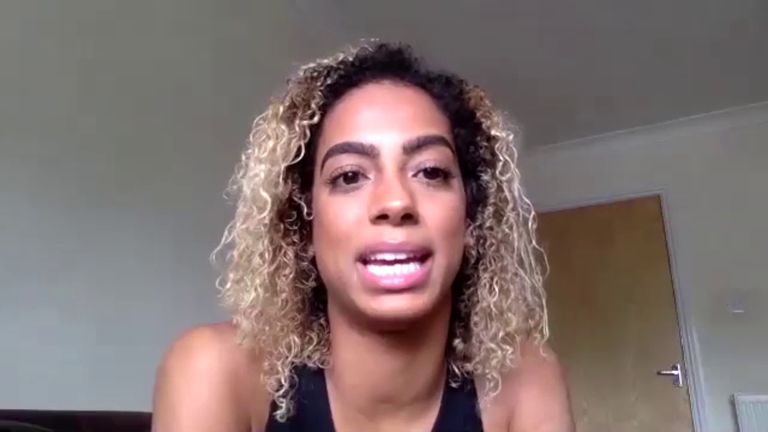
Former Team GB gymnast Danusia Francis calls for ‘top-down’ change at British Gymnastics

0

Danusia Francis: “They have achieved some of the greatest things, competing at the Olympics and representing their country, and they look back on it as a huge negative experience.”

Last Updated: 09/07/20 9:18pm


0:56

Former Team GB gymnast Danusia Francis says there needs to be a top-down change of culture at British Gymnastics.

Former Team GB gymnast Danusia Francis says there needs to be a top-down change of culture at British Gymnastics.

Former Team GB gymnast Danusia Francis has called for a top-down change in attitudes at British Gymnastics following allegations of physical and mental abuse.

The organisation announced the launch of an independent review into accusations of abuse in the sport on Tuesday, which will be conducted by Jane Mulcahy QC.

British Gymnastics has taken the step after a number of former athletes, including Commonwealth Games gold medallist Lisa Mason, publicly accused coaches of bullying and mistreating athletes.

1:27
The British Athletes Commission has written to British Gymnastics and UK Sport asking to be part of an independent review into allegations of a culture of fear and abuse within the sport.

The British Athletes Commission has written to British Gymnastics and UK Sport asking to be part of an independent review into allegations of a culture of fear and abuse within the sport.

Francis – who now represents Jamaica but has competed for Team GB in the past – was keen to stress she has not witnessed or been subjected to any abuse herself, but she says she feels for those who have been less fortunate than she has.

“It needs to be reviewed from the top-down and changes need to be made,” Francis told Sky Sports News.

“Everyone is starting to feel courage that their voice matters and that their voice can be heard.

Danusia Francis now competes for Jamaica and will represent them at next year's rearranged Olympics in Tokyo

Danusia Francis now competes for Jamaica and will represent them at next year’s rearranged Olympics in Tokyo

“I just feel lucky and I don’t feel as though people like me who have had a positive experience should be a lucky thing, it should be the norm.

“You should be able to step away from somewhere that you’ve trained for up to 30 hours a week and call it your second home.

“You shouldn’t ever be scared to go back there or feel traumatised to drive past. It really breaks my heart, especially that some of these are my close friends.

“They have achieved some of the greatest things, competing at the Olympics and representing their country, and they look back on it as a huge negative experience.”


Source link

Johnny Depp grilled about ‘3-day ordeal of assaults’ against Amber Heard, his severed finger

Johnny Depp denied abusing ex-wife, Amber Heard, for days during a 2015 drug binge in Australia. In court on Thursday, the actor claimed it was Heard who assaulted him and that she was responsible for cutting off his fingertip. The infamous injury was a point of contention under cross-examination.

Depp answered questions about his relationship with Heard for the third day in a row as part of his libel lawsuit against the Sun. The Fantastic Beasts star, 57, is suing the tabloid’s owner, News Group Newspapers, and the paper’s executive editor, Dan Wootton, over a 2018 article that called him a “wife-beater.” Depp has denied Heard’s abuse claims for years. The Sun stands by the statement and Heard, who was in court again, will testify on behalf of the defense during the three-week trial. 

Heard alleges she was abused 14 times from 2013 to 2016. On Thursday, the Sun’s attorney, Sasha Wass, focused on violent incidents that supposedly occurred when Depp was shooting the fifth Pirates of the Caribbean film in Australia. Just as it’s been since the pair split four years ago, it was a he-said, she-said in court over who was responsible for the abuse. Wass asked Depp about subjecting Heard to a “three-day ordeal of assaults” while he was high on drugs and drunk.

“I vehemently deny it and will go as far as to say it’s pedestrian fiction,” he replied, according to the Associated Press.

Depp admitted that their relationship felt like a “constant tailspin” and recalled telling Heard several times, “Listen, we are a crime scene waiting to happen.” He maintained he was never violent.

Wass and Depp sparred over details of the alleged altercation in Australia.

According to the Guardian, Wass claimed Depp held Heard by her hair, slapped her face, smashed her head against the fridge, spit at her, told her he hated her, threw bottles at the wall, shoved Heard against a ping-pong table which collapsed and ripped a phone off the wall, causing injury to his finger. Depp denied each accusation, saying “not true”, “no, ma’am” or “fabrication.”

However, Depp agreed the pair got into an argument.

“She was unwilling to sign a prenup,” he recalled. “My attorneys tried to get her to sign a postnup agreement.” 

Heard stated in court documents she was assaulted over three-days in early March 2015. The pair wed weeks earlier. According to Depp, she got frustrated and “started yelling” at him over being asked to sign the postnuptial agreement. Wass contended the argument exploded because he was drunk and taking drugs, like ecstasy. The actor denied taking drugs, but admitted to falling off the wagon with alcohol.

Depp noted it’s a possibility they also argued over accusations she was having affairs with the leading men in her films, which Heard has claimed. Heard had been shooting a movie with Billie Bob Thornton. During Wednesday’s court appearance, Depp admitted to being jealous when she worked with James Franco. 

Depp told the court it was Heard who was violent in Australia and that she threw alcohol bottles at him with one ultimately cutting off the tip of his finger.

“After Ms. Heard threw the second vodka bottle at me, which severed the tip of my finger and crushed the bone, is when I began what I would feel as some species of nervous breakdown,” Depp told Wass. “I didn’t want to live at that time.”

Another image of a mirror Depp supposedly painted with his finger.

The court was shown photos of walls in their rental home painted with his injured finger. The house had up to $150,000 in damages and while Depp agreed the couple “wrecked” the house, he said Heard was responsible for most of the damage.

One image the High Court was shown on Thursday.

During the hours long cross-examination, Wass asked Depp about an email he sent to his doctor at the time. In the message, he accused Heard of “having an obsession with herself” and only being interested in fame, but the defense argued he admitted to injuring his finger himself. “I’m so very sad. I cut the top of my middle finger off, what should I do? I’m so embarrassed …” it read. 

“That doesn’t mean to say I myself did it,” Depp said.

“Are you serious?” Wass replied.

Depp picked apart what Heard called the “three-day hostage situation” in Australia in his written statement, citing medical records and witnesses.

“Amber claims that during these three days, I subjected her to a variety of what sounds like torture and other abuse. These sick claims are completely untrue,” he stated in the document, which has been viewed by Yahoo Entertainment. 

Depp admitted to breaking his sobriety on March 8 “by drinking vodka after a sustained period of verbal abuse and endless aggression from Amber after I unsuccessfully sought refute and peace from her in one locked bathroom after another.”

“I understand that Amber makes references to a bottle of Jack Daniels in her first witness statement. There was no Jack Daniels on the property. I know that because if there had been, I would have definitely drunk Jack Daniels rather than vodka when I finally broke down and sought the solace of alcohol for the first time in a very long time,” Depp wrote. 

Depp added “my finger was cut off by Amber throwing a large ‘handle’ vodka bottle at me” and that he called his security guards shortly after the incident and he was eventually taken to the hospital.

“It is important to remember that my 24 hour a day security guards were right outside the property during this incident the whole weekend, and Amber knew that. At no point did she seek help from them while she claims she was undergoing a three-day hostage ordeal,” Depp said, noting the property manager who escorted Heard back to L.A. did not “see any damage to her face where she claimed I had been savagely striking her.”

“The truth is that she did not sustain any injuries at all during the weekend of March 8, while I suffered grievous injuries including a severed finger and a cigarette stubbed out on my cheek,” Depp added. 

The Australia incident was hardly the only thing covered in another explosive day in court. The actor was asked about multiple other alleged violent altercations, including one from December 2015 when Depp allegedly headbutted Heard. The AP reports Wass alleged to Depp that by the end of their marriage, “you were routinely using violence against Ms. Heard when you were intoxicated and when you were angry.”

During a different alleged violent altercation, Heard claimed that Depp trashed her closet, slapped her and headbutted her, causing two black eyes. Depp claimed Heard was the aggressor, and he had only tried to restrain her “to stop her flailing and punching me.” Images of Heard appearing hurt were shown in court.

Depp’s cross-examination is set to conclude Friday morning.

Read more from Yahoo Entertainment:

Source link

COVID-19 latest: Over two million tests conducted to date

Health Minister Zweli Mkhize, on Thursday 9 July, announced that the confirmed COVID-19 cases in South Africa have risen to 238 339. This is a whopping increase of 13 674, as the total number of confirmed cases stood at 224 665 on Wednesday 8 July. 

As cases continue to rise rapidly, a milestone is testing was also reached on Thursday. The total number of tests conducted to date is 2 000 569 and a total of 56 170 new tests were completed since the last report.

“We have thus reached a milestone of having completed over two million tests for COVID-19. I would like to pay special tribute to the men and women in the laboratory services who have made this possible. This is an enormous achievement that we can all be proud of as South Africans,” said Mkhize.

Mkhize announced an updated death toll of 3 720.

“Regrettably, we report a further 129 COVID-19 related deaths – one from the Northern Cape, 26 from KwaZulu-Natal, 28 from Eastern Cape, 37 from Gauteng and 37 from the Western Cape. We also indicate that the current total deaths in Limpopo is 33 (not 44 as reported yesterday). This was a data interpretation error which has been corrected,” said Mkhize.

There have been 113 061 recoveries which translates to a recovery rate of 47.4%.

LATEST COVID-19 CASES BY PROVINCE AS OF THURSDAY 9 JULY

The following confirmed COVID-19 cases have been detected in each province as of Thursday: 

  • Eastern Cape – 44 432 cases
  • Free State – 3 724 cases; 
  • Gauteng – 81 546 cases; 
  • KwaZulu-Natal – 19 630 cases; 
  • Limpopo – 2 381 cases; 
  • Mpumalanga – 2 902 cases; 
  • North West – 7 870 cases; 
  • Northern Cape – 1 039 cases; and 
  • Western Cape – 74 815 cases
  • Unknown – 0 cases.

This comes to a total of 238 339 confirmed cases. 

COVID-19 DEATH TOLL BY PROVINCE AS OF THURSDAY

The following confirmed COVID-19-related deaths have been detected in each province as of Thursday: 

  • Eastern Cape – 610 deaths;
  • Free State – 19 deaths;
  • Gauteng – 515 deaths;
  • KwaZulu-Natal – 249 deaths;
  • Limpopo – 33 deaths;
  • Mpumalanga – 22 deaths;
  • North West – 36 deaths; 
  • Northern Cape – seven deaths;
  • Western Cape – 2 229 deaths. 

LATEST RECOVERIES BY PROVINCE 

Mkhize announced the latest COVID-19 recoveries as follows: 

  • Eastern Cape – 24 304 recoveries;
  • Free State – 629 recoveries;
  • Gauteng – 23 804 recoveries;
  • KwaZulu-Natal – 5 505 recoveries;
  • Limpopo – 665 recoveries;
  • Mpumalanga – 779 recoveries;
  • North West – 1 574 recoveries;
  • Northern Cape – 267 recoveries; and
  • Western Cape – 55 534 recoveries.


Source link

Coronavirus canceled office clothing. These stores are in big trouble

0

The new work-from-home reality has rapidly recalibrated the fashion code for professional wear, and that spells trouble for the retailers who sell formal office clothing.

On Wednesday, Brooks Brothers, the 202-year-old menswear retailer that has dressed 40 US presidents and is synonymous with the classic Wall Street banker look, filed for bankruptcy as demand for suits plummeted amid the pandemic.
Meanwhile, Ascena Retail Group, which owns Ann Taylor and Lane Bryant apparel chains, told Bloomberg it’s weighing all options to stay afloat after its business was hit hard by a pullback in clothing purchases, including officewear. Ascena is reportedly planning to shut at least 1,200 stores. It has 2,800 locations in the United States, Canada and Puerto Rico.

Ascena did not immediately respond to request for comment, and Tailored Brands declined to comment.

With more work calls and team meetings now taking place from the comfort of home, office wear has become decidedly more relaxed. It’s a shift that’s been occurring for years, as employers in more buttoned up industries like financial services competed for talent with tech companies and upstarts that had their own, more laid-back work cultures.

‘Nail in the coffin’

The pandemic may have ended formality forever.

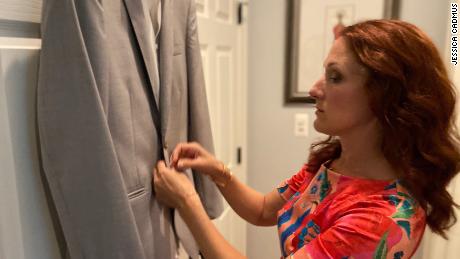
“Brooks Brothers’ bankruptcy filing is really quite incredible,” said Jessica Cadmus, a New York-based stylist whose clients mostly work in the finance industry.

Cadmus worked at Brooks Brothers earlier in her career, helping to set up a client concierge service for the company’s flagship store on New York’s Madison Avenue. “The reality is that workwear trends have been shifting for a while now and sadly the pandemic was the final nail in the coffin.”

Even prior to the national shutdown, Cadmus said her clients were gravitating to a more relaxed work look. “There was an enormous shift taking place towards business casual,” she said.

Last year, Goldman Sachs announced that its employees could start dressing down for the office. The Wall Street firm has historically favored collared shirts and suits.

“Then when Covid-19 hit and people were forced to work from home, there was an absolute halt in buying formal workwear,” said Cadmus. “The emphasis from my clients now is on polished loungewear, where the fit is not as tailored and comfort is key.”

Her male clients, she said, are looking for new shirts but not trousers. “They are not asking about sports coats, suits, or shoes. It’s just shirts,” she said. Women want statement necklaces, earrings and broaches instead of suits and dresses for a more put together look for video calls.

Some people aren’t even changing out of their pajamas. In June, 47% of consumers told market research firm NPD they are wearing the same clothes throughout most of their day while at home during the pandemic, and nearly a quarter said they liked wearing activewear, sleepwear, or loungewear most of the day.

“People clearly do not want to change into multiple outfits throughout the day, especially under these circumstances,” Maria Rugolo, NPD’s apparel industry analyst, said. “It is about blending and maximizing one’s wardrobe. They still want to look presentable for work, but also want to feel comfortable.”

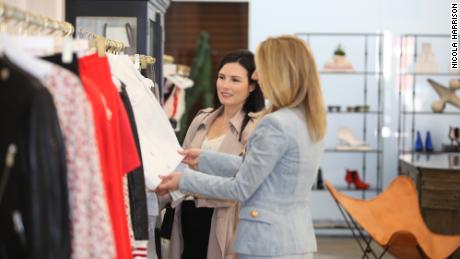
Personal stylist Nicola Harrison working with a client.

Stylist Nicola Harrison, whose clients include professionals in finance and other industries, acknowledges that workwear is now less dressy.

“But I’ve also been pushing against it,” she said. “For men, suits and sports coats provide a polished, professional look. And let’s be honest, they are very forgiving and hide a multitude of sins.”

For her, casual is acceptable at work to a degree. “Dark jeans, button-down shirt, a sports coat. You just shouldn’t go too far in the other direction because you are working from home.” Her “don’ts?” Ill-fitting polo shirts or clothes from your college days.

“Fit is key even with a casual look, even for a Zoom call,” she said. “With all the craziness happening in the world, the one thing you can control is your appearance. So why let yourself go?”

Source link

Hiring Outlook Remains Dim, With ‘Scarring in the Economy’

The number of new state unemployment claims dipped last week, but job losses continue to batter the economy as rising coronavirus cases pushed some regions of the country to reverse course and reimpose shutdown orders on businesses.

More than 1.3 million workers, seasonally adjusted, filed new claims for regular unemployment benefits last week, the government reported on Thursday. Another million first-time claims were filed under the federal Pandemic Unemployment Assistance program. Taken together, the report paints a disappointing picture of recovery: Total new unemployment claims have edged up from their mid-June lows.

Although hiring nationwide has picked up in recent weeks, most of the payroll gains were temporarily laid-off workers who were rehired. The pool of employees whose previous jobs have disappeared and who must search for new ones has grown.

“Their circumstances may be more challenging to rectify than those who were laid off because of a temporary closure,” said Elizabeth Akers, who was a staff economist with the Council of Economic Advisers under President George W. Bush. “Finding new jobs will be more difficult. There’s been scarring in the economy.”

Recent readings from employment sites also point to more lasting damage to the labor market. Overall job openings at ZipRecruiter rose last week, for instance, but the number of new jobs posted declined for the fourth week in a row.

“For now, at least, that suggests the increase in vacancies is being driven by a slowdown in hiring, not an increase in labor demand,” said Julia Pollak, ZipRecruiter’s labor economist.

“Recent jobs reports are encouraging, but the increase in employment entirely reflects rehires of workers on temporary layoff,” she added. “The recovery in new hiring has yet to begin.”

The longer the pandemic dampens or halts shopping, dining out, travel and business operations, the more likely it is that jobs put on a brief hold simply vanish.

Brooks Brothers, the nation’s oldest apparel brand in continuous operation, filed for bankruptcy this week and permanently closed 51 stores. And airlines announced that they might lay off or furlough tens of thousands of employees in October despite billions of dollars in government aid because air travel has not rebounded.

In Texas, where a jump in coronavirus cases has led to a new round of business closings and other restrictions, unemployment claims have risen. More than 117,000 people filed for benefits in Texas last week, a jump of more than 20,000 from a week earlier. It was the second straight weekly increase and the most new filings since late May, although still below the peak in early April.

A wide range of indicators recently have suggested that the economic rebound is losing momentum in states where virus cases are rising quickly.

The unemployment data released Thursday didn’t paint a clear picture, however. New filings fell in Oklahoma, Florida and other virus hot spots, and rose only slightly in Arizona. Claims rose in New Jersey and New York, states where the virus is comparatively under control. And economists caution against reading too much into week-to-week changes in state filings, which can be volatile.

Congress created the emergency Pandemic Unemployment Assistance program in March to extend benefits to independent contractors, self-employed workers and others who don’t qualify for regular state unemployment insurance. The effort got off to a slow start: Many states struggled to roll out the program while dealing with a record number of regular unemployment claims. Jobless workers across the country reported encountering jammed websites, lost paperwork and confusing or contradictory instructions.

Those issues have spilled into the data itself. Backlogs, data-entry errors and other issues have made it hard to know how many people are receiving benefits under the program, or exactly when their claims were first filed. At least some states appear to be counting the same recipients multiple times.

But economists say there is little doubt that the program is helping millions of workers who would ordinarily fall through the cracks of the unemployment safety net. More than 10 million people have filed claims under the emergency pandemic program, which is set to expire at the end of the year.

A weekly $600 federal supplement for all jobless workers is scheduled to end this month. The Paycheck Protection Program, an effort designed to preserve jobs by offering forgivable loans to small business, was recently extended through October.

Liz Etheredge, the chief executive of Mecklenburg Paint in Charlotte, N.C., said the federal loan made it possible for her to keep workers employed.

The spring paint season was just starting when the pandemic hit. “Oh, gosh, things just pretty much stopped,” said Ms. Etheredge, whose company also handles property management.

  • Updated July 7, 2020

    • What are the symptoms of coronavirus?

      Common symptoms include fever, a dry cough, fatigue and difficulty breathing or shortness of breath. Some of these symptoms overlap with those of the flu, making detection difficult, but runny noses and stuffy sinuses are less common. The C.D.C. has also added chills, muscle pain, sore throat, headache and a new loss of the sense of taste or smell as symptoms to look out for. Most people fall ill five to seven days after exposure, but symptoms may appear in as few as two days or as many as 14 days.

    • Is it harder to exercise while wearing a mask?

      A commentary published this month on the website of the British Journal of Sports Medicine points out that covering your face during exercise “comes with issues of potential breathing restriction and discomfort” and requires “balancing benefits versus possible adverse events.” Masks do alter exercise, says Cedric X. Bryant, the president and chief science officer of the American Council on Exercise, a nonprofit organization that funds exercise research and certifies fitness professionals. “In my personal experience,” he says, “heart rates are higher at the same relative intensity when you wear a mask.” Some people also could experience lightheadedness during familiar workouts while masked, says Len Kravitz, a professor of exercise science at the University of New Mexico.

    • I’ve heard about a treatment called dexamethasone. Does it work?

      The steroid, dexamethasone, is the first treatment shown to reduce mortality in severely ill patients, according to scientists in Britain. The drug appears to reduce inflammation caused by the immune system, protecting the tissues. In the study, dexamethasone reduced deaths of patients on ventilators by one-third, and deaths of patients on oxygen by one-fifth.

    • What is pandemic paid leave?

      The coronavirus emergency relief package gives many American workers paid leave if they need to take time off because of the virus. It gives qualified workers two weeks of paid sick leave if they are ill, quarantined or seeking diagnosis or preventive care for coronavirus, or if they are caring for sick family members. It gives 12 weeks of paid leave to people caring for children whose schools are closed or whose child care provider is unavailable because of the coronavirus. It is the first time the United States has had widespread federally mandated paid leave, and includes people who don’t typically get such benefits, like part-time and gig economy workers. But the measure excludes at least half of private-sector workers, including those at the country’s largest employers, and gives small employers significant leeway to deny leave.

    • Does asymptomatic transmission of Covid-19 happen?

      So far, the evidence seems to show it does. A widely cited paper published in April suggests that people are most infectious about two days before the onset of coronavirus symptoms and estimated that 44 percent of new infections were a result of transmission from people who were not yet showing symptoms. Recently, a top expert at the World Health Organization stated that transmission of the coronavirus by people who did not have symptoms was “very rare,” but she later walked back that statement.

    • What’s the risk of catching coronavirus from a surface?

      Touching contaminated objects and then infecting ourselves with the germs is not typically how the virus spreads. But it can happen. A number of studies of flu, rhinovirus, coronavirus and other microbes have shown that respiratory illnesses, including the new coronavirus, can spread by touching contaminated surfaces, particularly in places like day care centers, offices and hospitals. But a long chain of events has to happen for the disease to spread that way. The best way to protect yourself from coronavirus — whether it’s surface transmission or close human contact — is still social distancing, washing your hands, not touching your face and wearing masks.

    • How does blood type influence coronavirus?

      A study by European scientists is the first to document a strong statistical link between genetic variations and Covid-19, the illness caused by the coronavirus. Having Type A blood was linked to a 50 percent increase in the likelihood that a patient would need to get oxygen or to go on a ventilator, according to the new study.

    • How can I protect myself while flying?

      If air travel is unavoidable, there are some steps you can take to protect yourself. Most important: Wash your hands often, and stop touching your face. If possible, choose a window seat. A study from Emory University found that during flu season, the safest place to sit on a plane is by a window, as people sitting in window seats had less contact with potentially sick people. Disinfect hard surfaces. When you get to your seat and your hands are clean, use disinfecting wipes to clean the hard surfaces at your seat like the head and arm rest, the seatbelt buckle, the remote, screen, seat back pocket and the tray table. If the seat is hard and nonporous or leather or pleather, you can wipe that down, too. (Using wipes on upholstered seats could lead to a wet seat and spreading of germs rather than killing them.)

    • What should I do if I feel sick?

      If you’ve been exposed to the coronavirus or think you have, and have a fever or symptoms like a cough or difficulty breathing, call a doctor. They should give you advice on whether you should be tested, how to get tested, and how to seek medical treatment without potentially infecting or exposing others.


Initially she helped most of her 30 employees apply for unemployment benefits, which she said was time consuming and confusing. “One day I waited on hold for three hours to reach somebody” with the state to work out glitches with benefit applications, she said, “and then another day I waited two hours.”

She applied for a Paycheck Protection Program loan, hoping to avoid permanently laying off painters.

“It came just in time,” said Ms. Etheredge, who was able to avoid using up her savings.

She has put everyone back on the payroll through the use of her loan money, so she expects that the entire amount will be forgiven.

“I just worry how this country is going to pay it all back,” she said.

Thomas Falls Jr. used the federal loan program to help pay workers at his family’s commercial cleaning company, Falls Facility Services in Birmingham, Ala.

About a quarter of his business, which spans much of the state, dried up when the pandemic started, Mr. Falls said. He was forced to lay off about 25 workers south of Montgomery when the schools they cleaned closed. A new contract at a county government building elsewhere in the state and demand for enhanced sanitizing at other offices, though, made it possible to keep the rest of his 200 employees on the payroll, and even hire a few more.

“We were kind of fortunate,” said Mr. Falls, who said he planned to rehire the rest of his employees once schools reopened.

Lisa D. Cook, a professor of economics and international relations at Michigan State University, worries what will happen when these assistance programs dry up.

“At the heart of this is job loss,” said Ms. Cook, who testified before a congressional committee this week. State and local governments are laying off health care and education workers, and eviction bans are expiring even though a significant chunk of household renters and businesses are having trouble making payments.

“I just worry about this all piling up in the system,” she said.

Many jobless workers may have to wait a long time for the labor market to improve. The Organization for Economic Cooperation and Development said this week that high unemployment would probably persist in the United States and other developed countries at least until 2022.

Source link

LHC seeks reply from NAB on plea to arrest Jang Geo Media Group Editor-in-Chief’s wife and children

Jang/Geo Editor-in-Chief Mir Shakil-ur-Rahman was arrested by NAB on March 12. — Geo News/File

LAHORE: The Lahore High Court (LHC) on Thursday sought a reply from the National Accountability Bureau (NAB) chairman and others within two weeks on a petition questioning faulty investigations in the plot allotment case against Jang Geo Editor-in-Chief Mir Shakil-ur-Rahman.

A division bench comprising Justice Sardar Ahmad Naeem and Justice Farooq Haider passed the orders on a petition filed by Asad Khurral.

A counsel on behalf of the petitioner argued that his client provided evidence to NAB against Mir Shakil and his family members — Mir Ibrahim, Mir Ismail, Shaheena Shakil and others — in the illegal plots allotment case.

In 1986, Mir Ibrahim Rahman was 8 years old, Ayesha Rahman was 6, Asma Rahman was 4 and Mir Ismail Rahman was 1 year old.

However, the bureau only arrested Mir Shakil and no step had been taken against his family members, the petitioner complained.

He said that the bureau had “failed to take appropriate action” against the detained journalist’s family and that it would benefit Mir Shakil at the trial stage.

He pleaded with the court to direct the bureau to nominate the co-accused in the reference, besides placing their names on the Exit Control List.

The court, after hearing the argument, sought a reply from NAB authorities within two weeks and adjourned further hearing.

Source link