Sunday, May 3, 2026

Death of man in Tacoma, Wash., who said ‘I can’t breathe’ in police custody ruled a homicide

The mayor of Tacoma, Washington, called for the city manager to fire four police officers after the death of a black man in custody was ruled a homicide.

Manuel Ellis, 33, died on March 3 after being handcuffed and restrained by officers. He could be heard on police scanner traffic saying “I can’t breathe,” after he was handcuffed, and he died at the scene, according to NBC News affiliate KING in Seattle.

A Pierce County Medical Examiner’s Office ruling released this week said Ellis died of respiratory arrest due to hypoxia as a result of physical restraint, KING reported. Contributing factors included methamphetamine intoxication and dilated cardiomyopathy, commonly known as an enlarged heart.

Manuel Ellis died in Tacoma, Wash., in March while in police custody.via GoFundMe

Mayor Victoria Woodards called for the officers’ firing at a news conference streamed on Facebook on Thursday. “Today, it stops in Tacoma,” Woodards said. “We live in a nation where too many black lives have been lost, and I don’t want to see another one,”

Referring to a video that surfaced of the arrest, the mayor said, “As an African American woman, I didn’t need a video to believe,” she said, adding, “It does take a video for so many people to believe the truth about systemic racism and its violent impact on black lives.”

Tacoma is among the many cities across the country that have seen waves of protests sparked by the death of George Floyd in Minneapolis police custody more than a week ago.

The video that appears to show Ellis’ detainment was taken by an anonymous passerby from a vehicle and seems to show two officers punching and then slamming a man to the ground.

The footage was posted on social media by the Tacoma Action Collective and contains profanity and images that viewers might find disturbing. NBC News does not know what occurred before the events in the video.

Police have said that two officers encountered Ellis at 11:22 p.m. as he was walking home and allegedly harassing a woman at an intersection.

When the officers asked what he was doing, police said Ellis claimed he had warrants and wanted to talk to them. Then Ellis repeatedly struck their patrol car, prompting the officers to call for backup before engaging in a struggle to detain him, police said.

“He picked up the officer by his vest and slam-dunked him on the ground,” said Ed Troyer, spokesman for the Pierce County Sheriff’s Department.

There was a struggle before police got Ellis handcuffed on the ground and officers called for paramedics at 11:25 p.m.

Ellis stopped breathing and lost consciousness within a minute of firefighters’ arriving, and he was pronounced dead at the scene. His cause of death was initially listed as pending while medical examiners ran toxicology tests.

The Pierce County Sheriff’s Department is investigating the incident and plans to turn the case over to the county prosecutor next week, KING reported.

The four officers involved were initially placed on administrative leave after Ellis’ death, but were later allowed to continue working. After the medical examiner’s results were released, the officers were again placed on administrative leave, KING reported.

Tacoma Police Chief Don Ramsdell could not immediately be reached Friday morning to comment on the mayor’s call for the officers to be fired.

Ramsdell said in a statement Thursday that the department put the officers on leave while the agency waits for the sheriff’s office to complete the investigation.”We are committed to the investigative process and the integrity of the findings,” the police chief said. “Our hope is that any investigations bring with them answers for everyone involved.”

Tacoma police identified the four officers involved in restraining Ellis as Christopher Burbank, Matthew Collins, Masyih Ford and Timothy Rankine.

In a statement sent to NBC News, union representatives expressed concern that a decision was made on the officers’ fate before the investigation is complete.

”Without any facts, without an investigation, without due process, and with less than a minute of short, blurry, partial Twitter videos in hand, the mayor passed judgment on the actions of four Tacoma Police Officers,” the statement said. “She called them criminals. She called for their prosecution. She called for their termination from employment. And she called for all of these things without an ounce of evidence to support her words beyond misplaced rage.”

Ellis’s family spoke at a news conference flanked by community organizers and civil rights leaders to demand an investigation by the state attorney general.

His mother, Marcia Carter, gave an emotional account of her last conversation with her son: “Those were the last words I heard my son say to me: ‘I love you, Mom. I love you, Mom.’ And I can’t hear that ever again. I won’t be able to hear that.”

The Associated Press contributed.


Source link

White bystanders armed with rifles watch Floyd protesters march in Indiana

It is legal in Indiana to carry a rifle or a shotgun, but a permit is required to carry a sidearm in public, Land explained.

The protest on Monday drew dozens of demonstrators against the killing of George Floyd, a 46-year-old black man who died May 25 after pleading for air while a white Minneapolis police officer pressed his knee into Floyd’s neck.

Former Officer Derek Chauvin has been charged with second degree murder. The three other officers at the scene were charged for the first time on Wednesday with aiding and abetting second-degree murder and second-degree manslaughter.

Cedric Caschetta, who attended the nearly three-hour protest said some people stood on the opposite side of the street where the protest began and tried to antagonize them. Caschetta, 20, said the opposition crowd shouted, “Get a job,” “You don’t belong here” and “You’re the problem.”

Caschetta, who’s black, noted that he understands people’s Second Amendment rights but that the type of firearm the bystanders carried was excessive.

“Their message was intimidation, protection,” said Caschetta, a junior at Elmhurst College who lives in Lowell, Indiana.

Meanwhile, police officers accompanied the protesters to assure them of the department’s support and protection, Land said. Police also told the people opposing the protesters that the department stands with the demonstration.

“(We) made sure their message got out. We agreed with their message,” Land said. “Crown Point is not Minneapolis.”

Crown Point Mayor David Uran emphasized that the protesters were practicing their First Amendment rights.

“It was a peaceful demonstration. They were allowed to be out there,” Uran said during a virtual City Council meeting on Monday hours after the protest. “The tone was set very early that this was gonna be very peaceful.”

In Indianapolis, a police department official said the agency is investigating the actions of several officers captured on video during a demonstration Sunday using batons and pepper balls to subdue two women.

The video, posted on Twitter and Facebook, shows a black woman, who was being held from behind by a white, male officer, escaping his grasp and then being surrounded by several other officers. There are audible pops heard and the video shows several dust clouds, believed to be pepper balls, near the woman. It also shows two officers strike her with batons until she falls to the ground. The video also shows her being held face down against the pavement with a baton at the back of her neck.

A second woman, who is white, is seen and heard shouting, “Why her? Why her?” Another officer rushes the second woman, shoves her to the ground, where she is subdued by officers. The video does not show what led to the incident.

In announcing the investigation, Indianapolis Metropolitan Police Department spokeswoman Sgt. Grace Sibley declined to provide additional information.


Source link

Who’s allowed to track my kids online?

0

For two decades children’s digital privacy in the United States has been regulated by a national law: the Children’s Online Privacy Protection Act. The law limits how companies can collect data on children under 13 years old.

If website operators don’t properly adhere to the rules outlined in the act, they could face massive fines. In September, the Federal Trade Commission announced a record-breaking penalty against YouTube, in which the Google-owned service agreed to pay $170 million to settle alleged COPPA violations.

But the law has also faced criticism, with some lawmakers and advocates arguing that it doesn’t go far enough. Here’s what it does and does not do.

What COPPA does

COPPA, which went into effect in 2000, requires websites and services that want to collect personal information about children under 13—including real names, screen names, or contact information—to post privacy policies and get parental consent before obtaining the data.

In 2013, the FTC expanded the rules to require sites or services to get parental permission before collecting geolocation information, photos, video, and any “persistent identifiers,” like cookies. To meet the requirement, some services may have a parent sign a consent form or call a phone number, but many simply ask for age at sign-up and stop users who say they are under 13 from joining.

The law includes fines for companies that fail to comply. In one notable early case, from 2003, Mrs. Fields Cookies and Hershey’s Foods paid civil penalties of $100,000 and $85,000, respectively, to settle allegations that portions of their websites improperly collected data on children.

A few years later, the fines were already escalating: The social networking service Xanga paid $1 million in 2006 to settle FTC charges that it had created more than 1.7 million Xanga accounts for users who provided information indicating they were under 13 years old.

Last year, in another record for the time, Musical.ly—which has since become TikTok—agreed to pay $5.7 million to settle alleged violations of COPPA. That record was shortly eclipsed by the $170 million YouTube penalty.  (YouTube has since changed its rules concerning children’s content, disabling some features and limiting data collection for videos aimed at kids.)

What COPPA doesn’t do

The law applies to websites that are aimed at children under 13, but that standard is somewhat vague: If a service uses animated characters in ads, for example, or the service’s subject matter is something clearly appealing to kids, like toys, it might fall under COPPA.

General-interest sites are also responsible for complying with COPPA if they have “actual knowledge” that they’re collecting data on kids under 13. The standard, critics argue, is far from onerous: A website may ask for age at sign-up but isn’t required to verify it. Popular services like YouTube and Facebook ask for age at sign-up, but there’s little stopping users from lying. Instead, services say they terminate users’ accounts if moderators determine the user is under age.

One 2006 comment to the FTC, cited in a report on COPPA, noted “there is no conceivable way, short of locking a child in a closet and not letting him out until adulthood, to absolutely prevent a child from viewing age inappropriate websites.”

The FTC itself has also been criticized for the perception that it’s overly lax in enforcing the law—advocacy groups have argued that even massive penalties, like the 2019 YouTube fine, don’t go far enough to deter companies from violating COPPA. The Electronic Privacy Information Center, for example, has said “the FTC has not adequately enforced COPPA in recent years, failing to act on complaints in a timely way.” The agency has also been broadly criticized as being under-resourced.

While press releases might trumpet the size of fines, those penalties are still only a traffic ticket for some major companies. YouTube’s $170 million fine, for example, amounted to just a tiny fraction of the company’s 2019 revenue of $15 billion, which in turn was only about 10 percent of overall Google revenue.

“We think there should be stronger enforcement of COPPA,” Ariel Fox Johnson, senior counsel for policy and privacy at Common Sense Media, said. She said the “actual knowledge” standard could be lowered to “constructive knowledge.” Under that standard, website operators wouldn’t have to be directly informed that kids are on their service—the FTC would have to prove only that, had companies done their due diligence, they would have known they were collecting data on children.

Where will COPPA go next?

As countries like the United Kingdom pass their own youth privacy laws, officials have taken a closer look at COPPA. Last year, the FTC announced that it was seeking comment on potential changes to its COPPA enforcement practices. “In light of rapid technological changes that impact the online children’s marketplace, we must ensure COPPA remains effective,” FTC chairman Joe Simons said in a July statement. The review has raised concerns that the agency will cave to pressure from the tech industry to weaken the law.

Congress has also considered changes. A bill from Rep. Kathy Castor (D-FL) would create new protections for teenagers between the ages of 13 and 17 and expand COPPA to explicitly include protections for data like biometric, health, and educational information. The bill would also give the FTC power to pursue higher financial penalties.

A different plan, introduced last year by Sen. Edward J. Markey (D-MA) and Sen. Josh Hawley (R-MO), would create what they’ve pitched as a “COPPA 2.0”—an update to the law that would expand the ages covered by the law, requiring services to get user consent before tracking teens between 13 and 15 years old. Under the bill, the FTC would also create a division dedicated to examining youth privacy issues.

“Right now you turn 13, and you’re treated like a 35-year-old online,” Johnson said. The bill would also set a blanket ban on targeted advertising toward children under 13.

“If we can agree on anything,” Markey said in a statement announcing his and Hawley’s legislation at the time, “it should be that children deserve strong and effective protections online.”

This article was originally published on The Markup and was republished under the Creative Commons Attribution-NonCommercial-NoDerivatives license. Do you have a question for Ask The Markup? Email us at [email protected]

Read next:

Call of Duty: Warzone now shows message of support for Black Lives Matter

Corona coverage

Read our daily coverage on how the tech industry is responding to the coronavirus and subscribe to our weekly newsletter Coronavirus in Context.

For tips and tricks on working remotely, check out our Growth Quarters articles here or follow us on Twitter.


Source link

UK trial on hydroxychloroquine: ‘It doesn’t work’

0

Researchers said they’re no longer giving patients the malaria drug in the so-called RECOVERY trial | George Frey/AFP via Getty Images

New twist for controversial drug, which has been championed by Donald Trump.

By

Updated

A large, randomized U.K. trial found “no clinical benefit” of hydroxychloroquine to treat hospitalized COVID-19 patients, researchers announced Friday.

“It doesn’t work,” declared Martin Landray, one of the lead researchers, at a briefing. Patients receiving hydroxychloroquine died at about the same rate — about one in four — as those receiving regular care in a randomized trial being conducted by the University of Oxford and the U.K. National Health Service.

Researchers said they’re no longer giving patients the malaria drug in the so-called RECOVERY trial, which will continue to evaluate three other treatments as potential coronavirus fixes.

For anyone who’s hospitalized, “hydroxychloroquine is not the right treatment,” Landray said.

Researchers reviewed their data earlier than planned following a request Thursday by the U.K.’s drugs regulator.

It’s the latest twist for the controversial drug, championed by U.S. President Donald Trump, among others. Last month, a massive observational study published in the Lancet suggested it increased the risk of death, prompting the World Health Organization to pause its study of hydroxychloroquine.

As questions about that study grew, leading to the Lancet’s retraction on Thursday, the WHO restarted its hydroxychloroquine study, saying the data from current randomized trials don’t show it causing extra harm.

The WHO now plans to once again reconsider testing hydroxychloroquine after the U.K. researchers informed the U.N. health body of their determinations this morning, said Peter Horby, the other principal investigator.

Among the 11,000 patients in the RECOVERY trial, 1,542 were randomly assigned to receive hydroxychloroquine compared to 3,132 getting regular care, with the rest using the other treatments in the study. After 28 days in the hospital, 26 percent died on hydroxychloroquine, while 24 percent in the control group died, a statistically equal result.

There was no evidence the drug shortened hospital stays or otherwise improved outcomes, researchers said. Nor was there evidence it caused greater risks.


Source by [author_name]

Coronavirus Live Updates: Fauci Warns Of COVID-19 Spread At Protests

0

More than 6.6 million cases of the virus have been confirmed worldwide, and more than 391,000 people have died from it, according to data compiled by Johns Hopkins University. Efforts to curb the outbreak have led to the global disruption of daily life and the economy, as schools and workplaces shutter in hopes of slowing transmission.

HuffPost reporters around the world are tracking the pandemic and the measures being taken to flatten the curve of transmission.

Read the latest updates on the coronavirus pandemic below. (To see the latest updates, you may need to refresh the page. All times are Eastern. For earlier updates on the pandemic, go here.)

NYC Sees Significant Drop In Coronavirus Deaths ― 6/5/20, 11:00 a.m. ET

New York City, the leading state in coronavirus infections and deaths, saw its biggest drop yet in deaths this week.

Newly released records put out by the city show there were zero confirmed coronavirus deaths Wednesday, the New York Daily News reports. However, three deaths were listed as having a “probable” connection to COVID-19, which may later be reclassified to count as coronavirus-related deaths.

The first confirmed death from the virus in the city occurred March 11. The death toll hit its peak on April 7, with 570 deaths in one day.

— Sebastian Murdock

Fauci Says Protests Are ‘Perfect Set-Up’ For Coronavirus ― 6/5/20, 10:30 a.m. ET

As protests continue across the country demanding police accountability and justice for the death of George Floyd, the nation’s top infectious diseases expert is warning of the potential health risks.

Dr. Anthony Fauci told WTOP about the likelihood of the coronavirus spreading during nationwide protests attended by thousands of people at a time.

“It’s a perfect set-up for further spread of the virus in terms of creating some blips that could turn into some surges,” he told WTOP. “There certainly is a risk.”

Read HuffPost’s guide to reducing your risk for contracting coronavirus while protesting here.

— Sebastian Murdock

Brazil Death Toll Passes Yet Another Grim Milestone — 6/5/20, 4:00 a.m. ET


HPBR 5 June

Brazil’s coronavirus death toll surpassed Italy on Thursday, as the Health Ministry reported 1,437 deaths in the last 24 hours.

HuffPost Brazil reports (in Portuguese) that the country has now reported 34,021 deaths from COVID-19, trailing only the United States and the United Kingdom. With 30,925 confirmed cases in the last 24 hours, the total number of infections reached 614,941, according to Thursday’s bulletin. However, experts consider the tally a significant undercount due to insufficient testing.

The latest data was released three hours later than usual and after evening news bulletins had gone to air.

Since the beginning of the pandemic, Brazilian President Jair Bolsonaro has played down the threat of the disease, criticizing social distancing measures and urging regional governments to lift restrictions for the sake of the economy.

On Tuesday, Bolsonaro told Brazilians that death is “everyone’s destiny.”

HPAU 5 June


HPAU 5 June

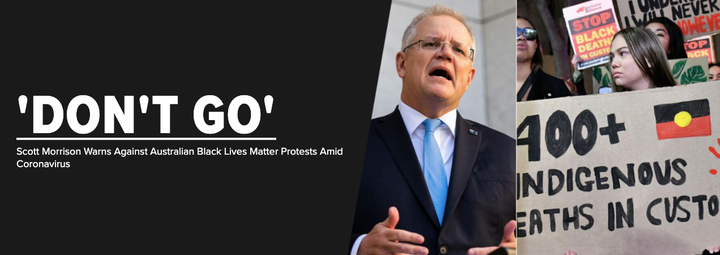
Australian Prime Minister Scott Morrison on Friday issued a stern warning to those planning to attend Black Lives Matter protests around the country this weekend amid fears the events could spread coronavirus.

“The health advice is very clear, that it’s not a good idea to go,” he told reporters. “Let’s find a better way and another way to express these sentiments, rather than putting your own health at risk, the health of others at risk, and the great gains we have been able to make as a country in recent months.”

People in the Australian cities of Perth and Sydney have protested this week against police violence and mourned not just George Floyd but Aboriginal and Torres Strait Islander lives lost at the hands of police.

“Stop Black Deaths In Custody” protests are planned in most major Australian cities for this weekend but Morrison has made it clear people should still be very wary of contracting coronavirus. Australia has not reported a death from coronavirus for more than a week. It has recorded 102 COVID-19 deaths and almost 7,200 infections. 

The Centers for Disease Control and Prevention announced Thursday that it will require coronavirus testing sites to collect demographic data from patients amid growing concerns that COVID-19 disproportionately affects communities of color.

CDC Director Dr. Robert Redfield cited healthy food as one of the many resources that communities of color often cannot access.

“There’s no question that the social determinants of health as pertained to access to quality food have enormous public health — health outcomes,” he said at a House Appropriations Committee hearing.

Gathering better data about the way COVID-19 affects those communities opens new doors, he said, calling it “the key first step that we need to do to address the health disparities.”

The development comes as protesters nationwide call out the systemic racism that the Black community faces, both in law enforcement and other facets of government, including public health. In April, data from the CDC found that nearly one-third of those who have died from the coronavirus are Black.

Three of the authors behind an influential article that found that hydroxychloroquine increased the risk of death in COVID-19 patients retracted the study on Thursday, citing concerns about the quality of the data behind it.

The study’s authors said Surgisphere, the company that provided the data, would not transfer the full data set for an independent review.

“As such, our reviewers were not able to conduct an independent and private peer review and therefore notified us of their withdrawal from the peer review process,” the authors wrote in a statement, adding, “Based on this development, we can no longer vouch for the veracity of the primary data sources.”

President Donald Trump has touted hydroxychloroquine as a treatment for COVID-19, despite a dearth of scientific evidence to back up his claim. He has said that he’s taken hydroxychloroquine as a prophylactic against the coronavirus. However, results of a rigorous study published Wednesday in the New England Journal of Medicine found that using the anti-malarial drug to prevent COVID-19 proved ineffective.

A HuffPost Guide To Coronavirus


Source link

Illustration: Police Have High-Dollar Gear, but Resistance Is Priceless

“The most expensively outfitted police force cannot match the power of your inalienable rights as American citizens.”

Source link

Begusarai actor Rajesh Kareer asks people to stop sending money, says ‘received more than I’m worthy of’

Image Source : FACEBOOK/RAJESH KAREER

Rajesh Kareer’s co-star in Begusarai, Shivangi Joshi also helped him by giving him Rs 10000.

Rajesh Kareer, who was seen in TV show Begusarai alongside popular actresses Shweta Tiwari and Shivangi Joshi, has now asked people to stop donating money into his account. The actor said that he has got more than he is worthy of. Rajesh took to Facebook to share a new video. Thanking people for helping him in this time of crisis, the actor says, “Please don’t deposit more money in my account as I feel I have received more than I am worthy of.” He added, “It feels like all of India came out to support me and has blessed me and my family.”

“I am no longer in the same situation that I was in last week,”the actor added. Rajesh Kareer also expressed his gratitude to media for amplifying his plea and said that he doesn’t know how he would ever be able to repay this kind gesture.

Rajesh’s co-star in Begusarai, Shivangi Joshi also helped him by giving him Rs 10000. “I am really happy with her gesture. We were not so close to each other on the set but despite that she came ahead to help me in this crisis, it means a lot,” Rajesh told SpotboyE in an interview.

Earlier in a video shared on Facebook, the TV actor said that he urgently need money for survival. The veteran actor has been residing in Mumbai for the last 15-16 years and has been out of work for quite some time now. In the video, Rajesh Kareer says: “Main Rajesh Kareer, artiste hoon. Agar sharam karunga toh yeh zindagi bohot bhaari padne wali hai… Bas itni hi guzaarish karna chahta hoon aap logon se ki mujhe madad ki bohot sakht zaroorat hai. Halaat bohot hi naazuk bane hue hai humare. Mumbai mein family ke saath rehta hoon 15-16 saal se (I am Rajesh Kareer. I’m an artiste. If I feel ashamed then it will cost me heavily. All I want to say is I badly need help. I have been living in Mumbai for the past 15-16 years with my family and our condition is very critical),” says the veteran actor in a chocked voice and with tearful eyes.

“Waise bhi kafi time se khali tha main. Aur ab toh do do teen mahina ho gaye ki halaat bohot zyada kharab ho gaye hamare. Aap logon se meri yeh humble request hai ki bhale hi Rs 300-400 dein. Itni agar aap log madad karenge toh… kyunki shooting kab start ho na ho, kuch pata nahi. Mujhe kaam mile ya na mile, kuch pata nahi. Life ekdum block si ho gayi hai. Kuch samajh nahi aa raha. Jeena chahta hoon (I have not been getting work for quite some time now. Over the past two to three months my condition has been very bad. I humbly request you all that even if you can give Rs 300-400… because no one knows when shooting will resume, I don’t know when I will get work. My life is blocked. I cannot figure out what to do. I want to live),” the actor pleads in the video.

Fight against Coronavirus: Full coverage


Source link

3 Reasons to Pause Before Celebrating Today’s Surprising Jobs Numbers

0

On first glance, today’s U.S. jobs report seems like a much-needed dose of good news when more or less everything else is aflame: Unemployment fell from 14.7% to 13.3% in May as the economy gained 2.5 million jobs; economists had expected the rate to increase to as much as 20%.

Any drop in unemployment is, of course, a welcome development. But there are at least three big reasons why we should take pause before cracking out the champagne over Friday’s jobs numbers.

First, and most saliently given the ongoing protests over justice and equality, this rebound isn’t being felt equally across demographic groups. While the overall unemployment rate is falling, it’s still rising for some groups, including black Americans. While unemployment for white Americans dropped from 14.2% in April to 12.4% in May, the rate for black Americans increased slightly, from 16.7% to 16.8%:

Second, while the change in percentage looks good, the reality is that there are still 21 million Americans out of work—and perhaps more, as official unemployment data never really show the full picture. Thinking about this only in terms of the change in percentage and not in the absolute numbers masks the pain that so many American families are still feeling. Moreover, there’s a danger that slight decreases in the unemployment rate will give lawmakers in Washington cover to avoid passing much-needed additional relief for the millions of Americans still out of work. The expanded unemployment benefits, for instance, expire at the end of next month, and there’s little to suggest so far that they will be extended.

Finally, the jobs that are returning are likely doing so because some states are ending or curtailing their coronavirus lockdowns, meaning those who were temporarily laid off are going back to work. “The number of unemployed persons who were on temporary layoff decreased by 2.7 million in May to 15.3 million, following a sharp increase of 16.2 million in April,” reads the BLS release accompanying the report. But there’s been no material change in the fight against the virus—there’s no vaccine, no cure, and only limited evidence of possible treatments. If states reopen and cases spike a few weeks later, further lockdowns may be needed, putting us right back in the unemployment nightmare we’ve been living through for the last few weeks — in fact, we’re already seeing early signs of these spikes in some states.

Make no mistake: Anybody getting their job back is good news. But celebrating only the headline figures without further examining the underlying data is a mistake.

Write to Alex Fitzpatrick at alex.fitzpatrick@time.com.

Source link

World champion runner Salwa Eid Naser provisionally suspended in doping case

0

By: AP | Monaco |

Updated: June 5, 2020 8:11:33 pm


Women’s 400 Metres Final: Bahrain’s Salwa Eid Naser reacts to her victory. (Reuters)

Women’s 400-meter world champion Salwa Eid Naser was provisionally suspended Friday for not making herself available for doping tests.

The Athletics Integrity Unit said it has charged the sprinter from Bahrain with whereabouts violations.

Naser could miss next year’s Olympics if the case is proven.

Naser won the world title in October, finishing in 48.14 seconds ? the fastest time by any woman since 1985.

Athletes are required to provide regular updates on their whereabouts to make it possible for anti-doping authorities to carry out surprise testing outside of competition.

A violation means an athlete either did not fill out forms telling authorities where they could be found, or that they weren’t where they said they would be when testers arrived.

Three violations within 12 months can lead to a suspension if the athlete can’t justify why they weren’t available for testing.

The provisional suspension is the latest in a series of cases against Bahrain’s elite squad of female runners. Olympic steeplechase champion Ruth Jebet was banned four years in March for EPO, and Olympic marathon runner-up Eunice Kirwa picked up a four-year ban last year.

📣 The Indian Express is now on Telegram. Click here to join our channel (@indianexpress) and stay updated with the latest headlines

For all the latest Sports News, download Indian Express App.

Source link

China Misses Energy Goal as Environment Concerns Grow

0

As China tries to restore its economy to pre-pandemic levels, signs are growing that the government has assigned environmental concerns a lower priority.

One indication emerged last month from a report by China’s top planning agency, showing that the government missed a key energy conservation target in 2019.

The report by the National Development and Reform Commission (NDRC) acknowledged that the government failed to reach its “obligatory” target of improving energy efficiency by 3 percent, achieving a reduction in “energy intensity” of only 2.6 percent.

The intensity indicator measures energy consumption per unit of gross domestic product, tracking China’s progress in promoting efficiency and reducing energy waste year by year.

The energy intensity targets are also linked to carbon emissions commitments, climate change goals and smog.

The country has typically missed targets when the economy is under pressure or conservation takes a back seat to production growth.

In 2011, for example, energy use climbed 7 percent as GDP soared 9.3 percent. Efficiency improved only 2 percent, missing the target by 1.2 percentage points in that expansionary year.

In its report for 2019, the NDRC blamed the missed target on “the rapid growth of steel, building materials, nonferrous metals, chemicals, and the service sector,” as the government struggled to boost sagging growth rates, even before the effects of the COVID-19 crisis were felt.

The agency argued that it had met 87.1 percent of the scheduled reductions in energy intensity for 2016-2019 under the 13th Five-Year Plan, “and thus was in line” with the efficiency goals. The plan calls for a 15-percent improvement in the five-year period through 2020.

But the government’s policy this time appears to differ from its previous responses under the 12th Five-Year plan, when the NDRC raised its annual targets in an attempt to recover lost ground from the poor performance in 2011.

This time, the NDRC has not set a numerical target for 2020, casting doubt on the ability to meet the five-year goal.

“Much hard work will be required in order to achieve the target,” the NDRC said without making a specific commitment.

Smoke rises above the skyline of Beijing on a moderately polluted day, Aug. 26, 2017.
Credit: Associated Press

Turning to ‘dirty’ industries

The NDRC report to China’s annual legislative session was overshadowed by the government’s decision to set no numerical target for GDP this year for the first time since the Asian currency crisis nearly two decades ago.

In his work report to the National People’s Congress (NPC), Premier Li Keqiang cited uncertainty and unpredictability following a record 6.8-percent drop in first-quarter GDP due to the COVID-19 impact.

Without a GDP forecast, an energy intensity target may have become impossible, since the index is a ratio of energy consumption to GDP.

The NDRC said that another key target had been met last year, measuring carbon intensity, or the amount of carbon dioxide (CO2) produced per unit of GDP. China achieved a 4.1-percent reduction against a target of 3.6 percent, it said.

This week, the Ministry of Ecology and Environment also reported an improvement in air pollution in 337 monitored cities with good air quality recorded on an average of 82 percent of days last year.

But other reports cited concerns about China’s greenhouse gas emissions this year as it strives to restore economic growth.

Reuters pointed to signs that “China is turning to ‘dirty’ industries and investment to kick-start its economy,” raising carbon intensity.

“The magnitude of the coronavirus risks turning things upside down,” said Li Shuo, senior adviser at the environmental group Greenpeace, according to Reuters.

Despite the reductions in intensity measures, China’s total emissions will likely continue to rise with GDP growth as the economy rebounds with help from energy-consuming construction and infrastructure projects.

Recent reports by CarbonBrief.org and other advocacy groups have criticized China’s plans to build new coal-fired power plants at a time when the sector is already bloated with overcapacity.

Philip Andrews-Speed, a senior principal fellow at the National University of Singapore’s Energy Studies Institute, said the pressures on China are similar to those affecting many countries.

“As in many countries today, the top priority is restoring economic growth and employment as much as possible. One way to do this is through construction and other energy intensive
industries,” said Andrews-Speed.

“As a result, the environment, energy efficiency and climate change drop down the agenda, at least for a while,” he said.

Passing references only

The environment received little attention in Premier Li’s work report to the NPC.

Environmental safeguards were not included in the government’s “six fronts” of stability, such as employment and investment, or the “six areas” of security, such as job and energy security, listed in a footnote to Li’s speech.

The challenge of climate change was not addressed in the work report.

Li said the fight against pollution would continue as one of the country’s “three critical battles,” originally identified by President Xi Jinping, along with poverty and potential risk, according to another brief listing in a footnote.

“Priority will be placed on curbing pollution in a law-based, scientific and targeted way,” Li promised without going into specifics. “We will intensify efforts to control air pollution in key areas,” he said.

On Friday, the official Xinhua news agency published a series of Xi’s “quotable quotes” on environmental protection on its website to mark World Environment Day, but it announced no new plans.

In an apparent attempt to defuse criticism of the downgrading, Huang Runqiu, the minister of ecology and environment, told Xinhua that the government would not relax environmental protections under the next five-year plan.

“In the 14th Five-Year Plan period, we will continue to improve ecological and environmental quality by reducing pollutant emissions, and vigorously promote ecological protection and restoration,” said Huang.

Seven out of nine environmental targets under the 13th Five-Year Plan had been achieved, he said.

But Li’s report left little doubt about the government’s highest priorities for the recovery period, and the environment was not among them.

“This year, we must give priority to stabilizing employment and ensuring living standards, win the battle against poverty, and achieve the goal of building a moderately prosperous society in all respects,” he said.

Andrews-Speed noted that environmental issues also received only passing references in a high-level Communist Party of China (CPC) document issued last month, laying out the party’s agenda.

“We will improve the functions of the government in economic regulation, market supervision, social management, public services, and ecological environment protection, innovate and improve macro-control, and further improve the ability of macroeconomic government,” the CPC said.

Climate change was not mentioned at all in the document released by CCTV News, entitled “Opinions of the CPC Central Committee and the State Council on Accelerating the Improvement of the Socialist Market Economic System in the New Era.”


Source link