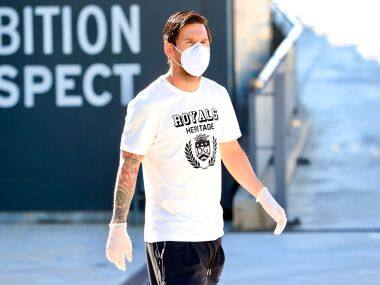
One missed practice was enough to raise concerns about Lionel Messi.
Messi’s presence in next week’s return of the Spanish league was put in doubt by some Barcelona media after he trained separately from the group on Wednesday.
Even though Barcelona said there was no reason to worry about Messi, and that he simply underwent an alternative training program in the gym, some reports said there could be more to it.
Catalan channel TV3 said Messi has a minor thigh muscle problem that could keep him from being ready to play in Barcelona’s 13 June match at Mallorca, the team’s first since the league was halted nearly three months ago because of the coronavirus pandemic.
TV3 said late on Wednesday that Messi underwent tests to determine the real extent of the injury. Barcelona did not confirm Messi had to be tested.
Thursday was a scheduled rest day for the club, with the squad returning on Friday to continue its preparations.
Messi missed nearly two months at the beginning of the season after hurting a calf muscle in the first preseason training.
He is the league leading scorer with 19, five more than Real Madrid’s Karim Benzema. Messi also has the most assists, with 12.
Defender Clément Lenglet is set to miss the trip to Mallorca because of an accumulation of yellow cards, but striker Luis Suárez, who underwent right knee surgery in January and was expected to miss the season before the pandemic, has been practicing normally and is expected to be back in action in Mallorca.
Ousmane Dembelé is not likely to return as he continues to recover from a hamstring problem.
Barcelona has a two-point lead over Real Madrid with 11 rounds remaining.
Madrid resumes on 14 June against Eibar at Alfredo Di Stéfano Stadium in the club’s training center. Santiago Bernabéu Stadium is undergoing renovation work for the rest of the season.
The league’s first game will be the Seville derby between Sevilla and Real Betis.

Data could contribute to the approval of the SC daratumumab formulation by regulatory bodies — researchers
Subcutaneous (SC) daratumumab was non-inferior to intravenous (IV) daratumumab in terms of efficacy and pharmacokinetics and had an improved safety profile in patients with relapsed or refractory multiple myeloma (R/RMM), a study is reporting.
Researchers from the COLUMBA trial also said the data could contribute to the approval of the SC daratumumab formulation by regulatory bodies.
IV daratumumab for treatment of patients with multiple myeloma (MM) involved a lengthy infusion that affected quality of life, and infusion-related reactions were common, Mateos et al noted in the May 2020 edition of the Lancet Haematology journal.
SC daratumumab, they added, was also thought to be easier to administer and to cause fewer administration-
related reactions.
For their ongoing, multicentre phase III trial, they tested the non-inferiority of SC daratumumab to IV daratumumab.
Patients across 147 sites in 18 countries were randomly assigned (1:1) by a computer-generated randomisation schedule and balanced using randomly permuted blocks to receive daratumumab subcutaneously (SC group) or intravenously (IV group).
Patients received 1,800 mg of SC daratumumab co-formulated with 2,000 U/mL recombinant human hyaluronidase PH20 or 16 mg/kg of IV daratumumab once weekly (cycles 1-2), every two weeks (cycles 3-6), and every four weeks thereafter (28-day cycles) until progressive disease or toxicity.
The co-primary endpoints were overall response and maximum trough concentration (Ctrough; cycle 3, day 1 pre-dose).
Between October 31, 2017, and December 27, 2018, some 655 patients were screened, of whom 522 were recruited and randomly assigned (SC group n=263; IV group n=259). Three patients in the SC group and one in the IV group did not receive treatment and were unevaluable for safety.
An overall response was seen in 108 (41%) of 263 patients in the SC group and 96 (37%) of 259 in the IV group, while the geometric means ratio for Ctrough was 107.93 per cent, and the maximum Ctrough was 593 μg/mL (SD 306) in the SC group and 522 μg/mL (226) in the IV group. The results also showed that the most common grade 3 and 4 adverse events were anaemia (34 [13%] of 260 patients evaluable for safety in the SC group and 36 [14%] of 258 patients in the IV group), neutropenia (34 [13%] and 20 [8%]), and thrombocytopenia (36 [14%] and 35 [14%]).
Pneumonia was the only serious adverse event in more than 2 per cent of patients (seven [3%] in the SC group and 11 [4%] in the IV group). There was one death resulting from a treatment-related adverse event in the SC group (febrile neutropenia) and four in the IV group (sepsis [n=2], hepatitis B reactivation [n=1], and Pneumocystis jirovecii pneumonia [n=1]).
Lancet Haematology, published online, doi: 10.1016/
A knife-wielding security guard went on a rampage at an elementary school in southeastern China on Thursday, leaving at least 39 people injured, officials said.
The attack, which occurred at 8:30 a.m., left 37 students slightly wounded and two adults with serious injuries, according to an announcement by the local authorities in Cangwu County, in the southern province of Guangxi. None of the injuries were life-threatening, the announcement said.
The security guard, a man named Li Xiaomin who was said to be about 50 years old, was arrested, according to People’s Daily, the official Communist Party mouthpiece. The adults injured were the school’s principal and another security guard.
No information was immediately released about a possible motive. A call to the Cangwu Public Security Bureau went unanswered.
Videos shared by Chinese media outlets showed children being carried out of the school, the Central Primary School of Wangfu town, and rows of ambulances outside. Eight ambulances were called to transport the injured, People’s Daily said.
School attacks are not uncommon in China. Last year, at least 75 students were injured in a spate of attacks at schools across the country, and at least 10 others died.
In November, a man entered a preschool in Yunnan Province and sprayed a corrosive chemical, injuring 51 students. He intended it as “a revenge on society,†official media reported at the time.
In September, a man killed at least eight students at an elementary school in Hubei Province in central China, according to the police. And in January, a hammer attack at a Beijing elementary school left 20 children injured.
In response to the rash of attacks over the past decade, many schools began hiring security guards. On social media on Thursday, several commenters expressed fear and dismay that this time, a security guard had been the attacker.
“The children never would have thought that the uncle who normally protects their schoolyard would suddenly hurt them,†one wrote.
The frequency of school attacks has prompted significant concern in China over the past decade, and state media outlets have published articles attributing the phenomenon to the stresses caused by a rapidly changing society.
Private gun ownership is virtually forbidden in China, making mass shootings rare. But attackers have used bombs and axes in carrying out attacks on multiple people, in addition to hammers and knives.
Bella Huang contributed research.
DOACs set to become among most expensive therapies reimbursed under community drugs schemes
The introduction of direct oral anticoagulants (DOACs) to the Irish drugs market has resulted in an overall increase in anticoagulant prescribing, according to a recent study.
Researchers also said there has been a significant reduction in warfarin usage, with the annual expenditure on DOACs now exceeding €51 million.
In a paper published in the Irish Medical Journal (IMJ) recently, Smith and Barry said they wanted to investigate the impact of DOACs on the utilisation and expenditure on oral anticoagulants (OACs) in the Irish Community healthcare setting.
Using anonymised prescription data from the Health Service Executive’s pharmacy claims database, they investigated anticoagulant prescribing between January 1, 2014, and December 31, 2018.
Drugs were coded according to World Health Organization-Anatomical Therapeutic Chemical (WHO-ATC) classification.
Anticoagulant drugs were identified using the relevant ATC codes i.e. warfarin (B01AA03), dabigatran (B01AE07), rivaroxaban (B01AF01, B01AX06), apixaban (B01AF02), and edoxaban (B01AFO3), and extracted from the database.
“Patients were categorised into the following age groups: 0-44, 45-64, 65-79 and 80 years or over to determine utilisation in the different age cohorts,†they wrote.
Drugs that were contraindicated or cautioned in combination with DOACs were also identified including: nonsteroidal anti-inflammatory drugs (NSAIDs), aspirin, amiodarone, verapamil, systemic antimycotics and antidepressants, they added.
The results showed that during the trial period, 74,748 patients were being treated with OACs by the year end 2018 — an increase of 30,319 over five years.
Warfarin prescribing, meanwhile, had fallen from 32,751 patients in 2014 to 16,166 by the year-end 2018.
Apixaban was the most frequently prescribed OAC. The research team also noted that patients treated with DOACs were older than participants in the pivotal clinical trials and were frequently co-administered interacting drugs.
Noting that the average annual cost per patient being treated with DOACs was approximately €900 as compared with €160 for warfarin (excluding monitoring costs), they said that DOACs expenditure increased from €1,023,067 per month at the start of 2014 to €4,582,874 by year-end 2018.
“At current growth rates the DOACs are set to become one of the most expensive therapies reimbursed under the community drugs schemes,†they wrote.
“Whether this increased expenditure is reflected in much improved health outcomes remains to be seen.â€
IMJ; Vol 113; No. 5; P71
In the first of two articles about the negative symptoms of schizophrenia, Consultant Psychiatrist Dr Stephen McWilliams shares a symptoms vignette, and expansively discusses diagnosis and initial therapy
Ray is 20 and the youngest of three brothers. He grew up in suburban Dublin and both parents work in business.
Relatively popular throughout secondary school, Ray always socialised well and had a solid circle of friends.
He enjoyed rugby training on Saturdays, supported the Leinster rugby team and attended matches at the Aviva Stadium with friends when the opportunity arose. A good student with a keen intellect, he worked hard academically and ultimately achieved 570 points in his Leaving Certificate. This was enough points to pursue the architecture course he had always dreamed of.
But college is not working out as planned. Ray is a moderate drinker, but he has been smoking cannabis intermittently for the past few years – although crucially never around exam time. As Ray’s first year at college has progressed, his parents have noticed a change of demeanour. His face seems less expressive than normal, his actions are less spontaneous, and he makes less eye contact. When asked a question, he now typically leaves a gap before he answers, while his conversation generally seems more stilted and perhaps lacks the depth that it used to.
Previously a smart dresser (perhaps even a little vain), he now has to be reminded to take a shower or change his clothes. He has given up rugby training and does not bother watching the television coverage either. The family soon realise that Ray has not been to college in months, that he has drifted from his friends and that he has stopped returning his girlfriend’s phone calls. Towards his end-of-year exams, he drops out of college completely with a vague plan to get a job instead.
In time, Ray begins to hear voices talking about him, remarking that he will never amount to anything in life. He tries hard to get rid of these voices using distraction techniques, loud music and even alcohol, but nothing seems to work. What is initially irritating soon becomes frightening, as the voices are ever more sinister and threatening. His thoughts sometimes seem mixed up and he finds it hard to express himself.
As he reverts to watching more and more television, he begins to feel a strong connection with the events happening on the news. Indeed, he wonders if the newscaster is trying to communicate directly with him to offer a warning. Ray experiences a similar sense of foreboding while on the internet and suspects his email account is being hacked by the GardaÃ. He increasingly switches off his phone so that he cannot be tracked and unplugs electronic equipment at his home.
Part 1
This is the first of two articles about the negative symptoms of schizophrenia (those outlined in the paragraphs two and three above). The first article will deal mostly with diagnosis; the second will discuss treatment.
Schizophrenia generally presents for the first time between the ages of 15 and 40, while the lifetime risk is around 1 per cent. Approximately 20 per cent of psychiatric admissions in Ireland are for the treatment of schizophrenia, making it second only to depressive disorders, while psychosis remains the commonest reason for involuntary admissions. Schizophrenia is both profoundly debilitating for the individual and costly for society.
Behan and colleagues (2008) estimated the (direct and indirect) expense of schizophrenia to the Exchequer to be over €460 million in 2006.(1) This sum is likely to have increased significantly in the intervening 14 years.
Aetiology of schizophrenia
What is the aetiology of schizophrenia? Unfortunately, there is no single easy answer. Clinicians still emphasise the stress-vulnerability model, a theory in which biological factors (a complex interaction between genetics and disrupted early development of the nervous system) predispose people to developing psychosis as they mature and encounter the rigours of life.
Obstetric factors, stressors in childhood and adolescence (leading to dopaminergic dysregulation), and social adversity (leading to negative cognitive biases in relation to everyday experiences) all increase the risk of emerging psychosis. This risk is further heightened by the use of illicit substances, especially cannabis, which can increase the lifetime risk of schizophrenia by six or more times. Relapse of psychosis is more likely with interpersonal conflict and high expressed emotion in the family setting.
Diagnosis as a whole
Before considering negative symptoms, we could review the diagnosis of schizophrenia as a whole. According to the World Health Organization’s International Classification of Diseases 10th Edition (ICD-10, 1993), schizophrenia is a severe psychotic illness that is not attributable to: (a) organic brain disease; (b) substance intoxication, dependence or withdrawal; or (c) diagnosable mania or depression.(2)
A formal diagnosis dictates that psychotic symptoms must be present on most days for at least a month, and must include one or more of the following: (a) thought echo, insertion, withdrawal or broadcast; (b) passivity delusions (in which the individual believes their actions, impulses or feelings are controlled by an outside force) or delusional perception (in which a delusion is triggered by the perception of something real); (c) auditory hallucinations (usually third-person or running commentary); and (d) persistent delusions not already mentioned.
Less specific symptoms
Even if a patient does not fulfil the criteria above, they can still be diagnosed with schizophrenia if they have two or more from a longer list of less specific symptoms. These include: (a) other types of hallucination; (b) thought disorder (where the link – or “association†– between one thought and the next becomes loosened); (c), catatonic behaviours (for example, unconscious physical posturing or mutism); and (d) negative symptoms (which we will outline in detail below). An updated classification system – ICD-11 – is currently being finalised and is due for adoption on January 1, 2022.
A set of criteria
The American Psychiatric Association’s Diagnostic and Statistical Manual of Mental Disorders 5th Edition (DSM-5, 2013) describes schizophrenia in a slightly different manner.(3) Again, schizophrenia is seen as a severe psychotic illness, but it must meet a set of criteria to qualify for the diagnosis. Criterion A requires the presence of at least two from a list of symptoms that includes delusions, hallucinations, disorganised speech, disorganised or catatonic behaviour, and negative symptoms (again, outlined below). At least one of these symptoms must come from the first three items on the list.
Criterion B requires that the individual’s level of social and occupational functioning for a significant proportion of their time since onset must fall short of their normal level.
Criterion C requires that the symptoms meeting Criterion A must be present continuously for at least six months, with at least a month of active symptoms (or less if successfully treated). This may include a prodrome or residual symptoms.
Criteria D, E and F primarily involve exclusions such as schizoaffective disorder, depression, bipolar disorder, substance misuse and medical conditions, and allowances for autistic spectrum disorder.
Two sets of symptoms
The concept that schizophrenia could be divided into two sets of symptoms was originally proposed by Hughlings-Jackson in 1931. Essentially, positive symptoms are those which are there when they should not be (like hallucinations, delusions and so forth), while negative symptoms are those that are not there when they should be (like fluent speech, social interaction and so forth).
In 1982, Andreasen and Olsen devised a set of validated diagnostic criteria allowing for the subdivision of patients into those with positive, negative, or mixed schizophrenia.(4) They asserted that, while patients with positive-symptom schizophrenia typically demonstrate adequate premorbid adjustment and global functioning, normal cognition and no evidence of cerebral atrophy, patients with negative-symptom schizophrenia tend to exhibit poor premorbid adjustment, poorer global functioning, impaired cognitive function and evidence of cerebral atrophy.
The negative symptoms are in five domains and are as follows:
Affective flattening or blunting
• Unchanging facial expression;
• Decreased spontaneous movement;
• Paucity of expressive gesture;
• Poor eye contact;
• Affective non-responsivity;
• Lack of vocal inflection.
Alogia
• Poverty of speech;
• Poverty of the content of speech;
• Blocking;
• Latency of response to questions.
Avolition-apathy
• Poor grooming and hygiene;
• Impersistence at work or school;
• Physical anergia.
Anhedonia-asociality
• Few recreational interests or activities;
• Reduced sexual interest or activity;
• Inability to experience intimacy or closeness;
• Impaired relationships with friends and peers.
Attention
• Social inattentiveness;
• Inattentiveness during mental state examination.
These five domains feature in Nancy Andreasen’s Scale for the Assessment of Negative Symptoms (SANS) which (along with the subsequently-developed Scale for the Assessment of Positive Symptoms, or SAPS) is commonly used in early intervention services to identify evolving psychotic symptoms and reduce the duration of untreated psychosis (DUP).(5)
Within each domain of the objectively rated SANS, each symptom is marked from 0 (absent) to 5 (severe), while each domain is given a global rating to yield the overall score.
Meanwhile, the other commonly used inventory, especially in research, is the Positive and Negative Syndrome Scale (PANSS).(6)
This was first published in 1987 by Kay, Fiszbein and Opler. During the course of an interview that usually takes under an hour, the patient is rated from 1 to 7 on 30 different symptoms – seven on the positive scale, seven on the negative scale and 16 on the general psychopathology scale. The negative scale items are as follows:
• Blunted affect;
• Emotional withdrawal;
• Poor rapport;
• Passive or apathetic social withdrawal;
• Difficulty with abstract thinking;
• Lack of spontaneity and flow in conversation;
• Stereotyped thinking.
Because 1 is the lowest score for any item, all PANSS scores range between 30 and 210. As negative symptoms can sometimes be harder than positive symptoms to pin down in individuals such as Ray (from our vignette above), inventories such as the PANSS and the SANS can be useful adjuncts to clinical assessment, if used properly. So, what happens to Ray?
Therapy
Ray’s parents are naturally worried, and they call the family GP, who refers him to a psychiatrist. With some difficulty, Ray is persuaded to keep this appointment, whereupon the psychiatrist diagnoses psychosis and admits him to a local psychiatric hospital. Ray resides there for a few weeks, and receives a combination of medication, occupational therapy, and some group psychological work. His subjective experiences gradually begin to normalise.
Positive symptoms like his hallucinations become fainter and less frequent and he no longer feels paranoid. But the family believe the “Ray†they used to know, has yet to fully return. In truth, his negative symptoms are harder to ameliorate. In this regard, the next and concluding article will allow us to examine the pharmacological and non-pharmacological management of negative symptoms and its effect on unmet needs and prognosis.
References
1. Behan C, Cullinan J, Kennelly B, Turner N, Owens E, Lau A, Kinsella A, Clarke M. Estimating the Cost and Effect of Early Intervention on In-Patient Admission in First Episode Psychosis. J Ment Health Policy Econ (2015). 18(2):57-61.
2. World Health Organization (1993). The ICD-10 Classification of Mental and Behavioural Disorders.
3. American Psychiatric Association (2013). Diagnostic and Statistical Manual of Mental Disorder 5th Edition (DSM-5).
4. Andreasen NC. Negative symptoms in schizophrenia. Definition and reliability. Arch Gen Psychiatry (1982). 39(7):784-8.
5. Andreasen NC. Scale for the Assessment of Negative Symptoms (SANS). Iowa City, University of Iowa (1984).
6. Kay SR, Fiszbein A, Opler LA. The Positive and Negative Syndrome scale (PANSS) for schizophrenia. Schizophr Bull (1987). 13(2):261-76.
Cyprus is so keen to get its tourism industry back on track, officials are offering to cover the costs of any travelers who test positive for COVID-19 while on vacation in the Mediterranean island nation.
According to a letter shared with CNN, the Cypriot government will pay for lodging, as well as food, drink and medication for tourists who are taken ill with coronavirus during their visit.
Officials have also earmarked a 100-bed hospital for foreign travelers who test positive, while a 500-room “quarantine hotel” will be available to patients’ family and “close contacts.”
“The traveller will only need to bear the cost of their airport transfer and repatriation flight, in collaboration with their agent and/or airline,” the letter says.

The news came shortly after Cyprus Transport Minister Yiannis Karousos announced hotels in the country will reopen on June 1, while international air travel will restart on June 9.
Once the destination reopens, visitors from only chosen countries will be allowed to enter.
Travelers heading to Cyprus will need to provide a valid certificate proving they’ve tested negative for Covid-19, while they’ll be subject to temperature checks on arrival as well as testing at random during the course of their trip.
Bali has also been successful in containing its coronavirus outbreak, with less than 350 confirmed cases and, at the time of writing, a total of four deaths.
The Indonesian island now hopes to welcome tourists back by October, provided its infection rates stay low.

According to a statement from Ni Wayan Giri Adnyani, secretary of the ministry, Yogyakarta, situated on the island of Java, is likely to reopen first, along with the Riau islands province.
All foreign nationals, except for diplomats, permanent residents and humanitarian workers, are currently banned from Indonesia, and anyone entering the island must undergo a swab test and provide a letter stating they are free of COVID-19.
Visitors have been banned from entering Thailand since March because of the pandemic.
While the number of cases here has been relatively low in comparison to other destinations – Thailand has reported more than 3000 confirmed cases and over 50 deaths – officials aren’t taking any chances when it comes to reopening the country.
“It is still dependent on the outbreak situation, but I think the earliest we may see the return of tourists could be the fourth quarter of this year,” Yuthasak Supasorn, governor of the Tourism Authority of Thailand (TAT) told CNN Travel.
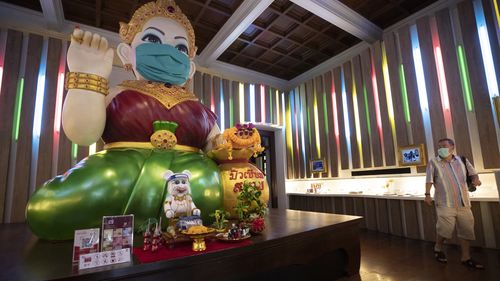
The governor went on to stress there will be limitations on who can visit the country and what regions they can go to once restrictions are relaxed.
The ban on incoming international commercial flights – excluding repatriation flights – was recently extended until June 30 and Phuket International Airport remains closed.
Like the rest of the EU, restrictions are currently in place on all non-essential travel from outside the Schengen Zone (a grouping of 26 countries which normally have open borders).
Travellers who do enter the country, with the exception of EU citizens or arrivals from the UK, will be subject to a compulsory 14-day coronavirus quarantine until at least July 24.
Officials have made it clear the country is in no hurry to ease border restrictions for international travelers.
Although some businesses have been given permission to reopen, the country’s hotels, bars, restaurants and cafés are to remain closed at least until June 2.
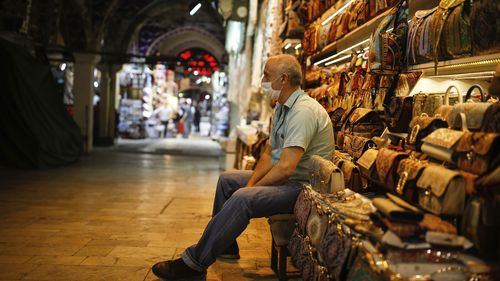
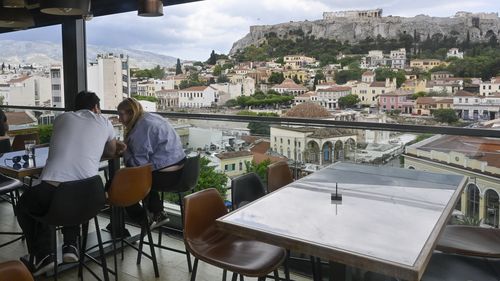
The European country, which managed to keep its coronavirus case numbers low by implementing a strict lockdown early on, plans to allow travelers back in on June 15.
“The tourism period begins on June 15, when seasonal hotels can reopen,” Prime Minister Kyriakos Mitsotakis announced on May 20.
Although non-essential travel to Germany is prohibited at present, the nation intends to lift restrictions for EU countries from June 15, according to German Foreign Minister Heiko Maas.
Officials are also considering allowing entry to visitors from Turkey, the UK, Iceland, Liechtenstein, Norway and Switzerland, although a final decision is yet to be made.
The Austria/Germany land border is also reopening – travel between Austria and Germany will be possible from June 15 – and restrictions around the country are being relaxed.
Mexico is aiming to welcome visitors back within weeks.
While the nation remains in lockdown, officials are planning to reopen the country bit by bit in order to get things back on track.
“The plan for the country is to open in stages and by regions,” WTTC CEO Gloria Guevara told CNN Travel recently.
“The target is domestic travelers first, followed by travelers from the US and Canada and then the rest of the world.
The border between the US and Mexico border is closed to “non-essential” travel until at least June 22 and most international flights in and out of Mexico’s key airports are currently suspended or significantly reduced.
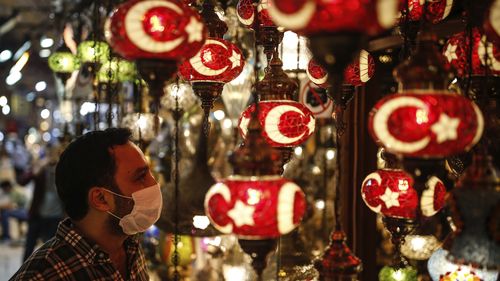
According to Tourism Minister Mehmet Nuri Ersoy, the destination plans to restart domestic tourism by the close of May and hopes to receive international visitors from mid-June.
The country has set out new guidelines for its hotels and resort facilities, such as temperature checks at entrances and at least 12 hours of room ventilation after checkout. Guests will be required to wear face masks and maintain social distancing.
Meanwhile, restrictions on intercity travel have been lifted, while restaurants, cafes, parks and sports facilities are permitted to reopen from June 1, along with beaches and museums.
Italy has been one of the destinations worst hit by the pandemic, but travellers from the EU, along with the UK and the microstates and principalities of Andorra, Monaco, San Marino and the Vatican, will be allowed to enter without having to go into quarantine starting June 3, in a move the government has described as a “calculated risk.”
Visitors were previously required to undergo a two-week quarantine before being allowed entry.
Spain’s lockdown was one of the toughest in Europe, but restrictions are gently being lifted. Beaches set to reopen in June while hotels in some parts of the country have already been permitted to resume business.
From July 1, the European destination, which welcomed a record 84 million visitors in 2019, will grant EU travelers permission to enter without having to quarantine for two weeks.
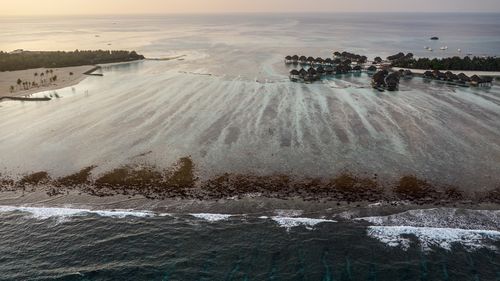
It’s already one of the most lavish destinations in the world, but the Maldives looks set to become even more exclusive once it reopens.
The island nation, made up of over 1000 islands, closed its national borders and cancelled all flights shortly after recording its first two coronavirus cases in March.
However, around 30 resorts here have stayed open, with tourists opting to self-isolate in the famous honeymoon destination rather than return home.
While it was previously thought the destination would reopen at the end of the year, officials have brought this forward to July.
A phased reopening has been proposed that would see private jets and super yachts allowed entry from June 1.
Visitors will also need to present a medical certificate confirming proof of a negative COVID-19 test taken at least two weeks before landing in the destination.
The Maldives received more than 1.7 million visitors in 2019 and the destination had expected numbers to rise to two million in 2020.
Portugal is still in the process of relaxing lockdown restrictions, allowing restaurants, museums and coffee shops to reopen at reduced capacity from mid-May.
While visitors from outside the EU are banned until at least June 15, some routes in and out of Portuguese-speaking nations such as Brazil are still operating.
The land border between Portugal and Spain, which has been closed to tourists since March, is unlikely to reopen until EU travel restrictions are lifted.
Although the prospect of reopening to international tourists appears to be a little while off, officials are putting measures in place to ensure foreign travelers will feel confident to return once they’re able to.
Rita Marques, the country’s Secretary of State for Tourism, has launched a “don’t cancel, postpone” scheme, allowing tourists to reschedule any pre-arranged holidays to Portugal until the close of 2021.
The Egyptian government suspended passenger flights back in March, while all hotels, restaurants and cafes were closed and a night curfew imposed.
These measures are currently being relaxed, with hotels that meet certain requirements, such as having a clinic with a resident doctor on site, being granted permission to reopen for domestic visitors at a reduced capacity.
But a curfew remains in place between 8pm and 5 am, and the government has made wearing masks mandatory in public places and public transport.
Although international flights are yet to begin operating again – bar a select few routes – cabinet spokesman Nader Saad recently stated they may gradually recommence during June and July.
While other destinations are relaxing travel restrictions and bringing in measures to lure travelers back, the UK is choosing to enact stricter regulations.
Despite previously opting against a mandatory quarantine for travelers, the government recently announced that, as of June 8, all arriving travelers will be required to self-isolate for a 14-day period.
Under the new rules, all arrivals will have to provide an address, at which they must remain for two weeks.
Google has been targeted with a huge class action lawsuit in California claiming its Chrome browser still tracks users while in Incognito mode.
Although many users may think browsing Incognito protects them from all forms of tracking, the lawsuit alleges that’s not the case.
The lawsuit alleges the tech giant uses a variety of methods to collect data including Google Analytics, Google Ad Manager and some web plugins to profile users for advertising.
The proposed suit is seeking $5 billion in damages or up to $5,000 per affected user. The lawsuit is based on the idea Google’s practices are in breach of California’s privacy laws.
‘[Google] cannot continue to engage in the covert and unauthorized data collection from virtually every American with a computer or phone,’ reads the official complaint.
Incognito mode is billed as more private because the user’s history isn’t recorded, websites aren’t cached and cookies aren’t saved on a user’s computer.
To do this Google disables some background features, such as one called the FileSystem API which avoids leaving traces of activity on someone’s device. However, websites are able to check the availability of FileSystem API, and if they receive an error message back, determine that the person is using Incognito mode, and provide them a different experience.
Google believes it’s transparent about the types of data it does collect when a user is in Incognito mode and plans to fight any lawsuit brought against it.
‘As we clearly state each time you open a new incognito tab, websites might be able to collect information about your browsing activity,’ said Jose Castaneda, a company spokesperson.

Good morning. Join us today at 11 a.m. Eastern for our DealBook Debrief call about the future of Big Tech with Kara Swisher, one of the best-connected reporters in the industry. R.S.V.P. here. (Was this email forwarded to you? Sign up here.)
The French luxury giant LVMH agreed to buy Tiffany for $16.2 billion last November, at a price many thought at the time to be high for the storied jeweler. It looks even more expensive after the pandemic, and now LVMH is weighing whether to press for the deal to be re-priced.
LVMH’s C.E.O., Bernard Arnault, is talking with advisers about his options, and the matter was discussed at a board meeting on Tuesday, Michael has learned. Among the points the company could raise are whether Tiffany has suffered a “material adverse change†to its business, or whether it will miss financial projections agreed to in the deal.
• Women’s Wear Daily, which first reported LVMH’s deliberations, raised the prospect that Tiffany could fail to cover its debt covenants, citing unnamed sources. Shares in Tiffany plunged after the report.
LVMH hasn’t broached the subject with Tiffany — at least not yet, two people with knowledge of the matter told Michael. For its part, Tiffany believes that its deal agreement is ironclad, and that it’s in no danger of failing to meet its financial obligations. (It declared a quarterly dividend two weeks ago, something one of the people said wouldn’t have happened if the jewelry chain was concerned about its finances.)
• LVMH still believes there’s strategic value in acquiring Tiffany, which would give it another major luxury brand and landmark real estate on Fifth Avenue in Manhattan. Neither side expects LVMH to try to walk away — at least, not at this moment.
• LVMH said this morning that it won’t buy Tiffany shares in the open market, ruling out a potential tactic to lower the overall price of the deal.
It could become the latest deal to be reconsidered as a result of the pandemic, as prospective buyers get cold feet and sellers fight to keep the transactions alive. A partial scorecard: L Brands agreed to break off a sale of Victoria’s Secret to Sycamore Partners; Woodward and Hexcel called off their merger; Xerox abandoned a hostile bid for HP; Carlyle is fighting in court to get out of an agreement to buy a stake in American Express’s corporate travel business; SoftBank and WeWork are tussling over a share sale; and BorgWarner and Delphi agreed to cut the price of their deal after threatening lawsuits.
____________________________
Today’s DealBook Briefing was written by Andrew Ross Sorkin in Connecticut, and Michael J. de la Merced and Jason Karaian in London.
____________________________
Every day this week, we have featured statements from companies and business leaders about racial discrimination and social unrest following the death of George Floyd. Today, we’re sharing excerpts from a letter by Craig Arnold, the C.E.O. of the industrial conglomerate Eaton. He sent the message to Eaton’s 95,000 employees on Monday; many responded by expressing thanks, sharing personal stories and supporting his call to action.
“Why, why, why? I wish I had the answer,†Mr. Arnold writes.
Perhaps something has gone horribly wrong with our society. Yes, I say society because it would be too easy to place the blame on a few bad apples. We will always have a few bad apples. For too long, the majority of Americans, decent and caring individuals, have stood by and allowed the worst of us to go unchecked. We have allowed hate and those who have little regard for the life of another person to practice with impunity. We have rationalized our way into accepting behavior that is unacceptable because we’re too busy — or too fearful — to get involved.
“I understand the anger, frustration, and hopelessness that exist in so many of our minority communities,†he writes, and worries that rioting will “shift the dialogue from the root cause of the problem.â€
It would be easy for the events over the last few days to suggest that we are dealing with an insurmountable problem — certainly a problem that is too big for any one individual to confront. I disagree. Just imagine for a moment that you were one of the police officers on the scene the day that George Floyd died. And when he said, ‘I can’t breathe,’ you did what should have been done. You intervened and put a stop it. Where would we be today? Maybe still dealing with protests in the streets of major cities, maybe not. At a minimum, we would have one less senseless loss of life. One person can make a difference — you can make a difference.
Two of America’s pro sports leagues, Major League Baseball and the N.B.A., are working to resume play after calling off games because of the pandemic. Neither has a clear path to reopening just yet.
N.B.A. owners will vote today on resuming the 2019-2020 season at Walt Disney World late next month, The Times’s Marc Stein reports. The teams that would participate — 16 teams in playoff positions in the rankings and six that were close to making them — would send essential personnel to live at the Disney resort, and play games in empty arenas.
• The players’ union still has to approve the plan, though the league’s commissioner, Adam Silver, has been negotiating with the head of the union, Chris Paul, for weeks. (Bob Iger of Disney, which owns ESPN and the resort, is also involved.)
They’re further along than M.L.B. Team owners yesterday rejected a proposal by the players’ union for a shortened 114-game season, after the players turned down an offer for an 82-game season. Owners may counter with a 50-game proposal, which the union would most likely reject.
• As The Times’s Tyler Kepner points out, it’s all about money. All the wrangling means that the M.L.B. doesn’t look likely to come back soon.
As the business world reckons with discrimination and racism, investment firms are doing what they know to address the issue: raising new funds meant to help disadvantaged groups.
• Andreessen Horowitz announced its Talent x Opportunity Fund, which will invest in entrepreneurs who “lack the typical background and resources†of the usual Silicon Valley founder. It will start with $2.2 million, and all investment profits will be poured back into the fund.
• Goldman Sachs created the Goldman Sachs Fund for Racial Equality, which will back organizations focused on fighting “racial injustice, structural inequity and economic disparity.†It will start with $10 million.
• Earlier this week, SoftBank unveiled a $100 million fund to invest in companies founded by people of color. And TechCrunch notes that other firms are weighing similar funds, perhaps by targeting start-ups created out of institutions like historically black colleges and universities.
Firms are trying to make up for structural inequality in venture capital. Just 3 percent of venture capital investors are black or African-American, according to data from the National Venture Capital Association and Deloitte, while 5 percent are Hispanic. And a report by RateMyInvestor found that just 1 percent of venture-backed founders were black, and less than 2 percent were Hispanic.
The next gathering of the global elite at the World Economic Forum will be larger — and smaller — than in previous years. Organizers of the event in Davos, Switzerland, announced a “twin summit†for the 2021 edition, with a large virtual element running alongside a smaller in-person forum from Jan. 26 to 29.
Half as many delegates will attend in person as before. The goal is to distribute 1,200 to 1,500 of the coveted badges for official attendees, “with business, government and media representatives a first priority,†said Adrian Monck, a managing director at the W.E.F. About 3,000 delegates attended the most recent forum, one of the last big events to be held before the pandemic.
• Including support staff and side events, some 10,000 people descend on the Swiss ski resort every year. With fewer bigwigs at the official event and social distancing measures likely to still be in place in January, the crowds should be much smaller. (Brokers who rent out apartments and chalets for thousands of dollars a night are reporting slower sales than usual.)
“Virtual hubs†will integrate with the in-person programming, the forum said, making the event “open to everyone.†The theme will be “The Great Reset.â€
Can they really pull this off? The W.E.F. wouldn’t be so sure if the Swiss authorities weren’t also keen for the event to go ahead. (Switzerland has greatly reduced the spread of the coronavirus and will begin lifting lockdowns this month and reopening its borders next month.) The organization is now negotiating renewals with the companies that spend hundreds of thousands of dollars to attend the forum each year. The nature of the discussions, Jason understands, are split between executives who believe in the forum’s high-minded mission and those who see it mostly as a networking event.
• Some companies have already said that they will skip it. But others may think that a smaller event makes it even more exclusive — and therefore, more valuable.
Deals
• The Labor Department issued new guidance that could let 401(k) retirement plans invest in private equity funds, which are normally restricted to the very wealthy. (NYT)
• The movie theater chain AMC warned that it may not be able to survive the pandemic. (AP)
Politics and policy
• The British banks HSBC and Standard Chartered publicly backed a new Chinese security law that gives Beijing more control over Hong Kong. (FT)
• James Mattis, the former secretary of defense, denounced President Trump as a divisive leader who is threatening the Constitution. (The Atlantic)
Tech
• Nearly three dozen early Facebook employees criticized Mark Zuckerberg’s decision to not alter or block certain posts by President Trump. (NYT)
• Snap said it would no longer promote Mr. Trump’s account on Snapchat’s Discover home page. (NYT)
Best of the rest
• The chief of Pilgrim’s Pride was accused of price fixing, the first charges in a major investigation of chicken producers. (NYT)
• What went wrong at the C.D.C.? (NYT)
Thanks for reading! We’ll see you tomorrow.
We’d love your feedback. Please email thoughts and suggestions to dealbook@nytimes.com.
What happens next in relation to Covid-19 infection in Ireland is now largely down to how we each all work together by staying apart, writes Lloyd Mudiwa
I was disappointed to read infectious disease specialist at the Royal College of Surgeons in Ireland, Prof Sam McConkey’s warning in the press earlier this week that house parties being held around Ireland are “very, very bad†and a “disaster†for efforts to contain the spread of coronavirus.
This was on the back of a second house party held by my children’s neighbours over the weekend, which was attended by certainly more than four people, with the first one held at the height of the full lockdown.
We all know people, colleagues, friends, and relatives, who are sick and/or dying from Covid-19.
Not to mention that while the number of new cases of coronavirus is declining, it would be even more positive were the proportion arising from “unexplained community transmission†eliminated before further easing of the restrictions.
A significant scale of unexplained community transmission would mean there is still uncontrolled spread of the virus, which could feasibly exponentially rise over just a matter of a few days.
Healthcare workers
Illness, fatigue and social issues among healthcare workers in the line of duty all threaten the healthcare system’s capacity to manage the anticipated increase in non-Covid-19 clinical services such as elective surgical activity required for the phased resumption of surgical services.
All the deaths have so far been presented as statistics and charts. According to newly published Health Protection Surveillance Centre data, as of midnight May 31, there have now been a total 1,658 Covid-19-related deaths out of 25,066 confirmed cases of the virus in Ireland.
While I would not go as far as to call them ‘covidiots’, what those people hosting parties/partying are forgetting is that this pandemic is not simply about numbers, it is about real people. They too together with/or their loved ones could easily fall victim to the infection.
While many of those who would have been on patient wait lists may have died in the ongoing pandemic, but what about those who have been added to non-Covid-19 services such as mental health owing to the effects of the pandemic? Also, what about cancer screening (if you are not doing the diagnostics you do not pick up the early cancer, while its symptoms are still relatively more manageable) or heart disease?
This is after the just-published first study to provide an objective, accurate, and granular real-time measurement of GP workload in Ireland, which demonstrated the significant volume and variety of work undertaken by GPs, confirmed what “GPs on the ground already know and experience — that they are working longer hours with increased non-clinical demandsâ€, according to Irish College of General Practitioners President Dr Mary Favier.
Varley said the agreement was necessary but hasty “we could have done better by putting more practical arrangements in placeâ€.
Furthermore, many who are sick in the community have stayed away worried they might catch the virus.
What will happen?
The courage and humanity of the Health Service Executive (HSE) workforce during this pandemic has helped to attract scores of new recruits, and the Irish health system is thriving for now thanks to our “ordinary superheroesâ€.
But what will happen to the HSE when the clapping for these scrub- and gown-wearing heroes stops? Will the reverence and gratitude (owing to them for coming to Irish society’s rescue) wane? Will the extra funding for the Irish health system dry up?
The hope as the lockdown eases is that all people will ultimately drift back to the HSE for whatever ails them, and the service will be able to help them all.
Do we have the right infrastructure in Ireland to recover from this pandemic? How can we make sure our health service is ready for the next outbreak before/if it comes?
Already the Irish Hospital Consultants Association Council (IHCA) Secretary General, Martin Varley has warned the Oireachtas Special Committee on Covid-19 Response that there was insufficient flexibility or agility in how the hastily put together private hospitals agreement worked to provide extra hospital capacity in practice.
The IHCA has suggested the lack of sufficient practical arrangements on the implementation of the agreement resulted in suboptimal use of private hospitals capacity, while maintaining that bed utilisation had been running at about 30 to 40 per cent when the health service could have used private hospitals to the extent of 60 to 80 per cent.
Real failure
The real failure had been the inability to involve all three main parties — the health service management, the private hospitals and private practice, as well as other hospital consultants’ representatives in the negotiations, IHCA Council member and Consultant Orthopaedic Surgeon, Mr Maurice Neligan, told Committee members.
There was now an urgent and essential need to utilise these capacities to their optimum and prevent in the coming months a surge of non-Covid-19 emergency cases which hospitals would not be in a position to cater for at such volumes due to the delays in care.
Let us not forget that it will only be possible for the Irish health service to help everyone who might require its services in the short to mid-term — at least for the foreseeable future — only if we help ourselves.
Although it is frustrating and challenging, it cannot be overstated how simple measures such as the two-metre physical distancing are having a huge effect.
We do not need to see any more people unnecessarily getting sick and dying.
But whatever happens now, the commitment of the Irish healthcare workers can never be forgotten and ought to be forevermore supported.