Wednesday, April 29, 2026

Retailers, Battered by Pandemic, Now Confront Protests

People smashed the front doors of a Walmart in Peoria, Ill. They ransacked an Apple store in Philadelphia and broke the windows at Nordstrom’s flagship in Seattle, its hometown, while throwing merchandise into the crowds outside.

The outbreak of protests and riots during the weekend roiled retailers of all stripes, adding new stress to an industry that has already been upended by the coronavirus pandemic since March. But even as major chains boarded up stores and halted operations, they largely sought to convey empathy for protesters following the death of a black man, George Floyd, while in police custody, and did not condemn the damage to their businesses. Many large retailers would not discuss the extent of the damage or how many stores they had to close because of the unrest.

“The events of this weekend are one more painful reminder that injustice remains in our world,” Nordstrom said on its website on Monday. “We can fix the damage to our stores. Windows and merchandise can be replaced. We continue to believe as strongly as ever that tremendous change is needed to address the issues facing Black people in our country today.”

Walmart’s chief executive, Doug McMillon, said in a memo to employees: “We must remain vigilant in standing together against racism and discrimination. Doing so is not only at the heart of the values of our company, it’s at the core of the most basic principles of human rights, dignity and justice.”

Target, which is based in Minneapolis, where Mr. Floyd was killed, said over the weekend that about 200 stores would close or have shorter hours as a result of protests and looting. On Monday, the chain said that it was no longer sharing the number of affected stores “as the situation remains incredibly dynamic,” and emphasized its commitment to rebuilding and reopening damaged locations while supporting the Minneapolis and St. Paul communities.

CVS said that more than 250 locations across 21 states faced varying levels of damage from protest activity and that 60 stores remained closed while repairs were made. Adidas, which also sells the Reebok brand, said that after some stores were damaged during protests, it decided to close all its retail stores in the United States “until further notice.” Nike and Apple also closed some stores.

Denise Moore, a member of the City Council in Peoria, Ill., said there seemed to be no obvious pattern for which stores were targeted and damaged. A laundromat, a shoe store that sold largely orthopedic shoes and a Walmart — all had their windows smashed.

Ms. Moore, who is the first African-American woman elected to the Peoria City Council and represents a district with a large minority population, said she found the professions of empathy from large retailers like Walmart to ring hollow.

“It would be better for Walmart to respect their workers and pay them a livable wage,” Ms. Moore said on Monday. “They take so much from this community.”

The Walmart in Peoria was one of several dozen that were damaged over the weekend. Social media and local news reports showed images of looting at dozens of Walmart stores from California to Massachusetts, and many locations had to close temporarily because of the unrest.

In a statement, a Walmart spokesman said the company was “monitoring this situation closely as it develops and will continue closing stores in select markets as a safety precaution for our customers and associates.”

The retailer said it would continue to pay workers while the stores remained closed.

Target and Gap, which also owns Old Navy, Athleta, Intermix and Banana Republic, also said that they would pay employees for scheduled shifts at closed stores and potentially redeploy workers to other locations.

Still, the damage comes just as retailers, especially those that sell clothing and other nonessential items, were beginning to open up after they were forced to shutter in March to curb the spread of the coronavirus.

“We’re all crossing our fingers that this period will be a short one,” said Matthew W. Lazenby, chief executive of Whitman Family Development, which oversees the high-end Bal Harbour Shops outside Miami.

“This pandemic has hit retail hard and of course, just as a lot of these stores are starting to try to bounce back, the civil unrest that spread this weekend has forced a lot of stores to close,” Mr. Lazenby said. “People are already nervous and already have some trepidation around the public health risk so this on top of that doesn’t make it any better.”

Even though the shopping center is miles from the site of protests in downtown Miami and in Fort Lauderdale, a handful of retailers, including Tiffany, Moncler, Saks Fifth Avenue and Intermix, erected barricades in front of their stores on Sunday, Mr. Lazenby said. The stores took the step as Miami-Dade County announced a curfew from 9 p.m. to 6 a.m. on Sunday, he said, adding that the center had just reopened on May 18.


Source link

Military MPs Motion to Impeach Myanmar’s Speaker of Parliament Fails

0

Myanmar’s Speaker for the Lower House of Parliament T Khun Myat will remain in his position after an impeachment motion filed by the military-aligned opposition party failed in a secret vote Monday.

The ruling National League for Democracy (NLD) politician was accused in the motion of failing to fulfill his responsibilities as speaker for the lower house because he rejected motions put before the parliament, actions supporters of impeachment said were constitutional violations.

“The number of votes in favor of this motion is 132 and it is less than the two-thirds majority of the total number of sworn-in members of parliament,” announced the parliament’s Vice Chair Tun Tun Hein after the vote. The motion needed 254 votes to pass.

Only 380 of the 440 members of parliament’s lower house were present to vote. Of the lawmakers, 243 opposed and five abstained.

“I therefore declare this motion as failed and the parliament will not take action as [the motion] did not receive the necessary support according to sub article (A) of article 119 of the bylaw,” the vice chair said, referring to Myanmar’s 2008 constitution.

The motion was submitted Friday by Union Solidarity Development Party (USDP) MP Sai Tun Sein.

It cited several of the speaker’s rejections to discuss motions, including on negotiating coronavirus protection activities, implementation of a social skills curriculum for students, and holding a public briefing on the government’s response to International Court of Justice provincial measures in a genocide suit brought against Myanmar.

An NLD MP said that the speaker did not break any laws in any of his decisions.

“The law does not mandate that the chairman approve every urgent motion,” said Nay Linn Aung the MP from Chin State’s Mindat township.

“It is up to his judgment to approve or reject which motions to discuss in parliament,” he said, adding, “His rejections of some of the motions are proof that he is doing a good job. We should even honor him.”

In response, Maung Myint, a USDP MP from Min Kin Township said it would have been fair if the motions failed after parliament voted on them, but pointed out that the motions were never advanced to discussion as the speaker rejected them.

“We submitted the motions to publicize issues related to national interest. We tried to make them known to the public through the parliamentary platform,” said Maung Myint.

“Rejecting those motions was blocking the national interest. I would like to say that the speaker is abusing his power,” he added.

“We are now skeptical of the speaker’s honesty,” he said.

Myanmar is slated to hold general elections at the end of this year, a vote that will partly serve as referendum on the five-year rule of Aung San Suu Kyi and her NLD.

Reported by Thiha Tun and Thet Su Aung for RFA’s Myanmar Service. Translated by Ye Kaung Myint Maung. Written in English by Eugene Whong.


Source link

Iran officials weigh in on US protests

Jun 1, 2020

In a role reversal, Iran’s Foreign Ministry Spokesman Abbas Mousavi issued a statement expressing support for protests taking place across the United States.

Mousavi, speaking in English, said, “To the American people, the world has heard your outcry over the State oppression; the world is standing with you.” He continued, “The American regime is pursuing violence and bullying at home and abroad. We are greatly regretful to see, along with people across the world, the [violent] incidences of US police that have recently unfolded. We deeply regret to see [that] the American people who peacefully seek respect … are suppressed indiscriminately and met [with the] utmost violence.”

Mousavi added, “To the American officials and police, stop violence against your people and let them breathe.”

Iran’s Foreign Minister Mohammad Javad Zarif also took to Twitter to call out the United States over the protests. Reprinting a US State Department press release about protests in Iran and crossing out Iran and replacing it with the United States in the title, Zarif tweeted May 30, “Some don’t think Black Lives Matter. To those of us who do: it is long overdue for the entire world to wage war against racism.”

Comments by Zarif and Mousavi are aimed primarily at the United States and Secretary of State Mike Pompeo for expressing support for protests in Iran. Iran has always maintained that protests in their country were an internal affair and have rejected any comments and/or statements by either the United States or countries within the European Union. 

Interestingly, at this moment, the current interior minister took the time to talk about the number of Iranians killed in last year’s November protests that erupted when President Hassan Rouhani suddenly ordered a reduction in fuel subsidies. The country underwent a near total shutdown of the internet, and much of what happened during that time has remained a mystery. Officials have not been forthcoming about the total number killed in those protests despite calls by members of parliament to release the actual death tolls.

During a television interview May 30, Interior Minister Abdolreza Rahmani Fazli said the death toll was 200 to 225. He added that 20% of the deaths were due to guns not used by the security forces, suggesting armed groups had killed them, and he considered those who died to be “martyrs.” Comparing the responses to protests, Rahmani Fazli then said of President Donald Trump’s tweets, “They state publicly you’ll be encountered with our vicious dogs and our weapons. Trump himself is giving orders to shoot.”

Mojtaba Zolnour, who was head of parliament’s National Security and Foreign Policy commission during the Iranian protests, said June 1 the exact number killed during the country’s protests is 230. He said nearly 500 government and private buildings were damaged during those protests. Zolnour added that outside figures given about the number of deaths were lies. Opposition Green Movement’s website put the number of deaths at more than 600, and Reuters claims the number is 1,500.


Source link

Cook, Nadella and Pichai stand together in support of racial equality

0


Apple, which had to shut a majority of retail stores in the US after the protests against the killing of African-American George Floyd in police custody turned violent, has come out in support of racial equality. Leaders of other prominent technology firms such as and Google also spoke out.


Tim Cook, chief executive of Apple, in a memo to employees, said: “That painful past is still present — not only in the form of violence but in the everyday experience of deeply rooted discrimination.”


“While our laws have changed, the reality is that their protections are still not universally applied. To stand together, we must stand up for one another, and recognise the fear, hurt, and outrage rightly provoked by the senseless killing of George Floyd and a much longer history of racism,” he said in the memo.


ALSO READ: In pictures: George Floyd protests around US cities, curfews imposed


Many Apple employees have raised concerns about discrimination, according to the memo. “I have heard from so many of you that you feel afraid — afraid in your communities, afraid in your daily lives, and, most cruelly of all, afraid in your own skin. We’ve strived to build an Apple that is inclusive of everyone,” he said.


Satya Nadella, CEO of Microsoft, raised his voice on at an internal meeting. “I want to start by talking about an issue that is important to all of us and is impacting and hurting many amongst us, very directly, and very severely. The everyday and hatred is not new,” he said, and added: “But we can start by checking in with each other, and have empathy for what others are feeling.”


Sundar Pichai, CEO, Google, said the company has decided to share its support for racial equality in solidarity with the black community on Google and YouTube homepages in the US.


ALSO READ: George Floyd protests: Flames engulf 200-year-old church near White House


“Today on US Google & YouTube homepages we share our support for racial equality in solidarity with the black community and in memory of George Floyd, Breonna Taylor, Ahmaud Arbery & others who don’t have a voice,” Pichai tweeted. “For those feeling grief, anger, sadness & fear, you are not alone,” Pichai said, sharing a screenshot of the Google search home page which said “we stand in support of racial equality, and all those who search for it.”


Floyd, a 46-year-old African-American restaurant worker, died in Minneapolis on Monday after a white police officer pinned him to the ground. Video footage showed the officer kneeling on Floyd’s neck as he gasped for breath, sparking widespread protests across the US. The police officer has been fired, and on Friday was arrested and charged with third-degree murder and manslaughter.


Source link

Potatoes, Greens and So Much Comfort

Cooking, frankly, was the last thing on my mind this weekend.

But we had to eat. So I made the most nourishing, comforting, filling thing I could think of for dinner on Sunday night: colcannon, an Irish dish of mashed potatoes and greens that I covered with fried leeks.

The fried leeks aren’t traditional in a colcannon. Usually the alliums are stewed more slowly in butter when they are used at all. But I love the deeper flavor of browned leeks, so I saved some to toss on top for a crisp, savory garnish.

To make enough for three to four, boil 2 pounds of any potatoes you’ve got. I left the skins on because we like the earthiness they impart. But you could peel them before or after cooking once the potatoes have cooled.

In a large skillet, melt 2 to 3 tablespoons butter, along with a drizzle of oil, then add 1 cup sliced leeks or alliums of choice (shallots, onions, scallions) and a pinch of salt. Sauté over medium heat for five or so minutes. When the leeks are golden, spoon some out onto a plate to use for garnish.

To the rest of the leeks in the pan, add a couple of sliced garlic cloves, and cook them for a minute until fragrant. Then, toss in a mess of sliced sturdy greens — about 2 quarts of whatever you’ve got. Cabbage or kale is traditional. I used a mix of broccoli rabe and kale, though chard, collard greens or mustard would also work. Season with more salt and cook, tossing them, until the greens are wilted and very tender. If the pan looks dry, add a splash of water.

Now add the potatoes to the skillet and mash them (so they’re either smooth or chunky), and add some milk or vegetable broth if you like, and a lot of butter. Be generous. Everyone knows butter is the point of colcannon. Taste, and add more salt and lots of pepper. Scatter on the fried leeks and more butter to melt in little pools across the top. You could crown this with a fried egg or some smoked salmon, but we didn’t. I opted for a simple green salad on the side.

It was just the thing for a bit of much-needed comfort.

Source link

After Reality Star’s Death, Japan Vows to Rip the Mask Off Online Hate

0

TOKYO — During the last weeks of Hana Kimura’s life, a steady stream of hate washed over her social media accounts. On Twitter, Instagram and Facebook, anonymous posters attacked her appearance, her outspoken behavior and especially her role on “Terrace House,” a popular Japanese reality show where some viewers saw her as a villain.

Her apparent suicide late last month at age 22 has provoked a national call for action against online bullying, thrusting Japan into a global debate over how much responsibility online platforms should have for moderating the content they host.

The Japanese authorities pledged to move quickly to rein in internet trolls, who hide behind a cloak of anonymity to share malicious posts that are sometimes misogynistic or racist. But free-speech advocates fear that measures making it harder for people to hide their identities could chill the country’s rising online activism, which has become an increasingly powerful check on government power.

“There are conflicts with freedom of speech and rights and privacy that are extremely thorny,” said Ayaka Shiomura, a former TV personality and current member of the upper house of Japan’s Parliament who has herself been the target of cyberbullying.

“We have to think about the victims, like Ms. Kimura, first,” she said, but “it’s possible for her situation to be exploited.”

The discussion in Japan echoes a fierce debate in the United States over how far social media companies should go to intervene in users’ posts. Last week, Twitter added labels to two of President Trump’s tweets, directing users to fact-checking materials, and it hid another of his tweets behind a warning, saying it glorified violence.

An incensed Mr. Trump, who has used social media to assail everyone from the world famous to the totally unknown, signed an executive order that could increase the liability of companies like Twitter and Facebook for content posted by users.

In Japan, the authorities have been wrestling for decades with how to police online speech. The country’s anonymous message boards, created in the internet’s early years, became breeding grounds for some of the worst aspects of modern online culture, as users found a thrill in publicly expressing their darkest views with no fear of repercussion.

The Japanese Parliament passed a law nearly 20 years ago that sought to protect victims of online abuse, though lawyers say it has had little effect. Now, since Ms. Kimura died, officials are vowing to put more teeth behind the protections.

The minister of communications, Sanae Takaichi, told reporters that she would move “with speed” to add measures that would make it easier for victims of online abuse to unmask the people behind anonymous posts.

Celebrities, politicians and legal experts have called for even stricter moves, demanding that social media companies be forced to take a more active role in reviewing and removing hate speech.

A coalition that includes Facebook, Twitter and the popular Japanese chat app Line put out a statement shortly after Ms. Kimura’s death saying that they would move swiftly to reduce personal attacks on their platforms. Among the steps could be blanket bans on users who intentionally demean others.

While the move by Twitter in the United States to more actively moderate content has added fuel to claims on the right that the platform is trying to squelch conservative views, in Japan the issue of intervening in online speech has posed a dilemma for the left, as well.

Suspicion of government censorship has deep ties to historical memories of the authorities’ ruthless suppression of free speech before World War II. People on the political left point to the power of unfettered speech to hold the government accountable in a country with a weak political opposition, and say that government regulations could be used to destabilize this growing force.

In May, an overwhelming wave of online criticism led Prime Minister Shinzo Abe to abandon an attempt to extend term limits for the country’s top prosecutors, a move widely seen as an attempt to shore up his political power.

But those on the left also abhor the kind of harassment that may have contributed to Ms. Kimura’s death.

For many viewers, the gentle rhythms of “Terrace House,” a show that throws six strangers together in a beautiful home and gently prods them to couple up, seemed like a refuge from the sometimes sordid drama of other reality dating shows.

Where other shows seemed intent on bringing out the ugliest aspects of their contestants’ personalities, “Terrace House” focused on quotidian pleasures. One of the biggest narrative arcs of the last season centered on one cast member’s struggles to make broccoli pasta.

When the show, which is produced by Fuji TV, was picked up by Netflix, it became a surprise international hit, with reviewers praising its often endearingly awkward content.

But online, some Japanese viewers spewed a constant flow of invective against the show’s cast members, ruthlessly picking apart their every misstep and perceived personality flaw.

Ms. Kimura, a professional wrestler, was subjected to especially harsh attacks. When commenters filled her social media mentions with posts calling her a “gorilla” and asking her to “please disappear,” she responded with a meek apology, asking, “If I do, will people love me?”

In an episode that aired in March, she was shown upbraiding a roommate for shrinking one of her expensive wrestling costumes in the dryer. The trolls piled on, telling her to die and criticizing her for her supposed lack of femininity, her muscular build, her outspokenness and the dark skin she inherited from her Indonesian father.

When the show went on hiatus because of the coronavirus pandemic, Fuji TV re-aired the episode and uploaded additional behind-the-scenes footage to YouTube and the show’s official website, drawing a second barrage of attacks.

On May 23, Ms. Kimura wrote on Twitter that she was receiving as many as 100 “frank opinions” each day. The post was accompanied by photos of multiple cuts on her wrists and arms.

Hours later, Ms. Kimura was found dead in the Tokyo apartment where she lived by herself.

In the ensuing controversy, Fuji TV quickly removed content about the season in which Ms. Kimura appeared from the show’s website and suspended its broadcast. In a statement, the network’s president apologized for not paying closer attention to Ms. Kimura’s mental state, writing that the network’s “awareness of how to help the cast was insufficient.”

As with bullying the world over, in Japan “people who are different from everyone else are often the targets,” said Ikuko Aoyama, an expert on cyberbullying at Tsuru University. “People use social media to knock down people who stand out.”

But “the damage that comes from veering from social norms is maybe more serious for Japanese people than those in Europe or the U.S.,” she said.

The burden of standing out seems to have weighed heavily on Ms. Kimura. In one of her first appearances on “Terrace House,” she told a castmate that she was worried that people hated her outgoing personality.

While her infectious enthusiasm and bubbly warmth made her a favorite with some fans, those traits also attracted scorn from others who came to see her as the show’s “heel,” a wrestling term used to describe a villainous foil for a heroic opponent.

It was the role she played in the ring and was most likely also the one she was expected to play on the show, said Hiromichi Shizume, a producer for Abema TV who has worked on reality shows. Producers often seek to reinforce those casting choices by coaching cast members and by selectively editing the hundreds of hours of footage they shoot.

They also regularly play up conflict on social media, hoping to drive more viewers to the show, Mr. Shizume said.

In Ms. Kimura’s case, “the promotional videos for the shows were edited to show her saying some nasty lines,” he said, adding that “negative posts online really boosted social media interest.”

Producers religiously monitor the social media response to their shows, said Tamaki Tsuda, who works on the high school dating show “Who Is the Wolf?”

“The trash talk drove interest in the show,” she said. “They understood that and used it, and I expect they were aware of what was happening with Hana’s social media.”

While Ms. Kimura’s death has prompted self-reflection about online hate and the nature of reality shows, some in Japan seem impervious to those lessons.

Twitter mobs used her apparent suicide as an excuse to unleash a torrent of invective on other members of the “Terrace House” cast, including the celebrities who appeared on the show to provide color commentary.

One of those targets has been Ryota Yamasato, a popular comedian who often ridiculed the show’s cast. Since Ms. Kimura’s death, commenters have lashed out at him online, filling his mentions with angry demands that he take responsibility.

Others have pushed back. “It’s easy to focus on negative comments,” one anonymous Twitter user wrote. “Please don’t think that that’s all there is, OK?”

If you are having thoughts of suicide, call the National Suicide Prevention Lifeline at 1-800-273-8255 (TALK) or go to SpeakingOfSuicide.com/resources for a list of additional resources. In Japan, call TELL Lifeline at 03-5774-0992 or go to telljp.com/lifeline/.

Makiko Inoue contributed reporting.

Source link

Protests Over Racism Versus Risk Of COVID: ‘I Wouldn’t Weigh These Crises Separately’

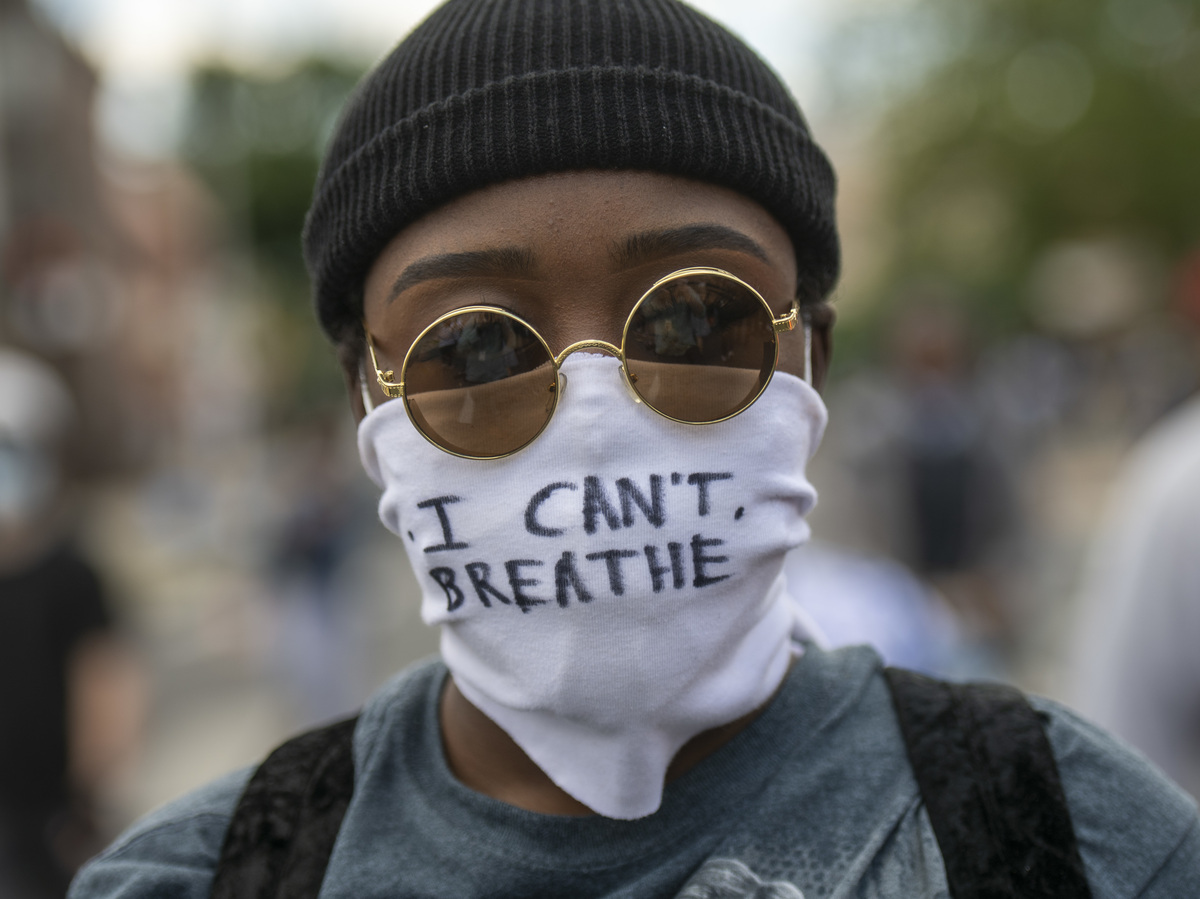
Protests over police treatment of black people have sparked concerns over the possible spread of COVID-19. Here, a protestor marches with a cloth mask stating “I CAN’T BREATHE” in Philadelphia on Monday.

Mark Makela/Getty Images


hide caption

toggle caption

Mark Makela/Getty Images

Protests over police treatment of black people have sparked concerns over the possible spread of COVID-19. Here, a protestor marches with a cloth mask stating “I CAN’T BREATHE” in Philadelphia on Monday.

Mark Makela/Getty Images

Mass protests that have erupted over police brutality toward black people in America are raising concerns about the risk of spreading the coronavirus. But some health experts, even as they urge caution, say they support the demonstrations — because racism itself also poses a dire health threat.

Tens of thousands of people, masked and unmasked, have thronged Minneapolis, Louisville, Atlanta and other cities in the week since the death of George Floyd, who died after a white Minneapolis police officer kneeled on his neck. They are the largest public gatherings in the U.S. since the pandemic forced widespread shutdowns, and many local officials are warning of a possible spike in new cases in one or two weeks.

“Risk of transmission is lower in open spaces, but wherever there is a gathering there is still the risk of transmitting the virus,” says Dr. Elaine Nsoesie, an assistant professor of global health at Boston University.

Health experts are urging protesters not to sing and shout to reduce the threat of person-to-person transmission. And they caution that police tactics such as tear gas and pepper spray could exacerbate the situation, as they prompt victims to cough and gasp for air.

The New York City Health Department has issued a list of tips for demonstrators to lower their risk of contracting COVID-19, by covering their faces and staying in small groups.

“Don’t yell; use signs & noise makers instead,” the advice stated.

Nsoesie says that while she agrees with the sentiment, “I can see how some of these tips can be difficult to follow. For example, if you are angry or frustrated about an issue, you want to express that feeling and speaking is one way of doing that.”

“It’s also hard to keep 6 feet of distance at a protest,” she adds.

Washington, D.C., Mayor Muriel Bowser says she’s worried about how consecutive days of protests could trigger an influx of COVID-19 cases. Huge demonstrations began in the nation’s capital on Friday — the same day Bowser lifted stay-at-home orders and eased shutdown rules.

The city is still limiting gatherings to no more than 10 people. But in the streets around the White House, that cap is regularly exceeded by orders of magnitude.

“I’m so concerned about it that I’m urging everybody to consider their exposure if they need to isolate from their family members when they go home and if they need to be tested, because we have worked very hard to blunt the curve,” Bowser said on NBC’s Meet the Press.

But the risks of congregating during a global pandemic shouldn’t keep people from protesting racism, according to dozens of public health and disease experts who have signed an open letter in support of the protests.

“White supremacy is a lethal public health issue that predates and contributes to COVID-19,” the letter states.

Initially written by infectious disease experts at the University of Washington, the letter cites a number of systemic problems, from the disproportionately high rate at which black people have been killed by police in the U.S. to disparities in life expectancy and other vital categories — including black Americans’ higher death rate from the coronavirus.

“Data is showing that blacks and Latinos have been disproportionately affected by COVID-19 in many states,” says Nsoesie, who was not among the letter’s signatories when she was contacted by NPR. “Racism is one of the reasons this disparity exists.”

“Racism is a social determinant of health,” she continues. “It affects the physical and mental health of blacks in the U.S. So I wouldn’t weigh these crises separately.”

Local governments should not to break up crowded demonstrations “under the guise of maintaining public health,” the experts say in their open letter. They are urging law enforcement agencies not to use tear gas, smoke and other irritants, saying they could make people more susceptible to infection and worsen existing health conditions.

The medical professionals also acknowledge the potential for COVID-19 cases to rise in the days to come, and they are calling for public health agencies to boost access to care and testing in affected communities.


Source link

Protests Over Racism Versus Risk Of COVID: ‘I Wouldn’t Weigh These Crises Separately’

0

Protests over police treatment of black people have sparked concerns over the possible spread of COVID-19. Here, a protestor marches with a cloth mask stating “I CAN’T BREATHE” in Philadelphia on Monday.

Mark Makela/Getty Images


hide caption

toggle caption

Mark Makela/Getty Images

Protests over police treatment of black people have sparked concerns over the possible spread of COVID-19. Here, a protestor marches with a cloth mask stating “I CAN’T BREATHE” in Philadelphia on Monday.

Mark Makela/Getty Images

Mass protests that have erupted over police brutality toward black people in America are raising concerns about the risk of spreading the coronavirus. But some health experts, even as they urge caution, say they support the demonstrations — because racism itself also poses a dire health threat.

Tens of thousands of people, masked and unmasked, have thronged Minneapolis, Louisville, Atlanta and other cities in the week since the death of George Floyd, who died after a white Minneapolis police officer kneeled on his neck. They are the largest public gatherings in the U.S. since the pandemic forced widespread shutdowns, and many local officials are warning of a possible spike in new cases in one or two weeks.

“Risk of transmission is lower in open spaces, but wherever there is a gathering there is still the risk of transmitting the virus,” says Dr. Elaine Nsoesie, an assistant professor of global health at Boston University.

Health experts are urging protesters not to sing and shout to reduce the threat of person-to-person transmission. And they caution that police tactics such as tear gas and pepper spray could exacerbate the situation, as they prompt victims to cough and gasp for air.

The New York City Health Department has issued a list of tips for demonstrators to lower their risk of contracting COVID-19, by covering their faces and staying in small groups.

“Don’t yell; use signs & noise makers instead,” the advice stated.

Nsoesie says that while she agrees with the sentiment, “I can see how some of these tips can be difficult to follow. For example, if you are angry or frustrated about an issue, you want to express that feeling and speaking is one way of doing that.”

“It’s also hard to keep 6 feet of distance at a protest,” she adds.

Washington, D.C., Mayor Muriel Bowser says she’s worried about how consecutive days of protests could trigger an influx of COVID-19 cases. Huge demonstrations began in the nation’s capital on Friday — the same day Bowser lifted stay-at-home orders and eased shutdown rules.

The city is still limiting gatherings to no more than 10 people. But in the streets around the White House, that cap is regularly exceeded by orders of magnitude.

“I’m so concerned about it that I’m urging everybody to consider their exposure if they need to isolate from their family members when they go home and if they need to be tested, because we have worked very hard to blunt the curve,” Bowser said on NBC’s Meet the Press.

But the risks of congregating during a global pandemic shouldn’t keep people from protesting racism, according to dozens of public health and disease experts who have signed an open letter in support of the protests.

“White supremacy is a lethal public health issue that predates and contributes to COVID-19,” the letter states.

Initially written by infectious disease experts at the University of Washington, the letter cites a number of systemic problems, from the disproportionately high rate at which black people have been killed by police in the U.S. to disparities in life expectancy and other vital categories — including black Americans’ higher death rate from the coronavirus.

“Data is showing that blacks and Latinos have been disproportionately affected by COVID-19 in many states,” says Nsoesie, who was not among the letter’s signatories when she was contacted by NPR. “Racism is one of the reasons this disparity exists.”

“Racism is a social determinant of health,” she continues. “It affects the physical and mental health of blacks in the U.S. So I wouldn’t weigh these crises separately.”

Local governments should not to break up crowded demonstrations “under the guise of maintaining public health,” the experts say in their open letter. They are urging law enforcement agencies not to use tear gas, smoke and other irritants, saying they could make people more susceptible to infection and worsen existing health conditions.

The medical professionals also acknowledge the potential for COVID-19 cases to rise in the days to come, and they are calling for public health agencies to boost access to care and testing in affected communities.


Source link

How a City Once Consumed by Civil Unrest Has Kept Protests Peaceful

It was not until nightfall that the true test came.

After the structured march had ended, a crowd that the police estimated to be between 700 to 1,000 protesters moved toward the precinct on 17th Avenue.

The 320 members on duty from the Newark Police Department — which has lost four officers to Covid-19 and continues to struggle with coronavirus-related staffing issues — were “stretched,” Mr. Ambrose said.

At about 6:30 p.m., he placed a mutual-aid call asking for backup officers from the State Police, Jersey City, the Essex County Sheriff’s Office and nearly a dozen neighboring towns. Within hours, 280 officers from the region had arrived to help.

As a line of police officers stood at the front of the First Precinct wearing face shields and riot gear, members of the crowd threw bottles, shouted insults and attempted to move toward the door. One protester jumped on top of a squad car, and several police vehicle tires were slashed, but there were no arrests.

“It was a waiting game,” Mr. Ambrose said. “The police held them from going in, and the Newark community stood there and helped the police. And I am forever grateful to them for that.”

Newark, a city of 282,000, is about half African-American, 36 percent Hispanic and 10 percent white. Its police department, which remains bound to a federal consent decree linked to past abuses, is about 84 percent black or Hispanic, officials said.

A message eventually went out, spread by younger residents, that it was time for anyone who did not live in Newark to leave, according to clergy members, community leaders and police officials present during the standoff.

Source link

China’s Wolf Warrior Diplomats: Is Life Imitating Art?

0

Under Xi Jinping, China’s diplomats have abandoned charm for an aggressive approach called “Wolf Warrior” diplomacy, with envoys taking to Twitter to insult their host countries or threaten trade war against governments that criticize China. Named after a 2017 action blockbuster featuring a Chinese Rambo shooting up foreign bad guys in Africa, the pugnacious diplomacy has been directed at countries as distinct as Sweden, Venezuela and India — and appears to be getting the same reviews as the movie. Wolf Warrior won awards inside China, but foreign critics cringed at what they described as “heavy-handed flag-waving,” “jingoistic jubilance,” and “unintentionally amusing” dialog.


Source link