The law has restricted freedoms in the semi-autonomous territory, raising concerns of official oversight of social media.
Other social media companies such as Facebook and Twitter are also reviewing operations in Hong Kong.
TikTok has come under scrutiny from the US and other countries because of concerns it could share user data with Chinese authorities.
The app was launched outside of mainland China by Beijing-based ByteDance to reach a global audience.
Separately, a spokesman for the app, said on Friday that TikTok might come under a new business structure.
“As we consider the best path forward, ByteDance is evaluating changes to the corporate structure of its TikTok business,” the spokesman said in an emailed statement.
He also reiterated previous pledges that ByteDance would refuse to share TikTok user data with Chinese authorities.
“We have never provided user data to the Chinese government, nor would we do so if asked.”
TikTok has increased its popularity during global coronavirus lockdowns with about 315 million people downloading the app in the first three months of this year, according to research firm Sensor Tower. The app now has 2.2 billion users globally, according to company data.
US Secretary of State Mike Pompeo and an Australian member of parliament have recently suggested the app needs more scrutiny over its data and privacy policies because its headquarters are in China.
Mr Pompeo has banned state department employees from downloading the app and suggested the app could also be banned in the US.
However, the company denied that it represented a security risk.
“TikTok is led by an American CEO (former Disney executive Kevin Mayer based in Los Angeles), with hundreds of employees and key leaders across safety, security, product, and public policy here in the US. We have no higher priority than promoting a safe and secure app experience for our users,” a spokesman said.
The Council for the Indian School Certificate Examinations (CICSE) on Thursday said it would announced the Board results for Class 10 (ICSE) and Class 12 (ISC) at 3 pm on Friday.
Board Secretary Gerry Arthoon made the announcement of the declaration of the CICSE board results.
“The results of the Class 10 (ICSE) and Class 12 (ISC) year 2020 examinations will be declared on Friday, July 10 at 3 pm. The results will be made available through the board website and SMS facility,” Arathoon said on Thursday.
The board had last week announced an alternate assessment scheme for the two classes after the pending exams were cancelled in view of a spike in COVID-19 cases.
As per the scheme, candidates will be assessed based on best three percentage marks obtained in subjects for which board exams have been conducted and the marks of their internal assessment as well as project work will be taken into account.
The internal assessment formula will be applicable for class 12 which is the Indian School Certificate (ISC) exam, while for class 10 which is Indian Certificate of Secondary Education (ICSE), the project work will be taken into account.
Capiche is a secret society for SaaS power users, building a new community of people who care about software to make the SaaS industry more transparent, together. This piece was written by Matthew Guay, Capiche‘s founding editor and former senior writer at Zapier.
When Jiro dreams of sushi, you’d hardly imagine him slicing sashimi with an ordinary, dull knife. Nor would you expect Usain Bolt to cross the finish line in shoes you could pick up at an outlet, the London Symphony Orchestra to grab the cheapest violins at the local music store, or Ford to take on Ferrari and win the Le Mans with any random car.
Experts use expert tools. Rigorously tested, finely tuned, carefully built to perform at the highest levels. They’re crafted, built for the most demanding audiences.
Then those best features trickle down, until yesterday’s best is today’s ordinary. In humanity’s pursuit of the best, we build better things, then mass-market them to fund the next best thing.
Along the way, the best, ideal versions of those tools become icons, symbols of victory. You might not need the absolute best shoe, the fastest car, the sharpest knife for your work. But wouldn’t you like the perfection they represent to rub off on your work? And so the best tools become status symbols. The watch that ticked on the moon makes you think you, too, could shoot for the moon, that you’re someone who needs the most exacting tools.
Now it’s happened to software.
Software was the great equalizer. “All the Cokes are the same and all the Cokes are good,†said Andy Warhol, and the same went for software. Gmail works the same on a $200 Chromebook or $2000 MacBook. Excel can track a $1,000 budget or a $100 million portfolio equally well.
But what if software could be better, crafted specifically for the professionals who need it most? How much would the people who email the most benefit from an email app that made them 10% faster? What would investors pay for a chat app specifically for finance? How many researchers would rebuild their libraries in a better notes app?
Thus positional software, an emerging category of software built for expert users with a focus on design and collaboration, adopted bottom-up in organizations, and often priced at a premium compared to existing category leaders. Similar to positional goods, highly valued items that showcase status, positional software are tools people aspire to use, either as experts in their industry or to position themselves as such.
The editor wars
The first best software was built by programmers, for programmers.
One team at MIT wanted a better text editor, and built Emacs. Another at Berkley wanted the same thing, and built Vi. The former was so customizable, it could be anything: An IDE, an email app, even your psychiatrist. The latter was so simple, it looked like nothing at first, with arcane commands required just to edit text.
Yet there was magic in both approaches. Each text editor was powerful enough to give developers superpowers, customizable enough to keep them from reinventing the wheel again, opinionated enough to build a following.
To this day, preferring Vim or Emacs labels you, puts you in a certain class of developers who are picky about their tools, willing to invest time in learning obscure features, and far less willing to consider switching to other tools.
They’re positional software.
The best software for each job
As software ate the world, developers weren’t the only ones demanding the best in software. When everyone’s work is done through software, everyone could use better tools to work at peak performance.
There have always been better tools, software that hit a higher bar. Niche software, things others in the same role and industry might know and tell each other about, but that would be hidden from the wider public. In the grand tradition of Vim and Emacs, they were often cryptic tools with steep learning curves, tools that made sense to invest time to learn if you used them all day, but that wasn’t worth the effort otherwise. Only those who truly need them would aspire to use them.
Then something switched. The best software became the most popular, aspirational tools that people built their identity around and wanted to use. What cooking shows and documentaries did for knives and premium ingredients happened to software.
Today’s Positional Software required a few ingredients of their own to happen:
Used in public
Email software was perhaps the first mass-market tool where you could earn credibility based on the software you used.
Hotmail got the idea right first. Offer free email when few others did, and add a signature to the bottom of every email that suggested you, too, could get free email. That made it one of the first viral software, a trick both the iPhone and Superhuman copied with an email signature that told recipients what sent your message.
Public use is what made software convey mass-market status. You neither gained nor lost credibility by, say, checking email on Outlook Express or Emails or Apple Mail; few knew the difference. Your email address’ domain, on the other hand, announced your software choice to the world, drew a line in the sand, gave you a digital identity.
Positional software uses Hotmail’s trick, letting the world know you use something different, something better. Superhuman indicates it with an email signature; Hey forces you to get a new email address to make sure no one misses it. Figma’s share links, Notion’s public pages, Typeform’s embeds, and Slack’s invites do the same—everyone you work with sees the software you use, and has to use it, too, if they want to collaborate. The Bloomberg terminal was an early example: If you wanted to chat with other traders, you needed Bloomberg. Even less visible software—modern equivalents of Vim and Emacs—can be used in public if you let the world know on social media, something most common with the most opinionated software.
The halo can wear off. You switched to Hotmail to save money, not specifically for a better tool, so with time a Hotmail, Yahoo, Aol, or Juno email address signified you were behind the curve. A Hey email address, today, might say you’re ahead. It’s a delicate balance, one exclusivity helps extend into a moat.
Exclusive
Free email is enticing. Free email only few can get, even more.
Gmail’s launch on April Fools’ Day, 2004, with a better web app and far more storage—leaps over the two things that set Hotmail apart in the first place. Gmail added something to the equation that made it even more desirable: Invitations. Only a thousand people could get in at first, and those could each invite a few friends. That let Google scale the service up over time, and gave a free Gmail account the cachet of an expensive luxury good, enough that people sold Gmail invites on eBay for over $150.
Invite-only bought Google time to perfect Gmail, a trick Google extended by keeping Gmail in beta for the first 5 years it was available. But the real success was in the viral word-of-mouth as everyone wanted an invite to use Google’s latest software.
Exclusivity speeds up the process of waiting for influential users to promote the product. Imagine Gmail without an invite system; some might mention using it, far more would use it without talking about it. The invite system made it exciting when you get to start using Gmail, making you more likely to talk about it—and for your colleagues and friends to ask you for an invite.
Add social media to the mix, and exclusive, invite-only software can quickly make a new product seem far more desirable. You just need to get people influential in the niche your software targets to use the software in public, sharing what they like about it, and the invite requests will start to come in.
Invite-only on its own isn’t enough; the initial buzz around Google’s later launch of Google Wave didn’t keep that product afloat. But it does add allure to software. Today, invite-only is a key launch strategy for everything from Superhuman (still invite-only) to Clubhouse (with an even more locked down invite system), Hey (invite-only for the first couple weeks) to Linear (invite-only while in beta).
Invite-only starts the sharing process. The real work-in-public, though, comes from collaborative software.
Built for you, then your team
The best software in the world doesn’t help if you can’t use it.
When IT teams mandated what software you could use, there was no reason to seek out better tools. Better to invest in getting the most out of the software they authorized.
Then two major things changed. Companies started switching to bring-your-own-device policies, giving you more freedom over the computer and thus software you use, making bring-your-own-software possible. Then, web apps freed software from IT constraints, making new software only a new tab away.
You didn’t have to use older desktop software. You could use the new best-in-breed software in your browser.
These web apps weren’t just utilities you’d use on your own. Increasingly, modern software was built to work together with a team. Perhaps you’d try Slack during a hackathon or with a group of people from your industry. You’d enjoy it, think your team would like it too, and so would go to slack.com and make a new team, and invite your colleagues. The exclusivity appeal would take over again, as others in your company would want into the cool new app, and before you knew it, Slack had swept through your company.
Google Docs didn’t need everyone to switch. It just needed influential writers in your team to start using it for collaborative edits, then to share the document links, and it’d grow from there. Airtable did the same to databases, Figma to design tools, Notion to notes. They were enough better to make the most choosy users switch, got them to work in public, and that sparked bottom-up adoption throughout the company.
But first, the product needed to be enough better to get that first tranche of users to switch.
Opinionatedly different
“Here’s to the crazy ones,†said the classic Apple ad. “They see things differently.†That is the defining feature of positional software. They force you to work differently.
Gmail removed folders from email, prioritized an Archive button over delete, forced you to use tags if you wanted to file messages. Typeform showed only one form question at a time. Superhuman hid most buttons, opting to prioritize keyboard shortcuts and the command palette. Figma abstracted away files, blurred the lines between mockups, demos, drafts, and finished work. Hey took away archiving, said inbox zero isn’t important, said 3 folders is enough.
Few are passionate about the differences between PDF editors or domain registrars, say—they either do the job, or they don’t.
Code editors, however, are worth fighting for. Vim and Emacs’ opinionated differences are what make them polarizing. The same goes for modern positional software. They take a stand, say there is a better way of working. That makes them polarizing, which makes them worth talking about, which helps them spread further. It lets them charge a premium for a product built with care.
It’s a virtuous cycle that helps positional software spread to everyone in its niche. They don’t need everyone to use their software, but they do need everyone who cares about the same things they do to use it. You can’t get there by being a jack of all trades. Opinionated features let software be a master of one.
Premium by design
Design, then, ties it those features together.
“Design is how it works,†said Steve Jobs, but better features alone were hardly enough for Apple’s co-founder. The company that taught us what chamfered edges and complications are cares deeply about how their products look and feel. So, too, do positional software.
Vim and Emacs may fall into the design is how it works category, with devotees favoring their raw simplicity. But they’re not turning heads when used in public, not making people wish they had an invite to see what the fuss is about.
Slack was an early leader in the crafted software space. Built from a company that two times had built a game and each time ended up building another product instead, the Slack team surely had great designers in their midst. But they also enlisted an outside design firm to launch the most polished team chat app the world had seen. Team chat wasn’t new; fun team chat was, and design was a key differentiator for Slack, enough that they could charge nearly three times as much per user than their closest competitor.
Positional software pairs a deep focus on features for the most exacting users with an equal focus on the design that will appeal to and work best for them. The chef’s knife needs a carefully curved handle and sharper blade to be worth buying—but it also needs to look the part, especially if it’s to cross the chasm from tool to desirable luxury.
Much of the discussion about Superhuman centers on its price, assuming a $30/month email app is a luxury, a Veblen good. Yet even if the status conveyed an exclusive Superhuman invite is worth the first month’s subscription, that alone is hardly enough reason to continue using the software. Subscriptions if anything align developer and users’ interests, as the latter can choose to leave anytime. Superhuman survives solely on how well it helps those who use email the most. If it makes them better at email, they’ll continue to pay, and talk about it.
Democratizing power features
IRC had been around for decades as an early team chat. Slack added design and opinionated tweaks and turned it into a chat app worth paying more for.
Gmail was built around keyboard shortcuts since its inception. Superhuman taught them to you with personalized onboarding and tooltips, making sure you’d learn them.
Vim and Emacs had features tucked away to make you a more efficient text editor if you took the time to learn them. Sublime Text put those features in a command palette where they were easy to discover.
You could always email design files around, track document changes in Word, update an intranet by hand. Figma, Google Docs, and Notion turned those tedious tasks into a single click, freeing you up for your real work.
Positional software makes its name with unique features and better design. But often it’s not entirely reinventing the wheel. Instead, it’s thoughtfully simplifying what previously were power-user features, making you work faster in ways that were only possible in older software if you took hours to study and memorize. Thus the common complaint that positional software is nothing new, that Slack’s just IRC and Superhuman’s only Gmail with a newer design. The detractors have a point—the features often are there in older products if you dig.
Positional software makes everyone a power-user.
Customizable, within limits
Software can’t gain a patina from wear-and-tear, doesn’t show your hard-earned battle scars of day-in-day-out usage the same way a long-loved tool can.
And opinionated software can never be as customizable as their developer-orientated, open-source, handcrafted counterparts. That’d take away the original insights and designs that make them great.
But you can’t have power user tools without some free-for-all, some area to experiment and make yourself at home. If anything, customization keeps the work-in-public going, as power users want to show what they’ve built from tools others might have originally dismissed.
And thus, positional software typically lets you customize something. Maybe just themes and add-ons, with an ecosystem of third-party developers turning the software into a platform. Maybe with emoji and stickers, consumer-style flair that makes you feel at home. Maybe with custom workflows that force you to think through how you work, make you invest in making the tool your own.
That keeps the virtuous cycle going, where the custom tweaks make it a tool you couldn’t imagine living without, which makes you talk about it in public, which makes others want in, which helps the vendors find someone else in your niche and increases their pricing power as that customer wants their software alone, not any random tool.
And that’s positional software.
A new world of premium software
Software started out enigmatic, mysterious, difficult to understand, gate-kept by obscure terminology and hidden features.
Then it went mass market, where everyone used the same tools, where Microsoft Office was standard and seldom was indie software considered.
And then, as software became the primary tool for everyone’s jobs, not just developers, the same principles that helped developer tools become great were brought to prosumer business software. More esoteric software appeared, tools used by only those with the most demanding needs, with details you’d have to be an insider to appreciate. Mass-market software could serve the bulk of the market; these new software focused on those who need them most.
The best tools signify the value a craftsperson places on time and efficiency. They’re emblematic of the role that craftsperson holds, signify their status and skill. And they’re honed over time to be best for that role.
Today’s positional software does the same. It’s best tools, designed for specific roles, carefully designed to make craftspeople better at their digital work. It’s software that positions you as an expert. It’s priced at a premium, and worth paying for—by those who need their features, and by those who want the status those features convey. They’re spread as digital artisans work in public, share their work, talk about their tools.
And that halo effect can, over time, make positional software the new leader in its field. It still may not overtake the market leader in sales. But it will absolutely influence its entire industry as it occupies the mindshare of the most influential segment of that industry’s professionals.
Suzanne Wylie’s words last year were eerily prophetic. The most powerful unelected woman in Belfast spoke of how tough it could be to appear on the front page of newspapers.
At the top of an organisation, it can be very lonely at times because ultimately the buck does stop with you, and particularly in a political organisation,” she said.
Belfast City Council’s chief executive was referring to the occasions she had hit the headlines over City Hall’s handling of loyalist bonfires.
But the controversy now engulfing her is far more serious than anything before.
The image of eight ordinary families – treated so differently to that of former IRA leader Bobby Storey’s at Roselawn Cemetery – led to an understandable wave of anger across the city and beyond. The council’s apology has not lessened it.
Wylie is a popular figure with councillors and staff. Highly personable and approachable, she became the council’s first female chief executive in 2014.
While the elected representatives are officially the bosses of senior council officers, the power and influence of the latter can’t be underestimated.
Councillors come and go but the officers remain in place and, with full council and committee meetings generally suspended due to coronavirus, more power fell into officers’ hands.
Wylie has worked for the council for over 30 years, joining as an environmental health officer after graduating from the University of Ulster.
In an interview with Best Of Belfast last year, she recounted how she was tasked with inspecting animals in the abattoir.
The male workers there tested her mettle. “Sometimes in the mornings when I came in I would find all sorts of bits of animals in my welly boots because they wanted to see what kind of stuff was this girl made off,” she said.
A workaholic who sets her alarm for 5.30am, she rose through the ranks at City Hall. She put some of her success as chief executive down to her focus on building relationships. She knew “all the players in this city” and it helped to be able to pick up the phone and “problem solve together”.
Councillors from a wide range of parties speak of Wylie as “very accommodating” and someone who constantly works to find compromises.
She is a well-known figure cycling to and from work – as late as 11pm some nights. She told Best Of Belfast how she kept “a pair of straighteners in the office” and would use the hand-dryer in the toilets to dry her hair.
Three years ago ex-DUP councillor Graham Craig was at the centre of a sexism storm when he said he enjoyed the sight of Ms Wylie on her bike.
The council’s director of city and neighbourhood services, Nigel Grimshaw – the second top official at the centre of the Storey cremation controversy – left his job as the most senior police officer in Belfast to join the council in 2015.
His approach to loyalist bonfires has led to him being better liked by SDLP and Alliance councillors than by unionist ones. He is also unpopular with Sinn Fein.
Grimshaw is seen as tougher and more formal in his approach to councillors than Wylie.
“He is an old copper. He has no time for social niceties and chit-chat. He’s a plain speaker,” said a council source.
As the PSNI’s former Belfast Area Commander, he had dealt with high-profile public order matters, including contentious parades and protests, in the city. He had also battled the threat from dissident republicans and was heavily involved in the implementation of the Patten policing reforms.
His departure from the PSNI surprised many colleagues.
Grimshaw had never been afraid to speak his mind during his police career.
He had regularly called for political leadership to be shown in Northern Ireland and had accused politicians of not moving quickly enough to develop a shared future to help ease tensions on the street.
In 2014 he hit back at Sinn Fein allegations of a “dark side” to policing following the arrest of Gerry Adams by detectives investigating the murder of Jean McConville.
Sanjana Sanghi thanks fans for warm response to ‘Dil Bechara’ trailer
Bollywood newbie Sanjana Sanghi has extended gratitude to the fans for their warm response to the trailer late actor Sushant Singh Rajput’s last film Dil Bechara.
Sanjana turned to Instagram and shared the trailer of the film and thanked the fans for the amazing response to it.
She also wrote “Life, indeed, is seri-real. 2 years ago, July 9th 2018, was the first day of Sushant & Sanjana, becoming Manny & Kizie in front of the camera, on set in Jamshedpur. My life since that day, has never been the same for a second.â€
“Kizie & Manny truly believed there never will be a greater love than their’s, but the love all of you, all over the world have shown us? It really does come close.â€
“It feels like a long, warm embrace. Thank you for loving, crying and smiling with #DilBecharaTrailer Lekin picture? Abhi baaki hai,†Sanjana said.
The trailer of Sushant and Sanjana upcoming film Dil Bechara has dethroned the highest grossing film of all time Avengers: Endgame’s record of most YouTube likes on a trailer.
Dropped earlier this week, the film’s trailer featuring the late actor alongside Sanjana Sanghi racked up over 5.4 million likes on YouTube within 24 hours of its release.
What is happening in India’s neighbourhood? While extensive comparative analysis has been done between Europe and US, precious little has been written on the Covid-19 situation in the Indian sub-continent.
We look at the spread of the pandemic in Pakistan, Afghanistan, China, Myanmar, Bangladesh, Bhutan, Nepal and Sri Lanka and assess where they stand in comparison to India.
PAKISTAN HAS HIGHEST INCIDENCE PER MILLION POPULATION
India, with 7,69,257 cases has the maximum Covid-19 caseload but looking at the Incidence per Million Population – which is a better indicator of the virus’ spread – it becomes clear that Pakistan fares worse.
India, interestingly, has a lower Incidence per Million than even Nepal, Afghanistan and Bangladesh. Yes, its massive population is a factor but then the argument could easily be reversed — despite its huge population, India has managed to contain the virus. The numbers could easily have spiralled out of control but the lockdown and other factors helped keep them in check.
In terms of absolute numbers, Bhutan has just 80 reported cases while Myanmar has only 317! Sri Lanka has also done exceedingly well with just over 2,000 total Covid-19 cases.
India’s cases have grown nearly three-fold (2.89 times) in the last one month (June 8 to July 8). Bangladesh has seen a 2.51 times increase while the corresponding multiple in Pakistan is 2.29.
However, the number of cases reported is directly linked to the number of tests conducted by a country. China has the best ratio of tests per one million population of 62,814. China is followed by Bhutan (34,230) and Nepal (19, 861). India has ramped up its testing and at 7,782 it is better on this count than Pakistan (6,750), Bangladesh (5,416) and Afghanistan (2,009) amongst others.
AFGHANISTAN’S POSITIVITY RATE WORST IN THE WORLD
One of the best parameters to gauge if a country is testing sufficiently is to look at the share of tests returning a positive result – this is known as the Test Positivity Rate.
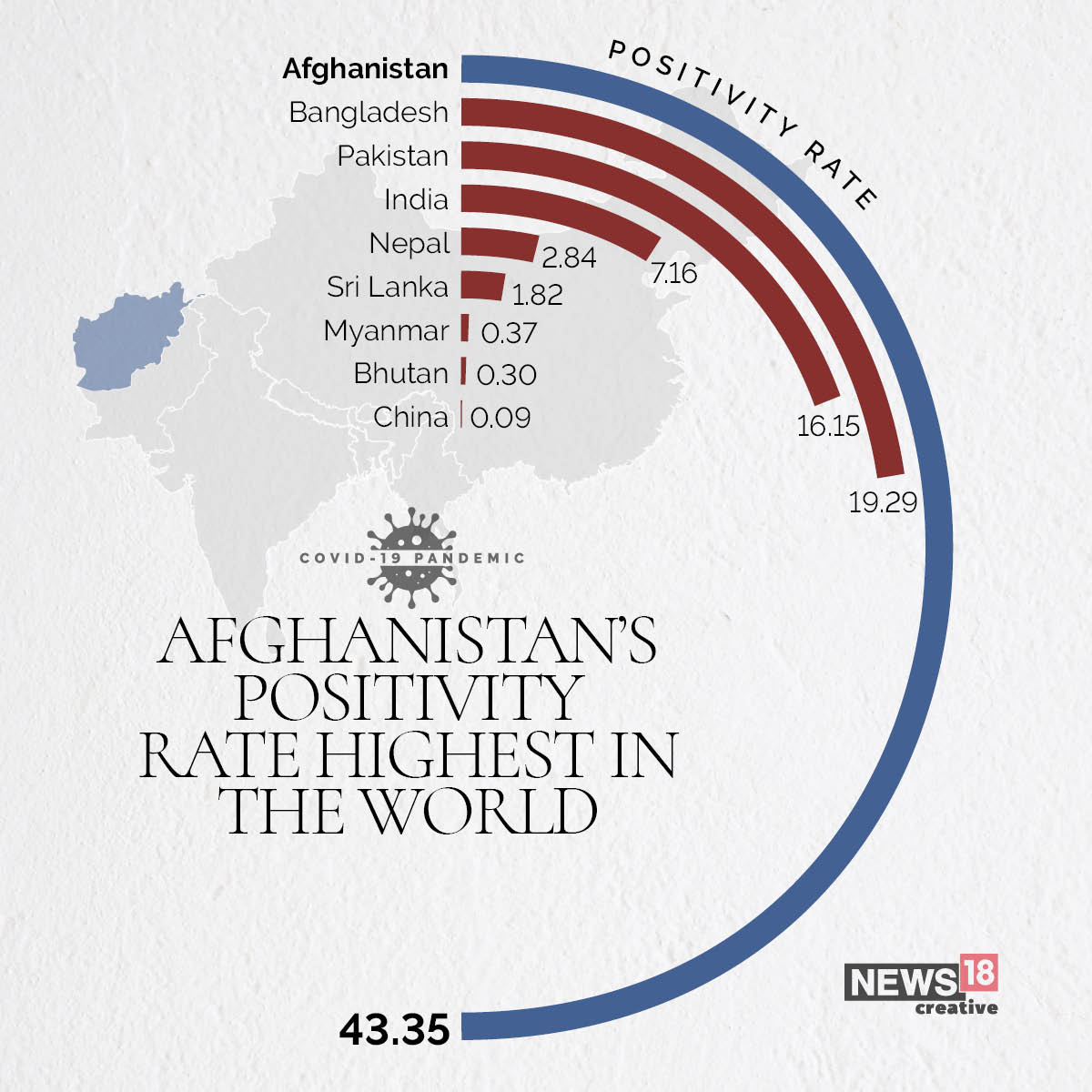
India’s Test Positivity Rate of 7.16% is less than half of Pakistan’s. Bangladesh has a Positivity Rate of almost 20% which means that for every five persons being tested, one is Covid-19 positive.
Alarmingly, Afghanistan has the worst Positivity Rate of 43.35% not only in the neighbourhood but in the world. This basically means that every second person tested in the country is positive, suggesting that the spread is extreme. Not surprising then that they are also testing poorly.
Myanmar has a population of around 5.5 crores and despite the low testing, it has a very low Positivity Rate of just 0.37%. This suggests that a very minuscule percentage of those being tested have contracted the virus – an indication that the nation has largely been able to contain the spread of Covid-19.
China did extensive testing but many experts have raised doubts over the number of cases being reported by the country.
While the Positivity Rate is an important parameter to understand the spread of the virus in a country, the most significant measures are the Mortality Rate and the Tests Per Death, as nothing is more important than saving lives.
NO DEATHS IN BHUTAN, INDIA’S MORTALITY RATE HALF OF CHINA’S
Bhutan is amongst the few nations in the world where there has been no casualty due to Covid-19. A sense of community and national solidarity, limited and controlled tourism, public’s trust in the government (the Prime Minister and Health Minister of Bhutan have a background in public health) and well-prepared machinery (the WHO and the Health Ministry undertook a simulation exercise at Paro airport in November 2019 to deal with potential disease outbreaks) are some of the reasons for this amazing feat by the Himalayan nation.
Meanwhile, Myanmar with six deaths, Sri Lanka with 11 and Nepal with 35 have also done a remarkable job in controlling the fatalities.
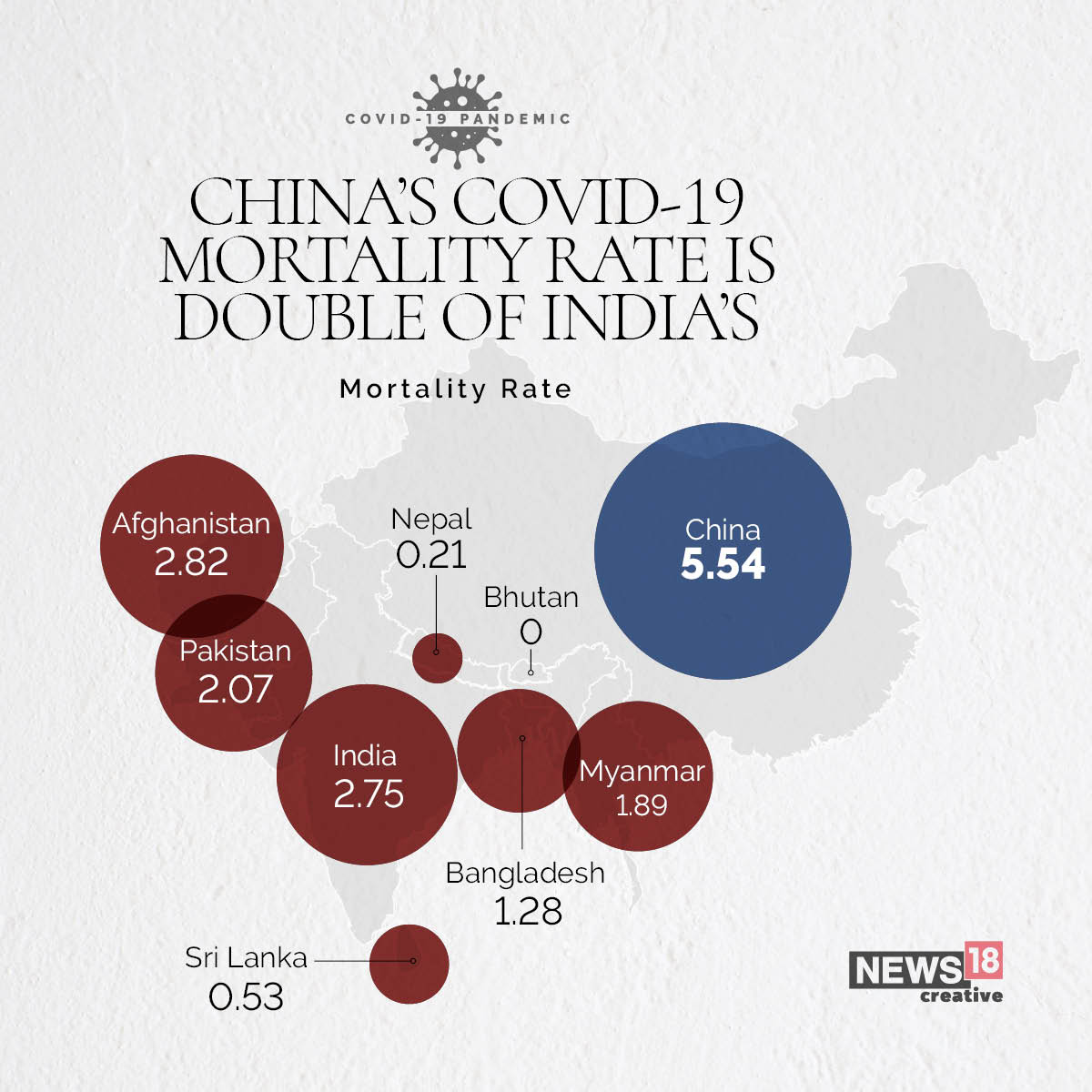
Although the number of cases still continue to rise at a fair rate, Bangladesh has a low Mortality Rate of 1.28%.
India has done a great job in containing the number of fatalities due to Covid-19. The country’s Mortality Rate of 2.75% is less than half of China’s, despite the latter being a totalitarian regime.
In terms of Tests Per Covid-19 Death, India with 508 tests per death, has done better than the likes of Bangladesh (406), Pakistan (299) and Afghanistan (82).
India has not only done well when compared to the richer, developed and advanced Western European nations and US, but given its size, population and other challenges, it also fares favourably in its own neighbourhood.
It is understood Guingamp offered £2.5m to Aberdeen for striker Sam Cosgrove
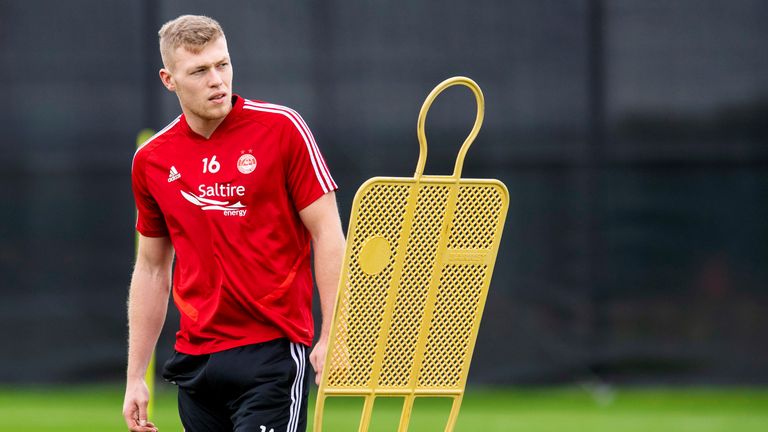
Aberdeen striker Sam Cosgrove has turned down a move to French side Guingamp.
Sources close to the club have confirmed they received “a significant offer” for the 23-year old striker, believed to be more than £2.5m.
Cosgrove has opted against the move due to the short time-frame required for it to proceed, as well as due to feeling he has more to offer at Pittodrie.
Aberdeen are battling the financial hit caused by the coronavirus pandemic, with players and staff undergoing a process of wage cuts.
Chairman Dave Cormack recently revealed the club is facing up to a potential £10m shortfall in income but confirmed that half of that has already been offset.
Aberdeen begin their 2020/21 Scottish Premiership campaign against Rangers at Pittodrie, live on Sky Sports at 5.30pm on Saturday, August 1.
The Dons then travel to St Johnstone for another Sky Live game the following Saturday at 12.30pm.
The Odisha government has approved the removal of five districts from the Left Wing Extremism affected Security Related Expenditure (SRE) scheme, a top police officer said.
The districts which will be out of the SRE are: Angul, Boudh, Sambalpur, Deogarh and Nayagarh, said Director General of Police (DGP) Abhaya.
“This recognises improved security situation in these districts. Odisha Police is committed to make the whole of Odisha LWE free,” the DGP said.
Odisha has been experiencing the scourge of Naxal activities for more than three decades. As many as 19 of the 30 districts of Odisha districts were declared as SRE district, sources said.
“Robust security response as well as focused developmental activities have brought about a turn-around in the situation in the state especially in the last few years, said IGP (Operation) Amitabh Thakur.
In April 2018, six districts – Jajpur, Dhenkanal, Keonjhar, Mayurbhanj, Gajapati and Ganjam – were declared as free from Maoist activities and these districts were removed from the Central government sponsored Security Related Expenditure (SRE) Scheme.
The SRE is a Central scheme exclusively meant for capacity building for Maoist affected districts across the country.
With the changing situation, Odisha government has approved the removal five districts namely, Angul, Boudh, Sambalpur, Deogarh and Nayagarh from the SRE scheme.
Therefore, a total of 11 districts of Odisha have so far been assessed to be free of Maoist activities in a span of two years, largely due to the impact of security response and good governance by the state government, the DGP said.
The fizzling out of the Maoist influence in the state is indicative of the growing acceptance by the people to the developmental agenda of the state government and their dis-enchantment towards the obsolete Maoist ideology, the top police officer said.
What is happening in India’s neighbourhood? While extensive comparative analysis has been done between Europe and US, precious little has been written on the Covid-19 situation in the Indian sub-continent.
We look at the spread of the pandemic in Pakistan, Afghanistan, China, Myanmar, Bangladesh, Bhutan, Nepal and Sri Lanka and assess where they stand in comparison to India.
PAKISTAN HAS HIGHEST INCIDENCE PER MILLION POPULATION
India, with 7,69,257 cases has the maximum Covid-19 caseload but looking at the Incidence per Million Population – which is a better indicator of the virus’ spread – it becomes clear that Pakistan fares worse.
India, interestingly, has a lower Incidence per Million than even Nepal, Afghanistan and Bangladesh. Yes, its massive population is a factor but then the argument could easily be reversed — despite its huge population, India has managed to contain the virus. The numbers could easily have spiralled out of control but the lockdown and other factors helped keep them in check.
In terms of absolute numbers, Bhutan has just 80 reported cases while Myanmar has only 317! Sri Lanka has also done exceedingly well with just over 2,000 total Covid-19 cases.
India’s cases have grown nearly three-fold (2.89 times) in the last one month (June 8 to July 8). Bangladesh has seen a 2.51 times increase while the corresponding multiple in Pakistan is 2.29.
However, the number of cases reported is directly linked to the number of tests conducted by a country. China has the best ratio of tests per one million population of 62,814. China is followed by Bhutan (34,230) and Nepal (19, 861). India has ramped up its testing and at 7,782 it is better on this count than Pakistan (6,750), Bangladesh (5,416) and Afghanistan (2,009) amongst others.
AFGHANISTAN’S POSITIVITY RATE WORST IN THE WORLD
One of the best parameters to gauge if a country is testing sufficiently is to look at the share of tests returning a positive result – this is known as the Test Positivity Rate.
India’s Test Positivity Rate of 7.16% is less than half of Pakistan’s. Bangladesh has a Positivity Rate of almost 20% which means that for every five persons being tested, one is Covid-19 positive.
Alarmingly, Afghanistan has the worst Positivity Rate of 43.35% not only in the neighbourhood but in the world. This basically means that every second person tested in the country is positive, suggesting that the spread is extreme. Not surprising then that they are also testing poorly.
Myanmar has a population of around 5.5 crores and despite the low testing, it has a very low Positivity Rate of just 0.37%. This suggests that a very minuscule percentage of those being tested have contracted the virus – an indication that the nation has largely been able to contain the spread of Covid-19.
China did extensive testing but many experts have raised doubts over the number of cases being reported by the country.
While the Positivity Rate is an important parameter to understand the spread of the virus in a country, the most significant measures are the Mortality Rate and the Tests Per Death, as nothing is more important than saving lives.
NO DEATHS IN BHUTAN, INDIA’S MORTALITY RATE HALF OF CHINA’S
Bhutan is amongst the few nations in the world where there has been no casualty due to Covid-19. A sense of community and national solidarity, limited and controlled tourism, public’s trust in the government (the Prime Minister and Health Minister of Bhutan have a background in public health) and well-prepared machinery (the WHO and the Health Ministry undertook a simulation exercise at Paro airport in November 2019 to deal with potential disease outbreaks) are some of the reasons for this amazing feat by the Himalayan nation.
Meanwhile, Myanmar with six deaths, Sri Lanka with 11 and Nepal with 35 have also done a remarkable job in controlling the fatalities.
Although the number of cases still continue to rise at a fair rate, Bangladesh has a low Mortality Rate of 1.28%.
India has done a great job in containing the number of fatalities due to Covid-19. The country’s Mortality Rate of 2.75% is less than half of China’s, despite the latter being a totalitarian regime.
In terms of Tests Per Covid-19 Death, India with 508 tests per death, has done better than the likes of Bangladesh (406), Pakistan (299) and Afghanistan (82).
India has not only done well when compared to the richer, developed and advanced Western European nations and US, but given its size, population and other challenges, it also fares favourably in its own neighbourhood.
The owner of an ashram in Shukertal was arrested for allegedly sexually harassing four children and forcing them and the others to work as labourers, police said on Friday.
Swami Bhakti Bhushan Govind Maharaj was arrested when he was trying to escape from the ashram, they said.
According to Additional District Magistrate Amit Kumar, a case was registered against the owner and others under IPC sections 323 (voluntarily causing hurt), 377 (unnatural offences), 504 ( intentional insult with intent to provoke breach of the peace) and sections 5/6 of the POCSO Act.
On July 7, a team of childcare helpline and police rescued eight children then and two later. They were aged between seven to ten years and hailed from Tripura, Mizoram and Assam.
They were also produced before the children welfare board. In a medical examination, four of the children were confirmed to be sexual harassed.
Meanwhile, Subdivisional Magistrate Kuldeep Meena recorded their statement.
The district authorities informed the parents of the victims who alleged sexual harassment by Bhushan and claimed that he forced them to lay bricks as part of manual labour.
Bhushan, who established the ashram in 2008, denied the charges against him, claiming he was falsely implicated in case.
We use cookies on our website to give you the most relevant experience by remembering your preferences and repeat visits. By clicking “Accept”, you consent to the use of ALL the cookies.
This website uses cookies to improve your experience while you navigate through the website. Out of these, the cookies that are categorized as necessary are stored on your browser as they are essential for the working of basic functionalities of the website. We also use third-party cookies that help us analyze and understand how you use this website. These cookies will be stored in your browser only with your consent. You also have the option to opt-out of these cookies. But opting out of some of these cookies may affect your browsing experience.
Necessary cookies are absolutely essential for the website to function properly. These cookies ensure basic functionalities and security features of the website, anonymously.
Cookie
Duration
Description
cookielawinfo-checbox-analytics
11 months
This cookie is set by GDPR Cookie Consent plugin. The cookie is used to store the user consent for the cookies in the category "Analytics".
cookielawinfo-checbox-functional
11 months
The cookie is set by GDPR cookie consent to record the user consent for the cookies in the category "Functional".
cookielawinfo-checbox-others
11 months
This cookie is set by GDPR Cookie Consent plugin. The cookie is used to store the user consent for the cookies in the category "Other.
cookielawinfo-checkbox-necessary
11 months
This cookie is set by GDPR Cookie Consent plugin. The cookies is used to store the user consent for the cookies in the category "Necessary".
cookielawinfo-checkbox-performance
11 months
This cookie is set by GDPR Cookie Consent plugin. The cookie is used to store the user consent for the cookies in the category "Performance".
viewed_cookie_policy
11 months
The cookie is set by the GDPR Cookie Consent plugin and is used to store whether or not user has consented to the use of cookies. It does not store any personal data.
Functional cookies help to perform certain functionalities like sharing the content of the website on social media platforms, collect feedbacks, and other third-party features.
Performance cookies are used to understand and analyze the key performance indexes of the website which helps in delivering a better user experience for the visitors.
Analytical cookies are used to understand how visitors interact with the website. These cookies help provide information on metrics the number of visitors, bounce rate, traffic source, etc.
Advertisement cookies are used to provide visitors with relevant ads and marketing campaigns. These cookies track visitors across websites and collect information to provide customized ads.