Wednesday, April 29, 2026

Xiaomi’s upcoming laptop in India could be a rebranded RedmiBook

0

Xiaomi’s laptop will be soon launched in India. The company started teasing the Mi Notebook in India from last week. Now, we’ve got information regarding the upcoming laptop from the house of Xiaomi. 

According to a new report from 91mobiles, sourced by Ishan Agarwal, the RedmiBook 13 which was announced in December 2019 in China will be rebranded and announced for the Indian market. It is also worth mentioning that the RedmiBook 13 will be powered by the Intel core chipset and not the recently launched Ryzen variant. 

Source link

Commission approves €4 million Estonian rent compensation scheme to support businesses affected by #Coronavirus outbreak

0

The European Commission approved a €4 million Estonian scheme to support businesses renting premises in shopping centres, in the context of the coronavirus outbreak. The scheme was approved under the state aid Temporary Framework adopted by the Commission on 19 March 2020, as amended on 3 April 2020 and 8 May 2020.

The public support, which will take the form of direct grants, is intended to cover part of the rent due by businesses located in shopping centres. The amount of public support to which businesses will be entitled under the scheme will match, up to a maximum amount of 25% of the rent, the discounts that each lessor may decide to apply on the rents in view of the current crisis situation.

This aims at incentivizing the private sector to contribute towards the objective of mitigating the impact of the coronavirus outbreak. The purpose of the scheme is to mitigate the sudden liquidity shortages that non-essential businesses in shopping centres are facing due to the closure imposed by the Estonian state between 27 March and 11 May to limit the spread of the coronavirus. The Commission found that the Estonian scheme is in line with the conditions set out in the Temporary Framework. In particular, (i) the support per company will not exceed the limits as set out in the Temporary Framework; and (ii) the scheme will run until 31 December 2020.

On this basis, the Commission approved the measure under EU state aid rules. More information on the Temporary Framework and other actions taken by the Commission to address the economic impact of the coronavirus pandemic can be found here. The non-confidential version of the decision will be made available under the case number SA.57403 in the state aid register on the Commission’s competition website once any confidentiality issues have been resolved.

Source by [author_name]

UK coronavirus live: England’s schools begin to reopen as lockdown eases across UK

The studies are part of the Accord (accelerating Covid-19 research and development) programme involving doctors and scientists, industry, the NHS the National Institute for Health Research (NIHR) and UK Research and Innovation.

“We are looking for a signal of both safety and efficacy, something that could reduce the severity of the disease, shorten its duration and prevent patients going into the intensive care environment,” said Tom Wilkinson, a respiratory medicine professor and consultant, who is the Accord academic lead, from the NIHR Southampton Biomedical Research Centre.

Just a handful of patients have enrolled for the trial so far and with coronavirus patient numbers falling, researchers are keen to quickly enlist as many as possible, said Wilkinson.

Source link

Restaurants, Salons And The Zoo: Easing Of COVID-19 Restrictions Puts Businesses Back In Action

See the latest stories on the coronavirus outbreak.  

SYDNEY – Several Australian states eased social distancing restrictions further on Monday, allowing restaurants to host more people and public attractions to reopen, as Canberra moves to revive the country’s ailing economy.

Australia has recorded about 7,200 coronavirus cases and 103 deaths, and with new infections now largely under control, it has embarked on a three-step plan to remove the bulk of curbs by July. 

In New South Wales, cafes and restaurants were allowed to cater for 50 seated patrons, while 20 guests will be allowed to attend a funeral. Both were previously limited to 10 people.

Public attractions, such as Sydney’s Taronga Zoo, art galleries, museums and libraries were also allowed to reopen.

In Victoria, which has taken the most cautious approach to reopening, restaurants and cafes could reopen on Monday. However, patrons are restricted to a maximum of 20 people.

Australia hopes removing restrictions will boost economic growth, though Prime Minister Scott Morrison on Monday said additional, targeted stimulus would be needed.

Australia’s government and central bank has pledged about A$250 billion in stimulus, though the bulk of this is expected to end by September.

Morrison said his government is considering a plan to offer homeowners one-off grants for renovations, while federal infrastructure projects will be bought forward.

“A big part of coming out of the COVID-19 crisis is our infrastructure spending,” Morrison told 2GB Radio.

Stalled Migration Affecting Economy

Australia’s three decades of uninterrupted prosperity are coming to an abrupt end as the global coronavirus pandemic crashes one of its most lucrative sources of income – immigration.

The country has been successful in managing the outbreak and reopening its A$2 trillion economy, thanks in part to an early closure of its borders.

But the policy has led to a halt in mass immigration – a key source of consumer demand, labour and growth – in an economy which is facing its first recession since the early 1990s.

Net immigration, including international students and those on skilled worker visas, is expected to fall 85% in the fiscal year to June 2021, curbing demand for everything from cars and property to education and wedding rings.

Gurmeet Tuli, who owns a jewellery store in the Sydney suburb of Parramatta, said his business is already hurting in a neighbourhood which is home to tens of thousands of migrants.

“My main clientele is young people who come here to study, they find work here and settle down, fall in love and want to get married,” Tuli said.

“I have not sold a single diamond ring in the past two months,” he added, noting business is down about 40% so far this year.

Reporting by Colin Packham, Swati Pandey and Sam Holmes


Source by [author_name]

Who will look after Lola during the pandemic? – New Mandala

0

On 4 April, a senior citizen was reported roaming the streets of Guagua, Pampanga amid the enhanced community quarantine. During the lockdown, it was mandatory to wear masks and secure a quarantine pass when going outside. Dressed in a pink duster, Lola (Grandmother) Rosa wasn’t wearing any of the required protective gear while she pushed a cart filled with recyclable trash. She was going to sell the trash at a junk shop to earn enough money to buy rice for her family.

Like Lola Rosa, many Filipino grandmothers bear the brunt of providing and caring for their families. Even in old age, they engage in care work or do odd jobs, ensuring family welfare at all costs. During a global pandemic that targets everyone, but most especially the elderly, who will care for lola?

Family dynamics in the Philippines

The Philippines is home to more than 24 million families, almost half of which reside in urban areas. Authority in the family is mostly vested in the parents, with the father traditionally seen as the haligi ng tahanan (the pillar of the family) and the mother as the ilaw ng tahanan (the guiding light of the family). But the popular depiction of the traditional Filipino family as a nuclear unit has not always rung true. Nuclear family units typically stretch to and are closely linked with a larger extended family. Other relatives can exercise influence, especially when able to contribute to such expenses as school fees.

Grandparents play a key role in the Filipino family. This importance is reflected, at least on paper, in the Civil Code of the Philippines which states that, “Grandparents shall be consulted by all members of the family on all important family questions.” Grandparents often play a large role in raising grandchildren, particularly in middle to lower class families. This is widely depicted in teleseryes (Filipino TV dramas), where lolas and lolos from poor families tend to be the kakampi (ally) of grandchildren being disciplined by their parents or bullied by their peers. Lolas are depicted as either the kontrabida (antagonist) if she comes from a rich family, or as someone very gentle but overprotective if she comes from a poor background. Either way, the lola is portrayed as always having the best intentions at heart for her family.

A typical household in highly urbanised Manila often includes three generations living together. The majority of these families are third or fourth generation descendants of rural migrants whose poverty and landlessness pushed them to urban centres in search of work. As the cost of living is more expensive in cities, families are forced to reside in cramped spaces to reduce expenses. The middle generations in each family often earn a living through employment that keeps them away from their children. It is common for urban poor households, for example, to include fathers who work in other cities or regions on a seasonal or prolonged basis, or mothers who work as house helpers for families in gated subdivisions. Children from rural areas who go to study in urban centres usually stay with their city-based relatives as well.

Because of these arrangements, care work and parental duties are often relegated to other family members. It is usually the lola who handles the management of the household. The lola cleans the house, cooks most meals and actively participates in child-rearing. She is an active agent of socialisation, imparting cultural values and religious ideals to her grandchildren.

This, too, is frequently the case for families of overseas Filipino workers. Filipinos have been a big part of the transnational exodus of labor to many parts of the globe. This makes it common to see “skip generation” households in urban and peri-urban areas, where old or aging people live with their grandchildren while the children’s parents toil overseas, sending remittances as often as they can.

Yet the contribution of these lower and middle class lolas to the family—however immense—remains for the most part unrecognised and underappreciated. Conditions of poverty and joblessness oftentimes render them invisible in family decision-making, and the dominant non-recognition of care work as actual and important labour adds to this invisibility. It is precisely because of this lack of recognition that calls for more comprehensive state support for the Philippine’s aging population has failed to significantly enter public discourse.

Lolas, especially from poor or middle class families, often assume the role of custodian parent. Forced to retire by age 65, they usually take on odd jobs such as cleaning homes and doing the laundry to augment family expenses. A cartoon from the artist Xiaoness.

Social security excludes the most vulnerable

Even before the coronavirus pandemic, the rights and welfare of older adults were not well cared for by the Philippine state. Lolas continue to do care work for their families but often without any social support. The national retirement program, for example, fails to include the most vulnerable segments of society. Older individuals employed in the informal sector are excluded from receiving retirement benefits, making it doubly hard for aging people from the lower and middle classes to get by upon leaving the workforce.

The Help Age Global Network has found that even if one does qualify for the social security program, the pension—which equates to about US$12 dollars per month for Filipinos 77 years or older—is not able to sufficiently cover an aging person’s living expenses and health needs.

The current pension scheme also fails to account for the reality that a considerable number of old people are still the primary breadwinners of their families. Due to the large percentage of children and young people in the country, there is a high dependency ratio—more and more children depend on their older family members. Many aging Filipinos are not able to save up for retirement because they need to provide for the needs of their dependents.

Meanwhile, the Pantawid Pamilyang Pilipino Program (4Ps), patterned after the conditional cash transfer systems of Brazil and Mexico, aims to provide conditional grants to address the short-term financial needs of poor Filipino families. But it has yet to be expanded to cover the needs and allay the poverty of older adults. At present, the 4Ps prioritises the health and education of children from poor households, covering expenses such as health check-ups and school enrolment. It does not provide access to healthcare services or have direct benefits for older people.

Finally while there is some merit in the Expanded Senior Citizens Act of 2010, which provides discount privileges for select goods and services to the elderly, it mistakenly assumes that they have purchasing power in the first place.

Protecting lolas from the virus

Older people are extremely vulnerable to the coronavirus, but an adequate response to their urgent needs has sorely been lacking. In the Philippines, government relief packs have reached only a minority of the population and contain less than the bare minimum needed for survival—a pack of instant noodles, a few kilos of rice, and a sparse number of canned goods. These can only do little to cover the basic nutrition needs of children and the elderly. Relief programs also fail to account for the various medical needs and conditions that are disproportionately found in older and more vulnerable populations.

Actions under the Social Amelioration Program (SAP), created by the government’s social welfare department to reach vulnerable sectors affected by the pandemic, have been slow and small. The SAP is part of measures under the Republic Act 11469, or the Bayanihan to Heal as One Act, the government’s intensified effort to provide financial assistance to Filipinos to curtail the effects of the pandemic. A family qualified for the SAP pay-out is given around Php 5,000 to 8,000 (or US$100 to US$160.) Application requirements are so stringent as to make it almost impossible for poor families to get aid. Documentary requirements, for example, demand applicants have government IDs to become beneficiaries. But those who work in the informal sector usually do not have IDs, or even copies of their birth certificates. Senior citizens who receive a monthly pension are also disqualified from receiving cash aid.

Lolas have not even been spared from the Duterte government’s string of mass arrests during the pandemic. Lola Dorothy Espejo, a 69-year old grandmother living on the streets of Manila, was arrested by barangay officials for not complying with the curfew during the lockdown. That she was homeless and jobless did not seem to matter to the barangay.


Rodrigo Duterte’s war on COVID-19 is a war on the Filipino people

Reports emerging of anti-communist attacks in cities and rural areas, arrests of activists and union members, and military action in spite of a declared ceasefire.


How do we now care for our lolas who suffer from the triple jeopardy of being old, poor and female in the Philippines? The pandemic and community quarantine have surely increased their care work at home, and it does not help that the curve is far from being flattened. We want our lolas to be safe and healthy. But the task of caring for our lolas is difficult without institutionalised social support from the state.

We can help our lolas by urging the state to recognise the social safety nets and economic benefits that our grandmothers’ custodial parenting provides. In the United Sstates, for example, it has been estimated that grandparents’ caregiving saves the government around US$23.5 to $39.3 billion annually. Other interventions that the state can look into include increased access to free and quality health care services and medication, the provision of relevant community wellness programs for senior citizens, and the provision of housing for poor and grandparent-led families.

The pandemic has set the stage for the rethinking and overhaul of socioeconomic systems. It has also drawn attention to the gaping holes left by profit-oriented healthcare and governance. In our on-going conversations about what a new and better normal might look like, we must create a warm and caring space for our lolas. We cannot leave her behind.

Source link

‘Bad people and bad cops’: Police step out to support protesters

The viral video of New York police kneeling with demonstrators Sunday dramatically documented the cracks that have formed in the thin blue line of America’s law enforcement agencies as some officers denounced the death of George Floyd and sometimes joined the protests.

A white former Minneapolis police officer is charged with third-degree murder and second-degree manslaughter after Floyd, an African American man, died pleading for his life as the officer pinned his neck to the ground for more than 8 minutes. Protests, many of them violent, have convulsed the country for almost a week.

Some police and sheriff’s officials across the country have said the behavior of the Minneapolis officers on May 25 was unacceptable. Typical of the responses was one from Art Acevedo, the police chief in Houston, Floyd’s hometown, who said two days later that Floyd’s death should be “condemned by all in law enforcement and our extended community.”

“His death serves as a stark reminder that when bad policing happens, it disproportionately impacts communities of color and poor communities,” Acevedo said.

But as demonstrators have continued to turn out by the thousands in the face of riot police, National Guard troops and the threat of infection with the coronavirus, Acevedo and some other law enforcement officers have gone a step further.

Houston Police Chief Art Acevedo walks arm in arm with a woman during a Justice for George Floyd march on Saturday.Mark Felix / AFP – Getty Images

Acevedo, who joined a Justice for George Floyd march on Saturday, addressed a crowd outside a Houston-area church Sunday, his eyes rimmed with emotion, to say not only that he understood the protests but also that he was outraged at Americans who “don’t see a problem.”

Minneapolis officers “showed no mercy when they put their knee on his neck,” Acevedo said in video published by NBC affiliate KPRC.

“For every black mother, brother, sister, uncle, cousin, they saw their family in George’s face,” he added.

Full coverage of George Floyd’s death and protests around the country

Acevedo said he had asked Floyd’s family to allow Houston police to provide a guard of honor when Floyd’s body is returned to Houston.

“We don’t fear when people are angry, because we join them when they are angry,” he said.

When protesters arrived Saturday at the police station in Flint Township, Michigan, Chris Swanson, the sheriff of Genesee County, took off his helmet, laid down his baton and addressed the crowd.

“We want to be with y’all for real,” Swanson told the crowd in video published by NBC affiliate WEYI of Flint, adding: “I want to make this a parade, not a protest. … You just tell what you need to do.”

The crowd started chanting “walk with us, walk with us,” whereupon Swanson waved his arm, said, “Let’s walk,” and joined the march.

As hundreds of people gathered Saturday on Pacific Avenue in Santa Cruz, along the Central Coast of California, Police Chief Andy Mills joined Mayor Justin Cummings in taking a knee. The police department said in a statement that Mills knelt to demonstrate solidarity with protesters and to bring “attention to police violence against Black people.”

In Coral Gables, Florida, near Miami, police chiefs from across Miami-Dade County knelt in prayer with protesters Saturday.

“This was a good first step in the right direction. It was a touching moment,” a spokesman for Miami-Dade police told NBC Miami.

Police and protesters locked arms Sunday afternoon near police headquarters in Bellevue, Nebraska, NBC affiliate WOWT of Omaha reported.

Police Sgt. Howard Banks denounced the Minneapolis officers’ actions, telling the crowd: “It’s all of us versus bad people and bad cops — and we want to get them out of the line of duty and police work, because they make all of us look bad.”

Passing motorists honked their horns in support, WOWT reported.


Source link

Commission approves €12 million Italian scheme to support companies active in the agricultural sector affected by #Coronavirus outbreak

0

The European Commission has approved a €12 million Italian scheme to support companies active in the agricultural sector affected by the coronavirus outbreak. The scheme was approved under the state aid Temporary Framework adopted by the Commission on 19 March 2020, as amended on 3 April 2020 and 8 May 2020.

The support will take the form of direct grants and will be accessible to companies of all sizes, including the self-employed, active in the agriculture sector. Support under the Common Agricultural Policy will be paid approximately four months before the envisaged date. The purpose of the scheme is to further address the liquidity needs of farmers and to help them continue their activities by compensating them for the interests that they have to pay on this anticipation of the payment.

The measure is expected to benefit over 1,000 enterprises. The Commission found that the Italian scheme is in line with the conditions set out in the Temporary Framework. In particular, the aid does not exceed €100,000 per company. The Commission concluded that the measure is necessary, appropriate and proportionate to remedy a serious disturbance in the economy of a member state, in line with Article 107(3)(b) TFEU and the conditions set out in the Temporary Framework.

On this basis, the Commission approved the measures under EU state aid rules. More information on the Temporary Framework and other actions taken by the Commission to address the economic impact of the coronavirus pandemic can be found here. The non-confidential version of the decision will be made available under the case number SA.57439 in the state aid register on the Commission’s competition website once any confidentiality issues have been resolved.

Source by [author_name]

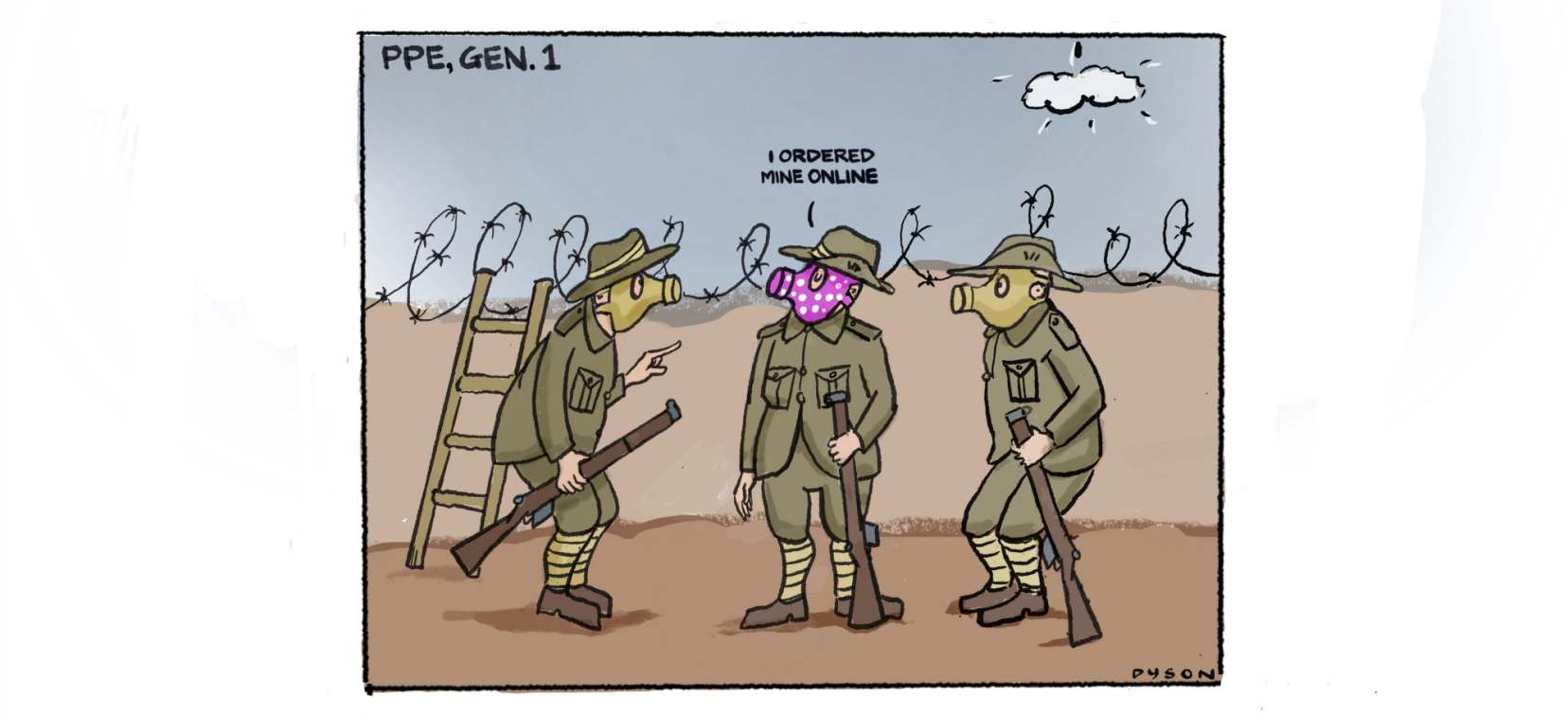
The latest illustrations from artist Andrew Dyson

The latest illustrations from artist Andrew Dyson

30 Images

1/30

Firing off a tweet.

2/30

Skills gap.

3/30

According to ScoMo.

4/30

Xi moving forward.

5/30

The new normal.

6/30

Bookmarks.

7/30

COVID-19 / climate change.

8/30

The Last Thylacine.

9/30

Not waving, drowning.

10/30

Regional deputy sheriff.

11/30

Office etiquette.

12/30

Life’s a beach in opposition.

13/30

Say uncle!

14/30

No time to rest.

15/30

Bookmarks.

16/30

Playing nicely.

17/30

Post lockdown.

18/30

Tracking app.

19/30

Recession effects.Credit:

20/30

Black swan events.

21/30

Sports victims.

22/30

Sufficient.

23/30

Easing off.Credit:

24/30

Beijing unmasked.

25/30

Protection.

26/30

Political dinosaurs.Credit:

27/30

Cloning.

28/30

Virgin hand-out.Credit:

29/30

Xi-Trump-virus.

30/30

Turnbull’s book.

Source by [author_name]

Rio Tinto Apologises For Blowing Up 46,000-Year-Old Aboriginal Site

MELBOURNE- Rio Tinto apologised for the destruction of a sacred Aboriginal cave in Western Australia that showed evidence of continual habitation dating back 46,000 years, and said it would urgently review its plans for other sites in the area.

Rio Tinto blew up the cave last week in Juukan Gorge, about 1,075 km north of Perth, as part of an expansion programme in the Pilbara iron ore region, provoking a local outcry and calls for reform of heritage protection laws.

Explosives destroyed two ancient rock shelters, where artefacts discovered included 4,000-year-old plaited human hair with genetic links to the present day traditional owners, the Puutu Kunti Kurrama and Pinikura (PKKP) people.

“That site, for us, that’s where our ancestors were occupying their traditional land,” PKKP director Burchell Hayes told ABC, adding that the community felt sorrow and sadness over the loss of heritage.

The mining giant, which had been granted state government approval in 2013 to damage or destroy the site under a legal framework that is currently under review, apologised on Sunday.

“We pay our respects to the Puutu Kunti Kurrama and Pinikura people, and we are sorry for the distress we have caused,” Iron Ore chief executive Chris Salisbury said in a statement.

The miner said that it had performed archaeological work in 2014 to preserve significant cultural heritage artefacts, recovering approximately 7,000 objects.

Rio said that it would work with traditional owners to look at its approach to preserving heritage.

“As a matter of urgency, we are reviewing the plans of all other sites in the Juukan Gorge area,” Salisbury said.

Federal Indigenous Affairs Minister Ken Wyatt last week flagged a need to strengthen the protection of indigenous sites, while his state counterpart said Western Australia was moving to fix out-of-date legislation.

Reporting by Melanie Burton


Source by [author_name]

Wishes pour in as Hardik Pandya announces fiance Natasa’s pregnancy

0


Indian cricket team dashing all-rounder on Sunday announced that he and his fiance, Serbian actress Natasa Stankovic, are expecting their first child.


Hardik made this announcement on social media platform Instagram, along with their pictures, which went viral instantly.


Hardik’s Instagram post read: “Natasa and I had a great journey together and it is just about to get better. Together we are excited to welcome a new life into our lives very soon. We’re thrilled for this new phase of our life and seek your blessings and wishes.”

India head coach was one of the first to wish the duo and he wrote in the comment section: “Congratulations Hardy and Natasa.”


Skipper also sent his blessings for the star couple and wrote: “Congratulations to you both H. Lots of love and blessings for the third member of your clan.”

tweeted photos of the two and wrote: “Congratulations to Hardik & Natasa!”


While India leg-spinner Yuzvendra Chahal and pacer Mohammad Shami wrote: “Congratulations”, teammate Ishan Kishan wrote: “Congrats meri jaan”.


Earlier this year, Hardik had announced his engagement to Natasa via social media as well. On January 1, Hardik had himself shared an image of him proposing to Natasa on social media and had captioned it: “Mai tera, Tu meri jaane, saara Hindustan. 01.01.2020 #engaged.”


The news of India all-rounder Hardik’s engagement to Natasa was not just a surprise for his fans, but also for some of the members in the Indian team.


Source link