Human Rights Watch has called on Bangladesh to move more than 300 Rohingya refugees, including children, to the camps in Cox’s Bazaar district, more than two months after they were quarantined on a small flood-prone island in the Bay of Bengal.
The Rohingya were rescued by the Bangladesh navy in early May after being stranded at sea for weeks, and sent to Bhashan Char island – a silty strip of land off the southern coast that is vulnerable to monsoon storms.Â
Bangladesh has said the 308 refugees were sent to the island rather than the camps in Cox’s Bazar because authorities were afraid they might have the highly infectious disease COVID-19.
“Bangladesh authorities are using the pandemic as an excuse to detain refugees on a spit of land in the middle of a churning monsoon sea while their families anxiously pray for their return,” Brad Adams, Asia director of HRW, said in a statement on Thursday.Â
“The government is inexplicably delaying aid workers’ access to support the refugees with immediate care, and refusing to reunite them with their families in the Cox’s Bazar camps.”
According to the US-based rights group, the quarantined refugees do not have adequate access to food, clean drinking water or medical care. Some have also alleged being beaten up and mistreated by the authorities, it said.
Bangladesh last year constructed facilities for 100,000 people on Bhashan Char, a muddy silt islet in the cyclone-prone coastal belt, saying they needed to take the pressure off crowded border camps that are home to almost one million Rohingya.
But the United Nations, rights activists and aid agencies have repeatedly raised concerns about the safety of those quarantined there and urged for relocation.Â
According to Bangladesh officials, the outbreak among Rohingya refugees has been “successfully contained” amid fears that the disease spread rapidly in overcrowded camps.
Some 724 Rohingya have been tested in the Bangladesh camps, with 54 found positive and five died since the first cases were detected in May, officials said.
Rohingya live in sprawling refugee camps in southern Bangladesh, most having arrived from Myanmar in late 2017 after fleeing a military crackdown that the UN said was conducted with genocidal intent.
The Myanmar army denies “genocide” and says it was carrying out a legitimate campaign against armed rebels who attacked police posts.
In January, the Hague-based International Court of Justice ordered Myanmar to take emergency measures to prevent the genocide of the Rohingya, who face widespread discrimination and have been stripped of their nationality.
After extending his support towards the PM and CM funds and the daily wage workers, Varun Dhawan has now come out to monetarily help the Bollywood dancers with whom he had worked in his previous movies. Ever since the COVID-19 pandemic, many small-time artists were left stranded due to the lack of work.
Amid these tough times, the actor transferred money to the bank accounts of 200 dancers and will be helping them every month. Varun, who has essayed the role of a dancer in films like ABCD 2 and Street Dancer 3D, admires their hard work and hence decided to provide support the real-life dancers.
Varun Dhawan has joined Sidharth Malhotra, Remo D’souza amongst few others who have also financially provided aid to the out of the job dancers during this lockdown.
Labour Party seeks answer on clinical need for system of two-yearly mammograms
The Labour Party Leader and Spokesperson on Health has pressed for more detail on the decision to reduce the number of women who can receive BreastCheck exams every year.
Deputy Alan Kelly queried why the system had been set up in such a way that women received these mammograms every two years, if there was no clinical need to have a mammogram every two years.
He called for clear advice now from the Head of Screening and the Chief Clinical Officer of the Health Service Executive (HSE) on the clinical implications.
He is also seeking to determine how long clearing the screening backlog is to take if the change in the interval between screenings is in place long-term.
“We have known about the plans to get screening services back up and running for a number of weeks now, so why did this decision to extend the time between exams fly under the radar like this?†said Deputy Kelly.
“We know that it is going to take a considerable amount of time to clear the backlogs that exist in BreastCheck, but now the fact that women will have to wait longer in between exams, will add to the anxiety women have been feeling about the resumption of screening services,†he added.
The plenary on Wednesday (8 July) approved the nomination of François-Louis Michaud for the post of executive director of the European Banking Authority (EBA).
Michaud, whose candidacy had been put forward by the European Banking Authority’s (EBA) supervisory board, was approved by 343 votes to 296, with 56 abstentions. He was the second candidate put forward this year for the post after the first person proposed, Gerry Cross, was turned down by the House last January.
Michaud underwent a hearing in the EP’s Economic and Monetary Affairs Committee and was then turned down by a small majority of its MEPs on Friday (3 July). However, the plenary did not follow the committee’s recommendation.
Background
The executive director of the EBA is responsible for its day-to-day management.
The EBA is one of the three authorities set up in the wake of the financial and banking crisis of 2007-2008. Together with the European Securities and Markets Authority and the European Insurance and Occupational Pensions Authority, the three watchdogs constitute the EU’s alarm system in the case of excessive risk or irregularities in the financial services environment.
The EBA has been searching for an executive director after the departure of Adam Farkas, who left to join the lobby group Association for Financial Markets in Europe in January. MEPs expressed displeasure at his departure to a directly interested lobby, with no cooling-off period.
At committee level, Michaud had been rejected on 3 July by a narrow majority (24 no, 23 yes, 10 abstentions) due to the lack of gender balance. The vote in the responsible committee served as a recommendation for the final vote in plenary. The previous candidate, Gerry Cross, was rejected by the European Parliament because he had worked for the Association for Finance Markets in Europe (AFME). The Parliament also complained that they had been presented by an all-male shortlist.
The Sky Q set top box has been given a big upgrade (Sky)
Anyone with one of Sky’s top-of-the-range Sky Q boxes is in line for a huge feature boost and a brand new look.
According to Sky, this is the biggest change to Sky Q since the service launched in 2016.
The company has changed up the user interface (UI) to include an expanded view of the homepage, showing you more of what you like. Hopefully, this should cut down on the amount of time spent searching for what you want.
To keep the organisation flowing, Sky is introducing what it calls a ‘show centre’ for every programme, listing seasons, episodes, broadcast schedules and on-demand links all together in the same place.
This works in tandem with a new ‘smart button’ that’ll take you to the right episode more quickly. So, if you’re halfway through an episode of Gangs of London, it’ll say ‘continue ep. 3’, or if you’ve just finished, it’ll suggest you start the next episode. The smart button will switch between Continue, Delete, Watch from the Start, or Play the next episode – all based on what you watched last.
Sky has expanded the home page to show users more of what it thinks they’ll like (Sky)
As well as making things easier to find through a redesign, Sky has improved the voice search functionality. The company says it’s now more intuitive, and will let you ask for themes and genres, alongside actors. So you could talk to your remote and say ‘thrillers with Nicole Kidman’ for it to bring up relevant suggestions of what to watch. You’ll soon be able to ask for entertainment themes too, such as ‘new shows’, ‘Halloween’ or ‘Christmas’.
Sports fans will also benefit from changes as soon all the latest games, news, documentaries, fixtures, podcasts and tables can be found in relevant ‘sports centres’.
Saying ‘football’ into the voice remote will take you to a page that brings together live and on demand football content from all channels and apps including; Sky Sports, Sky Sports App, BT Sport, terrestrial channels, YouTube and Spotify. You will see everything that’s on at that moment, with no need to scroll, search or dip in an out of apps. It’s not just football, Sky says users can do this for a range of sports including; F1, cricket, golf, boxing and tennis.
Sports fans will find all the content of their favourite sport grouped together (Sky)
Lastly, following the launch of High Dynamic Range (HDR) on Sky Q earlier this year, the Disney+ streaming service is now available in this format for the first time. This puts Sky alongside the likes of the Apple TV and Samsung’s smart TVs which also have this feature.
‘We’ve redesigned Sky Q to make it even smarter, simpler and better at aggregating all of the TV and app content you love into one place,’ said Fraser Stirling, Group Chief Product Officer at Sky.
‘A new-look UI, improved voice search and more intuitive navigation make everything easier to find without having to search around, so you can get to the next episode of Succession, a brilliant football podcast, or choose from the most popular British dramas easily.’
Right-leaning pro-Israel groups are targeting Rep. Ilhan Omar, a Minnesota Democrat and outspoken critic of the Israeli government who is one of the most high-profile progressive members of Congress.
Antone Melton-Meaux, 47, the Minneapolis attorney seeking to unseat Omar, 37, in the state’s Aug. 11 Democratic primaries, raised more than $1.5 million in May alone.Â
Much of that cash comes from political action committees opposed to more U.S. pressure on the Israeli government. Two such groups, Pro-Israel America and NORPAC, have bundled upwards of $450,000 for Melton-Meaux to date.
These Israel hawks’ investment in unseating Omar follows an expensive and ultimately unsuccessful intervention on behalf of House Foreign Affairs Committee Chairman Eliot Engel. Given Engel’s massive deficit in the in-person vote, the New York Democrat has all-but-officially lost to Jamaal Bowman, a progressive challenger who is more critical of Israel, in his June 23 primary.Â
Omar’s race provides this subset of pro-Israel activists and donors a fresh opportunity to demonstrate their strength after an embarrassing defeat.
“The stakes are high because Members of Congress are watching to see how much muscle these groups really have,†said Joel Rubin, a progressive foreign policy hand who ran Jewish outreach for Vermont Sen. Bernie Sanders’ campaign and served as a senior official in the Obama administration’s State Department.
As of the end of May, Pro-Israel America, which was founded by two former staffers at the pro-Israel mega-lobbying group, the American Israel Public Affairs Committee, or AIPAC, had raised over $303,000 for Melton-Meaux’s bid from hundreds of individual donors, according to official campaign finance disclosures.
NORPAC, a metropolitan New York City-area group, claims credit for raising Melton-Meaux an estimated $150,000 over the course of three virtual fundraisers in May and June.Â
Leaders of both organizations cited Omar’s left-wing views about the Israeli-Palestinian conflict, including her apparent support for the international Boycott, Divestment and Sanctions movement against Israel, as a motivation for supporting a challenge against her. (Omar, who supports a two-state solution to the Israeli-Palestinian conflict, does not agree with BDS supporters’ goal of a single bi-national state.)
“Rep. Omar’s views are way out of step with her Democratic colleagues and the American public,†Jeff Mendelsohn, a former AIPAC official who runs Pro-Israel America, said in a statement.
The pro-Israel leaders also pointed to insensitive comments Omar has made that they consider anti-Semitic.
A lot of people wanted in on this one. Ben Chouake, NORPAC
“People are very motivated to get rid of someone who they feel is a racist against them and against their families,†said Ben Chouake, a New Jersey physician and president of NORPAC. “A lot of people wanted in on this one.â€
While the groups are offering Melton-Meaux serious cash, their support comes with potential political risks since both organizations raise money for Republican candidates as well.Â
In particular, NORPAC, which has been around for much longer than Pro-Israel America, is a major source of campaign cash for top Republicans. This election cycle, about two-thirds of the money it has raised has gone to Republican candidates, including over $160,000 to Senate Majority Leader Mitch McConnell (Ky.), the largest recipient of NORPAC cash in Congress in the past two years. (In 2018, NORPAC’s giving was inversely proportional, with about two-thirds of its fundraising going toward Democrats.)
“We are not party-driven,†Chouake said. “We’re issue-driven.â€
Some major NORPAC donors even contribute to President Donald Trump. Howard Jonas, founder of the telecommunications firm IDT, donated the maximum individual contribution of $5,600 to Trump’s reelection, as well as $8,900 to the Republican National Committee.
Omar is already using the support of figures like Jonas against Melton-Meaux.
“Trump and his campaign don’t only have a problem with me and people who look like me — they are threatened by our growing progressive movement,†she wrote in a June 30 tweet soliciting new contributions. “So much so their donors are even funding our Democratic establishment opponents’ campaigns.â€
Brandon Bell/Getty Images
Rep. Ilhan Omar (D-Minn.) speaks at a press conference in St. Paul, Minnesota, on Tuesday. Her outspoken progressive style has won her both passionate supporters and enemies.
Bad Blood From The Start
Omar elicited the ire of defenders of Israeli government policies essentially from the moment that she won her race to represent Minnesota’s 5th Congressional District in 2018. While she implied as a candidate that she did not support BDS, after her general election win, she announced that she was supportive of the policy even though she continues to question its effectiveness and does not agree with proponents’ dedication to a one-state solution. (Her campaign maintains that Omar has been consistent all along because she continues to harbor the same reservations about BDS’s effectiveness that she expressed as a candidate.)Â
Omar’s first two months in office were plagued by controversy over remarks perceived by many to be anti-Semitic. In Feb. 2019, Omar tweeted the rap lyrics “It’s all about the Benjamins, baby,†as a commentary on why House Minority Leader Kevin McCarthy (R-Calif.) was vowing “action†against Omar and Rep. Rashida Tlaib (D-Mich.) for their views about Israel.
Omar’s comment reflected a widely held view on the left that groups like Pro-Israel America and NORPAC hold so much sway in Congress because of their campaign cash (“Benjamins†is slang for hundred-dollar bills imprinted with the image of Benjamin Franklin). But the comments provoked accusations from Jewish leaders and many Democrats that Omar was employing anti-Semitic tropes about Jews using money to control politics. Omar “unequivocally†apologized even as she reaffirmed her criticism of the “problematic role†of many lobbying groups, from AIPAC to the National Rifle Association.
In a speech to a pro-Palestinian Washington audience a few weeks later, Omar lamented the “political influence in this country that says that it is OK for people to push for allegiance to a foreign country.†Omar’s full remarks express solidarity with her Jewish constituents who find “sanctuary†in Israel, but critics argued that her reference to “people who push allegiance to a foreign country†revived the historically anti-Semitic charge that Jewish Americans are not entirely loyal to the United States.Â
Omar cleared the air in a Washington Post op-ed outlining her human rights-focused approach to foreign policy. In the essay, she argues that the U.S. would have more credibility admonishing adversaries like Iran and Venezuela if it also held allies like Saudi Arabia and Israel to higher standards.
Omar has also apologized for a 2012 tweet critical of the Israeli invasion of Gaza that used offensive rhetoric. “Israel has hypnotized the world, may Allah awaken the people and help them see the evil doings of Israel,†she wrote at the time.
JEWEL SAMAD/Getty Images
Then-President Barack Obama addresses the AIPAC policy conference in 2012. Obama-era policies like the Iran nuclear deal shifted Democratic politics on the Middle East to the left.
A Threat To The Hawkish Bipartisan Consensus
Omar represents one of the most reliably Democratic House seats in the country. The district, which encompasses Minneapolis and some of its suburbs, is the historic heart of the state’s small but significant Jewish community.
Despite their disagreements on some policy questions, Omar has engaged with her Jewish constituents. Rabbi Avi Olitzky, who leads a St. Louis Park congregation and sits on AIPAC’s national council, reports having a fine working relationship with Omar.
“Though there are a number of topics, especially around the U.S.-Israel relationship, on which Rep. Omar and I do not see eye to eye, I am grateful for the opportunity to continue that dialogue,†he said. “She has welcomed me into her office to have those conversations.â€
Notably though, the liberal pro-Israel group J Street, which endorsed Omar’s predecessor, Keith Ellison, from 2008 onward, is staying out of Omar’s race.
“J Street has a good relationship with Rep. Omar and her office and regularly consult with them about promoting our shared goals of diplomacy-first U.S. leadership, Israeli-Palestinian peace and human rights in the region,†J Street spokesman Logan Bayroff said in a statement.
Notwithstanding her support for BDS, which remains a minority position among rank-and-file Democrats, Omar’s overall approach to the U.S.-Israel relationship is consistent with the direction of the party. Nationwide, more than two-thirds of Democratic voters back tying U.S. aid to Israeli compliance with historic U.S. policies, including opposition to settlement expansion, according to a Center for American Progress poll.
Meanwhile, in Congress, where resolutions condemning BDS still pass with large, bipartisan majorities, Omar’s support for placing tougher conditions on U.S. aid to the Israeli government is becoming more mainstream. As the Israeli government has adopted increasingly right-wing policies, even some staunchly pro-Israel Democratic politicians have given the idea their imprimatur. One such Democrat, Maryland Sen. Chris Van Hollen, a member of party leadership, introduced an amendment that would bar use of U.S. aid for Israeli annexation of the occupied West Bank.
Preserving a bipartisan consensus in which conditioning U.S. aid to Israel remains politically costly is a priority for groups like Pro-Israel America and NORPAC. They believe that Israel’s security concerns justify its ongoing occupation of Palestinian lands; that U.S. intelligence cooperation with Israel provides U.S. taxpayers an invaluable return on their $3.8-billion-a-year assistance to the Jewish state; and that efforts to pressure Israel unfairly single the country out among recipients of U.S. aid. (In fact, Omar’s stance toward Saudi Arabia, another U.S. ally and military collaborator, appears to be harsher than her views on Israel: She has called for the U.S. to stop selling the country weapons altogether.)
In an interview, Melton-Meaux told HuffPost that while he opposes annexation, he also opposes conditioning U.S. aid to Israel in response to it.
“It is important for us, in the United States, to be voicing our concerns,†he said.
They want someone that will be a listener. Antone Melton-Meaux, Rep. Ilhan Omar’s primary challenger
Unlike the pro-Israel groups fundraising for him, Melton-Meaux supports then-President Barack Obama’s nuclear nonproliferation agreement with Iran in 2015. He wants the United States to reenter the agreement, though he would like to do away with the sunsetting provisions that ended restrictions on Iran’s nuclear capacities after 15 years. He also wants the U.S. to play the role of an “honest broker†in the Israeli-Palestinian conflict.
Asked why he thought the more hawkish groups were so supportive of his bid, Melton-Meaux said, “They want someone that will be a listener, someone that will work hard at bringing the parties together, that won’t have ideological purity tests when it comes to these types of conversations.â€
Neither Pro-Israel America nor NORPAC claimed to have a clear policy litmus test for the candidates it endorses. “Pro-Israel America endorsed Antone Melton-Meaux because he opposes Rep. Ilhan Omar’s divisive politics and supports the important alliance between the U.S. and Israel, a partnership that benefits both countries,†Mendelsohn of Pro-Israel America said.
Joel Rubin, who has also worked as an aide on Capitol Hill, sees something more strategic at play in the coalescing of right-leaning pro-Israel groups behind Melton-Meaux.
“What Ilhan Omar represents is a voice that provokes a conversation†on U.S. aid to Israel and BDS in the halls of Congress, Rubin said. “The point of supporting a challenger to her is to try to stifle that voice.â€
An Ideological Conflict
Like Omar, Melton-Meaux has a unique personal story to tell. His ancestors were enslaved in Kentucky until slave owner John Meaux emancipated them and granted them his land when he died in 1828. Meaux’s white descendants challenged the will in court, but Melton-Meaux’s ancestors won their freedom thanks to a Kentucky Supreme Court ruling. Melton-Meaux’s father fought to integrate a local Kentucky high school in the 1950s and went on to become one of the first Black electrical engineering graduates from the University of Kentucky.
Stephen Maturen/Getty Images
Antone Melton-Meaux, an attorney challenging Rep. Omar, speaks at a Juneteenth celebration in Minneapolis. He’s running as a bridge-builder who will better serve the district.
Melton-Meaux, who grew up in Cincinnati, is an employment lawyer with his own workplace mediation firm. He also has ties to the Jewish community that date to his days as an undergraduate at Washington University in St. Louis, and is proficient in biblical Hebrew thanks to a masters degree he obtained from Union Theological Seminary, a Christian divinity school in New York City.
Asked why he decided to run, Melton-Meaux said he believes that Omar has pursued national fame at the expense of attention to the district. His campaign slogan is “Focused on the 5th.â€
“She hasn’t shown up for voters and she hasn’t shown up for votes,†Melton-Meaux said, claiming that Omar has missed 40 votes in her first term in the House. “She is distracted with Twitter fights with the president or even with the Democratic Party.â€
Omar’s campaign website states that she has a 95% participation rate in more than 800 votes. She missed some votes due to a relative’s death from COVID-19 and the Muslim holiday of Eid al-Fitr, according to the campaign.
Omar has introduced 17 amendments that passed in the Democratic-controlled House. One of them, an expansion of federal funding during COVID-19 for subsidized school lunch programs, became law as part of the CARES Act relief package in late March.Â
Melton-Meaux has attracted some organic support in the district unrelated to foreign policy, including from prominent Black figures like former NAACP President Nekima Levy Armstrong and attorney Don Lewis, a friend and colleague of Melton-Meaux’s.
Speaking broadly about his criticism of Omar, Lewis said, “Her focus is on broader issues that tend to enhance her celebrity to the detriment of the local interests of the district.â€
Beneath the surface, it’s clear that Melton-Meaux and many of his local supporters are simply not as progressive as Omar.Â
Melton-Meaux and Lewis both characterized themselves as progressives who are just more pragmatic and results-oriented than Omar. Moderate Democrats have long cited concerns about efficacy to disguise their ideological qualms about more left-wing politicians. For example, former Secretary of State Hillary Clinton ran for president in 2016 as a “progressive who gets things done.â€
Melton-Meaux supported one of Omar’s more moderate competitors in the Aug. 2018 House primaries and cast a vote for Sen. Elizabeth Warren (D-Mass.) in the state’s March 3 presidential primary. Omar voted for Sanders, as did the voters in Minnesota’s 5th (Warren came in third after former Vice President Joe Biden).
Richard Tsong-Taatarii/Star Tribune/Getty Images
Minnesota Attorney General Keith Ellison has endorsed the reelection of Omar, his successor in Minnesota’s 5th Congressional District.
The contrast between the two candidates on the issues is also significant. Melton-Meaux supports creating a “primary care for all†health care system and public health insurance option, rather than Medicare for All. While Omar favors tougher rent regulations and an expansion of public housing, Melton-Meaux prefers incentivizing more housing construction and the distribution of vouchers to low-income renters. Melton-Meaux, whose son attends a charter school, is a champion of charter schools; Omar is a skeptic.
Though Omar is the Congressional Progressive Caucus’ whip, Melton-Meaux said only that he was “open†to joining the CPC. And unlike many Democrats, he does not have a policy of refusing corporate PAC money, though he said it has not yet come up because he hasn’t received any offers.
Perhaps for those reasons, Melton-Meaux has also attracted a lot of donations from financial industry executives, including a $2,800 check from Jonathan Gray, the president of the private equity giant Blackstone. Blackstone has been in the news for filling the campaign coffers of House Ways and Means Chairman Richard Neal (D-Mass.). In December, Neal stalled a bipartisan effort to reform “surprise†medical billing that would have hurt Blackstone’s bottom line.
In addition to the support of the state Democratic Party and organized labor, Omar appears to have the cash to withstand an onslaught. As of the end of March, she had spent more than $2 million and had more than $1.3 million left over. More than 99% of the donations she receives are under $200; the average contribution is $18.
She also has the endorsement of Ellison, who is now Minnesota Attorney General. Ellison’s role as chief prosecutor of the Minneapolis police officers charged with murdering George Floyd has earned him national attention.
Ellison told HuffPost that his support for Omar stems from years of working with her on progressive priorities like Medicare for All, climate change and workers’ rights.
“I believe she is for these things because she’s been doing these things since I met her … She was fighting for people,†he said. “These other folks might be nice, but we have to take their word for it because there’s no evidence that they have done much of anything for anyone.â€Â
Calling all HuffPost superfans!
Sign up for membership to become a founding member and help shape HuffPost’s next chapter
Above:Â Jonathan White with his family. Illustration: HuffPost; Photos: Family Handout/Getty Images
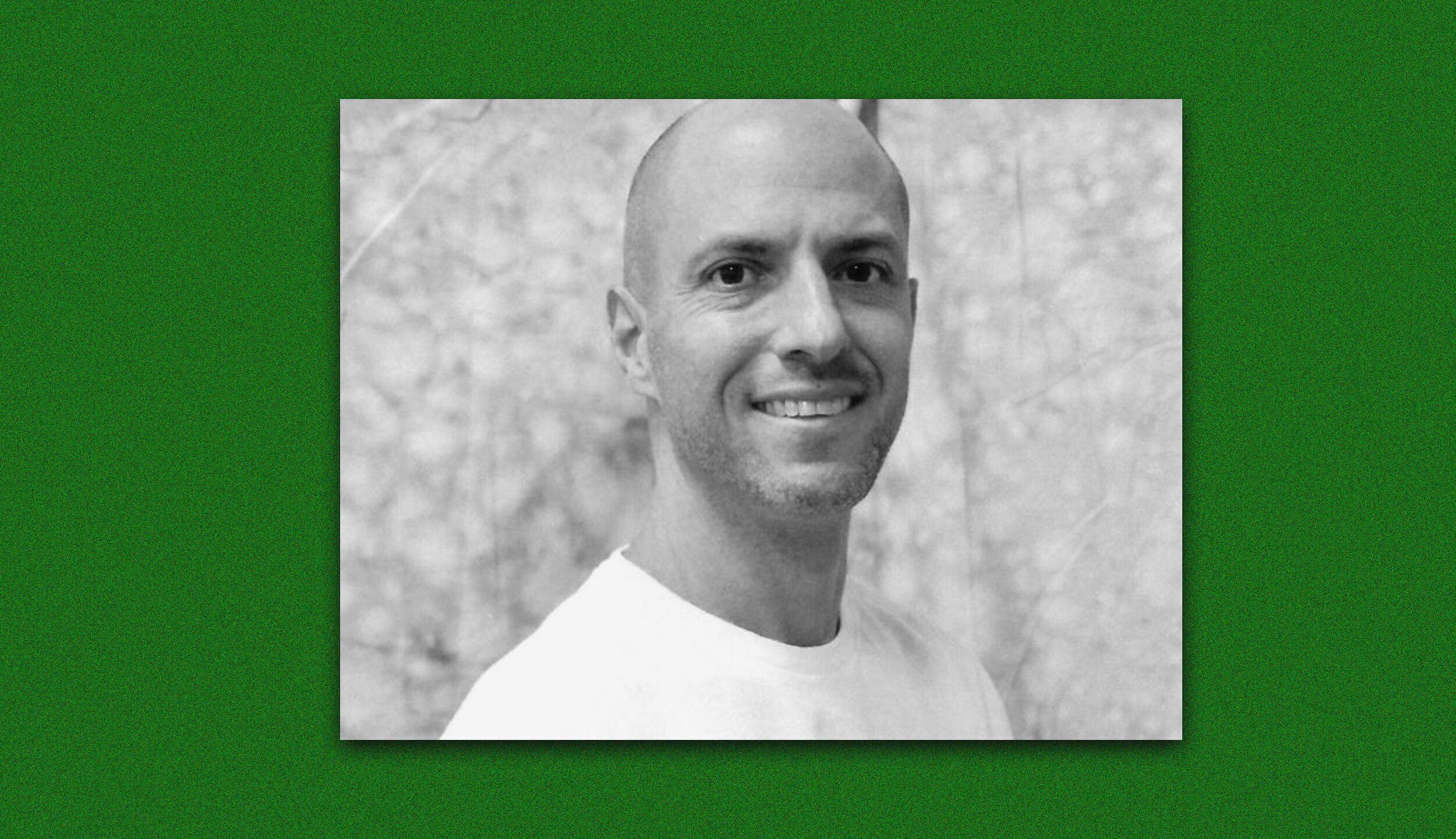
Jonathan White, a 45-year-old man incarcerated at a state prison in Ohio, gazed out at the group of people who had come to collect their lunch from the chow hall. As part of the effort to contain the spread of COVID-19, people were sent one dorm at a time to pick up their food. These individuals were from the dorm that houses many of the people who are elderly or have health conditions.Â
“My heart just ached cause I asked myself who am I seeing now that I won’t see again due to death from this virus,†White wrote in early April, just as the pandemic was building toward its first peak in the U.S.
“This prison is just too crowded, there is no way everyone will make it that I’m seeing unscathed,†White wrote. “Thanks to years of flopping people simply because they have the power to, never truly looking into who people are today,†he continued, referring to those he knew who had been denied parole. “This has resulted in their apparent overall objective which is to see to it that as many people as possible die in prison.â€Â
Since White made that dire prediction, at least 13 people incarcerated at Marion Correctional Institution (MCI) have died, in addition to at least one prison staff member. More than 2,000 prisoners — about 80% of the population — have tested positive for the coronavirus, including White. The prison is the second-largest COVID-19 cluster in the country, according to the New York Times tracker, just ahead of Pickaway Correctional Institution, another Ohio state prison about an hour away. Nationwide, 9 of the top 10 coronavirus clusters are in prisons or jails.Â
There are signs this particular prison outbreak spread into the surrounding community: The relatively small county of Marion has one of the highest rates of infection in the state, even with the Marion prisoner cases removed from the count.
HuffPost spoke with eight people incarcerated at Marion for more than two months about what it was like living through the pandemic, knowing it was almost impossible to avoid the potentially fatal disease behind bars. They described how their prison sentence stripped them of the ability to make decisions that would increase their chances of survival. They did everything within their power to protect themselves from COVID-19: They followed the news closely. They requested masks but were denied until it was too late. They pleaded with prison staff. They filed internal complaints, knowing they would go nowhere. They filed lawsuits, sometimes without help from a lawyer or access to the internet.Â
And when they turned on the TV, they watched the governor and the head of the state’s Department of Rehabilitation and Correction — officials with immense control over their fate — mislead the public about the protections available to people in the state’s prisons.Â
The coronavirus outbreak at the prison in Marion is proof of what criminal justice reform advocates and incarcerated people have been warning since the beginning of the pandemic: It is nearly impossible to keep the coronavirus out of prisons and jails, and once it’s in, it endangers everyone who lives and works in and around the facility. It is a risk that disproportionately impacts Black people, who are more likely to be incarcerated and also more likely to die of COVID-19. In April, the prison at Marion was dubbed the “number-one coronavirus hotspot†in the country — but because of a lack of mass testing in most American prisons, it’s impossible to know if Marion is truly an anomaly or if it’s indicative of how the highly contagious disease is traveling through similar detention facilities.Â
MEGAN JELINGER via Getty Images
A young girl stands behind a Marion Correctional Institution sign during a May 2 protest to increase public awareness of the conditions inside the Ohio prison.
As the scale of the epidemic revealed itself in March, many Americans began frantically preparing: stockpiling groceries and cleaning supplies; making improvised masks and learning to avoid getting too close to strangers. Every interaction was freighted with intentionality, as people made careful judgments about who was safe and who was a possible risk.Â
Inside Marion, however, a shambolic and ultimately futile version of this pandemic preparedness was taking place. Prison officials tried to replicate some of the medical guidance. They sent frequent messages through JPay, a corrections messaging service, urging people to wash their hands and practice social distancing. But even the simplest suggestions seemed absurd.
A grim alternate reality took shape. People incarcerated at Marion knew some of them would die from the coronavirus. They closely followed media reports about the emerging pandemic, and what was happening inside the prison did not match the urgent warnings they saw on TV in early March.
“There are three feet in between my bunk bed and the bunk bed on my left side and the bunk bed on my right side,†Steven D’Augustino, a 50-year-old man with asthma who is incarcerated at MCI and has tested positive for COVID-19, said in a May interview. “So I have a living quarters, if you don’t count the bed itself, of about 18 to 21 square feet — two people actually, myself and my bunkie have about 21 square feet.â€
When people pointed out the physical impossibility of social distancing, given their living conditions in a prison operating at more than 150% capacity, they were instructed to sleep “head-to-toe,†D’Augustino said.
The prison started conducting temperature checks on employees coming to work on March 11 — but in the early days of the pandemic, the virus was being spread by people who did not yet run a fever or exhibit other symptoms.Â
Like other front-line workers, prison employees who wanted to wear masks had a hard time getting them. “We do not have the masks to issue to every staff member,†a corrections department official wrote in an email obtained by HuffPost, referencing the shortage of N95 masks. After weeks of unsuccessful negotiations, the Ohio Civil Service Employees Association — the union that represents the state’s corrections officers — used $200,000 in member dues to buy its own supply of KN95 masks to distribute to workers.Â
On March 25, the first corrections officer reported feeling sick. The officer had worked in the prison the previous day. It became clear the temperature-check firewall for employees had failed when the officer tested positive for the virus on March 29 — and when others began testing positive in the following days.Â
Several corrections officers who tested positive returned to work before they had recovered. Public health officials have urged Americans who contract the coronavirus to stay home until they’ve gone three days without a fever, have no respiratory-related symptoms, and have gone 10 days since symptoms first appeared. But that timeline wasn’t realistic for Ohio corrections officers, who received only 40 hours of paid leave for COVID-19.
Even if every officer was meticulous about stopping the spread of the virus, they were in an almost impossible situation. But some corrections officers didn’t seem to take the threat seriously, several people incarcerated at MCI said in interviews. Prisoners overheard guards inaccurately claim that the coronavirus was less deadly than the flu, a common talking point in right-wing media and one often repeated by President Donald Trump in the early weeks of the pandemic. Several prisoners who tried to cover their faces with makeshift masks were told to remove the coverings or risk getting written up for “contraband,†two incarcerated individuals said in interviews.
JoEllen Smith, a spokeswoman for the Department of Rehabilitation and Correction, confirmed to HuffPost that “wearing masks would have been a serious violation†of prison rules “prior to COVID.†The DRC did not adjust the guidance to allow masks until March 27 — and did not require them until April 7. Even then, incarcerated individuals were initially given only one mask, meaning they would have to go barefaced while they were washing it by hand and letting it dry.Â
So some 2,500 people sat inside the overcrowded prison, waiting for the virus to reach them. There was no hope that Ohio officials would thin out the prison population, which would have allowed freed individuals to protect themselves and created more space for those who remained behind bars. Although Ohio Gov. Mike DeWine was one of the few Republican governors willing to break with Trump and acknowledge the severity of the situation in the early days of the pandemic, he refused to meaningfully reduce the state’s prison population.
Asked during a March 29 press conference if he was considering letting anyone out of jail or prison, DeWine suggested that those incarcerated were safer in crowded detention facilities than out on their own. “What makes us think that they’re going to be in any better position outside than inside?†said DeWine.
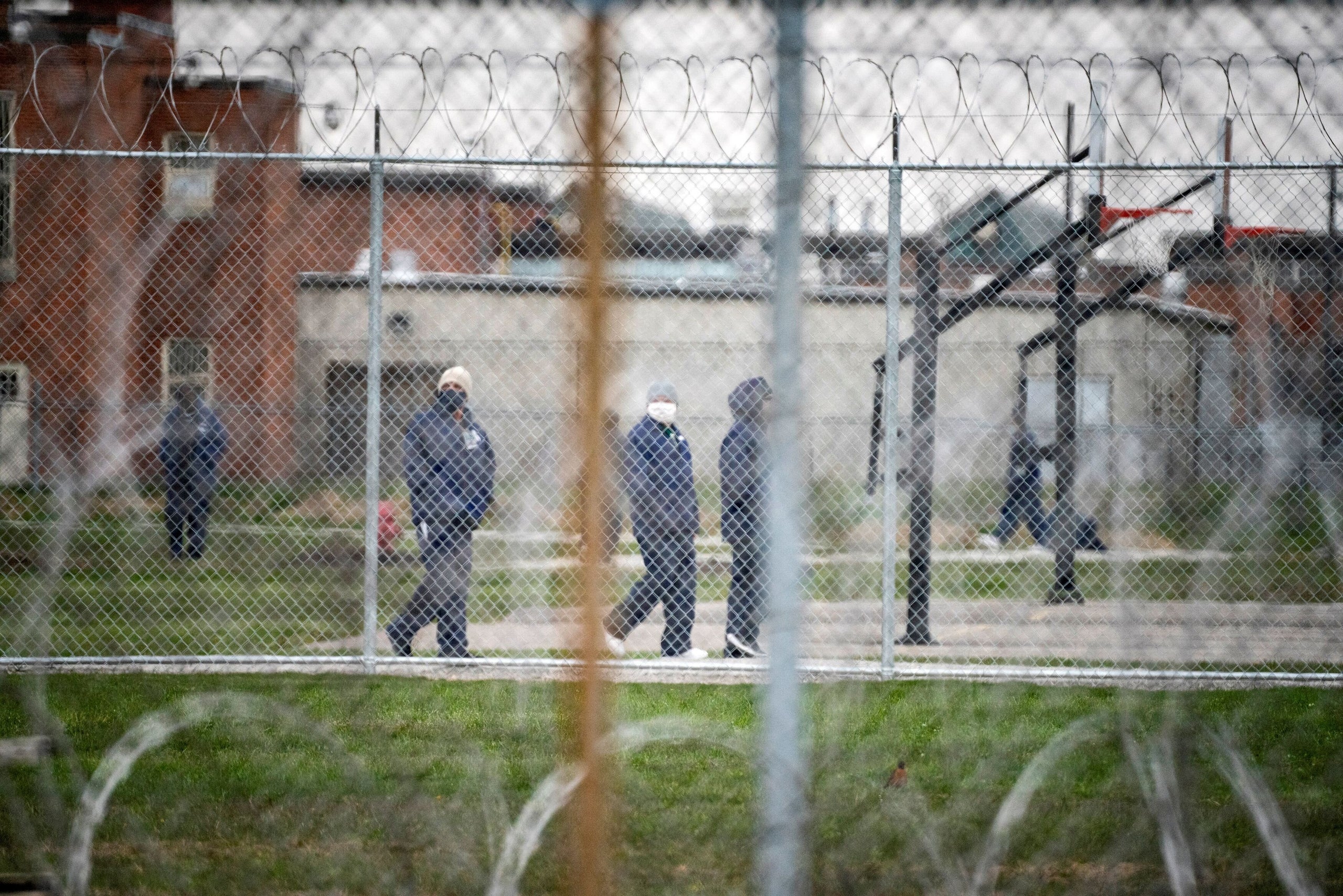
People walk in the yard at Marion Correctional Institution on April 22, just after the prison completed mass testing for the coronavirus.
The prison, which had already suspended visits from family and lawyers, went into lockdown. The things that make prison more bearable — educational classes, access to the library — were shut down indefinitely. Confined to their living areas for nearly the entire day, people had almost nothing to distract them.
“That’s OK if they’re really protecting us. The problem is they obviously didn’t protect us,†D’Augustino said.Â
The first COVID-19 death directly tied to the prison came on April 8. John Dawson, a 55-year-old corrections officer, had worked in the control center giving out equipment to prison staff. He had been with the Department of Rehabilitation and Correction for 24 years.Â
Keeping the virus out of the prison appeared to be a lost cause. Dennis Salerno, a 50-year-old man incarcerated at Marion who describes himself as a “health nut,†often prepared a drink that includes cayenne pepper for himself and a friend. He realized they were sick when neither of them could taste the cayenne. “Cayenne is hot!†he said in an interview. After adding a third of a jar of the pepper, Salerno decided he should stop adding more — “and that certainly we had Corona.â€Â
Officials’ focus shifted to mitigating the damage. Meals were reduced to twice a day to limit movement within the prison and allow time to clean the cafeteria between groups coming to pick up their food.Â
People inside had little confidence these measures were sufficient. White, who has high blood pressure and hypertension, started worrying that his job in the chow hall’s recycling unit was putting him at an even higher risk of getting the virus. But if he refused to show up, he risked punishment and a disciplinary report that could jeopardize his chances of being granted parole in the future.
Illustration: HuffPost; Photo: Courtesy of Dennis Salerno
Dennis Salerno first suspected he had COVID-19 when he couldn’t taste the cayenne pepper in a drink he makes to boost his immunity.Â
After talking with his family, White decided to stay in his dorm and do his best to self-quarantine. When he didn’t show up for work, corrections officers threatened to extract him from his cell and place him in solitary confinement, he said. He eventually received permission to pause his work at the chow hall after his family intervened. (Smith, the DRC spokeswoman, told HuffPost that the department had “nothing on record to verify this occurred†but did not deny White’s account.)
White’s precautions weren’t enough. He lost his sense of taste first — and then his ability to catch his breath. “My breathing had gotten so bad I had to turn my TV off and just focus and breathe. It was like trying to catch a feather,†he said. He self-treated the problem by holding his head over a crockpot and inhaling the steam. “It helps your skin,†he joked.Â
D’Augustino soon found himself literally surrounded by people who were sick. “Two people to my right had lost their sense of taste, the person that sleeps on the bottom bunk to my left was coughing, I was coughing, people around me were coughing ― I mean there was just all kinds of symptoms all over the place,†D’Augustino said.Â
“Guys was just falling out left and right,†said Shannon Kidd, a 42-year-old man imprisoned at Marion. The prison staff “was so overwhelmed with it, I don’t think they had the right staffing in place to handle it,†he said.Â
Members of the Ohio National Guard were dispatched to the prison as more staff members called in sick. Prisoners with high fevers were removed from the dorms. The people they lived with never found out where the sick were taken — although they feared it was to solitary confinement.Â
Solitary confinement is a form of torture and nobody inside wanted to end up there. Smith told HuffPost that people who are quarantined due to illness in areas typically used for punishment are not subject to the rules typically associated with solitary confinement — but those incarcerated at Marion didn’t know that. The fear of solitary drove some people to drink ice water and put cold towels on their heads before temperature checks in hopes of masking a fever.Â
Then, prisoners started to die. Jesse Zeigler, 74, told his family on April 6 that he was having trouble breathing, body aches and a headache. Christine Bevington, Zeigler’s stepdaughter, said a nurse at the prison told Zeigler that he didn’t have a high fever but that he should let her know if his symptoms worsened. Bevington worried that her stepfather was struggling to speak over the phone and called the prison’s medical staff. She found out days later that he was admitted to the hospital and diagnosed with COVID-19.
While Zeigler was in the hospital, Ohio’s corrections department began mass testing every person at three of the state’s facilities with the largest COVID-19 outbreaks, including Marion. “It seemed like it was a little too late,†said Andre Stores, a 43-year-old man at Marion with hypertension and pre-diabetes who tested positive for the virus. “Everyone was sick at the time.
When the results came back a few days later, some of the people imprisoned at Marion learned about the severity of the outbreak on the news: 78% of the prison population tested positive in that first round. In less than three weeks, MCI went from one confirmed COVID-19 case on staff to 154 staffers and 2,011 incarcerated people infected with the virus.Â
Meanwhile, Zeigler’s health was deteriorating — but his family remained largely in the dark. His wife received a call from someone offering information about a support group. “She told them she didn’t need it,†Bevington said in an email. “She didn’t know her husband was dying.â€
On April 19, Zeigler’s wife received another call, telling her that he had been on dialysis and a ventilator and probably wouldn’t make it through the night. The hospital arranged a Zoom video call for the family to say goodbye. He “was not responsive but we talked to him and told him we love him,†Bevington recalled. Before hanging up, Bevington asked the nurse if someone would call to let the family know when Zeigler passed away, and the nurse agreed.Â
Zeigler’s wife found out he was dead the next morning around 10:45 when she received a call from Ohio State University’s Wexner Medical Center asking if she wanted an autopsy. He had died the night before, she learned, less than an hour after the Zoom call ended.Â
MEGAN JELINGER via Getty Images
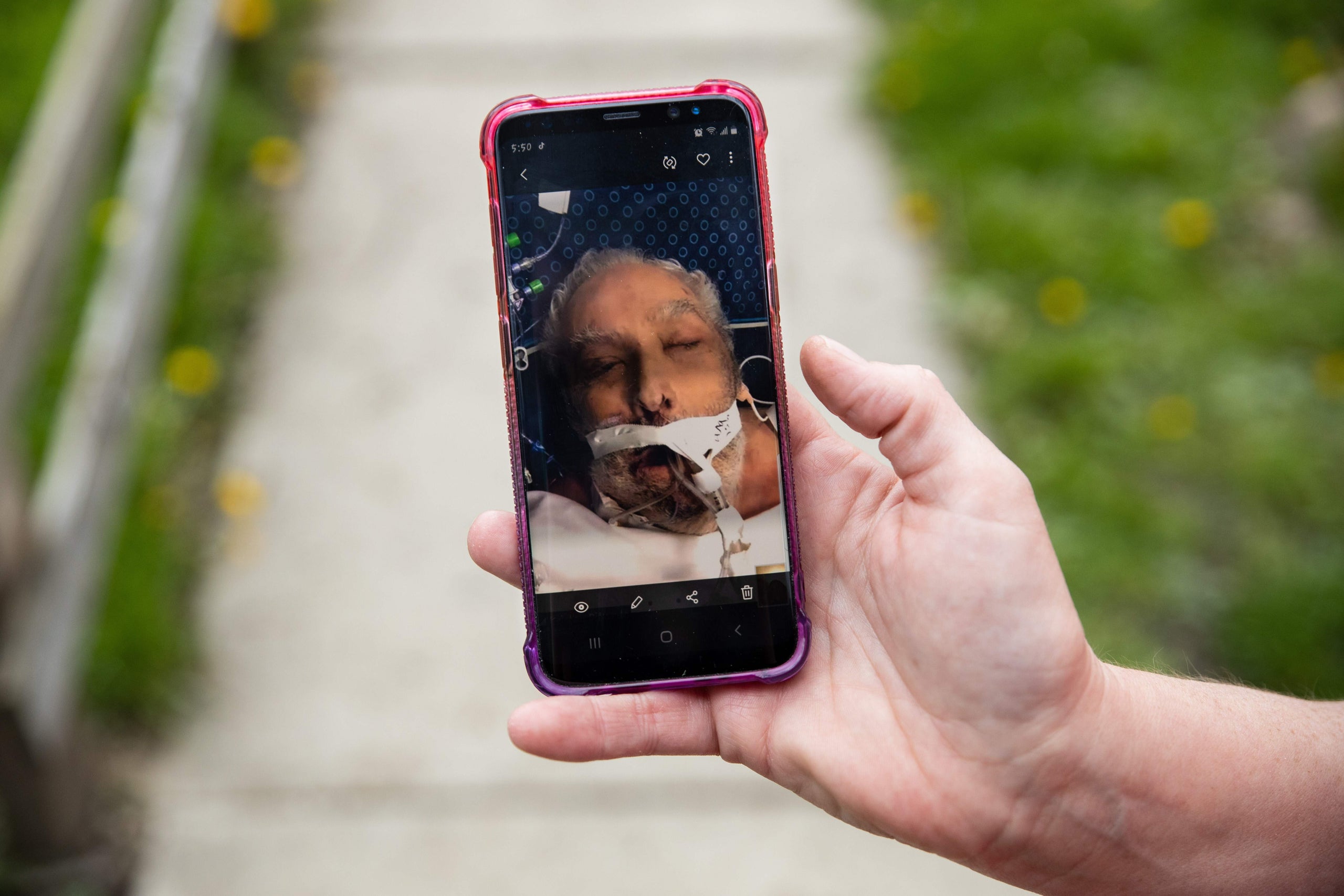
Christine Bevington holds a photo of her stepfather, Jesse Zeigler, taken as his family said goodbye on a video call before he died from COVID-19.
Marion Correctional Institution had become the nation’s worst documented COVID-19 hot spot. (It has since been replaced by Los Angeles County’s jail system.) The New York Times editorial board referenced its surging case numbers in a piece urging states to free prisoners to prevent more people from dying in custody. MSNBC broadcast videos sent from people incarcerated at Marion describing unsanitary conditions inside the prison.Â
But is Marion’s outbreak actually exceptional? Very few correctional institutions do facility-wide testing, as was undertaken there in April, and so there is little information about how many people have contracted the virus in other prisons and jails. This lack of data leaves open the alarming possibility that other prisons have infection rates similar to — or worse than — Marion’s.
In places that are doing limited or no COVID-19 testing, “their case rates look really low — but it’s really artificial because if you don’t have testing in the door, there’s no way to know what true prevalence is,†said Lauren Brinkley-Rubinstein, a co-founder of the COVID Prison Project, a group of public health scientists who track the coronavirus in correctional facilities.Â
Several states with high rates of testing — including Michigan, Tennessee and New Jersey — uncovered high rates of infection, researchers at the COVID Prison Project have found. Although no other prison has reported numbers as stunning as those at Marion, mass testing consistently shows that COVID-19 cases are more widespread behind bars than previously acknowledged.
The vast majority of prisons only test very visibly ill individuals and are almost certainly undercounting people who don’t show symptoms or who don’t report symptoms out of fear of being sent into solitary confinement. In Ohio, the corrections department had initially planned to do mass testing in every prison where limited testing revealed positive cases, Christopher Mabe, president of the corrections officers union, said in an interview in May. But after mass testing at Marion revealed catastrophic rates of infection, the corrections department shifted to supposedly more targeted strategic testing.
“They have walked away from the testing, basically burying their head in the sand on the actual problem that still exists,†Mabe said.
Corrections departments have incentives to avoid mass testing. It’s expensive, there are logistical complications to administering the tests, and the results could reflect poorly on the department. Most corrections departments are either unable or unwilling to acquire enough materials to commit to ongoing testing.Â
And because corrections authorities and politicians have mostly refused to significantly depopulate prisons, there isn’t room in most facilities to segregate COVID-19 carriers from everyone else. So without a plan in place to meaningfully protect incarcerated people from the coronavirus, mass testing does little more than document the system’s failures.Â
With mass testing, “the risk is that you find a lot of people and it makes you look bad,†Brinkley-Rubinstein said.
Other states are selectively testing prisons, too. At Washington state’s Monroe Correctional Complex, one of the first prisons nationwide to confirm a COVID-19 case, conditions are similar to those at Marion: Prisoners live in crowded dormitories as opposed to single cells. Washington and Ohio’s corrections departments have both responded to the pandemic by suspending visitation and programming, isolating symptomatic prisoners, implementing temperature checks for staff, restricting movement within the prison, and encouraging social distancing. But Washington has not conducted mass testing at Monroe — and claims that only 20 people incarcerated there have tested positive for COVID-19.Â
On June 17, the Washington State Department of Corrections announced plans for widespread testing at a different prison, Coyote Ridge Corrections Center, after confirming more than 100 COVID-19 cases among prison staff and incarcerated people. The state tested those people incarcerated in the medium-security complex and employees throughout the prison, and the number of confirmed cases more than doubled. The corrections department did not respond to an email asking why they were not conducting mass testing in every prison with confirmed cases of the coronavirus.Â
Illustration: HuffPost; Photo: Courtesy of Geoffrey Banks
Geoffrey Banks experienced COVID-19 symptoms through late May, more than a month after he had tested positive for the virus.Â
Some of those incarcerated at MCI didn’t learn their own diagnosis until after seeing on the news that most people in the prison had tested positive for COVID-19. They received their results on a stapled-shut piece of paper. For some, it was almost a relief to receive confirmation of a diagnosis they had already suspected.Â
The test results triggered a haphazard effort by prison officials to separate the people who tested positive from the people who tested negative. It did not go well.Â
“They have no clue how to separate,†said Geoffrey Banks, 37, who is incarcerated at Marion and tested positive for the coronavirus. “At first, it was we’re going to separate all the positives. We’re going to make the gym and these couple dorms all positive,†Banks said. “Then they realized, ‘Wow, you know, there’s a lot more positives than we thought.’â€
So the gymnasium and other areas used to quarantine the COVID-19-positive group flipped to become the areas to hold the people who tested negative. Smith, the DRC spokeswoman, said that if the positive and negative groups switched places, those areas would have been “thoroughly cleaned and disinfected,†but people inside don’t think it was enough. “They cross-contaminated that — they just screwed the pooch on that one, for lack of a better term,†Banks said.Â
By moving people with COVID-19 symptoms around in an attempt to create isolation areas, MCI staffers may have “inadvertently spread it a little bit,†Traci Kinsler, Marion County’s public health commissioner, said in an interview.
Even after it became clear that most of the prison was infected with COVID-19, people who were sick had a hard time getting medical attention. “The only way medical was taking guys was guys that were falling out,†White said
Banks, who experienced severe stomach pains, chills, headaches, fatigue and a slight fever, said that “unless you are not breathing, they’re just gonna give you Tylenol or stomach pills and send you on your way.†Some of Banks’ symptoms continued through late May, more than a month after he tested positive for COVID-19. “I am having labored breathing and can’t lay on my back without feeling like I have a bowling ball on my chest as well as a heavy cough,†he told HuffPost in a May 15 message on JPay. He waited several days for a response to a health services request and eventually received a cough expectorant, which he worried would just make him cough more. (Smith contends that people held at Marion had “adequate access to medical care†and could request emergency help.)
Testing doesn’t always deliver clear results, and some prisoners at Marion received inconclusive results and had to get retested the following week. In the meantime, they were left in the same living area as the people who tested positive.Â
Willis Williams, a 64-year-old with a liver disorder and hypertension, was one of the people who had to get retested. His second test results came back negative at the end of April, but he was never moved away from the COVID-19-positive population. Prison staffers told him the people who tested positive had probably recovered. Williams thought that was unlikely. And even if it was true, some of the people he got retested with received positive results the second time around, including individuals who lived in his dorm, he said.Â
“They left me in a positive area knowing that I was negative. They started off trying to separate positive from negative and then they take forever to get my results and then when I do test negative, they say, ‘Oh well, stay where you’re at,’†Williams said in an interview. “That’s kind of difficult to swallow. There’s not a lot I can do.â€
Asked if he ever suspected he’d caught the coronavirus from someone in his dorm, Williams said it was hard to tell. “When you’re worried, your mind plays tricks on you. You cough too many times and wonder if you have it,†he said. “It was kind of traumatic to go through this every day not knowing.â€
Ohio’s corrections department has attempted to downplay the severity of the situation by emphasizing that many of the people who tested positive were asymptomatic individuals who wouldn’t have received a COVID-19 test at most other prisons. Annette Chambers-Smith, the department’s director, claimed in a May 18 press conference that 96% of the incarcerated people who tested positive were asymptomatic. Several individuals held at Marion told HuffPost they believed they were incorrectly classified as asymptomatic if they didn’t have a fever or shortness of breath, even if they reported other symptoms.Â
Chambers-Smith eventually acknowledged that more than 4% of the incarcerated people who tested positive experienced symptoms of the disease. “As the [Centers for Disease Control and Prevention] recognized additional symptoms of COVID, those things were added to our verbal screening process,†Smith, the DRC spokeswoman, wrote in an email.Â
Undercounting the number of symptomatic people could be a way to deflect criticism over the department’s handling of the coronavirus, Meghan Novisky, a Cleveland State University professor who focuses on the health consequences of incarceration, told the Ohio Capital Journal. “If there are no symptoms, you can make the claim that people aren’t suffering.â€
Illustration: HuffPost; Photo: Courtesy of Willis Williams
Willis Williams, who tested negative for COVID-19, was never separated from people who tested positive.Â
There is an obvious moral imperative for the state to provide basic protections to the people it imprisons. As many incarcerated people at Marion said in interviews, their prison sentence should not become a death sentence simply because they have no way to shield themselves from the coronavirus. But protecting the general well-being of people who live near a prison or jail is another reason to keep COVID-19 from tearing through the country’s detention facilities.Â
“We’ve been saying for decades, correctional health is public health,†said Dr. Brie Williams, a professor of medicine at the University of California, San Francisco who specializes in correctional health.
“Hundreds of thousands of correctional officers and correctional health care workers enter and exit these facilities every day. They return to their families, they return to their communities at the ends of their shift. They shop in the grocery stores, they seek medical care in the same health care facilities, they walk in the same parks, they send their kids on bike rides in the same areas as the rest of the community, and they bring back and forth, into and out of the jails and prisons where they work, any exposures that they’ve had during their time in the community or in the system,†Williams said.Â
That concern is particularly relevant in the Marion area. “We are a relatively impoverished community and a lot of people in our community work at the prisons,†said Todd Schneider, president of the Marion City Council. During one town council meeting, a member of the community compared people who work in prisons or nursing homes and wear their uniforms when they go to the grocery store to “Typhoid Mary,†said Schneider.Â
Health care facilities in prisons are typically designed to treat chronic conditions, like high blood pressure or diabetes, and minor injuries that require stitches. They are not generally equipped with ventilators or breathing machines to provide lifesaving respiratory support, professor Williams said. When incarcerated people become seriously ill, the plan is for them to get triaged at the on-site medical center and then transferred to a hospital in the community.Â
But prisons are often located in rural areas and rural areas often have smaller hospitals. “So you can just imagine the impact of an outbreak at a 2,000-person prison on a small community hospital,†Williams said.Â
As of July 1, 69 people incarcerated at Marion have been admitted to Wexner Medical Center, according to Smith. The highest number of prisoners in that hospital at any one time was 26, during the week of April 12. Generally, hospitals in the area do not appear to have been overwhelmed by the outbreak — but there is evidence of community spread from the prison into the surrounding community.
Even removing the more than 2,000 confirmed cases of people incarcerated at MCI from the count, Marion County has more coronavirus cases per capita than almost anywhere in the state, including the much more densely populated Cuyahoga and Franklin counties.Â
“What happens in our institutions is kind of reflective of what’s happening in the community,†Mabe said.Â
The corrections department says the prisoners at Marion are better now; the state claims that 2,042 incarcerated people who tested positive for COVID-19 have “recovered†from the virus. But most of the people who tested positive have not been retested to confirm they are now negative. Instead, people are placed in the “recovered†category based on their symptoms, even though many of those who tested positive never experienced symptoms in the first place.Â
“How they came to this conclusion without testing everyone again I don’t know,†White wrote in a JPay message. When White told medical staff at the prison in late May that he still had a bad cough, he was told it probably wasn’t related to the coronavirus. “They jus trying to sweep this whole thing along wit me under the rug,†he wrote.Â
According to Smith, people in Ohio’s prisons are considered to be recovered once they are 14 days past the onset of symptoms and free of symptoms for 72 hours. When these criteria are met, she said, the individual is referred to a physician or a nurse practitioner “who completes the recovery assessment considering the totality of the patient’s health status.†Individuals may receive a second test or antibody testing “in some instances,†but that’s a decision made on a “case-by-case basis,†Smith continued.Â
Relying on symptom-based assessments about COVID-19 has already proven to be a deadly mistake at a federal prison in California. Adrian Solarzano, a 54-year-old who was incarcerated at Terminal Island, died on May 24, after the Federal Bureau of Prisons had proclaimed him “recovered†from the coronavirus based on his lack of visible symptoms.Â
D’Augustino, Stores and Willis Williams are in the process of suing Ohio’s governor and top corrections officials on the grounds that the response to the pandemic at Marion violated Eighth Amendment prohibitions against cruel and unusual punishment. They will need to prove that the state acted with “deliberate indifference†to their medical needs. Without access to the internet, they sometimes would ask me to send copies of news reports and legal documents or to transcribe part of a press conference they had seen on TV so they could reference it in their complaint.
D’Augustino wrote the 50-page complaint by hand, without help from a lawyer. Williams proofread, keeping an eye out not only for typos but also for penmanship — you have to dot i’s hard for it to show up on a copy machine, he explained. It took weeks to get the document mailed from the prison to the federal court.
“It’s a very tedious process, and it’s pretty much set up for laymen to fail,†Williams wrote in a JPay message. “But we can’t be discouraged by that.â€Â
The Ohio Department of Rehabilitation and Correction’s response to COVID-19 at its prison in Marion was, objectively, a failure. An overwhelming majority of the people under their care got sick, more than a dozen died, and there doesn’t appear to be an adequate plan in place to prevent another outbreak in the future.Â
Due to decades of draconian sentencing laws and a broken parole system that often fails to account for overly harsh sentences or individuals’ reform, Ohio imprisons thousands more people than its prisons were designed to hold.
“I don’t think, by and large, that the problem lies at the feet of Annette Chambers-Smith,†said David Singleton, executive director of the Ohio Justice and Policy Center. “She and her staff have tried to do as good a job as possible getting out in front and planning.â€Â
The real problem, Singleton said, is Gov. DeWine’s failure to sign off on a large-scale reduction of the prison population. “You could do all the planning in the world and I don’t see how you prevent what’s happening at a place like Marion — and also at Pickaway — if you don’t actually substantially reduce the prison population,†Singleton said.
The numbers problem is clear to the people imprisoned inside Marion Correctional Institution, too. “The story isn’t that more than 2,000 guys came up with positive COVID-19,†White said in an interview. “My thing is: why was there more than 2,000 guys in a prison that was designed for 1,500?â€
“I’m not begging to go home,†said Banks, who noted that he didn’t expect to be released even if the governor moved to depopulate the state’s prisons. “I’m begging to be safe.â€
“If I have to be in prison, I want to be safe.â€
Calling all HuffPost superfans!
Sign up for membership to become a founding member and help shape HuffPost’s next chapter
Iraqi Minister of Immigration and Displacement Evan Faek Jabro announced on July 8 that her ministry will resume returning displaced people from Turkey’s Akda camp to Iraq. The returning operation had been stopped after the COVID-19 lockdown. However, it is unlikely that they return in the near future due to the ongoing pandemic challenges and economic crisis, not to mention the security decline.
The ministry is also addressing the issue of internally displaced people (IDPs). Faek announced on Jun 24 the closure of 20 camps for internally displaced people (IDPs) in Anbar province. Most of these refugees had returned to their home districts after spending nearly six years in camps. Jabro said 1,706 IDP families remain in the province.
The next day, during an inspection tour of the camps in Karbala province in central Iraq, Jabro noted, “Many families refuse to return to their home districts and wish to settle in the areas to which they were displaced.â€
In the Kurdistan region, Mohammed al-Bebawati, the representative of the Ministry of Immigration and Displacement in Duhok, told Al-Monitor that “some families have returned to Sinjar district. He noted, however, that some Kurdish families refuse to return to Sinjar as members of the Kurdistan Workers Party [PKK] and other Iraqi armed factions are present there and the conflict scares the residents.â€
The director of the Immigration Department at Babylon province, Hafez al-Shujairy, told Al-Monitor, “One of the reasons why the displaced Iraqis are not returning home is the destruction of their homes and their inability to pay the rent once they return to their home districts, not to mention the lack of job opportunities. Back in the camps, their lives are easier, as water and electricity services and food were provided.â€
Shujairi pointed to IDPs in Babylon province who refuse to return to their home districts because of the health crisis caused by the spread of the novel coronavirus. “The displaced Iraqis prefer to stay in the camps, which are being sterilized and sanitized by the ministry.†He added that in other areas, security reasons are a key factor in the displaced residents’ decision to return. In Jurf Sakhar in Babylon, fierce fighting erupted between Iraqi security forces and Islamic State members, displacing hundreds of residents. “Their return today is mainly subject to security considerations.â€
Iraqi Prime Minister Mustafa al-Kadhimi vowed June 10 to end the suffering of the displaced people while visiting the camps in the northern province of Nineveh.
The head of the Ministry of Immigration’s information office, Saif Sabah, told Al-Monitor that the ministry is keen to ensure the voluntary return of displaced Iraqis to their home districts. He expects a massive return when the coronavirus crisis ends and when public services and job opportunities are provided.
“The ministry has no plans to settle the displaced in the areas to which they have been displaced,†he said. “Its policy is to encourage local governments in the liberated areas to quickly provide an environment that offers services and security to persuade the displaced to return home.â€
Abed al-Zahra al-Hindawi, a spokesperson for the Ministry of Planning, told Al-Monitor, “The displacement issue is still putting pressure on the government, especially in light of the health and financial crisis.†He revealed that the ministry plans to begin with unifying national and international efforts to speed reconstruction and ensure stability in the liberated areas, allowing the displaced people to return to their home districts, especially those who have been living in camps. Efforts to achieve social peace will involve broad reconciliation programs between societal groups and health and services will resume for the displaced populations.
Hindawi continued, “Care and attention should be accorded to the camps in light of the refugees’ inability to return home under the current circumstance. This consists of providing basic life requirements and health and public services.â€
He said, “The ministry is communicating with the international community and United Nations organizations with a view to obtaining more support for reconstruction plans and providing financial assistance to secure a better life for the displaced.â€
Hindai pointed to the decision by Minister of Planning Khaled Batal Al-Najem to allocate a portion of the Social Fund for Development to support the IDP camps.
Other factors weighing in on the return decisions of the displaced include fear of tribally based violence against the displaced from among the families or relatives of IS members.
Al-Monitor talked to lawmaker Alia Nassif, who said, “Political forces are using the issue of the displaced as a political and electoral trump card.” She note that the return of the displaced is linked to the electoral objectives of Iraqi parties, especially the Sunni forces that have exploited the issues in the previous elections.
“All promises made by the parties to facilitate the return of the displaced and prepare their home districts for their return by offering services and infrastructure are mere slogans,” Nassif said.
Raad al-Dahlaki, the head of the parliamentary committee on immigration and displacement, seems hopeful. He discussed with Al-Monitor his meeting with the prime minister on the matter. “Kadhimi expressed the government’s willingness to provide the means for the return of the displaced to their home districts and settle the issue of the displaced as soon as possible.â€
But Dahlaki warned against “forcing the displaced to return,” saying he expects the issue to be settled within a year “if the government succeeds in rebuilding the war zones from which the people fled.â€
Meanwhile, the financial crisis that prevented the delivery of financial aid to the displaced, the exploitation of the issue by political parties in their power struggles and the money siphoned from the funds allocated to the displaced through corruption still hinder the return of Iraq’s IDPs.
Parliament backs revised rules to improve drivers’ working conditions and stop distortion of competition in road transport. MEPs endorsed all three legal acts without any amendments, as adopted by EU ministers in April 2020. The political agreement with the Council was reached in December 2019.
The revised rules for posting of drivers, drivers’ driving times and rest periods and better enforcement of cabotage rules (i.e. transport of goods carried out by non-resident hauliers on a temporary basis in a host member state) aim to put an end to distortion of competition in the road transport sector and provide better rest conditions for drivers.
Better working conditions for drivers
The new rules will help to ensure better rest conditions and allow drivers to spend more time at home. Companies will have to organise their timetables so that drivers in international freight transport are able to return home at regular intervals (every three or four weeks depending on the work schedule). The mandatory regular weekly rest cannot be taken in the truck cab. If this rest period is taken away from home, the company must pay for accommodation costs.
Fairer competition and fighting illegal practices
Vehicle tachographs will be used to register border-crossings in order to tackle fraud. To prevent systematic cabotage, there will be a cooling-off period of four days before more cabotage operations can be carried out within the same country with the same vehicle.
To fight the use of letterbox companies, road haulage businesses would need to be able to demonstrate that they are substantially active in the member state in which they are registered. The new rules will also require trucks to return to the company’s operational centre every eight weeks. Using light commercial vehicles of over 2.5 tonnes will also be subject to EU rules for transport operators, including equipping the vans with a tachograph.
Clear rules on posting of drivers to ensure equal pay
The new rules will give a clear legal framework to prevent differing national approaches and ensure fair remuneration for drivers. Posting rules will apply to cabotage and international transport operations, excluding transit, bilateral operations and bilateral operations with two extra loading or unloading.
Next steps
The adopted rules will enter into force after they are published in the Official Journal of the EU in the coming weeks.
The rules on posting will apply 18 months after the entry into force of the legal act. The rules on rest times, including the return of drivers, will apply 20 days after publication of the act. Rules on return of trucks and other changes to market access rules will apply 18 months after the entry into force of the act on market access.
Season 3 of Get Shorty, inspired by Elmore Leonard’s classic novel, is now streaming first on Showmax.Â
About Get Shorty season 3
Miles Daly (Emmy winner Chris O’Dowd from Bridesmaids), muscle for a Nevada crime ring, is feeling… unfulfilled. The trial separation with his wife is looking less and less like a trial; he can’t tell his kid what he does for a living; and work is … well, less than glamorous. So when he travels to Hollywood to collect a debt, and leaves with a screenplay, he decides he’s ready for a career change.Â
“When you think of stuff Chris O’Dowd’s done, it’s all kind of warm and cuddly,†says his co-star, three-time Emmy winner Ray Romano (Bad Education, The Big Sick), who plays washed-up producer Rick Moreweather. “But you see him in this role and he’s got to be intense. He’s got to be dangerous. I wasn’t sure if it would work, but he nails it. I’m very impressed how this guy, who I remember from Bridesmaids as the one sweet guy in the movie, can do both sides. You root for him in this. He’s ruthless, forceful and dangerous, but you still like him.â€Â
If O’Dowd was caught off guard by the sex symbol label Bridesmaids earned him (famously referring to himself as ‘more of a spoon symbol’), his Get Shorty tough guy called for some deep digging. “It was something I hadn’t really done before, so that was exciting,†O’Dowd says, adding, with characteristic self-deprecating humour: “I don’t get to be very manly very often, and it felt like a manly part.â€
“Any time where I have to be very intimidating, it probably doesn’t come very naturally to me,†O’Dowd says, “so those are the scenes that I find the most challenging.â€Â
To prepare for the role, O’Dowd says he drew on “something that somebody said to me. They said, ‘Getting hit isn’t the worst thing in the world.’ Once you realize that, you go into everything kind of fearless. So I did some boxing for the role, just to feel how that would be. And it’s true. I mean, it does hurt, but it means that you can walk right up to someone knowing, I’m close enough that they’re not gonna have a swing. Any swing that they could hit me with from here isn’t gonna hurt me, so I’ve got nothing to worry about. And that kind of power shift is helpful.â€
Of his character, Miles, O’Dowd says, “He doesn’t like killing people. He doesn’t mind beating people, but he’s not really a killer.†But, he cautions, “That doesn’t mean that, in the course of our story, he won’t do it.â€
All the reasons to watch Get Shorty
The New York Times says, “O’Dowd is a delight,†while Entertainment Weekly adds, “Ray Romano is terrific.â€
The two Emmy winners are really all the reasons you need to watch Get Shorty, but the series happens to have everything else going for it too, including grit to spare.
“Get Shorty is Hollywood meets organized crime,†says Romano. “And you know what goes with that: sex and violence and blood.â€Â
Leonard’s 1990 New York Times best-selling novel also inspired the Golden Globe-winning 1995 film with John Travolta, Gene Hackman, Danny DeVito and Rene Russo, but here, Romano says, “The tone is different. It is darker and more intense, but still infuses comedy and quirkiness.â€
“It’s all-new characters,â€Â O’Dowd explains. “It’s new stories. And of course, because it’s a TV show, there are a lot more stories.â€
Get Shorty comes to Showmax from Epix, the youngest of the US’s major premium cable TV channels, which has brought us great shows like 2020 Black Reel and Image Awards Best Drama nominee Godfather of Harlem and Perpetual Grace, 2019’s show of the year, according to  Entertainment Weekly’s Kristen Baldwin. Â
As The Hollywood Reporter puts it, Get Shorty is “a fantastic send-up of Hollywood… one of TV’s best-kept (or hardest to find) secrets.â€Â
Look out for appearances from the likes of Oscar nominee Felicity Huffman (Transamerica, Desperate Housewives, American Crime), MTV Movie Award winner Heather Graham (The Hangover, Austin Powers), Screen Actors Guild winner Dean Norris (Breaking Bad), and Oscar-winning legend Alan Arkin (Little Miss Sunshine, Argo), whose son Adam Arkin (The Americans, Sons of Anarchy) is one of the directors – and himself a three-time Emmy nominee. Â
Created, written and produced by Davey Holmes (Shameless, Damages), Get Shorty has an 8.2/10 rating on IMDb and a 96% audience score on Rotten Tomatoes, where the critic’s consensus praises the show’s “slick production values … complemented by its seasoned cast’s chemistryâ€.Â
“Mr. Leonard would surely be pleased with how Davey Holmes, the show’s creator, has appropriated signature Leonardesque touches – deadpan humour; casually deployed violence; incongruous eloquence,â€Â says The New York Times. Rolling Stone says it’s “scrappy, funny and fast on its feet, zipping from mob violence to low-life banterâ€; Los Angeles Times says it’s “well-made and beautifully playedâ€; and TV Guide calls it “bloody terrificâ€.Â
Watch: The official trailer for Get Shorty season 3
We use cookies on our website to give you the most relevant experience by remembering your preferences and repeat visits. By clicking “Accept”, you consent to the use of ALL the cookies.
This website uses cookies to improve your experience while you navigate through the website. Out of these, the cookies that are categorized as necessary are stored on your browser as they are essential for the working of basic functionalities of the website. We also use third-party cookies that help us analyze and understand how you use this website. These cookies will be stored in your browser only with your consent. You also have the option to opt-out of these cookies. But opting out of some of these cookies may affect your browsing experience.
Necessary cookies are absolutely essential for the website to function properly. These cookies ensure basic functionalities and security features of the website, anonymously.
Cookie
Duration
Description
cookielawinfo-checbox-analytics
11 months
This cookie is set by GDPR Cookie Consent plugin. The cookie is used to store the user consent for the cookies in the category "Analytics".
cookielawinfo-checbox-functional
11 months
The cookie is set by GDPR cookie consent to record the user consent for the cookies in the category "Functional".
cookielawinfo-checbox-others
11 months
This cookie is set by GDPR Cookie Consent plugin. The cookie is used to store the user consent for the cookies in the category "Other.
cookielawinfo-checkbox-necessary
11 months
This cookie is set by GDPR Cookie Consent plugin. The cookies is used to store the user consent for the cookies in the category "Necessary".
cookielawinfo-checkbox-performance
11 months
This cookie is set by GDPR Cookie Consent plugin. The cookie is used to store the user consent for the cookies in the category "Performance".
viewed_cookie_policy
11 months
The cookie is set by the GDPR Cookie Consent plugin and is used to store whether or not user has consented to the use of cookies. It does not store any personal data.
Functional cookies help to perform certain functionalities like sharing the content of the website on social media platforms, collect feedbacks, and other third-party features.
Performance cookies are used to understand and analyze the key performance indexes of the website which helps in delivering a better user experience for the visitors.
Analytical cookies are used to understand how visitors interact with the website. These cookies help provide information on metrics the number of visitors, bounce rate, traffic source, etc.
Advertisement cookies are used to provide visitors with relevant ads and marketing campaigns. These cookies track visitors across websites and collect information to provide customized ads.