In reversal, Texas orders face masks in public: Coronavirus live

  • The United Nations Security Council has unanimously adopted a resolution demanding an “immediate cessation of hostilities” for at least 90 days in key conflicts including Syria, Yemen, Libya, South Sudan and Congo to tackle the coronavirus pandemic.

  • Italy’s hard-hit northern region of Lombardy accounted for considerably more than half of the nation’s latest confirmed 187 coronavirus cases – raising the total to 240,760 nationwide. The Ministry of Health also reported 21 new deaths, raising to 34,788 the total of known deaths.

  • Some 10.8 million people around the world have been diagnosed with the coronavirus, over 5.7 million have recovered, and more than 520,000 have died, according to a tally by Johns Hopkins University.

Here are the latest updates.

Friday, July 3

01:43 GMT – US coronavirus cases hit new global record

The US reported more than 55,000 new COVID-19 cases on Thursday, the largest single-day increase any country has ever reported, according to a Reuters tally.

The daily US tally stood at 55,274 late Thursday, topping the previous single day record of 54,771 set by Brazil on June 19.

Just two weeks ago, the United States was reporting about 22,000 new cases a day. It has now reported more than 40,000 cases for seven straight days and broken records for new cases three days in a row, according to the tally.


US buys nearly all stocks of coronavirus drug remdesivir (3:28)

01:20 GMT – US issues guidelines but no new rules for air travel

Federal agencies in the US said airlines should consider limiting capacity on planes to promote social distancing, but stopped short of requiring them to do so.

In a new report, the Transportation, Homeland Security, and Health and Human Services departments also recommended – but did not move to require – travellers wear face coverings in airports and on planes. All leading US airlines now require passengers to wear masks, but regulators have refused a request by the airlines to make it a federal rule.

The agencies said airlines and airports should take steps to increase social distancing, clean surfaces touched by passengers, give specialized training to airline crews, and provide more information to help with contact tracing if passengers test positive for the virus.


INSIDE STORY | How can the aviation industry weather the coronavirus storm? (24:26)

00:34 GMT – In stark reversal, Texas issues statewide mask order

Greg Abbott, the governor of Texas, ordered that face coverings must be worn in public across most of the state.

The order requires “all Texans to wear a face covering over the nose and mouth in public spaces in counties with 20 or more positive COVID-19 cases, with few exceptions”.

He also banned gatherings of more than 10 people, and mandated social distancing of six feet. 

The Republican governor, who had pushed Texas’ aggressive reopening of the state economy in May, had previously said the government could not order individuals to wear masks. His prior virus-related orders had undercut efforts by local governments to enforce mask requirements.


Millions of US jobs lost amid pandemic may never return (2:21)

00:11 GMT – Coronavirus outbreak hits Africa health workers

The World Health Organization (WHO) said more than 6,000 health workers have been infected with the coronavirus in 38 countries across its Africa region since the pandemic began.

Hundreds of health workers already have been infected in the latest hot spot of South Africa’s Gauteng province, which includes Johannesburg and the capital, Pretoria. Across South Africa, more than 2,000 health workers across have been infected. In Nigeria, nearly 1,000 have been sickened.

The WHO’s 47-country Africa region has the most severe health workforce shortage in the world, and concerns about adequate personal protective gear against the coronavirus are widespread.

Already a handful of countries have seen more than 10 percent of their health workers infected as of Tuesday: Guinea-Bissau, Sierra Leone, Niger, Mozambique and Burundi.


Hello and welcome to Al Jazeera’s continuing coverage of the coronavirus pandemic. I’m Zaheena Rasheed in Male, Maldives. 

You can find all the key developments from yesterday, July 2, here. 


SOURCE:
Al Jazeera and news agencies

Source link

Splitting 5-4, Supreme Court Grants Alabama’s Request to Restore Voting Restrictions

WASHINGTON — By a 5-to-4 vote, the Supreme Court on Thursday blocked a trial judge’s order that would have made it easier for voters in three Alabama counties to use absentee ballots in this month’s primary runoff election.

The court’s brief, unsigned order gave no reasons, which is typical when it rules on emergency applications, and it said the order would remain in effect while appeals moved forward.

The court’s four more liberal members — Justices Ruth Bader Ginsburg, Stephen G. Breyer, Sonia Sotomayor and Elena Kagan — said they would have rejected Alabama’s request.

In March, Gov. Kay Ivey, a Republican, postponed the election in light of the coronavirus pandemic. At the same time, the official who oversees the state’s elections, John H. Merrill, Alabama’s secretary of state, a Republican, expanded the availability of absentee ballots to all voters who concluded that it was “impossible or unreasonable to vote at their voting place.”

But Mr. Merrill did not relax two of the usual requirements for absentee voting: submission of a copy of a photo ID with a voter’s application for a ballot and submission of an affidavit signed by a notary public or two adult witnesses with the ballot itself.

Four voters and several groups sued to challenge those restrictions, saying they placed an unlawful burden on the right to vote in light of the health crisis. Making a copy of a piece of identification, for instance, may be difficult and dangerous during the pandemic, they said.

Alabama officials have dismissed that concern. Writing on Twitter, Mr. Merrill said: “When I come to your house and show you how to use your printer I can also show you how to tie your shoes and to tie your tie. I could also go with you to Walmart or Kinko’s and make sure that you know how to get a copy of your ID made while you’re buying cigarettes or alcohol.”

Judge Abdul K. Kallon, of the Federal District Court in Birmingham, blocked election officials in Mobile, Jefferson, and Lee Counties from enforcing the ID requirement for voters who are disabled or 65 or older. He also blocked the notary or witness requirement for voters who submit a sworn statement that they are at heightened medical risk.

Judge Kallon also allowed — but did not require — officials to employ curbside voting.

A unanimous three-judge panel of the United States Court of Appeals for the 11th Circuit, in Atlanta, refused to block Judge Kallon’s decision while an appeal moved forward.

In a concurring opinion, Judges Robin Rosenbaum and Jill Pryor wrote that state officials were mistaken in arguing “that the photo ID and witness requirements impose only a ‘little bit of work’ on Alabamian voters.”

“That misperceives the burden,” they wrote. “The burden here is not the finding of two people or a notary to witness a signature or the finding of a location to copy one’s photo ID. Instead, the burden is tied to the fact that plaintiffs and those similarly situated must risk death or severe illness to fulfill Alabama’s absentee voter requirements and, therefore, to exercise their right to vote.”

In asking the Supreme Court to intervene, state officials said Judge Kallon’s order had come too close to the election and threatened its integrity.

Their brief discussed ways in which voters could safely comply with the witness requirement.

“Nothing requires voters to lock arms with their witnesses, or for a signatory and witnesses to unmask themselves before the signing,” the brief said. “A particularly cautious voter could meet her witnesses outside or in a large room and then each sign the piece of paper — with everyone remaining masked and staying six feet or more from one another. In fact, there is nothing to prevent the witnesses from watching the voter sign from a different room entirely or through a window, such that the voter need never be in the same room as the witnesses.”

In response, lawyers for the voters said the state had offered no good reasons “to justify the application of the witness or photo ID requirements to high-risk voters in the middle of a pandemic.”


Source link

U.S. Attorney Ousted by Barr Will Testify Privately Before Congress

In the end, because of legal issues surrounding Mr. Berman’s appointment, Mr. Barr was forced to ask Mr. Trump to fire him. He also backed away from his plan for temporary succession and installed Mr. Berman’s deputy, Audrey Strauss, to run the office for now.

Mr. Berman’s dismissal also came at a time when Mr. Trump had been pushing out other administration officials with a degree of independence, including inspectors general who are tasked with rooting out agency fraud and abuse.

On Thursday, Mr. Donoghue, the U.S. attorney in the Eastern District of New York, notified his office that he would be stepping down to become an official with the Justice Department in Washington, according to people familiar with the matter.

The post he will assume — principal associate deputy attorney general, working under Mr. Rosen — is considered extremely influential, as Mr. Rosen’s office oversees the nation’s federal prosecutors’ offices. A previous official in the role, Edward O’Callaghan, was best known for overseeing the day-to-day of the Russia investigation.

The job is particularly critical under Mr. Rosen, who has never been a prosecutor.

Mr. DuCharme, who is Mr. Rosen’s current top deputy, will return to the Brooklyn office, where he had worked for his entire career as a prosecutor before he came to Washington last year to advise Mr. Barr on criminal and national security matters.

Mr. Berman will testify just a week after two Justice Department lawyers told the House Judiciary Committee that political appointees in the prosecutor’s office in Washington and in the antitrust division had intervened in investigations to advance the personal interests of Mr. Trump and Mr. Barr.

Aaron S.J. Zelinsky, a prosecutor who worked on the investigation into Roger J. Stone Jr., Mr. Trump’s longtime friend, told the committee that senior officials in the Washington U.S. attorney’s office demanded a more lenient prison sentence for Mr. Stone “because of politics.”

Source link

Neil Cavuto Shouts Down GOP Lawmaker Pushing To Disband Coronavirus Task Force

Fox News host Neil Cavuto got into a heated dispute with Rep. Andy Biggs (R-Ariz.) on Thursday after the lawmaker pushed to disband the White House coronavirus task force amid record surges in COVID-19 cases because, he claimed, its health experts “undermine” President Donald Trump. 

Biggs, a fierce Trump ally, had on Wednesday called for the White House coronavirus task force to be dismantled. He accused its leading experts ― Dr. Anthony Fauci, the director of the National Institute of Allergy and Infectious Diseases, and Dr. Deborah Birx, the White House coronavirus response coordinator ― of working to “contradict many of President Trump’s stated goals and actions for returning to normalcy,” which he claimed was “causing panic that compromises our economic recovery.”

In Thursday’s Fox News interview, Biggs also claimed, despite widespread evidence to the contrary, that face masks are ineffective in preventing the spread of coronavirus. Biggs represents a state that is experiencing one of the most serious case spikes in the country, a point Cavuto noted.

“You have hospitalizations and ICU bed use, the highest of this crisis. You’re telling people to … [not wear] a mask and get rid of a commission,” Cavuto said. “Your people are listening to you, and you’re saying we can ease up.”

When Biggs accused Cavuto of “cherry-picking data,” the Fox News host fired back that the lawmaker simply wanted to get rid of the task force because he doesn’t like what the experts are saying.

“They have no political agenda,” Cavuto said. “They’re worried doctors, and they think that people can get a little cavalier. I don’t think that means they’re anti-the-president’s-agenda. They’re pro-keeping-people-alive agenda.”

“Their time of usefulness has expired,” Biggs responded. “What they do is when the president comes out and makes a policy, because he is the president and he is the policymaker, when they make these statements that they make, they engender panic and hysteria and undermine what the president is doing.”

Cavuto noted that if people were following guidance to mitigate the spread of coronavirus, public health experts would not need to express such dire concerns. Earlier this week, Fauci warned that new daily cases could reach 100,000 unless more aggressive nationwide action is taken to slow the spread. A record-setting one-day spike of 50,000 cases was recorded Wednesday as several states began to reverse course on their reopening plans ― including Arizona, Texas, Florida and California, where the outbreaks have been most severe.

Meanwhile, that same day, Trump said he still believed the virus would eventually “just disappear” on its own.

“Doesn’t he refer to them as the health experts?” Cavuto asked. “Doesn’t he have a commission because he defers to them as the health experts?”

He added: “And they’re citing worries. They’re citing also that we can get this under control. It needn’t be a panic if people should do what they should be doing. But isn’t that what doctors do, look after people’s lives?”

Watch the full exchange below.

A HuffPost Guide To Coronavirus


Source by [author_name]

9NEWS Live blog: Follow all the latest breaking news and updates here

British socialite Ghislaine Maxwell has been arrested on charges she helped lure at least three girls — one as young as 14 — to be sexually abused by the late financier Jeffrey Epstein, who was accused of victimizing dozens of girls and women over many years.

According to the indictment, Maxwell, who lived for years with Epstein and was his frequent companion on trips around the world, facilitated his crimes and on some occasions joined him in sexually abusing the girls.

Epstein, 66, killed himself in a federal detention center in New York last summer while awaiting trial on sex trafficking charges.

There will be more on this on 60 Minutes on Channel 9 on Sunday.

Source by [author_name]

Palestinian Authority to pay civil servants half their monthly wages amid cash crunch

Jul 2, 2020

The Palestinian Authority told public sector employees today that it would pay them just half of their May salaries as the embattled government attempts to patch up its deepening revenue crisis.  

At a press conference in Ramallah today, Palestinian Finance Minister Shukri Bishara said the Palestinian Authority’s domestic revenues had dropped by 80% in the last four months. He added that public salaries would be paid out at 50% through the end of the year, unless the government is able to secure emergency funds. 

The Palestinian Authority, which exercises limited self-rule over the impoverished territory, announced June 4 that it would stop accepting tax revenues from Israel. The refusal was seen as a protest over Prime Minister Benjamin Netanyahu’s plan to annex parts of the West Bank, land the Palestinians want for a future state.

The tax revenue, which Israel collected on the authority’s behalf on goods that arrived at Israeli ports, was estimated at $190 million per month. The transfers accounted for roughly 60% of the Palestinian budget in 2019 and were expected to make up an even greater share this year as a result of the coronavirus.  

The World Bank projects the Palestinian economy could shrink up by to 11% in 2020. The cash-strapped Palestinian government also said last month that it would cut $105 million it sends each month to the Hamas-ruled Gaza Strip, where the Palestinian Authority handles the wages for civil servants.

In May, Israel announced it would loan the Palestinian Authority as much as $228 million over a four-month period to offset coronavirus-related losses to the economy.


Source link

Survey: Displaced Iraqis experiencing job losses, food shortages amid pandemic

Jul 2, 2020

The majority of displaced Iraqis have experienced job losses, food shortages and more during the COVID-19 pandemic, according to a recent survey by humanitarian organizations working in the country.

The International Rescue Committee conducted a survey with other organizations in May of people in camps, informal settlements and places formerly displaced individuals have returned to. The interviews took place across the north and west, including the Kurdistan Region, in Ninevah, Duhok, Erbil, Sulaimaniyah, Kirkuk, Salahuddin, Anbar and Diyala provinces, an International Rescue Committee spokesperson told Al-Monitor.

According to the survey, 87% of those interviewed lost their jobs as a result of the lockdowns. Also, 73% reduced the amount of food they consumed due to their economic situation. And 61% said they were going into debt.

Iraq has instituted a series of business closures, curfews, travel bans and restrictions on civilian movement since March. Despite these measures, coronavirus cases are climbing at around 2,000 per day, a large jump since mid-June, according to Health Ministry statistics. The number recorded today was 2,184, for a total of 53,708 with 2,160 deaths.

The UN-affiliated International Organization for Migration did a report on April data that showed large percentages of small and midsize Iraqi businesses reported revenue and job losses during the pandemic.

Iraq’s economic situation was not good before the pandemic either. Protests against the government have continued on and off since October. One of the grievances of the protesters, who are largely young, is the lack of job opportunities in the country.

There are around 1.4 million internally displaced Iraqis throughout the country, according to the UN. Many were displaced as a result of the conflict with the Islamic State that began in 2014 and have yet to go home. Security concerns, territorial disputes, poor economic conditions and other factors are contributing to continued displacement.


Source link

Rights group: Detainees in overcrowded Yemen prison at risk of COVID-19

Jul 2, 2020

A prison linked to a separatist group in southern Yemen is at major risk of a COVID-19 outbreak, Human Rights Watch said today. 

At Bir Ahmed, a detention center affiliated with the Southern Transitional Council, prisoners lack masks, gloves and basic hygiene products, the rights group said. Relatives told Human Rights Watch that 44 detainees were transferred in early April to a 10-square-meter (108-square-foot) room that had previously held four people.

“The grossly overcrowded conditions and absence of health care at Aden’s Bir Ahmed facility threatens the lives of detainees and facility staff as Covid-19 spreads in Yemen,” said Michael Page, deputy Middle East director at Human Rights Watch, in a statement. “The Southern Transitional Council authorities should urgently address the inhumane detention conditions and release those detained arbitrarily.”

The Mothers of Abductees Association, a group whose relatives have been detained by various armed groups, said the prisoners at Bir Ahmed have been held there for up to two years without charge. According to the association, at least one guard experiencing coronavirus-like symptoms died in May and another became extremely sick. 

In April, the United Arab Emirates-backed Southern Transitional Council declared self-rule in the southern port city of Aden and throughout the country’s southern governorates. 

The group was highlighted in a report this week from Yemeni rights organization Mwatana, which found that more than 1,000 people have been arbitrarily detained and hundreds more tortured by Yemen’s warring parties. In Southern Transitional Council-run detention centers, prisoners have been subjected to a wide range of torture that included nail removal, forced nudity and threats to rape them and their families, the report said.

Mwatana, Human Rights Watch and other rights organizations have repeatedly called on the parties to the conflict to release unjustly held prisoners before the coronavirus reaches their detention facilities. 

Yemen has reported a relatively low number of infections, with most of the 1,221 reported by the internationally recognized government. Aid organizations say the virus is likely spreading undetected throughout the country, especially in the Houthi-held capital, Sanaa. 

After five years of conflict between the Saudi-backed military coalition and the Houthis, Yemen’s health care system is under severe strain. Health facilities were targeted at least 120 times by the conflict’s warring parties between 2015 and 2018, according to a report from the New York-based Physicians for Human Rights and Mwatana.


Source link

Think of Kimchi as a Verb

In 1904, the Japanese military authorities arrested the American novelist Jack London. Three times. He was covering the Russo-Japanese War for the San Francisco Examiner as a war correspondent in Korea, and drew from his time overseas in a 1915 novel, “The Star Rover.”

“I know kimchi,” London writes, speaking through his characters. “Kimchi is a sort of sauerkraut made in a country that used to be called Cho-Sen. The women of Wosan make the best kimchi, and when kimchi is spoiled it stinks to heaven.”

This is one of America’s earliest written encounters with kimchi. London was right in the first regard: Kimchi is “a sort of sauerkraut,” a fermented dish that most often starts off with cabbage and salt.

As for the last comment, kimchi almost never spoils. Prepared correctly and with enough salt, it can ripen for months, even years, until it becomes mukeunji — kimchi that’s so concentrated in flavor that it burns the tongue and tastes wonderful when stewed.

Outside Korea, it took at least 100 more years for kimchi to go from so-called spoiled stink to it-girl pantry staple and poster child for gut health. Today, some would say that it’s not just a cornerstone of Korean cuisine; it is Korea itself.

Kimchi is also a verb. Most people think of the red-hot, fermented cabbage dish as a singular noun. But as one of the few Korean food words to make its way into English dictionaries (along with gochujang, bulgogi and soju — “a pint of which would kill a weakling and make a strong man mad and merry,” as London writes), kimchi is an umbrella term for a much larger world of dishes you can find on any given Korean table.

Here’s the thing: You can kimchi just about anything. Napa cabbage is most traditional, but radishes, scallions and cucumbers are also popular. Nutty, grassy perilla leaves (part of the mint family) make for great kimchi, as do ramps, apples and even raw squid.

And here’s the other thing: When you want the flavors of kimchi, but don’t want to wait for it to ferment, you could try a quicker alternative.

There are many ways to do this, but I like to combine vegetables with vinegar to achieve kimchi-like results, which I think of as “quick kimchi.” In Korea, these technically would be considered muchims, which can refer to any number of “seasoned” or “dressed” salads or other preparations.

Since these quick versions bypass fermentation, they use a master sauce that is all purpose and absolutely versatile, borrowing from pantry stalwarts like gochugaru (a Korean red-pepper powder that’s sweeter and fruitier than it is spicy); funky, savory fish sauce (you can swap this out for soy sauce if you’re vegetarian); and toasted sesame oil for depth (or what Koreans call gosoham, which roughly means “nutty” or “tasty” — though there is no perfect translation).

The vegetables you choose to dress are entirely up to you. Juicy logs of smacked Persian cucumbers are excellent at picking up the fire-bright sauce in their craggy nooks and crannies. The light aniseed flavor of thinly sliced fennel, which stays crunchy days after, gains a buttery sweetness when marinated in the gochugaru and fish sauce. Snappy grape tomatoes — the green bell peppers of the tomato world — get a second chance once treated like kimchi. Toss these umami bombs with bouncy rice noodles for a quick lunch.

The important thing is to salt your vegetables and let them sit for about 30 minutes to draw out the excess water. They’ll maintain their crunch later. (Don’t toss this brine, either. It’s fabulous in a martini.)

Then it’s just a question of tossing the salted vegetables with the dressing and serving them like a side salad. Alongside grilled meats, pork chops, fish or even a simple bowl of white rice, these sides are a welcome crunchy addition to any cookout table.

Recipes: Smacked Cucumber Quick Kimchi | Fennel Quick Kimchi | Grape Tomato Quick Kimchi

Pairing wine with Korean food requires versatile bottles, particularly if you are eating Korean-style, with many different dishes at once, each with pronounced flavors. The best solution is to look for wines with lively acidity that will refresh the mouth with each sip. Dry, breezy sauvignon blancs, sometimes as pungent as kimchi itself, would be good choices, as would grüner veltliners and many Italian white wines. For reds, I’d look at frappatos from Sicily and entry-level Loire reds. Jeannie Cho Lee, a wine authority from Korea, is not in favor of sweet wines with Korean cuisine. “Sweetness is not a common, obvious flavor on our dining table,” she wrote, “and added sweetness detracts from the integrity of the savory dishes.” ERIC ASIMOV

Source link

The real Russia hoax

0

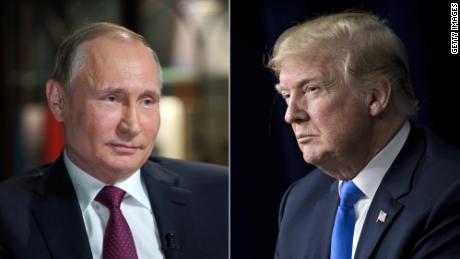
But the real hoax is how White House officials are covering up for Trump’s incompetence as commander in chief who is responsible for the welfare of the US military and who has consistently maintained a bizarre bromance with a former KGB officer, Russian President Vladimir Putin.

On Monday White House press secretary Kayleigh McEnany said of the intelligence surrounding the Russian bounties, “there were dissenting opinions within the intelligence community, and it would not be elevated to the president until it was verified.” Robert O’ Brien, Trump’s national security adviser, similarly tweeted that because the intelligence hadn’t been “verified” the president wasn’t briefed.

But this explanation makes no sense at all. Presidents get plenty of unverified information. Intelligence is not like mathematics where 2+2 can always be “verified” to make 4.

Think of the operation during which Osama bin Laden was killed by US Navy SEALs in Abbottabad, Pakistan in 2011.

There was no “verified” intelligence that bin Laden was in Abbottabad. It was an entirely circumstantial case that he might be there, and former President Barack Obama had to make the call to dispatch the SEALs on a potentially quite dangerous mission despite the fact there was significant dissent within the intelligence community about the likelihood that bin Laden was there.

As I found when I was reporting my book “Manhunt: The Ten-Year Search for Bin Laden from 9/11 to Abbottabad,” in the weeks before Obama ordered the bin Laden raid, a small intelligence “Red Team” was tasked to examine the intelligence that bin Laden might be in Abbottabad. The team came back with a range of estimates that al Qaeda’s leader was in Abbottabad varying from 40% to 60% confidence. When Obama ordered the risky bin Laden operation he did so knowing that there was likely only a 50/50 chance that he was in Abbottabad.
And that gets to the nature of intelligence. When the US intelligence agencies examine an issue of particular importance to US policymakers they often will issue a National Intelligence Estimate (NIE). The word “estimate” is telling. US opponents cloak their actions in secrecy and so the American intelligence community tries to break through this veil of secrecy typically with some combination of human sources, signals intelligence and satellite imagery. This doesn’t typically produce a “verified” truth but rather an estimate that often comes with varying levels of “confidence” from “high” to “low.” Here, for instance, is a declassified NIE from 2007 about the history of the Iranian nuclear program
According to his national security adviser, O’Brien, Trump wasn’t personally briefed about the Russian bounties. If this is true, the real reason for this seems likely not because that intelligence wasn’t important, but that Trump simply doesn’t want to hear anything bad about his buddy Putin and so US intelligence officials have consistently downplayed to Trump anything that might make Putin look bad, according to The Madman Theory, a forthcoming book by CNN’s Jim Sciutto.
And the fact that the Russian bounty intelligence was put in the Presidential Daily Brief earlier this year means little since Trump hardly ever reads these briefings, according to the Washington Post and the New York Times, shirking his responsibilities as commander in chief to spend untold hours hate-watching cable news and tweeting about all sort of trivia and grudges instead of doing the hard work of getting informed to protect the American people and its military.
It’s not a secret, or even news that Russia has been supporting the Taliban. In March 2018, the top US commander in Afghanistan, General John “Mick” Nicholson, told the BBC that Russian weapons were smuggled to the Taliban and that they “provide some degree of support to the Taliban.” So, some version of the facts of Russian support to the Taliban has been public for more than two years.
The real question White House officials haven’t begun to address — so eager are they to say that the President wasn’t informed about plots to kill US troops in Afghanistan — is: What will the Trump administration do about this? After all, Trump personally ordered the killing in January of General Qasem Soleimani, the commander of Iranian military operations in the Middle East, for supposedly planning attacks on US targets in the region.

Would Trump order some kind of retaliatory action against the Russians based on the intelligence about their bounties for the lives of US soldiers? The question answers itself.


Source link