Niece’s book says Trump views ‘cheating as a way of life’

Donald Trump waves to staff members of the Trump Taj Mahal Casino Resort in 1990. To his left is his mother, Mary, and his father, Fred. (Charles Rex Arbogast / Associated Press)

Donald Trump’s upbringing in a deeply dysfunctional family makes him a uniquely destructive and unstable leader for the country, his estranged niece writes in a scathing new book, perhaps the most personal in a series of deeply unflattering tell-all accounts about the president.

Mary Trump, a clinical psychologist, describes her uncle as deeply insecure and unscrupulous, saying he paid a friend to take his SAT so he could get into college. She accuses him of “twisted behaviors” and “cheating as a way of life,” citing a lifelong habit of lying.

“Donald is not simply weak, his ego is a fragile thing that must be bolstered every moment because he knows deep down that he is nothing of what he claims to be. He knows he has never been loved,” writes the 55-year-old daughter of the president’s eldest brother, Fred.

The Times obtained an early copy of her 240-page book, “Too Much and Never Enough: How My Family Created the World’s Most Dangerous Man.” It is scheduled to be released on July 14.

The book, which portrays the president as almost pitifully desperate for affirmation, provides a harsh contrast to Trump’s self-made image as a tough and successful businessman. It also represents an extraordinary breach in the wall of secrecy that he has erected around his life.

More than any modern president, Trump has gone to extraordinary lengths to conceal or distort major details of his private life, barring his schools from releasing transcripts, refusing to disclose his tax returns or detailed health information, and requiring employees and others to sign nondisclosure agreements to prevent release of unflattering material about his business and personal affairs.

The author says the president’s late father, Fred Sr., was domineering and a “high-functioning sociopath,” and his late mother, also named Mary, was “emotionally and physically absent.” They left Trump, she argues, without empathy and “fundamentally incapable of acknowledging the suffering of others.”

“Honest work was never demanded of him, and no matter how badly he failed, he was rewarded in ways that are almost unfathomable,” she writes.

“Now the stakes are far higher than they’ve ever been before; they are literally life and death. Unlike any previous time in his life, Donald’s failings cannot be hidden or ignored because they threaten us all,” she adds.

Although the president’s family sued to try to block release of the brutal personal account, a New York appeals court ruled that publisher Simon & Schuster may distribute the book.

It remains the focus of a legal battle, however. Trump, the fourth of five siblings, argues that in writing the book, his niece violated a nondisclosure agreement that she signed two decades ago as part of the settlement of a bitter dispute over the family fortune.

She has told the court that Trump lied about his net worth and other business affairs during the negotiations and that the confidentiality agreement should be declared invalid.

Sarah Matthews, a White House deputy press secretary, said the allegation that Trump paid someone to take the College Board admissions test for him “is completely false.” Trump enrolled at Fordham University in 1964 but transferred two years later to the Wharton School at the University of Pennsylvania, graduating with a bachelor’s degree in business.

Matthews also said “the president describes the relationship he had with his father as warm and said his father was very good to him.”

According to the book, the Trump family was caustic, cold and calculating.

“Donald suffered deprivations that would scar him for life,” Mary writes, and he developed personality traits that included “displays of narcissism, bullying, grandiosity.”

He also became practiced at bending the truth, a precursor to becoming a president who has uttered and tweeted thousands of falsehoods since taking office.

“For Donald, lying was primarily a mode of self-aggrandizement meant to convince other people he was better than he actually was,” Mary writes.

According to her account, Trump got his older sister, Maryanne, to complete his school homework, and he paid a friend to take his College Board admissions test.

“That was much easier to pull off in the days before photo IDs and computerized records,” Mary writes. “Donald, who never lacked for funds, paid his buddy well.”

Mary Trump relies on her training as a clinical psychologist to analyze the president. She blames him for the unraveling of her father, Fred Jr., who died in 1981 at age 42 after struggling with alcoholism.

Fred Jr., often called Freddy, had been expected to take over the family real estate business, but he was uninterested, and Fred Sr. ended up favoring Donald instead.

“Donald, following the lead of my grandfather and with the complicity, silence, and inaction of his siblings, destroyed my father,” Mary writes.

Freddy became a commercial airline pilot, disappointing his father, who described him as a “bus driver in the sky.” While Fred Jr. was living in Massachusetts with his wife, Donald visited and berated him for his alleged failings.

“You know, Dad’s really sick of you wasting your life,” Donald said, according to the book.

Fred Jr.’s drinking worsened, and an attempt to return to the family business didn’t pan out. At the end of his life, no family members accompanied him when he was taken to the hospital, Mary writes. She says Donald went to the movies the night his brother died.

According to the book, Trump internalized Fred Sr.’s treatment of Freddy.

“He had plenty of time to learn from watching Fred humiliate his older brother and Freddy’s resulting shame,” Mary writes. “The lesson he learned, at its simplest, was that it was wrong to be like Freddy: Fred didn’t respect his oldest son, so neither would Donald. Fred thought Freddy was weak, and therefore so did Donald.”

Trump, not known for introspection, has expressed rare doubts about his treatment of his older brother. “I do regret having put pressure on him,” he told the Washington Post last year.

After Fred Sr. died in 1999, Mary and her brother, known as Fritz, were angered to learn that they would inherit far less than they expected. When they challenged the will, the Trump family cut off their medical insurance — a devastating blow to Fritz, whose new son was born with cerebral palsy and needed constant care.

Mary and Fritz eventually settled for less money than they felt they were entitled to, but the legal sparring had consequences down the road.

In the book, Mary reveals herself as the key source for the New York Times’ investigation into Trump’s alleged tax fraud as he inherited his father’s real estate empire. She communicated with one of the reporters using an untraceable phone and visited her former lawyer’s office to collect computer files and nineteen boxes of documents.

The book also describes unflattering comments made by Maryanne, Trump’s older sister and a retired federal judge. When he announced he was running for president, Mary writes, Maryanne dismissed him as “a clown.” And when he started to build support among evangelical voters, she was outraged.

“The only time Donald went to church was when the cameras were there,” Maryanne said, according to the book. “It’s mind boggling. He has no principles. None!”

Trump’s well-documented lewdness extends to his interactions with his niece, she says. After asking Mary to help ghost write one of his books, he refused to grant an interview but provided her with “an aggrieved compendium of women he had expected to date but who, having refused him, were suddenly the worst, ugliest, and fattest slobs he’d ever met.”

Around that time, Mary went with her uncle to Mar-a-Lago, his Florida resort. She writes that when he spotted her in a bathing suit, the future president looked at his 29-year-old niece “as if he’d never really seen me before” and told her “you’re stacked!”

Several former senior members of Trump’s inner circle have also shared withering criticism of the president as he seeks reelection.

Last month, John Bolton, Trump’s third national security advisor, released a scorching behind-the-scenes account of what he viewed as the president’s incompetence and servile behavior toward authoritarian leaders.

Source link

Juventus stunned by AC Milan comeback – European round-up

0

Lecce also beaten by Lazio in Serie A as Atletico Madrid are held in La Liga

Last Updated: 08/07/20 12:25am


Juventus slipped to a surprise defeat against AC Milan

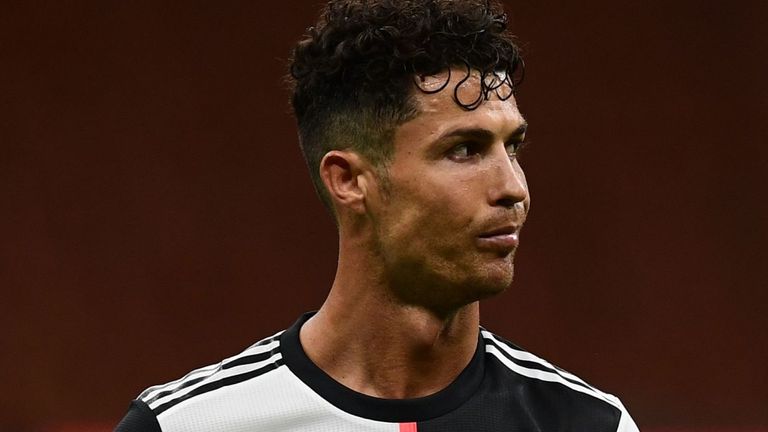
Juventus missed the chance to take a big step toward a ninth successive Serie A title as they let a two-goal lead slip in a 4-2 loss at AC Milan.

Juventus could have extended their lead at the top of the table to 10 points with a win and a tight first half finished goalless after Zlatan Ibrahimovic had a goal ruled out for offside shortly before the break.

But Adrien Rabiot broke the deadlock two minutes after the restart by curling a strike into the top-right corner with Cristiano Ronaldo doubling Juventus’ lead six minutes later.

However, Milan turned the match around completely in the space of five minutes.

Zlatan Ibrahimovic was among the scorers for Milan

Zlatan Ibrahimovic was among the scorers for Milan

Ibrahimovic converted a penalty in the 62nd minute following a handball from Leonardo Bonucci before two quickfire goals from Franck Kessi and substitute Rafael Leo.

Milan extended their advantage 10 minutes from full time when Giacomo Bonaventura capitalised on an error from Juventus defender Alex Sandro to set up Ante Rebic.

Elsewhere in Serie A, Lecce missed a penalty and also had a goal disallowed, but still managed an upset win over title-chasing Lazio.

Goalscorer Rafael Leo celebrates with Stefano Pioli at full-time

Goalscorer Rafael Leo celebrates with Stefano Pioli at full-time

Fabio Lucioni and Khouma Babacar scored for Lecce after Felipe Caicedo had given Lazio an early lead.

Lazio’s bad night was made worse when defender Patric was sent off for biting Giulio Donati in an incident that could lead to a lengthy ban.

Lazio were just a point behind Juventus when the season was halted because of the coronavirus pandemic. They had been on a record unbeaten run of 21 games but the Roman side have lost three of their five matches since the season resumed.

La Liga: Atleti held by Celta

Alvaro Morata scored for Atletico Madrid on Tuesday

Alvaro Morata scored for Atletico Madrid on Tuesday

Atletico Madrid were held to a 1-1 draw with relegation-threatened Celta Vigo, missing the chance to get closer to a Champions League spot.

Alvaro Morata put Atletico ahead in the first minute at the Balaidos Stadium, converting a cross from Angel Correa, but Fran Beltran equalized for the hosts with a neat volley in the 49th minute, hitting the top corner with a shot that lobbed over Atletico goalkeeper Jan Oblak.

Diego Simeone’s team are three points ahead of fourth-place Sevilla and nine ahead of fifth-place Villarreal, extending their unbeaten run to 15 games.

It was the second straight draw for Celta, who opened a seven-point gap to the relegation zone but could lose some ground depending on other results.

Elsewhere, 19-year-old South Korea midfielder Lee Kang-in scored in the 89th minute to help Valencia end a four-game winless streak with a 2-1 victory over Real Valladolid.

Lee scored with a low left-foot shot from outside the area to keep Valencia in the fight for a Europa League spot. They are one point behind seventh-place Real Sociedad with three games to go. Valladolid, who have two wins since the break, stay in 13th place.

A Super 6 for Newcastle?

Do not miss your chance to land the £250,000 jackpot for a sixth time this season on Wednesday. Play for free, entries by 6pm.


Source link

Coronavirus: Free parking for NHS staff ‘cannot continue indefinitely’, health minister says

0

NHS healthcare workers need clarity over the future of free hospital parking after a health minister announced funding for it “cannot continue indefinitely”, a Liberal Democrat MP has said.

Health Secretary Matt Hancock said on 25 March that the government would cover the parking costs of NHS staff who were “going above and beyond every day” during the coronavirus outbreak in England.

But health minister Edward Argar has since said the government is looking at how long this support will “need” to go on.

In response to a written question from Labour MP Rachael Maskell, he said: “The provision of free parking for National Health Service staff by NHS Trusts has not ended and nothing has changed since the announcement on 25 March.

“However, free parking for staff has only been made possible by support from local authorities and independent providers and this support cannot continue indefinitely.”

Image:
Edward Argar has said support for free parking for NHS staff ‘cannot continue indefinitely’

Mr Argar said the government wants to make good on its promise of free hospital parking for the disabled, frequent outpatient attendees, and parents of sick children who are staying overnight and nightshift workers.

He continued: “Implementation of this commitment has been on hold whilst the NHS has been managing the COVID-19 pandemic and devoting its hospital parking capacity to staff and other facilities necessary for managing the pandemic.”

File photo dated 16/12/2019 of Liberal Democrat MP Layla Moran
Image:
Liberal Democrat MP Layla Moran has said the government ‘must provide clarity’

:: Listen to the Daily podcast on Apple Podcasts, Google Podcasts, Spotify, Spreaker

Liberal Democrat leadership candidate Layla Moran has called for clarity and said NHS workers must not be “saddled with extortionate parking charges”.

She said: “Removing parking charges for staff at the outset of COVID-19 was the right move. Our healthcare workers deserved to have certainty that they could get to work without extra charges or hassle.

“Now the government must provide clarity and ensure our workers are not saddled with extortionate parking charges. We also need to see more efforts to promote green transport options for our healthcare workers.”

Source link

6 Dead, 1,500 Infected As Coronavirus Ravages California’s San Quentin Prison

Half a dozen inmates have died and more than 1,300 inmates have been infected by the coronavirus at San Quentin State Prison in Northern California, as advocates urge Gov. Gavin Newsom to release more prisoners. 

In late May, San Quentin prison had zero confirmed cases of the virus among its around 4,000 inmates. But after more than 120 prisoners were transferred in from another facility in Chino — 25 of whom later tested positive for COVID-19 — an outbreak began that has grown to devastating proportions in recent weeks. As of Tuesday, 1,369 people incarcerated at San Quentin and 184 staffers had tested positive, adding up to more than 1,500 infected with the virus, per the state’s tracking tool. Only 13 inmates with active cases have been released so far. 

Prisoners advocates and state politicians have been calling for Newsom to release more inmates in response to the crisis.

On Monday, the Democratic governor said that his administration has been working on the issue “every single day for the last three weeks” and that it was a “top priority.” His plan is to bring the prison’s population down to about 3,000 inmates over the “next few weeks” and he was “individually” reviewing cases, Newsom said.

It was not clear if all of the inmates to be removed to reduce San Quentin’s population would be released from prison entirely or if some would be transferred to other facilities. The governor’s office and the state’s Department of Corrections and Rehabilitation did not immediately respond to HuffPost’s request for further comment. 

Last week, 20 inmates at San Quentin went on a hunger strike to protest its inhumane conditions, including dirty, cramped cells, amid the COVID-19 pandemic.

Juan Moreno Haines, a journalist incarcerated in San Quentin who said he’s tested positive for COVID-19, told The Appeal last week that people were still locked up with others in cells ― a practice that ignores social distancing recommendations. Haines wrote in The Appeal in late June that prisoners were “reluctant to report when they’re sick” out of fear of being sent into the “punishing conditions” of solitary confinement.

On Tuesday, state legislators and other officials, including San Francisco District Attorney Chesa Boudin (D) and state Sen. Scott Wiener (D), called for Newsom to release “medically vulnerable” and aging inmates from San Quentin, as well as those “deemed a low risk to public safety.” They also urged the governor to “dramatically reduce” prison populations across the state to less than half of current capacity. 

Throughout California’s prisons, there have been over 5,000 confirmed coronavirus cases so far, and 29 inmates have died. 

The state prison system has released 3,500 incarcerated people through “expedited” parole processes since March, per the corrections department. At San Quentin, the department has said it is taking measures to reduce the spread of the coronavirus, including having staffers’ temperatures checked before entering and reducing the number of people in common areas.

California overall has seen a steady increase in coronavirus cases in recent weeks, with more than 277,000 confirmed cases and more than 6,000 dead as of Monday. The state has hit a seven-day average of 7,800 new cases per day, and hospitalization rates have increased by 50% over the last two weeks, per the governor. 

After being one of the earliest states to shut down businesses and direct residents to shelter in place, California began reopening in May. But it has since had to walk back reopenings in several areas as new cases ballooned. 

The U.S. continues to lead the world with more than 2.9 million confirmed cases and over 131,000 dead from COVID-19 so far. Some of the country’s worst outbreaks have been in congregant settings like nursing homes, meatpacking plants, Amazon warehouses and other prisons nationwide.

“The virus is here and it’s getting worse by the day,” Charles Lawrence, then an inmate at Pendleton state prison in Indiana, wrote in a letter in mid-April, later shared with HuffPost. “It’s only a matter of time before it claims a life.” Just over two weeks later, Lawrence died from the coronavirus.

“Protect human beings behind bars,” Lawrence’s wife, Sanya, told HuffPost last week. “Their lives matter, too.”


Source link

Intellasia East Asia News – HK national security law: city’s leader Carrie Lam denies she was ever kept in dark by Beijing over new legislation

0

Hong Kong’s leader has said she was not kept in the dark as Beijing imposed the national security law on the city, and central government officials had briefed her and sought her opinion on the legislation.

On Tuesday, Chief Executive Carrie Lam Cheng Yuet-ngor also said the police’s power was not expanded under a series of new implementation rules laid down by the government the day before.

Under the new rules, Hong Kong police can raid premises without a court warrant, order internet firms to remove content or seize relevant devices, and demand information from political groups operating outside the city.

Chief Executive Carrie Lam meets the press at the government’s headquarters. Photo: K.Y. Cheng

Get the latest insights and analysis from our Global Impact newsletter on the big stories originating in China.

But at a 45-minute press conference on Tuesday, Lam said the law had been misrepresented as being draconian and undermining “one country, two systems”, the principle under which the city is governed.

She also said the notion Hong Kong officials were kept in the dark before it was enacted was wrong.

Rather than enlarging police power, the implementation rules were meant to limit such powers in law enforcement, Lam said.

“Apart from the powers under the current ordinance, Article 43 of the new law already empowered the police to adopt seven measures in safeguarding national security,” she said. “If we do not write down these implementation rules, the police’s power and measures would be almost absolute.

“It was exactly because we felt we need to protect and respect human rights, that we created the implementation rules… to stipulate under what circumstance could the measures be adopted, and who can approve it.”

Countering those who said the legislation was draconian, Lam said it was “relatively mild” compared with similar laws in some other countries.

“I have not seen widespread fears among Hong Kong people in the past week,” she said. “The national security law will restore stability, and help ensure the majority of Hong Kong people would exercise their rights and freedoms without being intimidated or attacked.”

The chief executive was asked if Hong Kong’s civil liberties, including press freedom, would be undermined by the new rules.

“I hope you will be assured that in the fundamental principles of this particular piece of legislation, Article 4, the respect and preservation of human rights is one of the guiding principles, and I will just explain that even the implementation details, they are designed and devised in order to protect and respect human rights,” she said.

Lam earlier dismissed suggestions that Beijing officials had kept her in the dark.

“The National People’s Congress Standing Committee has listened to opinions, including that of myself and the city’s government,” she said.

Lam believes remarks she made two weeks ago fuelled the misrepresentation of her relationship with Beijing over the drafting of the new law.

“I answered a question here, and [the reporter] assumed that I know nothing and said, ‘you guys have not seen the law’,” she said

“I only answered that at the moment, ‘we have not seen the complete details of the proposed legislation’. This was used to suggest that I know nothing about the law, and have not seen any provision until the law was passed on June 30.

“This was really far from what I meant, and [those critics’] ability to imagine and exaggerate things really impressed me.”

On one country, two systems, Lam said allegations were made that the law “signifies the death” of the principle, or put it in jeopardy.

“The answer from me is exactly the opposite. The national security law aims to affirm and improve the implementation of one country, two systems by addressing risks of undermining national security,” she said.

On Monday, China’s ambassador to London, Liu Xiaoming, said Britain’s plans to give British National (Overseas) passport holders in Hong Kong a path to British citizenship amounted to “gross interference in China’s internal affairs”.

Asked to comment on London’s offer, Lam said she believed Beijing would “respond and handle [the situation] seriously”, but had no information on what action the central government might take.

https://sg.news.yahoo.com/hong-kong-national-security-law-063336327.html


Tags:

Category: Hong Kong


Print This Post

Source link

Intellasia East Asia News – HK national security law: top US diplomat criticises legislation on programme by city’s public broadcaster

0

America’s top diplomat in Hong Kong went on a radio programme by public broadcaster RTHK on Monday to criticise Beijing’s national security law for the city, barely a week after the controversial legislation came into effect.

In response, the city’s government revealed on Monday night that Chief Secretary Matthew Cheung Kin-chung and Secretary for Security John Lee Ka-chiu met US Consul general to Hong Kong and Macau, Hanscom Smith, earlier in the day to express grave concern over the matter.

Smith had accused China of using the legislation to erode Hong Kong’s fundamental freedoms and create an atmosphere of coercion and self-censorship.

Get the latest insights and analysis from our Global Impact newsletter on the big stories originating in China.

“We want to create an atmosphere that is as free and open as possible, that allows… everyone in Hong Kong to be able to operate in a way that’s free of coercion and intimidation and is consistent with what [they] were promised in the [Sino-British] Joint Declaration,” he said.

“Hong Kong has been a successful economy precisely because of its openness and transparency. When you start undermining that with opaque measures [of] extraterritoriality, vaguely defined criteria, then you start to undermine what makes Hong Kong work.”

You can’t have one country and two economic and financial systems. Fundamental political and social freedoms are very closely linked to economic success

Hanscom Smith, US consul general

After the programme, he said it would be a tragedy if Hong Kong’s popular anti-government protest slogans fell foul of the law.

In a statement issued on Monday evening, a government spokesman said the implementation of the “one country, two systems” principle in Hong Kong was entirely an internal matter of Beijing and no other state or legislature had the right to intervene.

“Social unrest, the failure of the rule of law and a lack of protection for corporate assets and personal safety are genuine factors that would undermine investors’ confidence.

“As a matter of fact, these were the factors that led to the fall of Hong Kong’s international rankings in the past year. The US has its own national security legislation, but we have never heard that such legislation affected the economic development and business environment of the US,” the spokesman said.

Reacting to Smith’s comments, Ip Kwok-him, a Hong Kong deputy to China’s top legislature, the National People’s Congress, said the fact that Smith was able to criticise Beijing on a public broadcaster showed that Hong Kong still enjoys a high degree of freedom.

“It was quite rare for the US consul general to speak on any local radio programme, I think Beijing’s foreign ministry is going to have a word about it,” he said.

“The US is a major target of the national security law, and Washington must be upset about the legislation. Under this context, Smith must represent his government in speaking up, or he could be fired.”

The controversial legislation Beijing tailor-made for Hong Kong outlaws acts of secession, subversion, terrorism and collusion with foreign forces in the city’s affairs, and carries a maximum penalty of life imprisonment.

Criticising the law alone does not constitute any of the four offences of the new law, as everyone can have his or her own views

Priscilla Leung, Basic Law Committee member

The law was enacted just before Hong Kong marked the 23rd anniversary of its return to Chinese rule on July 1, sparking concerns over the fate of the one country, two systems principle that has guided the city’s governance since 1997.

Asked if Smith could be breaking the new law, Basic Law Committee member Priscilla Leung Mei-fun said it was not unlawful to criticise anyone.

“Criticising the law alone does not constitute any of the four offences of the new law, as everyone can have his or her own views. You can’t say they are provoking hatred towards authorities unless there are substantial acts,” she said.

In an interview with the Post on Thursday, Smith said the US consulate in Hong Kong would continue to interact with the city’s opposition politicians, even with foreign interference outlawed under the new legislation.

Washington imposed visa restrictions on Chinese officials last month and banned exports of defence equipment and sensitive US technology to Hong Kong while reacting to the new law, prompting Beijing to announce tit-for-tat visa restrictions on American individuals.

The US Congress this month passed the Hong Kong Autonomy Act, which penalises Chinese officials who erode Hong Kong’s autonomy as well as banks and firms that do business with them, sending it to the White House for President Donald Trump’s signature.

“It’s very important for us to highlight the fact that to the extent that mainland China starts treating Hong Kong more like the mainland, then the way we treat Hong Kong has to reflect that as well,” Smith told the state broadcaster on Monday.

He warned that the erosion of Hong Kong’s autonomy by Beijing would undermine the city’s success as an international business hub.

“I think we’re troubled by the provisions of the national security legislation that refer to foreign collusion. There’s been an ongoing propaganda campaign by Beijing to point to foreign scapegoats… We reject those accusations. Of course what’s happening in Hong Kong reflects [their people’s] own interests and concerns.

“Hong Kong, to be successful, has to maintain what sets it apart from mainland China and that includes [its] openness, transparency, protection of intellectual property, free expression and all of these attributes that have been the cornerstones of the success of this city,” Smith said.

“You cannot divorce these fundamental freedoms from Hong Kong’s success as an economic hub. In other words, you can’t have one country and two economic and financial systems. Fundamental political and social freedoms are very closely linked to economic success.”

https://sg.news.yahoo.com/hong-kong-national-security-law-070004946.html


Category: Hong Kong


Print This Post

Source link

Intellasia East Asia News – Jakarta office market resilient during new normal

0

The office market in Jakarta has remained resilient due to the flexibility of landlords and tenants during the health crisis, despite the growing trend of working from home, property consulting firm Knight Frank has stated.

Jakarta’s Premium and Grade-A office occupancy rates remained stable at around 76 percent in late May. The same level was seen in the second half of 2019, according to the company’s data.

Knight Frank business development director Martin Wijaya told The Jakarta Post in an online interview on June 19 that both office property owners and tenants in Jakarta had been able to compromise in terms of payment, which contributed to the city’s stable office occupancy rate.

“The key is flexibility with both parties. That’s what makes us resilient in the office market sector,” he said.

While landlords are able to be flexible with the payment, tenants’ commitment to honor the contracts, amid possible fines for termination, have been some of the main factors that have maintained the office occupancy rate in Jakarta, the firm stated.

Companies all over the country have remote working arrangements for their employees to prevent the transmission of COVID-19, lowering the use of office space during the pandemic. The government’s large scale social restrictions (PSBB) in several regions have also forced offices and businesses to shut, although the government began gradually reopening the economy in June.

The monthly rental ask price in Jakarta has also been relatively stagnant, Knight Frank data show. For Premium office space, the ask price was Rp 439,000 (US$30.2) per square metre in late May, while in the second half of 2019, the price was Rp 441,000 per sq m.

For Grade-A office space, the monthly ask price in late May stood at Rp 352,000 per sq m. In the second half of 2019, it was Rp 354,000 per sq m.

“The office occupancy rate is relatively stagnant compared to the previous period with around 400,000 sq m of space available throughout the year,” Knight Frank senior researcher Syarifah Syaukat said during the interview.

According to the company’s records, office space demand is currently dominated by sectors that have not been hit hard by the COVID-19 pandemic, such as the financial sector, e-commerce, food and beverage and insurance.

Tenants are also reluctant to unilaterally end their rent, as the majority of rent contracts include a hefty penalty for early termination, which could see tenants lose their security deposits and require that they pay fees for the rest of their lease term.

While landlords typically do not approve of rent price cuts, they usually allow for rent payment deferment for cash-strapped tenants, according to the firm’s associate tenant director, Rina Martianti.

However, despite the relative resiliency, new tenants are starting to take shorter lease terms, down from five years to three years, to minimise risks. In addition, companies are postponing their decision to relocate, upgrade or expand.

Property consultant Jones Lang LaSalle (JLL) Indonesia head of research James Taylor said in May that Jakarta might experience the most significant impact from the pandemic on new leasing deals in the second quarter, as businesses continued to carry out work-from-home arrangements.

“However, we expect tenant demand to return once the worst of the crisis has passed. In some ways, COVID-19 is accelerating changes to the workplace that were already coming,” he said in a statement on May 26.

Leasing activity in the Asia-Pacific dropped 9 percent in the first quarter of 2020 from the previous quarter in 2019, despite a 14 percent year-on-year increase, JLL data show.

https://www.thejakartapost.com/news/2020/07/06/jakarta-office-market-resilient-during-new-normal.html


Category: Indonesia


Print This Post

Source link

Intellasia East Asia News – After-coronavirus stocks are red hot again as resurgence of epidemic and HK unrest spurs haven demand

0

A resurgence of the coronavirus epidemic and social unrest in Hong Kong has been fuelling a fresh run-up in China’s new-economy stocks, spanning from gaming companies and online food delivery to biopharmaceuticals and networking.

Tencent Holdings, China’s social media juggernaut that runs businesses from mobile gaming to fintech, and Meituan Dianping, the nation’s biggest online platform of food delivery and bookings, both climbed to their record highs last week in Hong Kong. The ChiNext index of technology-heavy smaller companies trading in Shenzhen also rose to its highest level in four years.

The renewed frenzy marks an ongoing shift in sentiment from the old-economy stocks engaged in traditional industries, which recently have attracted some buying after the US reopened its economy and China’s economy showed a nascent sign of a recovery.

Get the latest insights and analysis from our Global Impact newsletter on the big stories originating in China.

Traders have been quick to pull out of traditional sectors, whose business strength is more closely linked to the economic swings, after the daily cases of new infectors rose to a record high following the lifting of lockdowns and an escalation of China-US tensions.

New-economy stocks stand to benefit in multiple scenarios, according to Union Bancaire Privee (UBP), a Switzerland-headquartered private bank and wealth management firm. If the hostility between Beijing and Washington continues to be dialled up, China will need to boost spending on new infrastructure projects ranging from 5G networks to internal data centres. Meanwhile, the threat of a fresh outbreak of Covid-19 would prompt investors to pile into the stocks to shield from the economic fallout, said Anthony Chan, chief investment strategist for Asia at UBP.

“The tech, the internet tech, the education and also the medical innovations are really our high preference sectors, not only for the second half of this year, but also for the long term because they are really the priority areas in China for years to come,” he said.

When news of the coronavirus outbreak was first reported in China in January, traders loaded up on new-economy stocks, as stay-at-home orders led people to spend more time playing mobile games, order online food, and engage in virtual networking and remote conferences. Investors have continued to favour the sector.

Tencent rose 1.2 per cent to HK$524.50 on Friday, its highest close since its listing in 2004, and Meituan surged 6.9 per cent to HK$191.70, a record close since it went public in 2018. Alibaba Group Holding, which owns the South China Morning Post, added 3 per cent to HK$220.80 and Xiaomi, China’s biggest smartphone maker, gained 4.9 per cent to HK$14.26.

In the mainland, the ChiNext gauge of technology start-ups rose to its highest since January 2016, with drug makers Maccura Biotechnology and Pharmaron Beijing leading the rally over the past two months.

Even after the outsize gains, analysts are still upbeat and predict further gains in new economy stocks. Tencent had its share-price estimate raised to HK$592 by Jefferies Group recently because of the impending launch of a slew of blockbuster mobile games. The price targets for JD.com and NetEase imply that the stocks will rise at least 10 per cent from the current prices, according to Bloomberg data.

The pattern of chasing technology stocks falls in line with sentiment in the US, where the Nasdaq Composite Index closed at a record for two consecutive days before heading into the July 4 holiday weekend. Unparalleled liquidity unleashed by the Federal Reserve and the resurgence of the pandemic after the economy reopening have fuelled increased bets on US companies such as Tesla and Amazon.

While China has largely contained the coronavirus and the economy is showing signs of steady recovery, the risk of a fresh outbreak still looms. Tens of thousands of people in Beijing have been tested for Covid-19 after the virus broke out in a wholesale marketplace in the capital city last month and infected a few hundred people. The China-US ties and the political unrest in Hong Kong are also a focus of investors, with the police arresting more than 300 people who protested against the official enactment of a national security law in the city on July 1.

“The offline activities are still restricted and in a difficult time so the new-economy stocks will continue to benefit,” said Wang Chen, a partner at Xufunds Investment Management in Shanghai. “Their ability to ride out the epidemic was already ascertained and well reflected in the first-quarter reports. The stock prices can hold up well for long.”

Tencent probably posted a 23 per cent increase in second-quarter earnings, according to the estimates by 15 analysts tracked by Bloomberg. That compares with 6.2 per cent growth for the previous three-month period, when the companies on the Hang Seng Index averaged an 18 per cent profit decline. The social media giant is expected to release its interim report next month.

One major concern for investing in the new-economy stocks is the elevated valuations. Tencent is trading at the most expensive level relative to the Hang Seng Index in four years on the price-to-earnings ratio basis, while the valuation multiple for the ChiNext gauge also touched its highest since 2016.

Still, companies like Tencent deserve to be valued that high, as annual earnings growth of the social media giants is 36 percentage points above the market average, according to Changjiang Securities.

The new-economy sectors will boost China’s economy by 0.6 per cent in the short term, according to projections by Guotai Junan Securities.

New-economy stocks will probably lead the pack of gainers in the second half, while the outlook of the traditional companies rests on the strength of the economic recovery, said Wang Hanfeng, a strategist at China International Capital Corp.

“No matter how you spin it, this new-economy theme actually has a very strong fundamental reason to stay invested,” said Chan at UBP.

https://sg.news.yahoo.com/coronavirus-stocks-red-hot-again-085522139.html


Category: Hong Kong


Print This Post

Source link

Intellasia East Asia News – HKEX kicks off trading of first tranche of 10 MSCI futures contracts tracking stock markets from Australia to Japan

0

Hong Kong’s stock exchange on Monday launched the trading of 10 MSCI Index futures contracts tracking stocks from across Asia-Pacific markets, as the bourse seeks to cement its position as a leading global financial hub.

The launch of the 10 derivative products, denominated in US dollars, is the first as part of an agreement struck between bourse operator Hong Kong Exchanges and Clearing (HKEX) and MSCI in May, which allowed the exchange to offer futures contracts and options on the 37 equity gauges owned by the New York-based index compiler.

“Today’s listing marks an exciting new chapter for HKEX and our markets, as we provide even more choice to our customers, and continue to build the breadth, depth and attractiveness of Hong Kong’s financial markets as a global trading and investment hub,” said Wilfred Yiu, head of markets at HKEX.

Get the latest insights and analysis from our Global Impact newsletter on the big stories originating in China.

“This will bring enhanced liquidity to our markets and greatly complement our existing product suite.”

The 10 contracts are linked to indices covering stocks in China, Australia, India, Indonesia, Japan, Malaysia, Taiwan and Thailand.

However, mainland investors are not able to trade these derivatives via the Stock Connect programme currently.

HKEX was picked to offer the contracts over Singapore Exchange, as the city’s bourse manages to woo more investors after the launch of the Stock Connect programme and the reform of listing rules that allow stock offerings by more technology companies.

The Singapore Exchange, which has had a 23-year partnership with MSCI, retains no more than two dozen futures contracts.

Shares of HKEX rose 2.3 per cent to a record high of HK$353.20 on Monday. Investors have ramped up the stock in anticipation of the bourse operator benefiting from the forthcoming secondary offerings of Chinese companies trading in the US amid escalating hostility between Beijing and Washington.

E-commerce platform JD.com and gaming company NetEase both started trading in Hong Kong last month, marking the start of the return of the group of Chinese companies with a combined market cap of about $1.2 trillion.

Another 23 futures contracts on the MSCI Index tracking stocks from the Philippines to Vietnam will start trading on July 20 and in August, with another four still subject to regulatory approval, according to HKEX.

MSCI’s stock indices are tracked by investors holding more than $13 trillion of assets worldwide.

https://sg.news.yahoo.com/hkex-kicks-off-trading-first-050828139.html


Category: Hong Kong


Print This Post

Source link

Intellasia East Asia News – TikTok says stopping app operation in HK

0

TikTok said late Monday it is stopping its popular video snippet-sharing app from working in Hong Kong due to “recent events.”

The move by TikTok, owned by China-based ByteDance, came as Facebook, Google and Twitter put a hold on requests by Hong Kong’s government or police force for information on users, following China’s imposition of a sweeping new security law.

“In light of recent events, we’ve decided to stop operations of the TikTok app in Hong Kong,” TikTok told AFP.

TikTok has consistently denied sharing any user data with authorities in China, and was adamant it did not intend to begin to agree to such requests.

The company expects to take several days to wind-down app operations in Hong Kong.

TikTok has become a global sensation with users sharing 15 to 60-second video clips on everything from hair dye tutorials to dance routines and gags about daily life.

It joined the EU’s disinformation code of conduct last week as tech giants seek to persuade Europe to back away from setting laws against harmful content online.

https://sg.news.yahoo.com/tiktok-says-stopping-app-operation-hong-kong-043123188.html


Category: Hong Kong


Print This Post

Source link