What to Cook This Week

0

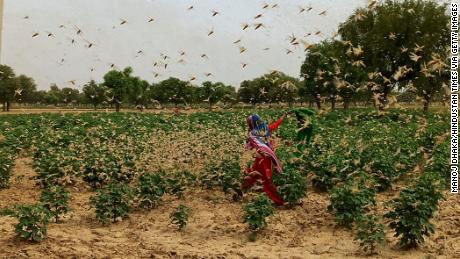
Good morning. A number of years ago, my friend and colleague Tejal Rao met up with a sous chef named Julia Goldberg at the vegetarian restaurant Superiority Burger in New York, where Goldberg then worked. Tejal had come to learn the secrets of one of Goldberg’s most elegant creations: A vegan ranch dressing (above), “tangy and creamy,” Tejal wrote for The Times, “turbocharged with the familiar mouth-smacking umami of bottled ranch.”

Vegan ranch, of course, cannot contain buttermilk or mayonnaise, the dressing’s traditional base. Goldberg’s version used tahini instead, and lemon juice and maple syrup, and a huge amount of chopped parsley, dill and chives. It’s a pretty phenomenal dressing when used atop grilled romaine, as Tejal suggested. It’s also terrific with roasted potatoes, alongside chicken wings or dabbed on a lambchop run under the grill. But I’ve grown to love it most as a burger condiment, whether that patty is made of beef or mushrooms and beets.

Won’t you make vegan ranch this evening, then, to give yourself a little joy when joy is so thin on the ground? Won’t you make it because it’s strange and madcap and delicious, at a time when those things might actually provide some relief? Vegan ranch dressing on a burger! That could be Charlie Chaplin in “Modern Times.”

(Not feeling it? Here’s a fine roasted salmon with toasted sesame slaw, from Kay Chun.)

On Monday, you could steer into nostalgia, make this recipe for an elegant tuna-macaroni salad that Amanda Hesser adapted a million years ago from the restaurant Clementine, in Los Angeles.

For Tuesday’s meal, vichyssoise against the summer heat. (If you’re working from home, or at any rate at home during the day, make the soup at lunch, so it can get a good chill on in the refrigerator before dinner.)

A baked spinach and artichoke pasta on Wednesday night? Yes, please.

On Thursday, I’m thinking, you might try Florence Fabricant’s neat recipe for risotto Marseille-style, which is to say with the flavors of bouillabaisse. (Really!)

Then on Friday, another fantastic throwback, from a 2015 Francis Lam article about the mysteries of Manhattan’s curry row, on East Sixth Street: home-style Bangladeshi chicken korma, courtesy of Shama Mubdi, whose husband owned restaurants there.

There are thousands and thousands more recipes you might cook this week awaiting you on NYT Cooking. I hope you will consider subscribing so that you can see all of them. Your subscriptions support our work.

We will support you in return. If anything goes wrong while you are cooking or using our technology, please reach out for help. We’re at cookingcare@nytimes.com. We will get back to you.

Now, it’s nothing to do with split peas or harissa, and I know I’ve mentioned it before, but if you didn’t click before, now I think you ought to: A.O. Scott’s “The Essential Spike Lee,” in The Times.

You ever read Breece D’J Pancake? Here’s his short story “Trilobites,” from 1977.

Join Raymond Pettibon in the studio, courtesy of David Zwirner.

Finally, it is the cartoonist George Booth’s birthday. He is 94. Here’s an old profile of him in The New Yorker, if you’re interested. And if you are, you may want to track down a copy of “The Essential George Booth” as well. I’ll be back on Monday.
Source link

Trump Says ‘Nobody Briefed Or Told Me’ About Russian Bounties To Kill U.S. Soldiers

0

President Donald Trump on Sunday denied that U.S. intelligence officials had briefed him about an alleged plot by Russian operatives to pay Taliban-linked militants in Afghanistan to kill American troops.

“Nobody briefed me or told me, [Vice President] Pence, or Chief of Staff Mark Meadows about the so-called attacks on our troops in Afghanistan by Russians,” Trump tweeted.

The president accused The New York Times of using a fake “anonymous source” to report the alleged briefing. In fact, the Times report cited multiple officials who spoke on the condition of anonymity. It’s not uncommon for news outlets to grant anonymity to sources who aren’t authorized to speak publicly about information that may be newsworthy.

“Everybody is denying it & there have not been many attacks on us,” Trump tweeted. He added of the Times report: “Who is their ‘source’?”

The Times was the first to report on the alleged Russian operation. It was later confirmed by several outlets, including The Washington Post, The Wall Street Journal and ABC News. 

All of these outlets reported that Russian intelligence officers offered bounties to Afghan militants to kill soldiers serving with coalition forces in Afghanistan, including U.S. and British troops.

As of Sunday, the Times was the only outlet to report that Trump was personally briefed on the matter. The Times also reported that the National Security Council was made aware of the plot in late March.

The White House has not yet taken any action against the Russian government in response to the reported plot, according to the Times. The reports sparked renewed accusations from Trump critics who say the president doesn’t take enough action against the Kremlin.

Twenty-four Americans were killed in combat in Afghanistan between early 2019 and early 2020, reported the Times. It’s unclear whether any of the bounties Russian operatives may have paid to Afghan militants resulted in the deaths of any American soldiers.

White House Press Secretary Kayleigh McEnany said in a statement Saturday that neither Trump nor Pence were briefed on the matter.

“The United States receives thousands of intelligence reports a day, and they are subject to strict scrutiny,” McEnany said. She added that her statement “does not speak to the merit of the alleged intelligence but to the inaccuracy of the New York Times story erroneously suggesting that President Trump was briefed on this matter.”

Director of National Intelligence John Ratcliffe also denied that Trump and Pence were made aware of the alleged operation. Former Acting Director National Intelligence Richard Grenell, who served in that position when Trump was allegedly briefed, said Saturday that he had “never heard” of it.

“No one would be fine with this if it were true,” Grenell tweeted in response to someone asking whether he was “fine” with the alleged Russian bounties.

In their statements, Trump, McEnany and Ratcliffe did not confirm or deny reports that Russian agents offered to pay Afghan militants to kill U.S. soldiers. The Kremlin has denied the existence of any such operation.

Presumptive Democratic presidential nominee Joe Biden on Saturday slammed Trump for failing to “sanction and impose any kind of consequences on Russia for this egregious violation of international law.” He called the White House’s inaction a “betrayal of the most sacred duty we bear as a nation — to protect and equip our troops when we send them into harm’s way.”

Instead of condemning the alleged Russian bounties, Trump on Sunday ranted about Biden’s statement.

“Funny to see Corrupt Joe Biden reading a statement on Russia, which was obviously written by his handlers,” the president tweeted. “Russia ate his lunch and Obama’s lunch during their time in office, so badly that Obama wanted them out of the then-G-8.”

Rep. Liz Cheney (R-Wyo.), the third-ranking Republican in the House, called on the White House to answer questions about the alleged Russian bounties, including who knew about the plot and when, and what has been done to hold Russian President Vladimir Putin accountable.

“Why weren’t the president or vice president briefed?” she tweeted.


Source by [author_name]

India opens one of the world’s largest hospitals to fight coronavirus

0

The Sardar Patel COVID Care Centre, the largest facility of its kind in India, became partly operational on Sunday, with 2,000 of its 10,000 beds available, according to the Delhi government.

The remaining 8,000 beds at the facility, which is located in the Chattarpur area of Delhi, will be in use from Wednesday.

India’s Home Minister Amit Shah and Delhi’s Chief Minister Arvind Kejriwal visited the care center on Saturday ahead of its launch.

In a message posted on Twitter that day, Kejriwal described the center as being “among the largest hospitals in the world.”

Meanwhile, the Home Minister tweeted that the 10,000-bed facility “would provide huge relief to the people of Delhi.”

The administration and operations of the facility will be run by the Indo-Tiberan Border Police (ITBP), Shah confirmed.

“I applaud our courageous ITBP personnel, who would be operating this COVID Care facility during these trying times. Their commitment to serve the nation and people of Delhi is unparalleled,” he added in a tweet.

The opening of the hospital coincided with the release of India health ministry data on Sunday which showed the largest rise in the daily number of new Covid-19 cases.

The country reported 19,906 new infections and 410 new deaths from the virus, bringing the total to 528,859 positive cases and 16,095 fatalities.

Delhi became the country’s worst-hit city on Wednesday, surpassing Mumbai’s coronavirus tally. Only the west India state of Maharashtra with 159,133 cases has had more infections than the capital.

CNN’s Vedika Sud contributed to this report

Source link

Priyanka Chopra shows solidarity with LGBTQ+ community

0

Priyanka Chopra’s post pride month themed post to showcase solidarity with LGBT community

Priyanka Chopra has always been a vocal ambassador for peace and justice. She believes in using her voice for the greater good and in attempt to showcase solidarity for pride month she shared a post highlighting where she stands on the concept of love and freedom. 

Her most recent Instagram post encompassed the hashtag “I stand for love. Happy #Pride”

For the unversed, pride month is held each year in June to commemorate the lives lost during the Stonewall riots that occurred back in 1969 while protesters were trying to orchestrate events to help the LGBTQ community get recognition.

Check out her post below:

This is not the first time Priyanka has voiced out against injustice and hate. Just recently she expressed her grief about the police brutality which a a father-son duo from Tamil Nadu experienced.

The actress is still “reeling from what I’m hearing. Absolutely stunned, sad and angry. No human being deserves such brutality, whatever be their crime. The guilty must not be allowed to go unpunished. We need facts. I cannot even begin to imagine what the family must be going through. Sending strength and prayers. We need to use our collective voices to seek #JusticeForJayarajandBennicks.”

Source link

South Africa eases lockdown to revive the economy

South Africa has eased lockdown restrictions to restart businesses and revive its economy.

The tourism sector is among the worst affected.

While the tourist season kicks off only in September, few travellers are expected as the country grapples with the highest number of coronavirus cases in Africa.

Al Jazeera’s Fahmida Miller reports from Tiffindell Ski Resort, the only ski resort in the country.

Source link

Trump denies briefing on reported Russian bounties against US troops in Afghanistan

0

The White House had issued a statement a day earlier denying that Trump or Pence had been briefed on such intelligence. “This does not speak to the merit of the alleged intelligence but to the inaccuracy of the New York Times story erroneously suggesting that President Trump was briefed on this matter,” press secretary Kayleigh McEnany said.

Trump’s director of national intelligence, John Ratcliffe, also said neither the President nor Vice-President was “ever briefed on any intelligence alleged” in the Times’ report and he said the White House statement was “accurate.”

Trump’s tweet came a day after presumptive Democratic presidential nominee Joe Biden said that the report, if accurate, was a “truly shocking revelation” about the commander in chief and his failure to protect US troops in Afghanistan and stand up to Russia.

Russia called the report “nonsense.”

“This unsophisticated plant clearly illustrates the low intellectual abilities of the propagandists of American intelligence, who instead of inventing something more plausible have to make up this nonsense,” the Russian Foreign Ministry said.

A Taliban spokesman said the militants “strongly reject this allegation” and are not “indebted to the beneficence of any intelligence organ or foreign country.”

John Bolton, a former national security adviser who was forced out by Trump last September and has now written a tell-all book about his time at the White House, said on Sunday that “it it is pretty remarkable the President’s going out of his way to say he hasn’t heard anything about it, one asks, why would he do something like that?”

Bolton told NBC’s Meet the Press that he thinks the answer “may be precisely because active Russian aggression like that against the American service members is a very, very serious matter and nothing’s been done about it, if it’s true, for these past four or five months, so it may look like he was negligent. But of course, he can disown everything if nobody ever told him about it.”

The Times, citing unnamed officials familiar with the intelligence, said the findings were presented to Trump and discussed by his National Security Council in late March. Officials developed potential responses, starting with a diplomatic complaint to Russia, but the White House has yet to authorise any step, the report said.

Trump responded to Biden on Twitter, saying “Russia ate his and Obama’s lunch during their time in office”

But it was the Obama administration, along with international allies, that suspended Russia from the Group of Eight after its unilateral annexation of Crimea from Ukraine – a move that drew widespread condemnation.

Biden criticised Trump for “his embarrassing campaign of deference and debasing himself” before Russian leader Vladimir Putin. Trump tweeted that “Nobody’s been tougher” on Russia than his administration.

AP

Source by [author_name]

Trump Faces Mounting Defections From a Once-Loyal Group: Older White Voters

0

Ms. Gamble said she was planning to support Mr. Trump in the election all the same, describing Mr. Biden as too old and too compromised on matters related to China. But Ms. Gamble, who said she has a “severe lung problem,” expressed hope that Mr. Trump would change his approach to the pandemic.

“We can’t blame him for this — how many presidents could really do any better than what he’s done?” Ms. Gamble said, before adding: “I just wish he wouldn’t let the country open up as much as it has. I see all these teens and young people at the beach, and I fear for them because now they’re getting sick.”

In Tucson, Gerald Lankin, a more forceful Trump supporter, said he would back the president mainly as a vote “against the Democrats.” Mr. Lankin, 77, said he found Mr. Trump’s personal manner offensive but agreed with him on most issues and saw Democrats as “much, much, much, much too far to the left.”

“He hasn’t really done anything that I can say I’m against,” Mr. Lankin said of Mr. Trump. “I think what he’s doing is the best he can. But, boy, he is tough to take. He is a tough guy to take.”

There may be time for Mr. Trump to regain his footing with seniors, along with several other right-leaning groups that have drifted away during the bleakest months of his presidency. His ability to do so could have far-reaching implications not just for his chances of winning a second term, but also his party’s ability to keep its hold on the Senate.

At the moment, Mr. Trump’s unpopularity with older voters appears to be hindering other Republicans in states including Arizona and Michigan.

Gayle Craven, 80, of High Point, N.C., said that while she was a registered Republican, she had not voted for Mr. Trump in 2016 and would reject him again this year. She said she saw Mr. Biden as an “honest man.”

Source link

Why are similar countries experiencing COVID-19 so differently?

WASHINGTON — The global COVID-19 pandemic goes on and on, but not every country is experiencing the virus in the same way. As summer arrives, some countries are seeing much higher rates of new infections than others, and the United States is part of a group that is not faring especially well.

With a rate of 107 per million as of June 27, the U.S. has one of the highest new infection numbers in the world and its highest new case number so far, according to numbers from the Our World in Data project. Brazil is higher, with a seven-day average of about 168 new infections per million. But the United States is part of a group of countries where rates are high and/or rising. That group includes Russia and India, where the numbers are in double digits per 1 million people, and some question if they are accurate.

On the other end of the data, Germany and Italy have made large strides in containing the virus as both were above 60 new infections per million people at one point and are now in the single digits. And New Zealand’s numbers have been consistently extremely low.

The differences in the size of the current problem raises the question of why, and a look at some key numbers shows a muddled answer.

First off, a nation’s overall wealth does not appear to be a driving factor.

Looking at per capita GDP, the U.S. stands out among the countries in both groups — top and poor performers — for its high wealth number. But the next highest per-capita GDP is Germany, which has a far lower new infection rate. New Zealand and Italy are both above $34,000 per person and they have new infection rates that are quite low.

Meanwhile Russia, with a per-capita GDP figure of $11,200, Brazil at $9,001 and India at $2,009, all have much lower wealth numbers, but higher new infection rates.

In other words, sorting by wealth, the new infection rate number in the U.S. looks like something of an outlier, a wealthy country with a big new infection problem.

Similarly, health care expenditures don’t seem to make a dramatic difference in the new infection numbers.

As is often noted, the U.S. spends more on health care than any other country: more than $9,900 per capita in 2016, according to the World Bank. But all that spending hasn’t stopped the new infection rate from rising quickly here in the last few weeks.

The next highest in this group of countries dealing with COVID-19 is Germany, at more than $4,700 per person, and it is doing much better in terms of new infections. New Zealand, which has almost no infections, spends about $3,900 per person. And Italy, which has its new infection rate down to the low single digits, spends about $2,700 per person.

Again, the U.S. has new infection rates that look more like the countries that spend much less on health care, particularly Brazil and Russia.

Getting away from dollars, each nation’s COVID timeline does not seem like it plays much of a role either.

Of all the nations here, the U.S. has the earliest recorded COVID-19 case: January 21, 2020. The nation saw new infection spikes in April and May and then a decline before another new infection increase in the last 10 days.

But there isn’t really any pattern in new infection numbers in other countries tied to when the first case appeared.

Germany and Italy had their first infections in late January and saw new infection spikes in April and March, respectively, both have seen marked declines since then. Russia recorded its first infection at about the same time and didn’t record its new infection spike until mid-May. Brazil, which recorded its first case much later, still has not seen the peak for its new infection rate.

And while some skeptics will argue the numbers are only rising because the United States is testing more now, the gap between the new case numbers in the U.S. and the top performing nations is vast and the data suggest other factors are driving the increase.

In the U.S., the percentage of COVID-19 tests coming back positive is higher than those other countries, more than 5 percent, and it is rising. In Germany, Italy and New Zealand the percentage of positive tests is much lower, lower than 1 percent, and flat.

The point is sometimes the data show that underlying economic and health factors have a smaller impact than you might think, even in a pandemic. One thing the U.S., Russia, Brazil and India share, however, is government leaders that have at times downplayed the impact the virus.

India’s Prime Minister Narendra Modi told his people yoga could help build a “protective shield” of immunity against the virus as the country has loosened its rules to aid the economy. In Russia, Vladimir Putin declared victory over the virus this week and held a massive public military parade celebrating the 75th anniversary of the country’s defeat over Nazi Germany. Brazil President Jair Bolsonaro has belittled the virus and not worn a mask (though this week a judge ordered him to wear one or pay a fine). And, of course, President Donald Trump has begun to resume his large campaign rallies — which are mask-optional — as he mocks the virus.

None of this is to say those leaders are wholly responsible for their countries higher new-infection numbers. There is a wide range of societal factors in each country, from population density to the actions of local officials in each.

But as the pandemic continues and nations head down different paths, the politics and the data seem to be carrying a message. The voices at the top matter.

Source link

Scottish Premiership clubs given government approval to resume contact training

0

Clubs have five weeks of contact training before Scottish Premiership season is due to kick off

Last Updated: 28/06/20 3:15pm


Scottish Premiership clubs have been given government approval to resume contact training from Monday.

The suspension of all Scottish football activity was lifted on June 11 but only for top-flight clubs to train in a physically-distanced manner following the coronavirus crisis.

But the latest development gives clubs five weeks of contact training before the Scottish Premiership season is due to kick off.

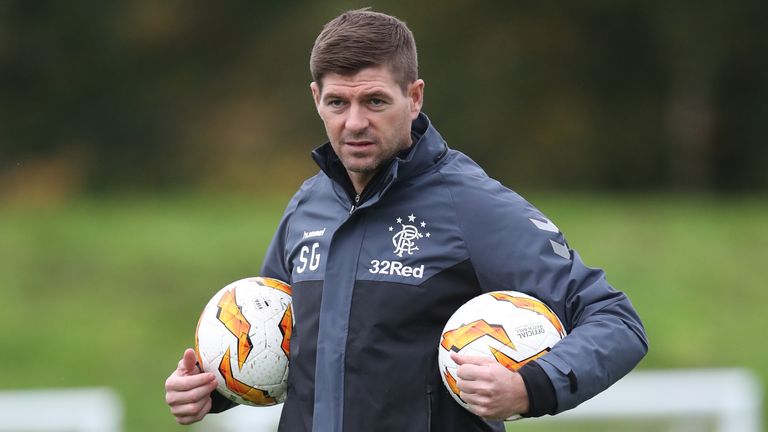
Steven Gerrard's Rangers squad can resume contact training

Steven Gerrard’s Rangers squad can resume contact training

A statement from Scottish football’s Joint Response Group read: “The Joint Response Group can now confirm that ministers have formally approved full contact training for Scottish Premiership clubs from tomorrow, Monday June 29.

“We would therefore encourage clubs to inform all team staff as soon as possible to facilitate the updated guidance, and clarify that the approval for full contact training is inclusive of all Phase 4 requirements outlined in the Joint Response Group Return to Training protocols reissued on Friday.

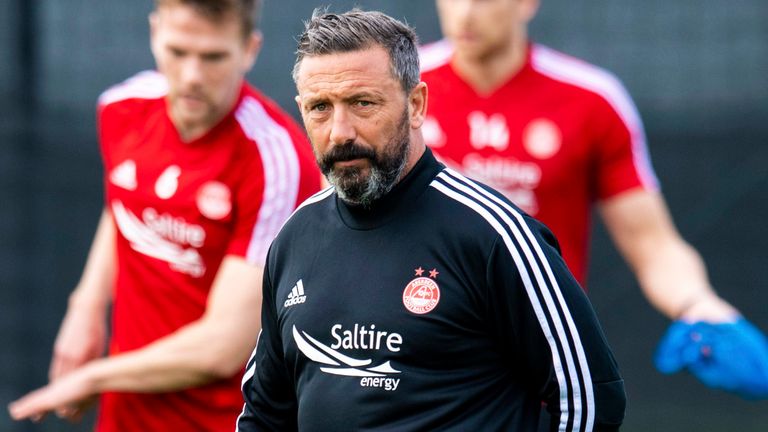
Aberdeen boss Derek McInnes leads training

Aberdeen boss Derek McInnes leads training

“Ministers have underlined that this return to full contact training is subject to observing public health measures, including testing.”

A spokesperson added: “Today’s confirmation from Scottish Government ministers is welcomed and is another significant step towards the resumption of the Scottish football season, beginning with the Premiership on August 1.”

Back-to-back Super 6 winners?

Do not miss your chance to land the £250,000 jackpot for a sixth time this season on Saturday. Play for free.


Source link

Turkey’s policy in Libya threatens EU

0

The Turkish intervention into the Libyan conflict caused the negative effect for the region: the balance of power changed and the GNA liberated Tripoli from the LNA forces and recently started a big-scale offensive on Sirte city.    On 6th of June after negotiations with the Commander of the Libyan National Army (LNA), Field Marshal Khalifa Haftar, and the Speaker of the Libyan House of Representatives Aguila Saleh Issa – Abdel Fattah Al-Sisi, the president of Egypt  issued the Cairo Declaration.

It is based on the agreements reached at the Berlin Conference on Libya in January. According to Cairo Declaration, “all parties undertake to cease fire from 6 a.m. local time on Monday, 8 June”. In addition, it provides for the continuation of negotiations in Geneva under UN patronage of a joint military committee in the 5+5 format (five representatives from each side). Further progress on other issues, including political, economic and security, will depend on the success of its work.

European Union Minister for Foreign Affairs Josep Borrel, French Foreign Minister Jean-Yves Le Drian, German Foreign Minister Heiko Maas and Italian Foreign Minister Luigi Di Mayo welcomed the declaration and called for the cessation of all hostilities in Libya and the withdrawal of all foreign troops and military equipment from the country.

French president noted that Turkey is playing ‘the dangerous game’ in Libya. “I don’t want in six months, or one year or two, to see that Libya is in the situation that Syria is in today,” he added.

Greek Foreign Minister Nikos Dendyas announced on Wednesday 24 June in a statement following the visit of EU High Representative for Foreign Affairs and Security Policy Josep Borrel to Evros that Turkey “continues to undermine security and stability, as well as peace in the Eastern Mediterranean”, causing problems for all its neighbours. “Turkey has continuously violated the sovereignty of Libya, Syria, Iraq and our EU partner, the Republic of Cyprus. In Libya, again in clear disregard for international legitimacy, it violates the UN embargo in pursuit of its neo-Osmanian aspirations. It openly ignores Europe’s repeated calls for respect for international legitimacy,” Dendyas said.

Turkey rejected the Cairo Declaration: The “Cairo Initiative” on the Libyan settlement is “not convincing” and insincere, declared Turkish Foreign Minister Mevlut Cavusoglu. After the Cairo Declaration Chairman of Presidential Council, Fayez Al-Sarraj urged the GNA troops to “continue their path” towards Sirte. https://www.aljazeera.com/news/2020/06/libya-gna-forces-press-failed-truce-offer-egypt-200608093125455.html

The recent success of the GNA troops is caused by the participation of Syrian mercenaries, connected with jihadists, who actively were sent in Libya by Turkey to fight against the LNA from may 2019. According to the Syrian Observatory for Human Rights (SOHR), the number of fighters from the pro-Turkey Syrian factions today can reach more than 18 000. Generally, the mercenaries are from Al-Mu’tasim Brigade, the Sultan Murad Brigade, the Northern Falcons Brigade, Al-Hamzat and Suleiman Shah. The mercenaries are promised to be paid 1500-2000 $ a month, but the current monthly salary of each fighter is about 400$.

The policy of Turkey in the Libyan region represents destructive neo-Ottoman and pan-islamist strategy, which is based on the neocolonialist ambitions. The possible explanation for the intervention to Libya is the instability in Turkey itself and the Erdogan’s loss of popularity (the support of AKP party came from 33.9 in February 2020 to 30.7 in May 2020 according to Metropol). The Turkish president uses the Islamic narrative (in Libya as the war on side of the GNA, in Turkey – the initiative to convert Hagia Sophia back into Mosque) for the legitimation of his power. İbrahim Karagül , the columnist in the mainstream Yeni Şafak media of Turkish Republic, openly writes that “Turkey will never withdraw from Libya. It will not give up before achieving its aim” (https://www.yenisafak.com/en/columns/ibrahimkaragul/as-angry-masses-hit-western-capitals-we-bid-farewell-to-the-world-we-know-the-fight-in-us-europe-is-not-about-racism-its-the-end-of-the-road-for-the-enslaving-western-order-turkey-is-now-a-super-power-its-words-carry-weight-in-libya-the-mediterranean-2047480).

The major pro-Erdogan media spread this neocolonialist agenda about from November 2019 (when GNA signed 2 deals with Erdogan): Libya is seen as a part of the neo-ottoman empire.

Threat for the EU

The negative effect of the neo-ottoman agenda in Libya is the threat of the new migration crisis, which can happen to the EU. In march 2020 Turkish leader Recep Tayyip Tayyip Erdogan, declared, that Turkey will not close the borders for refugees until the EU fulfills its promises to Ankara. Recently Turkish Foreign Minister Mevlüt Çavuşoğlu has noted the surge of a new wave of refugees to Europe amidst the stabilization of the COVID-19 situation. If Turkey responds to this challenge, Europe will face a new migration crisis and its social services will feel the main blow from the new wave of refugees.

The other front of threat is the Libyan costs, the starting point for the trip of migrants to Europe. Nearly 2,000 Turkish-backed Syrian militants that were transported to Libya over the last five months have fled the north African nation for Europe according to Syrian Observatory for Human Rights (SOHR).

European governments are taking steps to actively counter Turkish policy in Libya: France has already addressed NATO on this issue. French president has already discussed the issue with U.S. President Donald Trump, and more exchanges on the issue are expected in the coming weeks.

In order to protect European interests, it is important to protect Libya from Turkish expansion and to prevent Erdogan from gaining control over the country’s assets.


Source by [author_name]