Friday, May 1, 2026

Africa can build back better after Covid-19 – The Mail & Guardian

COMMENT

These are challenging times for Africa and the rest of our global village. 

As of May 24, 54 countries in Africa had recorded more than 100 000 Covid-19 cases and over 3 000 deaths. And although the number of cases continues to grow, it could have been much worse had it not been for African governments taking preventive action despite weakened environments.

We mourn the lives of the people we have lost and recognise the sorrow and burden of families and loved ones they have left behind. Life as we have known it has changed in unimaginable ways.

Economies and livelihoods have been heavily affected as the demand for Africa’s commodities has fallen and tourism has declined sharply. Remittances — which can account for more than 10% of Gross Domestic Product (GDP) — are also drying up. 

Already, the price of oil, which accounts for 40% of Africa’s exports and 7.4% of GDP, has declined by half, sharply reducing revenues for countries such as Nigeria and Angola. A similar price crash in coffee and cocoa has lowered earnings for Ethiopia, Kenya, Côte d’Ivoire and other producers.

Informal workers, 85.8% of the labour force, lacking social protection or buffers against economic shocks, are facing the devastating consequences. This is especially true for women workers who make up the majority of this sector.      

Africa’s economic growth could contract by 2.6%, pushing about 29-million more people into extreme poverty. 

As the toll mounts, learning has been suspended, forcing children out of school, creating uncertainty about whether they will be able to continue their education and losing some of the precious gains realised over the past five years.

Shortages of food stuff, including maize, cooking oil and wheat flour, could trigger a food crisis if problems such as the swarms of locusts devouring crops and pasture in East Africa are not tackled. The disruption of global supply chains is also considerably affecting export capacities.

The pandemic has brought long-standing fragilities and inequalities into sharp relief, including systemic discrimination against women and girls.  

There has also been an alarming rise in levels of violence in the home and rights-based abuses under the lockdown. 

These are just some of the reports we get daily — stories of pain, anxiety, frustration and anguish. 

But there is also hope, rooted in the customary spirit of African solidarity and kindness, of ubuntu — I am because we are.

Doctors, nurses, other frontline workers and ordinary citizens, men and women, old and young, are demonstrating sacrifice, courage and commitment in the fight against the pandemic. 

Women constitute 70% of the healthcare workforce; they are risking their lives to save others, serving as nurses, laundry workers, catering assistants and more. 

The African Union (AU) leadership responded swiftly to the crisis, setting up a co-ordinated continental approach, establishing an anti-Covid-19 Response Fund and appointing special envoys to mobilise international support.

The United Nations (UN), led by the World Health Organisation (WHO) and Dr. Tedros Ghebreyesus, has mobilised to support African states to prepare for, respond to and suppress the pandemic. The AU’s Centres for Disease Control and Prevention (Africa CDC) is co-ordinating with WHO and other partners to provide countries with training and medical supplies. 

Young Africans are also coming up with innovative solutions to healthcare challenges. 

In Cameroon, for example, 26-year-old Christian Achaleke rallied his friends and workmates to launch the “One Person One Sanitizer” campaign. He invested his salary in kickstarting the production of homemade hand sanitizers using a WHO-approved recipe.

Governments have announced relief measures. Companies are repurposing their production lines to make face masks, sanitizers, gowns and more.

Beyond the health response, the UN quickly scaled up its activities across the peace and security, humanitarian and development nexus to support the African response to Covid-19. 

The UN has launched a Global Humanitarian Plan, much of which is devoted to the African continent. The UN “Solidarity Flights”, led by the WHO and the World Food Programme (WFP) in co-ordination with the AU and Africa CDC, are delivering urgently needed medical equipment to all African nations.

UN Country Teams and UN missions are providing integrated whole-of-system support by tapping into the comparative advantages of specific agencies, funds and programmes.  

Guided by a Socio-Economic Response Framework, the UN is working across Africa to support governments in addressing the socioeconomic impacts of the crisis, from ensuring essential health services, social protection and basic services to protecting jobs, guiding fiscal and macroeconomic policies and promoting social cohesion and community resilience.

For example, in Kenya, Nigeria, South Africa and Zambia, the UN has worked with the governments and development partners to mobilise financial resources. 

In Burkina Faso, Gabon, Mali and Tunisia, the UN is supporting governments in the procurement of Personal Protective Equipment (PPEs). In Ethiopia, the UN — through WFP — is providing logistical support to facilitate delivery of products by private donors. 

The UN Multidimensional Integrated Stabilisation Mission in the Central African Republic (MINUSCA) has financed Covid-19 information sessions for civil servants and social workers and supplied information materials for distribution among the armed forces and the general population. 

And the UN Organisation Stabilisation Mission in the Democratic Republic of the Congo (MONUSCO) is using its radio station to inform people about Covid-19 in local languages, working to dispel rumours and counter misinformation.

The UN secretary-general has called for more than $200-billion for Africa as part of a comprehensive global response package, as well as an across-the-board debt standstill, options towards debt sustainability and solutions for structural issues in the international debt architecture.

Furthermore, the UN, along with the AU and the European Union, has just signed the regional programme of the Spotlight Initiative to end Violence against Women and Girls, dedicating some $40-million to prevention and response. 

These positive developments help to keep hope alive.

Just a few months ago, Africa’s fortunes were on the upswing. Some of the world’s fastest-growing economies were on the continent. Increasing internet access continues to expand the frontiers of innovation for Africans, youth in particular.

Declining rates of poverty and infant mortality signaled that Africa was on the right development path, anchored by the 2030 Agenda for Sustainable Development and the AU’s Agenda 2063.

We must have faith that the pandemic is only a partial eclipse, and that Africa’s sun will shine again — because of the continent’s youth, innovation and genuine partnerships to recover better.

The interconnectedness of African countries and particularly border communities requires that the continent continues to depend on pan-African solidarity in the Covid-19 fight. The African proverb “You cannot clap with one hand” rings as true as ever.

Recovering better 

Despite the devastating effects of the pandemic, Africa can build back better. Here are a few ways how to do so:

First, improve affordable access to medical supplies by creating green lanes at customs to facilitate fast movement, suspending tariffs on medical items, establishing price control mechanisms and fostering local manufacturing of medical supplies.

Second, protect small and medium-sized enterprises, including by leveraging opportunities in the digital economy and expanding access to technology.

Third, implement the African Continental Free Trade Area in order to fast-track Africa’s industrialisation and position its economy to better withstand future global shocks.

Fourth, use the recovery to accelerate a transition to low-carbon, climate-resilient growth, with a shift to economies that avoid air pollution, create green jobs and ensure clean and sustainable consumption and production.  This shift must be fair to all and leave no one behind. 

Fifth, we must heighten our focus on children, older persons, persons with disabilities, refugees and internally displaced persons.

Our guiding frameworks for a better, more sustainable recovery are the Sustainable Development Agenda and the Paris Agreement on Climate Change.   

Women must be at the decision-making table. We must also enlist the talent of the youth if we are to succeed in transforming Africa to a land of inclusion and prosperity that will serve future generations.  

We will get through this crisis together. Covid-19 can be defeated in Africa, and we can build back better. 

In the words of Nelson Mandela: “It is in your hands to create a better world for all who live in it.”

This op-ed was first published by Africa Renewal, a United Nations magazine


Source link

Transhumanism: Meet the cyborgs and biohackers redefining beauty

0

Written by Karina Tsui, CNN

As biotechnology advances, so too may our ideas of what it means to be human.

Today, we can alter our bodies in previously unimaginable ways, whether that’s implanting microchips, fitting advanced prosthetic limbs or even designing entirely new senses.

So-called transhumanists — people who seek to improve their biology by enhancing their bodies with technology — believe that our natural condition inhibits our experience of the world, and that we can transcend our current capabilities through science.

Ideas that are “technoprogressive” to some are controversial to others. But to photographer David Vintiner, they are something else altogether: beautiful.

“Beauty is in the engineered products,” said Vintiner, who has spent years photographing real-life cyborgs and body-modifiers for his upcoming book, “I Want to Believe — An Exploration of Transhumanism.”

Made in collaboration with art director and critic Gem Fletcher, the book features a variety of people who identify, to some degree, as “transhuman” — including a man with bionic ears that sense changes in atmospheric pressure, a woman who can “feel” earthquakes taking place around the world and technicians who have developed lab-made organs.

Fletcher was first introduced to the transhumanist subculture via the London Futurist Group, an organization that explores how technology can counter future crises. Upon meeting some of its members, the London-based art director approached Vintiner with the idea of photographing them in a series of portraits.

“Our first shoot was with Andrew Vladimirov, a DIY ‘brain hacker,'” Vintiner recalled in a phone interview. “Each time we photographed someone new, we asked for referrals and introductions to other key people within the movement.”

Though the photographer admitted that the transhumanists’ claims can seem outlandish at first, he soon saw the appeal of technological self-enhancement. “If given the chance, how would you design your own body and what would you want it to say about you?” he asked.

Redefining human experience

One of Vintiner’s subjects, James Young, turned to bionics after losing his arm and leg in an accident in 2012. Young had always been interested in biotechnology and was particularly drawn to the aesthetics of science fiction. Visualizing how his body could be “re-built,” or even perform enhanced tasks with the help of the latest technology, became part of his recovery process.

But according to the 29-year-old, the options presented to him by doctors were far from exciting — standard-issue steel bionic limbs with flesh-colored silicone sleeves.

“To see what was available was the most upsetting part,” Young said in a video interview.

“What the human body can constitute, in terms of tools and technology, is such a blurry thing — if you think about the arm, it’s just a sensory piece of equipment.

“If there was anyone who would get their arm and leg chopped off, it would be me because I’m excited about technology and what it can get done.”

Japanese gaming giant Konami worked with prosthetics sculptor Sophie de Oliveira Barata to design a set of bionic limbs for Young. The result was an arm and leg made from gray carbon fiber — an aesthetic partly inspired by Konami’s “Metal Gear Solid,” one of the then-22-year-old’s favorite video games.

Beyond the expected functions, Young’s robotic arm features a USB port, a screen displaying his Twitter feed and a retractable dock containing a remote-controlled drone. The limbs are controlled by sensors that convert nerve impulses from Young’s spine into physical movements.

“Advanced prosthetics enabled James to change people’s perception of (his) disability,” said Vintiner of Young, adding: “When you first show people the photographs, they are shocked and disconcerted by the ideas contained within. But if you dissect the ideas, they realize that they are very pragmatic.”

Young says it has taken several years for people to appreciate not just the functions of advanced bionic limbs but their aesthetics, too. “Bionic and electronic limbs were deemed scary, purely because of how they looked,” he said. “They coincided with the idea that ‘disability is not sexy.'”

He also felt there was stigma surrounding bionics, because patients were often given flesh-colored sleeves to conceal their artificial limbs.

“Visually, we think that this is the boundary of the human body,” Young said, referring to his remaining biological arm. “Opportunities for transhumanists open up because a bionic arm can’t feel pain, or it can be instantly replaced if you have the money. It has different abilities to withstand heat and to not be sunburned.”

As Vintiner continued shooting the portraits, he felt many of his preconceptions being challenged. The process also raised a profound question: If technology can change what it is to be human, can it also change what it means to be beautiful?

“Most of my (original) work centers around people — their behavior, character, quirks and stories,” he said. “But this project took the concept of beauty to another level.”

Eye of the beholder

Science’s impact over our understanding of aesthetics is, to Vintiner, one of the most fascinating aspects of transhumanism. What he discovered, however, was that many in the movement still look toward existing beauty standards as a model for “post-human” perfection.

Another subject of Fletcher and Vintiner’s book is Sophia, a robot designed by scientists David Hanson and Ben Goertzel at Hanson Robotics. Sophia is one of the most advanced humanoid robots to date.

Speaking to CNN Style in 2018, Hanson said that Sophia’s form would resonate with people around the world, and that her appearance was partly inspired by real women including Hanson’s wife and Audrey Hepburn, as well as statues of the Egyptian queen Nefertiti.

Related video: Meet Sophia, the robot who smiles and frowns just like us

But with her light hazel eyes, perfectly arched eyebrows, long eyelashes, defined cheekbones and plump lips — Sophia’s appearance arguably epitomizes that of a conventionally beautiful Caucasian woman.

“When I photographed Ben Goertzel, he vocalized how he took no time to consider how he (himself) looked — it was of no interest to him,” the photographer recalled of the photo shoot.

Vintiner saw a certain irony: that someone who was unconcerned about his own appearance would nonetheless project our preoccupation with beauty through his company’s invention.

It also served as a reminder that attractiveness may be more complex than algorithms can ever fathom.

“I fear that if we can design humans without any of the ‘flaws’ that occur in our biological makeup, things will be pushed further and further towards a level of perfection we can only imagine right now.” Vintiner said. “Look at how plastic surgery has altered our perception of beauty in a very short space of time.

“If the transhumanists are right and we, as humans, can live to be several hundreds of years old, our notion of beauty and the very meaning of what it is to be human will change dramatically.”

Due to the coronavirus pandemic, the launch of “I Want to Believe — An Exploration of Transhumanism,” as well as a Kickstarter campaign and accompanying photo exhibition, have been temporarily postponed.

Source link

#EIB Board approves €25 billion Pan-European Guarantee Fund to respond to #COVID-19 crisis

0

>@Getty Images
©Getty Images

The Board of Directors of the European Investment Bank (EIB) has today (27 May) agreed on the structure and business approach of the new Pan-European Guarantee Fund (EGF) to tackle the economic consequences of the COVID-19 pandemic. The Fund was endorsed by the European Council on 23 April as part of the overall EU COVID-19 response package. It will enable the EIB Group to scale up its support for mostly small and medium-sized European companies (SMEs), providing up to €200 billion of additional financing.

“The economic damage done by the COVID-19 pandemic is becoming more visible every day: hundreds of thousands of small and medium-sized European companies are fighting for their survival. The Pan-European Guarantee Fund is a timely and targeted response to their urgent needs, complementing the national efforts by the member states,” said EIB President Werner Hoyer. “We are grateful for the trust the member states have placed in us, the EU bank. We will work closely with national institutions to make sure that companies can quickly access help in the form they need it.”

In addition to establishing and managing the EGF, the EIB Group is also implementing the emergency measures announced in March to repurpose existing guarantees and support companies in the EU to overcome the consequences of the crisis. The first measure, launched by the European Investment Fund (EIF) on 6 April, offers dedicated EU-supported guarantees to contain the impact of the pandemic, making available €8bn of financing for SMEs and mid-caps across Europe.

The EIB Group is also using existing financial instruments shared with the European Commission – primarily the InnovFin Infectious Disease Finance Facility – to finance projects that work towards halting the spread of the coronavirus, finding a cure, and developing a vaccine. The EIB Group will support emergency measures to finance urgent infrastructure improvements and equipment needs in the health sector, using existing framework loans or undisbursed amounts from existing health projects. The EIB Group’s current pipeline of projects in the health sector amounts to around €6bn.

Detailed information about the help offered by EIB and EIF


Source by [author_name]

Commission to propose EU budget of €1.1T for seven years

0

The proposal is higher than a compromise plan put forward in February by European Council President Charles Michel | Kenzo Tribouillard/AFP via Getty Images

Figure would raise spending compared to current seven-year budget for EU27.

By

Updated

The European Commission will today propose a 2021-2027 EU budget of €1.1 trillion, according to a Commission document seen by POLITICO.

It will also put forward a plan for an additional €750 billion Recovery Instrument to combat the impact of the coronavirus crisis.

The figure of €1.1 trillion, in 2018 prices, would raise spending compared to the current seven-year EU budget when calculated for 27 countries, which is estimated at €1.082 trillion.

The proposal is below the level originally suggested by the Commission in May 2018 for the 2021-2027 period, but higher than a compromise plan put forward in February by European Council President Charles Michel.

In 2018, the Commission proposed a budget of €1.135 trillion, or 1.11 percent of the bloc’s gross national income (GNI). Michel proposed €1.095 trillion, which at the time was estimated to equal 1.074 percent of GNI.


Source by [author_name]

Shah Rukh Khan’s Kolkata Knight Riders extend support to battle the aftermath of Cyclone Amphan : Bollywood News – Bollywood Hungama

0

Shah Rukh Khan and his team have been supporting those impacted during this lockdown due to coronavirus outbreak. Now, his Indian Premier League cricket team Kolkata Knight Riders along with Meer Foundation have announced several initiatives to support the ongoing efforts of the Government to battle the aftermath of Amphan.

West Bengal Chief Minister’s Relief Fund:

Kolkata Knight Riders has committed to contributing to the fund.

KKR Sahayata Vahan:

The cyclone has left many homeless and devoid of basic necessities, The KKR Sahayata Vahan initiative will cater to multiple locations across West Bengal and help distribute essential kits to people affected especially in satellite towns/districts

Tree Plantation:

The KKR Plant A 6 Campaign, under the leadership of Juhi Chawla Mehta, has worked relentlessly over the years in planting trees in Kolkata. KKR pledges to plant and replenish the 5000 trees that were lost in the cyclone over a period of time.

Announcing these initiatives Venky Mysore, CEO & MD, KKR, said “The State of West Bengal and the city of joy have been special to us in many ways. The people of Kolkata and WB have embraced KKR and extended their love and unconditional support over the years.

Cyclone Amphan, hit West Bengal on May 20, has claimed over 896lives and affected 10 million people in the Eastern Indian state. Many have lost their homes, crops have been destroyed, water supplies damaged among others.

ALSO READ: Shah Rukh Khan praises Madhuri Dixit for her debut single ‘Candles’

BOLLYWOOD NEWS

Catch us for latest Bollywood News, Bollywood Movies update, Box office collection, New Movies Release & upcoming movies info only on Bollywood Hungama.

Loading…

Source link

Protesters in Hong Kong Rally Against China’s Tightening Grip

0

HONG KONG — Thousands of protesters in Hong Kong defied police orders on Wednesday as they took to the streets and gathered in shopping malls to voice their outrage at the Chinese Communist Party’s moves to tighten its grip over the semiautonomous region.

Riot police officers fired pepper balls into crowds in Central, a business district, at lunchtime, and tackled people who sought to protest in Causeway Bay, a shopping area. They herded groups of protesters and made them sit on sidewalks behind police lines. The police said that officers had arrested more than 200 people for taking part in unauthorized assemblies.

The protesters had gathered to express their anger with plans announced by Beijing last week to impose national security laws on the city and at a bill under debate by the local legislature to criminalize disrespect of China’s national anthem.

“I think maybe this is the last chance we have to fight back,” said Sheldon Liu, a 20-year-old college student who joined the march in Causeway Bay. “Of course I hope these laws will not pass, but I feel it is impossible to stop.”

Beijing last week announced plans to enact national security legislation in Hong Kong, in what critics say is its boldest attempt yet to assert control over the territory. On Sunday, thousands of protesters poured into the streets in defiance of social-distancing orders and clashed with police officers who fired tear gas, rubber bullets and a water cannon in the city’s largest demonstration in months. Nearly 200 people were arrested.

The protest on Wednesday was timed to coincide with when the city’s lawmakers were scheduled to debate legislation that would threaten a fine of up to about $6,500 and three years in prison for anyone found to be misusing or insulting the Chinese national anthem, called “March of the Volunteers.”

The demonstrators had earlier said they would protest outside the city’s legislative chambers, but their plans were thwarted by the police, who deployed officers in vast numbers to the area to prevent any unauthorized access.

Rosa Ning, a 65-year-old retiree, made it as far as a footbridge several blocks away from the legislative building before she was blocked by police cordons.

She said she had been saddened to see how pervasive the Chinese national anthem was becoming in the city, noting that in recent years it had begun to be played at the start of Cantonese opera performances that she enjoyed attending. Audience members were required to rise from their seats, she said.

“I stood up against my will, but in my heart, I was singing ‘Glory to Hong Kong,’” she said, referring to a popular protest song.

At midday, groups gathered to sing and chant at a mall in the Causeway Bay neighborhood. Police officers stopped some as they took to the streets, but a few thousand more briefly marched down main roads on Hong Kong Island.

They were met by the police, who sent them scattering down side streets.

Protesters had also called for a general strike on Wednesday to express their dismay with the new national security legislation. Carol Ng, the chairwoman of the Hong Kong Confederation of Trade Unions, an umbrella group of pro-democracy labor groups, said that given the short notice, she expected the number of participants to be lower than in strikes held last year.

Instead, she called it a “warm-up” for future protest actions by unions and workers who saw the new national security legislation as a violation of the “one country, two systems” policy that was meant to protect Hong Kong’s status within China.

“If you breach your agreement in the first place, do you think people will be silenced?” she said. “If you get even harsher toward us, we will get even stronger and resist.”

Though a similar national anthem bill went into effect in China in 2017, it does not apply in Hong Kong. The former British colony maintains its own economic and legal systems and enjoys freedom of expression and other civic freedoms not allowed on the mainland. Those freedoms are cherished by many residents here, and sports fans in Hong Kong in recent years have taken to turning their backs, booing and even raising their middle fingers as China’s national anthem is played in stadiums during international sporting events.

Resistance against symbols of Chinese power has only grown fiercer since the protests that erupted last year following the proposal of another piece of contentious legislation that would have allowed extraditions to mainland China. The proposal was later withdrawn.

At a World Cup qualifying match against Iran in Hong Kong last year, thousands of soccer fans booed loudly and turned their backs in the stands as the Chinese national anthem played. Hordes of fans repeatedly sang another song, “Glory to Hong Kong,” which was written and composed anonymously and has since been widely adopted as the anthem of the protest movement. Other symbols of Beijing’s power targeted by protesters last year include the official emblem at the Chinese government’s main office in Hong Kong and China’s red-and-yellow five-star national flag.

Based on a 2017 decision by China’s Communist Party-controlled legislature, the National People’s Congress, Hong Kong is obligated to adopt its own version of the national anthem bill. But the city has so far been unable to pass a law, and Chinese officials and pro-Beijing lawmakers have accused the city’s pro-democracy camp of “malicious” filibustering to prevent legislation like the anthem bill from going to a final vote.

Pro-democracy lawmakers in turn have accused establishment lawmakers of illegitimately seizing control of the committee in charge of considering the legislation. Twice this month, escalating tensions between the two camps resulted in scuffles between lawmakers. In one instance, at least four pro-democracy lawmakers were carried or dragged off the floor of the Legislative Council.

Passage of the bill would amount to a significant, if largely symbolic, setback to rights activists and pro-democracy politicians who say the law could be used to further suppress free expression.

“By criminalizing any random thing considered an ‘insult’ to China’s national anthem, the authorities are taking a huge step back from freedom of expression in Hong Kong,” said Phil Robertson, deputy Asia director for Human Rights Watch. “Stopping people from criticizing songs and symbols of China is the prelude for Beijing to impose a draconian national security law on the city.”

Elaine Yu contributed reporting.

Source link

Sovereign gold bond sale in May at Rs 1,168 cr, highest since launch

0


The Reserve Bank of India sold sovereign bonds worth Rs 1,168 crore in an issue that opened for about seven days in the second week of this month, making it biggest ever sale of such bonds by amount since they were launched in November 2015.


Demand for the yellow metal is still mostly in the form of securitised assets such as ETFs and bonds. The government has sold SGBs worth Rs 1990 crore while in April itself net investments in ETF stood at Rs.731 crore. In whole of 2019-20, an amount of Rs 2,316 crore was raised via SGB sales.


In the May issue, sovereign gold bond issue price was Rs 4,590 per gram and bonds for 2,544.3 kg (2.54 tonnes) were sold. However, the record sale by value is largely attributable to the high price of the metal in Indian According to industry sources, high net worth individuals and some new retail investors helped boost the sale. However, money raised through the bond sale still falls short of RBI’s expectations.


In terms of amount raised, the previous high was in November 2016, when Rs 1,082 crore was raised by selling 3.6 tonnes equivalent of that were priced at Rs 3,007 per gram then.


In April, RBI sold worth Rs 822 crore. Interestingly in April, the month in which popular the gold buying festival Akshaya Tritiya falls, bonds and ETFs were a huge attraction. Apart from SGB, very good response was seen in gold ETFs as well. The two instruments combined have attracted a net inflow of Rs 732 crore in April this year, the second highest in last several months after Rs 1,483 net inflow in February this year, according to data by AMFI.


In April, jewellers had shut shop due to the lockdown but started gradual opening this month in green zones, with safety norms in place. April gold ETF assets under management also increased to a six-year high (highest after February 2014) of Rs 9,198 crore, which has doubled in last 12 months. In the past 12 months, net inflow in gold ETFs was 2,344 crore.


Source link

Cigarette ban will see Ramaphosa and Dlamini-Zuma ‘in court’ on 9 June

The Fair Trade Independent Tobacco Association’s (Fita) legal bid to have government’s controversial cigarette ban overturned will be heard by the High Court in the week of 9 June 2020.

This latest update delivered by Fita on Wednesday morning comes after government complied with the court order — albeit a few hours beyond the deadline — and delivered substantive documents detailing the National Coronavirus Command Council’s (NCCC) deliberation on the subject of cigarette sales during lockdown.

According to journalist, Heidi Giokos, the state’s legal team missed the 17:00 deadline on Tuesday but delivered 4 000 pages to Fita on Wednesday morning. These documents are expected to reveal the minutes of the NCCC meeting which initially supported, but later overturned, the sale of tobacco during a move to Level 4 lockdown.

Government submits ‘decisions and reasons’

Government’s initial statement on the matter, which asserted that no minutes or record of the NCCC voting process were kept, has only added further complexity to the legal defence. While Cooperative Governance and Traditional Affairs Minister Nkosazana Dlamini-Zuma distanced herself from the ongoing legal battle, the NCCC chair has argued that the validation, ostensibly delivered to Fita, would focus on health concerns relative to the COVID-19 pandemic.

Fita Chairperson Sinenhlanhla Mnguni, who has described the prohibition of tobacco as ‘arbitrary and irrational’, confirmed government’s response to the court order, noting:

“We can confirm that this morning we received the record of decision and reasons for the banning of the sale of cigarettes from the Respondents. We are now finalising our supplementary papers which will be served on the Respondents by no later than 29 May 2020.”

Cigarette ban court battle: What happens next?

Court documents published by the applicant, Fita, list the ‘President of the Republic of South Africa’ and the ‘Minister of Cooperative Governance and Traditional Affairs’ as primary respondents. The court order further revealed a timeline of the challenge as follows:

26 May: Respondents file record of decision and reasons

29 May: Applicant may amend notice of motion and supplement founding affidavit

3 June: Respondents must file their responding affidavits

6 June: Applicant will file any replying affidavit

8 June: Both parties exchange and file heads of argument

9 June: Parties will approach Deputy Judge President for a special allocation of the matter for hearing during the week of 9 June 2020, failing which the matter will be set down for hearing in the urgent court on 9 June 2020

The latest legal development coincides with South Africa’s unclear move to Level 3 lockdown on 1 June. Dlamini-Zuma and the NCCC, who have yet to ratify regulations within the Disaster Management Act, have postponed numerous media briefings which were intended to provide further clarity on the risk-adjusted, district-based approach.  


Source link

Editor Of The Atlantic Fires Back At Trump Criticism In The Subtlest Way

The editor-in-chief of The Atlantic is wearing President Donald Trump’s attack on the magazine like a badge of honor.

Trump late Tuesday rejoiced on Twitter at reports that the coronavirus pandemic had forced the 163-year-old publication to lay off 68 employees, some 17% of its workforce:

Trump said it was “great news” that the “boring but very nasty magazine” was “going down the tubes.”

“This is a tough time to be in the Fake News Business!” the president ranted.

Jeffrey Goldberg, the magazine’s editor-in-chief, fired back at Trump’s criticism via his Twitter biography. He rewrote it to read: “Boring but very nasty editor in chief of the boring but very nasty Atlantic.”


It’s a tactic that Swedish climate campaigner Greta Thunberg has used on various occasions to mock Trump, Russian President Vladimir Putin and others who have criticized her.

Goldberg also suggested Trump had been triggered by an article headlined “Donald Trump, the Most Unmanly President,” and used the magazine’s time in the spotlight to promote its subscription services.

The Atlantic announced the layoffs, alongside executive pay cuts and salary freezes, on Thursday, reported The Washington Post. Some 22 editorial staffers were laid off. Its live events, sales and marketing teams were also hit.

“I know that the pandemic is indiscriminate in its course, cutting through various industries and geographies,” Atlantic Media chairman David Bradley reportedly told staff. “But, as has been the case for decades, our media economy is especially hard hit.”

Deputy managing editor Rachel Gutman tweeted she was “devastated” at the news. “They are some of the most wonderful people I know, and I cannot overstate how much I’ve learned from them.”

A HuffPost Guide To Coronavirus


Source by [author_name]

Sydney auction house reopens with Wakil Emerald bidding

Among the kaleidoscope of businesses that were forced to close when coronavirus seeped into our lives were the nation’s auctioneers of fine art and objects.

However, as the curve flattened and thanks to online bidding, auction houses are beginning to let the hammer drop again and tonight sees one of the country’s biggest gemstones go under the gavel.

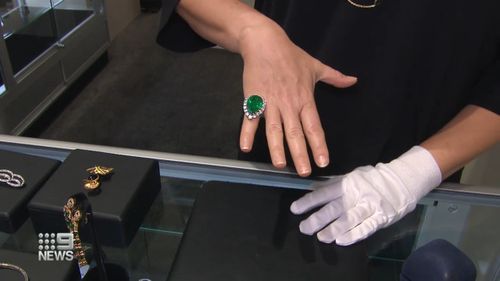
Known as the Wakil Emerald, it is 20 plus carats of pear shaped, step cut, claw set and diamond rimmed stone, named after its original owner, Sydney property developer couple Isaac and Susan Wakil.

Known as the Wakil Emerald, it is 20 plus carats of pear shaped, step cut, claw set and diamond rimmed stone (9News)

The Wakils would make their fortune first in the rag trade, then through purchasing rundown inner city properties such as Pyrmont’s Terminus Hotel, selling them for redevelopment.

Tonight, the Wakil Emerald is the keystone to a collection of vintage jewellery up for auction, including a platinum and diamond hair ornament crafted by Cartier in 1920, and still wearable today.

“Maybe not necessarily to run to the shops,” says auction house Smith and Singer jewellery administrator Emma Finn.

“But you could if you were desperate?” I pose. 

“Absolutely,” says Emma, “and if you can’t find your bulldog clip”.

The Wakil Emerald
The Wakil Emerald is named after its original owner, Sydney property developer couple Isaac and Susan Wakil. (9News)

Other pieces for bid tonight include a ruby-eyed and diamond whiskered cat brooch from Tiffany and Co, made of coiled wire.

“Gold wire,” says Ms Finn, “that give the appearance of fur”.

An animal not normally associated with fine jewellery is the wild boar, but a brooch of a boar profile crafted by Parisian house Van Cleef and Arpels, with tusks of diamond and a spine of gold, will also be auctioned tonight.

“We’ve had pig brooches before,” says Emma, “but never a wild boar”.

Also for auction are Bulgari earrings, three strands each of emerald rows, each strand tipped by pear shaped diamonds. With a reserve of $35,000, that would seamlessly marry with the Wakil.

The Wakil Emerald
Tonight, the Wakil Emerald is the keystone to a collection of vintage jewellery up for auction. (9News)

“They are another stunning highlight from the collection,” says Ms Finn, “Just perfect colour that these emeralds exhibit.”

But the keystone at tonight’s bidding will be the Wakil.

“This is the piece de resistance as far as the collection this evening is concerned?” I surmise.

“Absolutely,” Ms Finn quickly agrees, “and it would be of any collection. It’s probably the most significant stone we’ve seen offered in Australia.”

Bidding for the Wakil Emerald is set to start from $200,000 dollars, and is expected to well and truly surmount it.

Source by [author_name]