Monday, May 4, 2026

Excerpts: When Afghanistan was still considered the ‘just war’

My arrival coincided with a season of returns. Before I came to Kabul, I had met Afghan refugees who had fled during the Taliban rule to Delhi. They had been part of an exodus that commenced in the 1970s, at the onset of the country’s spiral of conflict.

By 2006, however, the direction of movement was reversed. Nearly 3 million refugees had come back to the country in the years following the defeat of the Taliban.

More:

Many of them were drawn to the capital for its relative security and the opportunities it offered. The majority were subsistence farmers returning from Pakistan and Iran.

There were also labourers, entrepreneurs, politicians and professionals. Along with these came foreign aid workers, consultants and journalists.

As the capital, Kabul was the centre of many of these forces, the city where all the gains and all the changes of the era arrived first and hit most powerfully. It was where worlds collided: the new with the old, the old with the ancient, the Afghan elite with the provincial migrants, the expats with the Afghans, the civilians with the government, the village with the city.


All these arrivals were to a city in flux. In retrospect, it was a troubled spring; but at the time there was still space for cautious optimism. Even as the war in Iraq floundered, Afghanistan was still considered the ‘just war’.

It had been five years since the Taliban government had been overthrown by the US and its allies, along with the Afghan military coalition called the Northern Alliance. It was believed that al-Qaeda had been chased out of the country.

The International Security Assistance Force (ISAF) – a UN-mandated, NATO-led mission – was established in December 2001 to safeguard the capital. In 2003 its mission was extended beyond Kabul.

There was a rush of foreign aid to rebuild the ruined country after decades of war. Afghans, tired of conflict and lawlessness, had responded with hope and optimism.

The 2004 elections had replaced the Transitional Authority established during the Bonn Conference with Hamid Karzai as president of the Islamic Republic of Afghanistan.

From the relative security of Kabul, it was possible to discern the gains made in education, women’s rights and infrastructure.

But already there were signs of unravelling: the resurgence of Taliban factions across the country, as well as rising discontent with the corruption and cronyism of the government.

Aid funds were poorly utilised – even the capital had little access to water, electricity and transport. More ominously, it was becoming a target for suicide bombings, explosions and kidnappings.

In February 2006, Foreign Policy magazine and the US-based Fund for Peace released their second ‘Failed State Index’. Afghanistan was placed at number ten on the list. It was a time that was not quite war, and certainly not peace.

In places, the bodies of old jeeps and tanks were used to build houses. The door of a vehicle became a bridge, the metal became sheltering walls. The fragments of the past had been rearranged into a new landscape.


The cycle of conflict that began in 2001 was underlaid by previous years of ethnic strife and sectarian violence, which resurfaced after the defeat of the Taliban [in 2001].

And there was more to it than military gains or losses. It was fuelled by the glut of weapons in the country, and the absence of a strong central government in the 1980s and 90s. It was shaped by the shadow economy of the opium trade, and the competition between different factions to control its gains.

Across the country, there had been displacement and erosion of civil society institutions and networks. The cities had poor infrastructure, the countryside had few livelihoods.

Within the government, there were high levels of official graft, and a legacy of war crimes and impunity. And there was the tsunami of aid money that brought corruption in its wake.

As the capital, Kabul was the centre of many of these forces, the city where all the gains and all the changes of the era arrived first and hit most powerfully. It was where worlds collided: the new with the old, the old with the ancient, the Afghan elite with the provincial migrants, the expats with the Afghans, the civilians with the government, the village with the city.

Taran Khan is an author and journalist based in the Indian city of Mumbai [Photo: Jonathan Page]

On this first journey, I was accompanied by my husband and a friend. Our assignment was to teach video production techniques to employees of a radio and TV station run by the Afghan government. We arrived full of ideas, certain we would have the time of our lives.

As I watched, the city transformed. Bare branches of trees gradually grew denser with blossom, infusing the air with a heady smell. Small streams and rivers filled up with water. From behind the ruins of mud walls, I saw new homes rising. The debris of war was everywhere.

In places, the bodies of old jeeps and tanks were used to build houses. The door of a vehicle became a bridge, the metal became sheltering walls. The fragments of the past had been rearranged into a new landscape.

Each day, we drove to work through the chaotic traffic of Kabul. Amid the snarls were large SUVs, their bodies emblazoned with the logos of different aid organisations, their radio antennae waving like irritable tentacles. There were also grey minivans called Town Aces, pronounced ‘Tunis’ by the Afghan commuters who packed into them.

The drivers would beat out the names of their destinations to a rhythm on the door without pausing for breath. ‘Karte Seh Karte Char Barchee Barchee Jada Jada Chowk Chowk Chowk,’ I heard.

Yellow-and-white Corolla taxis nosed in, along with cyclists and pedestrians.

Sometimes, the military convoys of ISAF soldiers would be stuck in the traffic too, and being by their side meant being uncomfortably aware that while they may be the intended targets of attacks, it was often the civilians beside them who bore the brunt of the explosions.

At every charahi, or crossroads, Kabul’s army of street children sold magazines and chewing gum and phonecards, or washed the windscreens of the cars waiting to move ahead.

In our commute of about an hour from Kolola Pushta to west Kabul, we crossed several landmarks and changing terrain, glimpsed in flashes through our car windows. It was only once we reached our workplace, and were in the company of our colleagues, that we walked.

Excerpted with permission from Shadow City, Taran Khan, Chatto & Windus, an imprint of Vintage

Source link

Coronavirus LIVE Queensland updates: police withdraw about one in 20 fines as the border stoush continues

If you suspect you or a family member has coronavirus you should contact (not visit) your GP, local hospital or 13HEALTH.

Source by [author_name]

Woman sues police department after officers allegedly stomp her stomach, leading to a miscarriage

A woman named Emerald Black is suing the Californian city of San Leandro after an alleged June 7, 2019 attack by police officers that she claims caused her to miscarry. Her attorneys filed a lawsuit against the city and its police on Monday.

According to the lawsuit, on the date in question, Black had just been released from the hospital for a pregnancy exam which confirmed she was at high risk for a miscarriage.

After the exam, Black, still dressed in “hospital clothing,” was a passenger in a car driven by her fiancée. When police pulled her fiancée over for having expired registration tags, Black informed officers she was pregnant and she was asked to remain in the car when police talked with her fiancée outside of the car.

Then, police allegedly yanked Black from the car, “taunted her, piled on top of her and stomped on her stomach leaving a shoe mark,” according to the court filing.

The attack caused Black to miscarry, she says. Now she’s suing for physical injuries, embarrassment, humiliation and emotional distress both from the incident and loss of her child.


A police officer.
Robert Alexander/Getty

The lawsuit alleges that police violated Black’s constitutional rights under the Fourth Amendment which prohibit excessive force and unlawful seizure since Black was allegedly unarmed, noncombative and had committed no crimes.

“Defendants had no probable cause or even reasonable suspicion to use any force whatsoever against Plaintiff. Therefore, the use of any force, was unlawful and excessive.”

Black’s lawyer also claims that the officers violated the state’s Bane Act which protects citizens from any intimidation that interferes with their civil rights. Lastly, lawyers accused police of false seizure and arrest.

Newsweek reached out to Black’s lawyers and the Leandro Police Department for comment. This story will be updated with any response.

This is not the first time police have been accused of mishandling a pregnant woman.

In May 2019, a Texas police officer shot and killed a woman during an arrest after she shouted, “I’m pregnant.” The woman had allegedly tried to grab the officer’s taser to use it against him.

In July 2019, New York City paid a $610,000 settlement to a woman who was shackled and handcuffed by police minutes before giving birth. Shackling pregnant prisoners during labor has been banned in New York state since 2009.

In July 2018, North Miami Beach police officer Ambar Pacheco was arrested after she allegedly kicked Evoni Murray, a pregnant woman, in the stomach. The woman was rushed to the hospital and gave birth to a healthy child. Pacheco was later charged with aggravated battery.

Source link

Conservative Commentator Rips ‘Weak, Insecure Coward’ Trump In Blistering Column

Conservative commentator and CNN host S.E. Cupp didn’t hold back on President Donald Trump in a new column, calling him out for attacking people who can’t defend themselves.

Specifically, Cupp targeted his consistent pattern of “picking on the dead and harassing their surviving family members,” as she wrote in an op-ed in the New York Daily News. 

Trump in recent days has been tweeting a baseless conspiracy theory that implies MSNBC’s Joe Scarborough might have killed a congressional intern in 2001, Lori Klausutis.

Klausutis worked in one of Scarborough’s Florida district offices when he was a Republican member of Congress. She was found dead in the office one morning, and authorities later determined that she had fainted due to an undiagnosed heart condition and fatally struck her head on a table.

Klausutis’s widowed husband, Timothy Klausutis, has asked Trump to stop spreading the “vicious lie,” but Trump has refused. 

“Even someone with just a modicum of decency and awareness of social mores would know better than to drag the deceased and their relatives through the muck for no good reason at all.”

But Trump, she said, “has neither decency nor awareness.”

And she noted Trump’s longtime pattern of using the deceased to advance his own agenda, mocking the late Sen. John McCain (R-Ariz.) and suggesting that the late Rep. John Dingell (D-Mich.) might be in hell. 

Cupp said Trump was “punching down” by attacking those who can’t defend themselves. 

“Punching down — even at the dead — isn’t the mark of a strong, secure, courageous man,” she wrote. “It’s the mark of a small, weak, insecure coward with no impulse control, compassion or common decency. That’s our president.”


Source by [author_name]

Nonketotic hyperglycinemia

0

  • AliefendioÄŸlu D, Tana Aslan Ay, CoÅŸkun T, Dursun A, Cakmak FN, Kesimer M. Transient nonketotic hyperglycinemia: two case reports and literature review. Pediatr Neurol. 2003 Feb;28(2):151-5. Review.

  • Applegarth DA, Toone JR. Glycine encephalopathy (nonketotic hyperglycinaemia) : review and update. J Inherit Metab Dis. 2004;27(3):417-22. Review.

  • Applegarth DA, Toone JR. Glycine encephalopathy (nonketotic hyperglycinemia): comments and speculations. Am J Med Genet A. 2006 Jan 15;140(2):186-8.

  • Coughlin CR 2nd, Swanson MA, Kronquist K, Acquaviva C, Hutchin T, Rodríguez-Pombo P, Väisänen ML, Spector E, Creadon-Swindell G, Brás-Goldberg AM, Rahikkala E, Moilanen JS, Mahieu V, Matthijs G, Bravo-Alonso I, Pérez-Cerdá C, Ugarte M, Vianey-Saban C, Scharer GH, Van Hove JL. The genetic basis of classic nonketotic hyperglycinemia due to mutations in GLDC and AMT. Genet Med. 2017 Jan;19(1):104-111. doi: 10.1038/gim.2016.74. Epub 2016 Jun 30. Erratum in: Genet Med. 2018 Jan 04;:.

  • Dinopoulos A, Matsubara Y, Kure S. Atypical variants of nonketotic hyperglycinemia. Mol Genet Metab. 2005 Sep-Oct;86(1-2):61-9. Review.

  • Hoover-Fong JE, Shah S, Van Hove JL, Applegarth D, Toone J, Hamosh A. Natural history of nonketotic hyperglycinemia in 65 patients. Neurology. 2004 Nov 23;63(10):1847-53.

  • Kikuchi G, Motokawa Y, Yoshida T, Hiraga K. Glycine cleavage system: reaction mechanism, physiological significance, and hyperglycinemia. Proc Jpn Acad Ser B Phys Biol Sci. 2008;84(7):246-63. Review.

  • Stence NV, Fenton LZ, Levek C, Tong S, Coughlin CR 2nd, Hennermann JB, Wortmann SB, Van Hove JLK. Brain imaging in classic nonketotic hyperglycinemia: Quantitative analysis and relation to phenotype. J Inherit Metab Dis. 2019 May;42(3):438-450. doi: 10.1002/jimd.12072. Epub 2019 Mar 20.

  • Swanson MA, Coughlin CR Jr, Scharer GH, Szerlong HJ, Bjoraker KJ, Spector EB, Creadon-Swindell G, Mahieu V, Matthijs G, Hennermann JB, Applegarth DA, Toone JR, Tong S, Williams K, Van Hove JL. Biochemical and molecular predictors for prognosis in nonketotic hyperglycinemia. Ann Neurol. 2015 Oct;78(4):606-18. doi: 10.1002/ana.24485. Epub 2015 Aug 10. Erratum in: Ann Neurol. 2016 Mar;79(3):505.

  • Van Hove J, Coughlin C II, Scharer G. Glycine Encephalopathy. 2002 Nov 14 [updated 2013 Jul 11]. In: Pagon RA, Adam MP, Ardinger HH, Wallace SE, Amemiya A, Bean LJH, Bird TD, Ledbetter N, Mefford HC, Smith RJH, Stephens K, editors. GeneReviews® [Internet]. Seattle (WA): University of Washington, Seattle; 1993-2017. Available from http://www.ncbi.nlm.nih.gov/books/NBK1357/

  • Source link

    South Africa: Today’s latest news and headlines, Wednesday 27 May

    For all the latest news in South Africa, be sure to check out headlines making waves across the country on Wednesday 27 May.

    Following a controversial postponement on Tuesday, Minister Nkosazana Dlamini-Zuma and the National Coronavirus Command Council (NCCC) are scheduled to address the nation on Level 3 lockdown regulations. Meanwhile, the South African Social Security Agency (Sassa) struggles to honour Relief of Distress grants, further embattling the country’s most vulnerable citizens.

    TODAY’S LATEST NEWS IN SOUTH AFRICA, Wednesday 27 MAY

    Rescheduled: Dlamini-Zuma, NCCC to address South Africa

    With the date for South Africa’s move to Level 3 lockdown drawing ever-nearer, the NCCC, tasked with amending regulations of the Disaster Management Act in line with government’s risk-adjusted approach, is expected to provide clarity on the reopening of the economy.

    The NCCC, chaired by Cooperative Governance and Traditional Affairs Minister, Dlamini-Zuma, has yet to officially gazette Level 3 lockdown regulations, leaving the window for change wide open, despite earlier assertions by President Cyril Ramaphosa.

    Dlamini-Zuma’s briefing comes amid a stern public condemnation of government’s continued tobacco ban, with the minister’s relationship with self-confessed cigarette smuggler, Adriano Mazzotti, coming under the microscope. Dlamini-Zuma has denied being ‘friends’ with Mazzotti, despite allegations of the two holidaying together in Europe.

    Social Relief of Distress Grants: Sassa making slow progress

    With more than 3 million unemployed South Africans applying for financial assistance – in the form of the unique R350 Social Relief of Distress Grant – Sassa’s administrative systems have buckled under the weight.

    Despite the electronic application system being launched two weeks ago, Sassa has only managed to process 75 000 claims. Adding insult to injury, Sassa spokesperson Paseka Letsatsi confirmed that only half of those applications would be eligible for payment. Letsatsi explained that the vetting process had found that “some are getting the UIF or some of them are on National Student Finance Aid Scheme (NSFAS)”.

    Letsatsi remained confident that the severe backlog would be cleared, adding that Sassa staff were working “around the clock” to ensure all eligible beneficiaries received assistance.

    MetroRail unlikely to operate at Level 3 lockdown

    The Gauteng Legislature’s Portfolio Committee on Roads and Transport says the opening of rail during level 3 lockdown could spell a public transport catastrophe.

    The committee said it is was not pleased with the measures presented by the Passenger Rail Agency of South Africa’s administrator, Bongisizwe Mpondo, on their readiness to receive passengers under level 3 lockdown regulations.

    “As the bulk of working class citizens go back to work, trains are expected to be operational effective 1 June 2020. However, plans presented by PRASA are short of a Gauteng province integrated system and could lead to a public transport disaster during level 3,” the Committee said.

    According to the statement released, it has emerged that Metrorail will only have one line in operation in the Gauteng province.

    “This move only addresses the north Gauteng commuters, leaving out all other regions in the province.”

    Moreover, issues of safety, security and screening measures presented by Mpondo were not reassuring to the committee.

    “Some of the doubts were prompted by the fact that PRASA has no indication on average figures of their daily commuters, therefore, making PRASA’s mitigation plans feeble, as they are not informed on any context including that of daily commuters.”

    According to the Chairperson of the Roads and Transport Committee, Dumisani Dakile, while they understand PRASA is under administration and faces immense challenges, it has to put the passengers’ lives first. (Source: SAnews)

    School vandalism, theft and lack of PPEs threaten reopening plans

    Although classrooms are scheduled to reopen to Grade 7 and 12 pupils next week, a wave of vandalism and theft, added to the dire lack of personal protective equipment (PPE) promised by national government, could spell disaster for the back to school plan.

    The Council of Education Ministers (CEM) has condemned the looting of schools supplies and PPEs, after classrooms in both Gauteng and KwaZulu-Natal were ransacked. KwaZulu-Natal Education MEC Kwazi Mshengu noted with grave concern the fact that 463 schools had been vandalised during lockdown.

    Adding to the education sector’s woes, two Cape Town schools have already been forced to close, before even officially reopening, due to teachers testing positive for the coronavirus.

    LATEST WEATHER FORECAST, Monday 27 MAY

    Take a look at weather forecasts for all nine provinces here.

    LIVE TRAFFIC UPDATES FOR CAPE TOWN, JOHANNESBURG AND DURBAN

    Stay one step ahead of the traffic by viewing our live traffic updates here.

    HOROSCOPE TODAY

    Free daily horoscope, celeb gossip and lucky numbers for Tuesday 27 May.


    Source link

    Kayleigh McEnany: ‘Peculiar’ That Joe Biden Doesn’t Wear Mask In His Home

    White House press secretary Kayleigh McEnany made a dig at former Vice President Joe Biden on Tuesday for wearing a face mask in public but not in his own home, claiming it was a “peculiar” move.

    The comment came in response to a reporter’s question about President Donald Trump’s apparent criticism of Biden for wearing a mask in public on Memorial Day. In Delaware, where the presumptive Democratic presidential nominee lives, wearing a mask in public is required by law as part of public health efforts to mitigate the spread of the coronavirus.

    “The president’s excited to see that Joe emerged from the basement,” McEnany said at the White House press briefing. “It is a bit peculiar, though, that in his basement, right next to his wife, he’s not wearing a mask, but he’s wearing one outdoors when he’s socially distanced.”

    She added that the president wasn’t “shaming anyone” and noted that Trump wore a mask in private during a tour of a Ford plant last week in Michigan. Publicly, Trump appeared barefaced for much of the tour, despite a Michigan executive order that required facial coverings to be worn in any enclosed public space.

    The Centers for Disease Control and Prevention’s federal guidelines also call for people to wear cloth face coverings in public, in concert with social distancing rules. Masks are not required in the home among household members. 

    When Reuters reporter Jeff Mason pointed to this guidance, McEnany said that “it’s recommended but not required, so it’s the personal choice of the individual, but it didn’t strike him as a very data-driven decision.”

    Biden had appeared with his wife, Jill Biden, at the Delaware Memorial Bridge Veterans Memorial Park on Monday to lay a wreath, marking his first public appearance in more than two months. 

    Sharing an image of Biden during the outing, Fox News political analyst Brit Hume attempted to mask-shame the Democratic front-runner on Twitter ― a move that was met with swift backlash. The president then retweeted Hume’s comment. 

    A HuffPost Guide To Coronavirus


    Source by [author_name]

    Coronavirus LIVE updates: US toll nears 1 lakh-mark; global cases cross 5.5 lakh

    0

    Coronavirus India LIVE updates: The ICMR has outlined the need for research on the effects of the coronavirus in lungs and other organs of the human body
    Coronavirus India LIVE updates:

    A call for study of lung tissues of patients who die of Covid-19 by conducting postmortem biopsies has found no takers in Karnataka, primarily due to complications involved in dealing with contagion deaths.

    To understand the disease’s progression in the lungs, which is the primary organ damaged by coronavirus, a provision for conducting lung biopsies in patients who die due to Covid has been made by the Rajiv Gandhi University of Health Sciences in Karnataka and the Indian Council for Medical Research but no proposals have been made so far, said officials.

    Cases in the unassigned category make up 2 per cent of India’s total cases

    On the other hand, cases in the unassigned category make up 2 per cent of the country’s 1,45,380 cases of coronavirus infection as of Tuesday, and could potentially skew the case curves of several states.

    The category “Cases being reassigned to states” was introduced in mid-May. Numbers under that head grew from 230 on May 16 to 1,403 on May 21, to 2,970 cases on May 26. The category has no information on recovery or deaths within this group, unlike the other state categories. Government officials said that the category captures the cases where discrepancies exist between the person’s home state and current states.

    Meanwhile, with 328 new cases and 18 deaths in the last seven days, Covid-19 hotspots under the Greater Hyderabad Municipal Corporation (GHMC) are rising. In the 67 days from March 2 to May 8, 1,133 cases were reported in Telangana. Of these, 626 were in GHMC areas. However, in the next 18 days (May 8-25), 597 cases were reported from GHMC areas while a total of 787 cases were reported in the state — including 158 cases of migrant workers who returned to the state testing positive.

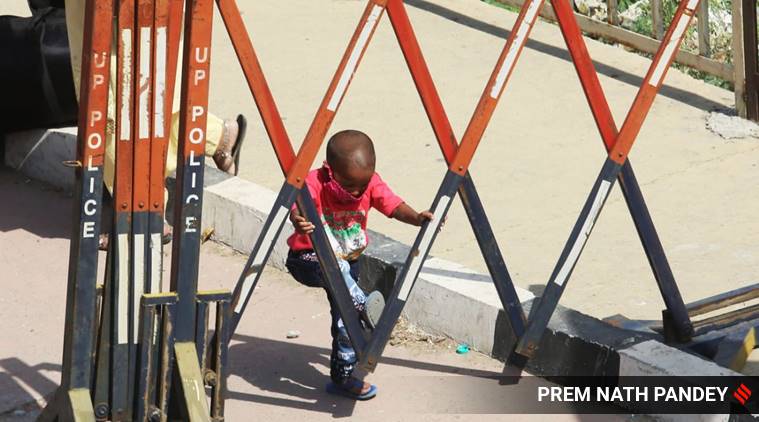
    Coronavirus India LIVE updates: En route home, migrant labourers seen at the Ghaziabad border on May 27, 2020. (Express Photo: Prem Nath Pandey)

    Centre asks states, UTs to negotiate with private labs, bring down test price

    Also, even as private diagnostic laboratories cite the Rs 4,500 price cap as one of the pain points for their coronavirus testing numbers stagnating at less than 20 per cent of daily tests done in the country, the Centre wants the price to be reduced further. This is in the light of availability of indigenous testing kits and other supplies, unlike in March, when all these had to be imported amid tough global competition.

    Guards, vegetable vendors in ICMR list of frontline workers who need testing

    Police personnel at check points, building security guards, airport staff, bus drivers and staff, vegetable vendors and pharmacists have been identified by Indian Council of Medical Research (ICMR) as “frontline workers” who need to be tested for Covid-19 if they show flu-like symptoms. This is in addition to healthcare workers, paramedics and returning migrants.

    Seventy-four of 82 ICU beds earmarked for Covid-19 patients in the city’s seven private hospitals are occupied at the moment. At six government hospitals, on the other hand, only 111 of 348 ICU beds for novel coronavirus patients are occupied.

    As the case tally in the capital continues to rise — 412 fresh cases were reported on Tuesday, taking the total to 14,465 — several accounts have emerged of severely ill people being unable to get admitted to ICUs in private hospitals.

    Also Read:

    IndiGo flier tests positive after landing in Coimbatore

    Centre shifts stance, releases source code for Aarogya Setu app

    MP district Burhanpur: More beds ready, need doctors

    Solidarity Trial: What progress has been made so far?

    Source link

    Minneapolis protests over George Floyd’s in-custody death grow volatile

    Hundreds of protesters gathered in Minneapolis on Tuesday night to decry the in-custody death of George Floyd, which led to the firing of four officers.

    Demonstrations became unruly, with windows damaged, graffiti sprayed and a police car vandalized. Officers in riot gear confronted protesters and fired tear gas.

    One person was shot during Tuesday’s rally inside a building near the site where Floyd was detained a day earlier. Floyd was pinned to the ground by an officer who put his knee on Floyd’s neck for about eight minutes in an incident that was captured on video.

    “Please, please, please, I can’t breathe,” Floyd, who was black, begged the white officer. “My stomach hurts. My neck hurts. Please, please. I can’t breathe.”

    Tuesday’s shooting was described as non-life-threatening, said police spokesman John Elder. A suspect fled the scene. It wasn’t clear if the violence was related to the protests.

    One newspaper reporter said on Twitter he was struck with a projectile. “I Was just shot with this in the thigh,” he said.

    The Police Officers Federation of Minneapolis said in a statement earlier Tuesday that the fired officers were fully cooperating with the investigation.

    “We must review all video. We must wait for the medical examiner’s report,” the statement said. “Officers’ actions and training protocol will be carefully examined after the officers have provided their statements.”

    In a statement early Tuesday, Minneapolis police said the officers were responding to a report of a forgery in progress and found the suspect in his car. They said he got out of the car when ordered, but then physically resisted officers.

    This is a developing story

    Gemma DiCasimirro and Associated Press contributed.


    Source link

    China’s Workers, Hong Kong Protests, SpaceX Launch: Your Wednesday Briefing

    0

    (Want to get this briefing by email? Here’s the sign-up.)

    Good morning.

    We’re covering China’s push to help its young struggling workers, protests in Hong Kong and a milestone on Wall Street for the U.S. reopening.

    Beijing’s major focus is getting the economy off the ground after a weekslong deep freeze. Young people are feeling the pressure as they enter perhaps China’s toughest job market in the modern era.

    They are reducing their expectations, taking pay cuts and in many cases waiting on the sidelines until things get better. Amid the trade war with the U.S. and tensions with Hong Kong, their future looks uncertain.

    Finding jobs for young workers has become a major priority for Chinese leaders, who have long promised a better life in exchange for limits on political freedom.

    Details: The jobless rate for people ages 16 to 24 totaled nearly 14 percent, more than twice the official figure for the nation as a whole.

    Quotable: “I can’t just keep waiting,” said one recent graduate of a prestigious drama school whose job prospects were gutted in the shutdown.

    The result: Only 200 cases were found, mostly people who showed no symptoms.

    The blanket testing cost hundreds of millions of dollars and mobilized thousands of medical and other workers.

    But this did not deter the government, which saw the testing as critical to restoring the public confidence needed to help restart the economy and return to some level of normalcy, our correspondents write.

    Supporters of the testing drive said the true value of the campaign was not so much medical as psychological.

    Quotable: “If there is no testing, everyone will still be scared,” said Guo Guangchang, head of Fosun, a Chinese conglomerate. “Many companies will have no way to resume production, and the service industry will have no customers.”

    The remarks on Tuesday were made on the sidelines of the National People’s Congress, and they came as Carrie Lam, Hong Kong’s chief executive, defended the central government’s contentious plan to draft new national security laws to punish acts of subversion.

    Hong Kong’s pro-democracy activists are preparing to hold new protests today, though turnout is expected to be smaller than the throngs of hundreds of thousands we saw last year. The Congress is set to vote on the laws on Thursday.

    Analysis: Steven Lee Myers, our Beijing bureau chief, said the mainland government’s move amounted to “rattling the saber,” but added that it was “certainly a chilling message.”

    The Taliban are on the verge of realizing their biggest desire: U.S. troops leaving Afghanistan. And the group has managed to do so without changing much of its extremist ideology.

    At a pivotal moment in the war, our reporters delved into the insurgents’ strategy, through dozens of interviews, including a rare one with Amir Khan Mutaqi, the chief of staff to the Taliban’s supreme leader.

    In Memoriam: Stanley Ho, the casino tycoon who transformed Macau into a global gambling hub, died on Tuesday in Hong Kong. He was 98.

    Oil from Iran: An oil tanker has sailed into Venezuela from Iran, the first of five ships expected to arrive in a nation so starved of gasoline that the docking of a single tanker was hailed by government officials as a victory.

    Snapshot: Above, traders on the floor of the New York Stock Exchange on Tuesday for the first day of floor trading in two months. The floor is operating at 10 percent capacity, with most traders still working from home.

    What we’re reading: This GQ profile of Steve Buscemi, who opens up about anxiety and loss. The writer’s interview with Buscemi was also her last restaurant meal before the pandemic shut down New York City, and it’s everything you need right now.

    Cook: Adding English peas to this green pea guacamole “is one of those radical moves that is also completely obvious after you taste it,” says Melissa Clark.

    Do: Now that many homes have become de facto offices, work wardrobes have adjusted. The robe is just one of many cozy styles catching on in isolation. And here are some simple stretches to help you counter the unhealthy effects of all that sitting.

    On Wednesday, two NASA astronauts are set to blast off from American soil on an American rocket to space for the first time in nearly a decade. In a first, the launch is being run by a private company, SpaceX, founded by Elon Musk. Sanam Yar, on the newsletters team, spoke with Kenneth Chang, a science reporter at The Times who covers NASA, about the launch. Here’s what he said:

    Back in 1968, Pan Am started issuing memberships for its “First Moon Flights” club to space enthusiasts hoping to someday book a commercial flight there. It was a fanciful promotion — the membership card was free — but more than 93,000 people signed up.

    Pan Am is long out of business, and we’re still a long way away from someone being able to buy a ticket to the moon, but the SpaceX launch is the first real step toward that dream. Although NASA has been involved in working with SpaceX, this is SpaceX’s operation. In the future, NASA will simply pay the going rate for a ticket to the space station and not be involved with running its own space transportation system to low-Earth orbit.

    SpaceX has been somewhat insulated, because although Elon is the visionary (Mars! Internet satellites!) and cheerleader for the company, people look to Gwynne Shotwell, the president and chief operating officer, to keep an even keel for the company’s day-to-day work. Tesla probably needs someone like that.


    That’s it for this briefing. See you next time.

    — Melina and Carole


    Thank you
    To Melissa Clark for the recipe, and to Theodore Kim and Jahaan Singh for the rest of the break from the news. You can reach the team at briefing@nytimes.com.

    P.S.
    • We’re listening to “The Daily.” Our latest episode is about two Mexican migrant brothers who died of the coronavirus shortly after they got to their new home in the U.S. To fulfill their dying wish, to be buried in Mexico, their family must navigate a patchwork of pandemic laws and bureaucracies.
    • Here’s our Mini Crossword, and a clue: The “m” of E = mc² (four letters). You can find all our puzzles here.
    • Join our Parenting editor for a conversation with Pooja Lakshmin, a perinatal psychiatrist, about balancing parenthood and me time right now.

    Source link