Friday, May 15, 2026

Watch: Here’s how Boston Dynamics’ robot dog encourages social distancing [video]

South Africa is still dealing with the fallout caused by the deaths of citizens at the hands of the SANDF and a shortage of PPE that has put soldiers and police at risk.

While we’re coming to terms with that, the Singapore government have called in help from an unlikely source to help it in its attempts to keep their citizens safe during the pandemic.

Spot, the ‘social distancing narc’

The new recruit is Spot the robot developed Boston Dynamics. For those of you who somehow haven’t heard of Spot before, you should definitely go over to YouTube now and have a look at the impressive work Boston Dynamics have done.

Spot will be deployed by the Singapore government “to assist safe distancing efforts at parks, gardens and nature reserves.” So essentially it will be roaming around open public spaces doing its best to remind Singapore citizens to maintain safe distances.

Spot is being introduced on an initial two-week pilot. For the period Spot will be patrolling during off-peak periods. Spot will play a recorded message reminding citizens to observe a safe distance.

Watch: Boston Dynamics’ Spot in action

Reducing manpower

For the length of the pilot, a human ranger will be deployed as well in case Spot runs into any unexpected problems while making its rounds. The Singapore government notes in its release:

“Spot will be controlled remotely, reducing the manpower required for park patrols and minimising physical contact among staff, volunteer safe distancing ambassadors and park visitors. This lowers the risk of exposure to the virus.”

Should the trial go well, it’s expected that the Singapore government will be considering rolling out more four-legged robots in its other public spaces.

If the videos are anything to go by though it doesn’t seem like Singapore’s population is quite ready for Spot.

Watch: Spot spotted elsewhere in public

Using tech to police the populous during the pandemic

The poor citizens can be seen getting rather uncomfortable when being followed by what looks like it could be created by Skynet as a pet for Arnold Schwarzenegger.

Hopefully, Spot will be able to win over the public, and we’ll see more robots roaming the streets. Spain made headlines back in March when it started using drones to shout at people who wouldn’t stay indoors.

Spot can also walk, trot, avoid obstacles, climb stairs, and much more. As much as I love drones, give me a four-legged robot dog that can open doors, jump and even rock some killer dance moves any day. Yes, dance:

Watch: A dancing UpTown Spot


Source link

Abandoned by their employers, Ethiopian domestic workers are left stranded in Beirut – The Mail & Guardian

In recent weeks, as many as 50 Ethiopian women, formerly employed as domestic workers in the homes of Lebanese citizens, have been abandoned by their employers outside the Ethiopian consulate in Lebanon’s capital, Beirut. Employers apparently resorted to this after being unable to pay their salaries.

The women spend their nights sleeping sprawled across cardboard laid out on the pavement, surrounded by an assortment of luggage and food packages donated from the community. They are on the consulate premises, but Ethiopian consular officials refuse to let them enter the building.

“They don’t let us in,” said Rediet, who says she spent two weeks on the pavement outside the consulate. “My employer just dropped me here and disappeared. The security guard won’t let us near the door. I have nowhere else to go.”

Rediet, like most domestic workers, refuses to give her full name, as she believes that the consulate would target her with retributive action — such as not renewing documentation — for talking to the press.

Lebanon’s economic crash of late 2019 has left citizens struggling to provide for their families, a situation since exacerbated by the Covid-19 pandemic. As a result, many Ethiopian domestic workers have been either laid off or are labouring without pay. Rediet was owed six months worth of wages when her employer dumped her outside the consulate with her luggage late one evening. “He didn’t even say thanks or anything. He just drove off as fast as he could,” she said.

Amnesty International reported that some women were being dropped off at the consulate without their passports, and said the Lebanese government needs to intervene. “These women are among the most marginalised people in society, and are bearing the brunt of the economic crisis, which was exacerbated by Covid-19,” said Heba Morayef, Amnesty International’s regional director.

Aya Majzoub, the Human Rights Watch researcher on Lebanon, described the practice as “inhumane and illegal, as it violates the terms of the workers’ contracts”. She added: “Lebanon should immediately establish a justice mechanism through which these workers can seek redress for human rights and labour violations.”

By Wednesday, about 35 abandoned domestic workers were still sitting on the concrete ground outside the consulate. On the same day, the consulate announced that it would suspend services indefinitely, without saying why.

Public pressure

Local Lebanese media outlets and their camera teams converged on the scene outside the consulate the same day. Images of the young women, forlorn figures in face masks, caused enough of a public outcry for the Lebanese labour ministry to intervene. “A hotel has been secured for the Ethiopian women,” Labour Minister Lamia Yammine later tweeted. Footage of the girls being bussed off and arriving at their new accommodation made the rounds on social media afterwards.

But word of the gesture appears to have had the opposite of the intended effect, encouraging more employers to abandon their employees. More domestic workers have since been dropped off and by Thursday, another 25 Ethiopian women found themselves exposed to the elements outside the consulate.

“The employers are to blame,” senior consular diplomat and communications head Befirde Dengela told the Mail & Guardian. “They can’t just throw them out here when they can’t afford to pay.”

Asked why the consulate decided to close its doors on June 3, Befirde Dengela stated that it was for the safety of the diplomats. “Some of the women this week got rowdy and attacked us. They are frustrated, but still we shouldn’t be kicked or spat at.”

Betty, who is among the women who have been stranded, disputed this account. “We didn’t do anything to them. We would see them every day as they leave for their parked cars. I haven’t been paid in three months and now I’m homeless. Their job is to help us, but they do everything they can to avoid us.”

Associated Press footage of the consulate’s entrance on May 21 appears to show a Lebanese security officer standing guard while Ethiopian women, unable to enter, stand nearby. When probed as to why the consulate was denying the women access to the consulate’s facilities, including a shelter that could house several dozen of them, Befirde Dengela stated that it was to control the spread of Covid-19.

“The girls haven’t been tested yet,” he explained. “We would be endangering them and our staff in the consulate by allowing them inside. We have repeatedly asked Lebanese authorities to intervene and hold these employers who abandon these women accountable. But they are slow to do so.”

But Iman Khazaal, head of the ministry of labour’s Mount Lebanon office, says the Ethiopian government is to blame for the predicament these women find themselves in. “Lebanon’s economy has been hit hard. We did what we could to facilitate the return of these women to Ethiopia by lifting the fines that undocumented migrants would normally be charged,” she explained. “But Ethiopia refuses to evacuate its citizens.”

The only available route home for Ethiopian domestic workers is aboard an Ethiopian Airlines flight to Addis Ababa, with one-way tickets costing an astronomical $1 450. This is an impossible sum for domestic workers, who previously earned as little as $150 monthly.

“How can they expect anyone in Lebanon to afford tickets at that price?” Khazaal said. “We haven’t had such issues with any other embassy. I respect the ties between our countries, but we are confused with the Ethiopian government’s approach.”

Khazaal added that the government is working on bringing legal action against Lebanese employers who throw their workers into the streets, but said, “Many of the women are undocumented, and this is complicating the identification process”.

Zecharias Zelalem is an Ethiopian journalist. You can follow him on Twitter at @ZekuZelalem.


Source link

A sleepy island paradise’s most showstopping sights

0

Eleuthera, Bahamas (CNN) — Friendly and unassuming, the Bahamian island of Eleuthera offers languid, daydreamy, toes-in-the-sand, drink-in-hand getaways.

The sinuous island — with a name taken from the Greek word for freedom — is also audaciously good looking.

High cliffs braced against the Atlantic line the eastern shore. To the west, clear aqua water laps sugary beaches and low rocky coastline.

Blissful average temperatures range from the low 70s F in winter to the low 80s F in summer.

And one main road runs the length of Eleuthera, which stretches 110 miles but is only two miles across at its widest point.

Stunning natural features are found up and down the island, with some of the most eye-catching sights at its narrowest and southernmost points.

A study in contrasts

The Glass Window Bridge spans a sliver of land separating the deep blue Atlantic from the Bight of Eleuthera.

Deborah Brunswick and Craig Waxman/CNN

Located on the skinniest part of Eleuthera, the Glass Window Bridge stretches across just a 30-foot sliver of land separating the dark, churning waters of the Atlantic Ocean from the smooth turquoise shallows of the Bight of Eleuthera.

The contrast is arresting, particularly from the air. With sturdy shoes, you can climb the rugged karst hill above the bridge for a wider view up and down the slim island and across the two bodies of water.

Violent storms have long since washed away a natural stone arch that once stood on the site of today’s concrete bridge. But American artist Winslow Homer was able to capture the arch in his circa 1885 painting “Glass Window.”

Rough weather and high sea swells can lead to bridge closures and dangerous situations, so it’s best to avoid the area when conditions are poor.

Soaking up nature

The Queen's Bath is a series of natural pools carved into rock by the pounding Atlantic.

The Queen’s Bath is a series of natural pools carved into rock by the pounding Atlantic.

Marnie Hunter/CNN

About a half mile south of the Glass Window Bridge, there’s another stunner well worth a visit.

The Queen’s Bath is a series of natural pools carved into rock by centuries of pounding surf on the wild Atlantic side of Eleuthera.

The surf washes into the pools for a refreshing dip when outside temperatures are warm but not blazing hot. When it gets hotter, the pools are warmed by the sun to a bath-like temperature.

It’s best to visit when the tide is fairly low and to skip it altogether when the surf is rough. The rocky “bathtub” surfaces are quite sharp and water shoes or tennis shoes are a must.

Both the bridge and the baths are about a 15-minute drive from North Eleuthera Airport, which during normal travel times welcomes direct flights from Atlanta, Fort Lauderdale and Miami.

Castaway isolation, while it lasts

On an island that boasts more than its fair share of beautiful beaches, there’s a more-challenging-to-reach stretch of sand that warrants the extra effort.

About two hours south of the Glass Window Bridge, on Eleuthera’s southernmost tip, Lighthouse Beach boasts the kind of island isolation featured in the most seductive screen savers.

A Jeep or SUV is best for navigating the rocky, unpaved road.

The payoff? Miles of powdery pink sand on the Atlantic side of the island. An old lighthouse sits on the limestone towering above the ocean, and great snorkeling and beautiful vistas over Half Moon Cay add to the spot’s enchanting remoteness.

Source link

The corruption virus weakens public trust in the government – The Mail & Guardian

Gauteng’s new premier

The government has had a bewilderingly muted response to alarm bells being raised about general and Covid-19-related corruption. Angst is growing among civil society organisations and the public at large as the scourge continues amid the deadly pandemic facing South Africa.

Surely the government would not be oblivious to the negative effect graft would have on its efforts to manage this unprecedented public health emergency? Then again, corruption is entrenched in our political, bureaucratic and private spheres and despite the outcries against it by public representatives — from the president to his ministers — organised business and trade unions, corruption continues unabated.

The argument is therefore that the government will not act against its own officials and politicians and the complicit private sector. Buying into this perspective is exactly what corruption beneficiaries want from us — to feel overwhelmed, forced to sit silently in our little corners and not concern ourselves with such societal issues. This would be a pity if allowed to persist, for we know that corruption is spreading just like a deadly virus, robbing many people of their current and future livelihoods.

We should not forget that the new administration promised us a clean, transparent and responsive government even before it took over two years ago. It’s a promise many of us believed in. More recently, President Cyril Ramaphosa again vowed that the government would “act very strongly against any attempts at corruption”. He declared during a public address in March that “special units of the National Prosecuting Authority [will] be put together to act immediately and arrest those against whom we find evidence of corruption”.

So, encouraged by the president’s words, civil society organisations have written to him with powerful suggestions of how this undertaking could be achieved. But, what does the president do? He plays for touch by kicking the ball straight into the bureaucratic milieu, which is not renowned for its efficiency.

Why not take it to the highly efficient National Command Council, Mr President? Why not instruct ministers to give the public regular feedback on reported concerns of corruption? It is this seemingly indifferent attitude that harkens back to the dark days of the previous administration where, as revealed by the Zondo Commission and other investigations, law firms, auditors, banks, local and international consulting firms, politicians and government officials were all on the take.

It is now well-known that Ramaphosa is caught in a political Catch-22. He is trying to reconcile ideological tricksters who dismiss corruption as a manifestation of a white-controlled economy with the rational few who are agitating for a clean-up while simultaneously placating a society disconcerted about the status-quo.

The past two years of his administration has made it clear that speaking through both sides of the mouth is not cutting it anymore.

One does not get a sense that the government takes this corruption crisis seriously.

Gauteng Premier David Makhura promised in 2014 at the Anti-Corruption Summit that he would “build an activist, responsive and clean government” that acts against corrupt government and business officials.

He followed up his assurances with the launch of an Ethics and Anti-Corruption Advisory Council with much fanfare in 2017, lining up the who’s who in the integrity community as its members. We have heard extraordinarily little about what these efforts have achieved.

This week Makhura had to defend himself against accusations of tender irregularities related to personal protective equipment.

The North West province is where fears of reprisals for exposing corruption loom large. The province is under administration because of widespread maladministration under the leadership of former premier Supra Mahumapelo.

Investigations by the province’s premier, Job Mokgoro, reveal that the misdemeanours were hidden in a poverty alleviation project Mahumapelo called “Setsokotsane”. The premier’s office, which the Hawks have raided, controlled the project and the associated dodgy procurement of products and services.

Low-level government officials with ringside access to the madness that was Setsokotsane have all too often seen how the politically-connected splash their ill-gotten gains on posh cars and over vanities such as nose jobs or international junkets or how they funnelled them into investments in fast-food restaurants, petrol stations and farms. They, however, speak in hushed tones about the happenings out of fear of reprisals.

Even as the government moved to alleviate hunger during lockdown, reports of partisan distribution of food parcels surfaced. The food parcel scandal involving Mahumapelo’s associate, former social development MEC Hoffman Galeng, and many other allegations, remind us of the callousness of some of those occupying top positions. They further give substance to the belief that the former premier still has the province in his grip.

Such developments across three spheres of government have exposed a missing link in government’s anti-corruption repertoire: action. If a lot has been achieved as government claims, then it must show us the proof. The public deserves to know. Shouldn’t the government be flooding the media with success stories? This inaction, both real and perceived, could destroy the fragile trust the government has worked so hard to rebuild.

It is important for the government to be seen taking stern action against graft. A bold and far-reaching anti-corruption campaign must be clearly communicated to give the public confidence that thievery and thuggery will be mercilessly dealt with.

Regaining public trust will give those with information about corrupt activities the courage to speak up. They will be reassured that action will be taken and that they will be protected.

Solomon Makgale is an independent communications consultant


Source link

The corruption virus weakens public trust in the government – The Mail & Guardian

The government has had a bewilderingly muted response to alarm bells being raised about general and Covid-19-related corruption. Angst is growing among civil society organisations and the public at large as the scourge continues amid the deadly pandemic facing South Africa.

Surely the government would not be oblivious to the negative effect graft would have on its efforts to manage this unprecedented public health emergency? Then again, corruption is entrenched in our political, bureaucratic and private spheres and despite the outcries against it by public representatives — from the president to his ministers — organised business and trade unions, corruption continues unabated.

The argument is therefore that the government will not act against its own officials and politicians and the complicit private sector. Buying into this perspective is exactly what corruption beneficiaries want from us — to feel overwhelmed, forced to sit silently in our little corners and not concern ourselves with such societal issues. This would be a pity if allowed to persist, for we know that corruption is spreading just like a deadly virus, robbing many people of their current and future livelihoods.

We should not forget that the new administration promised us a clean, transparent and responsive government even before it took over two years ago. It’s a promise many of us believed in. More recently, President Cyril Ramaphosa again vowed that the government would “act very strongly against any attempts at corruption”. He declared during a public address in March that “special units of the National Prosecuting Authority [will] be put together to act immediately and arrest those against whom we find evidence of corruption”.

So, encouraged by the president’s words, civil society organisations have written to him with powerful suggestions of how this undertaking could be achieved. But, what does the president do? He plays for touch by kicking the ball straight into the bureaucratic milieu, which is not renowned for its efficiency.

Why not take it to the highly efficient National Command Council, Mr President? Why not instruct ministers to give the public regular feedback on reported concerns of corruption? It is this seemingly indifferent attitude that harkens back to the dark days of the previous administration where, as revealed by the Zondo Commission and other investigations, law firms, auditors, banks, local and international consulting firms, politicians and government officials were all on the take.

It is now well-known that Ramaphosa is caught in a political Catch-22. He is trying to reconcile ideological tricksters who dismiss corruption as a manifestation of a white-controlled economy with the rational few who are agitating for a clean-up while simultaneously placating a society disconcerted about the status-quo.

The past two years of his administration has made it clear that speaking through both sides of the mouth is not cutting it anymore.

One does not get a sense that the government takes this corruption crisis seriously.

Gauteng Premier David Makhura promised in 2014 at the Anti-Corruption Summit that he would “build an activist, responsive and clean government” that acts against corrupt government and business officials.

He followed up his assurances with the launch of an Ethics and Anti-Corruption Advisory Council with much fanfare in 2017, lining up the who’s who in the integrity community as its members. We have heard extraordinarily little about what these efforts have achieved.

This week Makhura had to defend himself against accusations of tender irregularities related to personal protective equipment.

The North West province is where fears of reprisals for exposing corruption loom large. The province is under administration because of widespread maladministration under the leadership of former premier Supra Mahumapelo.

Investigations by the province’s premier, Job Mokgoro, reveal that the misdemeanours were hidden in a poverty alleviation project Mahumapelo called “Setsokotsane”. The premier’s office, which the Hawks have raided, controlled the project and the associated dodgy procurement of products and services.

Low-level government officials with ringside access to the madness that was Setsokotsane have all too often seen how the politically-connected splash their ill-gotten gains on posh cars and over vanities such as nose jobs or international junkets or how they funnelled them into investments in fast-food restaurants, petrol stations and farms. They, however, speak in hushed tones about the happenings out of fear of reprisals.

Even as the government moved to alleviate hunger during lockdown, reports of partisan distribution of food parcels surfaced. The food parcel scandal involving Mahumapelo’s associate, former social development MEC Hoffman Galeng, and many other allegations, remind us of the callousness of some of those occupying top positions. They further give substance to the belief that the former premier still has the province in his grip.

Such developments across three spheres of government have exposed a missing link in government’s anti-corruption repertoire: action. If a lot has been achieved as government claims, then it must show us the proof. The public deserves to know. Shouldn’t the government be flooding the media with success stories? This inaction, both real and perceived, could destroy the fragile trust the government has worked so hard to rebuild.

It is important for the government to be seen taking stern action against graft. A bold and far-reaching anti-corruption campaign must be clearly communicated to give the public confidence that thievery and thuggery will be mercilessly dealt with.

Regaining public trust will give those with information about corrupt activities the courage to speak up. They will be reassured that action will be taken and that they will be protected.

Solomon Makgale is an independent communications consultant


Source link

She’s A Frontline Doctor. Her Husband Has Lung Cancer. Now, A Simple Hug Is Dangerous

0

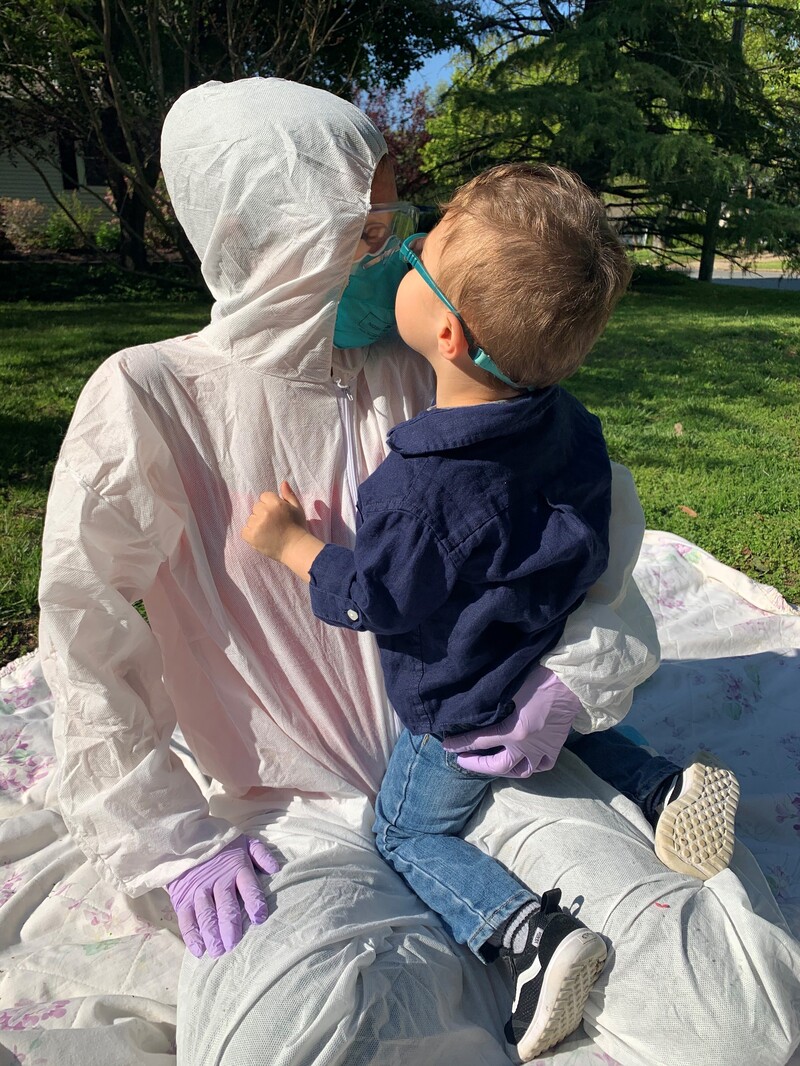
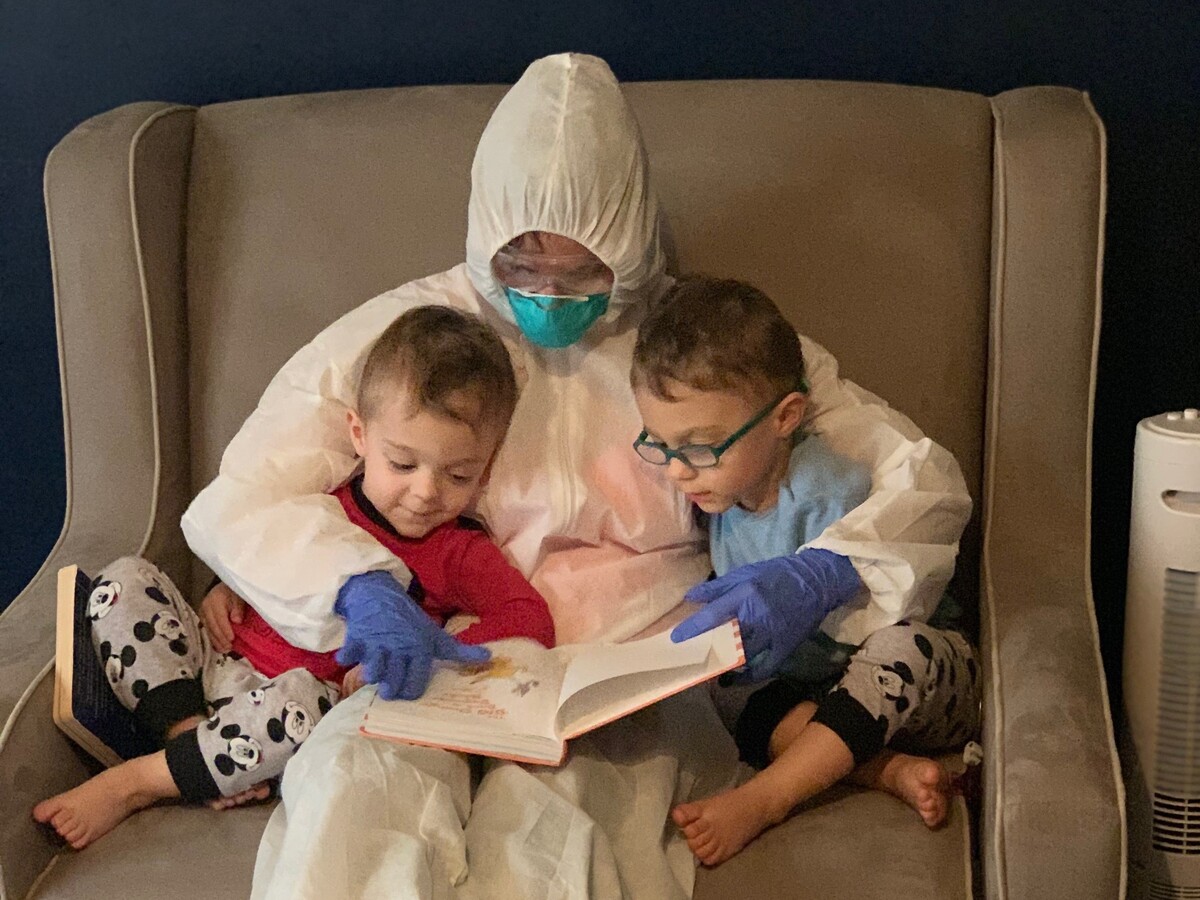
Dr. Lauren Jenkins reads to her twin sons, Pierce and Ashton, while wearing her “hazmat” suit. Because lung cancer has compromised her husband’s immune system, Jenkins moved out of her home and visited in the suit as a precaution.

Courtesy of Lauren Jenkins


hide caption

toggle caption

Courtesy of Lauren Jenkins

Dr. Lauren Jenkins reads to her twin sons, Pierce and Ashton, while wearing her “hazmat” suit. Because lung cancer has compromised her husband’s immune system, Jenkins moved out of her home and visited in the suit as a precaution.

Courtesy of Lauren Jenkins

Dr. Lauren Jenkins says her medical training has always taught her to think of the worst-case scenario. And one day this past March, that’s exactly where her mind went.

It was early into the coronavirus pandemic. Jenkins, a 37-year-old obstetrician-gynecologist who practices at a hospital in Philadelphia, was cooking for her husband and their nearly three-year-old twins, Pierce and Ashton.

That’s when she got a call from a colleague. An anesthesiologist she had worked with during a long surgery about one week earlier had tested positive for the coronavirus.

“I’m sitting there thinking, ‘OK. I’ve been exposed. It’s very likely that I’ve been infected. And it’s very likely that I’ve infected my family,'” she says.

For any family navigating the pandemic, that call would be alarming. For hers, it was potentially devastating.

Her husband, Jay Roux, 44, has stage IV lung cancer. Every few weeks, he has a needle inserted into his lungs to drain fluid that builds up. Cancer treatments have weakened his heart. And he eats — or, rather, ingests nutrition — through a gastrostomy tube into his stomach. His body’s defenses to the coronavirus are severely compromised.

“For Jay to get COVID, it would be catastrophic,” Jenkins says.

After learning of her colleague’s positive test, Jenkins immediately stopped cooking and rushed to her bedroom, where she locked herself away from the family. She remembers thinking, “Perhaps I had been responsible for exposing Jay to the very thing that would kill him.”

Roux brought food to her room on a tray, she says, “and passed it through the door and ran away.” When her family had all gone to bed, she put on a mask, grabbed bleach, and wiped down every surface she could find.

Dr. Lauren Jenkins and her husband, Jax Roux, on the beach in Wildwood Crest, N.J. before the COVID-19 pandemic forced them to live separately.

Courtesy of Lauren Jenkins


hide caption

toggle caption

Courtesy of Lauren Jenkins

Dr. Lauren Jenkins and her husband, Jax Roux, on the beach in Wildwood Crest, N.J. before the COVID-19 pandemic forced them to live separately.

Courtesy of Lauren Jenkins

She wasn’t upset with her colleague. He had come to work with mild symptoms, and, in general, doctors are taught to come to work even if they have a regular cold, she says. “Calling out sick isn’t really a thing,” she says. And it was early into the pandemic, before many health care workers were taking much more stringent precautions.

The next day, Jenkins drove to a testing site, endured the long swab pushed into the back of her nose, and got a test result. It was negative.

It was a massive relief. But she decided that as long as the pandemic dragged on, and as long as she was treating patients with the coronavirus, she could not put her family through that experience again. She would have to move out.

“There can never be a next time,” she decided. “I can’t take this kind of risk.”

At first, her husband argued that the family should stay together at their home in New Jersey. His cancer — and the heart problems from the treatment — make it hard to care for two energetic toddlers, even with the help of an au pair.

“I’m not even half the man I used to be,” he says.

He eventually came around. After more than a year of fighting cancer, he says, “it would be stupid” to die from a preventable exposure to the virus. Plus, he told Jenkins, if she did inadvertently pass the coronavirus to him, “I think that you would carry that guilt with you for the rest of your life, and it would eat you alive.”

So she moved out, landing in an apartment donated for use by health care workers in Philadelphia, about a half-hour drive from home.

Separating helped reduce Roux’s potential exposure to the virus. But it forced the couple to confront questions with no clear answers: With an uncertain prognosis, would the separation waste precious time that Roux has with his family? And if the pandemic continues for a year or more, how long would they live like this?

The ‘hazmat suit’

It didn’t take long to discover just how poor a substitute video calls can be for physical contact — the chance to hug each other, or sit and read to their kids together.

The twins had been born prematurely and had subsequently spent months in the neonatal intensive care unit.

“I never missed a single day by their side,” says Jenkins. Even afterwards, she hardly spent much time away from them.

In the first weeks away from home, she started to strategize a way to safely visit her family about once a week. After talking with her colleagues who specialized in infectious diseases, she landed on what they call her “hazmat suit.”

It’s the same kind of suit that might be seen in a high-tech laboratory: a hooded set of white coveralls, gloves, a mask and goggles.

The first moments she stepped foot in the house in the suit were admittedly “weird,” the couple says. Their son Pierce is more timid, and wasn’t quite sure what to make of the masked figure in the house.

After moving out, Jenkins would visit her husband and kids roughly once a week.

Courtesy of Lauren Jenkins


hide caption

toggle caption

Courtesy of Lauren Jenkins

After moving out, Jenkins would visit her husband and kids roughly once a week.

Courtesy of Lauren Jenkins

“He didn’t instantly run over to me,” says Jenkins.

But Ashton immediately jumped into her lap and started comparing “mommy’s glasses” — her safety goggles — with his own.

Once Pierce came around, they all read books and played with blocks together.

“Part of what’s so cool about kids is that they don’t overthink things,” she says. “It’s like, ‘Oh, mom’s been gone. But now she’s here.'”

“To even give her a hug and hold her for five minutes, it’s amazing,” says Roux. “Not the real thing, but it’s still amazing.”

The hardest part were the goodbyes. They decided to put the boys down to sleep before she leaves. That way, “It’s not like a big horrible goodbye,” she says. “I don’t know if it’s more for me or for them.”

A way out

At one point, the family was offered a way out of their forced separation.

Leadership at the hospital told Jenkins they could take her off the frontlines, so she wouldn’t have to risk exposure to COVID-19.

But she barely considered the offer before turning it down. Other doctors at her hospital, she says, are older and at higher risk. And she felt the need to contribute during a public health emergency.

“I don’t think anyone would’ve begrudged me,” Jenkins says. “But it didn’t feel right to me.”

She remembers calling Roux soon after. “I was actually a little nervous to tell him that I had said no,” she says.

But he immediately told her: I hope you turned down the offer.

“You’re a doctor,” he recalls telling her. “You provide an amazing service to women. That’s your calling. It’s what you do.”

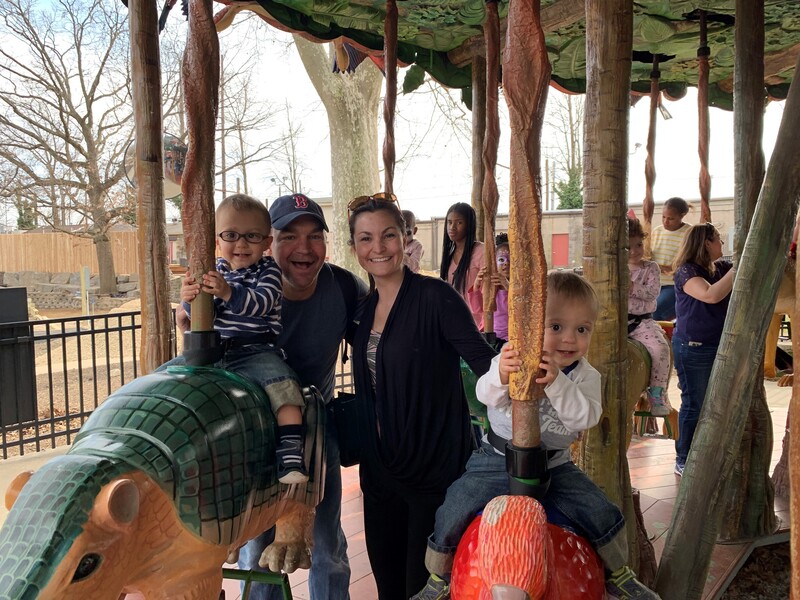
Long before the COVID-19 pandemic, Dr. Lauren Jenkins, her husband, Jay Roux, and their twins, Pierce and Ashton, ride the carousel at the Philadelphia Zoo.

Courtesy of Lauren Jenkins


hide caption

toggle caption

Courtesy of Lauren Jenkins

Long before the COVID-19 pandemic, Dr. Lauren Jenkins, her husband, Jay Roux, and their twins, Pierce and Ashton, ride the carousel at the Philadelphia Zoo.

Courtesy of Lauren Jenkins

They agree it was the right decision. Still, at times, Jenkins says she feels a creeping sense of “betrayal” by her job. It was hardest that day in March, when she first learned she might have exposed her family. But every now and then it comes back.

“My job is a huge part of who I am. And it’s a source of so much of my pride and my joy and my sense of self,” she says. “For the first time, I felt like my job was making me choose between my life’s work and the wellness of my family.”

Roux says his experience with cancer, and their long ordeal with the kids’ time in intensive care, has made him a firm believer in the idea that “s*** happens,” but you push on.

“I said to Lauren, ‘With all the stuff that we’ve gone through in the last couple of years, this is just a small ripple in the lake,'” he says. “‘We just get through it.'”

‘Nobody knows when it’s going to end’

The day after Mother’s Day, the couple decided to switch places. Jenkins was missing the kids, and Roux was struggling to keep up with them.

After talking with experts, they decided that the risk to their kids was low enough that she could return home. But this time, Roux would leave and stay at a family member’s spare apartment.

“When she came home, I already had all my stuff packed up in my truck,” he says. “She came in through one door and I waved at her and said I loved her and went out the other door.”

When the pandemic started, they hadn’t really considered that it could go on past the summer. But now they’re thinking about what it’ll mean to stay apart indefinitely.

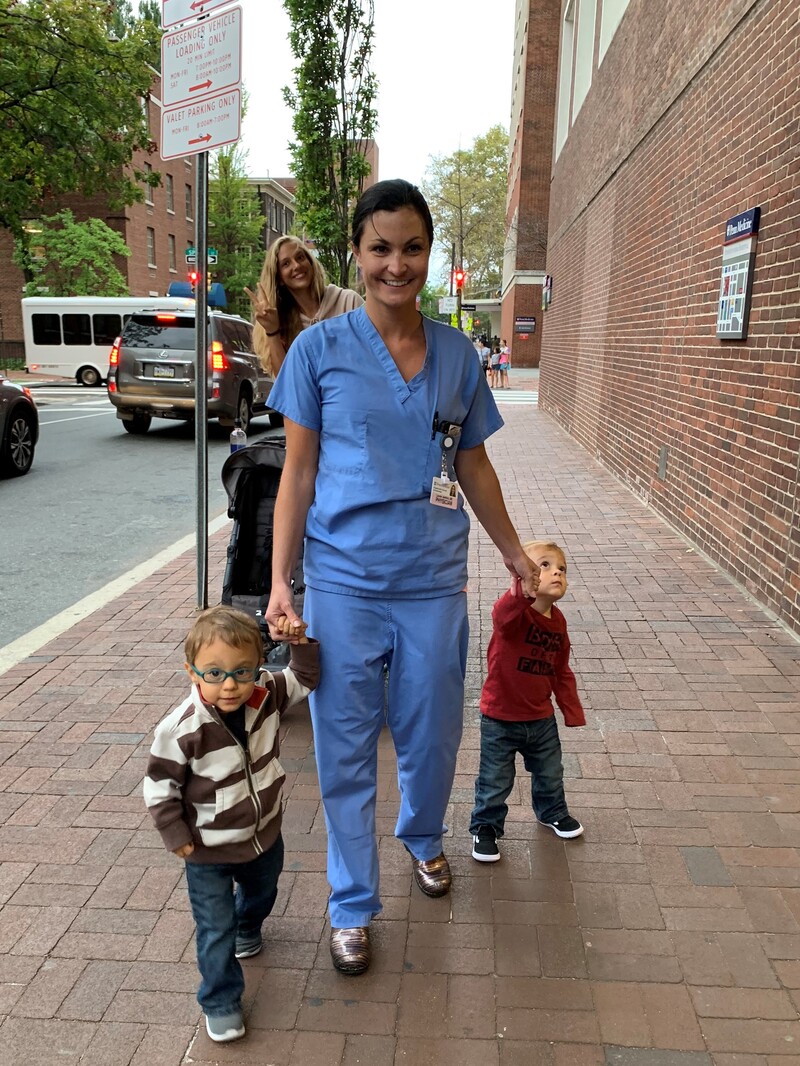
Dr. Lauren Jenkins walks with her two sons, Pierce and Ashton, in Philadelphia in the fall of 2019.

Courtesy of Lauren Jenkins


hide caption

toggle caption

Courtesy of Lauren Jenkins

Dr. Lauren Jenkins walks with her two sons, Pierce and Ashton, in Philadelphia in the fall of 2019.

Courtesy of Lauren Jenkins

“It’s a whole lot of questions with no answers, because nobody really knows,” says Jenkins. “Nobody knows when it’s going to end. We don’t even know antibodies actually confer immunity or if it means you can get it the second time. What happens then?”

Roux, in particular, is worried that officials will end lockdown policies too quickly.

“I want to see the numbers come way down below before people start thinking that it’s safe,” he says. “Not just because of me, but there’s the elderly and other people with immune deficiency.”

Every day, he still comes by the house to work on the yard, even just to see his family from a safe distance.

“I get to see my kids through the window, but I can’t touch them,” he says. “It’s awful, because I love my boys and they’re fun and I’m dad. And, you know, if Lauren comes home and I’m still in the yard, I’ve got to stay like 10, 12 feet away from her.

“And I just kind of give her one of those air kisses, you know? I tell her I love her. And then we always say, ‘this is weird.’ You know, it’s just so darn weird. But it won’t last forever.”

Source link

Covid-19 vaccine: AstraZeneca has ‘approached Gilead over possible merger’

AstraZeneca has approached its rival Gilead Sciences about a potential merger, Bloomberg News reported on Sunday.

Any merger, which would be the biggest healthcare deal on record, would bring together two of the companies leading the pharmaceutical industry’s efforts to develop a vaccine and treatments for Covid-19.

A combination of the two would be valued at about £200bn. AstraZeneca, which is valued at £110bn, recently overtook Royal Dutch Shell to become the UK’s largest company by market value. Gilead was valued at about $96bn (£74bn) at Friday night’s closing price.

AstraZeneca contacted Gilead in May, but did not provide the terms of any transaction, the report said.

A spokeswoman for AstraZeneca said the company did comment on rumours or speculation. Gilead did not immediately respond to a request for comment.

The two firms and several other drugmakers, including Eli Lilly, Pfizer and Merck, are racing to develop a vaccine and treatments for Covid-19.

More than 6.9 million people are reported to have been infected with the coronavirus globally and 399,025 have died, a Reuters tally showed on Sunday.

Bloomberg said Gilead had discussed the merger idea with advisers, but that no decision had been made on how to proceed and the companies were not in formal talks. Gilead was not interested in selling to or merging with another big pharmaceutical company, and preferred to focus on partnerships and smaller acquisitions, the report said.

AstraZeneca said last week that it had doubled manufacturing capacity for its potential coronavirus vaccine to 2bn doses in two deals involving the Microsoft billionaire Bill Gates that guaranteed early supply to lower income countries.

Sign up to the daily Business Today email or follow Guardian Business on Twitter at @BusinessDesk

It is unclear if the vaccine will work, but AstraZeneca’s partnership with Oxford University to develop one is among a handful of initiatives backed by Donald Trump’s Covid taskforce.

Gilead has also been at the forefront. Its remdesivir antiviral drug is the first to lead to improvement in Covid-19 patients in formal clinical trials.

Source link

The Week in Business: The Fight Over Inflammatory Language

The coronavirus and its economic fallout has been particularly debilitating for black Americans. They have been more likely to fall ill and lose jobs or income since the pandemic began, an ugly disparity that added to the racial strife that boiled over. Here’s what you need to know in business and tech for the week ahead. Stay safe out there.

As millions of people flooded streets across the country to protest the death of George Floyd, a black man who was killed in police custody on May 25, Facebook got caught up in the furor. Hundreds of employees staged a virtual “walkout” after the company’s chief executive, Mark Zuckerberg, said that the platform would not do anything about inflammatory messages that President Trump had posted about the demonstrators. Then, nearly three dozen former company executives wrote an open letter denouncing Mr. Zuckerberg’s hands-off stance. Facebook’s approach is increasingly different from that of other social media giants. The week before, Twitter added warning labels to some of Mr. Trump’s tweets, stating that they glorified violence and contained misinformation. And Snap said it would no longer promote Mr. Trump’s account.

As you might recall, Mr. Trump was none too pleased with Twitter’s labels on his recent tweets, and issued an executive order to crack down on social media companies’ control over the content on their platforms. But his move has already been challenged by a technology policy nonprofit group. The Center for Democracy and Technology filed a lawsuit last Tuesday stating that Mr. Trump’s order was retaliatory and violated the right to free speech. Which is funny, because that’s just what Mr. Trump said about Twitter’s treatment of his posts.

Adding to the long list of news to shake your head about this past week: Four chicken company executives were charged with price fixing. Federal investigators allege that several of the country’s largest chicken suppliers, including Pilgrim’s Pride and Claxton Poultry Farms, conspired to raise the price of chicken meat sold to major supermarkets and restaurant chains, including Chick-fil-A, KFC and Costco. And the Justice Department is still investigating more gruesome accusations that some chicken producers destroyed hens to inflate the value of chicken meat.

As pandemic restrictions ease, more workplaces are reopening, but day care facilities and summer camps can’t keep up with the resulting demand for child care while enforcing social distancing rules. So who will watch children when their parents are summoned back to the office? For parents who have so far managed to juggle child care with working from home, a return to “normalcy” at the workplace could make that balance untenable, and many economists predict that the burden will disproportionately hurt working mothers. Women have already lost their jobs at higher rates than men during the pandemic, and research has shown that the longer they stay out of the work force, the harder it is to get back in.

Even as another 1.9 million Americans filed for unemployment benefits last week, the May jobs report was much better than expected — the economy actually added 2.5 million jobs last month. And surprisingly, the unemployment rate dropped to 13.3 percent, down from 14.7 percent in April, the worst since World War II. Many analysts were predicting the May unemployment number would go in the other direction (as high as 20 percent). So this is welcome news, and gives hope that the economy could bounce back from the pandemic-induced crisis faster than forecast. Another thing that will help: Congress relaxed rules and timelines for how small businesses can use aid money from the Payroll Protection Program to get back on their feet.

The cost of Mr. Trump’s first in-person fund-raiser since the pandemic lockdowns began? $580,600 per couple. The event will be held at a private home in Dallas this coming Thursday, and the 25 or so attendees will be required to test negative for the coronavirus that same day. The Republican National Committee said that Trump Victory, the joint fund-raising committee for the R.N.C., Mr. Trump and 22 state Republican parties, will cover the cost of rapid testing for the event’s guests.

Stores in New York can reopen for curbside pickup this Monday, but for many of them, it’s not a viable business option. Meanwhile, the former president of the United Automobile Workers union, Gary Jones, pleaded guilty to using more than $1 million in union funds for vacation rentals, golf outings, clothing, liquor, fine dining and cigars. On a similar note, a judge has denied Bernie Madoff’s request for early release.

Was this newsletter forwarded to you? Sign up here.

Source link

Beyond Protests: 5 More Ways To Channel Anger Into Action To Fight Racism

0

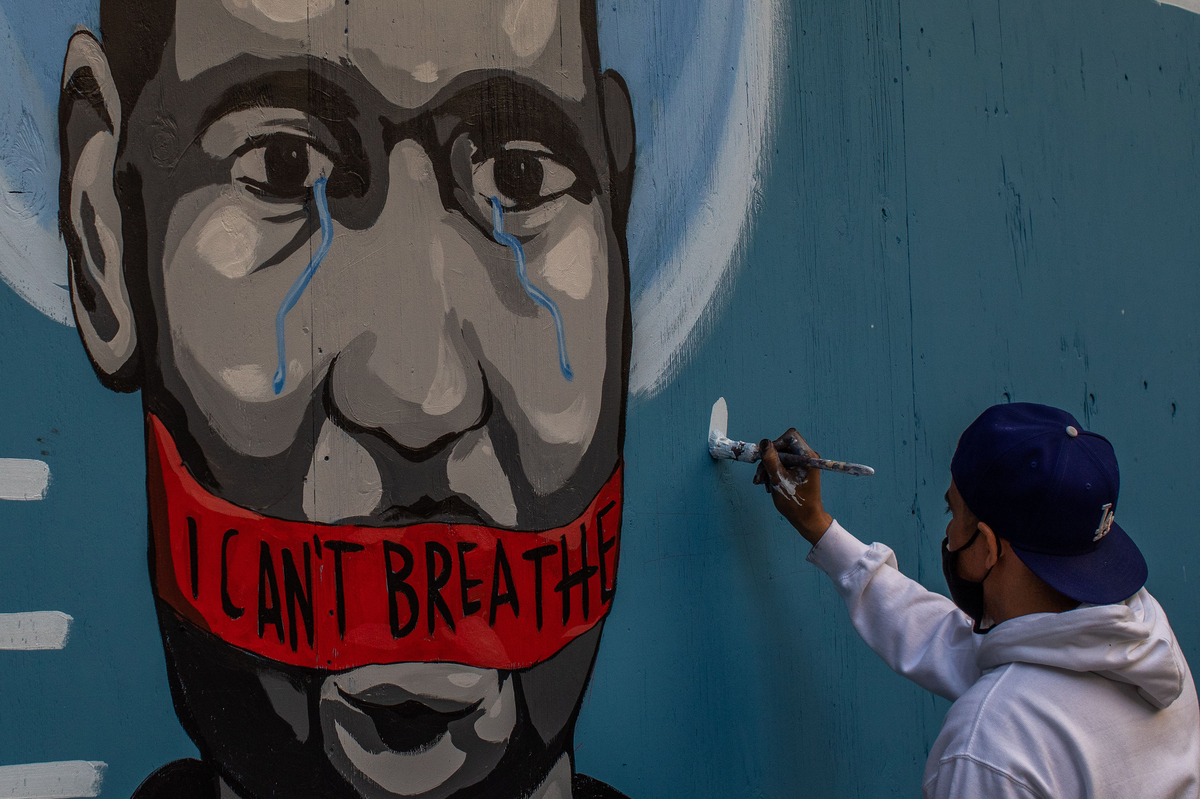
The artist Celos paints a mural in downtown Los Angeles on May 30, 2020 in protest against the killing of George Floyd by police in Minneapolis.

Apu Gomes/AFP via Getty Images


hide caption

toggle caption

Apu Gomes/AFP via Getty Images

The artist Celos paints a mural in downtown Los Angeles on May 30, 2020 in protest against the killing of George Floyd by police in Minneapolis.

Apu Gomes/AFP via Getty Images

Protests against the violent deaths of George Floyd, Breonna Taylor, Ahmaud Arbery and others are emboldening and expanding the movement to fight racism. But to make progress, many of us may need to adjust our thinking — and our actions. We talked to several African American and Hispanic psychologists and leaders for strategies to fight racism.

You know that old adage: “Don’t talk about race and politics at the dinner table. Well, we’ve got to get out of that,” says Polly Gipson, a clinical psychologist and associate professor of psychiatry at Michigan Medicine, University of Michigan.

And while many African Americans have the talk with their kids about how to avoid altercations with the police or what to say if they are stopped, it’s important for white parents to talk to their kids about racism too.

“Yes. It’s uncomfortable,” Gipson says. “But we can’t avoid things that are uncomfortable — because this is part of the problem of why we’re not as far along as we should be,” in eliminating racial injustices. And the more people who join the conversation, the better.

“A lot of people of color are tired. We’re tired of being the unseen and misunderstood,” says Inger E Burnett-Zeigler, a psychologist and associate professor at the Feinberg School of Medicine at Northwestern University. She’d like to see more voices at the table.

“I think it’s important for everyone, regardless of race, to ask, ‘What is my role in this system?’ ” she says. Ask yourself, ‘Have I been a passive bystander, and how can I change that?’

“Perhaps it’s simply speaking up in situations where you may have been disinclined to speak up before,” Burnett-Zeigler says.

These tragic events of recent weeks can also create an opportunity, because people are fired up. Given all the anger and frustration, experts say there are strategies to channel these emotions into action.

1. Listen To People Closest To You, And To People Of Other Races

Whether it’s your work colleagues, teammates, your children or extended family, one way to change hearts and minds is to listen. When we stop talking and start listening, we validate others’ feelings and emotions. And, we may find opportunities to educate.

For instance, “People will say, my kids don’t see color, and kind of wear that as a badge of honor,” says psychologist Gipson. But if a white person says this to a black person, it can be offensive. And, though it may be well-intended, the idea that people are colorblind is false.

“All kids, even infants, discern differences in race,” Gipson says. “It also invalidates people of color who have a ‘lived experience’ that is not like their white counterparts,” she explains. People don’t want important parts of their identity to be erased, they want to be recognized and respected for the entirety of their person.

2. Use Your Voice In Your Community And Work Place

We don’t all have the audience that sports figures have when they speak out against racism, but we all have a voice.

For instance, millions of people signed a petition posted by Color of Change, one of the nation’s leading racial justice organizations, demanding charges against the officers involved in the death of George Floyd.

At the local level, identify a policy that disproportionately affects people of color. Pick an issue in your community — whether it’s access to healthy food, school boundaries, or bail reform.

Rian Finney, 17, grew up hearing gunshots from his bedroom window, and he witnessed the aftermath of the unrest following the death of Freddie Gray in Baltimore in 2015.

“If I don’t speak up and do something, who will?” Finney asks.

He’s now involved with several youth organizations, including GoodKids MadCity and Baltimore Ceasefire, which recruits youth ambassadors to help raise awareness of gun violence. It has always been young people who push the civil rights movement forward, Finney points out.

And for adults, “look at your specific position and reflect on what power you might have to shift change to promote diversity and equity,” Burnett-Zeigler says. If you’re a manager, have you promoted or hired people of color? If you’re a teacher, have you incorporated messages of racial diversity and civil rights into your curriculum?

3. Give Your Time

If you’ve thought about signing up to be a tutor or mentor, now’s the time to do it.

“Tutoring is a great example, mentoring is a great example,” Burnett-Zeigler says. “These are ways you can use your personal influence in private ways for good.”

If you’re looking for a way to get started, check out the many national civil rights organizations or find a local, grass-roots group, says Janet Murguia, president and CEO of UnidosUS, a group that aims to empower Latinos to make change.

“We’ve partnered with organizations like Color of Change, National Urban League, Black Lives Matter and Race Forward, [which] are all doing incredible work in this space,” Murguia says.

For instance, Race Forward offers interactive racial justice training courses and classes. And she points to the race and healing collaborative supported by the Kellogg Foundation, which sponsors an annual National Day of Racial Healing event.

4. Speak Up By Using Your Creative Talents

“There are so many ways young people can use their talent and gifts,” says Gipson. On social media, we see examples of artists, from painters to jewelry makers, selling their wares and giving proceeds to an organization pushing for change.

“I love that idea,” says Wizdom Powell, a psychologist and associate professor who directs the Health Disparities Institute at the University of Connecticut.

“The idea here is to leverage your gifts and leverage your privilege, because we all have some of that,” Powell says. She points to an art competition that her institute organizes around visualizing health disparities. Art can play a role in healing and activism for health equity and social justice, she says.

Andre Rochester created Next In Line following the killings of Philando Castile and Alton Sterling — two African American men shot by police in 2016. Rochester uses his art to raise money for positive solutions to create change.


Andre Rochester


hide caption

toggle caption


Andre Rochester

“The arts have long been a vital and important way to process emotions, especially difficult ones, into something tangible,” says Jeremy Nobel, a physician who founded the Foundation for Art and Healing. “Expressive artifacts that make sense of the moment, bear witness and catalyze change.”

In times of distress, people can use art to access and communicate difficult thoughts and feelings, especially ones that are hard to talk about,” Nobel says. “[Art] offers a unique and powerful way to speak up, be heard, and be witnessed.”

5. Self-Care Is Important

For people who are reeling from the recent spate of deaths and racial trauma, it can feel overwhelming, says GiShawn Mance, a psychologist at Howard University. She says, she feels it personally.

She leads healing circles, which can help people connect and grieve. She also facilitates restorative justice circles — which aim to bring people who are trying to settle a conflict together.

But Mance says, in recent days she’s needed to take some time for herself. “It’s been hard to concentrate on work,” she says. In addition to the national unrest and the COVID-19 epidemic, which has hit communities of color the hardest, she is pregnant and a close friend recently died. “It’s a lot, and there have been tears,” she says.

This is a traumatic and stressful time especially for African Americans and people of color. “People put a lot of pressure on themselves to act or do something in this moment,” Mance says. So, her advice is this: “The fight for equity and justice is an ongoing effort; thus, do not put pressure on yourself to act or do something in this moment.” And she says, “I’m particularly talking to people of color and black people who are experiencing this.”

“It is difficult to help others when you are not OK,” she says. So, though self-care strategies will vary, take care of yourself and your mental health first, she says. Then “you can move forward in action to help others.”

Source link

An astronomer calculated that Earth’s intelligent life is probably ‘rare.’ Here’s what that means.

0

If we all got together and started Earth over, winding time back to the moment right after the land cooled from hot magma and giant meteor showers stopped devastating the planet, would life rise again on this planet? And would that life ever become intelligent? 

A new paper published May 18 in the journal Proceedings of the National Academy of Sciences offers an answer: Life likely spawns quickly and easily under Earth-like conditions. But intelligent life is probably rare and slow to emerge, suggesting it might not re-appear.

Source link