Campbell increased advertising spend during the first three months of the year as the coronavirus pandemic led to a surge in demand for comfort food like soup and snacks. Its marketing expenses jumped 26% from a year earlier, as spending on advertising and retailer promotions rose 29%, CEO Mark Clouse said in a conference call with analysts.
Marketing expenses for snacks rose 11%, and the company plans to boost that spending during the current quarter to retain new customers who have bought brands such as Goldfish crackers made by Campbell’s Pepperidge Farm division.
Campbell’s sales rose 15% to $2.24 billion from a year earlier while earnings doubled to $168 million, per its quarterly report. Sales of U.S. soup increased 35%, but the company lost market share in ready-to-eat soups because factory output couldn’t keep pace with demand.
Dive Insight:
Campbell’s boosted spending on advertising during the first quarter as the coronavirus pandemic led millions of consumers to stock their pantries with non-perishables and canned goods during lockdowns. The company seeks to maintain that sales momentum by ramping up its marketing spend during the remainder of the year, including campaigns planned for the current quarter.
“We have attracted new consumers to our brands during the COVID-19 demand surge, giving us access to millions of buyers who had not purchased our brands in the prior 52 weeks,” Clouse said during the earnings call. “Many of the households are younger and represent significant incremental growth for our brands. We are now mobilizing behind retaining these new consumers as we look ahead.”
Household penetration for Campbell Soup rose 10% during the first three months of the year, and millennials made up the biggest part of that growth, per IRI data cited in Campbell’s slide presentation. Its snack brands boosted household penetration 5.4 percentage points, including increases for what the company calls its “power brands:” Goldfish, Snyder’s of Hanover, Kettle, Lance, Milano, Cape Cod, Pretzel Crisps, Late July and Pepperidge Farm.
“This quarter, seven of our nine power brands grew or held share,” Clouse said during the call. Its Late July brand of organic snacks experienced the strongest growth with a gain of 2.5 percentage points in market share, followed by Lance’s 1.9 percentage point gain. Goldfish sales rose 11% but lost 0.7 percentage points of market share, while Hanover boosted consumption 21% and lost 0.5 percentage points, Clouse said.
The company expects snacks to be a significant driver of growth for remainder of the year, while consumer and retail trends will continue as people seek comfort food from wholesome brands, quick home-cooked meals, a focus on value and online shopping, per Clouse.
As an example of its recent marketing efforts, Campbell last month kicked off a social and digital campaign aimed at promoting home-cooked meals. Run across mobile video publisher Group Nine’s NowThis Food, Popsugar and Thrillist sites, the New Pantry campaign included custom content and Instagram Stories about how meals at home can bring people together during divisive times.
The Labor Department reported that 1.9 million Americans filed new claims for state unemployment insurance last week, along with 623,000 new claims for federal aid available to the self-employed and others not normally eligible for state jobless benefits.
The overall number collecting state benefits increased by almost 650,000 to a seasonally adjusted total of 21.5 million, showing that even as some businesses reopen and workers come off the rolls, others are being newly laid off or belatedly starting to receive benefits.
The job market is “crawling out of the hole now,†said Torsten Slok, chief economist at Deutsche Bank Securities. “We do have the worst behind us,†he said.
At the same time, Ian Shepherdson, chief economist at Pantheon Macroeconomics, said the weekly claims “are not falling as fast as I’d like them to fall or thought they would be falling.â€
“Let’s not kid ourselves,†he added. “This is still an astonishing rate of layoffs.â€
The European Central Bank administered another dose of economic stimulus to the eurozone economy Thursday, saying it would nearly double the size of its purchases of government and corporate bonds.
The central bank will step up its bond purchases by another 600 billion euros, or $675 billion, a way of driving down market interest rates and making credit cheaper. The decision will push the total bond purchases promised by the central bank since the pandemic began to 1.35 trillion euros.
Christine Lagarde, the central bank’s president, raised expectations that the bank would do more when she said last week that the economic effects of the pandemic could fulfill worst case scenarios. Members of the bank’s Governing Council have also expressed concern about deflation, a ruinous downward spiral of prices.
The latest data on joblessness in the eurozone, released Wednesday, showed the unemployment rate in April was 7.3 percent, a number that reflects the government-backed furlough programs designed to curb mass unemployment. But many national financial support programs are set to begin scaling back soon, making it likely that joblessness will grow higher over the coming months, economists said.
Wall Street dips as global markets waver.
Stocks on Wall Street dropped, following European markets lower on Thursday, in a small retreat after days of back-to-back gains.
The drop came after the U.S. government said the overall number of workers on state jobless rolls increased last week, signaling continued strain on the economy even as some businesses reopen.
In Europe, the decline came despite new efforts by the European Central Bank to bolster the region’s economy. The E.C.B. said that it expanded its stimulus measures by more than expected, stepping up bond purchases by another 600 billion euros, or $675 billion, to address economic distress caused by the virus outbreak.
The S&P 500 fell about half a percent. The index had climbed for four consecutive days before Thursday’s dip.
Stocks have been buoyed by recovery hopes in recent weeks, with the S&P 500 rising to within 10 percent of its pre-pandemic highs, while stocks in Europe are back to where they stood in early March. Investors have been inspired by signs of a quick return of normal activity — even if not to levels seen before government-imposed shutdowns and social-distancing orders. Companies, from automakers to restaurants, have reported that sales are beginning to pick up.
Still, the bad news has been relentless, from unrest in the United States to continuing tensions between Washington and Beijing.
LVMH may be reconsidering its takeover of Tiffany.
When the French luxury giant LVMH agreed to buy Tiffany for $16.2 billion last November, many thought it was a high price at the time. It looks even more expensive amid the coronavirus pandemic, and LVMH is weighing whether to press for the deal to be re-priced.
LVMH’s chief executive, Bernard Arnault, is talking with advisers about his options, and the matter was discussed at a board meeting on Tuesday, according to today’s DealBook newsletter. Among the points the company could raise are whether Tiffany has suffered a “material adverse change†to its business, or whether the jewelry icon will miss financial projections agreed to in the deal.
Tiffany’s shares plunged after Women’s Wear Daily first reported LVMH’s on deliberations. LVMH said this morning that it would not buy Tiffany shares in the open market, ruling out a potential tactic to lower the overall price of the deal.
LVMH hasn’t approached Tiffany to discuss re-pricing the deal. For its part, Tiffany believes that its deal agreement is ironclad. And buying Tiffany would give LVMH another major luxury brand and landmark real estate on Fifth Avenue in Manhattan. Neither side expects LVMH to try to walk away from the deal — at least, not at this moment.
A number of deals agreed before the pandemic have been rescinded or revamped, including L Brandsbreaking off a sale of Victoria’s Secret to Sycamore Partners, Carlylefighting to get out of buying a stake in American Express Global Business Travel, and BorgWarner and Delphi agreeing to cut the price of their deal after threatening lawsuits.
Germans will receive 300 euros, or about $336, per child, and pay a reduced value added tax on daily items and less for electricity, under a €130 billion stimulus plan announced by Chancellor Angela Merkel’s government.
Ms. Merkel called the package, which was agreed to late Wednesday, a “bold response†to the pandemic downturn.
The plan also includes €5.3 billion for the social security system, €10 billion to help municipalities cover housing and other costs and €1.9 billion for cultural institutions and nonprofits. It includes incentives to purchase electric vehicles, but none for gas- or diesel-fired engines, which Germany’s powerful automakers had sought.
The plan requires new borrowing. Ms. Merkel’s government abandoned its adherence to a balanced budget in March, when it passed a €750 billion rescue package that included taking on more than €150 billion of fresh debt. The latest package will also be financed by new borrowing, reflecting government concerns that millions of employees still need incentives to encourage spending.
“We need to get out of this crisis with an oomph,†the finance minister, Olaf Scholz said.
China steps back in airline dispute one day after U.S. vowed retaliation.
The Chinese authorities on Thursday appeared to retreat partially from an escalating dispute with the United States over air travel between the two countries, announcing that foreign airlines would be allowed to operate one flight per week in Chinese cities.
The announcement, from China’s civil aviation regulator, followed the Trump administration’s announcement on Wednesday that it would block Chinese passenger airlines from flying into or out of the United States starting on June 16. That move was a response to a similar ban by the Chinese government on American carriers, which had further stoked tensions between the world’s two biggest economies.
Foreign airlines that were barred from operating in China during the pandemic — which includes all American airlines except those carrying cargo — will be allowed to choose one Chinese city from an approved list to operate one flight each week, beginning June 8, the announcement said. The pandemic and Chinese restrictions had effectively halted passenger trips to China by United Airlines, Delta Air Lines and American Airlines.
Senate sends changes to the Paycheck Protection Program to the president.
The Senate gave final approval on Wednesday to a measure that would relax the terms of the Paycheck Protection Program, a federal loan program for small businesses struggling during the pandemic.
The bill, approved overwhelmingly by the House last week, would extend to 24 weeks from eight weeks the time that small businesses would have to spend the loan money. The eight-week period to spend the loan money was set to lapse within days for some businesses, leaving the Senate limited time to consider alternatives. The measure now heads to President Trump’s desk.
The bill also would give companies greater flexibility to use the loan money on other business expenses, like utilities and rent, by lowering the amount required to be spent on payroll to 60 percent, from 75 percent.
Republicans said that they generally favored revamping the program, which was created by the $2.2 trillion stimulus bill enacted in March. But an attempt to pass the bill by unanimous consent was delayed by Senator Ron Johnson, Republican of Wisconsin, who wanted a letter clarifying that the extension applied to the time frame to spend the loan money, not to the application period. Senator Mitch McConnell of Kentucky, the majority leader, submitted the letter just after 7 p.m.
The Paycheck Protection Program aims to help small businesses continue paying their workers by giving them access to government-backed loans that will be forgiven entirely if most of the money is spent on payroll costs.
As the pandemic upends work and home life, women have carried an outsize share of the burden, more likely to lose a job and more likely to shoulder the load of closed schools and day care. For many working mothers, the gradual reopening of the economy won’t solve their problems, but compound them, writes The New York Times’s Patricia Cohen and Tiffany Hsu.
If parents are called back to the workplace before day care and other support for family needs is available, they may need to limit their hours or leave the labor force altogether. And such choices are far more likely to face women than men.
Parents in the United States have nearly doubled the time they were spending on education and household tasks before the coronavirus outbreak, to 59 hours per week from 30, with mothers spending 15 hours more on average than fathers, according to a report from Boston Consulting Group.
The inequities that existed before are now “on steroids,†said Claudia Goldin, an economics professor at Harvard University. Since workplaces tend to reward hours logged, she said, women are at a further disadvantage. “As work opens up, husbands have an edge,†Ms. Goldin said, and if the husband works more, his wife is going to have to work less.
The Federal Reserve announced on Wednesday that it will expand its municipal bond-buying program, allowing two cities or counties in each state to sell their debt to the central bank, regardless of their population. The change will affect sparsely populated states like Wyoming, and will also extend to bond issuers like New York’s subway system.
Sales of e-bikes jumped 85 percent in March from a year earlier, according to the NPD Group, a research firm. Amazon, Walmart and Specialized are sold out of most models. If you are contemplating an e-bike purchase, there are trade-offs to consider, writes Brian Chen.
Canada Goose, the seller of $1,000 down-filled jackets, reported on Wednesday a fourth quarter sales decline of 10 percent, after cutting about 20 percent of its corporate work force last month amid the pandemic. While the company said publicly that it cut just 2.5 percent of its global work force when it laid off 125 people last month, it said in internal communications obtained by The New York Times that the figure represented roughly 20 percent of corporate employees.
Reporting was contributed by Tiffany Hsu, Nelson D. Schwartz, Niraj Chokshi, Vivan Wang, Melissa Eddy, Jack Ewing, Matt Phillips, Michael J. de la Merced, Jeanna Smialek, Patricia Cohen, Mohammed Hadi and William Davis.
Dana Sliva and Paul Alcock, Jr., of Lynchburg, Va., had originally planned an intimate June ceremony followed by what Ms. Sliva, 36, called “a bash in the back yard.†The Glencliff wedding, with its sharp one-hour turnaround time and peaceful setting, may have worked out better.
“Paul is not much of a talker, and sometimes going out in public can be stressful for him,†Ms. Sliva said. Mr. Alcock, also 36, has autism. Their two-person wedding, officiated by Carol Tyree, a Glencliff staffer who is a marriage celebrant, felt manageable in a world that can often feel otherwise.
“I can’t handle being in big groups,†said Mr. Alcock, a massage therapist. “I’ve had trouble with social dynamics and friend dynamics.†His courtship with Ms. Sliva, a marketing writer who was previously married and has a 6-year-old daughter, Penelope Joy Sliva, happened almost by accident. Ms. Sliva had been on Tinder two days when she saw a profile whose tagline included the words “artistic and tattoos.â€
“I was like, Oh my gosh, heck yeah, I’m going to check that out,†said Ms. Sliva, who was divorced after a yearslong separation in 2018. But she had misread the profile description. “It actually said, ‘autistic and tattoos.’†Ms. Sliva had no experience with people on the autism spectrum. But after she realized her mistake, she was still intrigued. “The first thing I said to him was, ‘What’s up, Buttercup?’ He said, ‘Comets.’ I was smitten.â€
A monthslong process of getting to know each other via phone and text took place before an in-person date, in February 2018 at Rivermont Pizza in Lynchburg, could be arranged. “Paul needed time to get his pregame together a little bit,†Ms. Sliva said. Sensory issues like competitive noises and changes in light can leave him feeling disoriented.
By late spring, Mr. Alcock had become a fixture in Ms. Sliva’s life, and Penelope’s, too. Ms. Sliva was learning to experience the world from Mr. Alcock’s perspective. “The more questions I asked, the more I understood how he looked at things,†she said. “I can be impulsive, and when I met him I started thinking, ‘Oh my gosh, you’re the one,’ really fast. But what Paul had in his mind was that our relationship should develop in a slow, healthy way. He taught me to value pacing in a relationship.†Rethinking spontaneous displays of affection like hand-holding during movies was part of the learning process. “Like, maybe I reached for his hand and that sense of touch didn’t feel right to him at that moment,†Ms. Sliva said. “I started to understand that he needed space in that moment, not that he doesn’t care.â€
With West Indies given the green light to tour England in July, the resumption of international cricket is inching closer.
Several other cricket boards have announced tentative schedules too, as the sport’s brief hiatus veers towards its conclusion.
When cricket does ultimately get under way, there will be several players who will be itching to carry on the solid form they showed in 2019. The breakout stars of 2019 such as Marnus Labuschagne and Rassie van der Dussen are just some of the players who will be keen to prove that there is plenty more to come.
On the other hand, there are players who did not have the best of seasons. These players saw their performances dip significantly after a strong 2018, and they will be desperate to set the record straight once again when the sport returns.
Here, we look at five players with a huge disparity between their performances in 2018 and 2019.
JOS BUTTLER | ENGLAND
2018 Stats
Innings: 45
Runs: 1677
Average: 34
2019 stats
Innings: 44
Runs: 1324
Average: 31.52
2018 was a special year for Jos Buttler, with the England batting ace truly announcing his arrival as an all-format player. Recalled to the Test set-up after his dazzling displays in the limited-overs formats, Buttler immediately seized his opportunity.
He was pivotal to England’s 4-1 series triumph over No1 ranked India with his rearguard heroics alongside Sam Curran. A maiden Test century and six fifties rounded off an excellent year for Buttler, but he was unable to carry that momentum in the year to follow.
In 2019, Buttler was productive in the shorter formats again, though his Test performances suffered heavily. A poor Ashes series was at the centre of his red-ball woes, with two half-centuries on the tour of West Indies being his only saving grace.
If he wants to remain an integral part of the red-ball set-up, the right-hander cannot afford a repeat of his 2019 Test displays.
FAKHAR ZAMAN | PAKISTAN
2018 stats
Innings: 38
Runs: 1635
Average: 48.08
2019 stats
Innings: 30
Runs: 741
Average: 24.70
No other batsman has gone through such a drastic slump in 2019 as Fakhar Zaman did. The swashbuckling opener seemed to have the world at his feet in 2018 as he became the first Pakistan batsman to smash an ODI double ton.
Unfortunately for the left-hander, the heights that he touched in 2018 were undone by the depths he plummeted to in the following year. While he had his moments in the ODI format, he still saw his average drastically drop from 67.31 to 34.15 between the two years.
The worst, though, came in the T20I format where Fakhar could not even manage to average in double figures. A paltry 17 runs across eight innings led to the batsman’s omission from the Pakistan T20 set up, and he has plenty of work to do if he wants to regain his place in time for the World Cup.
HENRY NICHOLLS | NEW ZEALAND
2018 stats
Innings: 24
Runs: 878
Average: 48.77
2019 stats
Innings: 34
Runs: 1087
Average: 35.06
While it wasn’t a dismal year overall for Henry Nicholls, it was quite the comedown from the lofty standards he set in 2018. In fact, the Kiwi batsman managed to improve his standing in ODI cricket while registering his maiden ton in the format.
However, all the gains that Nicholls made in white-ball cricket were offset by his poor form in the Test format. The left-hander started off 2019 on a strong note, with a century and fifty against Bangladesh at home.
He was unable to sustain those levels in the series to follow against Sri Lanka, England, Australia and India. His last 14 innings in Test cricket have only managed to yield 397 runs at an average of 33. Those numbers are substantially lower than 2018 during which Nicholls managed to average a staggering 73 in the Test format.
For a batsman who was ranked in the top 10 in 2019, Nicholls now finds himself languishing in 20th spot.
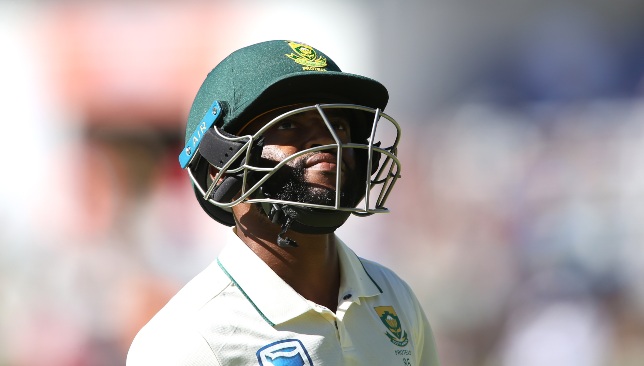
TEMBA BAVUMA | SOUTH AFRICA
2016-19 stats
Innings: 47
Runs: 1570
Average: 39.25
2019-20 stats
Innings: 19
Runs: 465
Average: 24.47
Between 2016 and 2019, Temba Bavuma made significant strides as a gritty middle-order batsman for South Africa. The diminutive batsman played several important knocks for the Proteas, including an unbeaten 95 against Australia at the Wanderers.
2019, though, wasn’t too kind to Bavuma whose fortunes took a giant beating. The right-hander kicked off the year with a fine 75 against Pakistan before being made to look ordinary in the months to follow.
Seven single-digit scores in his 12 subsequent innings, including three dismissals for ducks punctured Bavuma’s credentials greatly. His struggles, especially in the tour of India, mirrored that of his skipper Faf du Plessis. The poor returns from the two batsmen compounded South Africa’s woes as they limped to a home series defeat against Sri Lanka and were whitewashed emphatically by India.
When cricket does return, Bavuma will need to do more to justify a place in the squad which is already reeling with the retirements of senior stalwarts.
HONG KONG — Thousands of people holding candles gathered Thursday in Hong Kong for a somber memorial to mark the 31st anniversary of China’s military crackdown on demonstrators at Tiananmen square — despite an official ban on gatherings due to the coronavirus.
Thursday marks 31 years since Chinese troops opened fire on June 4, 1989, to end student-led unrest around the square in Beijing. Rights groups say the enforcement action may have killed thousands of protesters, although the official government count was a few hundred.
Hong Kong also passed a law Thursday that criminalizes the insulting of China’s national anthem, amid chaotic scenes in the territory’s legislature.
The law, passed after three readings, makes it illegal to insult the “March of the Volunteers” anthem. Booing, changing the lyrics or disrespecting the song is now punishable with up to three years in prison or fines equal to about $6,450.
Following the passage last month of a security law by Beijing at its National People’s Congress, pro-democracy lawmakers fear the anthem bill represents further encroachment by the mainland on the semi-autonomous territory.
Scuffles broke out several times in Hong Kong’s legislature during the passage of the anthem bill. On Thursday police entered the chamber after two pro-democracy lawmakers threw around foul-smelling liquid — they said to protest China’s crackdown at Tiananmen Square.
The topic is taboo on the mainland and Chinese authorities ban public commemorations.
Let our news meet your inbox. The news and stories that matters, delivered weekday mornings.
“The U.S. is proving the importance for China to restore order in 1989. But back then, the destruction of China’s order was much worse than U.S. now,” wrote Hu Xijin, editor of the Global Times, a state-run Chinese tabloid, on Twitter.
Tensions between China and the U.S. have been rising amid the global coronavirus pandemic, with a war of words that some have dubbed a new Cold War.
Protesters in Hong Kong attend a candlelight vigil to mark the 31st anniversary of the Tiananmen Square crackdown.Tyrone Siu / Reuters
Further Hong Kong protests flared up last month after Beijing side-stepped the territory’s own legislature to pass a security law that critics warn could erode human rights protections and the territory’s unique status.
The law was condemned by the U.S. and other countries, and President Trump said it would likely spell the end of the special economic treatment that Hong Kong enjoys under U.S. law.
On Wednesday, State Department spokeswoman Morgan Ortagus said the U.S. honored the “brave Chinese people whose peaceful calls for democracy, human rights, and a corruption-free society came to a violent end,” at Tiananmen in 1989.
“We stand with the people of China who continue to aspire to a government that protects human rights, fundamental freedoms, and basic human dignity,” she said in a statement.
On the eve of the Tiananmen anniversary, democratically ruled Taiwan called on China to apologize for the bloody 1989 crackdown and begin democratic political reform. The call was dismissed as “nonsense” by China’s foreign ministry.
“As to the political disturbance in the late 1980s, China has drawn a clear conclusion,” Chinese Foreign Ministry spokesman Zhao Lijian, said at a press briefing Wednesday.
In Hong Kong, too, where public commemorations normally go ahead each year, for the first time, vigils will take place online — due to the coronavirus pandemic, officials say — although a few hundred people still gathered at the city’s Victoria Park.
The Hong Kong Alliance, a pro-democracy advocacy group formed in 1989, has organized a virtual candlelight vigil. The group said it would also stream a program of events online, including a minute’s silence and slogan chanting.
“We believe the people of Hong Kong should have the right to light up a candle to condemn the massacre; this is part of our freedom of speech,” Lee Cheuk-yan, chairman of the Hong Kong Alliance, told NBC News.
“With the national security law we will still continue to have the vigil. … There may be personal risk but we do not want to live in fear. We will still continue.”
Hong Kong’s Chief Executive Carrie Lam, speaking Wednesday from Beijing, said the territory would not back down on national security laws and that foreign governments were displaying “double-standards.”
Justin Solomon, Tesa Arcilla and Ed Flanagan reported from Hong Kong. Adela Suliman reported from London.
Reuters contributed to this report.
Justin Solomon
Justin Solomon is a Hong Kong-based journalist.
Ed Flanagan is a Beijing-based producer for NBC News. He has been part of the NBC News team in China since 2005 and has covered the region — from North Korea to Japan as well.Â
Adela Suliman
Adela Suliman is a London-based writer and reporter for NBC News Digital.
The narrow blue beam of James Carroll’s head torch sweeps methodically from side to side over the gravel and rocks of Charmouth Beach in the county of Dorset on the south coast of England. It’s early January and at 5:30 p.m. already pitch dark, save for the twinkling lights of the town of Lyme Regis in the distance. Abruptly, Carroll stops, bends down, and picks up a dull gray stone the size of a grapefruit. With practiced ease, he hits it sharply with a rock hammer and the stone splits in two to reveal the perfect spiral of a 190-million-year-old ammonite embedded within.
Around 200 million years ago, this shoreline was entirely submerged by a tropical sea. The area was then around the latitude of Morocco, and its warm water supported a rich marine ecosystem filled with everything from ammonites (marine mollusks with a protective coiled shell) to ferocious 10-meter-long reptiles. Over time, the sea receded and the tectonic plate on which England sits drifted northward, but the sedimentary rocks and clay that formed the ancient seabed remained intact.
Fossil collector and preparer James Carroll uses a hammer to break open a rock on Charmouth Beach, Dorset, England. While some fossils can be found lying in the open, many professional collectors search for better finds hidden in limestone nodules.
(Tommy Trenchard)
With each new storm or high tide, those rocks erode away from the steep coastal cliffs, revealing the spectacular remains of creatures that once swam in the ancient sea. The Jurassic Coast, as the region is called, stretches for 155 kilometers through Dorset and East Devon. It has been a World Heritage Site since 2001 and is renowned as one of the most extraordinary fossil-collecting sites on Earth, offering glimpses into an astounding range of geological epochs.
The soft rocks and clay of the Jurassic Coast on the south coast of England release a steady stream of fossils onto the beach with each new high tide or winter storm.
(Tommy Trenchard)
In some parts of the world, all fossils are considered the property of the state, and even where this is not the case, regulations can make it hard for amateur collectors to take part. But on the Jurassic Coast, fossils can be revealed one day and destroyed by pounding waves or swept out to sea the next, meaning that neither landowners nor scientists can hope to save even a fraction. This means the involvement of the general public is key to ensuring the maximum number of fossils are collected for scientific research and public viewing. A progressive collectors’ code formalizes the average person’s ability to gather fossils and has contributed to a massive surge of interest in recent years, further stoked by social media and dinosaur movies.
An amateur fossil hunter displays two pyritic ammonites he discovered on Charmouth Beach.
(Tommy Trenchard)
“The most important thing is that we save the fossils,†explains Phil Davidson of the Charmouth Heritage Coast Centre, which was involved in creating the code.
The West Dorset Fossil Collecting Code of Conduct applies to a 17-kilometer stretch of coast between Lyme Regis and the village of Burton Bradstock, and was recently replicated in East Devon. Hammered out in the winter of 1998 by landowners, scientists, collectors, government agencies, and cultural and environmental organizations, the code clarifies ownership and seeks to ensure both that key specimens are preserved for posterity and that collecting happens in a safe and nondestructive manner. Collectors are free to take home small or common fossils but can only keep more significant finds—referred to as category one fossils—after reporting them. A collector who wants to sell a category one fossil has to offer it to museums before private buyers and must report the details of the sale.
An amateur fossil collector passes a new find to his son as they scour newly exposed sediment from a landslide on Charmouth Beach.
(Tommy Trenchard)
When there isn’t a global health crisis, hundreds of thousands of amateurs and professionals visit the area’s stony beaches each year. The Dorset Fossil Hunters Facebook group has over 2,500 dedicated members who share their finds and help identify new specimens, while enrollment in the paleontology program at the nearby University of Portsmouth has quadrupled since 2000.
Professional and amateur fossil hunters mingle with tourists on Charmouth Beach, one of the most popular fossil-collecting sites in the United Kingdom.
(Tommy Trenchard)
Every day that the Charmouth Heritage Coast Centre is open, hundreds of people come in with fossils. Between 20 and 30 of the finds turn out to be of scientific interest each year, says Davidson, whose desk is covered with paperwork, cables, and scattered ammonites, under the watchful eye of a stuffed plesiosaurus toy. “Lots are found by professionals … but lots are also found by amateurs, even first-time fossil hunters.â€
Carroll works on a piece in his studio-kitchen in Axminster, Devon, England. The work of exposing ancient creatures from surrounding rock takes extreme precision.
(Tommy Trenchard)
To make his point, he gestures at a small but perfectly preserved Pholidophorus fossil embedded in a limestone nodule in a public display case. “This fish was found by a five-year-old girl,†he says. Such fossils are rarely found in such good condition, and the discovery made headlines in national newspapers.
The rise of citizen fossil collecting is a fitting salute to Lyme Regis’s most famous denizen, Mary Anning. By the age of 12, Anning—with her brother’s help—had uncovered one of the world’s first ichthyosaurs. The discovery took place in the early 1800s, before the term dinosaur had even been coined. Anning, whose key role in the development of paleontology in the United Kingdom was largely obscured until long after her death, collected dozens of scientifically important specimens, some of which still take pride of place at museums around the world. In recent years, she has been the subject of several books, and a new film about her life, starring Kate Winslet, is due to be released this year, which may bring a further wave of collectors.
A boy walks out of a fossil and curio shop owned by longtime collector Barry Titchener. The shop was used as the setting for Mary Anning’s fossil business on the set of the upcoming biopic about the Lyme Regis-based fossil collector. Her actual shop was situated just across the street.
(Tommy Trenchard)
On the beach, Carroll examines his find with satisfaction. He has found more ammonites than he can remember, but this one is interesting, set in a wave of crystal within the limestone. He puts it into a heavy canvas backpack and moves on down the beach. Eventually, he’ll use air tools at his studio to chip away excess rock and fully expose the ancient creature inside. He occasionally sells one of his finds, though most of his income is from running tours for amateurs and cleaning up fossils for other collectors; demand for his fossil-preparation service is so high that he estimates it will take him 5,000 hours just to get through his backlog of fossilized lobsters.
People walk along the seafront past streetlights shaped like ammonites in Lyme Regis. The town was the home of Mary Anning, and is one of the most productive areas of England’s Jurassic Coast.
(Tommy Trenchard)
Before long, he crouches again and picks up a stone the size of a matchbox. To an amateur, it looks entirely ordinary. This one, he explains, contains the fossilized remains of an insect. On the rock’s surface, a barely visible fleck of light gray—an extremity of the ancient creature—is the only giveaway.
“When you look at it in your hand and say … I’m the first person ever to see it, it’s pretty cool,†says Carroll.
Fossils, including an ichthyosaur (center) and a shark (right), on display in a shop owned by veteran collector Chris Moore in Charmouth, Dorset.
(Tommy Trenchard)
The growing number of visitors to the Jurassic Coast has led to some healthy competition. With so many collectors scouring the beach, ammonites and other popular fossils get snapped up quickly, encouraging many regulars to seek out new and overlooked types of fossils, such as insects and fish, many of which turn out to be new to science.
More and more people are starting to make a living from fossil collecting, selling their finds to local shops, high-end London stores, or private collectors, or putting them up for auction, where a well-preserved ichthyosaur can sell for hundreds of thousands of dollars. For Carroll, however, and others like him, the business element is no more than an unfortunate necessity. It’s the electric thrill of opening a rock and seeing 200 million years back in time that he finds motivating. He rhapsodizes about how, after hundreds of millions of years, you can look through a microscope and still see the individual hairs, no more than eight hundredths of a millimeter wide, on the wings of some prehistoric fly. And above all, with no two fossils ever being quite the same, he dreams about what may be emerging from the cliffs at this very moment.
“What else haven’t we found out there?†he asks. “It gives me goosebumps!â€
Locally found ammonites are displayed for sale in a Lyme Regis fossil shop.
(Tommy Trenchard)
This article is from Hakai Magazine, an online publication about science and society in coastal ecosystems. Read more stories like this at hakaimagazine.com.
SEOUL (Reuters) – One robot makes cocktails from 25 bottles hanging upside-down from the ceiling, another carves perfect ice balls in the fraction of the time it takes a human with a knife and an ice pick.
Robo-bartenders are shaking up South Korea’s cafe and bar culture as the country transitions from intensive social distancing to what the government calls “distancing in daily lifeâ€.
And they look snazzy doing it too.
In a tailored vest and bow tie, six-foot-tall Cabo narrates his actions as he carves ice for a whisky on the rocks behind the bar at Coffee Bar K in Seoul.
“Do you see this? A beautiful ice ball has been made. Enjoy some cold whisky,†he says in Korean.
Cabo made his debut in 2017, but his presence is particularly reassuring now as the bar looks to encourage customers to return to entertainment facilities after the coronavirus outbreak.
“Since this space is usually filled with people, customers tend to feel very anxious,†said Choi Won-woo, a human bartender who assembles the drinks. “I think they would feel safer if the robot makes and serves the ice rather than if we were to do it ourselves.â€
At the Cafe Bot Bot Bot coffee bar, where the robot arm shakes up mojitos and other cocktails, manager Kim Tae-wan also pointed out that the ‘drink bot’ can provide a consistent quality to their mixes that human bartenders can’t.
Slideshow (10 Images)
Customers seemed encouraged by the safety the robots provided, though one pointed out a critical quality the robo-bartenders lacked.
“It’s a little disappointing that you can’t talk to the bartenders,†said 21-year-old university student Moon Seong-eun.
“One of the good things about going to a bar to drink is that you can chat to them about the drinks or about my worries.â€
Reporting by Hyunyoung Yi, Minwoo Park, Daewoung Kim, Writing by Minwoo Park and Karishma Singh, Editing by Raju Gopalakrishnan
When the next pandemic hits – and it’s a question of when, not if – it will be vital that we did all we could at this moment to learn the lessons taught to us by coronavirus.Â
One key lesson has been the effectiveness of travel bans. Countries that managed to contain the virus effectively implemented immediate health screenings of new arrivals, 14-day quarantines for those entering the country and even full travel bans. Of the world’s population, 91% live in countries with current travel restrictions, and 39% of people live in countries whose borders are completely closed to non-citizens and non-residents.
In mid-March Australia noted that 80% of cases being detected were linked to returning travellers. The government quickly introduced a border-closure policy in which only nationals were let into the country, who then needed to spend two weeks in mandatory quarantine in a hotel room. Despite the cost to the economy, roughly $4bn per month from international travellers and $5bn from domestic travellers, who are restricted from crossing state borders, the government felt it was imperative to get a handle on the number of new cases. This policy has paid off with a complete crunching of the coronavirus curve: Australia has had 102 deaths, and has only a handful of daily new cases. Life is slowly returning back to normal, with thethreat of coronavirus pushed beyond its borders. A similar story can be told about New Zealand, Greece, Iceland and the Faroe Islands.Â
The UK is implementing its own restrictions, but what took us so long? To understand this delay requires a delve into the minutes of Sage (the Scientific Advisory Group for Emergencies) that the government points to as evidence of it “following the scienceâ€. On 3 February and 23 March travel restrictions were discussed by Sage but were seen to have a negligible effect. Modelling noted that “if the UK reduces imported infections by 50%, this would maybe delay the onset of any epidemic in the UK by about 5 days; 75% would maybe buy 10 additional days; 90% maybe buys 15 additional days; 95% maybe buys a month.â€
Therefore travel bans were seen as only delaying the inevitable spread of the virus within the UK, and thus not worth the associated disruption and economic cost.
When the UK went into lockdown on 23 March, people living within the country were instructed to stay home and not travel farther than a few miles from their homes and only for essential journeys. At the same time, passengers from countries such as Italy, Spain, New York, Brazil and Russia could arrive at Heathrow and take the tube straight into London with no checks, screening or monitoring. It is ironic that the government that ran on “taking back control of our borders†was so reluctant to implement border controls when they were actually needed to protect its citizens and residents.
The current UK plan to quarantine all arrivals (except a small group of essential workers) for 14 days feels three months too late and too blunt an instrument. To stop the outbreak and limit the number of people exposed to the virus, the UK government should have moved quickly in late February/early March to implement border closure while moving to an early lockdown. This would have limited the number of imported cases, provided time to aggressively go after the virus through testing and tracing anddrive down numbers to the dozens.
Under the new plans, arriving passengers and crew must self-isolate at their homes or a specified location. They are only permitted to leave the house to buy food or medicine, attend funerals and court hearings, and to access public services. This will be monitored by unannounced visits and a breach would result in a £1,000 penalty.Â
While the overall idea to monitor importation of new cases is indeed a valid one that has been endorsed by the World Health Organization as countries exit lockdown, the implementation is problematic. It would make more sense if quarantine was mandated only for those arriving from countries with much higher rates of infection, and notthose that have a marginal number such as Greece, Australia, Norway, South Korea, Taiwan or Denmark. In addition, we should follow the example of countries such as Greece, Singapore, Hong Kong and Austria and test for Covid-19 on arrival.
At this stage, minimising the number of imported cases should be a priority. But what should we do when the next pandemic hits? The key learning must be the need to halt the export of the virus at the early stage of the outbreak. In January 2020, China could have closed its borders once it became clear that coronavirus was spiralling out of control. The country clearly had sufficient resources, personal protective equipment, hospitals and health staff to manage the outbreak without external assistance. Instead, it delayed closing borders and as a result, coronavirus has infected more than 6 million people across 188 countries. In a highly globalised economy closing borders may seem unpalatable, but perhaps we have now learned our lessons the hard way.
• Prof Devi Sridhar is chair of global public health at the University of Edinburgh
Image caption
Images of boyband BTS are among those flooding the hashtag
Fans of Korean pop music (K-pop) have taken over the #WhiteLivesMatter hashtag by posting images and videos of their favourite singers.
Use of the tag had increased as a response to the #BlackLivesMatter movement, with many posters opposing or criticising the protests.
After K-pop fans flooded the hashtag with photos and videos, the term started trending on Twitter.
Some fans are now focusing on other tags such as #AllLivesMatter.
The #BlueLivesMatter hashtag has also increased in popularity, often used in support of the police and criticising #BlackLivesMatter protesters.
By flooding the tags with videos and memes, the K-pop fans hope to drown out racist or offensive posts.
The protests began following the release of a video showing African-American George Floyd being arrested in Minneapolis.
In the video, a white police officer is seen kneeling on Mr Floyd’s neck even after he pleads that he cannot breathe.
Mr Floyd’s death has sparked huge protests across the US against racism and the police killings of black Americans.
Charges have been announced against all four of the police officers present during the death of Mr Floyd.
The vast majority of demonstrations over the past eight days have been peaceful, but some have turned violent and curfews have been imposed in a number of cities.
Clicking on the #WhiteLivesMatter hashtag now displays thousands of K-pop posts and messages of support for the US protesters.
On Tuesday, the #BlackLivesMatter tag was also flooded, as thousands of people posted a plain black square in support of a social media “blackout” campaign.
The flood of posts made it difficult for people to see updates about the protests or share important information using the #BlackLivesMatter tag.
Activists urged people to use the term #BlackOutTuesday instead.
We use cookies on our website to give you the most relevant experience by remembering your preferences and repeat visits. By clicking “Accept”, you consent to the use of ALL the cookies.
This website uses cookies to improve your experience while you navigate through the website. Out of these, the cookies that are categorized as necessary are stored on your browser as they are essential for the working of basic functionalities of the website. We also use third-party cookies that help us analyze and understand how you use this website. These cookies will be stored in your browser only with your consent. You also have the option to opt-out of these cookies. But opting out of some of these cookies may affect your browsing experience.
Necessary cookies are absolutely essential for the website to function properly. These cookies ensure basic functionalities and security features of the website, anonymously.
Cookie
Duration
Description
cookielawinfo-checbox-analytics
11 months
This cookie is set by GDPR Cookie Consent plugin. The cookie is used to store the user consent for the cookies in the category "Analytics".
cookielawinfo-checbox-functional
11 months
The cookie is set by GDPR cookie consent to record the user consent for the cookies in the category "Functional".
cookielawinfo-checbox-others
11 months
This cookie is set by GDPR Cookie Consent plugin. The cookie is used to store the user consent for the cookies in the category "Other.
cookielawinfo-checkbox-necessary
11 months
This cookie is set by GDPR Cookie Consent plugin. The cookies is used to store the user consent for the cookies in the category "Necessary".
cookielawinfo-checkbox-performance
11 months
This cookie is set by GDPR Cookie Consent plugin. The cookie is used to store the user consent for the cookies in the category "Performance".
viewed_cookie_policy
11 months
The cookie is set by the GDPR Cookie Consent plugin and is used to store whether or not user has consented to the use of cookies. It does not store any personal data.
Functional cookies help to perform certain functionalities like sharing the content of the website on social media platforms, collect feedbacks, and other third-party features.
Performance cookies are used to understand and analyze the key performance indexes of the website which helps in delivering a better user experience for the visitors.
Analytical cookies are used to understand how visitors interact with the website. These cookies help provide information on metrics the number of visitors, bounce rate, traffic source, etc.
Advertisement cookies are used to provide visitors with relevant ads and marketing campaigns. These cookies track visitors across websites and collect information to provide customized ads.