Gujarat: Saurashtra, Kutch get 25% average rainfall

0

Written by Ritu Sharma
| Ahmedabad |

Published: July 1, 2020 6:14:32 am


Further, nearly 100 talukas have already recorded rainfall between 126-250 mm (nearly 5-10 inch) during this monsoon season, the highest in the last five years. (Representational)

Two weeks since the south west monsoon arrived in Gujarat, Kutch and Saurashtra regions have received around 25 per cent of the average rainfall witnessed during this period. The southwest monsoon officially arrived Gujarat on June 14 covering districts of Valsad, Navsari, Tapi, Dang and Surat.

Kutch district has already received 25 per cent of the average rainfall during monsoon, which is the highest in the last five years – in 2017 it had received 15 per cent of the average rainfall. The Saurashtra region has received 22 per cent of its season’s share.

Further, nearly 100 talukas have already recorded rainfall between 126-250 mm (nearly 5-10 inch) during this monsoon season, the highest in the last five years.

Subsequently, comparing the rainfall data till June 30 for the last five years, this year the least number of talukas – 32 — received 0-50 mm rainfall, which is the lowest rainfall bracket. While 172 talukas received 0-50 mm rainfall in 2016, the highest in last five years, it was 116 in 2018.

Attributing the early rains in Kutch and Saurashtra regions to the Cyclone Nisarga witnessed in the first week of June, the India Meteorological Department (IMD) officials said that it was also conducive for the entire state.

“Due to the Cyclone Nisarga, a lot of moisture could come to the state and especially to the Saurashtra and arid Kutch regions, which are bereft of moisture. Also, due to this, Gujarat was quite conducive and thus rainfall was active in most parts of the state,” said Manorama Mohanty Additional Director of IMD’s Ahmedabad region.

Kutch and Saurashtra regions that cover almost half of the state geographically are expected to continue to add to its receipt of rainfall as the India Meteorological Department (IMD) forecasts rainfall for these regions, throughout this week.

“Due to a cyclonic circulation over south Gujarat now and neig-hbourhood between 1.5 km and 4.5 km above mean sea level tilting towards the southwest with height is expected to bring moderate rainfall with thunderstorm in the districts of Saurashtra, Kutch along with north and central districts,” Mohanty added on the forecast for this week.

On Tuesday, the 131 talukas that received rainfall included almost all districts of Saurashtra and Kutch. Kalavad taluka in Jamnagar district recorded the highest in the state (till 4 pm) — 73 mm in barely two hours from 12 pm till 2 pm.

Among the five regions the state has been divided into, the South Gujarat has received the lowest rainfall this season — 9.01 per cent. This is the region’s second lowest share in the last five years — in the monsoon of 2016, it barely received 4 per cent of the average rainfall.

The North Gujarat region has received 10.50 per cent of its monsoon share while the East Central region 14.15 per cent, which is also its highest share in last five years.

The state has recorded 122.24 mm, an average of 14.71 per cent rainfall till June 30, second highest after 2017, the year when the state witnessed one of its worst floods, devastating the North Gujarat districts of Banaskantha and Patan. In 2017, the average rainfall received till June 30 was 15.43 per cent.

The IMD has issued a heavy rainfall warning for districts of North Gujarat including Banask-antha and Patan, South Gujarat including Valsad, Navsari and Surat and in Saurashtra region namely Gir Somnath, Amreli, Bhavnagar, Junagadh, Porbandar till July 5.

📣 The Indian Express is now on Telegram. Click here to join our channel (@indianexpress) and stay updated with the latest headlines

For all the latest Ahmedabad News, download Indian Express App.

Source link

In CA: A Fourth of July to remember (but not because you did anything cool and fun)

CLOSE

Tune your TV sets to PBS for the annual Fourth of July extravaganza, because big IRL firework displays and parties are, for now, a thing of memories. And see how coronavirus cases are tracking in your ZIP code via USA TODAY’s exclusive analysis. Plus: In-N-Out loses double-double style.

It’s Arlene Martínez with news for Tuesday. I’m not bad, and you? 

But first, bison do not like it when you get too close, as this 72-year-old Golden Stater found out after being gored by one in Yellowstone National Park. She’d been trying to take their picture.

In California brings you top stories and commentary from across the USA TODAY Network and beyond. Get it free, straight to your inbox.  

More restrictions heading our way, governor says

Gov. Gavin Newsom said to expect more restrictions ahead of the Fourth of July long weekend, following new tallies that show soaring numbers of coronavirus cases and as California surpasses 6,000 deaths. 

What’s especially troubling is the uptick in hospitalizations — 43% over the last two weeks.

Newsom is planning to announce the specifics on Wednesday. 

On Sunday, Newsom ordered bars in seven counties to close, with Riverside County among those later joining the closures. Other states are doing the same thing, prompting “Bar Lives Matter” to trend on Twitter. 🤔 

“The framework for us is this: If you’re not going to stay home and you’re not going to wear masks in public, we have to enforce and we will,” Newsom said, adding the state will be “a little bit more aggressive as it relates to guidelines on Fourth of July.”

California’s not the only place hitting the brakes on reopening — 16 other states are too. 

Homeless housing: An update

Newsom on Monday signed the final 2020-21 budget that raises taxes on some businesses, adds billions in new debt and cuts pay to state workers by 10%. 

It also included an additional $1.3 billion to cities and counties to support homeless individuals, Newsom said during his briefing Tuesday. Of that, $550 million is for the acquisition of residential units and it provides $350 million to counties for wraparound social services. 

Newsom also gave an update on Project Roomkey, which launched in April and is now called Project HomeKey to reflect its change in mission.

Newsom has secured 15,679 hotel rooms and served an estimated 14,200 people. He touted an occupancy rate of 85% for the hotel and motel rooms that had been secured to provide short-term sheltering for vulnerable homeless residents. 

Gone without a trace, a questionable transfer and the cost of that test

A young couple from the Coachella Valley mysteriously vanished more than three years ago. This week, three men were charged with their murder. 

Nearly three in 10 inmates at San Quentin State Prison have the coronavirus. Gov. Newsom said the cause of the outbreak is under investigation, but he pointed to a transfer of 100 prisoners from Chino. 

You should not be charged any cost-sharing for a coronavirus test; on this, federal law is clear. But there are loopholes, as this essential worker found out after she was billed $1,840 for trying to find out if she had the virus.

Robert Fuller, 24, a Black man found hanging from a tree in Palmdale, was remembered during his funeral Tuesday as a cheerful young man who loved music, sports, video games and spending time with family. A coroner says it appears he may have taken his own life, but family members and friends fear he might have been lynched.

Coronavirus cases, by ZIP code

Like a rubber ball bouncing down a hardwood hallway, COVID-19 continues to spread unevenly across the U.S., hitting some neighborhoods hard while barely touching other parts of even the same metro area, according to a USA TODAY analysis of ZIP code-level data.

The analysis shows neighborhoods with the highest rates of infection from the deadly virus are more densely populated (and non-white) and have lower household incomes.

USA TODAY’s exclusive analysis draws from reported cases of COVID-19 by ZIP code of residence of those testing positive for the virus. It affirms a set of trends revealed by case counts available in April, when far fewer jurisdictions reported such granular data.

In-N-Out pays double-double; Simi policymaker’s remarks ‘inappropriate;’ new school rules

A group of Rancho Mirage residents successfully blocked an In-N-Out from coming to town. Now, a judge has ordered the city and burger chain to pay the group nearly $65,000 in legal fees.

Colleagues of a Simi Valley elected official who posted a social media post saying “rioters” should be sprayed with hoses connected to a septic tank called his meme “inappropriate” but declined to censure him. 

When schools had to quickly pivot to online instruction, teachers didn’t have to track attendance or whether students were doing the work. That’s changing in the fall.

What else we’re talking about

Remember all those babies that were going to be born in the next six to nine months? Maybe not, because what’s really soaring isn’t midday romps but birth control orders (although, I guess those can be concurrent situations).

The 2020 Oscar voting class includes 45% women, 36% underrepresented ethnic/racial communities, and 49% international from 68 countries, the Academy of Motion Picture Arts and Sciences announced.

He was a popular starting outfielder for the L.A. Dodgers just two years ago. Now he’s frequently homeless and in and out of mental health facilities. 

A bill that would block most public access to autopsy reports has been tabled for the year. The reports are key to providing insight on what led to someone’s death, and whether systemic problems contributed to it.

Before I leave you today, I’m bringing back this oldie but goodie. It harkens to a time when WFH was fresh and new, and we were still eager to find new ways to make it all work. Since returning to normal-ish isn’t going so great, here ya go: 100 things to do while stuck inside due to a pandemic.

In California is a roundup of news from across USA TODAY Network newsrooms. Also contributing: Los Angeles Times, California Healthline, Associated Press. 

Read or Share this story: https://www.usatoday.com/story/news/nation/2020/06/30/california-fourth-july-coronavirus-n-out-homeless-tues-news/5350998002/


Source link

John Wayne Airport Targeted For Name Change As ‘The Duke’s’ Values Come Into Question

0

The Democratic Party of Orange County, California, has called for John Wayne Airport to be renamed because of comments the late actor, known as “The Duke,” made nearly 50 years ago on white supremacy, sexual orientation and race relations.

In an emergency resolution prompted by an op-ed by Chapman University academics Fred Smoller and Mike Moodian, local Democratic leaders argued that the ongoing protests against racial injustice in the United States had presented the right moment to return John Wayne Airport to its original name, Orange County Airport, which it dropped in 1979, the year Wayne died.

The resolution was passed last week, with voters expected to decide on the name change later this year in a ballot initiative. It argues that Wayne’s “white supremacist, anti-LGBT, and anti-Indigenous views,” as revealed in a 1971 interview that resurfaced in 2019 when it was transcribed online, were more than enough reason for the change.

In the interview, in the May 1971 edition of Playboy magazine, Wayne critiqued “perverted” movies, including the 1969 film “Midnight Cowboy,” which he called “a story about two fags.” When questioned about racial discrimination, Wayne said that white Americans “can’t all of a sudden get down on [their] knees and turn everything over to the leadership of the Blacks.” When prompted on the struggles of Black performers to break into Hollywood, Wayne stressed that it was “just as hard for a white man to get a card in the Hollywood craft unions.”

“I believe in white supremacy until the Blacks are educated to a point of responsibility,” Wayne said. “I don’t believe in giving authority and positions of leadership and judgment to irresponsible people.”

In the interview, Wayne also argued that Native Americans did not necessarily deserve reparations. 

“Our so-called stealing of this country from them was just a matter of survival,” Wayne said. “There were great numbers of people who needed new land, and the Indians were selfishly trying to keep it for themselves…. I’m sure there have been inequalities. If those inequalities are presently affecting any of the Indians now alive, they have a right to a court hearing. But what happened 100 years ago in our country can’t be blamed on us today…. I don’t see why we owe them anything. I don’t know why the government should give them something that it wouldn’t give me.”

In their June 23 opinion article that instigated the resolution, Smoller and Moodian wrote that Wayne’s comments proved he was a “bigot.” They argued that Orange County has a diverse ethnic makeup, with “non-Hispanic Anglos mak[ing] up slightly less than 40 percent of the population,” and that Wayne “in no way represents Orange County today and its thriving communities of color.”

John Wayne Airport is Orange County’s Confederate statue, its ode to white supremacy. If Mississippi can remove the Confederacy from its flag, then Orange County can remove images of John Wayne from its airport.
Fred Smoller, Chapman University

Despite this argument, defenders of Wayne have emerged since the resolution passed, including President Donald Trump, who tweeted that the “Do Nothing Democrats” were showcasing “incredible stupidity” in striving to change the airport’s name.

Wayne’s youngest son, Ethan Wayne, told local media that his father was “a good man” and that “if John Wayne was there when that policeman was kneeling on George Floyd’s neck, you can bet that John Wayne would’ve pulled him off.”

“The truth is … he did not support ‘white supremacy’ in any way and believed that responsible people should gain power without the use of violence,” the younger Wayne told TMZ. “He called out bigotry when he saw it. He hired and worked with people of all races, creeds and sexual orientations…. It would be an injustice to judge him based on a single interview, as opposed to the full picture of who he was.”

In a statement sent to HuffPost, both Moodian and Smoller acknowledged Ethan Wayne’s defense of his father but argued that the elder Wayne had remained silent on social causes during his own era and “clearly expressed his belief that others were inferior and undeserving of an equal place in society.”

“He was dismissive of historical atrocities,” they said. “He ridiculed advocacy for fairness and equality. Wayne had no kind words for the social movements of the 1960s in which Blacks, women, LGBTQ+ community members, and Native Americans fought for ‘fairness and justice for all people.’” 

Moodian told HuffPost that the term “white supremacy in 1971 carried the same meaning that it does in 2020” and that, to the best of his knowledge, Wayne never publicly retracted the statements he made in the Playboy interview. 

“I believe he certainly would not be on the side of taking on systematic racism in the United States today,” Moodian said, “because he wasn’t a champion of taking on systematic racism during the 1950s, ’60s and ’70s.”

Both Moodian and Smoller stressed that they weren’t the first to suggest renaming the airport, pointing to Los Angeles Times columns a year ago. But according to Smoller, the police killing of George Floyd last month in Minneapolis and similar killings of Black people within recent months had snowballed “a growing reckoning with racism in the U.S.,” and it was vital to “critically look at systems in our society as they pertain to centuries of inequities.” 

“John Wayne Airport is Orange County’s Confederate statue, its ode to white supremacy,” Smoller said. “If Mississippi can remove the Confederacy from its flag, then Orange County can remove images of John Wayne from its airport.”

Smoller added that the matter was not a “liberal-versus-conservative issue,” but rather it was about universal values.

“What standards should we be using for naming buildings, statues and holidays after people?” he said. “It’s very simple. We have in this country values that are enshrined in our documents, like the Declaration of Independence, that say all men are created equal. You create honors for people who pull us closer to our objectives. Wayne was not one of those people.” 


Source by [author_name]

Egyptian company strikes gold in Eastern Desert

Jun 30, 2020

An Egyptian company has discovered a large gold deposit in the country’s Eastern Desert, the Ministry of Petroleum and Natural Resources announced today.

The ministry said the gold discovered in the Iqat region is estimated to be more than 62,500 pounds (28,000 kilograms, or a million ounces). The mining company Shalateen made the discovery. Shalateen and the government will form a joint venture to extract the gold, the Ministry of Petroleum and Natural Resources said in a press release. That would be about $1.8 billion at today’s prices; mining.com said the government expected the cost of developing the site to be $1 billion over 10 years.

Observers have believed Egypt’s deserts possess large quantities of gold for years, and the government is now prioritizing gold exploration. In August, Egypt ratified mineral resources amendments aimed at encouraging gold mining in the country. The new measures reduced government fees collected from gold miners in a bid to encourage investment. A government forecast last year predicted that gold mining could create more than 100,000 new jobs in the populous country.

The state hopes to gain $375 million in gold mining investments over the next two years, the ministry said.


Source link

China discovers new swine flu with pandemic potential – CNN Video

0

Chinese researchers have discovered a new type of virus in pigs that can infect humans and is capable of causing a pandemic, according to a new study. The disease, which researchers called the G4 virus, is genetically descended from the H1N1 swine flu.

Source link

Pompeo’s push to extend Iran arms embargo faces uphill battle at UN

Jun 30, 2020

Secretary of State Mike Pompeo called on the United Nations Security Council today to extend the conventional arms embargo on Iran indefinitely, only to face several harsh rebukes from allies and adversaries alike.

While American allies in the Middle East have started to line up behind US threats to snap back multilateral sanctions on Iran should the UN refuse to extend the embargo, the Security Council nonetheless appeared unmoved by Pompeo’s arguments at today’s virtual meeting.

“From Israel to the Gulf, countries in the Middle East — who are most exposed to Iran’s predations — are speaking with a single voice: Extend the arms embargo,” said Pompeo. “The council has a responsibility to listen to them. The United States’ overwhelming preference is to work with this council to extend the arms embargo to protect human life, to protect our national security and to protect yours.”

The arms embargo is currently set to expire in October as the first sunset provision under the 2015 Iran nuclear deal, formally known as the Joint Comprehensive Plan of Action (JCPOA). Iran has said that China and Russia have both expressed interest in selling it combat aircraft once the embargo expires.

Accordingly, Beijing and Moscow have indicated that they will veto any US effort to extend the arms embargo. But it’s unclear whether Washington even has enough Security Council votes to advance its resolution in the first place.

“It is very unfortunate that the United States left the JCPOA and by doing this leaving, actually violating international law because the JCPOA is enshrined in a binding [UN] resolution,” said the German ambassador to the UN, Christoph Heusgen.

Ironically, Pompeo has cited US participation in the JCPOA to argue that Washington has the right to pursue snapback sanctions on Iran under the Security Council resolution in question. However, it remains unclear whether the United States has the legal authority to pursue snapback sanctions under the resolution given its 2018 withdrawal from the accord and reimposition of crippling unilateral sanctions on Iran.

“Having quit the JCPOA, the US is no longer a participant and has no right to trigger snapback at the Security Council,” said China’s envoy to the UN, Zhang Jun.

The UN resolution lists the United States as a JCPOA participant. However, it also states that the United States “will refrain from re-introducing or re-imposing the sanctions … that it has ceased applying under this JCPOA, without prejudice to the dispute resolution process.” 

Zhang urged the United States “to stop its illegal unilateral sanctions” and to “return to the right track of overseeing the JCPOA” as well as its underlying UN resolution.

UN Secretary-General Antonio Guterres wrote in a report on JCPOA implementation this month that he regrets “the withdrawal of the United States of America from the plan in May 2018, as well as the steps taken by the Islamic Republic of Iran since July 2019 to cease performing its nuclear-related commitments under the plan.”

“I call upon all member states to avoid provocative rhetoric and actions that may have a further negative impact on regional stability,” wrote Guterres.

Germany’s Heusgen and other Security Council representatives echoed similar sentiments throughout the meeting. Since the US withdrawal, Iran has tripled its stockpile of low-enriched uranium past the limits laid out in the JCPOA.

Brian Hook, the State Department’s Iran policy coordinator, took Pompeo’s place in the middle of the three-hour long meeting. Hook recently returned from a tour of the Middle East to get US allies on the same page with regard to extending the arms embargo.

After meeting with Hook, Israeli Prime Minister Benjamin Netanyahu came out in favor of snapback sanctions on Iran today. Hook also visited the United Arab Emirates, Bahrain and Saudi Arabia over the weekend, all of which endorsed extending the arms embargo on Iran.


Source link

Details of China’s national security law for Hong Kong unveiled

A controversial national security law imposed by China on Hong Kong has come into force, punishing crimes of secession, sedition and collusion with foreign forces with terms of up to life in prison.

Beijing says the law is necessary to deal with separatism and foreign interference, but critics fear the legislation, which was approved in record time and not made public until after it was passed on Tuesday, will outlaw dissent and destroy the autonomy promised when Hong Kong was returned from the United Kingdom to China in 1997.

Chinese President Xi Jinping signed the contentious law some 40 days after the introduction of the bill by the central government in Beijing.

It took effect from 15:00 GMT, an hour before the 23rd anniversary of the handover of the former British territory to Chinese rule.

The new suite of powers radically restructures the relationship between Beijing and Hong Kong, toppling the legal firewall that has existed between the city’s independent judiciary and the mainland’s party-controlled courts.


  • Crimes of secession, subversion, terrorism and collusion with foreign forces punishable by up to life in prison
  • Companies or groups that violate national security law will be fined and could have operations suspended.
  • Damaging certain transportation vehicles and equipment will be considered an act of ‘terrorism’
  • Anyone convicted of violating security legislation will not be allowed to stand in any Hong Kong elections.
  • The activities of a new national security agency and its personnel in Hong Kong will not be under the jurisdiction of local government.
  • Authorities can surveil and wiretap persons suspected of endangering national security.
  • The law will apply to permanent and non-permanent residents of Hong Kong.
  • The law says the management of foreign NGOs and news agencies in Hong Kong will be strengthened

It empowers China to set up a national security agency in the city, staffed by officials who are not bound by local laws when carrying out duties.

It outlaws four types of national security crimes: subversion, secession, terrorism and colluding with foreign forces to endanger national security.

The full text of the law gave three scenarios when China might take over a prosecution: complicated foreign interference cases, “very serious” cases and when national security faces “serious and realistic threats”.

“Both the national security agency and Hong Kong can request to pass the case to mainland China and the prosecution will be done by the Supreme People’s Procuratorate and the trial will be in the Supreme Court,” the law stated.

“No matter whether violence has been used, or the threat of violence used, leaders or serious offenders will be sentenced for life imprisonment or a minimum of 10 years in jail,” it said.

“The Hong Kong government has no jurisdiction over the national security agency in Hong Kong and its staff when they are discharging duties provided in this law,” it added.

The text also specified that those who destroy government facilities and utilities would be considered subversive. Damaging public transportation facilities and arson would constitute acts of “terrorism”. Any person taking part in secessionist activities, whether organising or participating, will violate the law regardless of whether violence is used.

The law also said certain national security cases could be held behind closed doors without juries in Hong Kong if they contained state secrets, although the verdict and eventual judgements would be made public.

After the passing of the law, prominent Hong Kong pro-democracy activists Joshua Wong, Agnes Chow and Nathan Law issued statements on Facebook saying they would withdraw from the pro-democracy organisation Demosisto.

Wong said “worrying about life and safety” has become a real issue and nobody will be able to predict the repercussions of the law, whether it is being extradited to China or facing long jail terms.

The legislation marked “the end of the Hong Kong that the world knew before”, he said, adding: “From now on, Hong Kong enters a new era of reign of terror. With sweeping powers and ill-defined law the city will turn into a secret police state.”

Demosisto then announced on Facebook it was disbanding, saying the loss of top members made it difficult to continue.

Pro-democracy protesters observe a minute of silence during a protest after China’s parliament passes a national security law for Hong Kong, in Hong Kong, China on June 30, 2020 [Tyrone Siu/Reuters]

Al Jazeera’s Katrina Yu, reporting from Beijing, noted the passage of the law had been fast-tracked.

“It’s very symbolic that this law has been passed just a day before the anniversary of Hong Kong’s handover from Britain back to mainland China,” she said. “It seems to be Beijing telling the people that at the end of the day it is China that is in charge in Hong Kong and China’s leaders will do whatever they deem necessary to protect Hong Kong.” 

China first announced its plan to impose the legislation on the eve of the National People’s Congress last month, after nearly a year of protests in the territory that began over a now-withdrawn extradition bill with the mainland.

The security bill gave renewed momentum to the protests, which had calmed as the coronavirus pandemic made it more difficult to hold mass gatherings, and triggered condemnation from countries including the UK and the United States.

On Tuesday, more than 100 protesters gathered at a shopping centre in Hong Kong’s Central business district, chanting slogans including “free Hong Kong, revolution now”, with several holding up a flag representing an independent Hong Kong as well as posters condemning the law.

Activists are calling for fresh protests on July 1 even though police have said rallies cannot happen because of the coronavirus. Some 4,000 police are expected to be on standby on Wednesday when an official ceremony also takes place.

Al Jazeera’s Adrian Brown, reporting from Hong Kong, said the mood in the city was sombre.

The passage of the law has “had an immediate and chilling impact. We went out on the streets at lunchtime to speak to ordinary people at lunchtime to try and gauge their opinions and none of them wanted to comment – that’s very unusual here in Hong Kong,” he said.

“People are now going to vote with their feet and leave in droves.”

Authorities in Beijing and Hong Kong have repeatedly said the legislation is aimed at a few “troublemakers” and will not affect rights and freedoms, nor investor interests.

Hong Kong leader Carrie Lam, speaking via video link to the United Nations Human Rights Council in Geneva, said the law would fill a “gaping hole” and would not undermine the territory’s autonomy or its independent judiciary.

Lam said Hong Kong had been “traumatised by escalating violence fanned by external forces” and added: “No central government could turn a blind eye to such threats to sovereignty and national security.”

“We hope the law will serve as a deterrent to prevent people from stirring up trouble,” said Tam Yiu-Chung, Hong Kong’s sole representative on the Standing Committee of the National People’s Congress, which approved the law on Tuesday morning.

“Don’t let Hong Kong be used as a tool to split the country,” he said.

International condemnation

The legislation pushes Beijing further along a collision course with the US, the UK and other Western governments, which have said it erodes the high degree of autonomy the city was granted at its handover.

Washington, already in dispute with Beijingover trade, the South China Sea and the novel coronavirus, began eliminating Hong Kong’s special status under US law on Monday, halting defence exports and restricting technology access.

Meanwhile, in a joint statement, 27 countries including Britain, France, Germany and Japan said China must reconsider the law which “undermines” Hong Kong’s freedoms.

Julian Braithwaite, Britain’s ambassador to the UN in Geneva, read the statement at the world body’s Human Rights Council, on behalf of all the signatories.

The 27 countries have “deep and growing concerns” over the new security law, which has clear implications on the human rights of people in Hong Kong, the statement said.

Imposing the law without the direct participation of Hong Kong’s people, legislature or judiciary “undermines” the ‘One Country, Two Systems’ principle guaranteeing Hong Kong a high degree of autonomy, rights and freedoms, the signatories said.

“We urge the Chinese and Hong Kong governments to reconsider the imposition of this legislation and to engage Hong Kong’s people, institutions and judiciary to prevent further erosion of the rights and freedoms that the people of Hong Kong have enjoyed for many years,” the statement said.

Signatories included Australia, Canada, New Zealand, Switzerland and 15 European Union states including the Netherlands and Sweden.

Earlier on Tuesday, Dominic Raab, the British foreign secretary, called the passing of the law a “grave step”, before adding on Twitter: “China has chosen to break their promises to the people of Hong Kong and go against their obligations to the international community. The UK will not turn our backs on the commitments we have made to the people of Hong Kong.”

Japan described the move as “regrettable”, Taiwan’s President Tsai Ing-wen said she was “very disappointed” at the outcome and Charles Michel, president of the European Union Council, said the bloc “deplores” the decision.

And Joshua Rosenzweig, head of Amnesty International China, said Beijing’s “aim is to govern Hong Kong through fear from this point forward”.

China has hit back at the outcry, denouncing “interference” in its internal affairs.


Source link

Airbus Announces Job Cuts Amid Massive Dip In Aircraft Orders

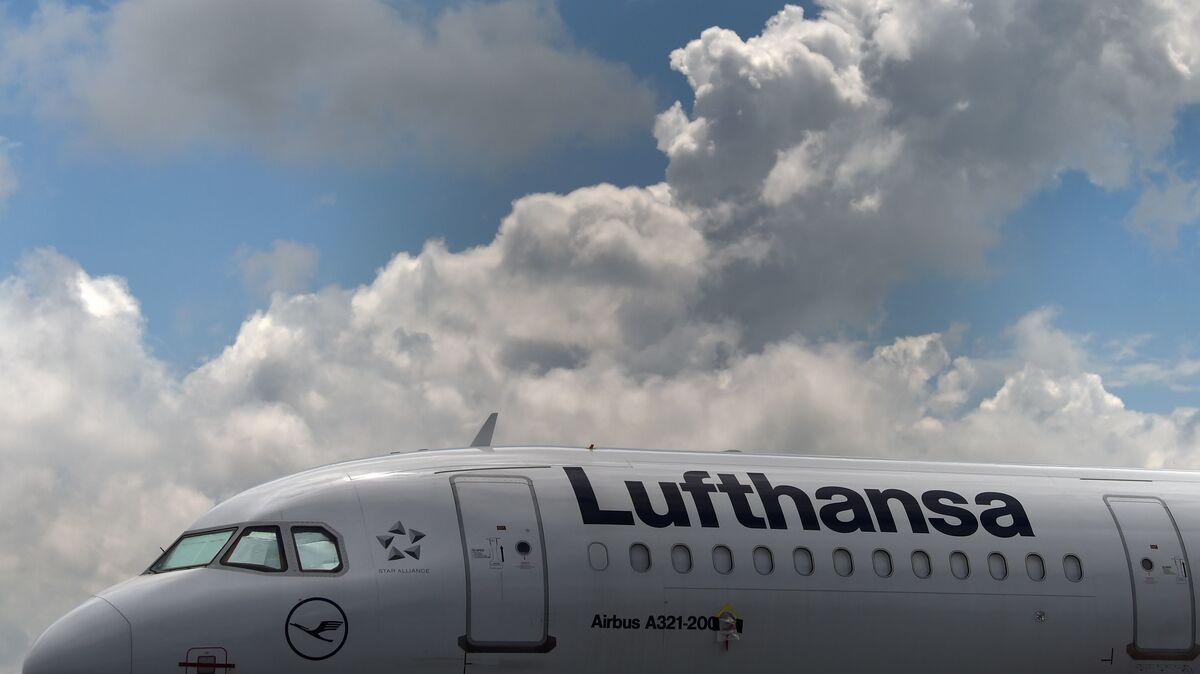
An Airbus aircraft of the German airline Lufthansa is parked at the Franz-Josef-Strauss airport in Munich, Germany, earlier this month.

Christof Stache/AFP via Getty Images


hide caption

toggle caption

Christof Stache/AFP via Getty Images

An Airbus aircraft of the German airline Lufthansa is parked at the Franz-Josef-Strauss airport in Munich, Germany, earlier this month.

Christof Stache/AFP via Getty Images

European passenger-jet maker Airbus announced Tuesday that it will cut 15,000 jobs over the next year, as the airline industry faces unprecedented losses due to the COVID-19 pandemic.

Airbus, which employs about 135,000 people worldwide, has seen a 40% drop in its business since the spread of the coronavirus.

“With air traffic not expected to recover to pre-COVID levels before 2023 and potentially as late as 2025, Airbus now needs to take additional measures to reflect the post COVID-19 industry outlook,” the company said in a statement.

Europe’s largest airplane maker said it planned to cut 5,100 jobs in Germany, 5,000 in France, 1,700 in the U.K., 900 in Spain and another 1,300 in other locations around the world by the middle of next year. The total of 15,000 includes 900 job cuts that had been announced as part of a restructuring plan before the pandemic.

Airbus CEO Guillaume Faury said the company was facing “the gravest crisis this industry has ever experienced.”

“The measures we have taken so far have enabled us to absorb the initial shock of this global pandemic,” Faury said. “Now, we must ensure that we can sustain our enterprise and emerge from the crisis as a healthy, global aerospace leader, adjusting to the overwhelming challenges of our customers.”

Airbus did not rule out layoffs, but said it would first seek voluntary departures and early retirements.

Even so, the company faces tough negotiations with governments and unions to get the cuts it is seeking.

Britain’s Unite union called the measures “industrial vandalism.”

In France, where President Emmanuel Macron’s government earlier this month announced a nearly $17 billion (15 billion euro) support package for the aviation industry, Force Ouvriere and other unions vowed to oppose the cuts, according to Reuters.

“It’s going to be a mighty battle to save jobs,” Francoise Vallin of the French Confederation of Management – General Confederation of Executives (CFE-CGC) union, said.

The announcement at Airbus wasn’t a surprise to many industry watchers, as aircraft orders have dried up amid a sharp decline in traffic for airlines due to the pandemic. Airbus rival Boeing, which has been reeling from the 15-month grounding of its 737 Max plane and the coronavirus pandemic, announced in May that it is cutting 12,000 U.S. jobs, including 6,770 involuntary layoffs.

Source link

Startling details about Sushant Singh’s YRF contract reveal he was heavily underpaid

0

Startling details about Sushant Singh’s YRF contract reveal he was heavily underpaid

Sushant Singh Rajput’s suicide case is being investigated by the Mumbai police and startling details about the actor’s career being hijacked in Bollywood are coming to light gradually. 

The police had earlier demanded a copy of the actor’s contract with Yash Raj Films (YRF). 

As per the contract, Sushant Singh had a 3-movie deal with the production house and was paid only paid Rs 30 lakh for the first one; Shuddh Desi Romance co-starring Parineeti Chopra and Vaani Kapoor.

For the second venture with YRF titled Detective Byomkesh Bakshy, Sushant was reportedly paid only Rs 1 crore.

However, it is uncertain as to whether Sushant was paid the entire amount for his second movie because as per the contract, he was given Rs 60 lakh. 

His third YRF film Paani was scrapped because of creative differences between its director Shekhar Kapoor and YRF owner and producer Aditya Chopra.

Sushant Singh Rajput was found dead at his Bandra apartment in Mumbai on June 14. 

The actor had hung himself and passed away due to asphyxia. Ever since his demise, debates about nepotism and lobbying in the film fraternity have been doing the rounds and the police is probing the same.

Source link

Sports News: World and National Sports Headlines, Score Updates, Highlights, Stats & Results – Sportsnet.ca

0

{* mergeAccounts *}


Source link