USDA predicts grocery prices will see their largest annual increase since 2011

0

Dive Brief:

  • Grocery prices are expected to increase by 3% on average this year, the USDA forecasts, according to a report in Fern’s Ag Insider. This would be the highest increase in grocery costs the country has experienced since 2011, and it would see grocery prices rising faster than the cost of food from restaurants and fast-food chains.
  • This average increase is due to the surge in meat, poultry and fish demand caused by coronavirus. Meat, poultry and fish account for one-fifth of grocery spending, Ag Insider reported.
  • Shoppers can expect beef prices to rise by 8%, pork by 4.5% and poultry by 3% in 2020 compared to last year, according to USDA data. Fish and seafood prices will see a 2% increase this year, higher than forecasted but below the 2.4% 20-year average. Beef, pork and poultry’s averages for 2020 will exceed their long-term average. Beef and pork’s increases are double the average annual rate.

Dive Insight:

The sudden spike in demand fueled by the coronavirus has caused a strain on the supply chain, particularly for packing and processing plants, which slowed production because of sick workers. Grocers also enforced limits on meat sales to consumers. 

According to Fern’s Ag Insider, these plants have since implemented health protocols and have “recouped much of the lost slaughter capacity.” However, red meat production, which includes beef, veal, pork and mutton, is down 2% since Jan. 1. 

Vegetable and fruit prices should only see a modest 1% rise this year. In order to grow crops, fresh food growers rely on skilled labor which is expected to be scarcer and social distancing compliance could reduce productivity, the USDA found. 

Store prices for groceries rise because grocery stores chains see price increases from manufacturers. Publix told CNN Business that the chain tries to absorb as much of the increase as it can before passing costs on to shoppers. However, the National Grocers Association, a trade association that represents independent grocers, said its clients will continue to follow their existing pricing structures, CNN reported. In this case, most price increases will be passed on to consumers. 

Price increases could push customers to shop at stores beyond their primary grocer in order to look for the cheapest prices and promotions. It could also lead to an increase in sales of private-label goods, which are often sold at lower price points. Grocers could also begin to see less demand for grocery products from consumers as restaurants begin to reopen.

Source link

USDA predicts grocery prices will see their largest annual increase since 2011

0

Dive Brief:

  • Grocery prices are expected to increase by 3% on average this year, the USDA forecasts, according to a report in Fern’s Ag Insider. This would be the highest increase in grocery costs the country has experienced since 2011, and it would see grocery prices rising faster than the cost of food from restaurants and fast-food chains.
  • This average increase is due to the surge in meat, poultry and fish demand caused by coronavirus. Meat, poultry and fish account for one-fifth of grocery spending, Ag Insider reported.
  • Shoppers can expect beef prices to rise by 8%, pork by 4.5% and poultry by 3% in 2020 compared to last year, according to USDA data. Fish and seafood prices will see a 2% increase this year, higher than forecasted but below the 2.4% 20-year average. Beef, pork and poultry’s averages for 2020 will exceed their long-term average. Beef and pork’s increases are double the average annual rate.

Dive Insight:

The sudden spike in demand fueled by the coronavirus has caused a strain on the supply chain, particularly for packing and processing plants, which slowed production because of sick workers. Grocers also enforced limits on meat sales to consumers. 

According to Fern’s Ag Insider, these plants have since implemented health protocols and have “recouped much of the lost slaughter capacity.” However, red meat production, which includes beef, veal, pork and mutton, is down 2% since Jan. 1. 

Vegetable and fruit prices should only see a modest 1% rise this year. In order to grow crops, fresh food growers rely on skilled labor which is expected to be scarcer and social distancing compliance could reduce productivity, the USDA found. 

Store prices for groceries rise because grocery stores chains see price increases from manufacturers. Publix told CNN Business that the chain tries to absorb as much of the increase as it can before passing costs on to shoppers. However, the National Grocers Association, a trade association that represents independent grocers, said its clients will continue to follow their existing pricing structures, CNN reported. In this case, most price increases will be passed on to consumers. 

Price increases could push customers to shop at stores beyond their primary grocer in order to look for the cheapest prices and promotions. It could also lead to an increase in sales of private-label goods, which are often sold at lower price points. Grocers could also begin to see less demand for grocery products from consumers as restaurants begin to reopen.
Source link

Labor pledges to reverse ABC funding cuts if elected

0

“ABC emergency coverage saved lives during the summer bushfires and staff came off leave to ensure Australians were kept informed. Now 250 dedicated ABC staff face the sack as a result of Scott Morrison’s cuts,” he said.

Announcing the funding alongside Labor’s candidate in Eden-Monaro, Kristy McBain, Mr Albanese will say the byelection is a chance for local voters to send the Coalition a message on ABC funding.

Eden-Monaro suffered significant damage during the bushfire crisis. The ABC has covered more than 850 emergency broadcasting events in the past 12 months, compared to 256 events in 2017-18 and 371 events in 2018-19.

The Sydney Morning Herald and The Age revealed last week the ABC proposed an expansion of its regional coverage if the indexation freeze was dumped, an idea that was disregarded by the government.

The exact details of Labor’s funding boost for the broadcaster could depend on the timing of the next election, which is due between August 2021 and May 2022. A new three-year funding deal for the ABC will be finalised for the 2022 federal budget.

The government has not said what its plans are for the organisation’s funding once the current indexation freeze ends.

The cuts announced by the ABC last week have triggered a fresh wave of criticism of the government, but Prime Minister Scott Morrison and Communications Minister Paul Fletcher have staunchly defended the funding levels.

On Tuesday, Mr Fletcher said Labor was telling “porkies” and insisted the government was not cutting the ABC’s revenue.

“ABC base funding, transmission funding and total funding are rising each and every year of the current funding triennium,” he said.

Loading

The broadcaster will receive $3.2 billion from the government in the current funding period: $1.062 billion in 2019-20, $1.065 billion in 2020-21 and $1.071 billion in 2021-22.

The indexation freeze follows hundreds of millions of dollars worth of accumulated cuts that began with the 2014 federal budget.

In a statement last week, ABC chair Ita Buttrose said there was “some confusion in government circles” about the nature of funding reductions. She said funding was increasing but by a reduced amount.

“This is the funding that has been cut and considered a saving by the government,” Ms Buttrose said.

Get our Morning & Evening Edition newsletters

Most Viewed in Politics

Loading

Source by [author_name]

Recipe: How to bake a moist Sugar-Free Carrot Cake

0

This carrot cake is a fuss-free, easy to follow recipe. Because it uses Xylitol in place of sugar, it is perfect for whipping up if you’re looking for a quick treat that is even ideal for diabetics.

{“@context”:”https://schema.org”,”@type”:”Recipe”,”name”:”Sugar-free Carrot Cake Recipe”,”image”:[“https://gcs.thesouthafrican.com/2020/06/c0b5530b-carrot-cake-with-cream.jpg”,”https://gcs.thesouthafrican.com/2020/06/c0b5530b-carrot-cake-with-cream-500×500.jpg”,”https://gcs.thesouthafrican.com/2020/06/c0b5530b-carrot-cake-with-cream-500×375.jpg”,”https://gcs.thesouthafrican.com/2020/06/c0b5530b-carrot-cake-with-cream-480×270.jpg”],”description”:”This carrot cake is a fuss-free, easy to follow recipe. It is perfect for whipping up if you’re looking for a quick treat that is even ideal for diabetics.”,”keywords”:[“#lockdownlife-recipes”,”cake recipes”,”carrot cake recipe”,”Recipes”],”author”:{“@type”:”Person”,”name”:”Robyn Brittow”},”datePublished”:”2020-06-30T15:00:00+02:00″,”prepTime”:”PT10M”,”cookTime”:”PT35M”,”totalTime”:”PT45M”,”recipeCategory”:[“Dessert”],”recipeCuisine”:[“Global”],”recipeYield”:””,”nutrition”:{“@type”:”NutritionInformation”},”recipeIngredient”:[“2 cups all-purpose flour”,”1 cup Xylitol”,”4 eggs”,”half-cup of sunflower oil”,”20 ml baking powder”,”10 ml baking soda”,”5 ml cinnamon”,”750 ml finely grated carrots”,”10 ml vanilla essence”,”500 ml fresh cream – whipped”],”recipeInstructions”:[{“@type”:”HowToStep”,”name”:”Whisk the xylitol, eggs and oil together, add the vanilla essence.”,”text”:”Whisk the xylitol, eggs and oil together, add the vanilla essence.”,”url”:”https://www.thesouthafrican.com/lifestyle/food/recipes/carrot-cake-recipe/#wpzoom-rcb-direction-step-5ef9b5ef004d3″,”image”:””},{“@type”:”HowToStep”,”name”:”In a bowl, sift the flour, cinnamon, baking powder and baking soda together and stir into the wet ingredients.”,”text”:”In a bowl, sift the flour, cinnamon, baking powder and baking soda together and stir into the wet ingredients.”,”url”:”https://www.thesouthafrican.com/lifestyle/food/recipes/carrot-cake-recipe/#wpzoom-rcb-direction-step-5ef9b5ef004d4″,”image”:””},{“@type”:”HowToStep”,”name”:”Add the carrots until combined and divide the batter into two greased 20 cm cake tins. Bake for 30-40 minutes in an oven preheated to 180u00b0C.”,”text”:”Add the carrots until combined and divide the batter into two greased 20 cm cake tins. Bake for 30-40 minutes in an oven preheated to 180u00b0C.”,”url”:”https://www.thesouthafrican.com/lifestyle/food/recipes/carrot-cake-recipe/#wpzoom-rcb-direction-step-5ef9b5ef004d7″,”image”:””},{“@type”:”HowToStep”,”name”:”Once the cake has cooled, ice the cake with the whipped cream and sprinkle with extra cinnamon if desired.”,”text”:”Once the cake has cooled, ice the cake with the whipped cream and sprinkle with extra cinnamon if desired.”,”url”:”https://www.thesouthafrican.com/lifestyle/food/recipes/carrot-cake-recipe/#wpzoom-rcb-direction-step-5ef9b5ef004d8″,”image”:””}]}

Sugar-free Carrot Cake Recipe

0 from 0 votes

Recipe by Robyn Brittow
Course: DessertCuisine: GlobalDifficulty: Easy

Prep time

10

minutes

Cooking time

35

minutes

Total time

45

minutes

This carrot cake is a fuss-free, easy to follow recipe. It is perfect for whipping up if you’re looking for a quick treat that is even ideal for diabetics.

Ingredients

  • 2 cups all-purpose flour

  • 1 cup Xylitol

  • 4 eggs

  • half-cup of sunflower oil

  • 20 ml baking powder

  • 10 ml baking soda

  • 5 ml cinnamon

  • 750 ml finely grated carrots

  • 10 ml vanilla essence

  • 500 ml fresh cream – whipped

Method

  • Whisk the xylitol, eggs and oil together, add the vanilla essence.
  • In a bowl, sift the flour, cinnamon, baking powder and baking soda together and stir into the wet ingredients.
  • Add the carrots until combined and divide the batter into two greased 20 cm cake tins. Bake for 30-40 minutes in an oven preheated to 180°C.
  • Once the cake has cooled, ice the cake with the whipped cream and sprinkle with extra cinnamon if desired.

Did you make this recipe?

Tag @the.south.african on Instagram and hashtag it #recipes

Like this recipe?

Follow us @thesouthafrican on Pinterest

.wp-block-wpzoom-recipe-card-block-recipe-card.is-style-default .recipe-card-image .wpzoom-recipe-card-print-link .btn-print-link {
background-color: #222222;
}
.wp-block-wpzoom-recipe-card-block-recipe-card.is-style-default .details-items .detail-item .detail-item-icon {
color: #222222;
}


Source link

Why Coronavirus Cases Are Spiking Around the World

0

In the United Kingdom, July 4 is being hailed as its own sort of British Independence Day, a “Super Saturday” when many of the country’s remaining coronavirus lockdown restrictions are being lifted or relaxed. The end of the country’s “long national hibernation,” Prime Minister Boris Johnson said last week, will be marked by the reopening of pubs, restaurants, hair salons, hotels, museums, theaters and other venues. Social distancing measures are being softened, and individuals will be allowed to spend time in the company of more people.

“Frankly I can’t wait to go to a pub or a restaurant,” Johnson said at a news conference last week. “I think people need to go out, and I think they need to enjoy themselves, and rediscover things that they haven’t been able to do for a long time.”

Even as Johnson and other world leaders declare victory, however, the virus has delivered a series of unsettling reality checks. There have been worrying outbreaks recently in Germany, South Korea, Italy, China and New Zealand. In the United States, the number of coronavirus cases has been surging in many states. And in the U.K. the government on Monday evening introduced its first local lockdown, isolating 330,000 people in the city of Leicester from the rest of the country after the number of cases there spiked. 

“We all want this to be over. We all want to get on with our lives. But the hard reality is this is not even close to being over,” Tedros Adhanom Ghebreyesus, the head of the World Health Organization, said on Monday.

“Although many countries have made some progress, globally the pandemic is actually speeding up,” he said.

It’s tempting to blame irresponsible individuals for the spiking infection rates. Since the beginning of the pandemic and the ensuing national lockdowns, social media has been filled with posts shaming people for congregating in parks and other public spaces, milling about in front of bars and restaurants without regard for social distancing, or failing to wear face masks.

Certainly, after so much time spent in confinement, the warm summer weather has brought with it a sense of release. In the U.K., thousands descended on the beaches of Bournemouth last week, on the hottest day thus far of the year, forcing officials to declare a “major incident.” 

The easing of lockdown restrictions, combined with rising summer temperatures that lure more people outside, creates a “perfect storm” that can easily overwhelm popular tourist destinations and contribute to the spread of the coronavirus, U.K. officials say — a situation that played out in the United States when young people attended spring break festivities in Florida and Mexico despite growing public health warnings.

Now, as countries in Europe reopen their borders to tourism, foreign visitors may spark a rise in infections. In Greece, for example, more than one-third of new coronavirus cases over the past week have been from foreign tourists. In Spain, Fernando Simón, director of the Center for Coordination of Alerts and Emergencies, warned this week that cases were likely to rise in the country as travelers are encouraged to return to the country to help its economic recovery.


Beachgoers enjoy the sunshine as they sunbathe and swim on Bournemouth Beach in southern England on June 25.

Many of the recent outbreaks have nothing to do with tourists enjoying their holiday or young people partying the night away in some field or former warehouse, however.

In Germany, two cities in the western state of North Rhine-Westphalia were placed on lockdown last week after more than 1,500 workers at a meat processing plant tested positive for COVID-19, raising fears of a second wave of coronavirus infections.

Meat processing plants have been notorious centers of coronavirus infection in many countries, including the United States. Employees — many of whom are low-paid immigrants who are housed in tight living quarters — typically work shoulder to shoulder, and ventilation systems designed to maintain cold temperatures within the factories create ideal conditions for the virus to spread.

The coronavirus has hit minority and low-income communities particularly hard. In Berlin, more than 300 households were placed under quarantine in the Neukölln neighborhood after an outbreak in an apartment complex that is home to many low-income and immigrant families.

“The people being affected right now are those who can’t even afford an apartment that’s big enough for their family,” Neukölln’s district mayor Martin Hikel told Deutsche Welle.

In Italy as well, the government has deployed soldiers to help quarantine a residential complex in the town of Mondragone, near Naples, that is home to a community of Bulgarian farm workers, after 49 people tested positive for COVID-19.

And Bartolini, one of Italy’s major delivery companies, was recently forced to close its warehouse in Bologna after dozens of employees contracted coronavirus.

“Logistics setting remains highly risky in terms of new outbreaks: These places present a high volume of people interchange and easy crowding,” Fabrizio Pregliasco, a virologist at the University of Milan, told HuffPost Italy.

The situation in Mondragone is similar to that in North Rhine-Westphalia, he said. “The professional risk there was grafted onto a potentially explosive social element, specifically the housing conditions of exploited workers, forced to rest in dormitories with dozens of people. Such a context makes social distancing impossible.”

“We should take into account that there are sectors of the population that do not have all the tools to fully understand and to access adequate information on what needs to be done,” he added.

Parisians dance in the street in the 6th Arrondissement as Paris celebrates the first day of summer with Fete de La Musique w


Parisians dance in the street in the 6th Arrondissement as Paris celebrates the first day of summer with Fete de La Musique with bands playing across the city on June 21.

In Leicester, there have been news reports of crowds outside of restaurants as well as an outbreak at a local food production plant, but public officials have said that multiple factors are likely to have contributed to the spike in cases.

“I don’t think at the moment we’re seeing a single cause or single smoking gun on this,” Ivan Browne, the city’s public health director, told the BBC, “so we really need to try to dig down and find out what is going on, and it’s likely to be a combination of factors.”

Speaking to the BBC on Tuesday, U.K. health secretary Matt Hancock suggested that poverty and higher-density housing may have contributed to the outbreak.

Presenter Dan Walker also mentioned the fact that Leicester is more ethnically diverse than other areas, with some people in the community perhaps facing language barriers in accessing public health information.

“We are still doing the work to understand exactly why the outbreak has been so bad in Leicester,” Hancock said. “But lots of the reasons that you mentioned just then are familiar to me, and people will find them intuitive.”

Shops in Oxford Circus in London celebrate the further easing of Britain's lockdown restrictions, aimed at reviving the econo


Shops in Oxford Circus in London celebrate the further easing of Britain’s lockdown restrictions, aimed at reviving the economy, June 23.

Overall, despite the hand-wringing on social media about people not following government guidelines, scientific evidence suggests that most people have been adhering to the restrictions.

“All the government evidence shows widespread adherence to the public health measures,” John Drury, a professor at the University of Sussex and one of the country’s leading behavioral psychologists, told The Guardian recently.

Most examples of people failing to follow social distancing measures are not evidence of individual selfishness, he said, but rather of the hardships that many face and the failure of public officials to offer clear guidance or provide for their needs.

“Despite media campaigns to vilify some people as selfish and thoughtless ‘covidiots,’ the evidence on reasons for non‐adherence shows that much of it was practical rather than psychological,” Drury and his colleagues wrote in a recent paper in the British Journal of Social Psychology. “Many people had to cram into Tube trains to go to work because they needed money to survive and government support schemes were insufficient. People were told they could go out to exercise, but those in urban areas had limited public space. And some employers failed to provide the support for social distancing and hygiene. Those with less income and wealth also live in more crowded homes.”

Now, with Boris Johnson encouraging people to eat, drink, and be merry — and the decision to relax restrictions further on a Saturday seems designed to facilitate just that — it’s no wonder that the public seems to be adopting a looser stance toward the coronavirus.

But it remains the government’s responsibility to make sure that the lifting of lockdown restrictions doesn’t result in a second wave of infections. Many health officials have looked on with dismay as the U.K. and the U.S. press ahead with reopening plans despite the lack of robust testing and tracing systems that would allow them to identify and isolate new outbreaks quickly, before they spread throughout the community.

“Test, Trace, Isolate and Quarantine,” remained the central message from the World Health Organization, Tedros said on Monday.

“With 10 million cases now and half a million deaths, unless we address the problems we’ve already identified at WHO, the lack of national unity and lack of global solidarity and the divided world which is actually helping the virus to spread … the worst is yet to come,” he said.

“I’m sorry to say that, but with this kind of environment and conditions we fear the worst,” he said.

With reporting from HuffPost U.K., HuffPost Italy, and HuffPost Spain.

A HuffPost Guide To Coronavirus


Source link

Coronavirus: GCSE and A-level pupils can sit exams if they don’t like coursework grade

0

GCSE and A-level students will be able to sit special exams if they don’t like the grade they received for their coursework.

The decision by Ofqual, a government body that oversees educational qualifications, effectively means that a full set of exams will be offered for all subjects in the autumn instead of the summer.

It has been suggested that AS and A-level exams will take place in October, and GCSE exams in November.

In a statement posted on the GOV.UK website, Ofqual said it had decided to implement the majority of the proposals it set out in a consultation document.

“Exam boards must make exams available in all GCSE, AS and A level subjects in the additional autumn series and we are therefore varying our normal rules that allow exams only to be held in May and June.

“Exam boards must base results on students’ performance in exams alone and not on any non-exam assessment, with the exception of art and design qualifications.

“Exam boards must issue replacement certificates for the summer results if students request this.

“The exam boards must adopt the normal arrangements for reviews of marking and appeals.”

Source link

As Bihar CM Nitish Singh harps on Rs 25,000 crore greenery mission, row over tree felling continues

0

Written by Santosh Singh
| Patna |

Updated: June 30, 2020 6:24:46 pm


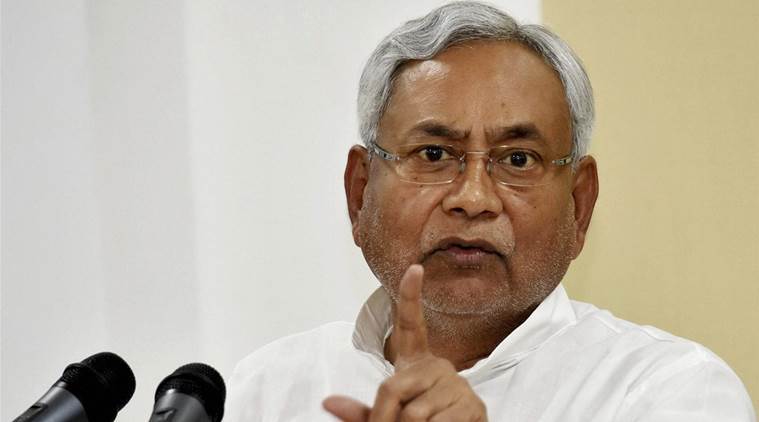
Bihar CM Nitish Kumar. (File Photo)

On Friday, a group of locals and functionary of an environment group had been applying a solution of clay and cowdung to protect cut parts of an Arjun tree so that new shoots and barks can come out. This was after the healthy tree of medical value was ordered to be felled with two other trees after the request of a Kankerbagh resident who said trees could damage his asbestos-roof, otherwise a flimsy reason to order felling of a healthy tree. An embarrassed forest department not only stopped the proposed felling of two other trees but also set up a two-member committee to know why the Patna DFO could issue such an order. The Patna DFO Ruchio Singhrde r on 19 June had ordered: “As three trees can cause damage to asbestos-shade houses, they should be cut”.

The incident came to light when leading Patna neurologist Dr Sanjay Kumar, a local resident, flagged the matter.

The Patna High Court has been hearing the issue of felling and relocation of trees in and around Patna since last June in response to a PIL filed by one Gaurav Kumar Singh, who had brought the attention of the court on the unplanned cutting of trees for new buildings and widening of roads. The petitioner had said Patna, as per the World Health Organisation, is one of the fifth most polluted cities of India on the count of air pollution. Taru Mitra alone has visited 25 places in the last six months to help prevent cutting of trees.

A division bench of Justice Jyoti Saran and Partha Sarthyhearinh, in CWJC No 8939/2019, on 25 June last year, verbally observed that” cutting of trees is equivalent to murder” and also observed that there had been allegations of some people putting chemical in roots of trees to get it felled. The court had later asked the state government to submit a detailed report on the matter with the action taken report. In the last two years, more than 2,000 trees have been cut in and around Patna.

Bihar Chief Minister Nitish Kumar has recently announced a mega drive to plant 2.5 crore plants on August 9 to boost his pet greenery project of “Jal, Jeevan, Hariyali” – worth Rs 25,000 crore. The chief minister has also talked about how his green mission had been helping generate huge employment in rural areas.

In Kankerbagh case, it was neurophysician Dr Sanjay Kumar, who flagged the issue and called Taru Mitra, an organisation working for the protection of the environment. Taru Mitra state coordinator Devopriya Dutta told The Indian Express, “A big Arjun tree of estimated 70 years age was completely pruned and only final felling was to be done. We fenced the free and applied standard cowdung and clay solution. The standard procedure says a healthy tree, which too of medicinal value, should not be cut, and if at all it has to be cut, it has to be relocated. We had met deputy CM and environment minister Sushil Kumar Modi early this year and got assurance of relocation plan”.

📣 The Indian Express is now on Telegram. Click here to join our channel (@indianexpress) and stay updated with the latest headlines

For all the latest India News, download Indian Express App.

Source link

A Truce, Not a Peace Treaty: A Global Economic Body Warns of Risks

0

WASHINGTON — Markets have become too complacent as risks from the coronavirus pandemic threaten global prosperity, the Bank for International Settlements warned in its annual report.

“The success of central banks in calming markets and shoring up confidence has even helped spark some market exuberance,” the global group, which supports the world’s central banks, said in the Tuesday release.

In a nod toward the recent disconnect between financial markets and the economy, the group said high stock prices and the lower premium on corporate debt suggested a divergence from the reality of economic weakness.

“Underlying financial fragilities remain,” the group said, adding that “this feels more like a truce than a peace settlement.”

The coronavirus pandemic roiled markets in March and April, as countries outside Asia began to lock down operations and it became clear that the health crisis would inflict pain upon major economies other than China’s.

Central banks responded rapidly as businesses and individuals scrambled to sell assets and raise cash, and the real-world crisis began to infect financial markets — making it hard for corporations to issue debt and difficult to trade even U.S. Treasury securities, which are usually highly liquid. Monetary policymakers bought huge sums of bonds and stepped into new markets as lenders of last resort, intent on staving off a full-fledged meltdown.

Investors were soothed, and they began buying stocks and debt again as they became confident that the Federal Reserve and its global counterparts stood ready to provide a backstop. Global stock indexes have rallied, and corporations have been issuing debt at a breakneck pace.

But now they might be overdoing it, the Bank for International Settlements and its leaders warned.

“Financial markets may have become too complacent — given that we are still at an early stage of the crisis and its fallout,” Agustín Carstens, the group’s general manager, warned in a speech tied to the release. He pointed out that the path of the virus and its effects on businesses still posed risks.

“Importantly, the shock to solvency is still to be fully felt,” Mr. Carstens said, warning that banks, which have extended loans to companies and consumers, will find themselves on the hook as businesses crash, taking workers down with them. That situation, the group warned, could be “triggered by cliff effects as initial fiscal support runs out and payment moratoriums expire.”

The report said that a surge in corporate defaults “is on the cards” and that such an event would “call for prompt and orderly debt restructuring,” along with other action from elected leaders with spending and lending powers.

If such problems are widespread, time-consuming bankruptcies could be a poor way to deal with them.

“Governments could play a useful but delicate role,” the report said. “This could range from setting some broad directions for restructuring to introducing some abbreviated, less granular processes, or possibly taking equity stakes in firms.”

The report also pointed to other vulnerabilities. Thanks to the U.S. dollar’s dominance in global commerce and finance, the Federal Reserve had to step in to calm global funding markets as conditions deteriorated in March.

The “huge scale” of the Fed response points to a vulnerability in the global monetary and financial system “when contrasted with the much smaller firepower of international organizations” like the International Monetary Fund, the report said. It said emerging market economies must rely on a “fragmented combination of mechanisms” to meet their liquidity needs in times of crisis until a “lasting political and practical solution” is found.

  • Updated June 24, 2020

    • Is it harder to exercise while wearing a mask?

      A commentary published this month on the website of the British Journal of Sports Medicine points out that covering your face during exercise “comes with issues of potential breathing restriction and discomfort” and requires “balancing benefits versus possible adverse events.” Masks do alter exercise, says Cedric X. Bryant, the president and chief science officer of the American Council on Exercise, a nonprofit organization that funds exercise research and certifies fitness professionals. “In my personal experience,” he says, “heart rates are higher at the same relative intensity when you wear a mask.” Some people also could experience lightheadedness during familiar workouts while masked, says Len Kravitz, a professor of exercise science at the University of New Mexico.

    • I’ve heard about a treatment called dexamethasone. Does it work?

      The steroid, dexamethasone, is the first treatment shown to reduce mortality in severely ill patients, according to scientists in Britain. The drug appears to reduce inflammation caused by the immune system, protecting the tissues. In the study, dexamethasone reduced deaths of patients on ventilators by one-third, and deaths of patients on oxygen by one-fifth.

    • What is pandemic paid leave?

      The coronavirus emergency relief package gives many American workers paid leave if they need to take time off because of the virus. It gives qualified workers two weeks of paid sick leave if they are ill, quarantined or seeking diagnosis or preventive care for coronavirus, or if they are caring for sick family members. It gives 12 weeks of paid leave to people caring for children whose schools are closed or whose child care provider is unavailable because of the coronavirus. It is the first time the United States has had widespread federally mandated paid leave, and includes people who don’t typically get such benefits, like part-time and gig economy workers. But the measure excludes at least half of private-sector workers, including those at the country’s largest employers, and gives small employers significant leeway to deny leave.

    • Does asymptomatic transmission of Covid-19 happen?

      So far, the evidence seems to show it does. A widely cited paper published in April suggests that people are most infectious about two days before the onset of coronavirus symptoms and estimated that 44 percent of new infections were a result of transmission from people who were not yet showing symptoms. Recently, a top expert at the World Health Organization stated that transmission of the coronavirus by people who did not have symptoms was “very rare,” but she later walked back that statement.

    • What’s the risk of catching coronavirus from a surface?

      Touching contaminated objects and then infecting ourselves with the germs is not typically how the virus spreads. But it can happen. A number of studies of flu, rhinovirus, coronavirus and other microbes have shown that respiratory illnesses, including the new coronavirus, can spread by touching contaminated surfaces, particularly in places like day care centers, offices and hospitals. But a long chain of events has to happen for the disease to spread that way. The best way to protect yourself from coronavirus — whether it’s surface transmission or close human contact — is still social distancing, washing your hands, not touching your face and wearing masks.

    • How does blood type influence coronavirus?

      A study by European scientists is the first to document a strong statistical link between genetic variations and Covid-19, the illness caused by the coronavirus. Having Type A blood was linked to a 50 percent increase in the likelihood that a patient would need to get oxygen or to go on a ventilator, according to the new study.

    • How many people have lost their jobs due to coronavirus in the U.S.?

      The unemployment rate fell to 13.3 percent in May, the Labor Department said on June 5, an unexpected improvement in the nation’s job market as hiring rebounded faster than economists expected. Economists had forecast the unemployment rate to increase to as much as 20 percent, after it hit 14.7 percent in April, which was the highest since the government began keeping official statistics after World War II. But the unemployment rate dipped instead, with employers adding 2.5 million jobs, after more than 20 million jobs were lost in April.

    • What are the symptoms of coronavirus?

      Common symptoms include fever, a dry cough, fatigue and difficulty breathing or shortness of breath. Some of these symptoms overlap with those of the flu, making detection difficult, but runny noses and stuffy sinuses are less common. The C.D.C. has also added chills, muscle pain, sore throat, headache and a new loss of the sense of taste or smell as symptoms to look out for. Most people fall ill five to seven days after exposure, but symptoms may appear in as few as two days or as many as 14 days.

    • How can I protect myself while flying?

      If air travel is unavoidable, there are some steps you can take to protect yourself. Most important: Wash your hands often, and stop touching your face. If possible, choose a window seat. A study from Emory University found that during flu season, the safest place to sit on a plane is by a window, as people sitting in window seats had less contact with potentially sick people. Disinfect hard surfaces. When you get to your seat and your hands are clean, use disinfecting wipes to clean the hard surfaces at your seat like the head and arm rest, the seatbelt buckle, the remote, screen, seat back pocket and the tray table. If the seat is hard and nonporous or leather or pleather, you can wipe that down, too. (Using wipes on upholstered seats could lead to a wet seat and spreading of germs rather than killing them.)

    • What should I do if I feel sick?

      If you’ve been exposed to the coronavirus or think you have, and have a fever or symptoms like a cough or difficulty breathing, call a doctor. They should give you advice on whether you should be tested, how to get tested, and how to seek medical treatment without potentially infecting or exposing others.


Mr. Carstens also urged central bankers to fix vulnerabilities in the financial sector outside the banking system, known as shadow banking.

While global regulators strengthened banks after the 2008 financial crisis, now “they need to help ensure that the nonbank financial sector optimally supports the real economy over the medium term,” he said.

If there is good news, according to the Bank for International Settlements, it is that formal banks — both the origin and the amplifier of the 2008 crisis — have performed better this time around, absorbing big balance sheet inflows and meeting credit line drawdowns, in some cases with the help of regulatory easing.

“A silver lining in this sobering picture is the state of the banking system,” the report said. “The pandemic found banks much better capitalized and more liquid, thanks largely to the post-crisis financial reforms coupled with a more subdued expansion.”

The Fed released the results of its annual stress tests last week, showing that large banks in America are prepared to sustain a shock but that a substantial chunk of them — about a quarter — will bump up against or even breach their capital minimums if the economy experiences a second pandemic wave and double-dip recession.

The Fed stopped short of barring banks from paying dividends next quarter, as some lawmakers and former regulators have urged — a decision that drew public criticism from one of the Fed’s governors, Lael Brainard, who said not taking stronger measures could “impair the recovery.”

Source link

Celebrate Asteroid Day 2020 with live talks about planetary defense

0

Defending Earth from asteroids may seem like science fiction, but planetary defense is a serious matter. That’s why scientists around the world mark June 30 — the anniversary of the Tunguska meteor explosion in Siberia in 1908 — as Asteroid Day. 

The Asteroid Foundation is hosting a five-hour series of panels and talks today to examine the state of asteroid research, discoveries and sample-return missions from Japan’s Hayabusa2 and NASA’s OSIRIS-REx missions. You can watch it live here via the Asteroid Foundation, as well as on Twitch. The program began at 7 a.m. EDT (1300 CEST) and will repeat later today.


Source link

Egypt warns of ‘existential threat’ from Ethiopia dam

Egypt has told the United Nations it faces an existential threat from a hydroelectric dam on the Blue Nile that Ethiopia plans to start filling in the coming weeks.

At a virtual meeting of the UN Security Council on Monday, Egypt’s Minister of Foreign Affairs Sameh Shoukry warned of conflict if the UN fails to intervene.

He urged the council to adopt a resolution that would give international clout to efforts to resolve the dispute over Ethiopia’s dam, the filling of which he said endangers the lives of 150 million Egyptians and Sudanese.

Shoukry said the draft resolution is in line with the outcome of an African Union (AU) summit on Friday where the leaders of Egypt, Sudan, and Ethiopia agreed to return to talks aimed at reaching an agreement over the filling of the $4.6bn Grand Ethiopian Renaissance Dam, known by its initials GERD.

“This draft resolution is not intended to pre-empt or forestall any negotiations, but to express at the highest levels the deep interests of the international community in reaching an agreement on the GERD and its appreciation of the dangers of acts of unilateralism in this matter,” he said.

Shoukry said the proposed resolution encourages the three countries to reach an agreement within two weeks and not take any unilateral measures in relation to the dam, and it “emphasises the important role of the UN secretary-general in this regard”.

Hours after the AU agreement was announced, the Ethiopian prime minister’s office said in a statement that the filling of the dam was set to begin within the next two weeks and that construction would continue.

Ethiopia’s UN ambassador said on Monday the UN was not the place to discuss the dispute.

“Let me be clear in that Ethiopia doesn’t believe the issue being discussed today has a legitimate place in the Security Council. It is bound to set a bad precedent and opens a Pandora’s box. This council should not be a forum for exerting diplomatic pressure,” said Taye Atskeselassie Amde.

He argued that Ethiopia has been deprived of its right to use the Blue Nile’s waters, saying more than 60 percent of the country is dry land with no sustaining water resources, while Egypt is endowed with groundwater and has access to seawater that could be desalinated.

Once completed, Amde said, the dam will bring electricity “to more than 65 million people who currently live in complete darkness”.

A view of the Blue Nile as it passes through the GERD near Guba, Ethiopia [Eduardo Soteras/AFP]

Escalating tensions

Both Egypt and Sudan appealed to the Security Council to intervene in the years-long dispute, which has seen bellicose rhetoric and escalating tensions.

The 15 Security Council members all expressed support for the AU action in reviving talks, but took no immediate action.

Egypt, which relies on the Nile for more than 90 percent of its water supply and already faces high water stress, fears a devastating impact on its booming population of 100 million.

Sudan, which also depends on the Nile for water, has played a key role in bringing the two sides together after the collapse of US-mediated talks in February.

Filling the dam without an agreement could bring the standoff to a critical juncture. Both Egypt and Ethiopia have hinted at military steps to protect their interests, and experts fear a breakdown in talks could lead to open conflict.

One analyst, however, believes it is unlikely any of the countries involved will resort to force.

“Ultimately, especially in the long run, the only way for Egypt to secure those [water] supplies is via cooperation with its upstream neighbours, very much including Ethiopia,” said William Davison, a senior analyst at the International Crisis Group.

“If this escalated into any form of conflict, it’s going to make it much, much more difficult for the parties to overcome the remaining obstacles to reaching an agreement on the GERD, and it really could set back relations in the long term,” he told Al Jazeera.

Balanced agreement

Sudan’s UN Ambassador Omer Mohamed Siddig called for the Security Council to take note of the AU’s effort.

He said Khartoum calls on leaders of the three countries “to demonstrate their political will and commitment by resolving the few remaining issues on the agreement”.

“We strongly believe that the African-led process can push forward the three parties’ efforts to reach a comprehensive, fair and balanced agreement,” Siddig said.

Sticking points in the talks have been how much water Ethiopia will release downstream from the dam if a multi-year drought occurs, and how Ethiopia, Egypt and Sudan will resolve any future disagreements.

Ahmed Soliman, a research fellow at Chatham House, said Cairo’s concerns were legitimate.

“What we have in Egypt is a significant gap between the amount of water they produce and the amount they consume. And with a rapidly growing population of over 100 million, it points to this problem only getting worse,” he said.

Source link