Thursday, May 14, 2026

Saturday was Queensland’s coldest ever May day

Meteorologist Rosa Hoff said Lucinda Point, about 100 kilometres north-west of Townsville, had a top of 17.3 degrees on Saturday, which made it the coldest maximum temperature every recorded.

The central Queensland coastal city of Bundaberg had a maximum of 13.2 degrees on Saturday, which made it the coldest May day in 129 years of records.

Loading

Ms Hoff said the central Queensland city of Rockhampton recorded a maximum of 12.2 degrees on Saturday, which put it within 0.1 degrees of equalling the city’s coldest recorded top temperature.

The records continued to tumble on Sunday with three minimum temperature records broken.

Lucinda Point had a low of 13.9 degrees, which was the coldest May day since 2000.

Hamilton Island, off the north Queensland coast, recorded a minimum of 13.9 degrees, the coldest May day since 1990.

The central Queensland coast town of Seventeen Seventy dropped to 8.3 degrees, the coldest May day since 2000.

In the south-east, Brisbane had a maximum of 15.1 degrees on Saturday. This was believed to be the coldest May day since the River City’s top of 15 degrees on May 22, 1922.

“After quite a cold weekend, we’re returning to normal conditions towards the coast, but it was quite a nippy one for many locations in south-east Queensland over the weekend,” Ms Hoff said.

“The Sunshine Coast got to a top of 14.7 degrees on Saturday, which was the coldest maximum temperature they have had in May since 1978.

“Stanthorpe on Sunday got to a maximum of 9.9 degrees, which was coldest May day since 1978.

“With the return of sunshine we have seen our temperature s pick up during the day, but nights are set to stay cold until the weekend.”

Most Viewed in National

Loading

Source by [author_name]

Notorious power station demolished in explosion

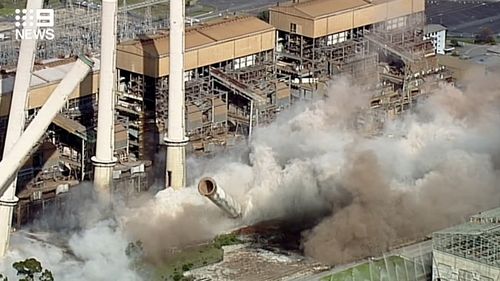
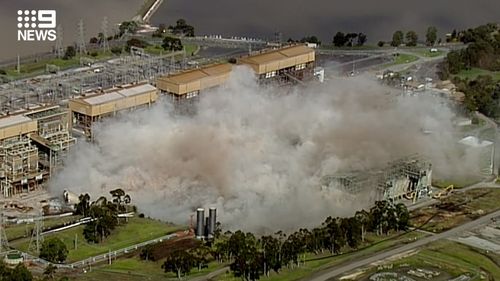
The chimneys, which soared 137 metres above the town of Morwell in the Latrobe Valley, came down just before 12.30pm today.

Owner Engie provided a live stream of the chimney demolition, which took about a minute and was viewed by thousands.

Hazelwood demolition captured. (Nine)
Aerial view of the explosion. (Nine)

The chimneys were built in the 1960s and operated for more than half a century before the brown coal-fuelled power station was shut down in March 2017.

There is about 50kg of asbestos in each chimney and about 12 tonnes of concrete, which will be monitored following the demolition in line with Victorian environment laws.

Engie said its ultimate goal is to rehabilitate the 4000-hectare site.

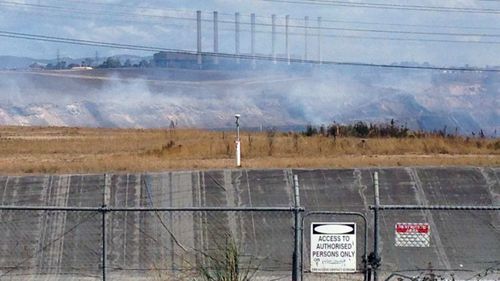
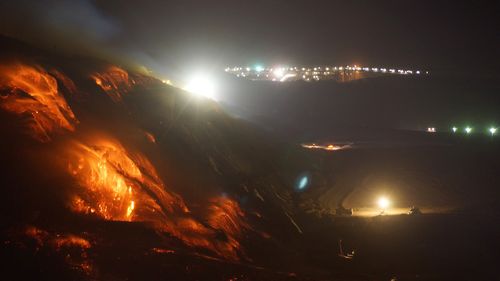
The site has been a headache for the Latrobe Valley community since 2014, when a bushfire spread to the coal mine and burned for 45 days.

The power station has been demolished. (Nine)

Hazelwood Power Corporation was fined $1.56 million last week in the Supreme Court of Victoria for putting employees and nearby residents at risk by failing to prepare for the fire.

The chimneys were blown up one by one within minutes.

There is about 50kg of asbestos in each chimney and about 12 tonnes of concrete.

Community members voiced concerns about the spread of asbestos from the explosions during the live Facebook forum.

Hazelwood Power Station’s 2014 mine fire. (ABC)

Mr McDowall said the detonations would not fragment the asbestos and that it would stay contained upon demolition.

“It’s a bonded product, it’s not a fragmentation product, it’s secure within its structure,” he said.

“It then hits the ground and becomes an asbestos product on the ground.”

Care was taken to conduct the demolition in prime weather conditions – a south-east to north-east direction with low wind speed – to control dust and plume from the explosions.

Hazelwood mine fire. (AP/AAP)

The site will be monitored for asbestos following the demolition in line with state laws.

Engie has been managing a process of retiring the brown-coal fuelled power station since it closed in 2017, with the ultimate goal to rehabilitate the 4000 hectare site.

The site has been a headache for the Latrobe Valley community since 2014, when a bushfire spread to the coal mine and burned for 45 days.

Hazelwood Power Corporation was fined $1.56 million on Tuesday in the Supreme Court of Victoria for putting employees and nearby residents at risk by failing to prepare for the fire.

Source by [author_name]

How a Kawasaki-like syndrome left this 6-year-old fighting for his life on a ventilator

0

The novel coronavirus outbreak

Worshipers offer Eid al-Fitr prayers outside a mosque in Tehran, Iran, on Sunday, May 24.

The novel coronavirus outbreak

Olivia Grant, right, hugs her grandmother, Mary Grace Sileo through a plastic drop cloth hung up on a homemade clothes line on May 24 in Wantagh, New York.

The novel coronavirus outbreak

Retired U.S. Marine Corps Brian Carabine replaces flags at the U.S. Veterans gravesite of the South End Cemetery in preparation for Memorial Day weekend on May 23, in East Hampton, New York.

The novel coronavirus outbreak

Graduates turn their tassels during a drive-thru graduation for Faith Lutheran High School at the Las Vegas Motor Speedway, on Friday, May 22 in Las Vegas, Nevada.

The novel coronavirus outbreak

The novel coronavirus outbreak

Workers wear protective gear as they start a cremation oven in Ecatepec, Mexico, on Thursday, May 21.

The novel coronavirus outbreak

A health worker wears a face shield while checking a patient’s temperature at a hospital in Toluca, Mexico, on May 21. Mexico had reported its highest number of new daily cases.

The novel coronavirus outbreak

People in Srinagar, India, lower the coffin of a woman who died from the coronavirus.

The novel coronavirus outbreak

The novel coronavirus outbreak

Levi Tinker, resident historian and general manager of the TCL Chinese Theatre in Hollywood, makes an announcement inside the theater’s empty auditorium on Monday, May 18. It was the theater’s 93rd birthday celebration.

The novel coronavirus outbreak

People practice social distancing in New York’s Domino Park on Sunday, May 17.

The novel coronavirus outbreak

Nurses in Nairobi, Kenya, take part in a Zumba fitness class in the parking lot of the Kenyatta University Teaching, Referral and Research Hospital on May 17.

The novel coronavirus outbreak

The novel coronavirus outbreak

The novel coronavirus outbreak

Mary Faye Cochran sings “You Are My Sunshine” to her son Stacey Smith from her senior-living facility in Smyrna, Georgia, on May 10. It was Mother’s Day in the United States.

The novel coronavirus outbreak

Pope Francis delivers a blessing from the window of his studio overlooking an empty St. Peter’s Square on May 10.

The novel coronavirus outbreak

The San Isidro cemetery in Mexico City, which was temporarily closed to the public to limit the spread of Covid-19, is seen in this aerial photo from May 10.

The novel coronavirus outbreak

Mary Washington speaks through a window to her daughter Courtney Crosby and grandchild Sydney Crosby during a Mother’s Day celebration at her senior-living facility in Smyrna.

The novel coronavirus outbreak

A Briarcliff High School student participates in a parade of graduating seniors through Briarcliff Manor, New York, on May 9.

The novel coronavirus outbreak

People wear face masks while watching a Victory Day military parade in Minsk, Belarus, on May 9. The parade marked the 75th anniversary of the Allied victory over Nazi Germany in World War II.

The novel coronavirus outbreak

A man rides past social-distancing markers in front of a shop in Brussels, Belgium, on May 9.

The novel coronavirus outbreak

A man pauses as he places the casket of a relative into a van at a busy New York funeral home on May 9.

The novel coronavirus outbreak

Health-care workers wait for citizens to arrive at the Anna International Airport in Chennai, India, on May 9. People were arriving in Chennai from Dubai, United Arab Emirates.

The novel coronavirus outbreak

A man wearing a face mask cycles through Chinatown in Yokohama, Japan, on May 8. Prime Minister Shinzo Abe announced that Japan will extend its state of emergency until the end of May.

The novel coronavirus outbreak

American citizens who were stranded in Syria due to the pandemic arrive at the Lebanese border on their way to the Beirut airport, where they would be leaving for the United States.

The novel coronavirus outbreak

During a protest in Washington on May 7, members of National Nurses United stand among empty shoes that they say represent nurses who have died from Covid-19.

The novel coronavirus outbreak

A worker helps disinfect a subway train in New York on May 6. The subway syatem was shut down for a deep-cleaning.

The novel coronavirus outbreak

High school students study in a classroom in Wuhan, China, as they returned to school on May 6.

The novel coronavirus outbreak

A nursery is disinfected in Cannes, France, on May 6. Nurseries in France were to gradually reopen on May 11.

The novel coronavirus outbreak

Refrigerated trucks are seen at a morgue that opened in New York to assist overwhelmed funeral homes.

The novel coronavirus outbreak

The novel coronavirus outbreak

The novel coronavirus outbreak

Michigan state police prevent protesters from entering the chamber of the Michigan House of Representatives on April 30. The protesters were unhappy with the state’s stay-at-home order. Gov. Gretchen Whitmer recently extended the order through May 15, though restrictions were relaxed so some businesses could reopen.

The novel coronavirus outbreak

This aerial photo shows surfers accessing Sydney’s Tamarama Beach on April 29. Several Sydney beaches reopened for exercise only.

The novel coronavirus outbreak

The novel coronavirus outbreak

A barber wears protective equipment as he cuts a customer’s hair in Lausanne, Switzerland, on April 27.

The novel coronavirus outbreak

The novel coronavirus outbreak

Health workers at a coronavirus testing center in New Delhi attend to a colleague who fainted due to exhaustion on April 27.

The novel coronavirus outbreak

The novel coronavirus outbreak

The novel coronavirus outbreak

Pitrik van der Lubbe waves from a boom lift to his 88-year-old father, Henk, at his father’s nursing home in Gouda, Netherlands, on April 24. Pitrik had not seen his father in more than four weeks.

The novel coronavirus outbreak

Protesters shout slogans against Lebanese Central Bank governor Riad Salamé as they block Hamra Street in Beirut, Lebanon, on April 23. Anti-government protesters have been demonstrating in Beirut as they continue to endure one of its worst-ever economic crises.

The novel coronavirus outbreak

A boy plays hopscotch at his home in A Coruna, Spain, on April 23.

The novel coronavirus outbreak

A dentist wears protective equipment while treating a patient in Den Bosch, Netherlands, on April 22.

The novel coronavirus outbreak

Biology teachers prepare to hold an exam at a secondary school in Berlin on April 22.

The novel coronavirus outbreak

A volunteer in Yangon, Myanmar, spreads calcium oxide on a road to help prevent the spread of the coronavirus on April 22.

The novel coronavirus outbreak

Migrants wave from balconies at a hotel in Kranidi, Greece, on April 21. The shelter, which hosts 470 asylum seekers, was placed in isolation after a pregnant resident tested positive for the novel coronavirus.

The novel coronavirus outbreak

A man disinfects a ceiling lamp at the ÄŒobanija Mosque in Sarajevo, Bosnia and Herzegovina, on April 21.

The novel coronavirus outbreak

A nurse holds a newborn baby, wearing a face shield as a protective measure, at a maternity facility in Jakarta, Indonesia, on April 21.

The novel coronavirus outbreak

Health workers at Madrid’s La Paz Hospital hold a minute of silence to remember Joaquin Diaz, the hospital’s chief of surgery who died because of the coronavirus.

The novel coronavirus outbreak

A woman applauds from the balcony of her Paris home to show support for health care workers on April 20.

The novel coronavirus outbreak

The novel coronavirus outbreak

Mayor’s office workers wear protective suits as they conduct a census in a Bogota, Colombia, neighborhood on April 19. They were trying to find out how many families needed to be provided with food.

The novel coronavirus outbreak

The novel coronavirus outbreak

A woman sticks her tongue out of a torn mask at a Reopen Maryland rally outside the State House in Annapolis, Maryland, on April 18. Residents in multiple states have been protesting stay-at-home orders.

The novel coronavirus outbreak

Newly married Tyler and Caryn Suiters embrace following their marriage ceremony in Arlington, Virginia, on April 18. The Rev. Andrew Merrow and his wife, Cameron, were the only other attendees at the ceremony, which was held at St. Mary’s Episcopal Church.

The novel coronavirus outbreak

Abed Khankan cuts a customer’s hair outdoors in Malmo, Sweden, on April 17.

The novel coronavirus outbreak

Two women walk to rent a small paddle boat by the Vltava River in Prague, Czech Republic, on April 17.

The novel coronavirus outbreak

Cars sit at a newly opened drive-in cinema in Dortmund, Germany, on April 17. It’s in front of a former blast furnace.

The novel coronavirus outbreak

Funeral workers in Manaus, Brazil, prepare the grave of a woman who is suspected to have died from the coronavirus.

The novel coronavirus outbreak

A member of the Don Bosco Foundation delivers food from the Fraternitas Project, which serves vulnerable families in Seville, Spain, on April 16.

The novel coronavirus outbreak

Police officers try on personal protective equipment in Amritsar, India, on April 16.

The novel coronavirus outbreak

Workers in Nairobi, Kenya, fumigate the streets and the stalls of the City Park Market on April 15.

The novel coronavirus outbreak

Novice Buddhist monks wear face shields at the Molilokayaram Educational Institute in Bangkok, Thailand, on April 15.

The novel coronavirus outbreak

A woman sits on a bench at an empty metro station in Prague, Czech Republic, on April 15.

The novel coronavirus outbreak

Health workers in Barcelona, Spain, acknowledge people who were showing their support from their balconies and windows.

The novel coronavirus outbreak

The novel coronavirus outbreak

Workers from the garment sector in Dhaka, Bangladesh, block a road during a protest demanding payment of unpaid wages.

The novel coronavirus outbreak

A woman meets with her son in a “Quarantainer,” a container devised to allow people to visit each other without risking the spread of coronavirus, at a care center in Utrecht, Netherlands, on April 14.

The novel coronavirus outbreak

Firefighters transfer a patient from an ambulance in Montpelier, France, on April 14.

The novel coronavirus outbreak

A cemetery worker pauses while digging graves at the San Vicente cemetery in Cordoba, Argentina, on April 14.

The novel coronavirus outbreak

Workers produce protective face masks at a new factory near Tehran, Iran, on April 14.

The novel coronavirus outbreak

The novel coronavirus outbreak

Medical workers in Istanbul clap for 107-year-old Havahan Karadeniz as she is discharged from the hospital on April 13. She had just recovered from the coronavirus.

The novel coronavirus outbreak

The novel coronavirus outbreak

A flower shop employee destroys unsold flowers in St. Petersburg, Russia, on April 13.

The novel coronavirus outbreak

A police officer requests that people return to return to their homes during a gathering that marked the Bisket Jatra festival in Bhaktapur, Nepal.

The novel coronavirus outbreak

A doctor in a protective chamber tests a patient for coronavirus at a walk-in kiosk in Chennai, India, on April 13.

The novel coronavirus outbreak

Musicians play their instruments for a retirement home in Karben, Germany, on April 13.

The novel coronavirus outbreak

A woman covers herself with plastic as heavy rain falls outside a New York hospital on April 13.

The novel coronavirus outbreak

People in Jerusalem attend the funeral of Eliyahu Bakshi-Doron, Israel’s former chief rabbi who died from coronavirus complications.

The novel coronavirus outbreak

In Rio de Janeiro, the Christ the Redeemer statue was illuminated to make Christ look like a doctor on April 12.

The novel coronavirus outbreak

The novel coronavirus outbreak

The novel coronavirus outbreak

A couple stands in a park along the Yangtze River in Wuhan, China.

The novel coronavirus outbreak

Priest-in-charge Angie Smith uses her phone to broadcast an Easter service from a churchyard in Hartley Wintney, England, on April 12.

The novel coronavirus outbreak

Children wave to a person dressed as the Easter Bunny during a neighborhood parade in Haverford, Pennsylvania, on April 10.

The novel coronavirus outbreak

Health workers in Leganes, Spain, cry during a memorial for a co-worker who died because of the coronavirus.

The novel coronavirus outbreak

Volunteers spray disinfectant in a favela in Rio de Janeiro on April 10.

The novel coronavirus outbreak

The novel coronavirus outbreak

A health care worker holds the hand of a coronavirus patient being moved at a hospital near Barcelona, Spain, on April 9.

The novel coronavirus outbreak

Service boats spray water in London to show support for health care workers on April 9.

The novel coronavirus outbreak

Employees of Hyundai Card, a credit card company, sit behind protective screens as they eat in an office cafeteria in Seoul, South Korea, on April 9.

The novel coronavirus outbreak

People wait in their cars for the San Antonio Food Bank to begin food distribution on April 9.

The novel coronavirus outbreak

A worker disinfects a carved cross at the Salt Cathedral in Zipaquira, Colombia, on April 8.

The novel coronavirus outbreak

A cake shop employee in Athens, Greece, prepares chocolate Easter bunnies with face masks on April 8.

The novel coronavirus outbreak

Californians Sarah and Aaron Sanders, along with their children, use video conferencing to celebrate a Passover Seder with other family members on April 8.

The novel coronavirus outbreak

The novel coronavirus outbreak

Cars in Wuhan line up to leave at a highway toll station.

The novel coronavirus outbreak

Rabbi Yaakov Kotlarsky places Passover Seder to-go packages into a car trunk in Arlington Heights, Illinois, on April 7.

The novel coronavirus outbreak

The novel coronavirus outbreak

The novel coronavirus outbreak

A man is sprayed with disinfectant prior to going to a market in Tirana, Albania, on Monday, April 6.

The novel coronavirus outbreak

Izzie, left, and Tippi wear ventilated dog masks in Philadelphia on April 6.

The novel coronavirus outbreak

The novel coronavirus outbreak

Police detain a doctor in Quetta, Pakistan, who was among dozens of health care workers protesting a lack of personal protective equipment on April 6.

The novel coronavirus outbreak

A Catholic priest sprinkles holy water on devotees during Palm Sunday celebrations in Quezon City, Philippines, on Sunday, April 5.

The novel coronavirus outbreak

The novel coronavirus outbreak

The novel coronavirus outbreak

Paramilitary members unload provisions in Kampala, Uganda, on Saturday, April 4. It was the first day of government food distribution for people affected by the nation’s lockdown.

The novel coronavirus outbreak

A police officer wearing a coronavirus-themed outfit walks in a market in Chennai, India, to raise awareness about social distancing.

The novel coronavirus outbreak

A woman in Moscow cooks while watching Russian President Vladimir Putin address the nation over the coronavirus pandemic.

The novel coronavirus outbreak

The hashtag “stayhome” is projected onto the Matterhorn mountain that straddles Switzerland and Italy on April 1. The mountain was illuminated by Swiss artist Gerry Hofstetter, who is transforming buildings, monuments and landscapes all over the world to raise awareness during the pandemic.

The novel coronavirus outbreak

Volunteers load food bags on a truck to deliver them to low-income families in Panama City, Panama, on April 1.

The novel coronavirus outbreak

Designer Friederike Jorzig adjusts a mannequin wearing a wedding dress and a face mask at her store in Berlin on March 31.

The novel coronavirus outbreak

People pray next to the grave of musician Robson de Souza Lopes after his burial in Manaus, Brazil, on March 31. According to authorities at the Amazonas Health Secretary, the 43-year-old died after being diagnosed with the novel coronavirus.

The novel coronavirus outbreak

Chris Lyndberg hands out a free lunch to a truck driver at a rest area along Interstate 10 in Sacaton, Arizona, on March 31. The Arizona Trucking Association was giving away 500 Dilly’s Deli lunches to show its appreciation for truck drivers who have been delivering medical supplies, food and other necessities during the coronavirus pandemic.

The novel coronavirus outbreak

The novel coronavirus outbreak

The novel coronavirus outbreak

Farmers deliver vegetables to a customer in Saint-Georges-sur-Cher, France, on March 29.

The novel coronavirus outbreak

People listen from their homes as priests conduct Sunday mass from a church roof in Rome on March 29.

The novel coronavirus outbreak

The novel coronavirus outbreak

A worker fixes partitions at a quarantine center in Guwahati, India, on March 28.

The novel coronavirus outbreak

Devices used in diagnosing the coronavirus are inspected in Cheongju, South Korea, on March 27. The devices were being prepared for testing kits at the bio-diagnostic company SD Biosensor.

The novel coronavirus outbreak

A student does homework in Bratislava, Slovakia, on March 27. Schools have been shut down across the world, and many children have been receiving their lessons online.

The novel coronavirus outbreak

A National Guard truck sprays disinfectant in Caracas, Venezuela, on March 27.

The novel coronavirus outbreak

The novel coronavirus outbreak

Pope Francis prays in an empty St. Peter’s Square on March 27.

The novel coronavirus outbreak

Coffins carrying coronavirus victims are stored in a warehouse in Ponte San Pietro, Italy, on March 26. They would be transported to another area for cremation.

The novel coronavirus outbreak

Members of Iran’s Revolutionary Guard prepare to take part in disinfecting the city of Tehran on March 25.

The novel coronavirus outbreak

Lydia Hassebroek attends a ballet class from her home in New York on March 25.

The novel coronavirus outbreak

People visit the Beijing Zoo on March 25 after it reopened its outdoor exhibits to the public.

The novel coronavirus outbreak

The novel coronavirus outbreak

A woman suspected of having coronavirus is helped from her home by emergency medical technicians Robert Sabia, left, and Mike Pareja, in Paterson, New Jersey, on March 24.

The novel coronavirus outbreak

People practice social distancing as they wait for takeout food at a shopping mall in Bangkok, Thailand, on March 24.

The novel coronavirus outbreak

The novel coronavirus outbreak

The novel coronavirus outbreak

People arrive at the South Municipal Cemetery in Madrid to attend the burial of a man who died from the coronavirus.

The novel coronavirus outbreak

Passengers arrive at Hong Kong International Airport on March 23.

The novel coronavirus outbreak

Giuseppe Corbari holds Sunday Mass in front of photographs sent in by his congregation members in Giussano, Italy, on March 22. Many religious services are being streamed online so that people can worship while still maintaining their distance from others.

The novel coronavirus outbreak

People clap from balconies to show their appreciation for health care workers in Mumbai, India.

The novel coronavirus outbreak

A woman attends a Sunday service at the Nairobi Baptist Church in Nairobi, Kenya, on March 22. The service was streamed live on the internet.

The novel coronavirus outbreak

A Syrian Red Crescent member sprays disinfectant along an alley of the historic Hamidiyah market in Damascus, Syria.

The novel coronavirus outbreak

The novel coronavirus outbreak

A funeral service is held without family members in Bergamo, Italy, on March 21.

The novel coronavirus outbreak

A member of the Syrian Violet relief group disinfects tents at a camp for displaced people in Kafr Jalis, Syria, on March 21.

The novel coronavirus outbreak

A doctor examines Juan Vasquez inside a testing tent at St. Barnabas Hospital in New York on March 20.

The novel coronavirus outbreak

The novel coronavirus outbreak

Medical staff wearing protective suits ride down an escalator at Moscow’s Sheremetyevo International Airport on March 18.

The novel coronavirus outbreak

The novel coronavirus outbreak

A patient in a biocontainment unit is carried on a stretcher in Rome on March 17.

The novel coronavirus outbreak

A pedestrian walks a dog through a quiet street in New York on March 17.

The novel coronavirus outbreak

People gather to collect free face masks in New Delhi on March 17.

The novel coronavirus outbreak

The novel coronavirus outbreak

Students at the Attarkiah Islamic School wear face masks during a ceremony in Thailand’s southern province of Narathiwat on March 17.

The novel coronavirus outbreak

People wait outside a Woolworths store in Sunbury, Australia on March 17. Australian supermarket chains announced special shopping hours for the elderly and people with disabilities so that they can shop in less crowded aisles.

The novel coronavirus outbreak

A member of Spain’s Military Emergencies Unit carries out a general disinfection at the Malaga airport on March 16.

The novel coronavirus outbreak

Displaced families near Atme, Syria, attend a workshop aimed at spreading awareness about the coronavirus.

The novel coronavirus outbreak

The novel coronavirus outbreak

A police officer checks the temperatures of bus passengers at a checkpoint in Manila, Philippines, on March 16.

The novel coronavirus outbreak

Flowers are stored prior to their destruction at a flower auction in Aalsmeer, Netherlands, on March 16. Lower demand due to the coronavirus outbreak is threatening the Dutch horticultural sector, forcing the destruction of products.

The novel coronavirus outbreak

Body temperatures are scanned as people enter the Buddhist temple Wat Pho in Bangkok, Thailand, on March 13.

The novel coronavirus outbreak

Two nuns greet neighbors from their balcony in Turin, Italy, on Sunday, March 15.

The novel coronavirus outbreak

The novel coronavirus outbreak

Passengers wait for their flights at Marrakesh Airport in Morocco on March 15.

The novel coronavirus outbreak

US Vice President Mike Pence takes a question during a White House briefing about the coronavirus on March 15.

The novel coronavirus outbreak

A Sea World employee sprays disinfectant in Jakarta, Indonesia, on Saturday, March 14.

The novel coronavirus outbreak

The novel coronavirus outbreak

The novel coronavirus outbreak

A member of the White House physician’s office takes a media member’s temperature in the White House briefing room on March 14. It was ahead of a news conference with President Donald Trump and Vice President Mike Pence.

The novel coronavirus outbreak

The novel coronavirus outbreak

Reporters in Arlington, Virginia, sit approximately 4 feet apart during a briefing by Marine Corps Gen. Kenneth F. McKenzie on March 13.

The novel coronavirus outbreak

People walk past a closed Broadway theater on March 13 after New York canceled all gatherings over 500 people.

The novel coronavirus outbreak

A Costco customer stands by two shopping carts in Richmond, California, on March 13.

The novel coronavirus outbreak

A teacher works in an empty classroom at the Pompeu Fabra University in Barcelona, Spain.

The novel coronavirus outbreak

A woman looks at an empty bread aisle in Antwerp, Belgium, on March 13.

The novel coronavirus outbreak

Employees of the Greek Parliament wear plastic gloves ahead of the swearing-in ceremony for Greek President Katerina Sakellaropoulou.

The novel coronavirus outbreak

A motorcyclist drives through disinfectant sprayed in Jammu, India, on March 13.

The novel coronavirus outbreak

Workers prepare to construct an additional building on a hospital on the outskirts of Moscow.

The novel coronavirus outbreak

Paul Boyer, head equipment manager of the NHL’s Detroit Red Wings, wheels out equipment bags in Washington on March 12. The NHL is among the sports leagues that have suspended their seasons.

The novel coronavirus outbreak

Students leave Glacier Peak High School in Snohomish, Washington, on March 12. Beginning the following day, schools in the Snohomish school district planned to be closed through April 24.

The novel coronavirus outbreak

An Uber Eats delivery biker stands at a deserted Piazza di Spagna in Rome.

The novel coronavirus outbreak

The novel coronavirus outbreak

Workers in protective suits disinfect Istanbul’s Dolmabahce Palace on March 11.

The novel coronavirus outbreak

A person wearing a face mask walks outside of a shopping mall in Beijing on March 11.

The novel coronavirus outbreak

The novel coronavirus outbreak

Medical staff in Wuhan, China, celebrate after all coronavirus patients were discharged from a temporary hospital on March 9.

The novel coronavirus outbreak

The novel coronavirus outbreak

The novel coronavirus outbreak

The novel coronavirus outbreak

Sumo wrestlers attend a tournament in Osaka, Japan, that was being held behind closed doors because of the coronavirus outbreak.

The novel coronavirus outbreak

A couple rides a bicycle at a park in Seoul, South Korea, on March 7.

The novel coronavirus outbreak

A volunteer from Blue Sky Rescue uses fumigation equipment to disinfect a residential compound in Beijing on March 5.

The novel coronavirus outbreak

The novel coronavirus outbreak

Municipal workers are seen at the Kaaba, inside Mecca’s Grand Mosque. Saudi Arabia emptied Islam’s holiest site for sterilization over coronavirus fears, an unprecedented move after the kingdom suspended the year-round Umrah pilgrimage.

The novel coronavirus outbreak

Passengers react as a worker wearing a protective suit disinfects the departure area of a railway station in Hefei, China, on March 4.

The novel coronavirus outbreak

Teachers at the Nagoya International School in Japan conduct an online class for students staying at home as a precaution against the spread of coronavirus.

The novel coronavirus outbreak

Soldiers spray disinfectant throughout a shopping street in Seoul.

The novel coronavirus outbreak

A Muslim worshipper attends a mass prayer against coronavirus in Dakar, Senegal, on March 4. It was after cases were confirmed in the country.

The novel coronavirus outbreak

People wear face masks in New York’s Times Square on March 3. New York reported its first case of coronavirus two days earlier.

The novel coronavirus outbreak

A security guard stands on the Shibuya Sky observation deck in Tokyo on March 3.

The novel coronavirus outbreak

The novel coronavirus outbreak

Medical staff stand outside a hospital in Daegu, South Korea, on March 1.

The novel coronavirus outbreak

Health care workers transfer a patient at the Life Care Center in Kirkland, Washington, on March 1. The long-term care facility is linked to confirmed coronavirus cases.

The novel coronavirus outbreak

British Prime Minister Boris Johnson visits a London laboratory of the Public Health England National Infection Service.

The novel coronavirus outbreak

Tomoyuki Sugano, a professional baseball player on the Yomiuri Giants, throws a pitch in an empty Tokyo Dome during a preseason game on February 29. Fans have been barred from preseason games to prevent the spread of the coronavirus.

The novel coronavirus outbreak

Commuters wearing masks make their way to work during morning rush hour at the Shinagawa train station in Tokyo on February 28.

The novel coronavirus outbreak

Medical staff transport a coronavirus patient within the Red Cross hospital in Wuhan on February 28.

The novel coronavirus outbreak

The novel coronavirus outbreak

A bank clerk disinfects banknotes in China’s Sichuan province on February 26.

The novel coronavirus outbreak

A child wearing a protective face mask rides on a scooter in an empty area in Beijing.

The novel coronavirus outbreak

A Catholic devotee wears a face mask as he is sprinkled with ash during Ash Wednesday services in Paranaque, Philippines, on February 26.

The novel coronavirus outbreak

People disinfect Qom’s Masumeh shrine in Tehran, Iran, on February 25.

The novel coronavirus outbreak

A worker in Daegu stacks plastic buckets containing medical waste from coronavirus patients on February 24.

The novel coronavirus outbreak

Paramedics carry a stretcher off an ambulance in Hong Kong on February 23.

The novel coronavirus outbreak

The novel coronavirus outbreak

A team of volunteers disinfects a pedestrian bridge in Bangkok, Thailand.

The novel coronavirus outbreak

A man rides his bike in Beijing on February 23.

The novel coronavirus outbreak

Hospital personnel in Codogno, Italy, carry new beds inside the hospital on February 21. The hospital is hosting some people who have been diagnosed with the novel coronavirus.

The novel coronavirus outbreak

Doctors look at a CT scan of a lung at a hospital in Xiaogan, China, on February 20.

The novel coronavirus outbreak

The novel coronavirus outbreak

The novel coronavirus outbreak

A medical worker rests at the isolation ward of the Red Cross hospital in Wuhan on February 16.

The novel coronavirus outbreak

Authorities watch as the Westerdam cruise ship approaches a port in Sihanoukville, Cambodia, on February 13. Despite having no confirmed cases of coronavirus on board, the Westerdam was refused port by four other Asian countries before being allowed to dock in Cambodia.

The novel coronavirus outbreak

A worker has his temperature checked on a shuttered commercial street in Beijing on February 12.

The novel coronavirus outbreak

Beds are made in the Wuhan Sports Center, which has been converted into a temporary hospital.

The novel coronavirus outbreak

A child rides a scooter past a police officer wearing protective gear outside the Hong Mei House in Hong Kong on February 11. More than 100 people evacuated the housing block after four residents in two different apartments tested positive for the coronavirus.

The novel coronavirus outbreak

The novel coronavirus outbreak

The novel coronavirus outbreak

A police officer, left, wears protective gear as he guards a cordon at the Hong Mei House in Hong Kong on February 11.

The novel coronavirus outbreak

The novel coronavirus outbreak

Chinese President Xi Jinping has his temperature checked during an appearance in Beijing on February 10.

The novel coronavirus outbreak

The novel coronavirus outbreak

People participating in a Lunar New Year Parade in New York City hold signs reading, “Wuhan stay strong!” on February 9.

The novel coronavirus outbreak

The novel coronavirus outbreak

A worker wearing a protective suit uses a machine to disinfect a business establishment in Shanghai, China, on February 9.

The novel coronavirus outbreak

Workers in protective gear walk near the Diamond Princess cruise ship docked in Yokohama on February 7.

The novel coronavirus outbreak

The novel coronavirus outbreak

A woman grieves while paying tribute to Li at Li’s hospital in Wuhan on February 7.

The novel coronavirus outbreak

The Anthem of the Seas cruise ship is seen docked at the Cape Liberty Cruise Port in Bayonne, New Jersey, on February 7. Passengers were to be screened for coronavirus as a precaution, an official with the Centers for Disease Control and Prevention told CNN.

The novel coronavirus outbreak

A light installation is displayed by striking members of the Hospital Authority Employees Alliance and other activists at the Hospital Authority building in Hong Kong on February 7.

The novel coronavirus outbreak

Passengers are seen on the deck of the Diamond Princess cruise ship, docked at the Yokohama Port on February 7.

The novel coronavirus outbreak

Flight attendants wearing face masks make their way through Don Mueang Airport in Bangkok on February 7.

The novel coronavirus outbreak

Workers check sterile medical gloves at a latex-product manufacturer in Nanjing, China, on February 6.

The novel coronavirus outbreak

A woman wears a protective mask as she shops in a Beijing market on February 6.

The novel coronavirus outbreak

This aerial photo shows the Leishenshan Hospital that is being built in Wuhan to handle coronavirus patients.

The novel coronavirus outbreak

A passenger shows a note from the World Dream cruise ship docked at the Kai Tak cruise terminal in Hong Kong on February 5.

The novel coronavirus outbreak

A mask is seen on a statue in Beijing on February 5.

The novel coronavirus outbreak

The novel coronavirus outbreak

A dog in Beijing wears a makeshift mask constructed from a paper cup.

The novel coronavirus outbreak

Striking hospital workers in Hong Kong demand the closure of the border with mainland China on February 4.

The novel coronavirus outbreak

The Diamond Princess cruise ship sits anchored in quarantine off the port of Yokohama on February 4. It arrived a day earlier with passengers feeling ill.

The novel coronavirus outbreak

A medical worker wearing protective gear waits to take the temperature of people entering Princess Margaret Hospital in Hong Kong on February 4.

The novel coronavirus outbreak

Medical workers in protective suits help transfer patients to a newly completed field hospital in Wuhan.

The novel coronavirus outbreak

People wearing protective overalls talk outside a Wuhan hotel housing people in isolation on February 3.

The novel coronavirus outbreak

A man stands in front of TV screens broadcasting a speech by Hong Kong Chief Executive Carrie Lam on February 3. Lam said the city would shut almost all border-control points to the mainland.

The novel coronavirus outbreak

A colleague sprays disinfectant on a doctor in Wuhan on February 3.

The novel coronavirus outbreak

The novel coronavirus outbreak

Medical workers move a coronavirus patient into an isolation ward at the Second People’s Hospital in Fuyang, China, on February 1.

The novel coronavirus outbreak

Children wear plastic bottles as makeshift masks while waiting to check in to a flight at the Beijing Capital Airport on January 30.

The novel coronavirus outbreak

Passengers in Hong Kong wear protective masks as they wait to board a train at Lo Wu Station, near the mainland border, on January 30.

The novel coronavirus outbreak

A volunteer wearing protective clothing disinfects a street in Qingdao, China, on January 29.

The novel coronavirus outbreak

Nanning residents line up to buy face masks from a medical appliance store on January 29.

The novel coronavirus outbreak

Lyu Jun, left, a member of a medical team leaving for Wuhan, says goodbye to a loved one in Urumqi, China, on January 28.

The novel coronavirus outbreak

A charter flight from Wuhan arrives at an airport in Anchorage, Alaska, on January 28. The US government chartered the plane to bring home US citizens and diplomats from the American consulate in Wuhan.

The novel coronavirus outbreak

South Korean President Moon Jae-in wears a mask to inspect the National Medical Center in Seoul on January 28.

The novel coronavirus outbreak

Hong Kong Chief Executive Carrie Lam, center, attends a news conference in Hong Kong on January 28. Lam said China will stop individual travelers to Hong Kong while closing some border checkpoints and restricting flights and train services from the mainland.

The novel coronavirus outbreak

Workers at an airport in Novosibirsk, Russia, check the temperatures of passengers who arrived from Beijing on January 28.

The novel coronavirus outbreak

US Health and Human Services Secretary Alex Azar speaks during a news conference about the American public-health response.

The novel coronavirus outbreak

Two residents walk in an empty park in Wuhan on January 27. The city remained on lockdown for a fourth day.

The novel coronavirus outbreak

A person wears a protective mask, goggles and coat as he stands in a nearly empty street in Beijing on January 26.

The novel coronavirus outbreak

Medical staff members bring a patient to the Wuhan Red Cross hospital on January 25.

The novel coronavirus outbreak

People wear protective masks as they walk under Lunar New Year decorations in Beijing on January 25.

The novel coronavirus outbreak

Construction workers in Wuhan begin to work on a special hospital to deal with the outbreak on January 24.

The novel coronavirus outbreak

The novel coronavirus outbreak

A couple kisses goodbye as they travel for the Lunar New Year holiday in Beijing on January 24.

The novel coronavirus outbreak

Workers manufacture protective face masks at a factory in China’s Hubei Province on January 23.

The novel coronavirus outbreak

Shoppers wear masks in a Wuhan market on January 23.

The novel coronavirus outbreak

Passengers are checked by a thermography device at an airport in Osaka, Japan, on January 23.

The novel coronavirus outbreak

People wear masks while shopping for vegetables in Wuhan on January 23.

The novel coronavirus outbreak

A militia member checks the body temperature of a driver in Wuhan on January 23.

The novel coronavirus outbreak

Passengers wear masks as they arrive at the Ninoy Aquino International Airport in Manila, Philippines, on January 23.

The novel coronavirus outbreak

A customer holds boxes of particulate respirators at a pharmacy in Hong Kong on January 23.

The novel coronavirus outbreak

Passengers wear masks at the high-speed train station in Hong Kong on January 23.

The novel coronavirus outbreak

A woman rides an electric bicycle in Wuhan on January 22.

The novel coronavirus outbreak

People in Guangzhou, China, wear protective masks on January 22.

The novel coronavirus outbreak

People go through a checkpoint in Guangzhou on January 22.

The novel coronavirus outbreak

Medical staff of Wuhan’s Union Hospital attend a gathering on January 22.

The novel coronavirus outbreak

Health officials hold a news conference in Beijing on January 22.
Source link

As Fishermen Flounder, Trump Clears A Path For Factory Farming The Oceans

Kindra Arnesen still had her baby teeth when she started working on the docks in Plaquemine Parish, a spindrift of land kicked southeastward off the Louisiana boot tip into the Gulf of Mexico.

Family troubles made home an unwelcome place. But with fishermen, many of whom had hauled shrimp and almaco jack from the Gulf for generations, she found safety and income, earning hundreds of dollars a week shucking oysters in the sticky summer heat. 

“These guys took me in and brought me up,” Arnesen said. “They showed me this is a good way of life.”

Making a living has been getting harder for her and others in the business. Tight regulations, pollution from the 2010 Deepwater Horizon oil spill, and competition from charter boats and amateur anglers were already driving would-be fourth- or fifth-generation fishers in the region to take up other professions. Then came the novel coronavirus pandemic. 

Since lockdown measures began across the country in March, seafood sales to restaurants, which normally buy up to 80% of fresh catch, have dropped dramatically, threatening thousands of mom-and-pop fishing businesses with bankruptcy. 

So when President Donald Trump ordered the Commerce Department to roll back regulations on commercial fishing earlier this month, Arnesen expected some relief. But her stomach dropped as she read the May 7 executive order. The main thrust of the presidential fiat set in motion a process to open federal waters, the stretch of ocean between three to 200 miles off most U.S. coastlines, to private companies farming fish in giant pens.

“It’s such a slap in the face,” Arnesen said. “This will destroy not only my business model but thousands of other business models across the entire coastline.”

Advocates for the U.S. aquaculture industry have long argued that the world’s growing appetite for seafood demands the expansion of fish farming, from oyster beds and inland salmon ponds to open-water pens teeming with finfish. At a moment when human-induced global warming is rapidly changing life in oceans, those in this nascent sector compare offshore aquaculture to seaward wind turbines ― a tool with more benefits than tradeoffs when it comes to sustainability. 

“The United States has the technology, the skilled workforce, the coastal infrastructure, and the growing market for healthy farmed seafood,” Bill DiMento, president of the pro-aquaculture business group Stronger America Through Seafood, said in a statement. “Our country needs economic stimulus ― not just in terms of immediate cash assistance, but also in the form of new job opportunities. Why not put Americans back to work in an emerging industry like aquaculture at a time when it is needed most?”

But the concern isn’t just that raising tuna or tilapia in federal waters will eat into the market share of those who currently make a living off the seas. Environmentalists say farmed fish produce concentrated pollution and risk devastating wild populations should they accidentally get turned loose in open waters.

The existing supply networks for producing the food farmed fish eat threaten to break foundational links in food chains from the Gulf to The Gambia, the small country on Africa’s west coast, jeopardizing the animals and people who have relied on the fish stocks that aquaculture companies crave. 

The Trump administration’s move comes as the novel coronavirus pandemic rips through the nation’s meat supply chain. That has fueled fresh calls to drastically overhaul the meat-producing industry, whose pollution, animal cruelty and harsh treatment of workers threaten more public health crises in years to come. 


An aquaculture fishery in Qingdao, China.

“This is the nightmare scenario: Having all these factory fish farms offshore that are going to be breeding disease and causing pollution,” said Rosanna Marie Neil, the policy counsel at the Northwest Atlantic Marine Alliance, a group that advocates for fishermen. “That’s the last thing we need right now when we’re going through a pandemic.”

‘It’ll Drop Our Price To Bottom Dollar’

Before any giant fish pens can be plopped down in open oceans, Congress would need to give its approval through legislation, Neil said. But the aquaculture industry already enjoys bipartisan support.

Its website, Stronger America Through Seafood ― whose board includes executives from aquaculture startups, the restaurant chain Red Lobster and agribusiness giant Cargill ― displays endorsements from Rep. Steven Palazzo (R-Miss.) and Rep. Collin Peterson (D-Minn.). The group has spent at least $161,500 on lobbying since the start of 2018, according to disclosures ProPublica collated. 

What Trump’s executive order this month did is establish the federal chain of command to speed through aquaculture projects once the legal approval is in place. 

The 3,100-word order instructs federal agencies to start devising a permit system and designates the National Oceanic and Atmospheric Administration (NOAA) as the lead agency with authority to review and green-light projects in federal waters. 

The order, according to the Food & Environment Reporting Network, settles a longstanding debate over who should regulate the nation’s fisheries, requiring that other agencies cooperate with NOAA’s decisions. NOAA sued for such authority as recently as 2016. 

The Environmental Protection Agency is still reviewing a project to raise almaco jack in weighted net pens shaped like chalices in the Gulf of Mexico off Sarasota, Florida. Under the new guidelines, NOAA would have ultimate authority to oversee similar projects.

“Our mission, as a company, is to soften humanity’s footprint on the seas,” said Neil Anthony Sims, the chief executive of Ocean Era, the company behind the project. 

“If we can have established a commercial offshore net pen operation in the Gulf of Mexico by 2025, so that the Gulf-region fishing and boating communities can actually see for themselves the minimal impacts,” he said, “then I will feel that we have established a model for how we might be able to then build further on this, and move to significantly reduce our collective footprint on marine ecosystems.” 

But the project, known as Velella Epsilon, highlights the concerns fishers like Arnesen have over offshore fish farming. The project proposed raising two cohorts of fish over 18 months, ultimately producing 136,000 pounds of seafood, nearly two-thirds the total commercial fishers’ annual catch limit for wild species.

Yet commercial fishers, Arnesen said, feel they’re at a disadvantage. They pay thousands upon thousands of dollars to meet regulatory requirements and haul fish from the open waters during only certain times of the year. Farms, meanwhile, have costs that are easier to calculate, and they harvest all at once, potentially flooding the market before the fishing season even starts.

“They’re literally trying to match every bit of stock that we’re already putting on the market,” Arnesen said. “What would happen if they’re successful and that occurs? It’ll drop our price to bottom dollar, where it will no longer be feasible for us to fish that particular species.” 

Another worry is what happens when a storm comes. Federal forecasters last week predicted 2020 would bring a record fifth consecutive active hurricane season.  

“We’re a hotspot for tropical storms and hurricanes,” Arnesen said. “I’ve seen where medium-sized hurricanes have ripped oil platforms from the seafloor. How do they think they can secure these cages? There’s no way to build a structure that a storm can’t tear up.”

Washington state banned inland salmon farms in 2018 after the non-native domestic fish escaped cages and invaded local rivers. The effects of unleashing the fish into ecosystems already in flux is one problem from climate change is still unclear. Pollution from net pens is another concern.

“There’s the waste issue,” said Miriam Goldstein, the director of ocean policy at the liberal Center for American Progress. “Simply put: These fish are pooping.”

Researchers writing in the Journal of Agricultural and Environmental Ethics volume concluded in 2011 that the “obvious environmental and animal welfare aspects of finfish aquaculture make it hard to ethically defend a fish diet.”

Sims pointed to a five-year study published in 2019 in the Journal of the World Aquaculture Society that found no significant uptick in pollution from an offshore finfish farm off of Panama’s Caribbean coast.

Yet pesticides and chemicals to treat farmed fish for diseases that may develop in close quarters could also cause damage, as can excess food that falls out of the cages. A 2014 federal review found “offshore finfish aquaculture operations generally do not have the ability to prevent chemicals and veterinary drugs (if used) and uneaten feed and fish waste from leaving the farm environment and flowing into adjacent waters.” The environmental group Friends of the Earth concluded that “diseases, parasites, and other issues plague the stocks of industrial ocean fish farms, often causing significant death tolls.”

One model for avoiding these problems is Sims’ flagship fish farm in Hawaii, called Kona Kampachi. The project, which moved forward with special permits from NOAA and is now run by the company Blue Ocean Mariculture, is carefully monitored with divers who halt feeding if fishmeal starts seeping out of the spherical net pens.

But Goldstein said the Hawaii farm “isn’t necessarily replicable.” Hawaii, the product of undersea volcanoes, has no continental shelf, so the farm is located in deep waters where there is little concern for how feces or food could hurt life at the bottom. (Sims argued that mandating and enforcing similar conditions would be “simply a matter of agency will. No one, anywhere, is suggesting that that be changed.”)

This is the nightmare scenario: Having all these factory fish farms offshore that are going to be breeding disease and causing pollution.
Rosanna Marie Neil, policy counsel at the Northwest Atlantic Marine Alliance

The fishmeal itself raises more concerns. Fish farms in the Gulf would likely feed on anchovies or menhaden, a small, oily and abundant fish that serves as a cornerstone of the wild food chain, disrupting the wild ecosystem. Pressure on the menhaden population in the years after the BP oil spill, for example, threw other species into turmoil, studies published in 2017 found. 

The aquaculture industry’s demand for such fishmeal ripples oceans away.  Chinese fishmeal companies monopolized the market for fish that locals in The Gambia, once considered a staple protein. 

“Now the people there have no access to those fish because fishmeal firms can pay more,” Goldstein said. “If U.S. fish farms were to enter the fray, there’s no guarantee fishmeal would be sustainably or ethically sourced.”

A False Premise

The Trump administration frequently cites the statistic that 90% of seafood Americans eat is imported ― the so-called “seafood deficit,” which in turn is part of the argument propelling fish farming projects. But the 90% figure is misleading. A large percentage of the seafood consumed in the U.S. is caught here, shipped overseas for processing, then re-imported.

A study published last May in the Proceedings of the National Academy of Sciences argued that the percentage of seafood caught overseas and eaten in the U.S. is closer to 65%. 

Even that figure doesn’t mean “the seafood deficit is a problem,” said Goldstein. 

“It reflects consumer preferences,” she said. “If you go to Costco and look at what people are buying and selling, Americans like to eat a lot of farmed salmon and imported shrimp. But America catches a lot of squid.” 

Federal regulators could also permit commercial fishers to catch species currently designated only for sport fishing and personal consumption, such as red drum, an abundant and flavorful fish. 

“There are underutilized species that we could be harvesting to feed our nation,” Arnesen said. 

President Donald Trump's administration has expressed concern about the dubious "seafood deficit," which has helped fuel the


President Donald Trump’s administration has expressed concern about the dubious “seafood deficit,” which has helped fuel the push for fish farming.

Elsewhere in the country, environmentalists support expanding aquaculture. In Maine, where the shrimp fishery was closed in 2013, fishers struggle in the winter months after the lobster season peaks. One solution, as laid out in the Blue New Deal Sen. Elizabeth Warren (D-Mass.) proposed during her failed presidential bid, is to offer state and federal incentives to spur new fish processing markets and farms to produce shellfish and seaweed. 

Sims cautioned that overlapping agency jurisdictions have been an obstacle to even attempting experimental projects, and said the new executive order doesn’t actually “change any of the regulations for offshore aquaculture, or the requirements for review.”

“It simply mandates that the agencies be proactive in identifying areas where aquaculture could be acceptable[,] identifies NOAA as a lead agency and sets a timeline for review,” he said. “The timeline is to prevent agency constipation.” 

But even in a best-case scenario, Goldstein said, the Trump administration order would only end up “selling off federal waters to industrial aquaculture operators with no fish to be seen for another two to three years.” 

“They justify this whole executive order over food security and helping coastal communities, but this does not help coastal communities at all,” she said. “And they are in very, very serious trouble right now.” 

Arnesen said the smattering of regulatory benefits the order offers to commercial fishermen seems meant to “pacify us and shut us up.” But that’s not in her plans. 

“We should have run a public relations campaign a long time ago,” she said. She offered a preview of what the coming one will look like: “They’re privatizing public waters. It’s not my fish, it’s your fish, I just go catch it for you.” 

A HuffPost Guide To Coronavirus


Source by [author_name]

Drive-Thrus And Drive-Ins: Muslim Americans Celebrate Eid Amid The Coronavirus Pandemic

Every year, Zarinah El-Amin’s mother, Cheryl, and fellow Muslim women in Detroit pooled their money to purchase toys for children on Eid, the annual festival that marks the end of Ramadan. They wanted to make sure every Muslim child who came to the mosque for Eid prayers could walk out with a toy ― a special way to mark the holiday and give back to the community. 

So after her mother died last year, she took over the toy drive. But then the coronavirus pandemic halted gatherings and closing mosques in its wake ― and it forced her and the community to find a new way to celebrate together. 

Muslims across the world have had to readjust traditions in order to comply with social distancing orders, and for the last month, Muslims have marked a particularly challenging Ramadan –– the holy month in which Muslims fast from dawn to dusk and traditionally break that fast with large dinner parties and gatherings at the mosques.

Eid al-Fitr, which took place Sunday, is usually marked by morning prayer services followed by traditional gatherings of friends and family over lavish meals. Instead, Muslims found other ways to mark the day, including praying at home and connecting with family over video-conferencing apps, such as Zoom.

In the days leading up to Eid, El-Amin and her two youngest children, Isra and Isa Naeem, picked out toys and packed goodie bags filled with candy to give to other Muslim children. For even just a day, El-Amin and her family can forget the pandemic and celebrate the true essence of Eid ― community and festivity after a month of sacrifice and hard work. 


Left top: Isra Naeem, 7, left, holds onto a purple balloon while Tasneem Abdul-Basir, center, and Laila Saadiq help set up and secure decorations before the Woodward Eid Cruise on Sunday, May 24, at the Muslim Center Masjid in Detroit. Right top: Zarinah El-Amin poses for a portrait outside the Muslim Center Masjid before helping to set up the treat and toy drive station for the Woodward Eid Cruise on the last day of Eid al-Fitr. Bottom left: A volunteer hands a goodie bag to a family before the Woodward Eid Cruise. Bottom right: A family waves from their car while they make their way around Campus Martius Park during the Woodward Eid Cruise.

“It’s so important for them to see that they can be happy and they can have their own traditions,” she said. “And they can share those traditions with other people, and they don’t have to feel left out.” 

On Sunday, they handed out the goodie bags as part of a new drive-thru Eid.

The idea started when Sameerah Sadiq, a local business owner, was strolling down Woodward Avenue with her husband the week before and were reminded of the Woodward Dream Cruise, an annual car parade in Michigan that has brought together more than a million people in the past. Although it is unlikely that this year’s car show will happen because of the coronavirus, Sadiq floated the idea of having a smaller cruise to mark Eid.

“I was trying to figure out how we as a family could enjoy this quarantine Eid, and that was the first thing that came to mind,” Sadiq said. “It supports social distancing, and it allows for us to still have some type of festivities during our celebration.”

So instead of dressing up to come to the mosque for prayers, Muslims in the community prayed at home, dressed themselves and their cars up, and joined their community for a Woodward Eid cruise.

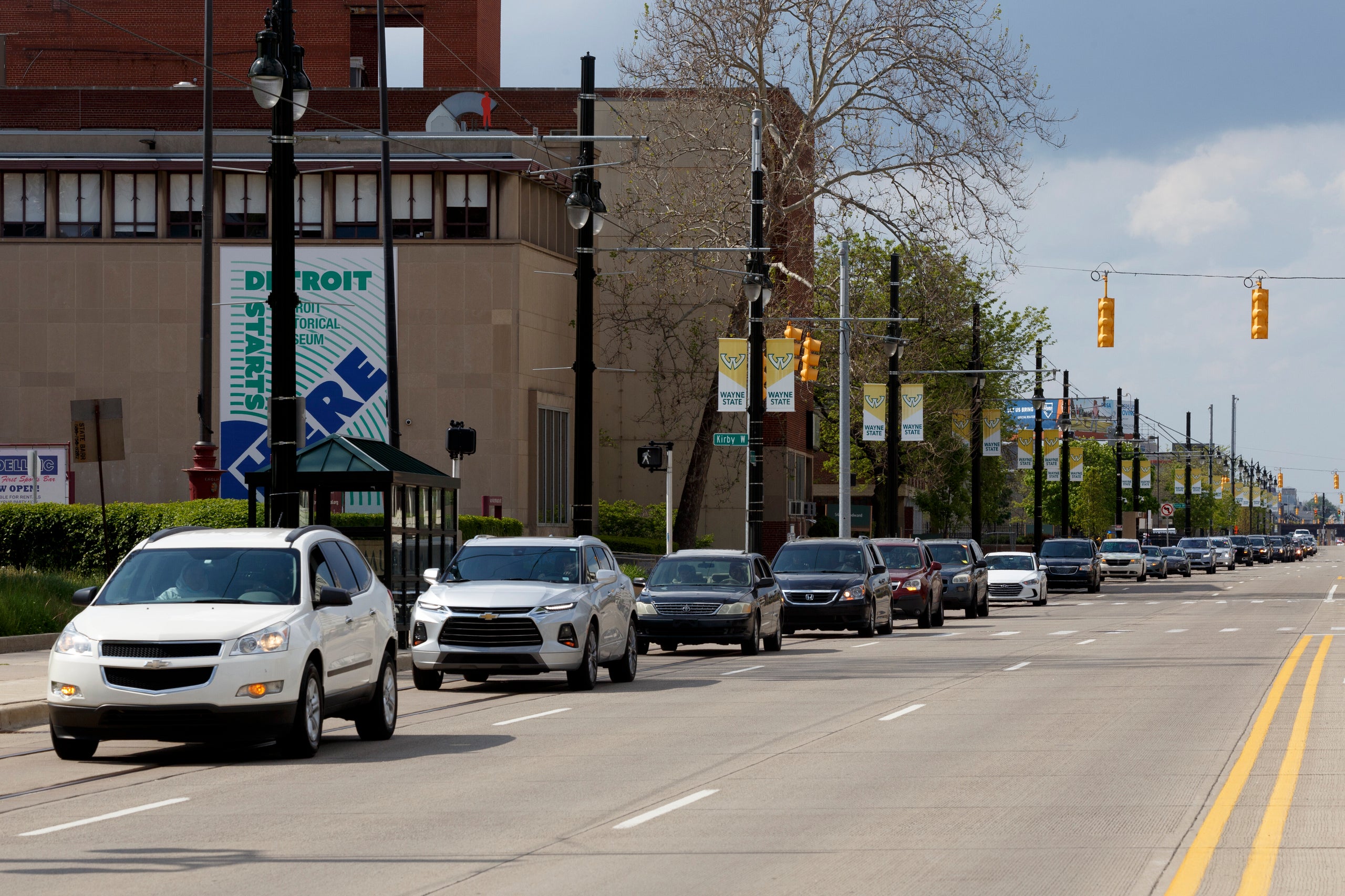
Families started at the Muslim Center, where nearly 200 cars snaked around the mosque parking lot while volunteers, including El-Amin, handed out toys to those families who were required to stay in their cars. The procession then continued downtown.

“This entire pandemic has been traumatizing for people, and it’s showing up in children’s lives in different ways,” said Mark Crain, the executive director of Dream of Detroit, a community development initiative, and a father of two who helped bring the event to life. “Whatever we can do to mitigate that a little bit, and to preserve the spirit of fun and celebration on Eid for them, that’s what we want to try and do.”

Mosque Drive-Thrus And Drive-Ins

Mosques across the country have embarked on creative ways to celebrate Eid while respecting social distancing orders. Islamic Centers in New York, Florida, New Jersey and Canada hosted Eid drive-thru celebrations.

In Bridgewater, Illinois, where more than 15,000 people gathered for last year’s Eid at the Toyota Park Stadium, the local Mosque Foundation hosted a drive-by reception. Muslim families drove into the Mosque Foundation’s parking lot to greet others from their vehicles while mosque staff, some dressed in cartoon character costumes, handed out gifts and goodie bags to children.

“We want to make sure that people would not miss that spirit of the first day of Eid at the conclusion of Ramadan,” said Oussama Jammal, the mosque’s president and board chairman. “Our faith is very flexible and very understanding of exceptional situations, and therefore allowed us to exercise exceptional ways to worship.”

In Sacramento, California, Muslim organizers also coordinated a drive-thru during the day so people could greet their family and friends from a safe distance and enjoy coffee ― a traditional treat after a month of fasting. 

In the evening, organizers put together a Drive-In Eid Movie Night, when families watched “Spider-Man” from their cars. Waseem Peracha, one of the organizers, said it was important for him to find a way for young Muslim children to celebrate Eid despite the pandemic. His organization, Ilmscape, arranges retreats for young Muslims in the Sacramento area, but those are now on hold. “COVID shouldn’t stop us from practicing our faith,” he said. “Our faith teaches us to be righteous and be good to the neighbors, be festive and try to have a positive attitude.”

Upholding Traditions At Home

Near Baltimore, Abeer Shinnawi, a veteran teacher for 18 years and mother to three girls, is trying to foster the spirit of Eid at home. Most years, Shinnawi and her family return to her native Chicago to celebrate Eid with family and friends. If they were unable to travel, they celebrated with loved ones nearby.

Last year, Shinnawi’s mom friends and their daughters gathered in her home to make maa’moul, a traditional Middle Eastern cookie made of semolina and stuffed with date paste or nuts. This year, Shinnawi and her girls made the cookies alone. 

Shinnawi said it was difficult figuring out how to best celebrate while following social distancing, especially as a Palestinian and an Arab, for whom physical touch and hospitality are emphasized in the culture. She wanted to serve and feed everyone personally. 

But if being a history teacher has taught her anything, it’s that people have coped in the past. Her mother used to record cassette tapes to send to her family. Now, Shinnawi has myriad options to see, chat and connect with her family and friends. 

That sense of community and history is important to El-Amin, too, who has been homeschooling her children since schools closed down in Detroit. So far, the experience and Eid gift preparation have offered lessons in gratitude, patience and the unpredictability of life. 

“We should be thankful that we get to have the stuff and we should be thankful that we get to do this and help other people, too,” said her 7-year-old, Isra Naeem.

El-Amin said celebrating Eid as a family and community helps the children through the challenges of growing up as Muslims in America.

“They do not see their holidays reflected in the broader society,” she said. “They can’t just walk in Target and everything is looking like Eid. It is incumbent upon us to make sure that it is ingrained in them so that they know not only the significance of what the holiday is but also so that they can feel excited.”

Cars line Woodward Avenue with a police escort as they head toward Campus Martius Park all the way from the Muslim Center Mas


Cars line Woodward Avenue with a police escort as they head toward Campus Martius Park all the way from the Muslim Center Masjid during the Woodward Eid Cruise on Sunday, May 24, in Detroit. Eid al-Fitr marks the end of the holy month of Ramadan.

A HuffPost Guide To Coronavirus


Source by [author_name]

Enjoy a Sustainable Weekend in Graz

0

If you’ve never heard of the city of Graz, Austria before, it is because Graz truly is one of Europe’s last hidden gems.

Situated in the south-east of Austria, Graz offers the perfect escape for those longing to escape overwhelming tourist crowds and fast travel.


Here are some tips on how to spend an enjoyable and sustainable weekend in Graz:

Friday: First Impressions

After arriving at your hotel (for example the newly refurbished Grand Hotel Wiesler), you can use the last hours of the day to gather some first impressions of the city. Head over to the Graz Tourist office, located in the city center, to pick up your town map as well as some useful insider tips. While you’re there, you can also consider investing in BACKUP, a reusable coffee cup, perfect for a guilt-free sip of espresso on the go. You can either keep it as a functional souvenir of your time in Graz, or return the cup to any of the 60+ participating cafes in the city.


Schlossberg

Once you are equipped, it is time to get a real feel for the city. And what better way to do so than by getting a bird’s eye view? Once the home to an impressive castle, Schlossberg has been the heart of the city for hundreds of years. Although the castle fell during the Napoleonic wars, the people of Graz never lost their love for this lush green oasis with a view.

There are several ways of getting to the top and each offers a unique experience in their own way. You can either take the ever-popular Schlossberg steps from the base of the mountain at Schlossbergplatz, or, if you’re tired, opt for the funicular or the lift instead. And who wouldn’t want to take an elevator through the middle of a mountain?

At the top, you can take a stroll along the cobble-stoned paths, seek out hidden corners, and, of course, marvel at the impressive clock tower. And if you feel that you are losing track of time, it may be because you are losing yourself in the beauty of the place, but if you take a closer look, perhaps it’s just because the hands on the clock tower are actually reversed.

End your day with a stunning view of the red rooftops of the city with a glass of crisp south-Styrian wine at the sky bar of the Schlossberg restaurant or Aiola Upstairs.

PS: If you’re up for a kick of adrenaline, take the Schlossberg slide on your way down!


Saturday: Hip, Green, And Trendy

One of the best things to do in Graz during the warmer months is to enjoy its ample green spaces and explore some of the city’s most trendy neighborhoods, Lend and Gries.


Farmers’ Markets

Start your day early and head to one of the numerous farmers’ markets in the city. Here, you can shop for fresh regional and seasonal produce while supporting the local economy where it matters most. On average, the fruits and vegetables, meats and cheeses, and other products are produced within just 20km of the city. The markets are very popular among the locals, so do be sure to come early or everything will be sold out!

One of the best farmer’s markets in Graz is located on Lendplatz. While you’re here, you can also sit down at one of the many hip cafes in the area and enjoy a cup of coffee and a piece of cake. Lenz im Lend is the perfect address for coffee during your market visit.

Tip: If you ever get thirsty along your way, keep an eye open for places with a ‘Refill Austria’ sticker on the door. Here, you can fill up your water bottle with tap water for free and avoid buying plastic bottles along the way.


Sustainable Shopping

Continuing on your adventure in Lend, you will come across a number of smaller, boutique-style shops in the area. The Lend district is known for its quirky art scene. Graz is part of the UNESCO Creative Cities Network and was named the first City of Design in Austria. As a result, numerous design shops have settled here throughout the last years. Two of the best known are Offline and Tag.Werk. 

Offline primarily employs individuals struggling with addiction. The goal of the project is to offer entry-level employment to ease the return of addicts or former addicts into the labor market. In the shop, you can find second-hand clothing, as well as various up-cycled items ranging from accessories to furniture.

Tag.Werk offers employment to underprivileged youth. In the shop, you can primarily find bags and backpacks made from up-cycled materials which makes each piece unique.


Funky Architecture

Returning to the city center, you will come across several quirky structures, such as the Murinsel (island in the Mur) and Kunsthaus (modern art museum). Both were conceptualized in 2003, when Graz was the European Capital of Culture. They offer a stark contrast to the traditional architecture found within the old town of Graz and dazzle the eye with pops of color, especially during the night.

Kunsthaus, also dubbed the ‘Friendly alien’ due to its biomorphic blue shape, is home to ever-changing exhibitions dedicated to modern art, starting from 1960. The exhibitions offer a good mix of Austrian and foreign artists and are sure to leave you inspired after your visit. The museum is also home to one of the best design shops in the city and well worth popping in your head for. If you’re in dire need of a break, the Kunsthauscafe is one of the most popular and trendy cafes in Graz.


Multicultural Flair

Continuing on on the banks of the river Mur, quite literally the pulsing artery of the city, you leave the funky yet glitzy Lend district and enter into Gries. Once known only for its red-light district, Gries has developed significantly over the last couple of decades. It still retains much of its grungy edges yet introduces a much-needed breath of multicultural flair into the city. 

Today, Gries is home to a multitude of Asian, Middle-Eastern, and African shops as well as cafes and restaurants. Before World War II it was also home to a large proportion of the Jewish community in Graz. At the location of a previous synagogue which was destroyed during the November pogroms in 1938, you now find a modern structure with a glass dome in its place.

Keep your eyes open for street art as you make your way south. Several intriguing pieces are hidden in the small paths and alleyways in the area!


Augarten

From the synagogue, cross onto the other side of the Mur river. Here, you will find the newly reopened Augarten, one of the city’s most important green spaces. It offers a welcome reprieve from the heat during the hot summer months. The river brings a cool breeze and the trees offer plenty of shade. Benches and lounge chairs invite you to stay and have a picnic with friends. 

On the edge of the park, you can also find a little cafe, Paulschlössl. It is one of several so-called ReUse cafes in Graz. The cafe offers employment to those disadvantaged in the labor market, be it due to age, health, or a lack of qualifications. The goods are sourced seasonally and regionally and most of the interior is made up of up-cycled materials.


Styrian Cuisine

End your day by enjoying some typically Styrian cuisine. The best address for classic yet elevated dishes is Der Steirer. Found at the location of a former wine bar run by Hans Weitzer, this restaurant embodies the Austrian concept of “Gemütlichkeit”, or coziness. True to its heritage, the restaurant offers a nearly endless supply of wine along with a delicious selection of Austrian dishes. You can either taste yourself through the menu with their Styrian tapas, or keep it simple by ordering a traditional Styrian Backhendl (fried chicken). No matter which way you decide, you’ll be sure to finish your day on a high note.


Sunday: Historic Old Town

Sunday is the perfect day to explore the city’s historic old town as well as some of its excellent museums. While you’re here, be sure to make use of the free tram connection between Jakominiplatz and Südtirolerplatz or Jakominiplatz and Schlossbergplatz.


Stroll through the historic old town

Graz’s biggest draw is obviously its gorgeous and well-preserved medieval center, one of the best-preserved medieval centers in Europe. As you take a stroll through Graz’s UNESCO-protected center, you will encounter an array of elegant palaces and townhouses which bear proof to the city’s Baroque heyday.

Start your tour at the city’s main square, Hauptplatz, and take a moment to marvel at the impressive city hall. Then, make your way uphill through Sporgasse and let the cobblestones take you to some of the city’s most imposing squares, Karmeliterplatz and Freiheitsplatz.

Pass the Graz castle and get dizzy on its double spiral staircase, get dazzled by the elaborate tomb of Emperor Ferdinand II. Take a short breather in the castle park (Burggarten) or the city’s main park (Stadtpark) below. Don’t miss the beautiful opera house as well as the city’s own version of the Statue of Liberty on your way back. Head down Graz’s premier shopping street, Herrengasse, and enjoy the intricate facades. It is also the location of one of the city’s most memorable buildings, the painted house.


Enjoy Mediterranean flair

On the way, you will pass the Landhaushof, one of the best examples of Renaissance architecture in Graz. The whole of the inner city has an Italian Renaissance overlay to it, lending Graz a very Mediterranean feel, unlike any other Austrian city.

Once you return to Hauptplatz, navigate through some of the narrow alleyways on its western edge to reach the Franziskanerviertel. Have a seat at one of the many street-side cafes and enjoy a glass of Aperol Spritz for a feel of Italy in Austria.


A visit to the Styrian Armory

When spending a weekend in Graz, a visit to the Styrian Armory is a must. With more than 30,000 items on display, the Styrian Armory is the largest preserved arsenal in the world. Built as a stock of arms to be handed to the local population in the event of a Turkish attack, the rich collection includes suits of armor, helmets, breastplates, swords, firearms, and cannons. 

Besides the Styrian Armory, there are a number of other museums in Graz that are well-worth visiting. Some of these are Graz Museum, the Natural History Museum, and the New Gallery.


Hearty Austrian dinner

To round off your visit to Graz, head to Glockenspielplatz for your dinner. At 6 o’clock PM you will find two figurines dancing up in the gable of one of the buildings. Clothed in traditional costumes, they sway to three different tunes played by 24 bells.

In the same building as the Glockenspiel, you will find Glöcklbräu, one of the most popular restaurants among locals and visitors alike. Finish your weekend in Graz with a hearty portion of Spätzle or a traditional serving of Schnitzel, washed down with a tall glass of beer.

Source link

‘I Just Can’t See How Reynold Can’t Win’ Says MasterChef Star

With the top 12 contestants now confirmed, ‘MasterChef Australia’ is in the later stages of the competition. 

However the question remains: Who will win? 

According to the show’s most recently eliminated contestant Tracy Collins, ‘Dessert King’ Reynold Poernomo will likely claim the final prize. 

“I just can’t see how Reynold can’t win,” Tracy told HuffPost Australia. “He’s just got mad skills.”

If there’s anyone else who could snatch the frontrunner position from Reynold, Tracy said it would be 22-year-old Jess Liemantara. 

“She is seriously coming into her own stride,” said the reality star. “She’s also got some mad skills. I think she’s one to watch as well.” 

Jess was safe from elimination on Sunday night after she won the instant noodle-themed immunity challenge on Thursday night.

Meanwhile Reynold has continued to impress the judges this season with his creative desserts, including his own take on an apple pie, served with a cinnamon parfait and topped with an isomat ball. 

Reynold became a household name on Australian TV and was dubbed the ‘Dessert King’ after appearing in season seven of ‘MasterChef Australia’ in 2015. 

He’s now one of 24 former contestants including Poh Ling Yeow, Laura Sharrad and Callum Hann who have returned to the show for its 12th season, ‘Masterchef Australia: Back To Win’.

Last month Reynold spoke about his decision to reopen his dessert bars in Sydney’s Chippendale and Ryde for takeaway and delivery, after initially closing them because of the government’s strict no dine-in rule.

“We weren’t sure, the government didn’t really say anything about how long this lockdown would be,” he told HuffPost Australia.

“We thought about it like, ‘Yeah we can’t just sit around and do nothing. We need to do something’.

“It’s getting really boring and everyone in isolation was very bored,” he explained. “There’s a lot of home cooking happening and it’s time for us to come get back into work and support our staff as well, and of course support ourselves.” 

 MasterChef Australia: Back To Win’ continues at 7:30pm on Channel 10.


Source by [author_name]

India’s airports begin to reopen

0

(CNN) — After two months of closures, airports across India begin reopening today, May 25.

However, don’t expect the airports to look the same as they did before the global coronavirus pandemic broke out earlier this year.

As CNN’s Vedika Sud reports, technology and social distancing are both playing a major role in keeping travelers safe.
At Indira Gandhi International Airport, which serves the national capital of New Delhi, travelers are now required to check in online before they come to the airport and then scan their boarding passes in order to enter the building.

Security queues are spaced out so that passengers can socially distance, and everyone must walk through a temperature screening station and fill out a travel declaration form.

Once they’ve gotten through security and into the departure area, travelers will notice that chairs have been spaced out and there are floor markers to indicate where to stand.

A worker marks squares on the ground at the Rajiv Gandhi International Airport in Hyderabad.

Noah Seelam/AFP/Getty Images

But there will be different experiences on board the planes as well.

Cabin crew are required to wear full-body PPE, while passengers must sport masks. For the time being, there’s no food or drink service on planes, but passengers are allowed to bring some items with them — provided the food is “dry” (think chips or crackers) and not “wet.”

Travelers will also be permitted only one small piece of carry-on luggage (like a purse, laptop bag or briefcase) per person, and everything else has to be checked.

Currently, only domestic flights are operating on carriers like Air India and SpiceJet as India’s borders remain closed to non-residents.

In order to keep prices from getting out of control, the government has instituted price caps on tickets.

Source link

Furious backlash after Boris Johnson defends aide’s lockdown journey

0

U.K. Prime Minister Boris Johnson will chair a tense bank holiday Cabinet meeting this morning with the Tory Party in a state of near-mutiny over his decision to stand by lockdown-flouting aide Dominic Cummings.

The prime minister will gather his senior ministers via Zoom to agree a further tweaking of lockdown restrictions in the coming weeks, with Johnson planning to update the nation — and, he hopes, change the narrative — at another must-see press conference tonight.

The PM’s most senior aides have canceled planned leave and flooded what was a pretty empty half-term news grid with attention-grabbing lockdown stories, starting with last night’s rushed-out announcement on schools. But trouble is still bubbling up from below, with Tory MPs from every wing of the party reporting abject rage from their constituents — and letting their whips know in no uncertain terms. This is not going away anytime soon.

Quick recap: Multiple conversations with Tory MPs and ministers reveal six key points of concern this morning about Cummings’ actions and the way this episode has been handled by No. 10 Downing Street. Cummings drove more than 250 miles from London to Durham to stay at a property next to his parents’ house while his wife was ill with COVID-19 symptoms. At that time, the U.K. was a few days into its strict lockdown, though the aide says he made the journey to access childcare and acted within the law.

First — the drive to Durham: The central charge is a willingness to ignore what we all thought was clear and unequivocal “stay at home” guidance for symptomatic people, and to have risked spreading the virus at motorway services, petrol stations or anywhere else a family of three traveling 260 miles may have needed to stop along the way. A senior government official last night insisted Cummings had not broken any rules — but refused once again to say whether he stopped off anywhere on the long drive to Durham. You all saw Transport Secretary Grant Shapps fail to answer this same question on TV yesterday. It’s going to be asked again and again.

There are six key points of concern about Dominic Cummings actions | Peter Summers/Getty Images

Second — a day trip to Barnard Castle? The same government official also refused to confirm or deny whether Cummings did indeed make a separate lockdown-flouting 30-mile road trip from Durham to the beauty spot of Barnard Castle on his wife Mary Wakefield’s birthday in mid-April; and again, you all saw Boris Johnson fail to answer this same question on TV last night. Sky News reports this morning that the “distinctive” car number plate noted down by the local man who spotted Cummings at Barnard Castle does indeed match up with “a car Mr Cummings has got into in the past.” The Mirror and the Guardian say a complaint has been filed to the police.

Third — the PR operation: One MP cited the “arrogance” of Spectator journo Mary Wakefield’s decision to publish on April 23 what now looks to have been a pretty misleading version of the Cummings’ family life in lockdown, leaving her employer — a proud Tory institution with 300 years of history under its belt — looking a little daft when the truth came out. (It was notable the Speccie was the first right-leaning publication to publish a furious opinion piece headlined “Why Dominic Cummings must go” after the story broke.) And the knee-jerk reaction on Friday night for “a friend” of Cummings to brief accommodating journos that he “isn’t remotely bothered” by this story went down like a cold cup of sick among almost every Tory MP Playbook has spoken to, given the sensitive context and the serious impact the revelations are having upon party and government alike.

Fourth — the changing story: Equally enraging for Tory MPs has been No. 10’s failure to agree upon a credible story that ties in with what most people understood the lockdown guidance to be; and indeed with the police’s own version of events. The decision to exploit a loophole about exceptional circumstances for people unable to care for vulnerable people looks barely credible on the face of it, given thousands and thousands of parents have been in this exact same position but managed to stay at home, and given Cummings was well enough at the time to drive 260 miles across the country. Crucially, of course, there may be extenuating circumstances here we don’t know about — but if so, No. 10 is point-blank refusing to say. And so the questions continue.

Fifth — the impact on public health: It was pretty jaw-dropping to watch the unfortunate Grant Shapps being asked to effectively rewrite vital public health advice on the hoof as he was given the impossible task of answering journalists’ questions over the weekend. Asked if symptomatic people were now allowed to get in their cars and go and isolate near to their families, Shapps said: “You have to get yourself sort of locked down and do that in the best and most practical way. And that will be different for different people under whatever circumstances their particular family circumstances happen to dictate.” You may not have seen that one on a government poster last month.

Sixth — the damage to the Tory Party: Politically, this is the most worrying charge of all for many Tory MPs, and the one that Keir Starmer is clearly going to be hanging around this government’s neck every week forever more — that it’s “one rule for them, and another for the rest of us.” One rule for a Westminster elite, and another for the rest who are missing their families, worrying about their children, mourning their dead from afar. As Nigel Farage will tell you, this is one of the most potent attack lines in modern politics — and it looks like Cummings has handed it to his opponents on a plate.

Screaming blue murder

Admittedly it’s a hot bank holiday weekend and nobody’s got anything better to do, but it really is hard to overstate the depth of anger over all of this today. We’ll start with the various groups of furious Tory MPs, move through the police, the clergy and the scientists, before getting on to the right-wing press and Brexiteer commentators … The eagle-eyed among you may have noticed this list is not *entirely* made up of “campaigning” left-wing newspapers and bonkers Remoaners, as far as we can tell.

Tory MPs (public): ConservativeHome now has a rolling live blog keeping tally of all the Tory MPs who have publicly called for Cummings to go, which in itself is not a *great* sign for the prime minister. Currently it stands at 16 MPs, with a 17th on the brink after pronouncing himself “unconvinced by the PM’s defense.” The public list includes Remainers and Brexiteers; former ministers and former whips; select committee chairs and normally silent backbenchers. These are definitely not all disgruntled MPs with grudges, and it doesn’t make happy reading for No. 10.

Tory MPs (private): Every political journalists’ text messages are chock-full of Tory fury this morning, and Playbook’s are no exception. “Utter sh*t show,” a Remain-voting MP from a Northern marginal says. “Needs to go.” The MP said constituents were “massively upset … Inbox has gone mad after press conference … Not round-robins either.” A Brexit-backing Tory MP in a marginal seat adds: “By appearing to be oblivious to why so many people are angry, they just look like they’re backing up their chum. Should have accepted it was wrong … Dom apologizes … We all move on. Now this drags on for days, and whether you keep him or sack him, you still look weak.”

Tory MPs (WhatsApp groups): The Telegraph reports how Tory MPs are currently sharing messages on a WhatsApp group sent to them by angry constituents “demanding to know why they had been forced to miss funerals or other important events, if the rules were open to interpretation.” Ouch.

Tory MPs (‘Red Wall’): Sky News and the i newspaper both report particular rage among the 2019 intake of Tory MPs who breached Labour’s “red wall” heartlands at the last election. Sky’s Tamara Cohen tells in this must-read Twitter thread how one MP received 250 emails on the issue; just two of them in support of Cummings. “This is the biggest public health issue for generations, and this is blowing up the government’s message we have been ramming home for weeks. We’re bloody mad,” the MP says. The i’s Richard Vaughan says red wall Tories are even backing Labour’s call for an inquiry. “Those of us across the North are absolutely livid about this,” one says. “Collectively we believe the decision to stand by Cummings goes against everything we’ve been saying to our constituents over the last few months.”

No. 10 was somewhat economical with the truth about whether Cummings’ family had been spoken to by the cops | Peter Summers/Getty Images

Tory grandees: “My subscription to the @Conservatives is overdue,” tweets former MP Bob Walter. “After watching the leader of the party on TV tonight it may be overdue for a little longer. I have been a party member for 55 yrs and sat on the Conservative benches in the Commons for 18 yrs. Heavy heart and sorely disappointed.”

Junior ministers: One minister tells Sky’s Beth Rigby that what they witnessed at yesterday’s press conference was “the PM’s authority with the British people draining away in front of my very eyes.” Another tells Playbook it is a “big bet” from No. 10 that people won’t care about the actions of an unelected adviser. “The worrying thing is that the constituents getting in touch are not the usual suspects,” the minister said, before adding: “But I think we always exaggerate how much these massive-feeling stories matter in the long term. Will he [Cummings] be around by the next election?”

Senior ministers: One unnamed Cabinet minister tell the Times that Johnson “has sacrificed his own credibility to save Dominic Cummings. He is burning away his personal brand, his trust, to save Dom.” Another says: “You can lose popularity, you cannot lose trust. It’s not a ‘bubble’ story. It’s on the front page of every newspaper, it is distracting from what the government should be doing.” A third is quoted in the FT as telling a colleague: “It’s hard to see how we can go on like this, expecting parents, teachers and the public to trust us when we bend the rules when it suits us.” The Telegraph quotes a “Cabinet source” who says: “The discussion among Cabinet ministers at the moment is that this will cost lives. People will look at this and decide that if Dom can ignore the rules so can they, and the consequence of that will be that people get infected who would have otherwise stayed at home.”

The police: The Times reports on fury within Durham Constabulary that No. 10 was, erm, somewhat economical with the truth about whether Cummings’ family had been spoken to by the cops. “Police contradicted claims by Downing Street that Mr Cummings’s father spoke to an officer about security issues, not about the alleged breach of lockdown rules,” the newspaper reports. “A source told the Times that although Robert Cummings did call Durham to speak about security, it became immediately obvious that lockdown guidance had been breached, and he was given ‘words of advice.’ He was told that under the rules his son should have stayed in London. Senior policing figures are angry that the government’s briefing gave the impression that ‘Durham have been anything other than fully truthful and sensitive in the handling of this.'”

The scientists: Particularly damaging for Boris Johnson was the outpouring of anger last night from behavioral scientists who have been advising the government’s response. Members of the Scientific Pandemic Influenza Group on Behaviours (SPI-B) took to Twitter last night to attack the PM’s handling of the affair. Professor Stephen Reicher, a member of the SPI-B, wrote: “In a few short minutes tonight, Boris Johnson has trashed all the advice we have given on how to build trust and secure adherence to the measures necessary to control COVID-19.” A number of his colleagues tweeted full agreement. Reicher tells the Times that “if as a consequence the measures become less effective, the infection will spread and people will die.”

The clergy: The Tory faithful will likely be unnerved by the fact more than a dozen Church of England bishops issued statements attacking Boris Johnson’s approach. “The question now is: do we accept being lied to, patronized and treated by a PM as mugs?” Bishop of Leeds Nick Baines asked on Twitter. “The moral question is not for Cummings — it is for PM and ministers/MPs who find this behavior acceptable. What are we to teach our children? (I ask as a responsible father.)” There are 14 angry bishops and counting — the Religion Media Centre is keeping a tally of the best quotes.

Church of England bishops issued statements attacking Boris Johnson’s approach to Cummings’ actions | Chris Ratcliffe/Getty Images

The neighbors: Watch here as Dominic Cummings is jeered and heckled by furious neighbors as he returns home to his Islington townhouse last night.

The Brexiteer press: The Daily Mail comes out all guns blazing this morning with a front-page comment piece calling for Cummings to go. “What planet are they on?” the splash headline asks. Inside the paper gives 10 pages of coverage to Cummings and the Downing Street response — and barely a word of it supportive to Boris Johnson.

The Brexiteer commentators: “That was one of the worst press conferences I have ever seen,” LBC’s Iain Dale wrote last night. “I wanted to hide behind the couch … Seriously, what on earth was Boris Johnson thinking? … Jesus wept. Car crash doesn’t really cover it.” TalkRADIO’s Julia Hartley-Brewer tweeted: “I will forever be grateful to Dom Cummings for delivering Brexit … But. No one is above the law. Especially during a pandemic. It’s too late for an apology now. He has to go.” ConservativeHome founder Tim Montgomerie added: “I’m really embarrassed to have ever backed Boris Johnson for high office.”

The cricket legend: Even cricket commentator David “Bumble” Lloyd is furious. And if that’s not a sign of cut-through, I don’t know what is.

So what happens next?

Erm, nothing: Boris Johnson has an all-powerful 80-seat majority in parliament, and is four years out from a general election — and is entitled to employ whomever he likes as a special adviser. The judgment inside Downing Street is that all of the above is just “noise,” and that this episode will quickly be forgotten amid the enormity of the crisis facing Britain and the wider world. Aides will be delighted with supportive(ish) front pages from the Sun, the Times, the Express and the Telegraph this morning, and they will point too to this new YouGov polling (gleefully flagged by Guido on Friday) showing public satisfaction with the media coverage of the crisis has tumbled throughout the past month. The press will be blamed for whipping up a storm, and the story — they hope — moved on to something new.

This is an extract from POLITICO’s daily email newsletter London Playbook. Sign up here.


Source by [author_name]

#Russia vs #China – EU Reporter

0

Co-operation between Russia and China has deep historical roots, and its earliest manifestations can be found already during the Chinese civil war. It seems that both countries should be most united by their communist ideology, but the ambitions of their leaders and the willingness to be the first and the most powerful was in fact the dominating force. Relations between these nations have seen times of flourishing, as well as times of military conflict, writes Zintis Znotiņš.

The relationship between both countries are currently presented as friendly, but it is difficult to call them truly friendly. Even in the past, relations between the USSR and China were based on each nation’s calculations and attempts to play the leading role, and it doesn’t seem like something has changed at the present, although China has become a “smarter” and resource-wise richer player than Russia.

We will now look at the “similarities” between China and Russia, the ways they are cooperating and future prospects for both of them.

Russia is a semi-presidential federative republic, while China is a socialist nation ruled by the secretary general of its Communist Party.

Already we can see formal differences, but if we dive deeper both countries essentially feel like Siamese twins. There are more than one party in Russia, but only one party decides everything that takes places in the country – United Russia. Russia isn’t even attempting to hide the aim of establishing the said party, which is to support the course taken by Russian President Vladimir Putin.

China, too, has nine parties1, but only one of them is allowed to rule and it is the Communist Party of China which answers to the secretary general who is also the president of the state.

Therefore, there is a single ruling party both in Russia and China, and this party is responsible for implementing and executing whatever the president wishes, meaning that both countries are ruled by a rather narrow circle of people. Forecasting election results in Russia and China is as difficult as being able to tell that the day after Monday is Tuesday. To write this piece, I spent a lot of time reading about the history of China and Russia and the current events taking place in these countries, and for this reason I figured that we also have to look at the meaning of the word “totalitarianism”.

Totalitarianism is a political system in which a country is governed without the participation of its people and decisions are made without the agreement of the majority of the people; in a totalitarian regime the most important social, economic and political affairs are controlled by the state. It is a type of dictatorship where the regime restricts its people in all of the imaginable aspects of life.

Notable characteristics:

Power is held by a small group of people – a clique;

Opposition is suppressed and general terror is a tool for governing the state;

All aspects of life are subordinate to the interests of the state and the dominating ideology;

The public is mobilized using a personality cult of the leader, mass movements, propaganda and other similar means;

Aggressive and expansionist foreign policy;

Total control over public life.2

Are China and Russia truly totalitarian states? Formally, no, but if we look at the essence of it we see a completely different picture. We will look at all of the signs of totalitarianism in China and Russia, but we will not delve too deep into events and occurrences that most of us are already familiar with.

Can we say that the majority of Russian and Chinese citizens are engaged in decision making? Formally, sort of, because elections do take place in these countries, but can we really call them “elections”? It would be impossible to list all the video footage or articles that reveal how polling stations operate in order to provide the required election results. Therefore, we can say that the general public is involved in making decisions, it’s just that the results are always determined by those in power.

The last paragraph brings us to the first point: power is held by a small group of people – a clique. Both nations are ruled by presidents who appoint whoever they wish and dismiss whoever they wish. This is power held by a small group of people. The next point – suppressing the opposition and using general terror to govern the state. Media outlets have written enough about suppressing the opposition in both countries, and everyone has seen at least a video or two on this topic. To stop their political opponents and any events organized by them Russia and China use not only their police forces, but the army as well. From time to time, information appears that an opposition activist has been murdered in either of the countries, and these murders are never solved.

We will not even begin talking about criminal cases and administrative arrests of opposition activists. We can say that the point in question is completely true. Regarding all of the aspects of life being subordinate to the state and ideology – is there anyone who isn’t convinced by this? If Russia is engaged in restricting and “teaching” its citizens quite inconspicuously, China has no time for ceremony – the Communist Party of China has published new guidelines on improving the “moral quality” of its citizens, and this touches upon all of the imaginable aspects of one’s private life – from organizing wedding ceremonies to dressing appropriately.3 Is the public in Russia and China mobilized using the cult of personality, mass movements, propaganda and other means? We can look at 9 May celebrations in Russia and all of the surrounding rhetoric, and the events dedicated to the anniversary of founding the People’s Republic of China. I’m sorry, but it feels like I’m watching some Stalin and Hitler era montage but in a more modern fashion, and instead of Stalin and Hitler there are some new faces. What is left? Of course, aggressive and expansionist foreign policy. China has been very active in the South China Sea for many years now, which has aggravated tensions among the armed forces of its neighbours – Brunei, Malaysia, the Philippines, Taiwan and Vietnam.

China is continuing to physically seize, artificially build and arm islands far from its shores. And in the recent years China has been particularly aggressive towards Taiwan, which the regime sees as being rightfully theirs.4 China is also willing to impose sanctions against those nations who intend to sell arms to Taiwan.

However, when it comes to armed aggression China pales in comparison to Russia, which isn’t shy to use armed aggression against its close and far neighbors in order to reach its goals. Russia’s aggression goes hand in hand with its nihilism. I am sure I don’t have to remind you about the events in Georgia, Ukraine and previously in Chechnya as well. Russia will use every opportunity to show everyone its great weaponry, and this also includes directly or covertly engaging in different military conflicts.

Maybe some of you will disagree, but as I see it China and Russia currently are totalitarian states in their essence.

History has shown us that up to a certain point even two totalitarian countries are able to cooperate. Let’s remember the “friendship” between Nazi Germany and the USSR, but let’s also not forget what this friendship resulted in.

It is also true that the economic sanctions imposed against Russia have pushed it to be more friendly with China, but it seems that China will come out as the winner of this relationship.

According to data from the Chinese Ministry of Commerce, in 2018 the Chinese economy received 56.6 million USD in direct investments from Russia (+ 137.4%), meaning that by the end of 2018 the amount of direct investments from Russia reached 1,066.9 million USD.

In 2018, the Russian economy received 720 million USD in direct investments from China, resulting in a total of 10,960 million USD in direct investments from China by the end of 2018.

The main spheres of Chinese investments in Russia are energy, agriculture and forestry, construction and construction materials, trade, light industry, textiles, household electric goods, services, etc.

The main spheres of Russian investments in China are production, construction and transportation.5 We can see from the amount of investments that in this “friendship” China has far exceeded Russia. We also cannot ignore the fact that China has launched more large-scale investment projects in other nations than Russia has.

It should be noted that China’s procurement of military equipment has allowed Russian armaments programs to exist. Russia sold modern armaments to China, despite the concerns that China will be able to “copy” the received armaments and then improve them. But the need for money was much greater to worry about such things. As a result, in early 2020 it was concluded that China has surpassed Russia in producing and selling armaments.6

If we look at the ways Russia and China are attempting to shape public opinion in the long term, we can see some differences. Russia tries to do this using publications, demonstrative activities and attempts for its compatriots to become citizens of their country of residence while maintaining their cultural identity in order to establish an intellectual, economic and spiritually-cultural resource in global politics.7 China, in addition to all of this, has established Confucius Institutes that are subordinate to the Chinese Ministry of Education. There are a total of 5,418 Confucius Institutes or classes around the world. These institutes, named after the most known Chinese philosopher, have drawn sharp criticism globally for its foreign policy views – ones that avoid discussing human rights or believe that Taiwan or Tibet are inseparable parts of China. These institutes have been accused of espionage and restricting academic freedom.

“The Confucius Institutes are an attractive brand for our culture to spread abroad,” representative of the Communist Party’s Politburo Li Changchun said in 2011. “They have always been an important investment in expanding our soft power. The brand name “Confucius” is quite attractive. By using language tuition as a cover, everything looks logical and acceptable from the outside.” The leadership of the Communist Party calls these institutes a crucial part of its propaganda toolset abroad, and it is estimated that over the past 12 years China has spent roughly two billion USD on them. The constitution of these institutes9 stipulates that their leadership, personnel, guidelines, tuition materials and most of their funding is ensured by the Hanban institution which is under the Chinese Ministry of Education.10

Both Russian and Chinese citizens either buy or rent property abroad. Russians do this so they have somewhere to go in case the necessity arises.

Chinese citizens and companies slowly rent or purchase large swathes of land in in the Russian Far East. There is no precise estimate of the amount of land handed over to the Chinese, but it is said it could range between 1–1.5 billion hectares.11

What can we conclude from all of this? China and Russia are, in essence, totalitarian states with bloated ambitions. If Russia tries to reach its ambitions in an openly aggressive and shameless manner, then China is doing the same with caution and thought. If Russia often uses military means to reach its goals, China will most likely use financial ones. If Russia attempts to fulfill its ambitions arrogantly, then China achieves the same result with seeming kindness and humility.

Which country has gotten closer to its goal? I believe it is definitely not Russia. In addition, just as the USSR, Russia too believes it is better than China. But for those observing from the sidelines, it is evident that in many areas China has far succeeded Russia and is now even acquiring Russian land.

This brings us back to history – what happens when two totalitarian states share a border? One of them eventually disappears. For now, it seems that China has done everything in its power to stay on the world map.

1 https://ru.wikipedia.org/wiki/%D0%A1%D0%BF%D0%B8%D1%81%D0%BE%D0%BA_%D0%BF%D0%BE%D0%BB%D0%B8%D1%82%D0%B8%D1%87%D0%B5%D1%81%D0%BA%D0%B8%D1%85_%D0%BF%D0%B0%D1%80%D1%82%D0%B8%D0%B9_%D0%9A%D0%9D%D0%A0

2 https://lv.wikipedia.org/wiki/Totalit%C4%81risms

3 https://www.la.lv/komunistiska-kina-publice-vadlinijas-pilsonu-moralas-kvalitates-uzlabosanai

4 https://www.delfi.lv/news/arzemes/devini-konflikti-kas-apdraud-pasauli-2019-gada.d?id=50691613&page=4

5 http://www.russchinatrade.ru/ru/ru-cn-cooperation/investment

6 http://www.ng.ru/economics/2020-01-27/4_7778_weapon.html

7 https://www.tvnet.lv/5684274/krievijas-am-tautiesiem-arzemes-jaklust-par-pilntiesigiem-mitnes-valstu-pilsoniem

8 http://english.hanban.org/node_10971.htm

9 http://english.hanban.org/node_7880.htm

10 https://rebaltica.lv/2019/08/kinas-maigas-varas-rupja-seja/

11 https://www.sibreal.org/a/29278233.html

The opinions expressed in this article are those of the author alone, and do not reflect EU Reporter‘s political position.

Comments

Facebook comments

Tags: , , , ,

Category: A Frontpage, China, EU, Opinion, Russia


Source by [author_name]