Tuesday, May 19, 2026

North Koreans Accused of Laundering $2.5 Billion for Nuclear Program

0

WASHINGTON — North Korean and Chinese nationals are operating a multibillion-dollar money laundering scheme to help fund North Korea’s nuclear weapons program, the Justice Department said in an indictment unsealed Thursday, a case that underscores the Trump administration’s inability to halt Pyongyang’s nuclear weapons program through diplomacy.

The department charged 28 North Koreans and five Chinese nationals of using a web of more than 200 shell companies to launder over $2.5 billion in assets through the international banking system.

The government alleged that the money flowed back to North Korea’s primary, state-operated foreign exchange bank, the Foreign Trade Bank of the Democratic People’s Republic of Korea, also known as Josen Bank. The funds were then used to support the country’s weapons of mass destruction program.

The charges are an acknowledgment that the United States has been unable to stop North Korea from building nuclear weapons by imposing economic sanctions and through President Trump’s attempts to broker an agreement with North Korea’s leader, Kim Jong-un.

Mr. Kim recently went three weeks without making any public appearances, sparking speculation that he had been ill.

“Set forth at the meeting were new policies for further increasing the nuclear war deterrence of the country and putting the strategic armed forces on a high alert operation,” the North’s official Korean Central News Agency reported. “Taken at the meeting were crucial measures for considerably increasing the firepower strike ability of the artillery pieces of the Korean People’s Army.”

Mr. Trump has said that he would use his relationship with Mr. Kim to deter the country from building more weapons, and the two met in Singapore in June 2018 and in Hanoi, Vietnam, in February 2019. But those meetings failed to produce any agreement ​on ​how to end North Korea’s nuclear weapons programs ​or how to ease sanctions against North Korea that had been imposed by the United Nations.

The United States and North Korea agreed that the talks had failed, with the meeting in Hanoi ending abruptly with no resolution. But they disagreed about why they came to no agreement.

“Sometimes you have to walk,” Mr. Trump said in Hanoi after the talks had broken down. He said that Mr. Kim’s offer to dismantle a nuclear facility in exchange for sanctions relief was “a dealbreaker.”

Mr. Kim has overseen four underground nuclear tests and has pushed for North Korea to build more nuclear weapons and missile programs. The country under his rule also flight-tested three intercontinental ballistic missile tests in 2017.

Source link

Rich Torontonians Eyeing An Exodus From City After Pandemic: Agency

0

As the coronavirus pandemic spread across the world earlier this year, news reports emerged that many rich people were fleeing dense cities for the perceived safety of suburbia or the countryside. Now, some observers say that trend could become permanent.

In Toronto, the centre of Canada’s second-worst COVID-19 outbreak, the wealthy are turning their attention to the Muskoka region, the cottage country north of the city, said Max Hahne, a Collingwood, Ont.-based real estate agent at high-end agency Engel & Volkers.

And it’s not out of some sudden interest in weekend getaways ― these people are looking to resettle permanently, Hahne says.

Watch: Pandemic prompts tech workers to flee Silicon Valley for mellower pastures. Story continues below.

The pandemic has been “a wake-up call for homeowners, not just like, ‘where do I want to live,’ but ‘how do I want to live?’” Hahne said in an interview with HuffPost Canada earlier this month.

He said interest has “spiked” since April, with much of it concentrated in high-end housing ― properties above $1.5 million. 

“I’m locked down here on my farm, getting calls and emails from people sitting outside a property,” he said, a phenomenon he attributed to “lockdown fatigue.”

It’s hard to tell at this point whether the trend Hahne sees anecdotally is playing itself out. But the latest sales numbers from the Lakelands Association of Realtors, which covers a large part of cottage country, show the real estate market in the region is more active than the one in Toronto.

While Greater Toronto home sales fell 67 per cent in April, the first full month of the lockdown, they fell a relatively mild 46 per cent in cottage country. And prices seem to be holding up better as well.


The median house price in cottage country north of Toronto took a slight dip in March of this year, as the pandemic lockdown began.

The market “is dropping off the cliff fast, but when it starts to recover, I think we’re going to see a spike in (the third and fourth quarter) and maybe sooner, because I’m noticing this lockdown fatigue.”

Hahne sees moving out of the city as a broader trend he thinks we will likely see in the coming years, helped along by the fact many companies are now switching to working from home, either partially or fully, on a permanent basis.

“Now I think you’re going to find more people moving to Collingwood (a cottage-country town) because their companies will allow it, and they have the tools, and they are comfortable using the tools.”

In the U.S., the trend is evident not only among the wealthy ― the New York Times, for instance, reported that as many as 40 per cent of the people in Manhattan’s wealthiest areas appear to have fled the city during the pandemic ― but also among youth.

Young people, who led the rejuvenation of urban neighbourhoods over the past few decades, are looking to move out to the more spacious suburbs, Bloomberg News reported recently. In many instances, that means moving back in with their parents.

The impact will likely mean lower rents, particularly in more overpriced cities with previously heavy demand on urban housing, such as New York and San Francisco, Bloomberg cited housing experts as saying.

It’s a trend many predicted even before the pandemic. Futurist Nik Badminton told HuffPost Canada earlier this year that he sees cottage-country communities near Canada’s largest cities as potential “boom towns” in the years to come.

That’s thanks to a class of “semi-retired entrepreneurs” who have been active in business their whole lives but are looking to slow things down, and improve their quality of life as they age, Badminton said before the pandemic.

Communities of “relocated wealthy middle-aged ‘retirees’” will become “new centres of business and will become more established,” he predicted.

Idle curiosity?

But not everyone in the real estate industry north of Toronto sees a permanent exodus of city dwellers in the wake of the COVID-19 pandemic ― at least not anymore than there was before the crisis.

This spike in interest from Toronto homebuyers may be nothing more than people stuck with nothing to do in the lockdown, amusing themselves with idle house-hunting, said Joe Quinn, a sales rep in the Muskoka/Port Carling office of Chestnut Park Realty.

The trend of Torontonians moving out to the nearby countryside began well before COVID-19, Quinn said.

“For two or three years, we’ve seen people want to ― I would say downsize, get out of such a busy market and take advantage of the high housing prices (in the city). … The differential between Toronto and Muskoka (can) save you a lot of money.”

He says he has seen people heading into their retirement years who were able to sell their homes in Toronto and buy a new one in the country, leaving them with hundreds of thousands of dollars to fund their retirement.

And he doesn’t particularly object to the potential influx of urbanites into his community.

If more people live in cottage country year round, “we’re going to have more stuff open year round, more good restaurants, more good produce in our stores. If we have more people I see it as a positive.”


Source link

Smokers’ fight to light up moves online – The Mail & Guardian

South African smokers say they’ve waited to exhale long enough and are threatening civil disobedience if they’re not allowed to buy cigarettes legally.

For the duration of the coronavirus lockdown, government regulations have banned the sale of cigarettes, tobacco products, and e-cigarette liquids. During a parliamentary question and answer session, Co-operative Governance and Traditional Affairs Minister Nkosazana Dlamini-Zuma stood firm in her position that smokers are more at risk of suffering complications from Covid-19 than non-smokers.

“Covid-19 is a novel virus that affects the lungs. And if they do get the infection, they are more likely than non-smokers to get a serious disease. That means they need ventilation.” 

Her words — and the subsequent unbanning of alcohol but not cigarettes under level three of the lockdown — have raised many people’s ire. 

Unable to meet up and show their anger, people have taken to social media platforms such as Facebook. These comprise a mixture of anger at the state and advice on how to break the law. The Mail & Guardian joined some of these groups to get a sense of the conversations. In one, posters jokingly refer to cigarettes as “sweets” — advertising the sale of “sweeties” for as much as R150 a packet.

On the group “Cigarettes South Africa” there are several complaints of being scammed by unscrupulous dealers. “If you get scammed or pay over R600 for a carton you are stupid. Quit smoking rather,” reads one poster. The person is derided by commenters who vow never to quit. 

On the “Covid-19 Smoker’s [sic] — Lift the Ban on Cigarette Sales” group, people who tip off police about the sale of illegal cigarettes are left with a warning — “Snitches fall in ditches”. 

Another group is calling for immediate action in the form of protest and civil disobedience. The group, “Protest March Against the Tobacco Ban”, wants supporters to march to the Union Buildings in Pretoria, as well as to Parliament in Cape Town. With about 5 000 group members, and nearly 8 000 people interested in attending the march, organisers say they have popular support behind their cause to fight for their personal liberty. 

Duncan Napier says he founded the protest group after becoming despondent. The owner of a waterproofing company doesn’t smoke cigarettes. He vapes from an e-cigarette. “Twisp and e-cigarettes are not tobacco products. It’s not a leaf; it’s not grown. It has nicotine, yes, but it’s not smoke, it’s a vapour,” he stresses.

Napier says the idea to formalise the online group into a physical protest of dissatisfaction came after frustration with not getting answers from the government about why he was not allowed to buy his vaping solution. 

“What we are doing is right. It’s about more than tobacco. It’s about the entire system. People are being disrespected; they’re being stonewalled, and that’s the problem. Government is not being open and transparent and putting their confidence in the people. And if someone doesn’t have confidence in you, then you don’t have confidence in them.”

On people using online platforms to advertise and sell tobacco products online, Napier condemned the practice, saying that although people are desperate, this is counterproductive to their fight, and he wants people to stop. 

“Some of these groups are poison. Some of these people are just complaining. They don’t have any objections. It’s just to vent,” Napier says. 

Nicolette Anderson, a member of Napier’s group, says she joined the online campaign because she believes the regulations barring the sale of cigarettes is unfair. “There has been no documentation that’s been provided to justify the ban. There’s no statistics or proof and it’s an infringement on our human rights.”

The organiser of the “Covid-19 Smoker’s” group mentioned earlier said it is meant to provide a place for smokers to stand in solidarity and inspire them to do so. Tersia Coetzer in Kimberley said she started the group after seeing people paying exorbitant prices for black market cigarettes.

“It’s not easy. Few people can afford the illegal cigarettes, and my heart goes out to the older people who can’t afford those,” she said. 

Coetzer said she has signed petitions, and hopes cigarettes will be available in level two of lockdown. 

Despite the banter among smokers, people claim that being forced to go cold turkey is affecting their mental state, making them moody and angry. Many are also posting links to Napier’s planned march next week. 

But already there are divisions in the online group planning to march. Members have pulled out because Napier has not yet obtained a permit. Organisers say they’re in the process of organising the legal requirements and are confident their voice will be heard. 

There may be some respite for smokers: Minister in the Presidency Jackson Mthembu reportedly told Eyewitness News that it is likely the ban on the sale of cigarettes will be dropped when South Africa goes into level two of lockdown. 


Source link

George Floyd’s death has caused ripple of protest throughout the U.S.

George Floyd’s death has caused hundreds of protesters to take over the streets all over the U.S. including Minneapolis, Memphis and Los Angeles.


Source link

‘Level three will require great discipline and responsibility’ — Dlamini-Zuma – The Mail & Guardian

Co-operative Governance and Traditional Affairs Minister Nkosazana Dlamini-Zuma has reiterated that the whole of South Africa will be moving to Covid-19 alert level three from June 1 — Monday.  

This will be done under strict observation, especially of areas that have been deemed coronavirus hotspots.

Speaking on Thursday, the minister fleshed out the practical details of lockdown level three, which President Cyril Ramaphosa announced in an address on Sunday. 

  • Liquor sales will be allowed from 9am to 5pm, but only if people buy it and consume it somewhere else; 
  • The sale of tobacco related products remains prohibited, although tobacco for the export market is legal; 
  • Churches will be open “for only fifty people”, who Dlamini-Zuma said “must be screened for the virus, wear masks, sanitise and practise strict social distance”;
  • Interprovincial travel will be allowed for funerals and also for people going back to school and work, but will require a permit; 
  • Air travel will be permitted for domestic flights;
  • Lodges, hotels and B&Bs will remain closed unless it is for business- or work-related travel; and
  • Entertainment venues, restaurants and food outlets will remain closed, and food will be available for collection and delivery only.

Dlamini-Zuma also pleaded with South Africans to adhere to restrictions and protect themselves and others from the spread of the virus. “The virus does not move. It is moved by people. The danger now is likely to be higher. We must be cognisent of reversing the danger. Those who are 60 and above are encouraged to stay home and go out only when it’s really necessary. The mortality rate in those groups is much higher than the younger groups,” she said. 

“The next alert level requires a lot of discipline and responsibility. We are trying to balance saving lives and boosting the livelihoods of South Africans,” she added.

Focus on the economy

Trade, Industry and Competition Minister Ebrahim Patel said the focus now is on getting the economy working again.

“This is the most significant opening of our economy. All sectors will operate fully for South Africans and export all over the world. All retail, furniture, appliances and clothing stores will now be open, although there might be a few exceptions. Agriculture and food productions will also now fully function,” said Patel.

He said the lockdown had come at great sacrifice but had bought time for the healthcare system. Hospitals have upgraded and their expanded bed capacity, as well as trained more staff. The stocks of critical healthcare equipment, including masks and hand sanitiser, have been built up.

 “The lockdown is effective, but it also comes with damage. It hurts the economy. So we developed sharp instruments in forms of these levels from level five to one,” said Patel.

From Monday, eight million workers will potentially be going back to work, he said. “Those who can work from home, should be encouraged to do so. The sale of alcohol had been a contentious issue. There were  concerns about the challenge of maintaining staying at home, among others. After consulting extensively with the industry and those working in the alcohol sector, many of them recognised the government’s concerns.”

The ministers said the government would continue to focus on several hotspots. Health Minister Zweli Mkhize said earlier this week that the lockdown level could change for different regions if the spread of Covid-19 accelerates there. Theses include the Buffalo City, Nelson Mandela Bay, Tshwane, eThekwini, Cape Town, Ekurhuleni and Johannesburg metros; and the Chris Hani, West Coast, Overberg, Cape Winelands, and iLembe districts.


Source link

To Lure Back Tourists, Cyprus Says It Will Cover Costs If They Contract COVID-19

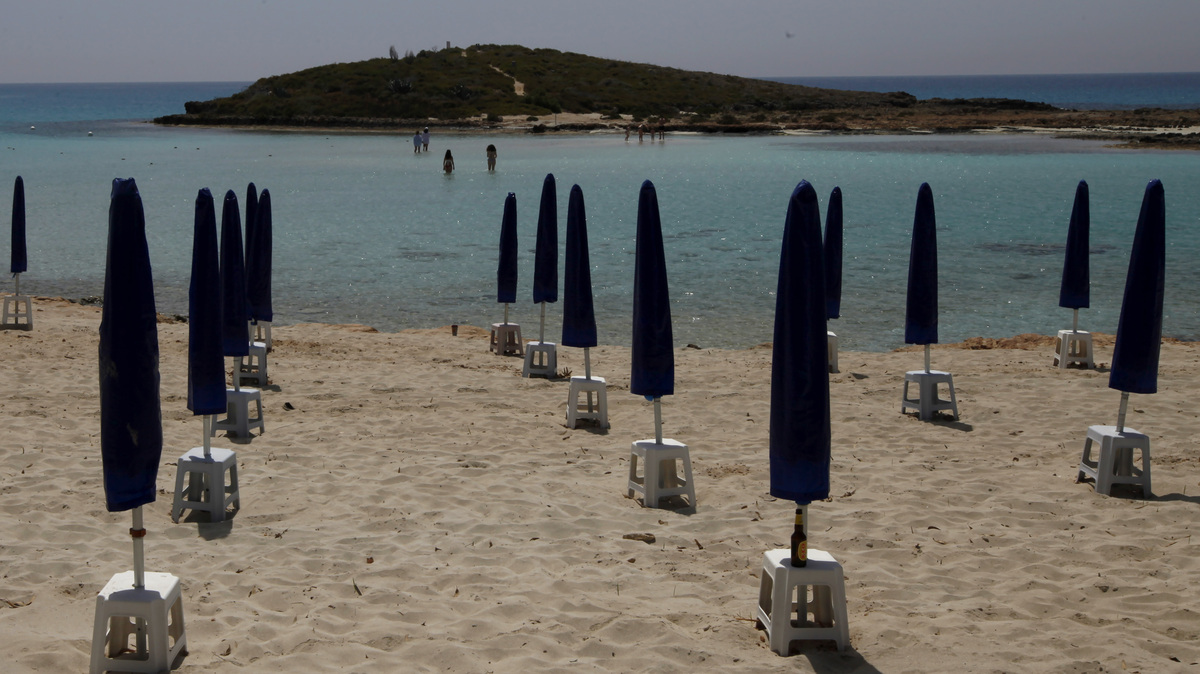
Hoping to draw tourists to Cyprus this summer, officials cite the “open-air lifestyle, abundance of personal space” and clean air. Here, rows of beach umbrellas await visitors on a nearly empty stretch of Nissi beach at the seaside resort of Ayia Napa earlier this month.

Petros Karadjias/AP


hide caption

toggle caption

Petros Karadjias/AP

Hoping to draw tourists to Cyprus this summer, officials cite the “open-air lifestyle, abundance of personal space” and clean air. Here, rows of beach umbrellas await visitors on a nearly empty stretch of Nissi beach at the seaside resort of Ayia Napa earlier this month.

Petros Karadjias/AP

If a visitor to Cyprus tests positive for COVID-19 this summer, the government will cover many of their expenses — including food, drink and lodging — according to a new plan that maps out how the island nation can revive its crucial tourism industry.

“The Cyprus government is committed to taking care of all travelers who test positive during their stay, as well as their families and close contacts,” the plan states. “The government will cover the cost of lodging, food, drink, and medication, in all cases mentioned above; the traveler will only need to bear the cost of their airport transfer and repatriation flight.”

Nearly 4 million tourists visited Cyprus last year, according to government statistics, generating nearly $3 billion in revenue for the country. Cyprus has a population of about 1.28 million.

Cyprus say it will ease restrictions on international air travel on June 9. But the island has been returning to normal business activities for the past month. It’s poised to restart its hospitality economy on June 1 – one day after health experts expect the country to achieve full containment of the coronavirus.

The first visitors to the Mediterranean country next month will be required to pass COVID-19 tests in their home nations within 72 hours of their trip. But that and other restrictions will be dropped for those from certain countries, depending on their “epidemiological status,” according to a letter outlining the plan. It was signed by the ministers of tourism, foreign affairs, and transportation.

Cyprus will conduct an “epidemic risk assessment” of countries on a weekly basis, using criteria that ranges from testing capacity to the rates of new cases and deaths. The first iteration of that list categorizes 13 countries as “low risk,” from Malta, Israel and Greece to Germany, Norway and Slovakia.

The pitch for touring Cyprus in the pandemic age ranges from the general – the ministers cite its “open-air lifestyle, abundance of personal space” and clean air – to the clinical, as they also note the country’s ratio of intensive care units per capita is one of the highest in the Mediterranean.

If tourists are diagnosed during their visit, they can use special facilities that are being reserved for them.

“A COVID-19 hospital with 100 beds will be made available exclusively for travelers who test positive,” the plan states, adding that capacity can be expanded at very short notice.

The plan also includes a range of details about how the country’s restaurants and beaches will work to reduce the chance of infection, from requiring more than 12 feet between beach umbrellas to disinfecting salt and pepper mills.

Source link

Ebrahim Patel: Domestic workers may return to work under Level 3

Minister of Trade and Industry, during a National coronavirus Command Council (NCCC) briefing on Thursday 28 May, gave the go-ahead for domestic workers to return to work under Level 3 lockdown.

Patel said the return is permitted as long as safety regulations and protocols are followed.

DOMESTIC WORKERS MAY RETURN TO WORK 

After a long wait, domestic workers are finally allowed to return to work and generate an income. Patel also mentioned that most other industries would make a return under Level 3. 

Apart from restaurants, entertainment and recreation facilities, most other industries will return to the grind. Restaurants can sell food, have it delivered and customers may collect but they cannot host a sit-down meal. 

Local governments can operate close to full operation. Council meetings and gatherings can also resume with strict social distancing, hygiene and health measures. 

“Almost our entire workforce will be back at work, but those who can work from home are encouraged to do so,” said Patel. 

“Special care must be taken for those over 60 and those with comorbidities,” he added. 

Patel also encouraged citizens to continue to order online and to work from home where possible.  

WORKPLACE PROTOCOL 

Patel says what needs to be done at workplaces should be clear to everybody. 

The following protocols must remain in place for workplaces under Level 3. Some of them will also be applicable to the return of domestic workers.

  • Employers must ensure that the 1.5 metres distance is maintained amongst employees;
  • Limit the number of people in the workplaces, so that we minimise the chance of infection;
  • Health and sanitation services must be readily available to employees; 
  • Masks must be worn and surfaces must be disinfected; and
  • Businesses must have a dedicated sanitation officer responsible for ensuring compliance with health guidelines.

UIF COLLECTIONS

On 15 May, the Department of Employment and Labour was making all efforts to reach domestic workers and farm labourers so that they could benefit from the COVID-19 relief scheme — this, obviously because they were not permitted to work. 

The call included making sure they apply and receive Unemployment Insurance Fund (UIF) benefits. 

The Department said it is doing everything in its power to help those who are vulnerable, during the lockdown, including domestic workers.

“Society is judged by how it tries to take care of the most vulnerable in its midst. This is why as the government in general and the Department of Employment and Labour in particular, are doing everything in their power to shield the most vulnerable from the worst of the pandemic,” said Minister of Unemployment and Labour Thulas Nxesi. 


Source link

The N+1 Candidate

Nikil Saval is a socialist candidate running for State Senate in Pennsylvania’s 1st district, which encompasses a huge swath of Philadelphia. He used to edit the literary and political magazine N+1, which is to say that he is more bookish than your standard elected-office-seeker. This occasionally gets in his way.

During a recent forum about education, Mr. Saval, 37, was asked what word he would choose as a title for a memoir about his run. He covered his face with his sweater.

“Tired,” he said, upon reappearing. “Exhausted.” The event’s moderator laughed, and her Zoom square turned momentarily yellow.

“But it would have to be a verb,” Mr. Saval continued. “A past participle. I don’t know.”

The moderator reassured him: “You’re putting more expectations on yourself than we’re going to put on you,” she said.

Mr. Saval’s attention to verb forms is indicative of the professorial sensibility he has brought to the campaign.

Yet Mr. Saval’s work in his adopted city has been effective. His platform aligns him with other members of the Democratic Socialists of America; housing and health care for all, steep taxes on the wealthy and a Green New Deal. In recent years, he worked to help elect a civil rights lawyer to District Attorney and a D.S.A. member to the House of Representatives. He was elected a ward leader himself in 2018.

If he wins his primary and the State Senate seat, the victory would be part of a pattern of leftist talkers and thinkers successfully turning ideas into action.

He thinks we shouldn’t be surprised. “It’s not like a quixotic, Norman Mailer situation,” Mr. Saval said. “We have a very serious campaign.”

“It’s a so-called safe seat and for that reason we should be advancing the most visionary policies possible,” he said. (Although Pennsylvania is a battleground state, the city of Philadelphia almost always votes Democratic. The state has a Democratic governor but its senate and house are controlled by Republicans and President Trump won there in 2016.)

Mr. Saval was born and raised in Los Angeles, to immigrants from India who ran a pizza restaurant. His political awakening arrived after he had graduated from Columbia University and got a job in publishing. His salary barely covered his rent.

“I was borrowing money from people, including my brother,” he said. “So I remember when they paid Alan Greenspan $8 million for his memoir in 2005 or 2006. And at the Penguin company meeting we were like, ‘We all make $28,000 a year as our starting salary. How can you rationalize giving Alan Greenspan $8 million? And the president of the company, Susan Petersen Kennedy, said ‘Alan Greenspan’s memoir is going to be a Penguin classic.’”

“I don’t know if we gasped,” he said, adding: “You mean like with the ‘Epic of Gilgamesh’ and ‘War and Peace’?”

His political enthusiasm found a vehicle in his work at N+1. The magazine was started in late 2004 and billed as a spiritual successor of the Partisan Review, the midcentury journal that cast the mold of the modern American intellectual. N+1’s founders, young Ivy League graduates of almost parodically serious bearing, published critical and philosophical essays about domestic and international politics and culture.

Mr. Saval’s first piece in the print magazine, in 2008, was “Birth of the Office.” It’s a researched history of the cubicle that became a book about the way that capitalism is built into the walls of the modern American workplace. (“Transposing the factory model to the office turned white-collar work into numbing, repetitive labor,” Mr. Saval writes in the introduction.)

As with other literary magazines, N+1 articles often use an essayistic, first-person approach in which the writer’s experience provides an entry point to a broader issue. (For example, Anna Wiener’s experiences in the tech industry as documented in an N+1 article — and then a best-selling memoir — offered a broader critique of Silicon Valley.) Mr. Saval preferred impersonal histories of labor movements, architecture and design and occasionally basketball.

In 2011, his girlfriend, Shannon Garrison, got into graduate school in Philadelphia, so the couple moved there. (They were married in 2014 and have a young son.) In 2012, Mr. Saval became a head editor at N+1. Under his supervision and that of Dayna Tortorici, his co-editor starting in 2014, the magazine became more politically coherent: explicitly feminist, internationalist and socialist. This was also the year that Mr. Saval became a member of the D.S.A.

In 2016, Mr. Saval threw himself into Bernie Sanders’s presidential campaign. (He continued to edit the magazine until the summer of 2019, and also wrote on a freelance basis for many publications, including The New York Times.)

“We turned his house into a staging location and he was just always there,” said Amanda McIllmurray, who met Mr. Saval during that campaign. She is now his campaign manager.

Mr. Saval wrote that, while canvassing for Mr. Sanders, he was happier than he’d ever been. For his own candidacy, though, he hasn’t been able to door-knock for months.

As cases of the coronavirus in Philadelphia climbed from double to triple digits, campaigning felt inappropriate. Mr. Saval imagined that potential constituents would react poorly to being cold-called: “Who cares that there’s a primary election and you’re running on a Green New Deal or whatever?”

But the campaign found its footing by calling people to ask what they needed, and connecting them to mutual-aid efforts led by volunteers.

“It was impossible to call anyone for anything and not ask them ‘How are you doing?’” Mr. Saval said. If people said that they were hungry, or that they didn’t have access to their prescriptions, “then you kind of had to act on it.”

Just 12 years ago, Anne Dicker, an earnest young organizer who had lived in the city for about a decade, ran for this same seat and got steamrolled.

Philadelphia Magazine said she was “so ideologically far left that she hates George W. Bush in a way that seems oddly personal.” It noted her “Hillary Clintonesque” pantsuit and warned that if she was to connect with voters, she would “need to find some way to exude charm.” It also spent close to 500 words on her bisexuality, starting with: “Anne Dicker had a secret.” (This was 2008.)

She was up against an incumbent named Vincent J. Fumo, who had held the office since 1978. The year before the primary, he was charged with more than 130 counts related to conspiracy, fraud, obstruction of justice and filing false tax returns. There was another candidate in the race: Johnny Dougherty, the head of the powerful electricians union, who is currently under indictment.

The incumbent, Mr. Fumo, withdrew from the race early, saying “the stress of being under indictment has taken a very real emotional toll.” (He was later convicted and sentenced to four and a half years in prison.)

Into his place jumped Larry Farnese, a lawyer who attracted the support of Mr. Fumo’s constituents and who eventually won the primary. At his victory celebration, Mr. Fumo held Mr. Farnese’s arm high in the air like a boxing coach with his champion.

And Ms. Dicker finished a distant third.

Twelve years later, Mr. Farnese still occupies the seat that Mr. Saval wants, though, in 2016, he was indicted on charges of using a bribe to sway a ward election. The next year he was acquitted by a federal jury.

Mr. Farnese said in a recent interview that he had put all this behind him. He had told people he would be exonerated; that was what happened.

“Since that occurred I have been re-elected to a leadership spot in our senate democratic caucus,” he said. “I have been elected as the judiciary chairman of the senate democrats. Those are positions that you don’t just get for being a nice guy. You get them because you have the respect and belief not only of your colleagues but also of your leadership team.”

Mr. Farnese has framed the race as incumbents often do: as a question of experience versus naïveté. “While Nikil has been talking about big progressive ideas, I’ve actually been delivering them,” he said.

He touted his bona fides, including that he wrote the first single-payer health care bill in Pennsylvania (he helped write that measure in 2009), and voted to expand Medicaid in the state and restore key education funding to Pennsylvania schools. In response to the coronavirus, he has asked the state to expand paid sick leave for workers. Throughout the race he has said that he was a progressive before it was cool.

Some commentators agree. Anthony Campisi, a Philadelphia public affairs consultant, said in an interview that the race would be difficult for Mr. Saval given that “you have an incumbent who I think most folks would say is pretty progressive.”

Furthermore, Mr. Farnese is familiar with the tactics favored at the State Capitol in Harrisburg.

“When you’re working up there, you’re working against radical far-right Republicans,” he said. “It’s not an academic exercise.”

Mr. Fumo, his convicted predecessor, has recently popped up on Facebook to support Mr. Farnese. He responded to an advertisement posted by Mr. Saval about Mr. Farnese’s legal history: “As far as that indictment goes, he was found NOT GUILTY!!! That means, you moron, that he NEVER misused any campaign money. Why don’t you go back to your Socialist Party and to NY where you came from?”

Despite the echoes of her race, Ms. Dicker isn’t pessimistic about Mr. Saval’s chances. She thinks the progressive movement in Philadelphia has turned a corner.

“Winning begets winning and the progressives have turned into a progressive machine that’s completely different from the old Philly machine,” she said. As if to illustrate her point, the powerful union led by Ms. Dicker’s other 2008 opponent, Mr. Dougherty, recently endorsed Mr. Saval’s campaign and contributed $25,000 to his campaign.

“​We were kind of holding our fire,” said Frank Keel, a spokesman for the union, who confirmed the endorsement. “In the last ten days or two weeks it really started to coalesce around Nikil.”

Asked about the union’s endorsement, Mr. Farnese’s campaign manager, Rajah Sandor, said: “Nikil Saval likes to hold himself up as some bastion of integrity, but when it comes down to it, he’s just a typical politician who will toss his moral code out the window for a chance at $25,000 from a political boss.”

Mr. Saval, in response, said that he was a labor candidate and the contribution represented union members’ dues. (Mr. Farnese has also been endorsed by a number of labor unions, including the Pennsylvania AFL-CIO.)

Some endorsements have arrived after the campaign dynamics may already have been scrambled by remote voting. Ben Waxman, a former spokesman for Mr. Krasner who is friendly with both candidates, said that in normal circumstances, many voters would know little about down-ballot races. But those voting from home might have taken a moment to Google them.

If they did, they might find that earlier this month, Mr. Saval also received an endorsement from Bernie Sanders, giving his campaign new momentum. It’s an indication that Mr. Saval is seen by his allies as working on behalf of a national democratic socialist movement — one formed from a series of groundswells, including Occupy Wall Street and Black Lives Matter — that will push to tax the rich, focus on workers and address climate change, among other priorities.

“The point is not to have a great candidate that you believe in,” Mr. Saval said. “The individual candidate in some ways just has to be a credible vehicle — or cipher even — for the coalition.”

Source link

Rainbow flags over Baghdad fan debate, spur fear

May 28, 2020

The embassies of Canada and the United Kingdom and the offices of the World Bank and the European Union raised rainbow LGBTQ flags in Baghdad to mark the International Day Against Homophobia and Transphobia on May 17. 

Though welcomed by liberals, the gesture prompted an online backlash, strenuous objections by Islamic parties and PMU militias and spurred fear among Iraq’s LGBTQ community. The fierce online commentary from conservatives forced the embassies to delete tweets that showed the colorful flag fluttering alongside the flags of the European Union, Canada and Iraq. 

The hashtag #No_to_LGBT_flag_in_Iraq trended on Twitter, particularly among supporters of controversial Shiite cleric Muqtada al-Sadr. Many users shared a photograph of a rainbow flag being burned, warned its hoisting would have consequences, called to bring back the death squads that used to kill gay men with concrete blocks and religious posts condemning homosexuality. Others took the opportunity to accuse the anti-government protests that began in October 2019 of being funded by foreign embassies, sharing a photo of protesters in Baghdad with their fingers painted in rainbows. Some even called to expel the diplomatic delegations altogether.

On Sunday, Iraq’s Foreign Ministry issued a statement denouncing the flags as against “the noble moral principles of all divine religions” and adding, “We remind all the missions operating in Iraq to adhere to the laws of the country and to follow diplomatic norms.” 

Adel Albdeewy, a political scientist at Baghdad University and the head of Baghdad-based Governance Center for Public Policies, thinks that the flags’ use did violate diplomatic protocols. 

“The 1961 Vienna Convention on Diplomatic Relations’ Article 20 states that the mission has the right to use the sending state’s flag and emblem on the mission’s premises and means of transport,” said Albdeewy. “The 1963 Vienna Convention on Consular Relations’ Article 29 also states the sending state’s right to use its national flag [but] most importantly to exercise this right in accordance with the receiving state’s laws, regulations and usages.” 

Albdeewy thinks that foreign delegations are not permitted to raise flags not recognized by the host country. “They have to respect the local values and regulations and avoid triggering the local community, especially in Ramadan, a month revered by the country’s Muslim majority,” he added. 

Khairuldeen Makhzoomi, a Washington-based Iraqi-American analyst and graduate of Georgetown University’s Center for Contemporary Arab Studies, thinks the basic functions of any diplomatic mission are to promote friendly relations between the host country and the home country. “They lost much of the local support by this unlearned step,” he said.

Ironically, the incident coincided with the publication of a sixth-grade Islamic educational text by Iraq’s Ministry of Education with a rainbow on the cover. The ministry rapidly announced that it had changed the cover in response to criticism.

Sadr’s Sairoon bloc said the gesture was “unacceptable,” condemning any behavior that contradicts Iraq’s culture and religion. The cleric later posted a series of tweets in which he took aim at the LGBTQ community saying its members were “mentally ill and in need of recovery and guidance.”

The words contradict Sadr’s statement in 2016 urging an end to violence against gay and gender-nonconforming people. At the time, Human Rights Watch welcomed the statement, hoping it might end the atrocities, kidnappings, execution and torture by militia groups, including Sadr’s Mahdi Army and League of the Righteous, of gay men and men perceived to be gay between 2009 and 2015. The killings began in Baghdad’s neighborhood of Sadr City, a Mahdi Army stronghold.

In March, Sadr blamed LGBT+ people for the COVID-19 outbreak, claiming that same-sex marriage was among the causes of the global pandemic. 

Observers expressed fears of a possible violent backlash. 

“Sadr’s supporters threatened to kill gays online. A day later, a person was shot dead with a silencer in Sadr City. The body was left with a letter in his hand telling Iraqi families to warn their sons against homosexual activities,” said Noor al-Qaisi, a Sweden-based Iraqi activist and blogger. 

In her work on this issue in 2011, al-Qaisi found that some of the men had been killed over their effeminate appearance. 

“Some of the victims were not gay. A handsome man was killed by a militiaman out of jealousy when the killer’s beloved woman expressed admiration for the victim,” she said. “In Iraq, people misunderstand the concepts of homosexuality, gender identity disorder and pedophilia. All non-heterosexual practices are considered homosexuality.”

Al-Qaisi thinks the situation is getting worse. “The society is against effeminate people in particular,” she said. “Those who even rape children are not despised or rejected. It is about masculinity.” 

Amir Ashour, executive director of the US-based IraQueer, Iraq’s first LGBT rights organization, blames political leaders for branding homosexuality as alien to Iraq.

“Diversity exists everywhere. LGBT+ Iraqis are not calling for the erasure of the Iraqi identity or the importation of Western values,” Ashour wrote. “We are calling for recognition that the Iraqi identity is larger than what figures like Sadr aim to portray. We are calling for the protection of human lives. These are universal human rights, not Western values.”

While Iraq’s Penal Code does not directly criminalize same-sex intimacy, Article 394 criminalizes extra-marital sexual relations.

In March 2019, IraQueer submitted a report on violence and discrimination based on sexual orientation and gender identity in Iraq to the UN Human Rights Council. The report indicates that from 2015 to 2018, the Islamic State was responsible for 10% of crimes against LGBT people, while the government’s forces and affiliated armed groups were responsible for 53%.

“The step was not wise, especially in Ramadan, a holy month for religious Muslims,” said Ahmed Menawer, a 26-year-old student at Mosul University. “They considered it a challenge to them. The EU deleted the post in an offense to European values, too. They should support the LGBT with laws and pressure on politicians who want to kill the community members. Such timid support is not useful.” 

US-based Iraqi journalist Riyadh Mohammed criticized the gesture’s timing. 

“The ambassadors’ behavior was fully consistent with other Eurocentric Orientalist practices that never fully understand other cultures, especially the Islamic,” said Mohammed. “Many experts have always tried to explain that any process of changing a culture — especially for a major old one that dominates more than a billion of people — must originate from within. Any attempt to ridicule it with the aim of changing it only strengthens the hardest forces in the culture concerned.”

While the act moved stagnant water, if that was the goal, it will most likely lead to persecution of Iraq’s homosexuals and justify accusing them of espionage and working for the West, he added. Mohammed thinks the act lacked political intelligence and will adversely affect Iraq’s protests in the name of human rights principles for all Iraqis. 

“The youth are facing a corrupt and criminal ruling political class using religiosity to perpetuate its thefts and crimes,” he said. “This behavior is only in the interest of this corrupt class, which has been accusing protesters of espionage and dissolution.” 

Makhzoomi, the Washington-based analyst, agrees that such a move will only benefit the militias. 

“Are these diplomatic missions willing to protect Iraq’s LGBTQ community? Or was it just an act of sympathy?” asked Makhzoomi. “Will they be able to secure a visa and refugee status for those who can’t talk openly about their sexuality, fearing for their lives? If not, then what was the purpose of such action?”


Source link

Nushrat Bharucha to star in the hindi remake of the Marathi horror film Lapachhapi titled Chhori : Bollywood News – Bollywood Hungama

0

After making waves with the announcement of a multi-platform content alliance between India’s Abundantia Entertainment and Crypt TV of the USA, the companies have announced their first production together will be the feature film, Chhori.


Chhori is the Hindi remake of the hit-Marathi horror film, Lapachhapi (translated as ‘Hide and Seek’) and stars the talented and youth-favourite star Nushrat Bharucha, who recently starred in India’s Pyaar Ka Punchama series, Sonu Ke Titu Ki Sweety and Dream Girl. Vishal Furia, who directed the original, will once again write and direct the film. Abundantia’s Vikram Malhotra and Crypt TV’s Jack Davis will produce on behalf of their respective companies.

Nushrat Bharucha to star in the hindi remake of the Marathi horror film Lapachhapi titled Chhori

A thrilled Nushrat Bharucha says, “I am extremely excited to be a part of Chhori. This genre excites me and the fact that the story is anchored in practices of our society, makes it relatable and impactful. I have wanted to work with Vishal Furia and I am so glad we are finally getting to collaborate on Chhori, which is so close to his heart. Abundantia Entertainment and Vikram Malhotra have always backed high-quality, progressive stories and are known to make films with strong female voices and as an actor, I couldn’t ask for more. Our collaboration with an international creator like Crypt TV and its CEO Jack Davis, whose expertise in this genre is unparalleled, makes this even more thrilling. I have enjoyed some of their content thoroughly and in my very first meeting with Jack we connected instantly on how we envisaged this genre and film. I am looking forward to beginning my experience with each one of them.”

Director Vishal Furia says, “When I first heard that Vikram Malhotra and Abundantia Entertainment were considering a remake of my film, I was thrilled – simply because I believe there is a lot more I want to say with this story. Getting a chance to revisit the film has been an amazing experience. I want to take the remake a few steps further and make a much more impactful, scary and thrilling film – more so because I am grateful for all the love I still receive for Lapachhapi. Partnering with Vikram and his team along with Jack Davis has been a wonderful process and I am confident that all of us can take this film to even bigger heights. Nushrat is a very strong and promising actor who I believe is well equipped to essay a strong role all by herself. I have wanted to collaborate with her for a while now and I am glad that we finally have a film together.”

ALSO READ: When Nushrat Bharucha tried to hide Sonu Ke Titu Ki Sweety song ‘Chote Chote Peg Maare’ from her parents

BOLLYWOOD NEWS

Catch us for latest Bollywood News, Bollywood Movies update, Box office collection, New Movies Release & upcoming movies info only on Bollywood Hungama.

Source link