Sunday, May 24, 2026

IMD raises monsoon forecast the day the rains hit Kerala coast

0


On a day when the southwest reached Kerala coast exactly on time, the India Meteorological Department (IMD) upgraded its forecast for 2020 rainfall to 102 per cent of the Long Period Average (LPA), from the 100 per cent in April. The forecast is with a model error of plus and minus of 4 per cent.


Region-wise, the forecasts showed that barring North-East and East India, rainfall in all the other regions of the country will be towards the higher side of ‘normal’ with North-West India which comprises of states such as Punjab, Haryana, UP and Delhi projected to get ‘above normal’ rainfall this year at 107 per cent of the LPA.


The said rainfall in Central India, most of which is rainfed, is expected to get rainfall equivalent to 103 per cent of its LPA, while Southern India is expected to get rainfall equal to 102 per cent of LPA. East and North-East India are expected to get 97 per cent of LPA equivalent rainfall.


However, this should not cause many problems, as the total quantum of rainfall in the Eastern Part of India is higher than in other regions. The forecast is with a model error of plus and minus 8 per cent.


The classified rainfall equivalent between 96-104 per cent of the LPA of the entire country as normal while that between 104-110 per cent of classified as above normal rainfall. Rainfall between 90-95 per cent is categorized as ‘below normal’.


ALSO READ: Southwest Monsoon hits Kerala; Met dept’s region-wise forecast today


Though the cumulative LPA for the four-month rainfall for all India is 88 centimeters but there can be regional variations in this.


In July, the met department said that rains would be 103 per cent of the LPA, while in August it will be 97 per cent of the LPA. July and August the two most important months for the southwest as these get the maximum quantum of rains in the four-month period. The forecast is with a model error of plus or minus nine per cent.


There is just a 15 per cent chance of rainfall being below normal this year and just 5 per cent of it being deficient, the met department said.


The timely onset of rains and upgrading of the forecast raised hopes that of the strong performance of the June to September rains in India something, which should have a positive impact on farm output and overall economic scenario.


Meanwhile, earlier in the day, the southwest has arrived over Kerala, marking the commencement of the four-month-long rainfall season, the India Meteorological Department said on Monday.


“The southwest monsoon has set in over Kerala today, 1 June 2020,” the said in a statement today.


The four-month monsoon season from June to September accounts for 75 per cent of rainfall in the country.


Private forecaster Skymet Weather on May 30 had declared the arrival of monsoon, but the IMD had differed, saying conditions were not ripe then for such an announcement.


Source link

Astronauts Dock With Space Station After Historic SpaceX Launch

0

The Crew Dragon has arrived.

On Saturday, SpaceX, the rocket company founded by Elon Musk, launched a Falcon 9 rocket with a Crew Dragon capsule carrying two NASA astronauts on top. SpaceX is now the first private business to accomplish a feat — taking people to orbit — that had until now only been done by nations.

Less than a day later, the spacecraft docked at the International Space Station, successfully completing the first leg of its journey.

This Crew Dragon test flight is a shakedown cruise to certify that the spacecraft meets NASA’s needs and safety standards in order to start routine trips taking astronauts to and from the space station. The agency has relied on Russia for that task since the space shuttles were retired in 2011. Once astronauts begin using the capsule with regularity, space tourists could also begin to fly it in the years to come.

At 1:22 p.m. Eastern time, the two astronauts, Robert L. Behnken and Douglas G. Hurley, disembarked the Crew Dragon, exchanging handshakes and hugs with the three astronauts already on the space station.

“Welcome to the International Space Station,” Christopher Cassidy, the NASA astronaut who is current commander of the space station, said to Mr. Behnken and Mr. Hurley. “Please come aboard.”

In a welcoming ceremony, Jim Bridenstine, the NASA administrator addressed the astronauts from NASA’s Johnson Space Center in Houston, where space station operations are managed.

“I will tell you the whole world saw this mission, and we are so, so proud of everything you have done for our country, and in fact, to inspire the world,” Mr. Bridenstine said. He then asked the astronauts if they had managed to get any sleep during the 19-hour trip.

“We did get probably a good seven hours or so opportunity for sleep.” Mr. Behnken replied. “And I did succeed at sleep.”

The current mission will not be a complete success until Mr. Behnken and Mr. Hurley return to Earth in the Crew Dragon. which they have named Endeavour, the same name as the retired space shuttle that both men flew on and the British sailing ship commanded by James Cook as he explored the Pacific.

“This has gone as well as we could have expected it to go,” Mr. Bridenstine said during a news conference after the docking.

Mr. Bridenstine and other officials including President Trump and Vice President Mike Pence have offered the successful launch as a hopeful inspiration to serve as a contrast to riots that have followed the death of George Floyd, a black man in Minnesota who died after a policeman kneeled on his neck.

But Mr. Bridenstine agreed that while the SpaceX mission might bring people together, it is not by itself a solution to social unrest.

“If the expectation was that things on the ground were going to change because we launched a rocket, I think maybe the expectation might have been a little high,” he said.

For now, Mr. Behnken and Mr. Hurley have an open-ended stay in orbit. The Crew Dragon test flight was originally scheduled to last only a couple of weeks, enabling the astronauts to test out capabilities of the capsule including serving as a shelter in case of an emergency.

But there have been delays in completing work on the spacecraft, as well as another that NASA is depending on for astronaut transportation, Boeing’s Starliner capsule. As a result, the space station is currently short-staffed with only three astronauts aboard — Mr. Cassidy and two Russians, Ivan Vagner and Anatoly Ivanishin — limiting how much scientific research can be conducted.

Mr. Behnken and Mr. Hurley can also assist with refurbishment tasks like spacewalks to install new lithium ion batteries that just arrived in a Japanese cargo ship.

The Crew Dragon is currently certified for up to four months in space. The spacecraft’s solar panels gradually decay over time, and the worry is that if it is docked too long, the panels would not be able to generate enough power for a safe re-entry to Earth’s atmosphere.

But over the next few weeks, the astronauts will periodically turn on the Crew Dragon and check. If the solar arrays turn out to be more resilient than predicted, the mission could be extended beyond four months.

During the welcome ceremony, Brian Babin, a Republican congressman whose district includes the Johnson Space Center, asked how this flight compared with the astronauts’ earlier trips to space aboard the space shuttles.

Mr. Behnken said that while the shuttles offered a rougher ride getting off the launchpad, the ascent became smoother. “But Dragon was huffing and puffing all the way into orbit,” he said. “A little bit more alive is probably the best way I would describe it.”

Once in orbit, the spacecraft appeared to smoothly pass all of its tests. “Today, the Dragon is extremely healthy,” said Steve Stich, deputy manager of NASA’s commercial crew program. “There’s really no major problems.

During Sunday’s docking, the approach of the Crew Dragon proceeded smoothly, about 15 minutes ahead of schedule, with a camera on the space station capturing the red, green and white lights of the capsule as it steadily crept up over the course of a couple of hours. The astronauts took over manual control for a while, firing the thrusters to nudge the position of the spacecraft. They then turned control back to a computer on board for the final steps, leading to docking at 10:30 a.m. Eastern time.

Mr. Behnken and Mr. Hurley then had to wait close to three hours more as air pressure was equalized between their capsule and the station, tests verified no air leaks and the spacecraft was plugged into the outpost’s power systems.

“As you are performing your inventory please collect all your food and water bottle trash,” Anna Menon, a SpaceX mission controller in Hawthorne, Calif., reminded Mr. Behnken and Mr. Hurley before they exited their spacecraft.

If no major problems arise during this test flight, NASA will use data from this flight to certify that the Crew Dragon is ready for routine flights to the space station. The next Crew Dragon mission — and the first operational one — is to carry four astronauts: three from NASA and one from the Japanese space agency.

But Mr. Behnken and Mr. Hurley got there first.

“We were just the lucky guys who got to fly the rocket yesterday,” Mr. Hurley said.

Source link

In the Gulf, migrant workers bear the brunt of the pandemic

One of the first photos associated with coronavirus in the Gulf featured a despondent South Asian employee of the Saudi oil giant, Aramco, forced to dress-up as a life-sized sanitiser dispenser. The photos drew fierce criticism online, forcing the company to apologise. But, long before the photos became public, the idea was conceptualised and approved, the cardboard cutout assembled to design, a worker selected for the task and ordered to walk the company’s halls. Then, higher-income employees posed beside him and the photos were released without pause, revealing the degree to which the racialised marginalisation of low-income migrant workers in the Gulf is normalised. 

The photos encapsulate the unequal impact of the COVID-19 crisis on the region’s 30 million migrant workers, who make up anywhere between 80-90 percent (in Qatar, UAE, Kuwait, Bahrain) to 60-70 percent (in Saudi Arabia, Oman) of labour markets. Those still at work risk their health to make other people’s lives safer – as cleaners, domestic and healthcare workers; easier – as grocery store staff or delivery men; or richer – by still toiling on construction sites.

The dualities of the Gulf’s social and economic systems are often oversimplified – rich nationals in the public sector, poor migrants in the private – but the pandemic has thrown these divides into stark relief. As Laavanya Kathiravelu writes in her introspection of migrants in Dubai, social distancing is already institutionalised in the Gulf; low-income workers from the Global South do the dirty and demeaning work, while physically and financially isolated from the modern societies they make possible.  

But this kind of social distancing is not saving lives – instead, it puts workers at greater risk of infection and other fallouts of the crisis. Migrant workers are not only excluded from emergency financial protections (with some exception in Qatar) but abandoned wholesale. Our networks have seen a sharp rise in cases from throughout the region – workers with no money for food, who face eviction because they can not pay rent; workers forcibly isolated in crowded labour accommodation or quarantine facilities with no water; workers who are not receiving critical medical care. All without the emotional support of their families and communities. Joint letters issued by a coalition of organisations including Migrant-Rights.org, Amnesty International and Human Rights Watch urge the Gulf states to protect workers and include them in COVID-19 policy responses.  

The plight of these workers is not only a consequence of the economic downturn but of their forced temporariness under the Gulf’s migration regimes. The “kafala”, or sponsorship system, privatises labour management, tying each migrant worker to an employer with near-complete control over their legal residency. Not only does kafala increase the risk of unpaid wages and pitiable working conditions, but it also absolves states of their responsibility to migrants. There is neither an economic nor a social contract between these essential workers and the countries they give their most productive years to. 

The working conditions the kafala enables, combined with inefficient complaints mechanisms, leave many workers in need of financial support. States do not provide meaningful assistance and charities play a role only in extreme cases. Instead, workers depend on diaspora associations for relief. For decades, Asian and African community groups have quietly provided food, accommodation and tickets home for workers in distress. 

Now, even this last line of social protection is strangled by stay-at-home orders, creating a vast need that is not being met by governments so accustomed to offloading responsibility. Hotlines function poorly, often providing misinformation, while authorities often take days to respond – with much nudging – to workers abandoned without food or water. Countries of origin are also slow to respond, partly due to capacity and partly due to an entrenched shirking of responsibility towards overseas workers.

Several Gulf countries now hope to reduce their burden by repatriating workers en masse, despite the multilayered risks involved. These calls are echoed by both jingoist and more progressive circles. “The threat is not from the outside,” one prominent activist in Bahrain tweeted, “it is from within us,” referring to the country’s migrant population. Actors, officials and media personalities from across the Gulf expressed similarly xenophobic sentiments, receiving both censure and agreement in response.  

The Gulf’s temporary migration regime exists precisely for scenarios like this – to easily dispose of a workforce when it is no longer needed or wanted. Having never been allowed to belong, the racialised distancing between classes makes for a clean break, at least for the host countries. For migrant workers, the consequences are almost too immense to fathom.

The views expressed in this article are the author’s own and do not necessarily reflect Al Jazeera’s editorial stance.

Source link

Hurricane Season Collides With Coronavirus, As Communities Plan For Dual Emergencies

0

Members of the Florida National Guard are seen during the opening of the COVID-19 walk-up testing site on April 27, 2020 in North Miami. State residents were asked to stay home under the pandemic. Restrictions are easing, but officials worry people might now hesitate to evacuate during a hurricane.

Joe Raedle/Getty Images


hide caption

toggle caption

Joe Raedle/Getty Images

Members of the Florida National Guard are seen during the opening of the COVID-19 walk-up testing site on April 27, 2020 in North Miami. State residents were asked to stay home under the pandemic. Restrictions are easing, but officials worry people might now hesitate to evacuate during a hurricane.

Joe Raedle/Getty Images

Robin Rokobauer doesn’t like to chance it. When there’s a hurricane, she almost always evacuates.

Rokobauer lives in Cocoa Beach, Fla., on a barrier island between the Atlantic Ocean and 153-mile-long Indian River Lagoon. Her mother is 93.

“She’s got to have flushing toilets,” Rokobauer says of her mother. “She’s got to have fresh water. She’s just got some physical needs that require that.”

But this year Rokobauer is thinking hard about her hurricane plan. She is 65, and like her mother, she’s considered at higher risk of serious complications from the coronavirus, which has claimed more than 100,000 American lives.

“If I have to go any farther or if I have to go somewhere, then you’re going to be exposed to more people in more environments, and you don’t know where those people have been,” she says.

The 2020 Atlantic hurricane season starts Monday, and federal scientists expect storms to be more frequent and powerful. Two named storms already formed in the Atlantic this spring before the official start of the season. As Florida and other coastal states plan for hurricanes, they are confronting troubling new public safety calculations because of the novel coronavirus.

There’s now a chance for one disaster to layer upon another. Many lives could be lost: first, from powerful winds, storm surges and flooding and then through the spread of the coronavirus in cramped public shelters following mass evacuations. Evacuees might pass the virus to friends and relatives who take them in, or get infected themselves in those new surroundings.

“The risks are significant,” says David Abramson, a professor at New York University’s College of Global Public Health, whose research examines the health consequences of hurricanes. “A lot of hurricane events lead to evacuations and displacements” without much time to build in social distancing safeguards, he says.

The hardest problem in planning for a hurricane during a pandemic could be public confusion over whether to evacuate or stay at home, says Craig Fugate, former administrator of the Federal Emergency Management Agency under President Obama.

“What I don’t want to have is people to say, ‘Hey, wait a minute. I’m not going to evacuate. I don’t want to get COVID-19, I’ve been told to stay home,’ ” says Fugate, who also led the Florida Division of Emergency Management. “That may result in more people staying behind and increasing the risk of loss of life.”

Others may stay put just because they are among the tens of millions nationally who have lost their jobs and feel they cannot afford to flee to hotels or family inland. As a result, some emergency managers along the Gulf Coast are trying to line up more shelters for the greater number of evacuees they expect, a move certain to stretch local and state budgets already tattered by the economic downturn.

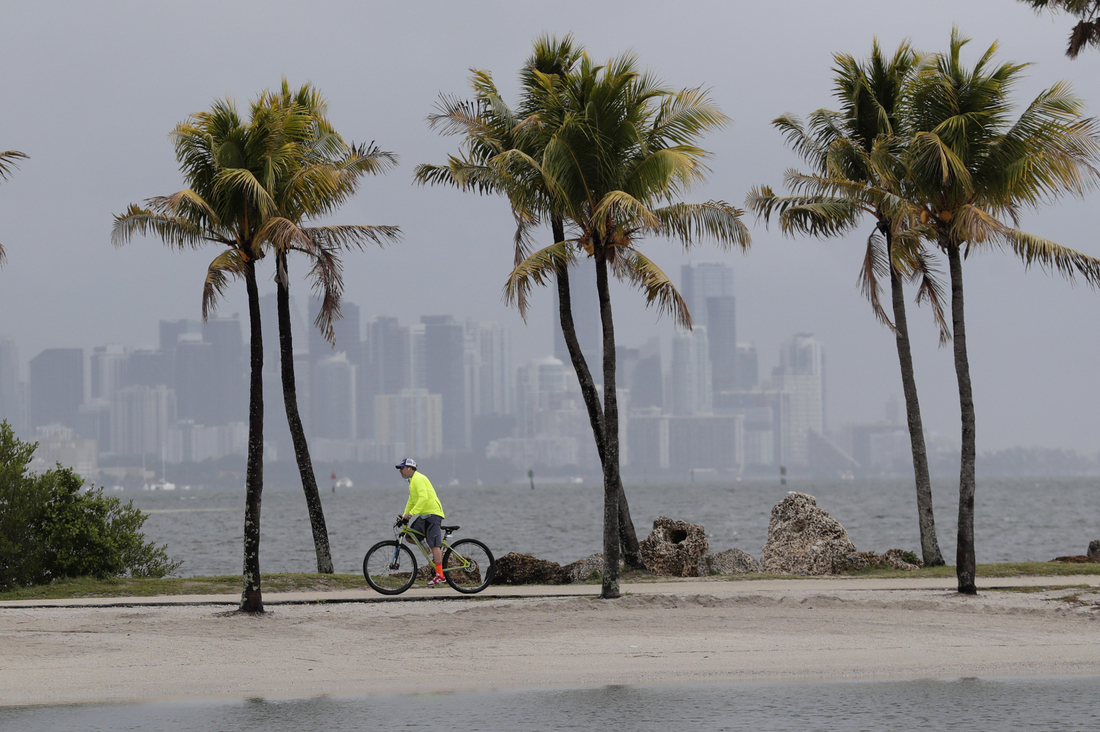
The Miami skyline is shrouded in clouds as a cyclist rides along Biscayne Bay. The National Oceanic and Atmospheric Administration has predicted an unusually active hurricane season this year, with more frequent and intense storms in the Atlantic Ocean. Seas made warmer by climate change are fueling stronger hurricanes, according to the newest research.

Lynne Sladky/AP


hide caption

toggle caption

Lynne Sladky/AP

The Miami skyline is shrouded in clouds as a cyclist rides along Biscayne Bay. The National Oceanic and Atmospheric Administration has predicted an unusually active hurricane season this year, with more frequent and intense storms in the Atlantic Ocean. Seas made warmer by climate change are fueling stronger hurricanes, according to the newest research.

Lynne Sladky/AP

Forecasters predict an active hurricane season

Coastal states from Maine to Texas have been scrambling to revise hurricane emergency plans to take the pandemic into account.

They’re rethinking everything — from evacuation routes and shelters to stockpiling personal protective equipment and communicating new procedures, says North Carolina meteorologist Katie Webster. She coordinates monthly calls with emergency managers through the National Emergency Management Association and is director of the natural hazards branch of the North Carolina Department of Public Safety.

Emergency managers in coastal states have been checking to see if companies they once relied on to supply everything from buses to food and water are still in business, or if alternative arrangements need to be made, she says.

“States will be as ready as they can be,” Webster says.

Florida, with its 8,436 miles of Atlantic and Gulf of Mexico coastline, has been hit hard in recent years. Since 2016, four major hurricanes have menaced the state, including Hurricane Michael, a Category 5 storm that tore through the Panhandle two years ago.

Climate change is intensifying the threats posed by hurricanes. A warmer atmosphere holds more moisture, making hurricanes likely to dump more rain. Sea-level rise elevates destructive storm surges into coastal communities. And hotter ocean waters are fueling stronger hurricanes, according to the newest research.

This season, every major forecasting organization is predicting above-average activity, because of a warm Atlantic Ocean and favorable atmospheric conditions. National Oceanic and Atmospheric Administration scientists, for example, have predicted 13 to 19 named storms, including six to 10 hurricanes and three to six major hurricanes, with wind speeds of 111 miles per hour or more. A normal season would have 12 named storms with six hurricanes, three of which would be major storms.

Meanwhile, as of last Friday, the University of Washington’s Institute for Health Metrics and Evaluation was projecting more than 100 new coronavirus infections a day in Florida by Aug. 1, just as the hurricane season reaches its height.

At a May briefing in Sarasota, Florida Gov. Ron DeSantis noted that the coronavirus spreads most easily when people come into close contact in an enclosed space.

“As you’re looking at sheltering for a hurricane you’v got to keep that in mind,” he says. “I mean if you pile people into a place, under normal circumstances that would be fine. But that would potentially allow the virus to spread if somebody is in fact infected.”

For its part, FEMA has updated its hurricane guide to include material on staying safe in the pandemic — including advice about social distancing, wearing cloth face coverings and following recommended cleaning practices.

Armed with hand sanitizer and masks, Trudie Marzig says she and her husband in Rockledge, Fla., about 50 miles southeast of Orlando, will be ready to evacuate if necessary.

“You have to take care of the immediate danger first, which is the weather issue,” she says. “You can deal with the virus pandemic afterward.”

Nightmare scenario: evacuations in a pandemic

Even without a pandemic, mass evacuations can be logistical nightmares, clogging freeways, causing traffic accidents, and depleting gas stations of fuel. For each storm, officials weigh the pros and cons of evacuation, and this year, they are adding the pandemic to their concerns, says Bryan Koon, a vice president at IEM, an emergency management and security consulting firm, and Florida’s emergency management director under Gov. Rick Scott.

Authorities in hurricane-prone states are rethinking not only when and where to call for evacuations, but how to execute them. In doing so, Koon says, officials have to contend with the vagaries of weather forecasting.

Meteorologists are getting better at forecasting the path hurricanes take toward land and the deadly storm surges they produce, he says. But there’s enough uncertainty to sometimes prompt officials to “over evacuate” as a precaution, says Koon, whose tenure in state government coincided with Hurricane Irma.

To curb the risk of spreading the coronavirus, officials could be more judicious with evacuations, he says, looking closely at factors like flood and storm surge zones and the age and condition of homes.

“We will have to determine whether it is better to have somebody stay in place because they will be dry enough, or their homes are strong enough, or maybe they are in mobile homes or a storm surge zone and the risks are worse for staying in place so you send them somewhere else,” Koon says.

The DeSantis administration is considering stay-at-home orders where homes are newer and sturdier, especially for weaker hurricanes.

And rather than using buses, community leaders are considering ride-sharing services such as Uber to transport low-income evacuees, one car at a time.

The stakes are especially high this year for low-income people, who would continue facing disproportionate risks from the coronavirus during a hurricane, says Abramson, the NYU professor. People get injured and sick during hurricanes but might lack adequate health insurance, he says.

“The people who are most vulnerable in hurricanes, socially and economically, are also vulnerable medically,” he says. “What we are about to see is also a large increase in the number of people who are uninsured, who are about to lose work-related insurance, and can’t pay for their own,” he adds.

Nursing home residents also face unusually high risks this season. Many low-lying facilities have evacuation agreements with facilities on higher ground, but Kristen Knapp of the Florida Health Care Association says this year, nursing homes will have to re-examine these arrangements.

“If you’re a facility that is an evacuation zone and you have positive cases in your building, you may not be able to go to your typical facility that you would go to if they don’t have positive cases in their building,” Knapp says.

Sheltering collides with social distancing

Sheltering large numbers of hurricane evacuees, which is always complicated by size, location and special circumstances, will be even more difficult amid the pandemic.

After Hurricane Irma, for example, some 350,000 evacuees were in shelters, often packed into school gymnasiums or other large venues. That wouldn’t make sense this year during a threatening hurricane, officials say.

Leaders are contemplating sheltering evacuees in hotels and motels left vacant by the economic collapse.

The American Red Cross is already lining up hotels or dormitories, and a higher number of large spaces so evacuees can be spread out. There will be health screening and temperature checks to get into shelters, says Trevor Riggen, a Red Cross senior vice president.

People with temperatures or other virus risk factors will be accommodated in a separate location, with access to medical help, he said.

Food will be served in boxes instead of cafeteria-style, and the Red Cross has already stockpiled face coverings and disinfectants for shelter cleaning, he says.

“We want people to know it will be as safe as possible,” he says.

While the emergency managers are getting ready for the six-month hurricane season, individuals and families need to do their part, this year more than ever, says Jennifer Collins, a geosciences professor at the University of South Florida whose research includes human behavior during hurricane evacuations.

“We definitely can lean on the government to some extent but we have to take personal responsibility as well,” she says. People should make sure they have what they need to shelter in place, for a hurricane and a pandemic, she adds.

Robin Rokobauer of Cocoa Beach considered staying put this year. But she believes she will have to evacuate in order to best protect her mother. She feels fortunate that Brevard County has had a relatively small number of coronavirus cases at some 400, including 12 deaths. Already, she is checking with hotels, looking for those with a kitchenette so that she can prepare meals in the room.

“I hope that we don’t have any” hurricanes, Rokobauer says. “I mean, we’ve been through a lot this year.”

Amy Green covers the environment in Florida for 90.7 WMFE Orlando. James Bruggers covers the Southeast for InsideClimate News. This story was reported and produced as part of InsideClimate News’ National Environmental Reporting Network.

Source link

A weird cosmic flare called the ‘Cow’ now has company

0

First, astronomers discovered the “Cow.”
Now they’ve rounded up a small herd.

A short-lived celestial flare-up with a
bovine nickname has been joined by two similarly unusual outbursts. The
mysterious events were brighter than typical supernovas, explosions of stars
that are a common source of temporary light shows in the sky. And the novel bursts
came and went quickly, with their visible light brightening and dimming over
days instead of the weeks typical of normal supernovas.

As particularly luminous examples of a
poorly understood class known as fast blue optical transients, the three novel
bursts have unknown origins. But they seem to be kin. “It’s like people going
out to find different creatures and find out how they’re related to each other.
We’re in the early stages of the ‘zoology’ of this class,” says astronomer Anna
Ho of Caltech.

Detected in June 2018, the Cow earned
its moniker thanks to the automatically assigned letters within its official astronomical
name, “AT2018cow.” It is joined by the “Koala,” Ho and colleagues report in the May 20 Astrophysical Journal. Named for the
ending letters in its handle, ZTF18abvkwla, the Koala appeared in September
2018. The third event, reported in the May 20 Astrophysical Journal Letters, resisted cute nicknames. Known as CSS161010, it was detected before the other
events, in 2016, but its significance wasn’t understood until now.

A possible explanation for the events is
that they result from an unusual type of supernova, one that explodes into a
dense shell of material. For all three events, telescopes detected radio waves
in addition to a short-lived flare of visible light. Those radio waves could have
been produced by accelerated electrons, kicked up when a blast of debris from
the explosion slammed into that surrounding shell. If an aging star shed its outer layers before it exploded, that could have created the
sheath (SN: 6/21/19).

But the events are still enigmatic. “We
don’t actually know what they are yet,” says astrophysicist Deanne Coppejans of Northwestern University in
Evanston, Ill., a coauthor of the paper on CSS161010. Scientists still can’t
rule out the possibility that the events could be the result of a black hole
ripping apart a star, rather than the aftermath of a supernova, she says.

After the Cow was discovered, scientists
had speculated that whatever created it may have involved some kind of cosmic “engine,”
a dense object like a black hole or spinning neutron star that could add some
oomph to the eruption by launching powerful jets of material. Now, in light of
the two teams’ new results, “I’m driven to think that there really is some kind
of central compact object driving these explosions,” says astrophysicist Brian Metzger of Columbia University.

That’s because the two new events both
spewed matter at blazing speeds. The Koala ejected its detritus at more than 38
percent of the speed of light; CSS161010’s ejecta reached more than 55 percent
light speed. The Cow’s offal reached a relatively measly 10 percent of the
speed of light. In the case of CSS161010, the researchers also observed X-rays,
which could likewise have been stirred up by such an engine.

Scientists have been regularly detecting
fast blue optical transients only for the last several years. Transient blips
of light in the sky are spotted by comparing different images taken of the same
locations at different times. In the past, telescopes surveyed the sky at
intervals short enough to catch normal supernovas but missed briefer events. Faster-paced
surveys have recently made it possible to spot changes that occur on timescales
of days. Those surveys include the Zwicky Transient Facility, which detected
the Koala, and the Catalina Real-time Transient Survey and
the All-Sky Automated Survey for Supernovae, both of
which detected CSS161010.

But watch this space: “There are more
surveys coming online that are going to be capable of detecting these things,”
says astrophysicist Patricia Schady of the
University of Bath in England. That could include the Vera Rubin Observatory, which will start up in 2022 (SN: 1/10/20). To fully pin down the source of the events, Schady
says, “we really do need more of these things.”

Source link

Protesters Attack Confederate Monuments, Topple Statue

Several Confederate monuments across the South have been attacked by demonstrators amid protests against police killings of Black people, sparked by the death of George Floyd in Minneapolis.

The statues have long been lightning rods for controversy over the Confederacy and America’s dark history of slavery.

In Birmingham, Alabama, protesters used ropes and a truck to yank a statue of Charles Linn off his pedestal to the ground, face down. Linn was one of the founders of Birmingham and a supporter of the Confederacy.

Though most of the tributes to the Confederacy were blasted with graffiti, a fire was set at the headquarters in Richmond, Virginia, of the United Daughters of the Confederacy, an organization that has helped erect several Confederate statutes. Nine fire trucks were on the scene Saturday night to extinguish the blaze, but the building was also covered in graffiti, reported the Richmond-Times Dispatch.

Statues in Richmond of Confederate Gen. Robert E. Lee, Stonewall Jackson, Jefferson Davis and Gen. J.E.B. Stuart in Richmond were all graffiti-bombed.

Monuments were also targeted in Mississippi, North and South Carolina and Tennessee.

“BLM” (Black Lives Matter) and “traitors” were spray-painted on the Confederate Defenders statues in Charleston, South Carolina. 

Red handprints and the words “spiritual genocide” were marked on a Confederate monument Saturday on the University of Mississippi campus in Oxford, The Oxford Eagle reported. An unidentified white male was arrested at the scene, according to the newspaper.

In 2017, President Donald Trump defended white nationalists at a rally in Charlottesville, Virginia, because he said they were defending Confederate monuments. Counter-protester Heather Heyer was killed at the rally when avowed white supremacist James Alex Fields drove his car into her. He was sentenced last year to several life terms.


Source by [author_name]

Britain’s Queen Elizabeth, 94, pictured horseback riding during lockdown

0

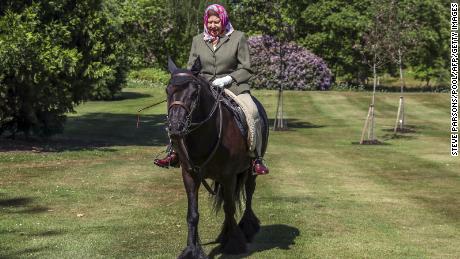
The Queen could be seen riding around Home Park, next to Windsor Castle, over the weekend, wearing a green jacket and a colorful scarf.

The images, released Sunday, feature the monarch riding Balmoral Fern, a 14-year-old fell pony, according to a Buckingham Palace news release.

The Queen has long been known for her love of equestrian pursuits, including horse racing, and has regularly been photographed on horseback over the decades.

The monarch turned 94 in April but the traditional royal gun salute to celebrate her birthday was canceled for the first time in 68 years. A royal source told CNN that she felt it would be inappropriate due to the pandemic.
Queen Elizabeth says wartime generation would 'admire' Britain's response to coronavirus, in televised address to mark VE Day

Trooping the Colour, the military parade held annually in mid-June to mark the official celebration of the Queen’s birthday, was also canceled.

Last month, on the 75th anniversary of VE Day, Elizabeth gave a rare televised speech from Windsor Castle in which she likened the British public’s response to the pandemic to the efforts of British soldiers during World War II.
That followed another speech, in April, in which she called for unity in the face of the pandemic.

Source link

John Oliver Wants Your Help ‘Making Tucker Carlson Really F**king Mad’

John Oliver is taking on Fox News host Tucker Carlson, who has railed against proposals that would allow more Americans to vote by mail. 

During a recent show, Carlson claimed that voting by mail was “an invitation to widespread fraud and manipulation,” then concluded his rant with a shrug and an “I don’t know.”

Oliver seized on the “I don’t know” as an opportunity to school Carlson.

“You don’t know? Well, first off, Tucker, thanks so much for admitting that,” Oliver said. “One of the biggest problems with modern discourse is that people think admitting a lack of knowledge is a sign of weakness when it’s not, is it? It’s how we learn and grow as individuals.” 

After sarcastically praising Carlson for admitting he doesn’t have all the facts, Oliver filled in some of the blanks. He noted that the United States has had widespread voting by mail since the Civil War and that one in four Americans have voted by mail in the last two elections. 

“Your premise that voting by mail is a new idea that would shatter democracy is in fact completely wrong and deeply stupid,” Oliver said. “That’s not a reflection on you, though, is it? You’ve just engaged in a dialogue in good faith, so thank you ― unless you weren’t doing that, in which case, go fuck yourself, you human boat shoe.” 

The host of “Last Week Tonight” then shared additional facts about voting, including the five states where every eligible voter is automatically allowed to vote by mail and the 29 others where voters could request an absentee ballot for any reason at all. 

Oliver also urged his viewers to vote by mail for one very specific reason ― and not just for health and safety if the nation is still facing coronavirus in November.

“If you vote by mail, not only will you be exercising your civic duty, you’ll also be making Tucker Carlson really fucking mad,” he said. “And what better incentive is there to do absolutely anything than that?”

Check out his full segment below:


Source by [author_name]

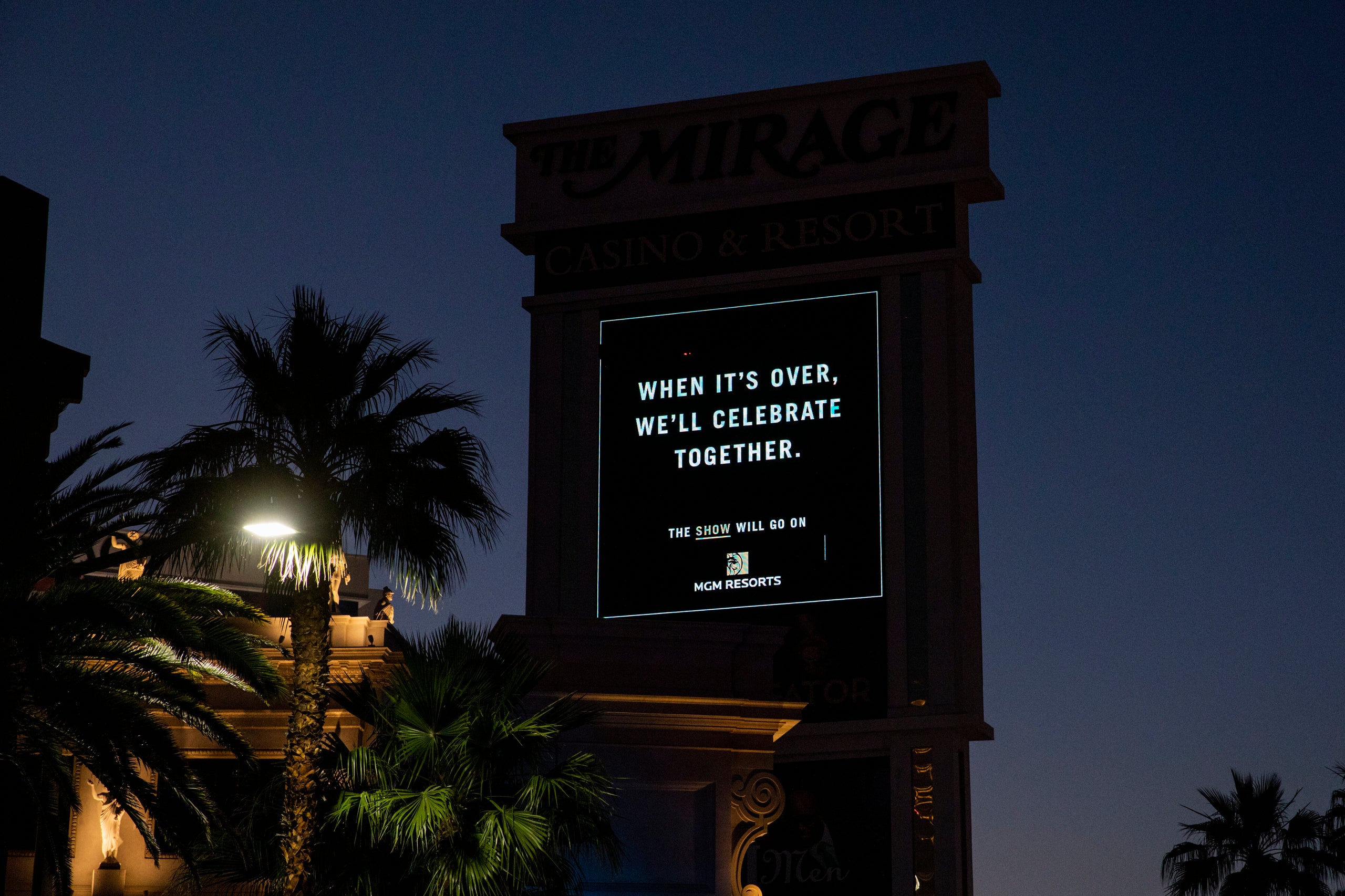
Vegas Is About To Reopen. But When Will The Jobs Come Back?

Photography by Joe Buglewicz

Tim Baer has no idea when he’ll return to work ― or whether he can keep his family safe and healthy when he does.

Baer tends bar at Hell’s Kitchen, celebrity chef Gordon Ramsay’s previously busy outpost inside Caesars Palace in Las Vegas. Like much of the gambling mecca’s service workforce, Baer was laid off from his job in mid-March when casinos, restaurants and nightclubs went dark due to the coronavirus pandemic.

Even though the Strip will begin a gradual reopening starting on Thursday, workers like Baer face nothing but uncertainty. While some casinos and restaurants will have customers for the first time in more than two months, hotels will be limiting the number of guests, crowds around craps tables won’t be allowed, and normally teeming nightclubs will remain shuttered as a public health precaution. 

Baer, a bartender for 30 years, doesn’t know yet when he’ll be called back. Thinking ahead to that moment, he wonders how he will perform such a fast-paced job in a hot facemask all shift long. He worries about contracting the virus and transmitting it to his wife or son, both of whom have concerning medical histories. But first and foremost, he worries about not getting that call.

“I lost a job I worked years for,” said Baer. “I don’t know what’s going to happen to me. I’m going to be struggling again. What kind of work am I going to do until something opens up?”

Offering an overview, he added, “It’s not looking too bright for a lot of people here in Las Vegas.”

Vegas might be the starkest example of what the hospitality industry faces across the country: a delicate balancing act between bringing back jobs and revenue and keeping workers and customers safe from a virus that’s killed more than 100,000 Americans. 

The city is well known for its reliable hospitality jobs that pay decent wages and provide a pathway to the middle class for many, including immigrant families. The powerful Culinary Union Local 226 and its sister union, Bartenders Local 165, represent workers on the Strip and downtown; together, the unions have 63,000 members. 

But how long it will be before a significant number of those jobs return remains a big question mark. In April, the unemployment rate in town soared to 33%, twice as bas as during the Great Recession. A spokesperson for the culinary union said 98% of its members were laid off due to the virus. 

It could be a long time before Vegas returns to something resembling normal. Its hospitality industry relies heavily on air travel. And most of the revenue at major resorts does not come from gambling itself ― it comes from hotel stays, meals and entertainment. Until the public is again comfortable booking flights to Sin City, those businesses will continue to take a hit.

“That’s not to say you’re not going to see a strong crowd driving from Southern California,” said Barry Jonas, a gaming industry analyst at SunTrust Robinson Humphrey, the corporate and investment banking arm of SunTrust Banks. “But the business centered on getting in an airplane, going out to a group meeting, hosting a convention ― that’s going to be a tough sell.” 

Jonas said he does see a certain pent-up demand, with people willing to go out and spend money under new social-distancing measures. “I just don’t know how that translates to a destination-oriented market,” he added.

Laid-off workers tell HuffPost they’ve waited as long as two months to start receiving unemployment benefits, as Nevada, like many other states, was poorly prepared for a flood of jobless claims. Frustrated residents have spent hours on the phone trying to get claims processed.

“The unemployment was so massive,” said Yolanda Scott, a food server at Treasure Island who was laid off on March 17 but didn’t get her benefits until mid-May. “The lines were just constantly busy. You had to call every day. It was like going to work.”

Many workers may remain on the unemployment rolls for months until tourism picks up.  

At a lot of workplaces, union contracts require that callbacks be based upon seniority. Baer has six years at his work level, and he knows other bartenders at Hell’s Kitchen with more time under their belts. But he’s grateful to have a union when his job prospects are so uncertain. 

“The union is playing hardball for worker protections,” he said.

Union leaders have been pressuring hotels and casinos for more transparency about their reopening plans and the protections they’ll have in place for employees. They have also called on Gov. Steve Sisolak (D) and the Gaming Control Board ― the governing body for the industry in Nevada ― to adopt health guidelines that apply to every property, rather than leave it to individual operators to decide which precautions they’ll take.

“The idea that each gaming company can come up with their own plans, keep those plans secret, and hope that one bad employer doesn’t harm workers and the entire industry is a potential disaster,” the culinary union said in a statement.


Nery Martinez, a bartender at Caesars Palace, at his home in Las Vegas last week. The company that owns it is set to open some casinos on Thursday, but Martinez is not among those slated to head back to work.

Nery Martinez, a bartender at Caesars Palace, said he wants to see all workers in the unionized workplace tested for coronavirus before returning to work. His union’s health fund has joined a partnership with the University Medical Center and certain resorts to provide free testing at the city’s convention center as reopenings begin. 

But testing is not mandatory, and different operators seem to be taking different approaches. Caesars, for instance, will be performing a health screening to determine which workers should get tested, and taking employees’ temperature before shifts. Martinez said that’s not enough.

“Some people had the virus and they don’t have symptoms,” he said. “For me, the safer way is everyone who works should be tested.” 

Martinez, who’s worked at Caesars for five years, has seen videos of crowded bars and customers invading workers’ personal space during the pandemic. He wants both his colleagues and his patrons to have to follow strict rules that are clearly posted. His wife works in a casino kitchen, and he worries for her health, too, along with that of their two children.

“It’s really hard to trust everyone in the workplace,” he said. ”The employer has to offer really clear transparency on the guidelines. They need to make that public, so everybody can see it. We want to trust those guidelines. I want to see all those things everywhere.”

But, as with Baer, Martinez’s first concern is getting back to work. If only half of his workplace is called back, he isn’t confident he would be among them. He could apply for work at other properties, but he suspects there will be a waiting list just about anywhere.

“If you don’t have the job you had before, it’s going be so hard to find another one,” he said.

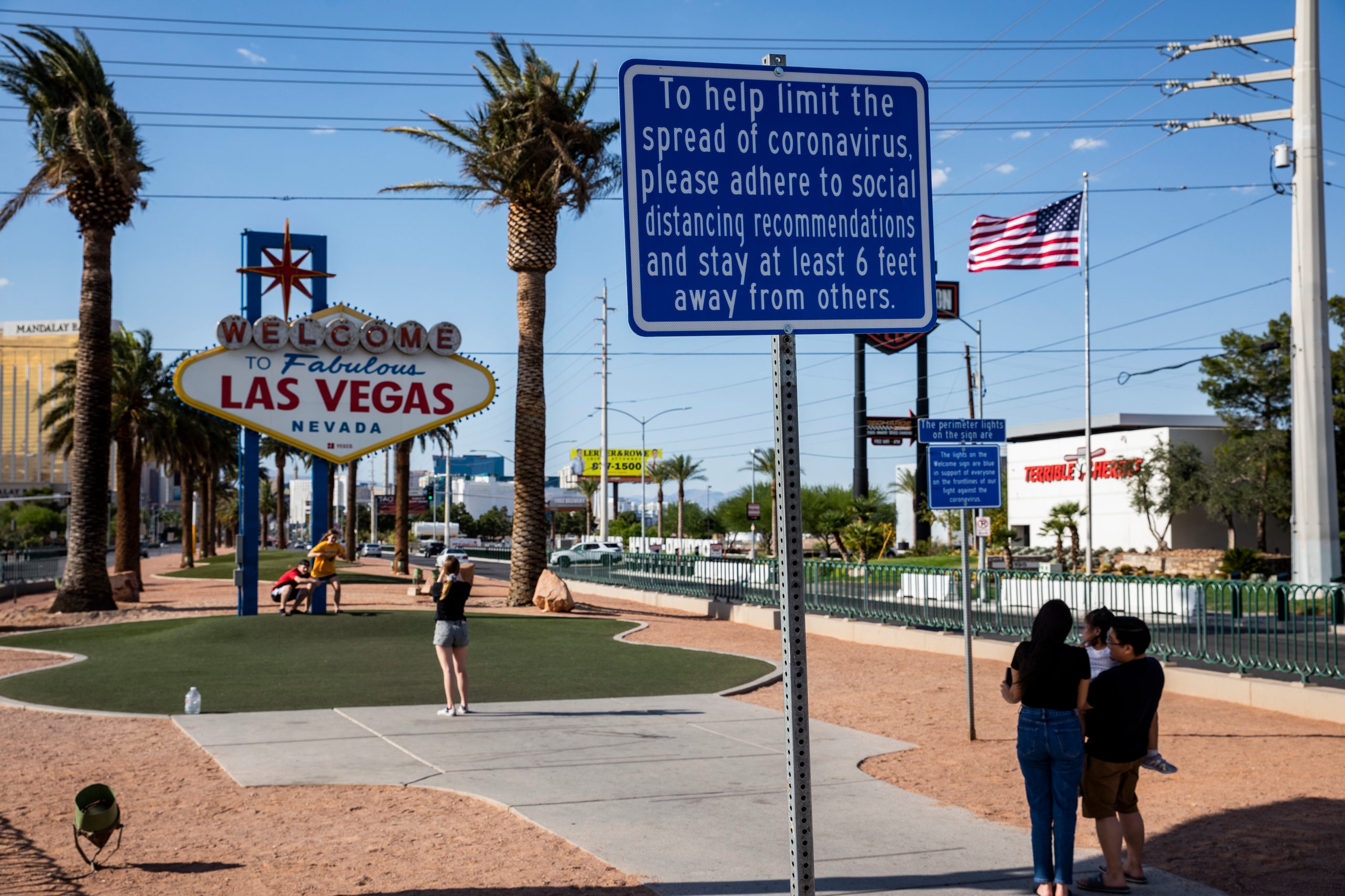
Signs now posted in many parts of Las Vegas stress the recommended social distancing to help stem the coronavirus pandemic.


Signs now posted in many parts of Las Vegas stress the recommended social distancing to help stem the coronavirus pandemic.

Even if Vegas bounces back, the coronavirus disruption could still bring about long-term changes to the city’s hospitality jobs. 

Jonas, the analyst, assumes at least some big employers will use the retrenchment as an opportunity to streamline operations and reduce labor costs. That could mean leaning even more on technology at the expense of workers, like using touchpads for hotel check-ins and drink orders, which were already becoming a common sight on the Strip.

The culinary union has tried to get out ahead of such shifts toward automation. In its last round of contracts with the major casinos and hotels, the union fought for job-training provisions to help members whose positions might be affected by new technologies. Ruben Garcia, a labor law professor at the University of Nevada, Las Vegas, said changes in the pandemic’s wake may test the effectiveness of those provisions. 

“The rationale [for employers] before was: ‘We need to become more efficient and provide a better guest experience,’” Garcia said. “That will now be supplemented with a public health rationale: ′We need to have fewer people and fewer touchpoints.′ It’s something the union will have to deal with.”

But for now, the concern is having a job to come back to. 

Baer said he is eager to be mixing drinks again. Even with the weekly unemployment supplement of $600 from the federal government, his income has fallen below what he would typically earn during a busy week at the bar. That extra federal aid is set to expire at the end of July. At that point, the maximum Nevadans would be able to collect per week would fall back to $469.

Baer said no one wants to go back to work before it feels safe, but some workers will get desperate as time goes on. And the question lingers ― when will anything close to a vibrant Vegas economy return?

“We’ve got some of the best customer service and restaurants in the world,” he said. “Are people even going to come back here? How long will it be?”


A HuffPost Guide To Coronavirus


Source link

Why Uncertainty Feels So Terrifying, And How To Cope With It

0

As life continues during the coronavirus pandemic, one thing is becoming clearer: There is so much we still do not know. When will the pandemic end? When will a vaccine become available? When can we resume daily life? Will things ever go back to normal? Will life be completely changed for good?

Scientists and health officials offer some predictions, but almost nothing about this pandemic is certain, except that it could go on for a long while. For many people, especially those who already struggle with anxiety, this uncertainty has been incredibly challenging — especially since the unknowns are literally a matter of life and death.

HuffPost spoke to mental health experts and people who struggle with anxiety to understand why uncertainty is so difficult to navigate in general, and how to cope.

First of all, why does uncertainty feel so damn terrible?

The human body is hard-wired to respond to uncertainty. Jessica Linick, a New York City-based licensed clinical psychologist, tells HuffPost that our brains are designed to evaluate threat and risk — and uncertainty can feel incredibly risky.

“The brain often looks for patterns,” Linick explained, adding that this mechanism is good when circumstances are predictable and make sense. “But in times of uncertainty and unpredictability, our nervous systems are on high alert; they’re always looking for that risk. And when someone’s nervous system is activated that way, it produces a flight or fight response.”

Lauren Hallion, an assistant professor of psychology at the University of Pittsburgh, agreed, noting that the human brain has evolved over time to pay attention to sudden changes in the environment that could signal a threat.

“In prehistoric times, those threats were sometimes predators, but they were sometimes diseases and viruses like the one we’re experiencing now,” Hallion said. “In other words, predictable environments are usually safe, while unpredictable environments were more likely to include potential dangers.”

Because the coronavirus pandemic is unlike anything we’ve experienced, many people are struggling with extremely grim “what if?” scenarios.

Uncertainty is rarely fun — but there’s a reason it feels so much worse right now.

While uncertainty, in general, can be anxiety-inducing, it’s fair to say that the uncertainty surrounding the COVID-19 pandemic is affecting people on a larger scale and in myriad ways.

Lynae Cook, a 30-year-old creative who lives in both Washington and California, has dealt with anxiety for most of her life. She told HuffPost that her mind has been occupied by a variety of unknowns.

“[I worry about] the fate of others and how people will pay their medical bills or afford housing,” she said. “In my personal life, [my anxiety] has manifested around projects that have been put on hold.”

Elly Belle, a 25-year-old writer and journalist living in Brooklyn, New York, said that her anxiety has been “really bad all the time” since the pandemic began.

“On top of being worried about myself and the uncertainty of my future, I’m also worried about everyone I know and love. Literally everyone is going through something difficult, whether it’s layoffs or lack of work, illness, or concerns about family,” Belle said. “I am constantly in a state of physical fear.”

Because the coronavirus pandemic is unlike anything we’ve experienced, and because there seems to be a growing list of abysmal possible outcomes, many people are struggling with extremely grim “what if?” scenarios.

“This can bring us to an existential place, where people are asking themselves about mortality [and] human nature,” said Melissa McCormick, a Florida-based licensed mental health counselor who specializes in anxiety and trauma healing.

She added that people who experience common anxiety might find themselves now coping with generalized anxiety disorder, panic disorder, or agoraphobia.

“Many of us are experiencing survival reactions … these are all visceral and can be intense, even when we are not realizing that’s what is happening in our bodies,” McCormick said.

Here’s how you can cope with uncertainty.

Belle, who has dealt with anxiety since early childhood, explains that uncertainty is always a trigger for her, but she learned at a young age that tragic possibilities are an unavoidable part of life.

“If we latch onto that [uncertainty], we will be in constant despair and anxiety,” she said. “I try to remember, especially in chaotic times, that all we can control is how we treat each other, which is why kindness is so important.”

She added that she’s been coping now by engaging in activities that make her happy, like cooking, making tea, listening to podcasts and talking with her therapist.

Likewise, Cook credits her therapist and naturopath for equipping her with successful coping tools.

“They taught me to take things in stride, the importance of sitting in your own feelings, and taking time to recharge,” she explained, adding that making lists and using a meditation app have been useful methods as well.

“Sometimes the best coping mechanism to deal with uncertainty is just try to keep yourself from thinking about all the things that you don’t know, and spend as much time as possible on the things you do.”

– Dana Gerber

For Dana Gerber, who has received treatment for her anxiety since the age of 7, the big question mark surrounding what the world will look like post-pandemic has been difficult to process.

“The biggest tool I’ve used is just distracting myself,” the 20-year-old writer from Maryland told HuffPost. She’s found it helpful to simply give her brain a break from worrying. Her distraction tools of choice? Books, Netflix, playing guitar or talking with friends.

“Sometimes the best coping mechanism to deal with uncertainty is just try to keep yourself from thinking about all the things that you don’t know, and spend as much time as possible on the things you do,” she said.

There are some cognitive tools therapists teach their patients that you can use to help you deal with uncertainty right now. Linick stresses the value of techniques that help calm a person’s vagus nerve, which is the longest cranial nerve in the human body and controls the body’s response during periods of rest or relaxation.

“Things that stimulate the vagus nerve can be vocal toning or humming, drinking cold water or putting ice on your face, jaw relaxation or massage, and calming breathwork,” she said, noting to make sure that your exhalations are longer than your inhalations when you’re doing breathing exercises.

Linick also suggested “orientation exercises” to help bring attention outward in the midst of an anxiety spike.

“Name five things in the room that are yellow, or green, or blue,” she offered as an example. “Look out the window and find the furthest thing you can see. Spend time looking at it, and describe it in various ways. This can help transition the focus from inside your body to outside your body.”

Hallion, who has partnered with other mental health experts to create a list of resources for coping with the pandemic, emphasizes the benefits of distraction.

“Going for a walk or a run while wearing a mask to protect others and staying 6 feet apart, calling loved ones, finding ways to volunteer for your community without leaving home — those are all strategies that can help distract us from our ‘worry spirals’ and bring us back to the present moment,” Hallion said.

There are also preventive tools to manage anxiety on a regular basis. Linick pointed out that during unpredictable times, it can be helpful for someone to focus on things that can be controlled.

For example, “Today, I’m going to clean my closet,” she said. “Today, I will put away my clothes. That’s something I can control; that’s something I can do. However tiny, those tasks can be quite useful.”

Additionally, Linick is an advocate of meditation, journaling, and movement exercises, while McCormick also recommends art expression and utilizing positive affirmations like ”This is not permanent. I am safe in this moment. I am inherently worthy. I deserve rest.”

"Calling loved ones, finding ways to volunteer for your community without leaving home — those are all strategies that can help distract us from our ‘worry spirals,’" says psychology professor Lauren Hallion.

“Calling loved ones, finding ways to volunteer for your community without leaving home — those are all strategies that can help distract us from our ‘worry spirals,’” says psychology professor Lauren Hallion.

What are some signs that you should seek further help?

As with any mental health issue, safety is key. “If someone feels like they’re going to hurt themselves, or hurt someone else, or they just feel unsafe in their own skin, they should seek help immediately,” Linick said.

If you don’t have access to a therapist, there are still ways to get help, like by contacting a crisis center. You can get in touch with Crisis Text Line by texting HOME to 741741, and the National Suicide Prevention Hotline can be reached by calling 1-800-273-8255.

But there’s certainly a gray area between manageable anxiety and a mental health crisis. McCormick pointed out some key signs and symptoms to watch out for.

“If someone is having panic attacks several times a week, I would say they need significantly more support,” she said, adding that the pandemic has also created a widespread increase in depression. “This may show up as changes in appetite and/or sleep, tearfulness, hopelessness, or thoughts of suicide. Some folks are in homes with unsafe people, so the risk for more safety-related anxiety and depression is also something to note.”

Ultimately, you know your body and mind best — but it’s always helpful to seek support at any point, whether it’s from a friend, loved one or therapist. McCormick puts it like this: “If someone feels like their distress is more than what they feel OK with, that’s truly enough to ask for help.”

A HuffPost Guide To Coronavirus

Source link