Former US Marine Paul Whelan was convicted of espionage and sentenced to 16 years in prison by a Moscow court. CNN’s Matthew Chance reports.
Journalist Maria Ressa, Critic Of Rodrigo Duterte, Convicted Of Libel
MANILA, Philippines (AP) — An award-winning journalist critical of the Philippine president was convicted of libel and sentenced to jail Monday in a decision called a major blow to press freedom in an Asian bastion of democracy.
The Manila court found Maria Ressa of the online news site Rappler Inc. and former reporter Reynaldo Santos Jr. guilty of libeling a wealthy businessman. The Rappler’s story on May 29, 2012, cited an intelligence report linking him to a murder, drug dealing, human trafficking and smuggling. The site’s lawyers disputed any malice and said the time limit for filing the libel complaint had passed.
“Rappler and both accused did not offer a scintilla of proof that they verified the imputations of various crimes in the disputed article upon the person of Keng,†Judge Rainelda Estacio-Montesa said in the 36-page ruling. “They just simply published them as news in their online publication in reckless disregard of whether they are false or not.â€
“The decision for me is devastating because it essentially says that Rappler, that we are wrong,†Ressa said in a news conference after the ruling. Her voice cracking, she vowed that “we will keep fighting†and appealed to journalists and Filipinos to continue fighting for their rights “and hold power to account.â€
The businessman, Wilfredo Keng, welcomed the ruling, which he said vindicated him and cleared his name “which Ressa, with one click of a button, attempted to destroy.â€
Ressa was sentenced to up to six years but her lawyer, Theodore Te, said the jail terms and other penalties imposed could not be enforced unless all appeals were rejected. She posted bail for the case last year and will study possible appeals in the next 15 days, Te said.
“The verdict against Maria Ressa highlights the ability of the Philippines’ abusive leader to manipulate the laws to go after critical, well-respected media voices whatever the ultimate cost to the country,†said Phil Robertson of Human Rights Watch, adding the verdict was “a frontal assault on freedom of the press that is critical to protect and preserve Philippines democracy.â€
President Rodrigo Duterte and other Philippine officials have said the criminal complaints against Ressa and Rappler were not a press freedom issue but a part of normal judicial procedures arising from their alleged violations of the law.
Keng dismissed the allegations in the 2012 story as baseless and false and said Rappler refused to take down the story online and publish his side of the story. He provided government certifications in court to show that he has no criminal record and sought 50 million pesos ($1 million) in damages, but the court awarded a much smaller fine.
Rappler’s lawyers said the story was based on an unspecified intelligence report and that Philippine penal law requires a libel complaint to be filed within one year. Keng filed his lawsuit in 2017, five years after the story was published.
A cybercrime law, which the Rappler journalists allegedly violated, was also enacted in September 2012 or four months after the story written by Santos was published. Rappler’s lawyers said Philippine penal laws cannot be retroactively applied.
Rappler, however, acknowledged that it updated the story in February 2014 to correct a misspelled word but said it did not make any other changes. The Department of Justice, which brought the libel charges to court, contended that by updating the story, Rappler effectively republished the story online in 2014, an argument dismissed by the news site’s lawyers.
The Department of Justice argued a complaint can be filed under the 2012 cybercrime law for up to 12 years, countering Rappler’s argument that Keng’s complaint was invalid due to being outside the one-year deadline for libel.
The Manila court upheld the 12-year period.
As Rappler’s chief executive officer, Ressa faces seven other criminal complaints in relation to legal issues hounding her news agency, including an allegation that it violated a constitutional ban on media agencies receiving foreign investment funds.
Ressa, who has worked for CNN and was one of Time magazine’s Persons of the Year in 2018, has accused the government of abusing its power and of using the law to muzzle dissent.
Many news outlets in the Philippines and beyond have criticized Duterte’s policies, including his anti-drug campaign that has left thousands of mostly poor suspects dead.
Duterte has openly lambasted journalists and news sites who report critically about him, including the Philippine Daily Inquirer, a leading daily, and ABS-CBN, the country’s largest TV network which was shut down by the government’s telecommunications regulator last month after its 25-year franchise expired. Congress has been hearing the network’s request for a franchise renewal.
The shutdown has been criticized as it cut off a major source of information on the COVID-19 pandemic in a Southeast Asian hot spot of the disease.
Associated Press journalist Kiko Rosario in Bangkok contributed to this report.
Calling all HuffPost superfans!
Sign up for membership to become a founding member and help shape HuffPost’s next chapter
Boy, 2, survives being shot in the head as bullet misses artery by just 1mm
A two-year-old boy who was shot in the head only survived because the bullet missed an artery by just 1mm, his family have revealed as they made a desperate appeal to find those responsible.
The toddler, his mother, and two teenage boys were injured after a gunman fired at a man, believed to be in his late teens, in Harlesden, northwest London on the evening of 3 June.
Police say the attacker shot inside the car the youngster and three others were travelling in before fleeing on a motorbike.
Today, the boy’s grandmother Lillian Serunkuma, who also suffered the devastating loss of her 15-year-old son when he was stabbed to death outside his school gates in 2017, made an appeal to the public for information.
She said: “If you know the person responsible for this incident, you need to come forward and speak to the police.
“My grandson is two, he has never hurt anyone. The person who did this doesn’t deserve your protection or friendship.
“The gunman could clearly see that a woman and child were present in the car, and fired towards them without any regard for their safety, seriously hurting them both.
“My daughter has never hurt anyone and didn’t deserve to be shot multiple times protecting her child from harm.”
The two-year-old’s mother and the two teenagers who were also in the vehicle were taken to hospital with gunshot wounds. Their injuries were not life-threatening or life-changing.
Doctors say the youngster, who his family do not want to identify, would have died if the bullet had hit the artery.
Detective Chief Inspector Pete Wallis said: “I am pleased to say the little boy injured is now, thankfully, starting to show signs that his condition is beginning to improve.
“This is a very welcome development for everyone on the investigation team and of course his family.
“However, it must not be forgotten that this little boy was shot in an act of indiscriminate violence.”
A 20 year-old-man arrested on suspicion of four counts of attempted murder has been released under investigation, while a 19-year-old man arrested on suspicion of attempted murder has been bailed.
Three other men, aged 29, 23 and 36, arrested on suspicion of assisting an offender, have all been released under investigation.
Ms Serunkuma’s son, Quamari Serunkuma-Barnes, was knifed three times in an attack outside Capital City Academy in Willesden, west London, on 23 January 2017.
She branded his then 15-year-old killer’s actions as “pure evil” in a statement read at the Old Bailey as he was jailed for at least 14 years after being found guilty of murder.
She wrote: “You never gave Quamari a second chance to defend himself. You took his life in a cold and malicious way.”
Married Britons report higher anxiety levels during lockdown
Married people and those in civil partnerships have reported the highest rise in anxiety levels during lockdown, according to a study by the Office of National Statistics.
Figures from the ONS, based on a survey of 6,430 adults in England, Scotland and Wales found that the percentage of people who are married or in a civil partnership who reported high levels of anxiety increased from 19% in 2019 to 39%. This compares with 36% of single people, up from 23%, and 32% of widowed individuals.
Prior to lockdown, the percentage reporting high levels of anxiety was lowest for those who were married or in a civil partnership (19%) compared with all other marital status groups (23%).
The study noted that married individuals were more likely to be balancing homeschooling alongside other commitments, with one in four people homeschooling during the pandemic, compared with approximately one in 10 who are single, separated or divorced.
It also noted that feeling lonely was the factor most strongly associated with reporting high anxiety – people who “often or always†felt lonely were almost five times more likely to report higher levels of anxiety than those who said they “never†felt lonely.
Those aged 75 and over were almost twice as likely as those aged 16 to 24to report high levels of anxiety during lockdown, reversing trends prior to lockdown.
In April the UK government set out these five tests it said had to be met before they would consider easing coronavirus lockdown restrictions:
- The NHS has sufficient capacity to provide critical care and specialist treatment right across the UK
- A sustained and consistent fall in daily deaths from Coronavirus
- Reliable data to show that the rate of infection is decreasing to manageable levels across the board
- Operational challenges including testing and personal protective equipment (PPE) are in hand with supply able to meet future demand
- Confident that any adjustments to the current measures will not risk a second peak of infections that overwhelms the NHS
For people reporting high anxiety during the pandemic, more than one in five said that their work had been affected because they were finding working from home difficult.
“One particularly striking finding is that 39% of people who are married or in a civil partnership reported high levels of anxiety,†said Dawn Snape, the assistant director of sustainability and inequalities division, for the ONS. “It may in part be because of the challenges of homeschooling alongside work and other responsibilities.â€
“Another marked change is in those aged 65 years or older. Prior to the coronavirus pandemic we consistently saw lower anxiety ratings in those aged 65 years and older, but now we are seeing the highest levels of anxiety amongst this group in lockdownâ€.
However, levels of anxiety among Britons appear to be reducing compared with the start of lockdown, figures show.
At the beginning of lockdown, there was a “marked†increase of anxiety, the ONS said. Between 20-30 March, almost half (49.6%) of people reported high anxiety. This reduced to 37% between 30 April and 10 May, but average anxiety scores are still higher compared with last year, and it has been estimated that 19 million adults in Britain are suffering high levels of anxiety.
A separate ONS study found that up to half of people who are shielding from Covid-19 in England have left their home against advice, while a third have seen their mental health worsen.
The figures, based on a survey of 4,149 people who are shielding, found that 49% have been out since shielding began, while 51% have stayed at home.
People who are shielding were initially told not to leave their home or garden, including for exercise, shopping or to go to work. On 1 June, the rules in England were relaxed to say people could leave their homes once a day for exercise.
The latest poll, covering 28 May to 3 June, found two-thirds (66%) had not stayed 2 metres away from those they live with despite being advised to do so, while 11% always kept their distance and 23% had done so sometimes.
Almost half (49%, an estimated 1.1 million people) said they had left the house since receiving advice to shield and 40% had left home at least once in the previous seven days.
The poll also found that while 61% of those shielding had experienced no difference in their mental health and wellbeing due to shielding, 35% said their mental health had got worse (29% slightly worse and 6% much worse). Women were also more likely than men to say their mental health had got worse over time.
The data also showed that about 627,000 of those shielding (28% of the total) had previously worked before being advised to shield.
Coronavirus: Fashion fans queue up to shop as non essential stores reopen in UK
9 of 96Attribution: AP Photo/Kathy Willens
New York City, New York
Manager Angel Ramos arranges shoes on a display in Top shoes, in the Sunset Park neighborhood of the Brooklyn borough of New York, after retail stores were allowed to reopen to customers, but with some restrictions, like curbside pickup on orders, and required wearing of face coverings, as part of the state’s phase one reopening plan.
Is curing AIDS worth the risk?
This article is part of Telescope: The New AIDS Epidemic, a deep-dive investigation into the modern face of a disease that transformed the world.
Scientific advances have put us closer than we’ve ever been to an end to AIDS. Ethical concerns could still push it out of reach.
Advances in prevention and treatment have not only lessened the urgency in finding a vaccine or cure for the disease; they’ve complicated the clinical trials needed to prove that a potential breakthrough is effective.
“Our success is the thorn in the flesh,†said Linda-Gail Bekker, deputy director of the University of Cape Town’s Desmond Tutu HIV Centre.
AIDS revolutionized drug research, as desperate patients raged at regulators for denying them access to experimental drugs that might not work, or could even be dangerous, but often represented the only chance of saving their lives.
“We’ve never had a disease like HIV†— Anthony Fauci, director of the U.S. government’s infectious disease research institute
Activists in the 1980s and 1990s convinced governments and drugs regulators to let them take untested medicines even if it might undermine the strict process for clinical trials. The uncertainty of an unproven treatment was better than a death sentence.
The widespread adoption of antiretroviral drugs — to manage or prevent the disease — have turned that logic on its head.
People on treatment can essentially live a normal life with HIV — and be confident that they won’t pass the virus on to others. And antiviral treatments, known as pre-exposure prophylaxis, or PrEP, can also be taken to prevent infections.
That leaves scientists and drugmakers facing a different ethical dilemma: How do you justify testing a vaccine that might not work when we know a daily pill can prevent HIV? Is there a rationale for trying out a cure that might come with dangerous side effects when existing medications offer a normal life even with HIV?
Alternative methods
For Janssen, the answer was simple. As the pharma giant prepared to test a new vaccine in a trial dubbed Mosaico, it decided to exclude men taking PrEP or those who said they wanted to start it.
The potential vaccine is one of the world’s top hopes for immunization, with Stage 3 efficacy trials starting in the U.S. late last year, followed by Spain and Argentina in early 2020. (Plans to include participants in Italy, Poland and elsewhere in Latin America are on hold because of COVID-19.)
All potential participants are counseled on ways to prevent infection, including condom use and PrEP, said Maria Pau, a senior director for the drugmaker. Only those who’ve ruled out PrEP are included; otherwise, their inclusion would mean that a significant proportion of PrEP-takers could muddy the results of the trial.
Trial design is a growing concern for vaccine researchers, Pau said, with groups like the World Health Organization convening meetings to figure out how to cope.
The Mosaico trial includes men who have sex with men and trans men, the group at highest risk in wealthier countries. Another trial with a similar formulation, but more targeted to the strain of HIV transmitted through vaginal sex, just started in sub-Saharan Africa. Women there are especially vulnerable because they don’t often have access to prevention methods like condoms, much less daily PrEP. (Women, who are less likely to use PrEP worldwide, aren’t excluded from this trial even if they’re using the preventive medicine.)
But a study published last month found an injectable form of PrEP that lasts months works just a well as a daily pill. That’s great news for people with limited access to health care, but it’s also likely to further complicate efforts to find a more permanent immunization.
“In the future it may be even more difficult because there are more and more prevention methods that some of these participants may choose,†Pau said.
HIV puzzle
The contrast can be seen in the global response to the novel coronavirus, the latest deadly disease of animal origins to sweep across the earth. Unlike HIV, there are no proven treatments for COVID-19.
“The world has come out guns blazing†for a coronavirus vaccine, Bekker said. “We haven’t had that†for HIV. While some pharma companies have stuck with HIV, others “have become fearful because of failure and have stepped away,†she added. “If anything, it’s kind of shrinking rather than engaged.â€
Ethical concerns and flagging global attention are just the newest challenges in the search for a permanent solution to AIDS. HIV has been confounding researchers for almost four decades.
Vaccines work by stimulating the natural immune response that the body would have if it was actually exposed to a disease. The vast majority of people overcome even the most dangerous bugs.
As difficult as developing a vaccine might be, “a cure is maybe even harder,†say scientists | Mujahid Safodien/AFP via Getty Images
“Despite the tens of millions of cases of HIV throughout the world since the beginning, there isn’t a single documented case of someone who has spontaneously cleared or eradicated the virus,” said Anthony Fauci, the longtime director of the U.S. government’s infectious disease research institute.
The scientific face of the U.S. coronavirus response, Fauci has been working on HIV since 1981 and famously tangled with AIDS activists over access to unapproved drugs.
Finding an effective vaccine is so difficult, Fauci said, because “you’re going to be asking the body to do something that natural infection [response] isn’t even capable of doing.”
HIV morphs inside the body. So by the time the immune system creates antibodies to fight one iteration, they’re “absolutely useless” because the virus has already changed, Bekker said.
She knows the difficulties of trying to create a vaccine all too well: Her trial of a promising candidate — the first large scale study of an HIV vaccine in almost a decade — was cut short in February when it clearly wasn’t working.
“It looked like it was going to be a blockbuster of a story, and then the whole thing imploded,” she said.
Worse than the disease
As difficult as developing a vaccine might be, “a cure is maybe even harder,†said Bekker.
There are only two people recorded as cured of HIV: the “London patient,” Adam Castillejo, and the “Berlin patient,” Timothy Ray Brown. They both had a bone marrow transplant to treat cancer. Eradicating HIV was a virtuous side effect.
Not only is this a costly and complicated treatment, it’s a dangerous one — and only worth the risk because their cancers would have certainly killed them.
Still, the search for a cure has picked up “particularly over the last five years, intensively,” said Fauci.
That’s in part thanks to new technologies offering scientists new inspiration and optimism. They include X-ray crystallography that lets researchers see the structure of cells at the atomic level and the ability to reverse engineer the DNA of immune cells to train them to fight a particular invader.

HIV experts argue that, even with effective methods of treatment and prevention, the search for cures and vaccines remains important | Mark R. Cristino/EPA
However, the virus’ thorny complications remain.
“We’ve never had a disease like HIV,†Fauci said. “The virus integrates itself into the genome of the cell, and once it’s there, it’s very difficult to flush it out, unless you effectively try and destroy all the cells of the body.â€
That’s the “draconian†approach behind the cancer-cum-HIV cures, he said. Even the first antiretroviral treatments had horrific side defects.
Newer ideas, like gene therapy, may not be safe either.
“How much risk would you allow yourself to be put into in order to be cured?†said Peter Godfrey-Faussett, UNAIDS’s senior adviser for science. Given the effectiveness of treatment, it may not be worth it when there’s “a small chance that it might kill me and a reasonable chance that it might cure me,†he said.
Ethics test
HIV experts argue that, even with effective methods of treatment and prevention, the search for cures and vaccines remains important.
“We still have 38 million who are going to need treatment for the rest of their lives,†said Bekker. That means decades of costs for health systems and donors — and around 770,000 die each year from the disease.
The most effective prevention measures, be they condoms or PrEP, depend on people using them consistently. The same goes for treatment.
“There’s a very strong feeling of ‘pill fatigue,’ and people feeling very concerned about every day needing to take a drug that would remind them that they’re HIV-infected,†Fauci said.
“It can’t be a super complex, very expensive intervention that’s only available to very few people†— Sharon Lewin, Australian researcherÂ
Cures based on some of the more cutting-edge technology could come with ethical concerns of a different type.
Supplying gene therapies or multidose vaccines to millions of people in poor countries could be extremely expensive.
Researchers and drugmakers would also like to avoid a repeat of the 1990s and 2000s, when African and Latin American countries went to war with Big Pharma over HIV drugs that were too pricey for their citizens.
“It can’t be a super-complex, very expensive intervention that’s only available to very few people,†said Sharon Lewin, a top Australian researcher and co-chair of the International AIDS Society’s Towards an HIV Cure initiative. “That’s not what we’re after … and that should influence the approaches that we use now.”
This article is produced with full editorial independence by POLITICO reporters and editors. Learn more about editorial content presented by outside advertisers.
From start screens to coin counters — a guide to video game UI
Sixty years ago the Brookhaven National Laboratory in Upton, NY held an open house. Visitors who toured the lab were treated to an interactive exhibit, a game titled Tennis for Two. The setup was simple—a 5-inch analog display and two controllers, each with one knob and one button. The world’s first video game was born, but after two years, the exhibit was closed.
Twelve years passed, and an eerily similar arcade game showed up in a bar called Andy Capp’s Tavern. The name of the game? Pong. Its maker? Atari. Seemingly overnight, the burgeoning world of video games was transformed. Novelty became industry.
Since Pong, the complexity of video game graphics has evolved exponentially. We’ve encountered alien insects, elven adventures, and soldiers from every army imaginable. We’ve braved mushroom kingdoms, boxing rings, and an expanding universe of hostile landscapes. While it’s fun to reminisce about the kooky characters and impossible plot lines, it’s also worth discussing the design elements that make video games worth playing—the UI components.
[Read: Playstation 5: All the games announced at Sony’s big event]
Like websites or mobile apps, video games have common UI components that help players navigate, find information, and accomplish goals. From start screens to coin counters, video game UI components are a crucial aspect of playability (a player’s experience of enjoyment and entertainment). To understand how these components impact the gaming experience, we must quickly address two concepts that are vital to video game design: Narrative and The Fourth Wall.
Narrative
Narrative is the story that a video game tells.
The fourth wall
The Fourth Wall is an imaginary barrier between the game player and the space in which the game takes place.
Narrative and The Fourth Wall provide two questions that must be asked of every UI component incorporated into a game:
- Does the component exist in the game story?
- Does the component exist in the game space?
From these two questions, four classes of video game UI components emerge: Non-diegetic; Diegetic; Spatial; and Meta.
Non-Diegetic
- Does the component exist in the game story? No
- Does the component exist in the game space? No
Non-diegetic UI components reside outside of a game’s story and space. None of the characters in the game, including a player’s avatar, are aware that the components exist. The design, placement, and context of non-diegetic components are paramount.
In fast-paced games, non-diegetic components may interrupt a player’s sense of immersion. But in strategy-heavy games, they can provide players with a more nuanced assessment of resources and actions.
Non-Diegetic components commonly appear in video games as stat meters. They keep track of points, time, damage, and various resources that players amass and expend during gameplay.

Diegetic
- Does the component exist in the game story? Yes
- Does the component exist in the game space? Yes
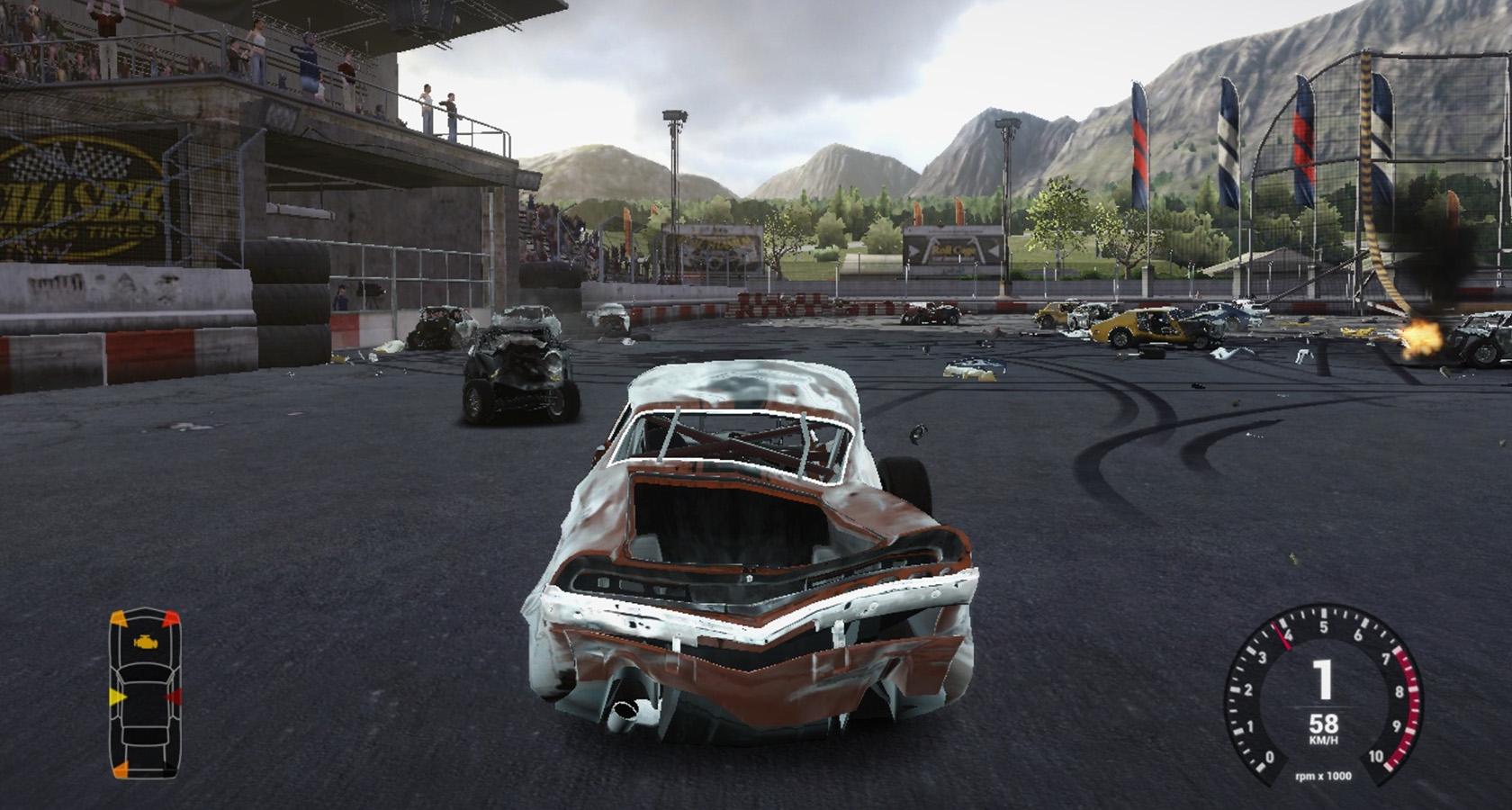
Diegetic UI components inhabit both a game’s story and space, and characters within the game are aware of the components. Even though they exist within the game story and space, poorly considered diegetic components are still capable of distracting or frustrating players.
Scale makes diegetic components tricky. For instance, an in-game speedometer that resides on a vehicle’s dashboard will likely be too small for players to see clearly. In some games, handheld diegetic components (like maps) can be toggled to a 2-D, full-screen view, making them non-diegetic.
Spatial
- Does the component exist in the game story? No
- Does the component exist in the game space? Yes
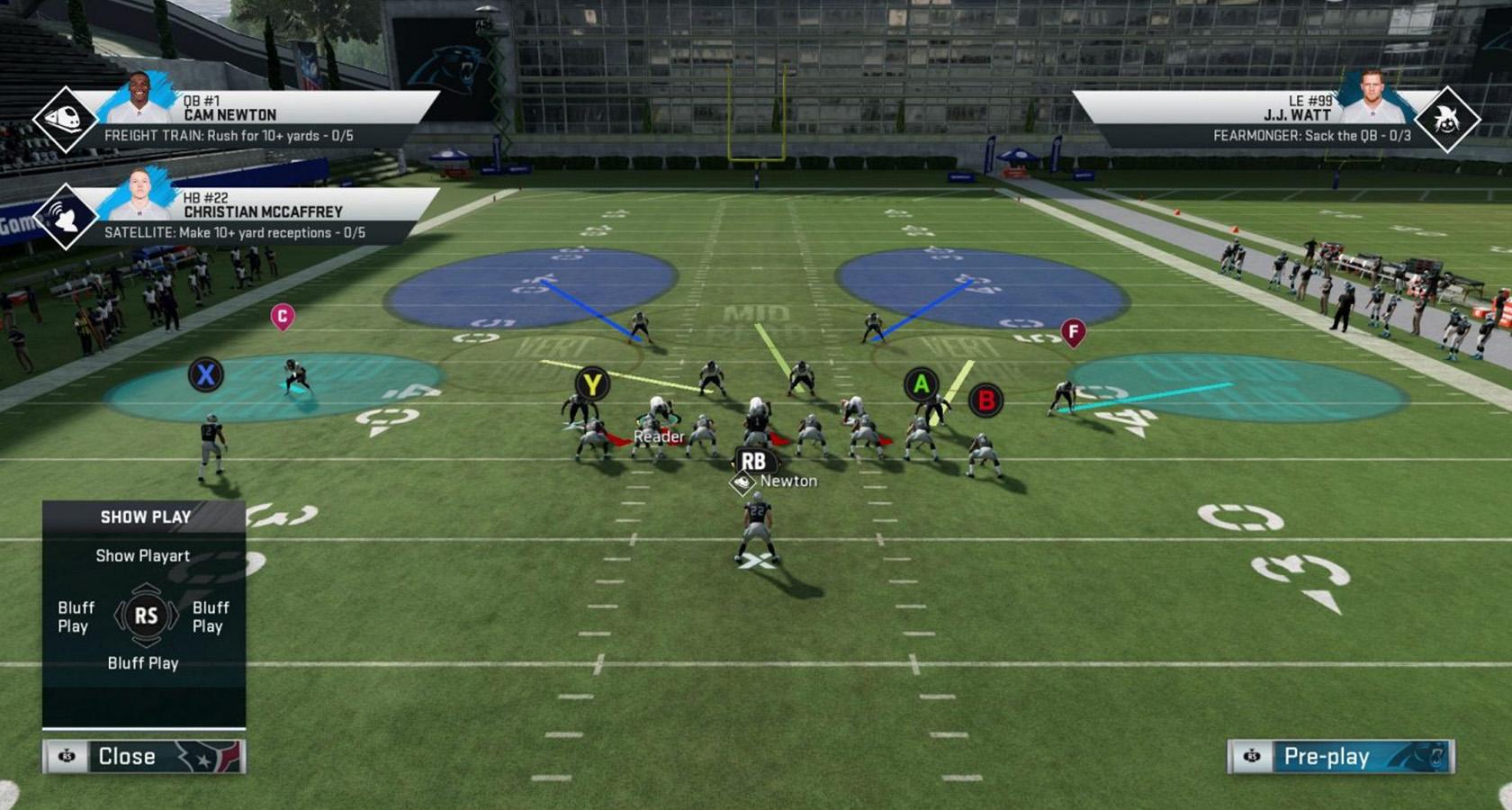
Spatial UI components are found in a game’s space, but characters within the game don’t see them. Spatial components often work as visual aids, helping players select objects, or pointing out important landmarks.
Text labels are a classic example of spatial UI components. In fantasy and adventure games, players may encounter important objects that are unfamiliar in appearance. Text labels quickly remove ambiguity and keep players immersed in the gaming experience.
Meta
- Does the component exist in the game story? Yes
- Does the component exist in the game space? No
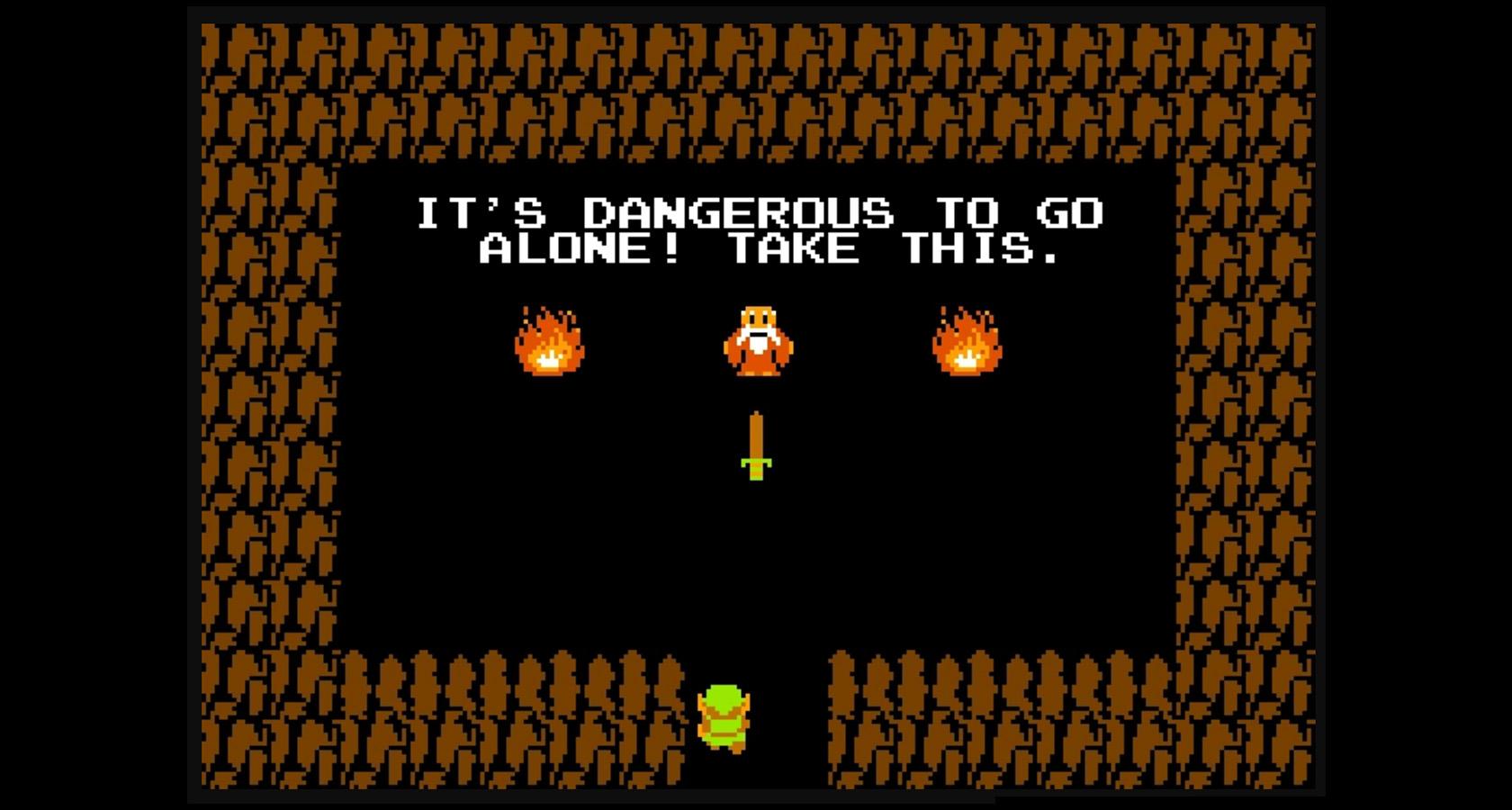
Meta UI components exist in a game’s story, but they don’t reside in the game’s space. A player’s avatar may or may not be aware of meta components. Traditionally, meta components have been used to signify damage to a player’s avatar.
Meta components can be quite subtle—like a slowly accumulating layer of dirt on the game’s 2D plane, but they can also feature prominently in the gaming experience. In action and adventure games, the entire field of view is sometimes shaken, blurred, or discolored to show that a player has taken on damage.
Classifying video game UI components isn’t always cut and dry. A life meter may be diegetic in one game but non-diegetic in another. Depending on a game’s narrative and its players’ relationship to the fourth wall, components may blur the line between classes. Likewise, an infinite range of visual styles and configurations can be applied to components according to a game’s art direction.

The Toptal Design Blog is a hub for advanced design studies by professional designers in the Toptal network on all facets of digital design, ranging from detailed design tutorials to in-depth coverage of new design trends, tools, and techniques. You can read the original piece written by Micah Bowers here. Follow the Toptal Design Blog on Twitter, Dribbble, Behance, LinkedIn, Facebook, and Instagram.Â
Read next:
This portable air cooler is a huge summer pickup for your comfort and your wallet
Celebrate Pride 2020 with us this month!
Why is queer representation so important? What’s it like being trans in tech? How do I participate virtually? You can find all our Pride 2020 coverage here.
ShowBiz Minute: Beyoncé, Williams, Lee
Beyoncé wants officers charged in black woman’s death ; Hank Williams Jr.’s 27-year-old daughter killed in accident; Spike Lee issues apology after defending Woody Allen. (June 15)


Overthinking blighted Jordan Spieth, but there is light at the end of the tunnel for former world No1 – Sport360 News
The path to excellence in professional sport is long and ever-changing. There are ups and downs, no matter the level, a journey every athlete expects. Making the downward spiral as short as possible is always the aim.
For the top stars, falling from rarefied heights is like recovering from a lengthy injury – it’s all about one step at a time. Even though the competition is still rising to the occasion, the key is to focus on yourself, take some positives as the weeks unfolds, and keep rebuilding.
For Jordan Spieth, trying to live up to the expectations of what has already been achieved is a difficult proposition.
It’s coming up to three years since the American lifted the Claret Jug at Royal Birkdale. His third major in two years. Sitting at number one in the world, he was a man on the cusp of greatness.
Many expected the Texan to be at the sharp end of the world rankings for the next decade, the man destined to win double-digit majors over the course of his career.
He was on a career trajectory like Phil Mickelson, or maybe even Tiger Woods, because of how frequently he won at a tender age. However, after a remarkable start to his career, he has struggled with his game since the 2017 Open, failing to win and rarely contending. He is like a different player.
Since the start of the 2018 season, he has posted just 11 top-10 finishes in 54 starts and has fallen to 56th in the world rankings. After ranking 39th on the PGA Tour in strokes-gained putting – his key strength – three years ago, Spieth dropped nearly 100 spots to 136th. He was ninth in that category in 2015.
Frustration has, at times, overcome him in his quest to return to the pinnacle of his game. When things done so naturally before are becoming more difficult, doubts naturally emerge.
A mental break away from the game over the last three months has no doubt benefited Spieth. That, coupled with the PGA Tour resuming its season last week at a course he has excelled at in the past, could be a formula for future success.
The Dallas native showed flashes of his old magic at the Colonial over the weekend, finishing in a tie for 10th, four shots behind eventual winner Daniel Berger.
His first round 65 was impressive, a step in the right direction. He made eight birdies, including three in a row on Friday, to card another sizzling 65 to reach 10-under.
He showed every shot during Saturday’s third round, which he entered one-stroke behind the leader and left a shot behind another leader after a two-under 68.
It was his final round that let him down though. He struck four birdies and five bogeys to sign off for a one-over 71. However, there were enough positives over the four days to complement his encouraging top-10 finish.
His mid-to-long range putting was strong and his driving was sharp – aside from one that blew out of bounds due to the wind. On the other hand, his normally clean wedge play was a bit rusty, but that is something which can be ironed out with practice. He didn’t have all the weapons in his armoury, yet that performance will give him confidence and belief.
Sometimes all it takes is one day, one round, one tournament to kick start something special again. There’s no doubt he is going to win again multiple times over the coming years. It’s just all about finding the rhythm again.
During the Covid-19 lay-off, he viewed that first month as an off-season, continuing to practice with a light load. Only in the last four weeks, he has ramped up his on-course preparations, analysing his recent performances with swing coach Cameron McCormick.
Creating these little habits to get back on track is what he has put emphasis on over the last few weeks. Working on his swing without the usual distractions and pressures of tournament golf has paid dividends.
He admitted that overthinking had been his biggest nemesis over the last two years and said he relished using the tour’s hiatus to free his mind of swing mechanics.
As the month’s progress, if Spieth can improve his driving accuracy and tighten up his putting, key to his three major triumphs, then we are going to see one of the finest players of his generation return to his sterling best.
Spieth is bound to be a consistent presence at the top of the leaderboard again. Everyone wants to see him there. We all want to see the gifted players contending each week. This is a man who boasts 14 worldwide wins. He only turns 27 next month. So young.
Before golf’s long pause, he made seven of eight cuts this season and recorded two top-10s. Back at Harbour Town this weekend, he will be hoping to improve on his 11th place finish from his last RBC Heritage appearance in 2015.
After reaching such lofty heights, Spieth will be eager to touch those boundaries again. One tournament and it could slowly come together again. He is still young, has plenty of class and countless days ahead to contend. It’s just a matter of rediscovering that magic consistently again.
Know more about Sport360 Application
Man admits urinating at PC Palmer memorial
Image copyright
Alamy Live News
The memorial for PC Keith Palmer was unveiled outside Parliament in 2018
A man has admitted urinating at the Westminster memorial dedicated to PC Keith Palmer.
Andrew Banks, 28, of Stansted, Essex, was photographed during Saturday’s right-wing protests in London.
He was sentenced to 14 days in custody, after pleading guilty to outraging public decency at Westminster Magistrates’ Court.
PC Palmer, 48, was stabbed while on duty during the Westminster terror attack on 22 March 2017.
He was one of five people murdered by Khalid Masood.
Image copyright
Staci Martin
PC Keith Palmer was unarmed as he was attacked by Khalid Masood
The image of Banks was widely shared on social media on Saturday as violent clashes between far-right protesters and police took place in central London.
Prosecutor Michael Mallon said Banks, a Tottenham Hotspur fan, was in central London to “protect statues”, but admitted he did not know which statues.
He was said to have drunk 16 pints during Friday night into Saturday morning, and had not been to sleep.
The act was widely condemned by politicians including MP Tobias Ellwood, who gave first aid to PC Palmer as he lay dying in the grounds of Parliament.