Monday, May 25, 2026

Level 3: Drive-thru strip club service divides Port Elizabeth

Level 3 of lockdown is a different kettle of fish, isn’t it? What is believed to be South Africa’s first drive-thru strip club experience has opened its doors in Port Elizabeth on Monday, offering beer and snacks alongside the racy dance routines of the performers at Candy’s.

A drive-thru strip club in South Africa?

At 10:00 on Monday, the Walmer-based business invited locals to come and sample the innovative experience. Charl Muller, who owns the venue, told local publication The Herald that he is doing everything possible to ensure that his staff can work in a safe and hygienic environment:

“This will provide some fun and at the same time help these girls to earn some much-needed money after a long time sitting at home. We’ll have six girls on at a time and each customer, relaxing in [their] car, can enjoy two songs and a great experience. We’ll keep it clean and professional as far as COVID-19 is concerned.”

How does a drive-thru strip club work?

The plans are something of a jaw-dropper. Schools are shut and many businesses remain on the scrapheap, yet here we have pole-dancers offering customers a Monday morning ‘pint and a peek’. But how, exactly, will Candy’s provide such a physical service in the age of coronavirus?

  • The dancers will strip as per their normal routine, but they’re now required to wear face masks.
  • All workers at Candy’s will be required to socially distance and have their temperatures taken daily.
  • They will perform on outdoor stages, in an enclosed partition which drivers can park-up next to.
  • Between 10:00 – 17:00, patrons will be able to buy coffee and snacks from the in-house cafe.
  • It’ll cost R250 to take-in a live show, and that won’t include the cost of your refreshments.

Adapting to change

Although the concept sounds a little crazy, it’s been particularly successful in America. Drive-through strip clubs have been thriving since lockdown began, as the contentious industry finds new ways to survive.

Establishments like Candy’s will always have their critics, but they are still a business with employees who desperately need to make money. The game may have changed, but the hustle remains the same…


Source link

Can Biden Emerge From the Basement and Meet the Moment?

Under normal circumstances, Joseph R. Biden Jr. might have delivered a speech on race in America on Sunday, covered by a press corps following him around the country. He might have visited Minneapolis or another city torn by violence. He might have summoned reporters to the front of his plane to critique President Trump’s leadership of a nation in crisis.

But at a moment that is emerging as a critical test for both Mr. Biden and Mr. Trump, the presumptive Democratic candidate for president is constrained by the limitations of a pandemic that has confined him to his home in Wilmington, Del., for the past three months.

Until now, Mr. Biden has sought to make the best of his circumstances with remote speeches, fund-raisers and interviews over Zoom, and digital advertisements.

Yet the president’s struggles are providing Mr. Biden with an opportunity to show an anxious nation how he might lead during these twin crises of civil unrest and a health emergency that has killed more than 100,000 Americans. The question is whether he can do this largely from the confines of his home or whether the moment has come to join other Americans — Mr. Trump among them — who have begun venturing into the world, to make his case to voters to oust a sitting president.

Mr. Biden may be thinking that moment has come. On Sunday, his announced schedule consisted only of delivering recorded remarks to a virtual rally in Maryland. But late in the day the former vice president made an unannounced tour of businesses in downtown Wilmington damaged during protests. On Monday he will meet with community leaders there.

Presidential campaigns can be defined by moments like this. Bill Clinton made a dramatic trip to Los Angeles, its streets empty and smoke still lingering in the air, after the riots of 1992. It was a high-risk move, providing images of Mr. Clinton touring the ruins of strip malls in Koreatown, playing basketball in what was called South-Central, and speaking at the First African Methodist Episcopal Church. He went on to defeat President George Bush six months later.

A visit by Mr. Biden to Minneapolis, or any of the other many American cities that were convulsed by protests and riots over the weekend, would be complicated because of the Covid-19 pandemic. Mr. Biden has broken his quarantine only twice for public appearances: the trip downtown on Sunday, and a visit on Memorial Day to lay a wreath at a veterans’ memorial.

But as tensions have mounted since the death of a black man, George Floyd, in the custody of Minneapolis police officers last Monday, Mr. Biden has raised, at least somewhat, his national profile — to the relief of some Democrats who fear he has had slipped off the radar screen in the midst of an epidemic that has riveted the nation.

He delivered remarks about the plight of black Americans on Friday, the day after Minneapolis was roiled by demonstrations. He issued a statement late Saturday night as looting and fires swept American cities, supporting the protesters while condemning the violence. He called Mr. Floyd’s family.

“He’s been present,” said Lis Smith, who was a senior adviser to the presidential campaign of Pete Buttigieg, the former mayor of South Bend, Ind. “I don’t think it matters to people whether he’s giving an address from his home or from behind a podium. No one in the cities facing unrest is sitting around thinking that the thing that could make this all better is having a presidential candidate in town stoking the fires.”

The challenges of this moment would be daunting for any candidate. And even Democrats who admire Mr. Biden have long worried about his political skills and fortitude. He is 77 and given to verbal missteps.

Can Mr. Biden give the nation hope and reassurance, and demonstrate how he might lead the country through a period of racial turmoil? Can he address a country’s fears in the midst of a pandemic that has sickened 1.7 million Americans and gutted the economy?

And can he navigate what has historically been a fault line for the Democratic Party, speaking at once to aggrieved African-Americans and others enraged by the death of Mr. Floyd while not alienating white blue-collar voters who prioritize law and order and have fled the Democratic Party for Mr. Trump?

For Mr. Biden, the risks of staying in political isolation are likely to escalate as these twin crises play out. He is competing for attention not only with Mr. Trump but also with Democratic leaders in Congress and mayors and governors. CNN did not provide live coverage of his remarks about Mr. Floyd on Friday as its correspondents waited for Mr. Trump to show up in the Rose Garden to talk about China and the World Health Organization.

And while Mr. Biden has self-quarantined in deference to stay-at-home directives by health officials — and to his own vulnerability to the disease, given his age — Mr. Trump has made it clear that he wants to return to something approaching a normal campaign and will resume in-person fund-raisers in June.

Still, for the time being, there are some benefits to Mr. Biden’s surgical approach to the campaign. Less is sometimes more in politics, particularly for a candidate who does not have the platform of public office.

Mr. Biden’s short but stark appearance on Friday showed that when he does step onto a large platform, his appearances can be powerful and effective. In this case, it set up a sharp contrast with Mr. Trump’s terse news conference at the White House, where he initially made no mention of the events engulfing the nation.

Mr. Biden was able to draw another contrast with Mr. Trump last Wednesday night as he paid tribute in a video to the 100,000 Americans who have died of Covid-19. Mr. Trump has struggled to seem empathetic as the nation confronted this grim milestone.

And as this long spring churns on, Mr. Biden’s confinement has freed him of the trappings of the modern campaign, its days packed with expensive and time-consuming rallies and chartered jets, which often seem a throwback to a predigital era. It has spared Mr. Biden the 14-hour days that can be exhausting even for a candidate half his age.

He is able to spend far less money by staying off the road, no small matter as he confronts an incumbent with a $187 million general election cash advantage. His isolation has allowed him to accelerate hiring that was constrained during the primaries by the campaign’s money shortage.

The virus crisis has taken him a little out of the spotlight — probably not a bad thing, given his propensity for saying the wrong thing — and focused attention on Mr. Trump as he struggles to manage a deadly pandemic and civil unrest across the nation.

“It’s fine — it’s more than fine,” said Rahm Emanuel, the former Democratic mayor of Chicago who was chief of staff to former President Barack Obama. “This is a race of Trump versus Trump, and Trump is losing.”

Scott Reed, a Republican consultant who managed the 1996 presidential campaign of Bob Dole, said Mr. Biden’s situation was reminiscent of the challenge Mr. Dole faced after capturing the nomination in April 1996 and then having to fill time, and attract attention, for four months until the convention. But this, he said, is playing more to Mr. Biden’s advantage.

“The basement strategy may become the new front porch strategy,” Mr. Reed said. “He may have found a new way to skin the cat.”

That is not to say that Mr. Biden would have chosen to spend the months leading to the convention in seclusion at his home rather than on the campaign trail. The former vice president has considerable work to do to energize liberals and younger voters. But it is far from clear whether he can do that without showing up and engaging those voters face to face. More broadly, Mr. Biden faces the challenge of building enthusiasm for his candidacy, something Mr. Trump enjoys from his devoted base.

Potentially most damaging, the pandemic is almost certain to impede the ability of surrogates and campaign volunteers to go door to door building up support.

“The virus is really hurting the ability of Joe Biden — his entire campaign and people outside his campaign — to mobilize,” said Jeff Weaver, a senior adviser to Senator Bernie Sanders, whom Mr. Biden defeated in the primaries. “Candidates for public office should be out among the people. Biden can’t be there. Surrogates can’t be there. You can’t have people knocking on doors.”

A critical question now is whether Mr. Biden and his campaign have the agility to make the most of this moment. Fund-raising was always going to be a big priority for Mr. Biden during this interregnum. The fact that he is not traveling should spare the campaign the overhead of the lavish events, with food and open bars, that donors expect these days.

“There are a lot of upsides for him,” Ms. Smith said. “The way we run presidential campaigns in 2020 is inefficient, outdated and expensive.”

For the past four years, Mr. Trump has been an inescapable public presence, from Twitter to television to rallies. By contrast, two former presidents — George W. Bush and Mr. Obama — made rare forays onto the public stage in recent weeks. Mr. Bush posted a video appealing for partisan unity around the coronavirus, and Mr. Obama spoke to graduating high school seniors.

That drew a flurry of attention, the same way Mr. Biden’s carefully chosen outings have won him notice over these past 10 days.

The digital technology of quarantine and his pick-your-moments schedule may have carried him through his low-profile spring.

But the campaign seems to have moved to its next chapter, as the nation confronts yet another crisis, and Mr. Trump struggles to find his bearings. For Mr. Biden, this could be an opportunity to step up and demonstrate how he, as president, would fill what many Democrats (and some Republicans) see as a void in leadership in the White House. That might be a hard case to make from a basement.

Stephanie Saul contributed reporting.

Source link

2 Tribal Casinos In Connecticut Roll The Dice And Reopen

A hand sanitizing wipe station is seen next to the slot machines at the Mohegan Sun casino on May 21. Connecticut’s two federally recognized tribes said they’re planning to reopen parts of their casinos on June 1, despite Gov. Ned Lamont saying it’s too early and dangerous.

Mary Altaffer/AP


hide caption

toggle caption

Mary Altaffer/AP

A hand sanitizing wipe station is seen next to the slot machines at the Mohegan Sun casino on May 21. Connecticut’s two federally recognized tribes said they’re planning to reopen parts of their casinos on June 1, despite Gov. Ned Lamont saying it’s too early and dangerous.

Mary Altaffer/AP

Tribal casinos in Connecticut reopening on Monday in defiance of state leadership. They are the latest to make that decision.

Two weeks ago, Viejas Casino & Resort in Alpine, Calif., was part of a wave of tribal gaming facilities to resume operations in that state even after Gov. Gavin Newsom wrote a letter trying to dissuade them.

Now, Foxwoods Resort Casino and Mohegan Sun are touting “limited” re-openings despite Connecticut Gov. Ned Lamont saying he thinks it’s too early for them to do so.

“I think the idea of opening up on June 1 is early,” Lamont said. “It’s earlier than Las Vegas, it’s earlier than any of our regional casinos want to do. I’d like to have more time.”

Officials at Foxwoods were confident ahead of the June 1 reopening, particularly because the tribe’s safety plan calls for 25% occupancy across the casino’s more than 9 million square feet.

“We feel like we’ve put forward a plan to mitigate the risk,” said Rodney Butler, chairman of the Mashantucket Pequot tribal nation, the tribe that runs Foxwoods. “Don’t go with the perception of what casinos were. Let’s focus on what we’re doing, and you have to come and see it.”

Foxwoods patrons will have their temperatures checked at the door and will be required to wear masks. Ten miles west of Foxwoods, Mohegan Sun is instituting similar safety guidelines. Also, players at table games will be separated by plexiglass. Dice will reportedly be disinfected after each roll.

The Connecticut gaming facilities are the first to reopen in a part of the country hit hard by the coronavirus. More than 3,800 state residents have died from COVID-19. In addition to the Connecticut and California reopenings, the Detroit Free Press reports that several tribal casinos in Michigan are following suit.

Source link

Fall Is Now Jam-Packed for Book Publishers. That Could Be a Problem.

The University of Chicago Press postponed 18 titles from its spring lineup to September. “Our thinking was that between the temporary closure of bookstores and the distracted state of the media and the consumer marketplace, they would have a better shot at reaching a broad audience that way,” said Elizabeth Branch Dyson, the press’s executive editor.

Other publishers have been reluctant to reschedule release dates, since there’s no guarantee that things will be better in the fall. Even if more bookstores reopen, customers may still be wary of them, and the economic fallout could worsen.

“Where are you going to move a book to? You’re going to move it to the fall, where you have the election and all these spring books that have moved?” said Morgan Entrekin, publisher and chief executive of Grove Atlantic, which has postponed just a few titles. “All the decisions we make are guesswork. None of us know what we’re doing.”

For authors with a big international audience, changing a release date gets even more complicated.

When Europa Editions decided to push back the publication of Ferrante’s novel “The Lying Life of Adults” from June to September, it scrambled to get two dozen international publishers on board. Europa had already printed 150,000 copies of the English translation by Ann Goldstein, and fans of Ms. Ferrante’s “My Brilliant Friend” books likely would have relished the chance to read her latest while sheltering in place. But her publisher decided against publishing the novel when many independent stores are still closed.

“It felt like it would have been a betrayal of the booksellers that have done so much for her,” said Michael Reynolds, Europa’s editor in chief.

Despite widespread bookstore closures, book sales haven’t cratered. Print sales so far this year are flat compared with the same period last year, suggesting that readers are still buying, according to NPD BookScan.

  • Updated May 28, 2020

    • My state is reopening. Is it safe to go out?

      States are reopening bit by bit. This means that more public spaces are available for use and more and more businesses are being allowed to open again. The federal government is largely leaving the decision up to states, and some state leaders are leaving the decision up to local authorities. Even if you aren’t being told to stay at home, it’s still a good idea to limit trips outside and your interaction with other people.

    • What’s the risk of catching coronavirus from a surface?

      Touching contaminated objects and then infecting ourselves with the germs is not typically how the virus spreads. But it can happen. A number of studies of flu, rhinovirus, coronavirus and other microbes have shown that respiratory illnesses, including the new coronavirus, can spread by touching contaminated surfaces, particularly in places like day care centers, offices and hospitals. But a long chain of events has to happen for the disease to spread that way. The best way to protect yourself from coronavirus — whether it’s surface transmission or close human contact — is still social distancing, washing your hands, not touching your face and wearing masks.

    • What are the symptoms of coronavirus?

      Common symptoms include fever, a dry cough, fatigue and difficulty breathing or shortness of breath. Some of these symptoms overlap with those of the flu, making detection difficult, but runny noses and stuffy sinuses are less common. The C.D.C. has also added chills, muscle pain, sore throat, headache and a new loss of the sense of taste or smell as symptoms to look out for. Most people fall ill five to seven days after exposure, but symptoms may appear in as few as two days or as many as 14 days.

    • How can I protect myself while flying?

      If air travel is unavoidable, there are some steps you can take to protect yourself. Most important: Wash your hands often, and stop touching your face. If possible, choose a window seat. A study from Emory University found that during flu season, the safest place to sit on a plane is by a window, as people sitting in window seats had less contact with potentially sick people. Disinfect hard surfaces. When you get to your seat and your hands are clean, use disinfecting wipes to clean the hard surfaces at your seat like the head and arm rest, the seatbelt buckle, the remote, screen, seat back pocket and the tray table. If the seat is hard and nonporous or leather or pleather, you can wipe that down, too. (Using wipes on upholstered seats could lead to a wet seat and spreading of germs rather than killing them.)

    • How many people have lost their jobs due to coronavirus in the U.S.?

      More than 40 million people — the equivalent of 1 in 4 U.S. workers — have filed for unemployment benefits since the pandemic took hold. One in five who were working in February reported losing a job or being furloughed in March or the beginning of April, data from a Federal Reserve survey released on May 14 showed, and that pain was highly concentrated among low earners. Fully 39 percent of former workers living in a household earning $40,000 or less lost work, compared with 13 percent in those making more than $100,000, a Fed official said.

    • Is ‘Covid toe’ a symptom of the disease?

      There is an uptick in people reporting symptoms of chilblains, which are painful red or purple lesions that typically appear in the winter on fingers or toes. The lesions are emerging as yet another symptom of infection with the new coronavirus. Chilblains are caused by inflammation in small blood vessels in reaction to cold or damp conditions, but they are usually common in the coldest winter months. Federal health officials do not include toe lesions in the list of coronavirus symptoms, but some dermatologists are pushing for a change, saying so-called Covid toe should be sufficient grounds for testing.

    • Should I wear a mask?

      The C.D.C. has recommended that all Americans wear cloth masks if they go out in public. This is a shift in federal guidance reflecting new concerns that the coronavirus is being spread by infected people who have no symptoms. Until now, the C.D.C., like the W.H.O., has advised that ordinary people don’t need to wear masks unless they are sick and coughing. Part of the reason was to preserve medical-grade masks for health care workers who desperately need them at a time when they are in continuously short supply. Masks don’t replace hand washing and social distancing.

    • What should I do if I feel sick?

      If you’ve been exposed to the coronavirus or think you have, and have a fever or symptoms like a cough or difficulty breathing, call a doctor. They should give you advice on whether you should be tested, how to get tested, and how to seek medical treatment without potentially infecting or exposing others.

    • How can I help?

      Charity Navigator, which evaluates charities using a numbers-based system, has a running list of nonprofits working in communities affected by the outbreak. You can give blood through the American Red Cross, and World Central Kitchen has stepped in to distribute meals in major cities.


Well-known writers, like Suzanne Collins, the author of “The Hunger Games,” as well as John Grisham and Stephen King, are weathering the crisis, since their fans snap up their books and can often find them at big-box stores that have remained open.

Source link

How to Be Your Own Glam Squad for a Zoom Wedding

Hair salons, spas and beauty retailers are continuing to help couples prepare for their weddings, even though most have been forced to temporarily close because of the coronavirus. Some are offering services like online tutorials and Instagram Live chats that feature tips from experts.

Couples are finding all this support a godsend. “Getting beauty advice from professionals helps keep your sanity,” said Shaunie Warner, 29, who lives in Los Angeles and works as an e-commerce manager for Beautycounter. She and her fiancé, Joe Apeah, 31, an information technology risk and compliance manager at TikTok, were one of three engaged couples featured on Beautycounter’s first wedding-focused Instagram livestream on April 29.

The couple, who pushed back their wedding date to Sept. 24 from May 22, were able to ask questions and talk about their concerns with the company’s lead makeup artist. “The session reinspired me about my wedding,” Ms. Warner said. “It reminded me I’m still having a celebration.”

If you’re looking for some advice, and can’t get it in-person, here are a few new virtual offerings from beauty brands and experts.

Engaged couples can tune into “I Do with Beautycounter,” a 30-minute bimonthly Instagram Live series hosted by the skin care and makeup brand. Three couples are invited to join the virtual chat with Christy Coleman, a makeup artist and the company’s chief artistic officer, about skin care and makeup tips. Other couples are able to view the live chat and ask their questions in the comments.

“These were big wedding months,” Ms. Coleman said. “We wanted to find ways to help couples prepare at home. This is something fun and engaging they can experience together while getting hands-on help with preparing their skin.”

Couples eager to have their questions and concerns addressed by Ms. Coleman live can send a one- to two-minute video stating their skin care and makeup wedding goals. Three couples will be chosen per episode to be featured in the live chat. Email Ido@beautycounter.com for more information. The next episodes will be live on June 19 and 26 at 4:30 p.m. Eastern time.

Preparation: Whether you’re a featured couple on the show or watching it live, you’ll want to “have a clean face, a mirror and forward-facing lighting from a desk lamp,” Ms. Coleman said. “Don’t go for overhead or backlighting as these create shadows. You want to be able to see your skin up close in the best light possible.” Also, have some of your favorite products in front of you so you can follow along.

Advice: Ms. Coleman suggested taking a self-care moment together the night before with a hydrating or detoxing mask so your skin is clean and fresh the following day.

Katelyn McCullough, who describes herself as a wedding-beauty matchmaker, owns Elwynn + Cass, a beauty concierge service that focuses on connecting brides, grooms and wedding party members with the right hair and makeup artist, at no extra fee.

“Most clients email me what they’re looking for or we do a 15- to 20-minute consultation on the phone,” said Ms. McCullough, whose company is based in San Diego. Last year she matched 500 clients with beauty pros. “Once I understand what you want, I recommend three or four options, which includes prices, years of experience, the artist’s bio and examples of their work.”

Ms. McCullough said about half of her business clients, who she charges a referral fee, are livestreaming their sessions or doing their consultations virtually.

“The artist is with you every step of the way, explaining how to achieve the look you want and helping you through any issues you might run into in real time,” she said.

An added bonus: No travel expenses are needed if the makeup artist you love lives in Seattle but your wedding is in Maine. For virtual or in-person hair or makeup services, the prices, which varies depending on the stylist or makeup artist you choose, range from $85-$200 per hour. For more information email: info@elwynnandcass.com

Preparation: “Before your trial, send me a list of products you use and what your skin type and hair texture is,” Ms. McCullough said. “That way the artist can be prepared for you. If you don’t know, the artist should be available to give you 10 minutes to talk it through and make suggestions.”

Advice: When choosing your stylists or makeup artist, Ms. McCullough advises selecting someone who you think you would get along with. “It’s just as important as their skill,” she said. “You’re supposed to have fun and feel comfortable.”

[Sign up for Love Letter and always get the latest in Modern Love, weddings, and relationships in the news by email.]

In April, Huda Beauty, a global beauty band, started a complementary, one-on-one virtual consultation program. Three different types of pro-artist sessions are offered: a 15-minute product consult, for example lash application or lip color advice; 30-minute technique (think contouring or smoky eye training); and a 60-minute ”get ready with me” session, which allows you to be supervised through your wedding-day look.

“This opportunity gives us a chance to provide our in-house pro-artists with new responsibilities while serving our social community,” said Huda Kattan, the founder and chief executive of Huda Beauty. The goal of the program, she said, was to support both the consumer and the company’s employees. “Sessions are tailored around your needs so you get the most out of it.”

To reserve a spot go to hudabeauty.com, click the “book your virtual consultation” link, and choose the type of appointment you want to make and with which artist. Once you’ve picked an available time and date you’ll receive an email confirmation and a link to a web conference, which will connect you with your artist.

Preparation: To have time to practice your look, Ms. Kattan suggests scheduling one or two appointments for sessions at least a month before your actual wedding day.

Advice: “Show your artist photos of your dress, your bridal party dresses, and the environment,” Ms. Kattan said. “And discuss your lighting. Lighting is everything and the artists will make sure your makeup is on-point no matter where you’re captured.”

Brittany Lo, the founder and chief executive of Beautini, a bridal beauty company based in New York, has created six, 10-minute beauty video tutorials. Among the skills being taught: how to create skin that glows, perfectly blend your eye shadow, apply lashes, and achieve a natural look.

“Once I learned people were homebound, I wanted to teach techniques to engaged couples so they’d have the confidence to do their own makeup for events leading up to their wedding,” Ms. Lo said. “It’s important people feel empowered rather than overwhelmed. Looking and feeling beautiful can mean everything to someone.”

Go to brittanylo.com/subscribe-free-class to enroll for her weekly video and newsletter series.

Preparation: “Bring photos of yourself that you love and hate — this is all about visual communication,” Ms. Lo said. “What’s a natural or glam look to you may not be to someone else, so it’s important that everyone is visually on the same page.”

  • Updated May 28, 2020

    • My state is reopening. Is it safe to go out?

      States are reopening bit by bit. This means that more public spaces are available for use and more and more businesses are being allowed to open again. The federal government is largely leaving the decision up to states, and some state leaders are leaving the decision up to local authorities. Even if you aren’t being told to stay at home, it’s still a good idea to limit trips outside and your interaction with other people.

    • What’s the risk of catching coronavirus from a surface?

      Touching contaminated objects and then infecting ourselves with the germs is not typically how the virus spreads. But it can happen. A number of studies of flu, rhinovirus, coronavirus and other microbes have shown that respiratory illnesses, including the new coronavirus, can spread by touching contaminated surfaces, particularly in places like day care centers, offices and hospitals. But a long chain of events has to happen for the disease to spread that way. The best way to protect yourself from coronavirus — whether it’s surface transmission or close human contact — is still social distancing, washing your hands, not touching your face and wearing masks.

    • What are the symptoms of coronavirus?

      Common symptoms include fever, a dry cough, fatigue and difficulty breathing or shortness of breath. Some of these symptoms overlap with those of the flu, making detection difficult, but runny noses and stuffy sinuses are less common. The C.D.C. has also added chills, muscle pain, sore throat, headache and a new loss of the sense of taste or smell as symptoms to look out for. Most people fall ill five to seven days after exposure, but symptoms may appear in as few as two days or as many as 14 days.

    • How can I protect myself while flying?

      If air travel is unavoidable, there are some steps you can take to protect yourself. Most important: Wash your hands often, and stop touching your face. If possible, choose a window seat. A study from Emory University found that during flu season, the safest place to sit on a plane is by a window, as people sitting in window seats had less contact with potentially sick people. Disinfect hard surfaces. When you get to your seat and your hands are clean, use disinfecting wipes to clean the hard surfaces at your seat like the head and arm rest, the seatbelt buckle, the remote, screen, seat back pocket and the tray table. If the seat is hard and nonporous or leather or pleather, you can wipe that down, too. (Using wipes on upholstered seats could lead to a wet seat and spreading of germs rather than killing them.)

    • How many people have lost their jobs due to coronavirus in the U.S.?

      More than 40 million people — the equivalent of 1 in 4 U.S. workers — have filed for unemployment benefits since the pandemic took hold. One in five who were working in February reported losing a job or being furloughed in March or the beginning of April, data from a Federal Reserve survey released on May 14 showed, and that pain was highly concentrated among low earners. Fully 39 percent of former workers living in a household earning $40,000 or less lost work, compared with 13 percent in those making more than $100,000, a Fed official said.

    • Is ‘Covid toe’ a symptom of the disease?

      There is an uptick in people reporting symptoms of chilblains, which are painful red or purple lesions that typically appear in the winter on fingers or toes. The lesions are emerging as yet another symptom of infection with the new coronavirus. Chilblains are caused by inflammation in small blood vessels in reaction to cold or damp conditions, but they are usually common in the coldest winter months. Federal health officials do not include toe lesions in the list of coronavirus symptoms, but some dermatologists are pushing for a change, saying so-called Covid toe should be sufficient grounds for testing.

    • Should I wear a mask?

      The C.D.C. has recommended that all Americans wear cloth masks if they go out in public. This is a shift in federal guidance reflecting new concerns that the coronavirus is being spread by infected people who have no symptoms. Until now, the C.D.C., like the W.H.O., has advised that ordinary people don’t need to wear masks unless they are sick and coughing. Part of the reason was to preserve medical-grade masks for health care workers who desperately need them at a time when they are in continuously short supply. Masks don’t replace hand washing and social distancing.

    • What should I do if I feel sick?

      If you’ve been exposed to the coronavirus or think you have, and have a fever or symptoms like a cough or difficulty breathing, call a doctor. They should give you advice on whether you should be tested, how to get tested, and how to seek medical treatment without potentially infecting or exposing others.

    • How can I help?

      Charity Navigator, which evaluates charities using a numbers-based system, has a running list of nonprofits working in communities affected by the outbreak. You can give blood through the American Red Cross, and World Central Kitchen has stepped in to distribute meals in major cities.


Advice: When you’re practicing the tips you’ve learned, wear a T-shirt in the same color and neckline of what you will be wearing at your event or wedding, Ms. Lo said. “This helps visualize how your hair and makeup will truly look on you,” she said.

Recently, Blushington, a makeup service and retailer with multiple locations in New York, Los Angeles and a store in Dallas, started virtual makeup classes and parties where brides, grooms, and their wedding parties can do group interactive lessons with a stylist.

“Couples still want a getting ready party experience,” said Jessica Hamilton, the director of operations and customer experience at Blushington. “They want to feel special and do the same events they would have had before the pandemic started. We wanted to recreate the tradition of getting ready together.”

Up to 10 people can take a makeup class simultaneously. A 75-minute class is $150 for brides; $75 for grooms. “A natural washout happens when we appear on a computer or phone,” Ms. Hamilton said. “Men’s grooming sessions focus on corrective makeup to counteract lighting issues, and brow and facial hair grooming help.”

Visit www.blushington.com/virtual-wedding-services, click on the virtual wedding link, fill out an inquiry form and a bridal service coordinator will contact you within 24 hours.

Preparation: “A list of 10 or so items — makeup brushes, foundation, eyelash curler, mascara, beauty blender sponge, setting spray — are sent to guests before their session,” Ms. Hamilton said, “so they will have everything they need in front of them.”

Advice: “Skin care is just as important for men,” she said. “They should exfoliate the evening before and use a nonirritating after-shave, and face balm, which keeps away redness, bumps and calms skin.”

Source link

Biden Names Two New Advisers as Convention Decision Looms

Joseph R. Biden Jr. has chosen two Democratic strategists to lead his preparations for the party’s summer nominating convention, a traditionally crucial event for a presidential campaign that is now enveloped in uncertainty because of the coronavirus pandemic.

Mr. Biden’s campaign is designating Addisu Demissie, a veteran Democratic strategist who managed Senator Cory Booker’s presidential campaign, as a senior adviser responsible for coordinating the convention. It is also naming Lindsay Holst, who was Mr. Biden’s digital director when he was vice president, to lead special projects for the convention, including its digital side, according to people familiar with the appointments.

The selection of two seasoned political aides for the convention-planning jobs underscores the stakes for Mr. Biden in orchestrating a successful event in August despite extraordinary public-health challenges. The event, which is slated to take place in Milwaukee, has already been pushed back to August from July because of the pandemic, and it is not clear what kinds of restrictions on public gatherings may still be in place in late summer.

Mr. Biden and other senior Democrats, including Gov. Tony Evers of Wisconsin, have raised the possibility that they may have to hold an entirely virtual convention, or some form of hybrid event that is largely online but has some in-person components.

President Trump is also wrestling with the practical difficulties of holding a convention under the circumstances, and he and his political advisers have been engaged in a tense negotiation with Gov. Roy Cooper of North Carolina, a Democrat, over whether the state will consider it safe to hold an August gathering in Charlotte. Mr. Trump has said he may move his party’s convention to another state if Mr. Cooper does not provide the assurances his campaign is seeking.

The widespread demonstrations against police brutality and the scenes of street violence in many American cities over the last week could present an additional challenge for convention organizers who are weighing how — and whether — to stage politically sensitive mass gatherings during a viral outbreak.

Jennifer O’Malley Dillon, Mr. Biden’s campaign manager, said in a statement that the two new advisers would “help lead this first of its kind convention, which is part of our broader engagement with the American people.”

“It will be an opportunity to have maximum impact with voters across the country and be the most inclusive convention in our history,” she said.

The addition of Mr. Demissie and Ms. Holst to the Biden campaign indicates that Democratic efforts to design a convention under those trying conditions are advancing to a new stage. Both worked on one or both of the Obama-Biden campaigns in 2008 and 2012.

Mr. Demissie led multiple winning statewide campaigns, steering Mr. Booker’s election to the Senate in 2013 and serving as campaign manager to Gavin Newsom during his successful run for California governor in 2018, before helming Mr. Booker’s presidential effort. A co-founder of the political consulting firm 50+1 Strategies, Mr. Demissie served in 2016 as the director of national voter outreach and mobilization for Hillary Clinton’s presidential campaign.

He is one of a few former senior aides to Mr. Biden’s onetime Democratic primary opponents who have joined up with Mr. Biden for the general election; chief among them is Ms. O’Malley Dillon, who managed Beto O’Rourke’s primary campaign before becoming Mr. Biden’s campaign manager in March.

Ms. Holst served in President Barack Obama’s White House and at the Democratic National Committee during the administration, starting out on the digital team at the D.N.C. during the 2010 election and then working on the president’s re-election campaign. She became Mr. Biden’s digital director during the second term.

Her appointment to a senior role in the campaign further confirms that Mr. Biden’s team is exploring alternatives to a traditional nominating convention, with the usual scenes of thousands of delegates, activists and political donors cheering on the party’s presidential ticket from the floor of an arena somewhere in a swing state.

Under normal circumstances, the political conventions are distinctive opportunities for both parties to showcase their presidential nominees, introduce new running mates and deliver emphatic and meticulously staged appeals to general-election voters on prime-time television.

Without the benefit of all the usual pageantry, and with the electorate in a decidedly downbeat mood, the conventions could become more muted affairs than in the past.

But the severity of the country’s challenges, and the general sense that the nation is confronting a decision of extraordinary weight in November, could also draw unusual attention to conventions that in most years are largely predictable affairs despite the parties’ best efforts to provide sizzle.

Source link

Shopping for Outdoor Coffee Tables

On terraces and decks, one piece of furniture is often key to anchoring a seating arrangement: the coffee table.

And if you haven’t got one, where are you going to put your drinks?

“It’s a must,” said Lee Cavanaugh, a partner at Cullman & Kravis Associates, a New York-based interior design firm. “I’ve seen people, to my horror, who don’t have a table near a seating arrangement — a decorator’s worst nightmare — and they have to put everything on the floor.”

When you’re selecting a coffee table, she advised, choose the materials carefully. Be aware that wood will weather over time if it’s left unsealed and that urban grit has a tendency to work its way into porous surfaces. Some metal finishes, on the other hand, may be problematic in the salty air near the ocean.

Another piece of advice: Don’t make the mistake of trying to match your table to your chairs. Patio sets, Ms. Cavanaugh observed, invariably look outdated. “It’s more interesting and aesthetically appealing if the materials are different,” she said.

And a smooth top is advisable if you want to avoid a tsunami of spilled rosé.

“You don’t want too many woven or wicker things,” Ms. Cavanagh said, “because it can be difficult to put a drink down.”


  • How large does a coffee table need to be? That depends on the size of your outdoor space. “You want about 18 inches of walking space,” Ms. Cavanaugh said, between the table and each piece of furniture.

  • How high should it be? “Our recommended height is usually 16 to 18 inches,” she said. “You don’t want a coffee table too high or so low that you’re tripping over it.”

  • Does it have to be a single piece? No, the designers at Cullman & Kravis often use clusters of small tables rather than one monolithic table. That way, Ms. Cavanaugh said, “people can move their own little tables around.”


Solid acacia wood table

$349 at Article: 888-746-3455 or article.com

Six-foot-long recycled-plastic table

$845 at Loll Designs: 877-740-3387 or lolldesigns.com


Powder-coated stainless steel tables with glazed stoneware tops by Gordon Guillaumier

$2,350 at 1stdibs: 877-721-3427 or 1stdibs.com


Mahogany-and-eucalyptus table with inset concrete top

$499 at West Elm: 888-922-4119 or westelm.com


Round terrazzo table

$549 at CB2: 800-606-6252 or cb2.com


For weekly email updates on residential real estate news, sign up here. Follow us on Twitter: @nytrealestate.


Source link

Poor Countries Face a Debt Crisis ‘Unlike Anything We Have Seen’

From Angola to Jamaica to Ecuador to Zambia, the world’s poor countries have had their finances shredded by the global pandemic.

The president of Tanzania has called on “our rich brothers” to cancel his country’s debt. Belarus veered toward a default when a promised $600 million loan from Russia fell through. Russia couldn’t spare the money because the ruble had taken a nose-dive, along with oil and gas prices. Lebanon, troubled even before the pandemic, has embarked on its first debt restructuring. And Argentina has defaulted again — for the ninth time in its history.

The low interest rates of the past decade led to an unlikely alliance between poor countries and international investors. Governments, state-owned companies and other businesses were able to raise money relatively cheaply to finance their growth, while investors searching for better returns than they were getting at home gobbled up that debt. As a result, developing countries owe record amounts of money to investors, governments and others outside their borders: $2.1 trillion for countries ranked as “low income” and “lower-middle income” by the World Bank, including Afghanistan, Chad, Bolivia and Zimbabwe.

Now, the pandemic is fraying that alliance. Economic activity has ground to a halt, closing ports, shutting factories, canceling flights and emptying resorts. Governments are on the hook for billions of dollars in interest and principal repayments — payments suddenly made more expensive by volatility in the currency markets at the same time that their public health costs are skyrocketing. And their investors are not in a forgiving mood.

“This is really unlike anything we have seen,” said Mitu Gulati, a law professor at Duke University who studies the debts of countries, or sovereign debt. “The last time we had this many countries likely to go under at the same time was in the 1980s.” In Latin America, that period was known as La Década Perdida — The Lost Decade.

Resolving those debts took years of negotiations, austerity measures and stalled economic development. But the debt crisis brewing today could be even harder to sort out.

Poor countries have long been able to borrow from institutions like the World Bank and International Monetary Fund, or from the governments of their trading partners, like China. But in recent years their debt, usually in the form of bonds, became popular with private investment firms. The investment funds in turn placed it with client pension funds, family offices and exchange-traded funds. And those entities have their own interests and their own rules, which will complicate any effort to negotiate easier terms for the borrowers, such as stretched out payment schedules, lower interest rates or reduced principal.

The stakes are high: Argentina’s multiyear dispute with a group of hedge funds including Elliott Management is a reminder of what can happen when a country lapses on its debt payments to investors. Elliott Management, a New York hedge fund run by Paul Singer, and others bought Argentine bonds shortly before the country defaulted in 2001, and held out for full repayment — at one point even seizing an Argentine naval vessel — rather than settle through a debt restructuring. When the sides finally settled in 2016, Elliott received nearly 400 percent of its original investment, according to Argentine officials.

A group of 77 poor countries are scheduled to make interest and principal payments of $62 billion on their debts this year, according to calculations by Ugo Panizza, an economics professor at the Graduate Institute of International and Development Studies in Geneva, who published them in a joint research paper with six other economists and bankruptcy lawyers. A portion of that is due in June.

Private investors have bought up more debt than official lenders in Latin American, East Asian and emerging European countries. These countries tend to issue bonds in dollars or other hard currencies. Now, their own currencies have plummeted in value as investors around the world sought refuge in the dollar — Brazil’s is down more than 30 percent against the dollar this year.

That means it takes more of their own currency to buy every dollar they need to pay their debts. At the same time, they’re spending heavily on everything from hand-washing stations in places without tap water to airlifts of protective equipment for medical workers.

“The abruptness of this shock is much larger than the 2008 global financial crisis,” said Ramin Toloui, a former assistant Treasury secretary for international finance during the Obama administration.

The International Monetary Fund has already expanded two emergency loan programs, and more than 100 countries have applied. Some, like Jamaica and Uzbekistan, have begun drawing their loans, while others are still being reviewed. The programs will help in the short term, Mr. Toloui said, but much more financial assistance will be required to keep poor countries solvent during a global shock. The I.M.F. itself has estimated the borrower countries’ total current need, from all sources, at $2.5 trillion.

During La Década Perdida, the debt that was crushing Latin America mainly involved loans from groups of banks, which spent years restructuring the loans, while the I.M.F. pushed to reduce government waste and inefficiency and make the local economies more productive. The process required cooperation, and if a bank tried to hold out, it might get a stern call from a regulator to bring it back on board.

The mix of creditors is different today. There are institutions like the World Bank, individual governments that have lent money — often to finance trade — and private-sector investors. So far, the private investors are the only ones that have been reluctant to give the countries a break.

In late March, the leaders of the World Bank and the I.M.F. issued a joint statement calling on international creditors to grant the struggling countries relief. They suspended the payments owed this year from a group of 76 countries known as the International Development Association, plus Angola, which owes large payments to China. A few weeks later, the Group of 20, a forum for large-economy governments and central banks including the United States, Germany and China, issued a communiqué supporting a payment suspension. Thirty-six countries have already applied, G20 officials said Thursday.

Those organizations have called on bond funds and other private investors to join the suspension on comparable terms.

The response has been slow.

It took the Institute of International Finance, a trade group from around the globe, nearly four weeks to offer a proposal. The group’s members — banks, insurers, hedge funds and other financial entities — say debt forgiveness is complicated by their fiduciary duties to their clients.

On Thursday, the group said it would be up to each investor to decide whether to go along with a moratorium, and any skipped interest payments would be tacked on to the borrowers’ principal. In other words, the countries would come out of the moratorium with more debt than they went in with.

Christian Kopf, head of fixed income at Union Investment Group, a large German asset manager with funds that own emerging market debt, said the approach that official institutions like the World Bank and International Monetary Fund are taking won’t work for many investors. That’s because suspending payments on a bond results in a default.

  • Updated May 28, 2020

    • My state is reopening. Is it safe to go out?

      States are reopening bit by bit. This means that more public spaces are available for use and more and more businesses are being allowed to open again. The federal government is largely leaving the decision up to states, and some state leaders are leaving the decision up to local authorities. Even if you aren’t being told to stay at home, it’s still a good idea to limit trips outside and your interaction with other people.

    • What’s the risk of catching coronavirus from a surface?

      Touching contaminated objects and then infecting ourselves with the germs is not typically how the virus spreads. But it can happen. A number of studies of flu, rhinovirus, coronavirus and other microbes have shown that respiratory illnesses, including the new coronavirus, can spread by touching contaminated surfaces, particularly in places like day care centers, offices and hospitals. But a long chain of events has to happen for the disease to spread that way. The best way to protect yourself from coronavirus — whether it’s surface transmission or close human contact — is still social distancing, washing your hands, not touching your face and wearing masks.

    • What are the symptoms of coronavirus?

      Common symptoms include fever, a dry cough, fatigue and difficulty breathing or shortness of breath. Some of these symptoms overlap with those of the flu, making detection difficult, but runny noses and stuffy sinuses are less common. The C.D.C. has also added chills, muscle pain, sore throat, headache and a new loss of the sense of taste or smell as symptoms to look out for. Most people fall ill five to seven days after exposure, but symptoms may appear in as few as two days or as many as 14 days.

    • How can I protect myself while flying?

      If air travel is unavoidable, there are some steps you can take to protect yourself. Most important: Wash your hands often, and stop touching your face. If possible, choose a window seat. A study from Emory University found that during flu season, the safest place to sit on a plane is by a window, as people sitting in window seats had less contact with potentially sick people. Disinfect hard surfaces. When you get to your seat and your hands are clean, use disinfecting wipes to clean the hard surfaces at your seat like the head and arm rest, the seatbelt buckle, the remote, screen, seat back pocket and the tray table. If the seat is hard and nonporous or leather or pleather, you can wipe that down, too. (Using wipes on upholstered seats could lead to a wet seat and spreading of germs rather than killing them.)

    • How many people have lost their jobs due to coronavirus in the U.S.?

      More than 40 million people — the equivalent of 1 in 4 U.S. workers — have filed for unemployment benefits since the pandemic took hold. One in five who were working in February reported losing a job or being furloughed in March or the beginning of April, data from a Federal Reserve survey released on May 14 showed, and that pain was highly concentrated among low earners. Fully 39 percent of former workers living in a household earning $40,000 or less lost work, compared with 13 percent in those making more than $100,000, a Fed official said.

    • Is ‘Covid toe’ a symptom of the disease?

      There is an uptick in people reporting symptoms of chilblains, which are painful red or purple lesions that typically appear in the winter on fingers or toes. The lesions are emerging as yet another symptom of infection with the new coronavirus. Chilblains are caused by inflammation in small blood vessels in reaction to cold or damp conditions, but they are usually common in the coldest winter months. Federal health officials do not include toe lesions in the list of coronavirus symptoms, but some dermatologists are pushing for a change, saying so-called Covid toe should be sufficient grounds for testing.

    • Should I wear a mask?

      The C.D.C. has recommended that all Americans wear cloth masks if they go out in public. This is a shift in federal guidance reflecting new concerns that the coronavirus is being spread by infected people who have no symptoms. Until now, the C.D.C., like the W.H.O., has advised that ordinary people don’t need to wear masks unless they are sick and coughing. Part of the reason was to preserve medical-grade masks for health care workers who desperately need them at a time when they are in continuously short supply. Masks don’t replace hand washing and social distancing.

    • What should I do if I feel sick?

      If you’ve been exposed to the coronavirus or think you have, and have a fever or symptoms like a cough or difficulty breathing, call a doctor. They should give you advice on whether you should be tested, how to get tested, and how to seek medical treatment without potentially infecting or exposing others.

    • How can I help?

      Charity Navigator, which evaluates charities using a numbers-based system, has a running list of nonprofits working in communities affected by the outbreak. You can give blood through the American Red Cross, and World Central Kitchen has stepped in to distribute meals in major cities.


“Contractually, under the prospectuses and circulars of the bonds fund that we offer, we are not allowed to own defaulted bonds,” he said.

Investors would be forced to sell their bonds, and credit rating firms would be required to downgrade the countries. “It would destroy for years to come the market access of those countries,” Mr. Kopf said.

In remarks to a United Nations group on Thursday, the president of the World Bank, David Malpass, did not directly address the predictions that a breather could cause mass selling and turn borrower countries into pariahs. “Much more is needed, including longer term debt service relief and, in many cases, permanent and significant debt reduction,” he said.

Mr. Malpass also said commercial creditors had to find a way to take part “and not exploit the debt relief of others.”

Mr. Gulati, the Duke law professor, said he wondered if any solution could be reached in time for borrowers to skip their June bond payments without being deemed to be in default.

Decisions by the I.M.F., World Bank and G20 to let the countries skip payments will certainly free up cash, he said. But that doesn’t mean the countries will put it toward the costs of the public health crisis. If the private investors don’t get on board, the money could move into their pockets instead.

“That relief,” he said, “can be used to pay the private creditors on time and in full.”

Source link

We have learned much, and need to learn much more | Science News

0

One year ago, the cover of Science News focused on the threat posed by a global disease outbreak: measles. Vaccine use had faltered, leading to 1,282 confirmed cases in the United States last year, and more than 400,000 worldwide. Little did we know that we would soon be under attack by a ferocious new viral foe. When this magazine went to press in mid-May, the United States had over 1.5 million confirmed cases of COVID-19 and more than 92,000 deaths, out of 4.9 million confirmed cases and about 324,000 deaths worldwide.

The speed and scope of what has happened to us all is still hard to grasp. I never imagined a world in which going to the grocery store could pose mortal peril, but here we are. Some days it feels as if everything that was once certain in life has been erased by uncertainty and dread.

In this issue, we step back from the daily flood of news to consider where we are in the fight against the virus, less than six months in. It’s not where anyone would hope to be: no approved treatments, no vaccines and with many countries still lacking systems for testing or contact tracing.

But we have also learned so much, so fast. Since December 31, when China reported a cluster of pneumonia cases of unknown cause, researchers worldwide have been racing to learn the workings of the new virus, identify its vulnerabilities and develop treatments and vaccines. The pace is dizzying; two prominent online repositories of “preprint” studies, bioRxiv and medRxiv, have posted more than 3,000 coronavirus-related studies since January.

Some of this work, which is not yet peer-reviewed, will turn out to be wrong, such as a study claiming that the virus had recently mutated to be more contagious. But many other efforts will either prove useful in their own right, or help advance the work of others.

We’re watching science happen in real time right before our eyes: messy, flawed, riveting. For many of us, never has the effort been greater; never has so much been at stake.

Source link

Special Report: Fighting the Virus | Science News

0

Less
than six months ago, news broke that a mysterious pneumonia was sweeping
through a city in China. For many of us in the United States, the danger seemed
too distant for concern. People continued to fly, gather for family events and
conferences — and set off on cruise ships. Within a month, though, the new
coronavirus, eventually named SARS-CoV-2, had crossed borders to at least 19
countries, including the United States. By March 17, the virus was in all 50
states. Nine days later, the United States had more active infections than
hard-hit Italy and China.

In
many countries, schools closed and moved classes online, businesses were
shuttered and people were ordered to stay home. Overwhelmed hospitals, caught
short on supplies, went searching for ventilators and personal protective gear.
People died; others feared for their lives and their livelihoods. As the virus
spread, scientists raced to figure out how the pathogen attacks and how it
might be tamed. The work continues, but the public is understandably impatient.

This special report investigates what it will take to regain some sense of normalcy. It’s going to take safe and effective treatments and a vaccine, along with testing and contact-tracing systems. The stress of the pandemic and all the uncertainty can mess with our brains, but we might need to get used to it. As George F. Gao, director general of the Chinese Center for Disease Control and Prevention in Beijing, says: “We’ve got to dance with the virus.” — Cori Vanchieri

As we wait for a vaccine, here’s a snapshot of potential COVID-19 treatments

Though a vaccine remains the ultimate goal, researchers are on the hunt for new ways to treat COVID-19. Read more

To end social distancing, the U.S. must dramatically ramp up contact tracing

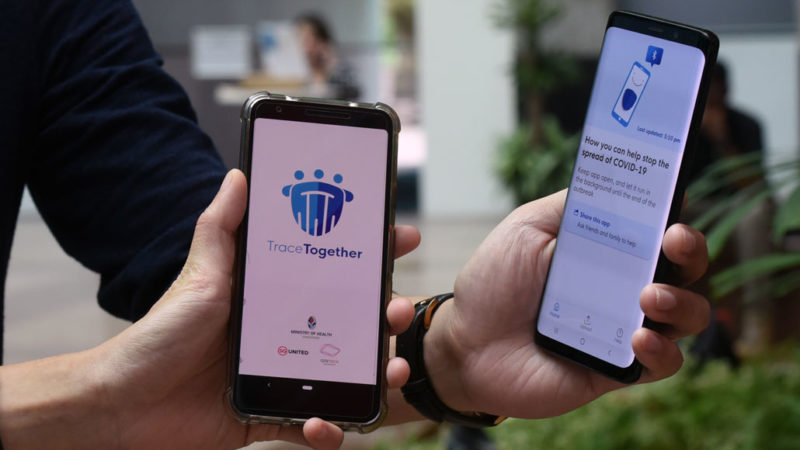
Life after social distancing may involve apps that ask you to self-isolate after you’ve been near someone who tests positive for COVID-19. Read more

What coronavirus antibody tests tell us — and what they don’t

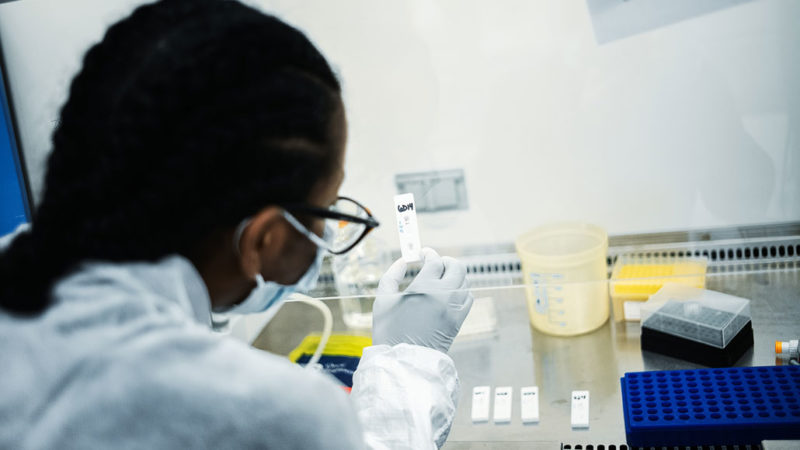
Antibody tests can give a clearer picture of who has been infected but don’t guarantee immunity for those who test positive. Read more

How coronavirus stress may scramble our brains

The pandemic has made clear thinking a real struggle. But researchers say knowing how stress affects the brain can help people cope. Read more

Source link