Wednesday, May 20, 2026

Sent home in stitches: 20 years ago, a motorbike accident put an end to my Thailand adventures

0

Bangkok (CNN) — Every time I read a news story about a young traveler in hospital in Thailand struggling to get home following a horrible motorbike accident, my stomach twists into a knot.

Pre-Covid, these incidents would hit the local headlines all too often, with accompanying social media comments from readers usually falling into three categories:

1. Admonishing the victim for being foolish enough to ride a motorbike in a country with such dismal road safety records.

2. Casting scorn on the injured party’s family for having the gall to set up a GoFundMe page when said person should have purchased insurance.

3. Fortunately, some sympathy.

I’m glad social media wasn’t a thing 20 years ago, when I was that unfortunate, naive backpacker, lying in a Koh Samui hospital bed with stitches covering significant portions of my body — including my tongue — and a plastic drainage tube in my knee.

A GoFundMe account, on the other hand, certainly would have been handy. I, too, was lacking adequate travel insurance and man did those hospital bills make my Canadian eyes, accustomed only to universal healthcare, water in shock.

First stop: Khao San Road

It was supposed to be a year-long adventure, backpacking through Southeast Asia with one of my closest hometown friends, Jodi, followed by a work holiday in Australia.

After saving for months, I’d quit my job as an assistant producer at a morning show at a TV station in Canada, telling myself this would be my last chance to see the world before getting ensnared by the three “Ms”– marriage, mortgages and motherhood.

Jet-lagged from the 20-something hours of flights, which took us from Edmonton to San Francisco to Seoul to Bangkok — we were backpackers, we went for the cheapest option possible — our eyes widened as we stepped foot on Khao San Road just two hours after we landed at Don Mueang International Airport.

Bangkok’s Chao Phraya River.

Karla Cripps/CNN

The famed backpacker district, with its bright lights and pumping music, quickly sucked us in, its “booze vans,” pubs and cheap food helping us battle the scourge of jet-lag for the next several hours till we stumbled back to our guest house on nearby Phra Arthit Road, collapsing into our beds.

We spent the next few days plodding the well-worn tourist trail, Lonely Planet guidebook in hand, as we ticked off all the usual rites of Bangkok backpacker passage — elbowing through crowds at the Grand Palace, falling for tuk tuk scams and paying way too much for a long-tail boat tour of the Chao Phraya River.

Bangkok heat eventually getting the better of us — we couldn’t afford a hotel with a pool; even splurging on a room with A/C felt decadent — we decided to head north, meeting up with a friend from our hometown who had flew in from Australia. From Khao San Road, we took a night bus to Chiang Mai. It was a sleepless, bumpy ride, made worse by the smell of dog poop on the bottom of a fellow traveler’s shoe that wafted into my nostrils from the seat behind me.

Trekking in Northern Thailand.

Trekking in Northern Thailand.

Karla Cripps/CNN

A three-day trek through the green mountains of Thailand’s north quickly reminded us why we came to Asia in the first place — a wonderful, occasionally challenging experience that took us past scenic vistas and waterfalls.

Our nights were spent in local hill tribe villages, where we’d eat delicious, locally prepared food, paired with lukewarm cans of Singha before falling asleep on thin floor mats in small thatched huts.

Destination: Koh Samui

I’m grateful for those two weeks.

Because almost as soon as we left Chiang Mai, things began to unravel as quickly as a cheap crochet bikini top that’s been washed one too many times.

We arrived in Koh Samui after dark, following a series of rides on trains, trucks, boats and one sleepless night on the floor of the airport — in a panic, we foolishly jumped off at the wrong train station in Bangkok in the city’s Don Mueang district and couldn’t afford the nearby airport hotel.

The following morning, Jodi and I explored the island with our shared motorbike rental, hitting up the Big Buddha and other local attractions before heading back to our beach bungalow to get ready for dinner.

2. Karla Cripps Thailand

We spent the night on the floor of Bangkok’s Don Mueang Airport — even though we weren’t actually flying anywhere.

Karla Cripps/CNN

A lovely German medical worker named Arno, who was familiar with the island and also staying at our accommodation, offered to take us to a nice seafood restaurant on the beach.

The night was fairly uneventful — great food, nice weather — until the drive back to the bungalows. As anyone who’s been to Koh Samui knows, those roads are curvy, winding through the island’s jungle-covered hills.

On one particularly sharp turn, our motorbike hit a patch of loose gravel and skidded onto its side, slamming us into the tiny rocks, which embedded themselves into our new, open wounds.

Jodi was driving — a fact I love teasing her about to this day — and I was riding pillion. And, perhaps most embarrassingly, we weren’t wearing helmets.

Luckily, Arno was on his motorbike behind us and able to flag down a songthaew — a covered pickup truck with seats in the back designed to shuttle around tourists — and take us to an international hospital. I don’t remember much about the ride except that I looked down at my bloody hands, thinking to myself that something terrible had happened. The rest of the ride was a blur.

I recall lying on a bed with bright overhead lights and hearing screaming — I later found out it was me, hysterical as they cleaned out our wounds and stitched us up, with my tongue and knee particularly mangled. I can only assume my knee hit the ground first and I likely bit my tongue.

10. Thalland Karla Cripps

“Where are your damn helmets, ladies?!”

Karla Cripps/CNN

Several painful days passed.

Lying side by side, unable to walk due to our injuries, Jodi and I stared at the single English-language channel on the TV in our room in silent terror, waiting for the nurses to arrive for our daily wound cleanings.

I had never experienced a sense of dread quite like this before. The nurses would gently scrape the pus out of our wounds with scissors and douse them in iodine before putting on fresh gauze, a painful process that had us writhing in the beds in pain and fighting back tears as the women smiled nervously in sympathy.

No doubt, we weren’t the first damaged backpackers they’d laid their hands on and we certainly wouldn’t be the last.

Our insurance provider told us they’d cover our flights home — but not our medical bills. Foolishly, we assumed we wouldn’t need full coverage and just bought the basic policy.

“We’re young, we’re healthy, Thailand is cheap.”

Food is one thing. Healthcare is quite another. Being Canadian, where healthcare is publicly funded, we had no idea how much our treatment would cost.

It turned out, our bills had already ballooned into thousands of dollars, chipping away large chunks of the savings we’d worked so hard to accumulate to fund our once-in-a-lifetime journey.

We needed to get home fast — as uncomfortable as the journey would be.

Back to Canada, 11 months ahead of schedule

Arriving at Koh Samui Airport, I’ll never forget the looks on the faces of fellow air travelers as we were rolled into the departure zone.

With its thatched roof and open-air seating, this airport was designed to evoke feelings of escape, welcoming you to a delightful beach holiday filled with swaying palms and white sandy beaches.

We were the ultimate juxtaposition. There we sat in our wheelchairs, covered in gauze, splotches of iodine accentuating the “road rash” that covered us.

People stared and whispered, some approaching to ask what the hell had happened. I felt offensive. Ashamed, even, for ruining their final moments in paradise with my hideous presence.

8. Karla Cripps Thailand

Not the first tourist to wind up in a Thai hospital after a motorcycle mishap, and certainly not the last.

Karla Cripps/CNN

The flights back to Canada were a blur thanks to the strong painkillers the hospital gave us for the long journey that took us from Samui to Bangkok to Taipei to Vancouver to Edmonton — all followed by a three-hour drive back to our hometown, where our families lived.

My poor parents, from whom I inherited a life-long love of travel, were in Peru on their own adventure. I forbade anyone in my family from telling them about my troubles as I didn’t want to ruin their vacation. (Remember, this was the pre-Facebook days when such secrets could actually be kept.)

When they got back a week later, I surprised them at the front door, black eyes still not healed. Not the welcome home mother dearest was expecting, given I wasn’t due back in Canada for another 11 months.

Eventually, the wounds healed as most wounds do, leaving some badass scars that I’ve learned to loathe a little bit less with the passing of each year.

Today, I consider them a permanent souvenir of life’s unpredictability, a reminder to avoid casting judgment on others for their bad decisions and, most importantly, to always, always go for the full insurance package.

Jodi and I didn’t abandon our travel plans, either. We spent two months at home with our parents, then, sufficiently healed up, restarted our journey in Bali, where we traveled for six weeks before carrying on to Australia for our working vacation — albeit with a far tighter budget than intended.

Nearly two decades later, we returned to Koh Samui for a friend's wedding.

Nearly two decades later, we returned to Koh Samui for a friend’s wedding.

Karla Cripps

And the accident didn’t sour me on Thailand, either.

Just a few years after that Australia trip I moved here permanently and have lived in Bangkok for the last 17 years, happily ensnared in marriage and motherhood — though I could do without my mortgage.

Jodi and her family even flew here for a six-week visit in 2018, a trip that had us ziplining through treehouses in Laos and, yes, enjoying the beaches of Koh Samui we never had a chance to experience first time around.

Rest assured, no motorbikes were driven.

Source link

Married but Living Far Apart

“I get so sad missing him, compounded with all the doubt about when we get to restore our easy travel to each other’s cities,” Ms. Schneider said. To keep connected, they exercise together via FaceTime and tune in to the same lectures, synagogue services and musical events via Zoom. “I put on lipstick, comb my hair and put on jewelry that Larry has given me,” Ms. Schneider said. When they spot each other, they say hello with the Carol Burnett “ear tug.” And, Mr. Moss added, “in the absence of physical intimacy, we are exploring modes of long-distance intimacy.”

Pamela Hinchman, 64, a voice and opera professor at Northwestern University, married Ted DeDee, 70, last year. Her outlook on marriage had always been that “you don’t have to be glued to someone’s hip,” she said. (She has been divorced twice, and he was a widower.)

When they got engaged in 2018, he was living a two-and-a-half-hour drive away in Madison, Wis., with no plans to move in with her in Evanston, Ill., though he was retired. When he told her that the La Jolla Music Society in California needed a new chief executive, she told him, “That’s perfect for you.” Six months before their wedding, he came out of retirement to take the job.

For nearly a year, they have flown more than four hours about twice a month to see each other.

But in January, Mr. DeDee decided he would leave his job in June to focus on a health issue. When the coronavirus threat ramped up, he said he moved up his departure to mid-March “so I can be with my wife, simple as that.”

The coronavirus has changed Ms. Hinchman’s outlook, too. “It’s surprising to both of us, but life together has been put into perspective,” she said.

In the face of so much uncertainty and fear, what she most wants is to be with her husband. “Now the biggest priority is being there for each other, in person.”

Source link

Within a Week, They Fell in Love

Clare Goslant was in search of an affordable place to live in Washington, when she took time off between her junior and senior years at Harvard for an internship with the World Wildlife Fund.

What she found was the International Student House, a community of young students and interns in the district that provides dormitory-style accommodations and two meals a day.

It was there where she also found Alex Plum, who was in a master’s program in East Asian studies at Georgetown’s foreign-service school.

“There was a group of girls, all the same age — 21 or 22 — we all had a bit of a crush on him, but thought he was dating someone else in the house,” said Ms. Goslant, 26. “I sent him a text message asking if he’d want to go out sometime.”

He did, though he tells a slightly different story. Mr. Plum, 29, had grown up in Asia. (His father was the regional president for a small-engine manufacturer.) He had returned to the United States for college and then had stayed for an advanced degree. The international milieu of the residence was familiar to him, and in his job at the front desk, he remembers having seen Ms. Goslant’s application and thinking, “She’s really cute.”

“When she did actually move in,” he said, “I remember seeing her at breakfast and just being really nervous. But eventually I got up the courage to sit down next to her and strike up a conversation.”

The two spent their first date at a briefing by the French ambassador about the European Union at the International Student House. Afterward, they went out for tacos.

They shared their first kiss that night. Both say that within a week, they were already in love.

“At least for me, right away, I knew she was the most caring, compassionate, beautiful person,” he said. “It was a wonderful experience, falling in love.”

“He has a vibrancy and humor and lightheartedness that I hadn’t encountered in anyone else,” she said.”

Ms. Goslant stayed until January 2017 before returning to Harvard, and then in May 2017 went back to Washington for another internship and another summer at International Student House with Mr. Plum.

After he received a master’s degree, he returned to Arizona State University, from which he had graduated and which was also near where his parents were living, in Tempe, and spent about a year working as an assistant director for Asian research. He also began the process of enlisting in the United States Marine Corps.

“He had had a lifelong dream of service that he felt he hadn’t completed,” Ms. Goslant said, though she remembers having questions about how it would affect their relationship. She is now an education assistant at the Boston chapter of Alliance Française, the language instruction and cultural organization.

Last November, at a Marine Corps ball in Las Vegas, Mr. Plum, now Lance Corporal Plum and a machine-gun squad leader, proposed. As his platoon faced imminent deployment this spring, the two decided to get married without planning a wedding.

On March 23, in Phoenix, they did just that. The Maricopa County Courthouse had limited service because of the coronavirus pandemic, but judges were still coming out after the close of court business each day to marry couples waiting there with licenses in hand.

“You pay the judge $100, ask the wedding party next to you if they’ll be your witnesses, and then the ceremony is over in like two minutes,” said Ms. Goslant. “But I was really shocked by how emotional I got during it. Up until that point I sort of looked at it in a more pragmatic way, and I was actually quite surprised by how genuinely emotional I was to be marrying my best friend.”

Ms. Goslant, now living with her parents in Cambridge, Mass., is considering taking the law-school entrance exam and other graduate school options. Mr. Plum remains outside of San Diego, at Camp Pendleton, awaiting deployment instructions.

Both are hoping to narrow the geographical gap after he returns. “It will be difficult but not impossible,” he said. “Nothing’s impossible. That’s the thing. There’s ways and means.”

Source link

What To Do About Travel You’d Booked For Later In 2020

0

The COVID-19 pandemic has disrupted the travel industry in unprecedented ways. With spring vacations canceled long ago and summer options looking grim, many travelers are wondering what they should do about trips they had booked for later in 2020.

Should they go ahead and cancel or postpone? Is it better to just wait and see what happens? Will international travel even be possible? Are refunds an option?

“Right now, the [Centers for Disease Control and Prevention] tells us that all nonessential travel ― foreign and domestic ― is on hold,” Erika Richter, senior director of communications at the American Society of Travel Advisors, told HuffPost. “This is a rapidly evolving situation. However, we know one thing for certain: The virus is not under control. Therefore, travelers need to continue to consult with expert resources to understand the impact on their 2020 travel plans.”

Essentially, travel will return in phases, but there will be restrictions and considerations that affect individual travelers differently.

“Barring a miracle, there will be no vaccine this year,” said Brian Kelly, founder and CEO of The Points Guy. “Even if you can physically go somewhere, no one can make the decision for you about whether or not to make the trip. That’s a matter of personal risk analysis based on the information you have.”

So what major factors should people consider when assessing what to do about travel they had booked for later this year? HuffPost spoke to Kelly, Richter and other travel experts to find out. Read on for their guidance.

Don’t Hold Out Hope For International Travel

There are many factors to consider when assessing what to do about travel you had planned for later in 2020. A big one is whether the trip is domestic or international.

“Local and regional travel will come back first, potentially in 2020, depending on the experts’ advice,” said Richter. “International travel likely won’t see a return until 2021.”

Kelly told HuffPost he believes that many borders will open up later this year, allowing for the possibility of international travel. Still, he noted, “some countries may not let in people from the U.S. because of our inability to handle this like an adult.”

Even if international travel is technically possible, the decision to risk that option will be a personal calculation. It’s safe to assume informed travelers will take a more cautious approach amid the pandemic.

“We always tell travelers to reference objective third-party sources of information like the CDC and the State Department before making decisions to travel,” Richter explained. “Every traveler has their own level of risk tolerance, so it’s important that they are making informed decisions in consultation with expert advice. This also means that travelers need to talk to their health care provider before their next trip ― whenever that trip happens to take place. Every traveler is going to have a different health profile and vulnerability, which will certainly need to be considered before their next trip.”

In addition to concerns about the spread of COVID-19 in various countries, mandatory self-quarantine orders for foreign travelers may also make international trips less appealing.

“Some countries may not let in people from the U.S. because of our inability to handle this like an adult.”

– Brian Kelly, founder and CEO of The Points Guy

“Before you can cancel your plans down the road, it’s important to consider the purpose of your trip and where you’re headed,” said Rob Karp, founder and CEO of the travel planning service MilesAhead. “Consumers need to weigh out their region’s current travel restrictions along with understanding the restrictions being held in the destinations they plan to travel to.”

He added that travelers should think about how they could pose a risk to the destination they hope to visit.

Domestic Travel Will Likely Come With Restrictions

Domestic travel will be a safer, easier option, but there are still many factors to consider.

Even if nonessential travel is back on the table later in the year, some states may have mandatory self-quarantine orders in place. Budget travel expert Lindsay Myers advised paying attention to any travel restrictions at the destination you plan to visit and consulting expert sources.

“Listen and read about what is happening in the area that you want to visit,” she said. “This will help you have a more informed decision on what to do with your reservations.”

If you had planned to fly somewhere else in the U.S., turning it into a road trip may feel like a safer plan. The farther away the destination, the greater the risk to you and others, so consider a shorter trip to somewhere closer to home. Even just an afternoon drive for a hike or other outdoor activity can offer a nice break.

Still, the popularity of the destination is another factor to consider. U.S. beaches and state parks are already having issues with overcrowding.

“The busier the location, the more travel restrictions you are likely to face,” said Axel Hefer, CEO of hotel price comparison site Trivago. “Ask, ‘Will I feel comfortable making the trip?’ Similar to shorter trips, any travel to remote locations might be more manageable in the short term. Also keep in mind that experiences at your destination may be impacted, so you should check whether restaurants and other activities will be open.”

Even domestic travel may entail restrictions and other factors to consider. 

Although you may feel comfortable driving somewhere, there may be concerns about hotels or Airbnbs.

“If you do not feel safe about the cleanliness of your accommodation, try switching your house with a friend or family in another city for the weekend,” Myers suggested. “It gives you a chance to get away and break out of your everyday.”

If There’s A Penalty For Canceling Now, Just Wait And See

After conducting your personal risk analysis, you may feel inclined to cancel your trip. But it could be prudent to hold off, especially if it means incurring a penalty.

“It pays to wait until the last minute to cancel your flight,” said Myers. “Travel has been brought to a standstill, and there is so much uncertainty about when it will come back. Do not cancel your flight because this turns the cancellation into a voluntary cancellation of your reservation. When this happens, the airline does not have to refund you or help you in any way.”

Voluntary changes and cancellations are often subject to fees. Many airlines have implemented more flexible cancellation policies amid the pandemic, but if you’re looking for a full refund, it may be worth waiting to see what happens. Myers noted that many airlines are still canceling flights as they approach their scheduled departure dates, which qualifies more travelers for a refund attributed to an involuntary change.

“It pays to wait until the last minute to cancel your flight.”

– Lindsay Myers, budget travel expert

“It doesn’t cost you anything to keep the option open, even if the end result is the same,” said Konrad Waliszewski, co-founder and CEO of the travel app TripScout. “Consumer protection regulations for COVID-19-related cancellations are only likely to get more consumer-friendly and transparent over the coming months as well.”

For other travel reservations, such as hotel rooms, you should similarly take the time to figure out your options. Travelers can contact the hotels where they reserved rooms or the booking platforms they used to learn about the cancellation policy and what plans they have in place for the remainder of the year.

“The hotel and Airbnb industry have been hit very hard during this pandemic,” said Myers. “If you booked directly with the hotel, contact the hotel directly to discuss your options on moving your date or completely canceling your booking. Airbnb already has cancellation processes with their hosts in place. Hotels and third-party platforms have been constantly updating their reservation policies because of the pandemic.”

If There’s No Fee, Canceling Now Could Help You Save Later

There are reasons you may want to cancel sooner rather than later. For one, travel companies’ cancellation policies are changing rapidly, and the flexibility we’re seeing now not is guaranteed in the long term. Plus, if you’re able to cancel now without incurring a fee, you could even get a better deal later.

“If you’re able to cancel your bookings with no penalty, then you should cancel now,” advised Waliszewski. “If your trip actually becomes possible and safe, then prices will certainly be much cheaper than your original booking, and it’s the one time you don’t have to worry about everything being booked.”

Airlines, hotel chains and other travel suppliers are offering different refund and voucher options for cancellations. If you’re loyal to a major airline or hotel chain, you may feel comfortable accepting a credit instead of a refund.

“Consumers need to ask themselves if that credit is something you’ll actually utilize at another time,” Karp said. “You should also factor in your confidence in the supplier. Is this a brand or company you normally book with and trust? Consumers are less likely to keep a credit with companies they don’t necessarily trust.”

Karp also noted that canceling a flight sooner rather than later may help airlines get a better sense of flight capacity and if that particular route is in demand. He and Richter both emphasized that postponing is an option as well.

“Although this may feel like a strange time to coordinate travel plans, suppliers are being flexible with bookings, vouchers and refunds now more than ever,” Karp said.

Even if you don’t know when it will be safe for you to take the trip you’d planned, you’ll likely be able to postpone again if need be.

Ultimately, travelers with trips scheduled for later in 2020 need to take stock of their current booking options, consult the most up-to-date guidelines and recommendations from public health and safety experts, follow the conditions in their destination of choice and consider personal health factors. These considerations will shape the best course of action.

Source link

Reasons Why You Need To Visit Sicily

0

Are you thinking of a beautiful island where you can take your family, next holiday?

Perhaps, you should choose Sicily that has gorgeous and Perfect Island. Sicily is one of the largest Islands in Italy and has seduced travellers with its natural and cultural treasures. It crows wonderful cool weather and varied range of culinary influences.

The Island is full of historical monuments, volcano and mountain scenery that abound it.


Here are just a few reasons why you need to select Sicily for your next holiday:

Beach

Everyone loves the calm, warm weather in the beaches, the sand and the perfect sceneries. Beaches in Sicily have the best most beautiful sceneries in the world. The favourable weather is enough to visit the beach for half a year—the glorious summers that stretch throughout the year and the mild winter that becomes a war spring.

Sicily has over 280 beaches that come in all forms and many colours from those in town to private inlets and coves. Most of the beaches have sparkling waters and surrounded with a rocky coastal landscape powdered with white sands.

Your main reason for visiting Sicily should be to spend time at the warm beaches, in Sicily, there are plenty of beaches to choose from.


Art

There is an abundance of historical sceneries that surrounds Sicily. The historic buildings that bring about a beautiful mix of cultures, churches and museums make it a perfect spot to bring your family. For instance, if you are searching for Greek architecture (though you are in Italy), you can visit the Valley of the Temples in Agrigento.


Food

Sicily is the best place where you can find culinary delights and foodies. It doesn’t matter where you visit, in Sicily whether you choose to eat at the street or fine dining hotels the food is guaranteed to be delicious. They have a fresh and seasonal menu that gives you the temptation to taste.

Think of seafood, pizza, pasta and one’s that are coated in a cheese after all you have a variety to choose on, and you may choose either caponata, “involtini di pesce spada” or “con le sarde”.


Wine

Think of the long-standing wine traditions that will quench your thirst. In Sicily, you will get Marsala the popular most wine, Nero d’Avola, Syrah and one made from Zibibbo grapes. For the ones that love wine, you will fit right in.


Accommodation

It’s affordable and cheap to live in Sicily. Choose the best holiday destinations and accommodation with the best view of the beach. Most of the best hotels in Sicily have a hot spring and surrounded by dramatic views where you can do walking, boating and flora hunting.


Conclusion.

Sicily has been developed for tourist attraction, and the locals are kind hosts who are eager to show off their Island and make travellers feel at home. So, if you are planning for a vacation, make sure you select Sicily and write it as your first choice. Wait no more, book a trip to Sicily.

It is a truly great island, and you will not regret it!

Source link

NIMH » Get Excited about the Brain!

0

A coloring and activity book for kids ages 8-12

Did you know the human brain generates enough electricity to power a small lightbulb?

This free, printable coloring and activity book for children ages 8-12 features exciting facts about the human brain and mental health.

Download and print the PDF version today!

Source link

Exercise Examples and Videos

0

Source: Department of Agriculture –
Related MedlinePlus Pages: Exercise for Older Adults

Source link

Self-Shot Magazine Covers

For its 50th anniversary issue, ESSENCE released a Naomi Campbell cover that was styled and shot by the supermodel of the 90s herself using her iPhone. For now, the days of traveling models and crowded photoshoot sets are over and publications are getting creative in other ways with at-home shoots that can be created with accessible high-quality equipment.

For the first-ever ESSENCE magazine cover shot entirely on an iPhone, Campbell did her own hair and makeup, and chose an outfit of her own before posing for a relaxed smartphone self-portrait. According to the magazine, this cover “[marks] the first time in the brand’s 50-year history that a cover star was her own photographer.”

Image Credit: ESSENCE

Source link

Fitness: All Guides

0

girl holding track shoesFitness is fun! It’s a great way to improve your overall health and wellness. Through exercise, you may even find you feel less stressed and more relaxed. You’ll have more energy during the day too! However, the number one way to make exercise a part of your life is by participating in activities you find fun and enjoyable. It may help to exercise with a friend or family member.
Exercise Safety

It’s important to consult your health care provider before starting any exercise program. The exercises featured in the strength training fitness guide here are for teens that are in good health and have no physical restrictions. Be sure to listen to your body. Exercise should feel like you are working out (your breathing should be heavier than normal and you might break a sweat), but not like you are injuring your body. If a particular exercise or stretch hurts, STOP immediately. You may be performing the exercise incorrectly, working beyond your limits or injuring your body. If you feel dizzy, have trouble breathing, or experience any pain while you are exercising, STOP, and talk to your health care provider about next steps.

Your body needs energy (food and fluids) to perform at its best. Our sports nutrition guide will help you understand what you should eat and drink before, during and after exercising so that you will feel energized, build and repair muscles, and have a safe workout.

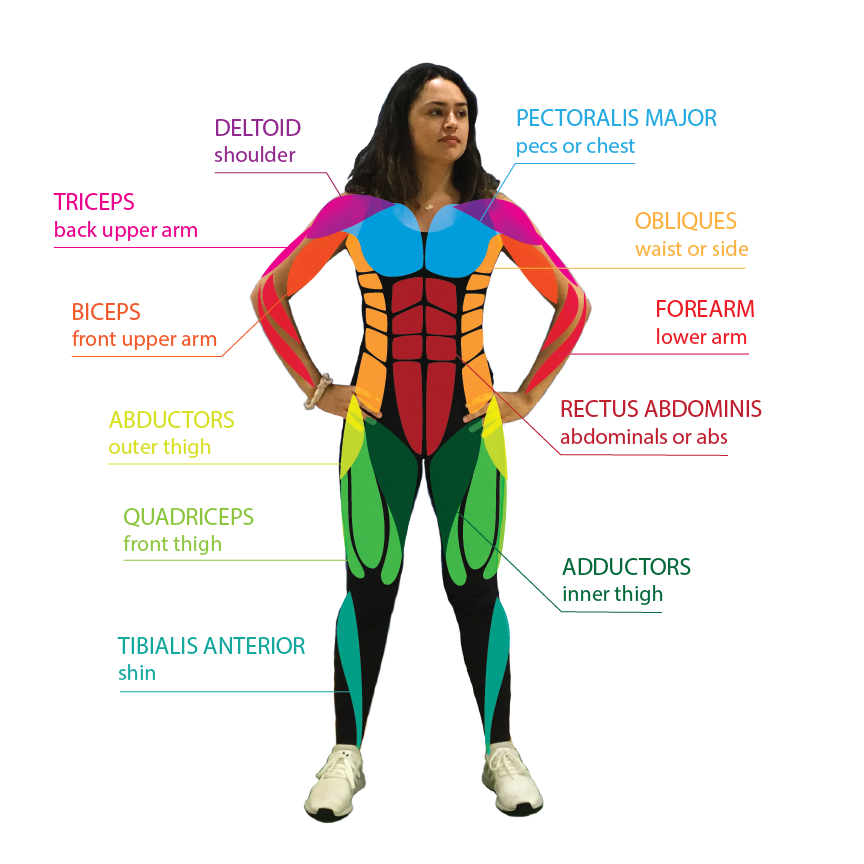
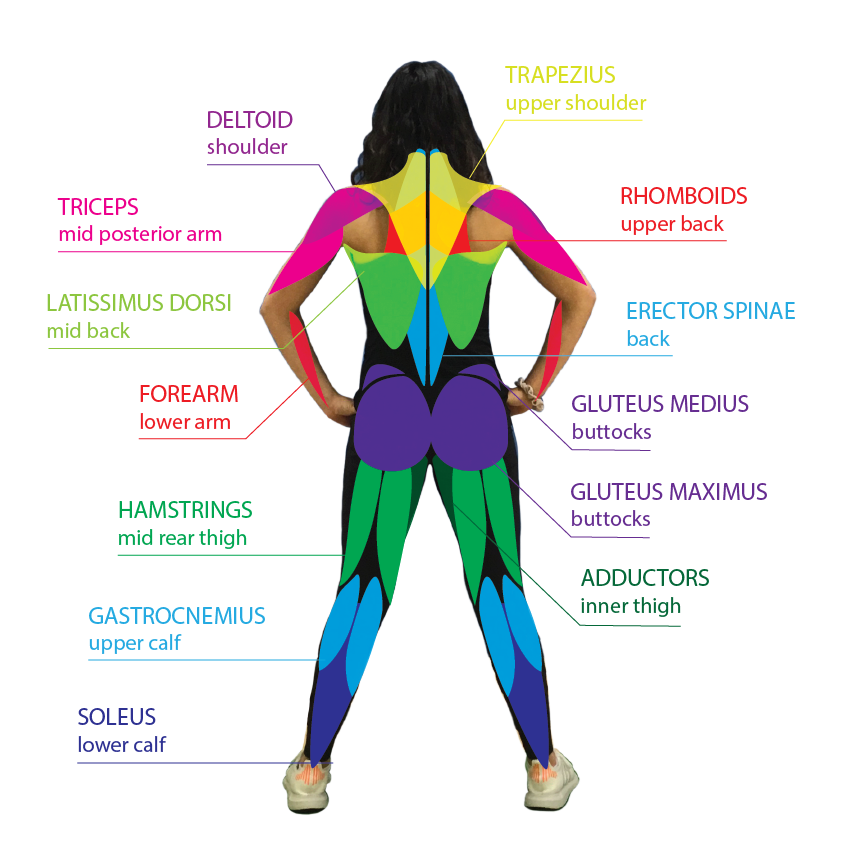
My Muscles

Understanding the names and locations of your muscles is important when you’re exercising. If you know the specific muscles you’re using, it is easier to focus on each aspect of your workout. This helps you to be more efficient and to prevent injuries.

How to use My Muscles:

  • Learn the names of your muscles and where they are located on the body by looking at the pictures below.

Look at both views: front (anterior) and back (posterior)

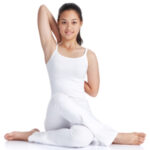
yoga-pose

Stretching is a way to get your body ready for exercise, improve flexibility, and increase your range of motion. Proper stretching will help your muscles feel relaxed and prevent muscle related injuries. Try the following static stretches (meaning that you will not be moving around for the stretch) demonstrated by our Peer Leaders. For each stretch, hold for 30 seconds at a time. Make sure you go into the stretch slowly and hold the position when you start to feel some tension in the muscle. If you feel pain, stop immediately- this means you may be stretching the muscle too far. Check out the My Muscles guide to see which muscles you will be stretching using these exercises.

Other great ways to stretch include dynamic stretching (a movement-based type of stretching) and foam rolling using a foam roller!

Upper Body Stretches

Cross Shoulder Stretch Tricep Stretch Chest Stretch

Lower Body Stretches

Quadricep Stretch Standing Hamstring Stretch Sitting Hamstring Stretch Lunging Hip Flexor Stretch Calf Wall Stretch

girl lifting weights

Strength training is a great way to get your muscles conditioned and strong. This form of exercise can help raise your metabolism (the way your body uses energy from food) and will keep your bones strong, which may help prevent future osteoporosis. Strengthening your muscles can even help to release stress from your body. Try the following workouts for your upper, middle (core), and lower body!

Helpful Tips:

  • While doing these exercises, focus on your breathing (deep inhales and exhales)
  • Check out the My Muscles guide as a reference for what muscles you are working.


Workout 1: Lower Body

How to: Start with the first exercise on this list. Perform the exercise 8-12 times (if you are a beginner, aim to complete 5 repetitions of the exercise). Once you finish, move on to the next exercise, until you finish all 6 exercises.  Repeat this entire set 1-3 times.

Floor Bridges Clam Shells Squats Reverse Lunges Side Lunges Standing Calf Raises


Workout 2: Upper Body

How to: Start with the first exercise on this list. Perform the exercise 8-12 times (if you are a beginner, aim to complete 5 repetitions of the exercise). Once you finish, move on to the next exercise, until you finish all 6 exercises.  Repeat this set 1-3 times.

Push-ups Up and Down Plank Bicep Curls Triceps extensions Chest Press Overhead Press


Workout 3: Core (Middle body)

How to: Start with the first exercise on this list. Perform the exercise 10-15 times OR hold the position for 20-30 seconds. Once you finish, move on to the next exercise, until you finish all 6 exercises.  Repeat this set 1-3 times.

Plank SupermansRight/Left Plank Bicycle CrunchesV-Sit Leg raises

Source link

Top 10 Cycle Routes of Great Britain

0

Green, cheap and great exercise, not to mention enormous fun, cycling is becoming ever more popular. London has just launched its own cycle hire scheme and more of us than ever are exploring Britain by bike.


We’ve got hundreds of cycle routes to choose from but here are 10 of our favourites.

Millennium Coastal Path, Llanelli, Wales

The Millennium Coastal Park is a 12-mile stretch of coastline on the Burry Estuary which features a purpose-built traffic-free path following the coastline along the park’s entire length. Previously an area of industrial wasteland, the park has been transformed into a tranquil green corridor offering superb views of the Gower Peninsula and a variety of attractions both natural and man-made.


Lough Neagh, Northern Ireland

For a unique cycling experience complete a circuit of Lough Neagh, the largest inland water in Britain and Ireland. The 113-mile, bi-directional Loughshore Trail (Route 94 of the National Cycle Network) is ideal for enthusiasts, novices and families alike. The route mainly follows quiet, country roads close to the lough’s shoreline and consists of mostly flat terrain – apart from a couple of short hilly sections which provide fantastic views over this huge expanse of water.


Limehouse to Little Venice, London, England

London’s network of canals make for great traffic-free cycling and a scoot from riverside Limehouse in the east to Little Venice along the Regent’s Canal is a great way to see London from a new perspective. Explore Limehouse, once the centre of London’s working docks and now home to upmarket flats and yachts, cruise through cool Camden and check out some of London Zoo’s

inhabitants en route. At 8 miles it’s easily achievable in a few hours.


Richmond to Hampton Court, London, England

Wind your way along this photogenic section of the Thames from villagey Richmond to the glorious Tudor palace, Hampton Court. There are some great pubs along the way and even a sandy beach or two. For more information and other routes along the River Thames check out the Waterscape website.


Bristol and Bath Railway Path, West Country, England

Linking the twin West Country jewels of Bath and Bristol, this 13-mile stretch of disused railway track begins in the historic port of Bristol and passes via Mangotsfield, Warmley and Saltford before arriving in the heart of Bath.


Chocolate Tour, Birmingham, England

The crucible of the Industrial Revolution is famous for many things – canals, engineering, curries but most mouth-wateringly, chocolate. Cycle along the Rea Valley out from Birmingham city centre along the towpath of the Worcester and Birmingham Canal. If you’re hungry take a detour to Cadbury World, the factory and interactive experience dedicated to the world’s best-loved chocolate.


Marin Trail, Conwy, Wales

This mountain bike trail near Llanrwst has big climbs, steep descents and truly awesome scenery. Long challenging climbs lead to miles of technical singletrack weaving through trees and boulders, across streams and down tricky gullies. Have a break for a moment to take in the views across Snowdonia National Park.


Wastwater, Lake District, England

The 12-mile cycle from Wastwater to Santon Bridge via Gosforth is said to have the best view in the Lake District. Wastwater is the deepest lake in England and it’s surrounded by some glorious scenery including Scafell Pike, England’s highest mountain.


Crab and Winkle Way, Kent, England

The Crab and Winkle Way links the cathedral city of Canterbury with the harbour in Whitstable. On the way you travel through Blean Woods, one of the largest areas of ancient broadleaved woodland in southern Britain, where you can find the rare heath fritillary butterfly. Don’t forget to pop into Canterbury’s magnificent cathedral, part of a UNESCO World Heritage Site.


Cairngorms, Scotland

The uplands of Scotland are famed for their rugged beauty and these days, their excellent mountain biking terrain. Trails in the Cairngorms National Park are rarely waymarked – instead, bring a map (there are good mountain biking route maps available locally) and go and explore.

Source link