Eerie Golden Gate Bridge ‘Music’ Fills San Francisco After Railing Replacement

0

San Francisco’s iconic Golden Gate Bridge has found its voice… and it’s already driving some locals nuts.  

The city’s helpline says the noise ― described as a whistle, hum, howl or even scream ― is caused by “high winds blowing through the newly installed railing slats along the bike path on the bridge.” 

It’s not constant, only when the winds are just right, as was the case on Friday:

It can be heard for miles throughout the City by the Bay and beyond:

Local public radio station KQED referred to the bridge as a “a giant orange wheezing kazoo.”

“The Golden Gate Bridge has started to sing,” Paolo Cosulich-Schwartz of the Bridge District told the station. “The new musical tones coming from the bridge are a known and inevitable phenomenon that stem from our wind retrofit during very high winds.”

He added that the retrofit is “necessary to ensure the safety and structural integrity of the bridge for generations to come.”

In other words, unless there’s another retrofit, the haunting sounds are here to stay.


Source link

Jennifer Aniston Donates Nearly $1 Million to Racial Justice Charities


Jennifer Aniston Donates Nearly $1 Million to Racial Justice Charities Following George Floyd’s Death | Entertainment Tonight


Source link

‘Hypocrites’: Bollywood actors slammed over George Floyd stand

Several Bollywood stars have been labelled “hypocrites” after speaking out against racism to lend support to global protests while promoting products in India designed to make people’s skin lighter.

The actors were also trolled and accused of “cowardice” for their refusal to call out the attacks on India’s minorities, mainly Muslims, while protesting against the killing of George Floyd in the United States.

More:

A series of A-list Bollywood actresses, including Priyanka Chopra, shared posts on social media to protest against the death of Floyd who died in police custody after a white officer knelt on his neck for nearly nine minutes.

“End this race war here in the US, and around the world. Wherever you live, whatever your circumstances, NO ONE deserves to die, especially at the hands of another because of their skin colour,” Chopra, 37, posted on Instagram.

⁣⁣People were quick to call her out on social media for previously promoting an “intense fairness moisturiser”.

They also pointed at her role in a 2008 Hindi film, Fashion, in which she is ashamed of having sex with a Black man.

“Thanks for speaking out for black lives. But, maybe also stop supporting a skin bleaching cream which promotes anti-blackness,” one user replied to Chopra’s Instagram post.

Chopra, a former Miss World who became a star in both Bollywood and Hollywood, has said in past interviews that she regretted endorsing such a product as a young actress and that she is proud of her dark skin.

She was not immediately available to comment.

Promoting ‘fairness’ creams

Actresses Sonam Kapoor Ahuja, Deepika Padukone and Disha Patani also faced criticism for their anti-racism social media posts while having featured in ads for skin fairness products.

India’s multi-billion-dollar skin lightening industry has a host of products appearing to offer dark-skinned Indians a lighter, fairer and better version of themselves, often endorsed by the Bollywood’s top actors.

After years of criticism and campaigns against such products, many brands moved to calling them “skin brightening”, “whitening” or “lightening” creams and face washes.

“Most brands no longer want to be associated directly with being termed as ‘fairness creams’,” said actor Abhay Deol, a vocal critic of fairness products and Bollywood’s support of them.

Critics say the film industry helps feed India’s obsession with fair skin and bias against darker faces, with many pointing out it fails to represent the diversity of Indians.

For example, actors from southern states where most people are darker-skinned are rarely in mainstream Bollywood films.

Last year, the film Bala featured the story of a woman who suffered discrimination because of her complexion and actress Bhumi Pednekar had her skin darkened to play the role.

Social media users also questioned why Bollywood continued to write lyrics and dialogues that equated fairness with beauty.

Kangana Ranaut, a noted actress, spoke out against her Bollywood colleagues for promoting fairness products.

“These people, especially Indian celebrities, the successful ones … have been endorsing all kinds of fairness products and today shamelessly they stand and say black lives matter – I mean how dare they?” she told the BBC in an interview.

Indian-American comedian Hasan Minhaj took on Bollywood for the endorsements as well on his news-comedy programme Patriot Act on Netflix.

‘Cowardice to the fore’

Meanwhile, many in India also criticised the Bollywood actors for their silence when Indians face police atrocities and other forms of violence.

“So much respect for all the celebrities tweeting #BLACK_LIVES_MATTER. It takes courage to bring your cowardice to the fore when you tweet for American lives but can’t tweet for Indian lives,” tweeted Omar Abdullah, former chief minister of the erstwhile Jammu and Kashmir state, now divided into two federal territories.

Others asked why the Bollywood actors do not take a stand on contentious issues such as the “anti-Muslim” Citizenship Amendment Act (CAA) passed by the government late last year, or the protests and violence that followed after the passage of the law.

The CAA allows Indian citizenship for non-Muslim minorities from the neighbouring Pakistan, Bangladesh and Afghanistan. Critics say the law violates India’s secular constitution.

“So our starlets who did not even whisper about the anti-Muslim carnage in Delhi, the spate of lynchings, the citizenship bill, the arrests of academics and intellectuals are outraging with the hashtag #BLACK_LIVES_MATTER. PUKE,” journalist Rana Ayyub posted on Twitter.

Many social media users also called out the “hypocrisy” behind Bollywood actors expressing outrage over the death of a pregnant elephant in Kerala state, while maintaining silence on the imprisonment of activist Safoora Zargar, who was arrested in April despite her pregnancy for protesting against the CAA.

The animal died last month after it reportedly ate a fruit filled with explosives. Its death triggered a political controversy after right-wing forces attempted to communalise the issue by suggesting the culprit could be a Muslim, forcing Kerala Chief Minister Pinarayi Vijayan to flag a “hate campaign” over the issue.

Zargar, 27, is accused of being a “conspirator” behind the February violence in the Indian capital, in which 53 people were killed.

She has been charged under the Unlawful Activities Prevention Act, 2019 (UAPA), a stringent “anti-terror” law and has been denied bail thrice so far despite her health conditions amid the coronavirus pandemic.

“Where has the outrage and empathy we rightly felt at the death of the elephant in Kerala gone in the case of Safoora Zargar, the Jamia student held in an overcrowded jail at COVID time?” asked filmmaker Bedabrata Pain in a column titled Human Cruelty and a Tale of Two Pregnancies for The Wire news website.


Source link

Small Queensland distillery makes hand sanitiser and the world’s best spiced rum

Amid the “chaos” of producing hand sanitiser during the COVID-19 pandemic, a central Queensland distillery was recognised internationally for its usual tipple.

Saleyards Distillery co-owner Catie Brewer said they had been making hand sanitiser for the past couple of months for rural firefighters, police, doctors, local hospitals, schools and aged care homes.

Saleyards Distillery owners Warren and Catie Brewer have gone from creating rum to hand sanitisers. During the pandemic, they have also awarded the title of the best spiced rum in the World Rum Awards.

“Now that the hand sanitiser has slowed down, we are now in high demand for our rum, as during the chaos of hand sanitiser production we received a lovely surprise from the World Rum Awards in London,” she said.

“We took out the title [for World’s Best Spiced Rum] … The award has been a huge game-changer for us and we are overwhelmed with demand.

Source by [author_name]

Nuts And Bolts—Empowering Sensors To Reach Their Full Potential

0

AsianScientist (Jun. 8, 2020) – The electronics and microchips that have enabled the information revolution may have found their way into everything from toys to tech gadgets, but their hard and metallic nature have kept them away from the final frontier: the human body.

Sensors that measure everything from heart rate to blood pressure could go a long way in personalizing healthcare for an individual, yet most existing medical sensing devices are external and only capture readings at a single point in time. For sensors to make a difference, they need to be small, light and most of all, flexible.

This is where flexible sensors—and their enabling technologies—come in. The following three technologies are making the most of flexible sensor technology to meet the needs of industries ranging from medical devices to athleisure.

Wearing Your Sensor on Your Sleeve

The e-textile industry, which is poised to be worth close to US$3 billion by 2026, rests on the premise that it solves many issues that wearable tech faces today. If it succeeds, today’s smart watch could well be replaced by smart t-shirts.

To reach their full potential, wearable devices should ideally be networked so that they can communicate and build up a comprehensive picture of what they are collectively sensing. However, wireless networks for wearable devices are currently limited by signal interference and weak security protocols, which hamper a wider adoption.

To get around this problem, this e-textile technology uses wireless signals that are propagated on the surface of the textiles rather than onto the surrounding space. This is achieved by confining the radio-waves to the clothing by way of patterns woven using conductive materials to create a metamaterial textile. By modifying the geometry of the metamaterial textiles, users can control the transmission of wireless signals or even sensing or signal processing devices,

With the athleisure industry booming and overtaking the denim industry, e-textiles such as these could profoundly influence sporting wear in the future. And it’s not just for fun and games; the technology can also be adapted for use in healthcare where vitals of patients can be monitored at all times through their clothing.

Access at Your Fingertips

From tracking our heart rate to our sleep patterns, sensors that are built into wearables strive to make life simpler. Take this tactile sensing glove, for instance. Studded with an array of tactile sensors, the glove responds to the slightest pressure of your fingers and translates it into a sense of touch.

The glove detects pressure using a layer of sensors that convert mechanical strain into a change in electrical resistance, which is an effect known as piezoresistance. It translates increased pressure into decreased electric resistance, which can be the stimulus to generate haptic feedback to the user.

Weighing under half a kilo and entirely customizable, the glove can easily be fitted onto robotic gripper or a prosthetic device. It can also be used in situations that demand tremendous precision, like surgeries or bomb disposals, since this technology enables sharpened sensory perception.

Putting the Pedal to the Metal

Whether they are worn as a clothing item or glove, all flexible sensor technologies require electrodes to supply power to its electronic components. This final technology—a novel metallization platform—is thus a key enabler of wearables as a whole, allowing items of almost any shape to incorporate flexible electrodes.

By using proprietary inks based on gold, silver, platinum and palladium, as well as an energy efficient process, this technology enables transparent conductors and printed circuitry on a wide range of surface materials. These high performance metallisation inks are not only cost effective but also environmentally friendly.

The resulting electrodes are flexible and bendable, which are vital features for touchscreens and wearables. Best of all, this technology produces electrodes that are five to ten times cheaper than similar ones available on the market.

Asian Scientist Magazine is a media partner of Intellectual Property Intermediary (IPI) Singapore.

———

Copyright: IPI Singapore. Read the original article here.
Disclaimer: This article does not necessarily reflect the views of AsianScientist or its staff.


Source link

Egyptian state media accuses doctors of treason for speaking up on coronavirus crisis

Jun 8, 2020

Egyptian doctors have expressed anger in recent days, accusing the authorities of neglecting them and failing to protect and provide them with the protective equipment they need. In response, media outlets close to the government accused the doctors of treason, not sacrificing for the sake of the nation and even taking part in plans by hostile foreign countries or the Muslim Brotherhood.

Within one week, 12 Egyptian doctors died of the novel coronavirus. On May 26, four doctors died, followed by eight others in the same week, leading to mass resignations by doctors at al-Munira Hospital in Cairo.

Since the coronavirus crisis began and up until June 1, 33 doctors have died from COVID-19, while 372 have tested positive for the virus. Of that number, about 80 have recovered, Karim Mesbah, member of the Doctors Syndicate Council, said in a June 2 press statement.

On May 25, the syndicate issued a strongly worded statement accusing the Ministry of Health of failing to protect medical staff.

The syndicate held the Ministry of Health fully responsible for the increase in cases and deaths among doctors, threatening to take “all legal and union measures to protect the lives of its members and to prosecute all those involved in this failure that could even be considered murder.”

The Egyptian government responded with skepticism, threats and intimidation, followed by arresting some doctors. Dr. Hani Bakr, an ophthalmologist, was arrested for writing an April 4 Facebook post about the pandemic in which he denounced the performance of the Egyptian government in dealing with the crisis, criticizing the authorities for sending medical masks to China and Italy while he was unable to obtain them, Bakr’s lawyer Aisha Nabil told Al-Monitor.

The authorities are still holding Bakr, one of at least three doctors who were arrested during the pandemic, Nabil noted. She added that he is accused of spreading false news, misusing social media and joining a terrorist organization, pointing out that the last charge is often used in political cases.

Media outlets close to the Egyptian regime accused the doctors who protested and resigned over the deaths of their colleagues of treason, saying they were members or sympathizers of the banned Muslim Brotherhood.

Gate Ahram reported May 25, “What happened in the wake of the death of Dr. Walid Yahya at Mounira Hospital due to COVID-19 raises many questions about the role of the terrorist Brotherhood in the crisis, especially after the doctor who submitted his resignation was proven to be affiliated with the Brotherhood.” It went on, “Brotherhood members and their supporters are doing their best to quash the society’s will in confronting the coronavirus crisis or any other crisis by attempting to ignite sectarian conflicts. Today it’s the doctors; tomorrow they will target workers, and so on until the country that banned this group collapses.”

The front page of Al-Dostor on May 28 included pictures of doctors including Dr. Mona Mina, the undersecretary of the Doctors Syndicate and former member of the Doctors Syndicate Council, as well as politicians, journalists and other prominent public figures over whom a banner read, “All Members of the Brotherhood.”

The pro-government camp in Egypt took the conflict between the Ministry of Health and the Egyptian Doctors Syndicate a step further. Notorious lawyer Samir Sabry submitted a criminal complaint against Mina, accusing her of “spreading false news and inciting division and strikes among doctors.”

Mina is known for fighting for doctors’ rights and had previously called on the government to provide them with protection.

Doctors in Egypt denounced the arrest of their colleagues. Dr. Mohammed Awad told Al-Monitor over the phone, “I’ve known Bakr since the January [25] Revolution [in 2011]. Back then, he used to join us in field hospitals, save the injured people in the protests and when things settled in Egypt after the revolution, we worked together at the Tahrir Doctors Society and went on medical convoys to Cairo and other governorates. Bakr was always present and even went on convoys to remote areas such as Halayib, Shalateen, Siwa and Marsa Matruh.”

Awad added, “Bakr was arrested for merely publishing his opinion on his personal page and was charged with joining a terrorist group and spreading false news, although he only pointed out the negligence that everyone can already see. Bakr was never a member of the Brotherhood, nor did he even like the group. As proof, he used to join the demonstrations in protest against the Brotherhood when it was in charge.”

On May 28, head of the Doctors Syndicate Hussein Khairy met with Egyptian Prime Minister Mostafa Madbouly for the first time since the beginning of the crisis to discuss the problems that doctors are facing during the pandemic such as the lack of personal protective equipment, training for medical teams assigned to work in new quarantine centers, testing for medical staff who come in contact with COVID-19 cases and places to isolate medical workers who contract the virus.

Following the meeting, Madbouly announced that testing will be immediately increased for medical staff and that isolation rooms for doctors will be created in each hospital. He also vowed to provide the necessary protective equipment to medical teams and all hospitals. 

Egyptian Minister of Health Hala Zayed defended her management of the crisis and said in a May 25 statement that the ministry “has been keen to allocate a section in every hospital with a capacity of 20 beds for the treatment of medical personnel with COVID-19.” She said that her ministry observes all precautions and procedures to protect medical staff, as all staff members are checked upon entering the hospitals to work for shifts of 14 days straight and again before leaving.


Source link

Car testing site aims to ‘stay ahead of the game’

0

Image copyright
Millbrook

Image caption

The 4WD Powertrain Test System at Millbrook is at “the forefront of hybrid and electric vehicle powertrain testing”

A car testing facility is aiming to stay “ahead of the game” when it comes to developing driverless and greener cars.

Millbrook Proving Ground, in central Bedfordshire, is marking its 50th anniversary this year.

President Alex Burns said the pace of change in that time had been “extraordinary” and thanked its “incredible staff”.

Motoring journalist Andrew Frankel said the site was an “indispensable asset”.

Image copyright
Millbrook

Image caption

The track site was chosen as it was both flat and hilly

Image copyright
Millbrook

Image caption

Millbrook officially opened in 1970 where Vauxhall cars and Bedford trucks, buses and military vehicles were tested

Work started in 1968 and the track opened two years later for General Motors (GM) to test Vauxhall and Bedford vehicles.

Its rural location was paramount to the companies developing cars and using it, Mr Burns said.

The work there was “very, very secret” and the purposeful planting of 3,000 trees on its boundary meant it was “difficult to see in”, he said.

“Some of our customers will drive at night for added security.”

Episodes of Top Gear have been filmed there along with the 2006 James Bond film, Casino Royale.

Image copyright
Millbrook

Image caption

Millbrook takes its name from the nearby village, where a flourishing community of mills were located around an idyllic brook

Image copyright
Millbrook

Image caption

Workers helped to lay 3,500 tonnes of granite blocks on the track when it was being built

The track has been independently owned since 2013 and £120m has been invested in global testing facilities since 2015. Some 500 staff work there.

“We are ahead of the game for testing autonomous vehicles,” Mr Burns said.

“In the past we have looked at what happens in collisions, now we are seeing how to avoid collisions.

“We are helping to reduce the impact vehicles have on the environment and improve the safety of road transport.”

Image copyright
Millbrook

Image caption

Millbrook is the Ministry of Defence’s independent military vehicle test and engineering specialist

Image copyright
Millbrook

Image caption

The track also houses a battery test facility

Mr Frankel, from DriveNation, an Instagram car magazine, said: “Millbrook was then and remains today the only place in the UK where road cars can sustain near maximum velocity, providing vital data for anyone from a chassis engineer to a road tester from a car magazine.

“When I was testing cars full-time in the 1990s, Millbrook was an indispensable asset, as vital a tool of my trade as my typewriter.”

Image copyright
Millbrook

Image caption

The circuit has a “loyal and skilled workforce” and employs 500 people, said Mr Burns

Find BBC News: East of England on Facebook, Instagram and Twitter. If you have a story suggestion email


Source link

#COVID-19 recovery must ensure resilience for workers and the planet

0

We are witnessing a convergence of crises. The world is facing an unprecedented scale of human devastation from COVID-19 and communities are at risk of widespread destitution. The loss of lives is heart-breaking. The economic crisis has caused widespread hardship and uncertainty as swaths of the global workforce face unemployment, loss of income and mass workplace closures. This can only multiply global inequality, writes International Trade Union Confederation General Secretary and Global Commission on the Economy and Climate member Sharan Burrow. 

Meanwhile, the global climate crisis has not gone away. The immediate impacts of the COVID-19 pandemic only increase the urgency for climate action. Be it climate or COVID, the pandemic has laid bare how ill prepared we are to manage major risks, and how existing vulnerabilities and inequalities can be exacerbated by a crisis.

In our efforts to recover from the COVID-19 crisis, we cannot afford to ignore the major threat posed by climate change. We must integrate recovery strategies that generate infrastructure, invest in care and jobs that are also part of the climate solution. Bailing out high carbon industries or investing in fossil fuel production risks the very survival of the human race. We can and must tackle both together, in order to save lives and protect workers.

The first wave of government action is necessarily focused on addressing the immediate impacts of COVID-19, stopping its spread and helping those affected by the virus or  unemployment. This alone is a huge task. Many countries are struggling to support impacted workers and communities. One of the missing pieces is a global social protection fund for the poorest of countries. It would take just $37 billion for five years to build resilience for all people in the Least Developed Countries.

The next waves of government response are focused on how to boost growth. In doing so, we must ensure that as the UN Secretary General says we ‘build back better’. Governments and multilateral development institutions will be investing trillions of dollars to address the crisis and reflate economies.

This is a once in a generation moment to accelerate the transition to a more resilient growth model.

The way through this crisis begins first with committing to a new social contract, and second with ensuring that the development pathways we set for our futures are more inclusive, sustainable, and resilient.

First, the new world must be defined by a new social contract. The old social contract is unsustainable, unjust, and has drastically exacerbated impacts of the pandemic. Support for workers and businesses who are committed to rights and sustainability is imperative.

According to International Trade Union Confederation, many countries including Canada and New Zealand have shown commendable leadership in centering people in their crisis response. Now these gains must be maintained, and where there were exclusions, they must be resolved.

It’s time for many more governments to step up. The COVID-19 crisis is expected to wipe out up 300 million jobs in the second quarter of 2020. The IMF’s World Economic Outlook projects a 3% decline in global output, the worst since the 1930’s Great Depression.

The world needs to come together to establish universal social protection for all, to help vulnerable communities overcome this devastation and emerge stronger. We are all in this together.

Second, recovery efforts must mainstream twenty-first century approaches to how we produce, consume and live. These approaches must be more sustainable, inclusive, and resilient, and we must seek and prioritize them in economic recovery packages.

Low carbon investments make more sense than ever. Given rising global unemployment, such investments could boost jobs and generate strong economic returns. Bold climate action could deliver immediate social and economic benefits, including 65 million new low-carbon jobs in 2030.

Recent research shows that green COVID-19 recovery packages, which cut greenhouse gas emissions and stimulate economic growth, deliver higher returns than conventional stimulus spending.

Only one-sixth of countries prioritized green measures in stimulus packages during the global 2008 financial crisis. Those that did provide ample examples of positive results. The United States invested a record amount in clean energy through the American Recovery and Reinvestment Act of 2009, which supported 900,000 clean energy job years from 2009 to 2015. Findings suggest US investments in renewable energy, energy efficiency, and public transportation double jobs per dollar compared to traditional alternatives.  In its recovery from the financial crisis, the Republic of Korea spent the highest proportion of its stimulus on green measures globally (about 69%), and rebounded faster than most OECD countries.

More recently, despite their government’s lamentable attack on labour laws and the minimum wage, Indonesia’s Low Carbon Development Initiative (LCDI) established clear evidence of the immediate benefits of a sustainable growth path through ambitious climate action. These benefits include higher employment, faster poverty alleviation, higher GDP growth, and better air quality.

The European Council has also moved swiftly to ensure that a green transition is central to the European Union’s economic response to COVID-19, building on the EU Green Deal announced in December 2019.

This is the sort of action we hope G20 finance ministers meant when they called for a recovery that achieves “strong, sustainable, balanced and inclusive growth” at their meeting last month. But it will take global coherence to ensure we see climate and employment ambition realised.

Instead of propping up already declining industries, we need to ensure a just transition and measures to reset our economic trajectory to help us build back better. Now more than ever, the path to a strong and inclusive recovery runs through uplifting the voices of workers, trade unions, and affected communities, and ensuring their protection.

This is the time to lay the foundation for a new social contract built on just working conditions and sustainable economic growth. With urgent, collaborative action, we can emerge from this crisis more resilient than ever.

Source by [author_name]

What are the UK’s new quarantine rules that face a legal challenge?

Britain’s three biggest airlines have started legal proceedings against the government in a bid to overturn quarantine rules due to take effect in the UK from Monday. What are the new restrictions on international arrivals and how will they be enforced?

How will arrivals be tracked?

Most people arriving in the UK will need to fill in an online form with contact and travel details and the address where they will be staying in quarantine for the subsequent 14 days. Self-isolating people can shop for essentials such as food and medicine. Random checks will be carried out by Public Health England.

Who is exempt?

A large list of people, including anyone on government or defence business, foreign diplomats, regular international commuters, lorry drivers, medical workers and fruit pickers. By and large, the exemptions are international key workers.

How it will be enforced?

In England, fines start at £100 for not filling in the form, £1,000 for breaching self-isolation and possible deportation for foreign nationals not complying. However, the devolved administrations of Scotland, Wales and Northern Ireland have yet to say whether and how they will enforce the rules for any arrivals in their jurisdictions – an anomaly that IAG and others argue undermines the process.

Given that people can’t travel anyway, why do airlines and travel firms object?

Although lockdown rules prevent overnight stays in the UK, and the Foreign Office has warned against all non-essential foreign travel, signs of progress had led airlines to plan more flights over the next two months, after grounding fleets in March. Holiday firms hoped that people would start booking trips. They argue that imposing the rules so late in the pandemic is ineffective, illogical, and will deter visitors and potential outward bookings long after the quarantine rules are lifted.

Why does the government say they are necessary?

The government says the measures are backed by science and will help prevent a second wave of Covid-19 cases imported from abroad, as other countries move out of lockdown, with restrictions on work and movement potentially eased further in the UK in coming weeks.

Have other countries imposed similar quarantine measures?

Yes, many either ensured that arrivals self-isolated or closed their borders to foreign visitors. However, Britain decided against doing so early in the crisis and is now bringing in quarantine just as other EU countries are in the process of opening up.

Source link

Daniel Dubois is ‘the most exciting heavyweight’ prospect in boxing and will challenge for a world title soon, says Frank Warren

0

“Exciting times, everybody looks to us as far as the heavyweight division is concerned”

Last Updated: 08/06/20 6:01am


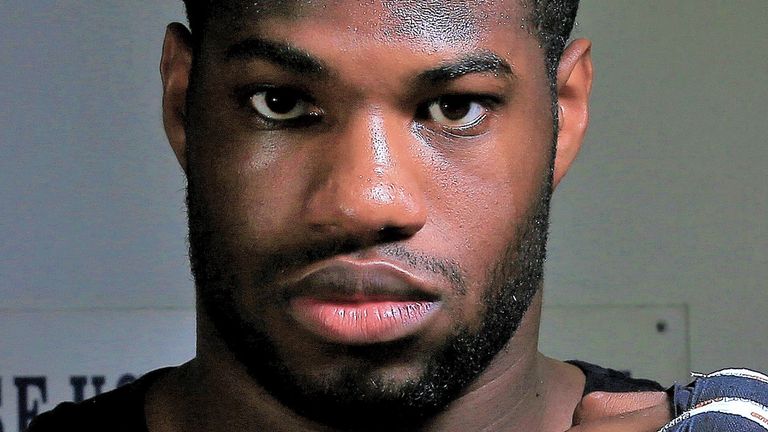
Daniel Dubois is 14-0 aged just 22

Daniel Dubois hoped to fight for a world championship in early-2021 until lockdown struck but he remains “the best young prospect” in the heavyweight division, says his promoter Frank Warren.

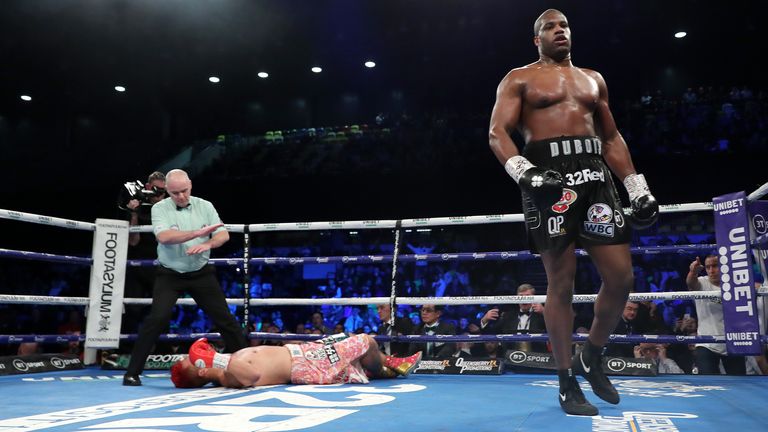
Aged just 22, Dubois has smashed his way to 14 consecutive victories, 13 via knockout and nine within the first couple of rounds.

“At this stage of his career he’s the most exciting heavyweight I’ve been involved with or seen,” Warren told Sky Sports.

Dubois has KO'd 13 out of his 14 opponents

Dubois has KO’d 13 out of his 14 opponents

“I would have liked him to be fighting for a world title early next year, but now we have to see what will happen.”

Tyson Fury’s promoter Warren said about Britain’s stranglehold of every belt in the heavyweight division: “We own it. We’ve got the best heavyweights in the world and the best young prospect in Dubois.

“Exciting times, everybody looks to us as far as the heavyweight division is concerned.”

Dubois has won British and Commonwealth gold and holds versions of the WBC (he is ranked at No 7) and WBO (ranked at No 3) belts. He was scheduled to fight Joe Joyce until the coronavirus pandemic forced its postponement.

“I’d like to get his fight back on with Joyce,” Warren said. “A great fight, two undefeated heavyweights.

“He is champing at the bit. All he wants to do is fight. He lives and breathes it – he could fight tomorrow because he is so fit and well.”

Dubois previously told Sky Sports: “I’m watching video [of Joyce]. The way it’s worked out, I’ve got extra time to prepare. It’s about using it constructively. I look at what I’m up against, and then I develop my tactics and game plan.

“There are lots of big fights waiting to be made. I want to be a part of that.”

Dubois was scheduled to fight Joyce

Dubois was scheduled to fight Joyce

Warren also promotes Anthony Yarde, who bravely fell short in his ambitious challenge of WBO light-heavyweight champion Sergey Kovalev last year.

Warren said about pitting Yarde against unbeaten rival Joshua Buatsi, the former Rio Olympian: “I have no problem with it, it’s a great fight, but you want it with a crowd because it would draw 25,000 people or maybe more. It’s not an issue for us.

“Yarde is a fighting man, he went to fight Kovalev in his back yard and was 10 seconds away from winning. Kovalev was all over the place but Yarde ran out of gas.

“Yarde had limited experience as an amateur – compare that to Buatsi’s experience. Yarde had 11 fights as an amateur so it’s tremendous what he’s done.”

Buatsi told Sky Sports: “How would I beat Yarde? I’d improve on what I’m doing. I tend not to watch opponents too much because if I improve, it will be good enough to beat whoever is in front of me.”

1:07
Top Rank promoter Bob Arum says Anthony Joshua will face Tyson Fury in 2021 – if Joshua defeats Kubrat Pulev

Top Rank promoter Bob Arum says Anthony Joshua will face Tyson Fury in 2021 – if Joshua defeats Kubrat Pulev

0:35
Fury: I’ll beat Wilder again then AJ!

Fury: I’ll beat Wilder again then AJ!

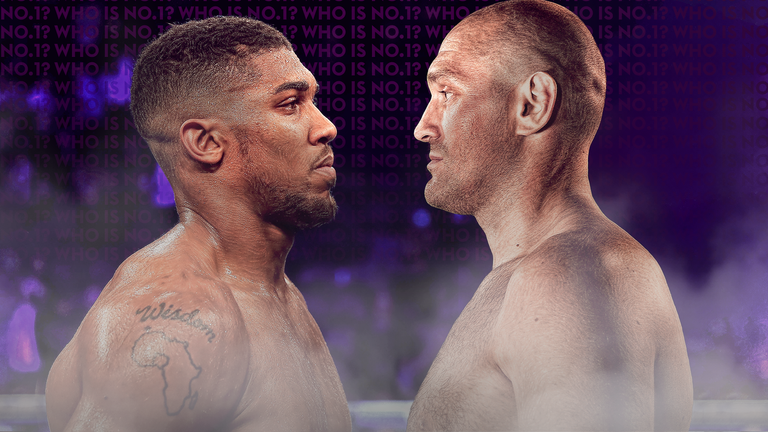
The undisputed heavyweight championship fight between WBC champion Fury and IBF, WBA and WBO holder Anthony Joshua is “not a difficult fight to make” according to Warren.

“Whatever is on the table is 50-50,” Warren said.

“Fury is the No 1 heavyweight but we don’t say 60-40. 50-50 down the middle.

“Once we get the offer that we’re supposed to be getting, we’ll be in a position to sit around the table and knock it into shape. It’s not about me or [Joshua’s promoter Eddie Hearn’s company] Matchroom. It’s about getting this fight made.

“If we can’t make this happen between us, then we’ve got to point the finger at whoever doesn’t make it happen.”


Source link