this link is to an external site that may or may not meet accessibility guidelines.
this link is to an external site that may or may not meet accessibility guidelines.

We’re all concerned about diagnosing the Coronavirus, so it’s a shame Apple Watch can’t take our temperatures. Neither can a WearOS smartwatch or the Fitbit Versa. During a time when more people than ever are concerned about having a fever, it’s a shortcoming that seems particularly glaring.
Update 5/31: Several studies are now available for sharing your data to help track COVID symptoms and early warning signs.
It’s not your watch’s fault, however. Skin readings, particularly on the wrist, are less than ideal for monitoring body temperature due to stress, sweat, and other external oscillating factors. For now, any attempts to do so would be inaccurate at best. If you’re worried about whether a lingering cough could be caused by a coronavirus infection, you’ll need to track your temperature the good old fashioned way and then input your results manually in Apple Health or Google Fit for now. Then you can consult your physician if you see an upward trend.
But that doesn’t mean wearable devices are powerless to help in the fight against COVID-19. Just like your smartwatch’s heart-rate monitor can alert you to possible warning signs of atrial fibrillation or sleep apnea, it can also spot warning signs that might signal your body is fighting a flu-like infection—if you know where to look.
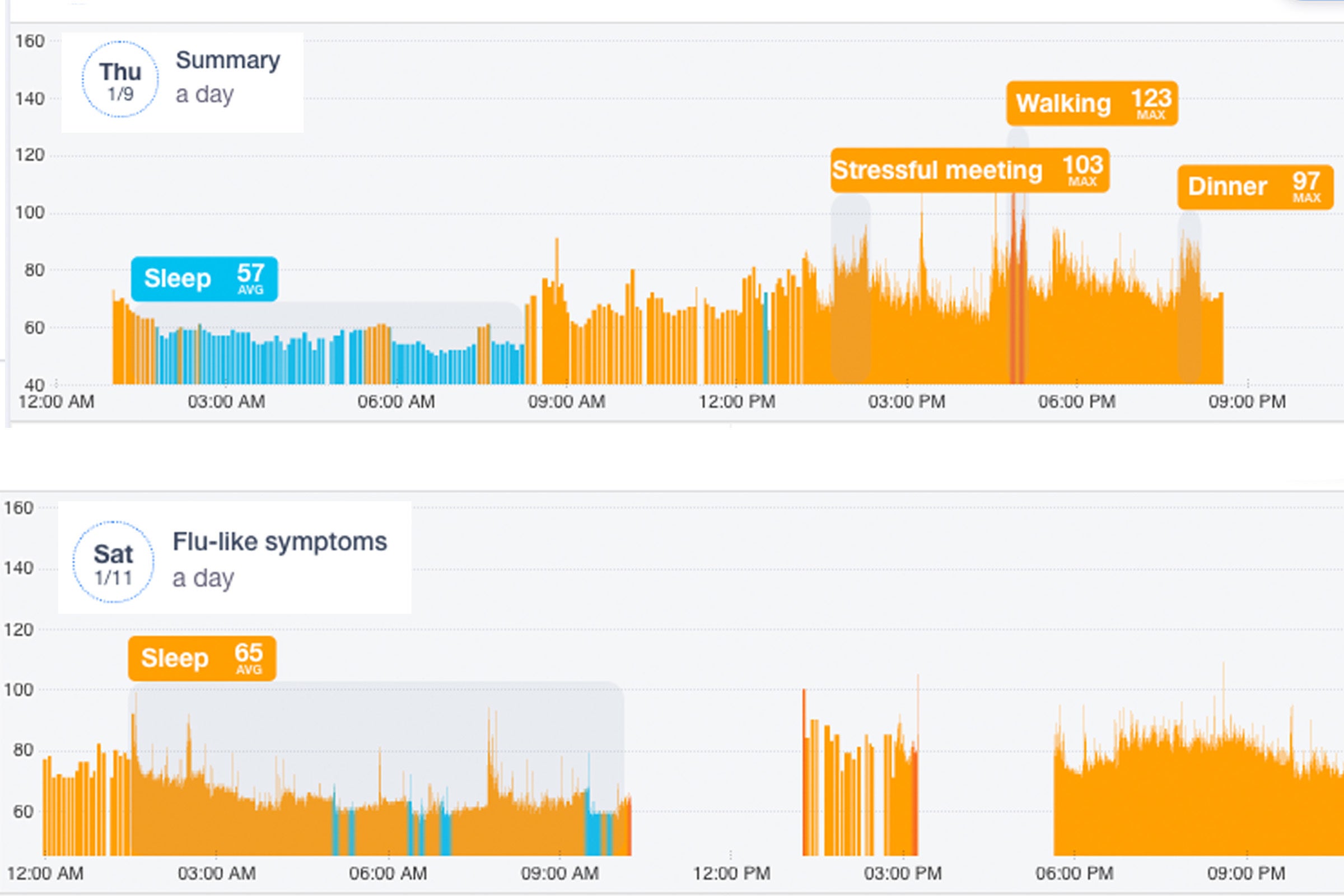
App maker Cardiogram pushed an update to its Apple Watch and WearOS apps last week that adds a new stat that shows average beats per minute during sleep. As it turns out, tracking fluctuations in your heart rate during sleep could signal that your body is fighting a viral infection like COVID-19.
By tracking your sleeping heart rate, Cardiogram might be able to alert you to an imminent illness.
Cardiogram co-founder Johnson Hsieh discovered the correlation after tracking his BPM during a bout with the seasonal flu in January. He noticed that his normal sleeping heart rate was about 10 beats per minute higher while his body was fighting the virus and returned to normal as his sickness subsided. The higher BPM was also evident during other parts of the day, but sleep is where it’s easier to spot.
It’s due to vasodilation, which is a fancy medical term for the expansion of the blood vessels during inflammation. As blood vessels expand, signals are sent to your brain to increase your heart rate and provide additional blood supply to inflamed regions.
“A pretty clear signal in your heart rate when you have symptoms that would otherwise be measured exclusively by a thermometer,†said Harish Kilaru, head of product at Cardiogram. “When your body is fighting an infection, both your sleeping BPM and your resting BPM are higher.â€
Since Cardiogram is still studying how BPM correlates to viruses and other illnesses, it won’t be part of its UCSF partnership studies users can opt into, nor will it actively alert you to these types of fluctuations in your sleeping BPM. As Kilaru explained, other factors (such as consuming alcohol) can also lead to an increase in resting BPM, so it’s not an exact science just yet. While Cardiogram still recommends taking your temperature and consulting your physician with any concerns, heart-rate monitoring is one more way to stay on top of possible coronavirus symptoms.
 Michael Simon/IDG
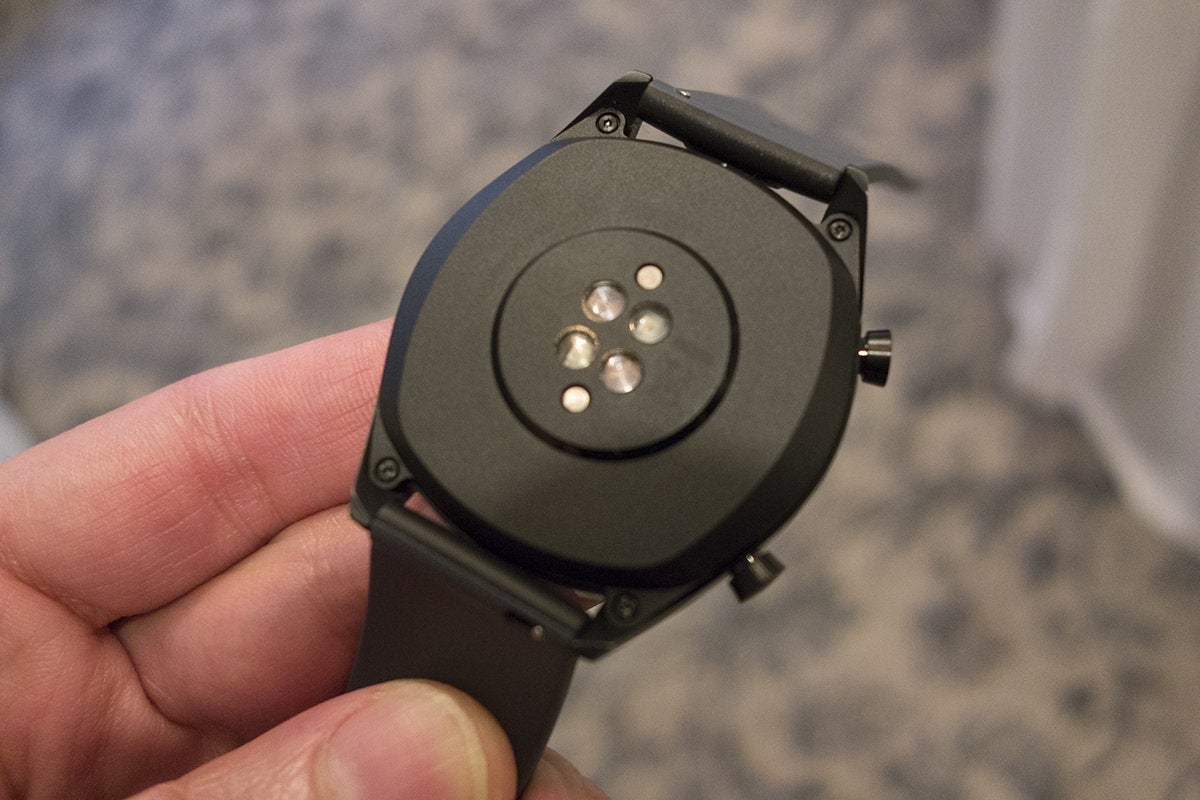
Your watch’s heart-rate monitor can be an effective tool in tracking the coronavirus.
“I think there’s a lot of potential here because we have seen a connection between these symptoms and your heart rate,†Kilaru said.
A recent Fitbit study reached a similar conclusion. While examining resting heart rate data from 200,000 participants who used a Fitbit wearable device for at least 60 days from 2016 to 2018, researchers discovered s distinct correlation between elevated resting heart rate and influenza-like illness rates across five states (California, Texas, New York, Illinois, and Pennsylvania) and found the data significantly improved flu predictions. Additionally, weekly changes in resting heart rate closed mirrored changes in influenza-like illness rates.
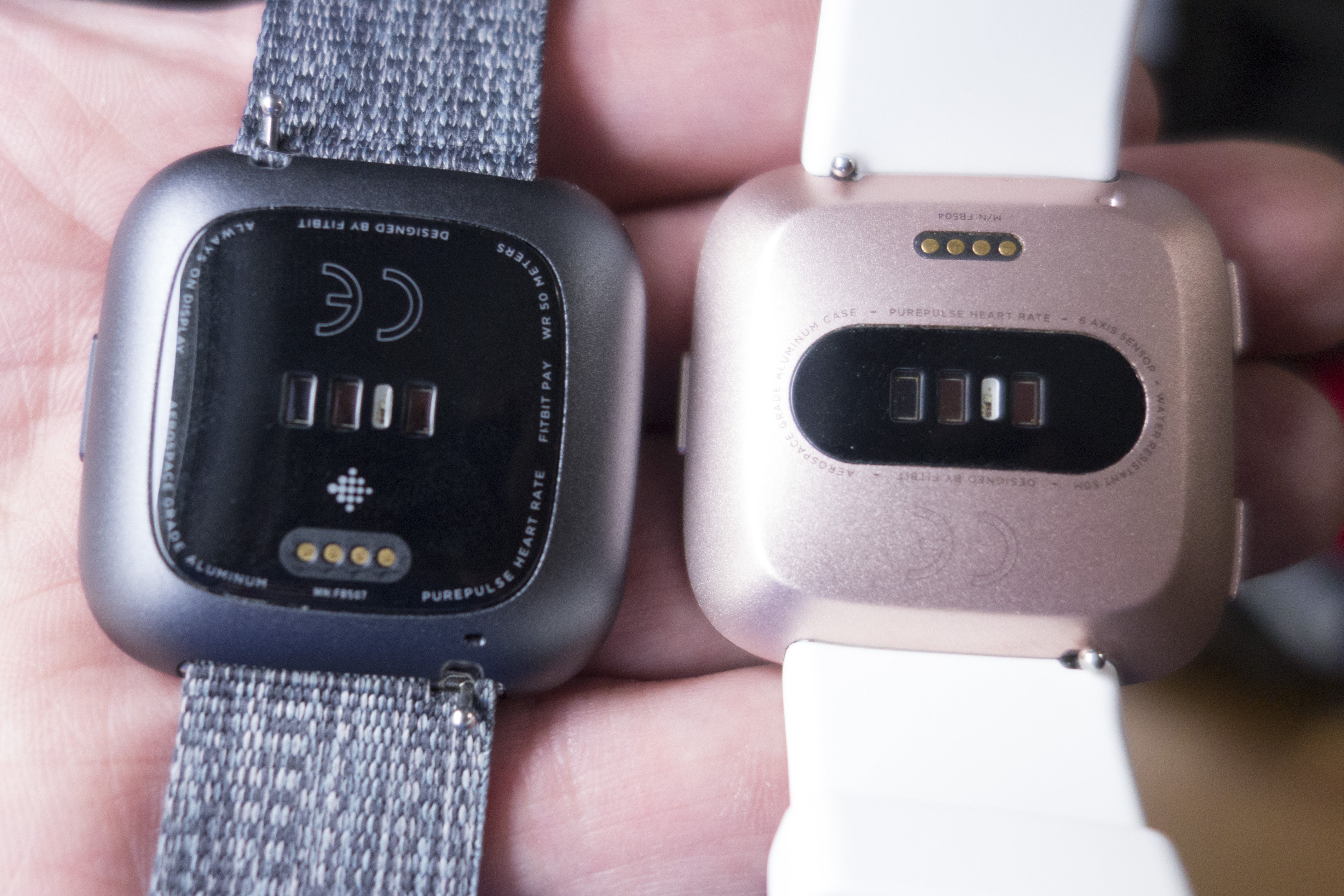
While the Cardiogram app isn’t available for Fitbit OS, the Fitbit watch will natively track your sleeping heart rate each night. And if you have a Charge 3 or Versa 2, you’ll get an even better handle on your COVID-19 exposure due to their relative SpO2 sensors that can track oxygen levels in your blood.
 Michael Simon/IDG
The Fitbit Versa 2 (left) is one of a few smartwatches that can measure oxygen levels in the blood.
Like Cardiogram’s method, Fitbit’s SpO2 sensor will record your blood-oxygen levels as part of its Sleep Score. While you won’t get a number, each morning you’ll find an Estimated Oxygen Variations chart that will show your levels throughout the night, which can be invaluable for tracking COVID-19 symptoms. A typical blood-oxygen saturation level is above 90 percent, but COVID-19 sufferers can develop severe hypoxia, which lowers the oxygen levels in your blood due to damage to the walls of the air sacs in their lungs.Â
In a comment provided after this article was published, Fitbit noted that the Estimated Oxygen Variation chart is not intended to track slow fluctuations in relative SpO2 or sustained hypoxia (as might occur with acute or chronic respiratory problems), but rather was designed to track shorter-term fluctuations over time scales of 30-60 seconds, as is more commonly seen in breathing disturbances during sleep. So if you see major fluctuations, which will be clearly marked, you can call or visit your local healthcare provider for information about what it might mean.
The notion of wearables helping identify COVID symptoms is no longer an abstract notion. Since I write this, numerous studies have cropped up to tap into the data available on your watch to see how it can apply to early detection.
The quickest way for Fitbit users to help is right in the app. Inside the Assessments & Reports section of the Discover tab you’ll find a COVID-19 study that will ask a series of questions and gather data from your device to help “find a way to quickly defeat COVD-19 with data from your Fitbit device.â€
 Fitibit
Anyone with a Fitbit device may participate in the new COVID-19 Study.
Duke University is also hosting a study called Covidentify that consists of two questions each day for up to 12 months. The study will be “investigating whether the data from your smartphone and smartwatch can help determine whether or not you have a COVID-19 infection, and how severe the infection is expected to get.†Only Fitbit and Garmin users may take part but support for other smartwatches is on the way.
Also exploring the relationship between wearables and COVID is Scripps Research, which is running the DETECT (Digital Engagement & Tracking for Early Control & Treatment) study to “monitor your heart rate and allow you to record symptoms like fever or coughing.†The goal of the study is to “identify areas with viral outbreaks quickly.†It’s open to any user with a wearable device that tracks your heart rate.
Monitoring resting heart rate and SpO2 tracking can be excellent indicators of the flu, but they’re still not as good as an actual body temperature reading. While there are very few wearables that are able to accurately show body temperature right now, that’s probably going to change in a post-COVID-19 world.
 Michael Simon/IDG
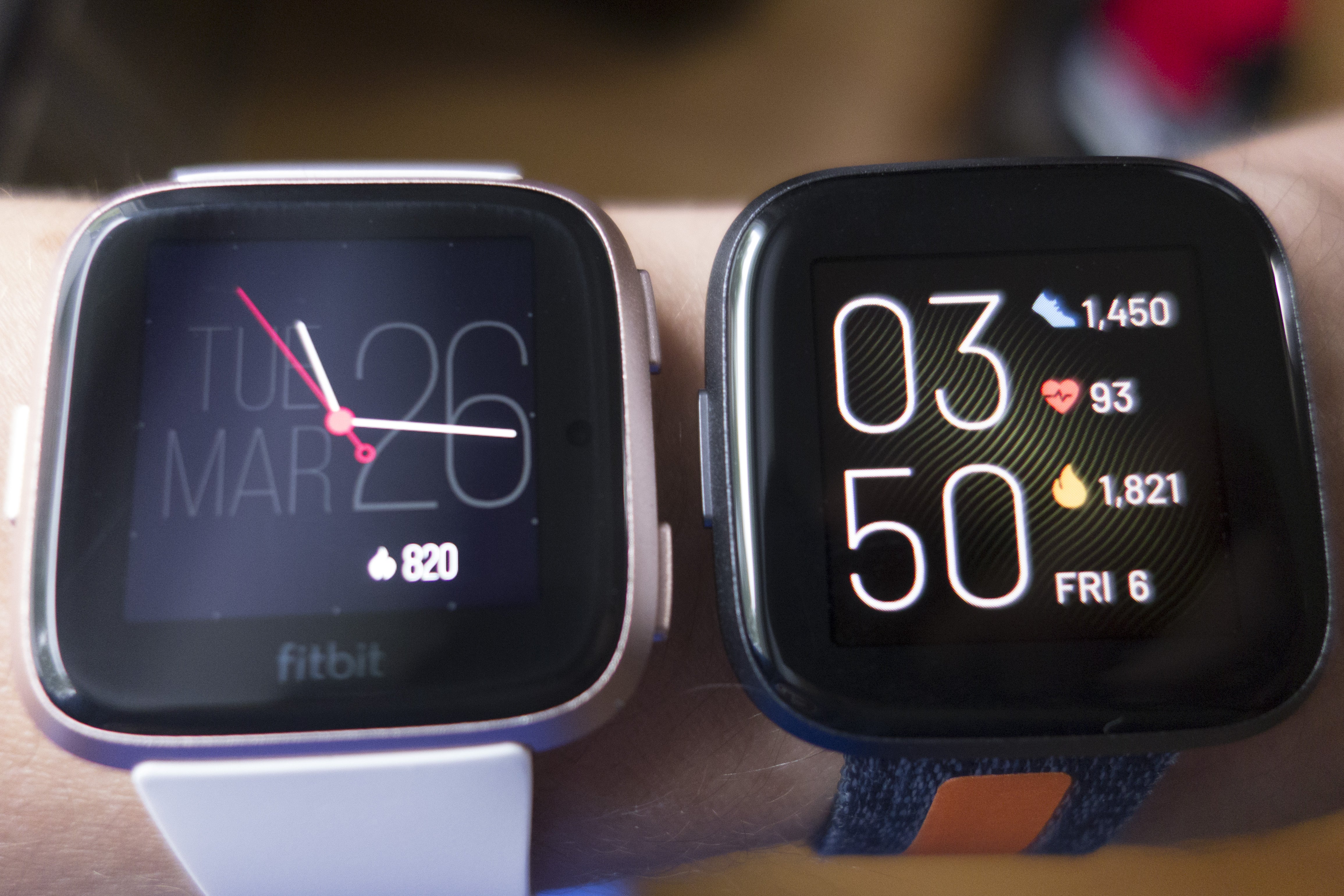
Future smartwatches by Apple and Google will likely figure out a way to accurately track body temperature.
Smart ring maker Oura has already developed a direct skin temperature system that may provide a solution for smartwatches. It still uses a direct skin temperature for readings, but instead of showing your actual temperature, it charts fluctuations based on the wearer’s average baseline temperature using a custom algorithm, similar to how Fitbit calculates your blood-oxygen levels. So a mild fever would read +2.2 degrees rather than 100.8 degrees Fahrenheit.
With AI and machine learning coupled with a negative thermal coefficient (NTC) thermistors, tomorrow’s smartwatches could deliver continuous body temperature readings and alert you to flu-like fluctuations, much like the Apple Watch and others already do for heart health. For example, Kinsa is already using its smart thermometer data to create a Health Weather Map in the U.S. as a way to visualize infections. Combined with the heart rate data and SpO2 readings and future body temperature sensors, it could give health providers an invaluable tool for battling future pandemics within smaller communities.
But even without the ability to track body temperature, your smartwatch can still be useful in monitoring your own coronavirus symptoms. “Just because your wearable devices aren’t taking your temperature regularly,†Kilaru said, “it still provides you a clear and continuous data point that you can use on a day-to-day basis.â€

Minister of Basic Education Angie Motshekga, while briefing the nation on the reopening of schools on Monday 1 June, said there is a lot of anxiety regarding matrics and their exams.Â
Motshekga held the briefing on Monday after it was initially postponed on Sunday 31 May.Â
Motshekga said that due to anxiety surrounding matric exams, the learners who were supposed to write in June will now write in December.Â
We’re already in the month of June, which means there would be little time matrics to prepare themselves if exams had to take place in June.Â
Motshekga said the Department of Basic Education (DBE) has agreed with its partners to have another meeting on Thursday 4 June to assess the readiness of schools. The minister said Personal Protective Equipment (PPE) should arrive this week.Â
For the moment, schools are still expected to reopen on 8 June as stipulated by the department on Sunday evening. The Western Cape Education Department (WCED) has, however, allowed grade 7 and matric learners to return to school on Monday 1 June.
“I am hopeful that all the challenges will be addressed, any further delays will disadvantage learners,†said Motshekga.Â
Besides the announcement of matrics and when they will write their exams, Motshekga also made other points, which parents and learners should be aware of pending the full reopening of schools.Â
Motshekga made the following announcements regarding the reopening of schools: Â
Here’s why schools did not open on time:Â

2019’s Atlantic hurricane season was a busy one and AccuWeather’s forecasters are anticipating another active season for 2020.
Accuweather
Thanks to COVID-19, the hurricane season that officially starts Monday will be unlike any other.Â
“The combination of an ongoing pandemic and what NOAA has forecast to be a busy hurricane season is a cataclysmic scenario,” according to the disaster policy group SmarterSafer Coalition.
Federal forecasters at the National Oceanic and Atmospheric Administration last month predicted as many as 19 named storms would form, of which as many as 10 will be hurricanes. It’s just one of many forecasts that predict an unusually busy season in 2020.Â
“This could be a very active season,” said AccuWeather meteorologist Dan Kottlowski. “The more active the season, the more likely we’ll have at least one, two or three major events.”
Astrid Caldas, a climate scientist with the Union of Concerned Scientists, said: “The intersection of the pandemic with hurricane season is unprecedented and unfortunate, as it will play out as FEMA’s resources and staff are stretched thin with the pandemic response and a series of disasters since 2017, which will make it harder for the agency to rise to the challenge of simultaneously occurring disasters.”Â
Stronger storms: Global warming is making hurricanes stronger, study says
Even without the pandemic, this “would be a challenging hurricane season,” said Rachel Cleetus, also of the Union of Concerned Scientists, due to the predicted number of storms. “As a nation, we’re not prepared, and this is putting people’s lives at risk.”
The nation’s ability to keep people safe is going to be severely tested, she added, and in large part depends on how well FEMA and state and local authorities work together under these unprecedented circumstances.
“Other disasters like ongoing Midwest flooding and the upcoming wildfire season also put pressure on the agency’s resources,” Cleetus said.Â
FEMA said it’s ready for hurricane season: “While FEMA continues to lead federal operations during the whole-of-America COVID-19 response, we continue to take deliberate and proactive steps to respond to and recover from future disasters, such as hurricanes, while responding to COVID-19. FEMA has already responded to severe weather during this pandemic, with devastating tornadoes in the southeast, while also preparing for the start of the 2020 hurricane season.”Â
Nevertheless, the overwhelming fight against COVID-19, paired with already scarce resources, will dramatically impact the ability of federal, state, and local governments to support hurricane disaster relief.
And the threat of contracting COVID-19 will be a deterrent for some people considering to go to a shelter to ride out a hurricane.
“If we have to do mass congregate sheltering, what are the protocols we’re going to have in place?,” Jared Moskowitz, the director of the Florida Division of Emergency Management, said in a recent news conference, AccuWeather reported. “Are we going to have COVID-only shelters? How are we going to do evacuations?â€Â
Social distancing in emergency shelters? Michigan flooding response complicated by COVID-19
Florida plans: Coronavirus could change Florida’s hurricane planning: Hotels, Lyft, Uber all in play
Another dynamic may also come into play this year when tropical systems threaten the U.S.: disaster fatigue.
Months of stress and worrying over the coronavirus pandemic and its implications on society, the economy and everyday living has taken its toll on many Americans, AccuWeather reported.Â
“They’re tired of seeing the numbers. They’re tired of seeing the news media. They’re tired,” Bill Wheeler, deputy emergency management coordinator in Harris County, Texas, told AccuWeather.
FEMA recently released the “COVID-19 Pandemic Operational Guidance for the 2020 Hurricane Season†to help emergency managers and public health officials best prepare for disasters while continuing to respond to and recover from the pandemic.Â
While FEMA aims to live up to its mission, it noted disaster response may be conducted remotely this year, and that the public should be aware the agency’s application process may not be done in-person due to health and safety considerations.
“While this is understandable, there’s no question it will significantly complicate hurricane preparedness and recovery efforts, especially for communities that are less well-resourced or more isolated,” the Union of Concerned Scientists said.
Nursing homes are at particular risk during a hurricane, according to Weather.us meteorologist Ryan Maue.
“(What’s) very important during hurricane season is to prepare those in elderly housing including nursing homes for potential storm impacts,” he said. “This is just one of many areas where the coronavirus pandemic and hurricane season intersect.”
Cleetus pointed out that hurricane season lasts until Nov. 30, and public health experts are warning of a surge in infections later this year.Â
“We’re not out of the woods in terms of the public health challenge,” she said.
At the American Red Cross, Trevor Riggen, senior vice president of disaster services, said, “disasters won’t stop during the coronavirus outbreak – so as we head into hurricane season, our goal is to provide anyone in need after a disaster with comfort and support.”
He added that amid the coronavirus crisis, Red Cross will provide some relief services virtually, including mental health support and financial assistance, thanks to investments in items like laptops, wireless hotspots and mobile devices.Â
“Instead of opening shelters, we’re prioritizing individual hotel rooms or dormitory style rooms to make sure people have a safe place to stay if they can’t return home after a disaster,” Riggen said.
And as bad as it could be in the U.S., nations of the Caribbean may be even more at risk. Erynn Carter, senior director for humanitarian response at Mercy Corps, said the region faces a “nightmare scenario” if a major hurricane hits in the middle of “an uncontained pandemic.”Â
“Skyrocketing demand for health supplies has stretched supply chains,” Carter said. “Difficulty accessing items like hygiene products and medical supplies will hurt much needed preparations for hurricane response.Â
“In the event of a major storm, supply chains would almost certainly be further limited by hurricane damage. This will threaten the lives of people who need medical care and equipment to fight COVID-19, and the lives of people with injuries and health crises caused or made worse by a hurricane.”
So far, the hurricane season has gotten off to a fast start. Two named storms have already formed:Â Tropical Storms Arthur and Bertha.
It’s the first time since 2012 that two storms formed during the month of May.Â
First season storm: First storm of hurricane season won’t make landfall on Florida’s coast but will bring rain, rough surf
Read or Share this story: https://www.usatoday.com/story/news/nation/2020/06/01/hurricane-season-2020-coronavirus-may-cataclysmic-scenario/5274713002/

A bug in Android means that setting a certain image as your phone’s wallpaper could be enough to crash it. The issue gained widespread attention over the weekend after leaker Ice Universe tweeted the image that causes the issue, and the bug has since been verified by 9to5Google and Android Authority. Ice Universe says that the bug affects Samsung handsets in particular, but it’s also been replicated on Google Pixel phones, among others.
On affected phones, setting the photo as your wallpaper causes a handset’s screen to immediately start turning on and off, making it unusable. Rebooting a phone won’t fix the issue. 9to5Google reports that you can restart your phone into safe mode and delete the image file as a potential fix, but Android Authority says it eventually had to factory reset its device to get things back to normal. Suffice it to say, you definitely shouldn’t try replicating this issue on any of your important devices.
The bug does not appear to be universal; Android Authority says it initially tried to verify the bug on a Huawei Mate 20 Pro, but found that the phone does not appear be affected.
According to a Twitter thread posted by 9to5Google contributor Dylan Roussel, the issue may be caused when certain phones don’t support the color space used by the image. According to Roussel, the image uses the RGB color space, while many Android phones prefer SRGB.
Roussel notes that when he tested the issue on a Pixel 4 XL running the Android 11 developer preview, however, the software appears to include code to replace unsupported color spaces with SRGB. As a result, the wallpaper didn’t crash the Pixel 4 XL. This suggests that a fairly simple fix might be available for any phones that suffer with this issue. XDA-Developers reports that one developer has already submitted a patch to AOSP to resolve the issue.
It’s not unusual for seemingly innocuous content to crash phones. Earlier this year, a bug was found in iOS 13 that caused iPhones to crash when displaying certain characters from the Sindhi language. A few years ago, there was even a five-second video that could cause iPhones to crash. Until a fix is widely available, you should probably exercise some caution over what images you use as wallpapers on Android.

Good evening, here are the latest developments on the coronavirus pandemic in Australia. This is Elias Visontay and it’s Monday 1 June.
As restaurants and cafes across NSW welcomed up to 50 diners at any given time on Monday, three additional Covid-19 cases were recorded, bringing the state’s total to 3,098.Â
In Victoria, authorities announced a further four cases of Covid-19 on Monday, as it also loosened lockdown restrictions.
Victorians are now able to dine out at restaurants with up to 20 patrons at the same time.
This explainer outlines current restrictions around the country in greater depth.Â
The federal government has opened the door to providing cash grants for home renovations as part of a new round of economic stimulus aimed at propping up Australia’s construction sector.
The government has also hinted it is looking at helping the struggling arts and entertainment sector, which has been pleading for assistance for months because many workers have missed out on the $1,500 fortnightly jobkeeper wage subsidy.
It is understood the support for home renovations is on the table – but the bigger focus of the forthcoming package is likely to be new construction and larger-scale work.
It comes as the prime minister joined NSW premier Gladys Berejiklian in Sydney on Monday to announce $1.75bn in federal government funding for a metro line to the future airport at Badgerys Creek in the city’s west.Â
Fox Sports and former NRL player Matthew Johns have apologised for a comedy sketch where they used the NRL’s new cardboard cut-outs to put the face of Adolf Hitler into the crowd.
As stadiums are empty, the league has launched an initiative where fans can pay $22 to send in photos and have a cardboard cut-out of themselves sit in the stands. However, multiple people have taken advantage of the scheme to submit childish and offensive jokes.
Over the weekend, a photo of English serial killer Dr Harold Shipman was spotted in the stands – among other potential “joke†cutouts – during the match between Newcastle and Penrith.
Johns then aired a sketch on Fox Sports which showed a cut-out of Hitler in the stands – though this did not actually happen. Another japester made headlines on Friday for submitting a photo of Boris Johnson’s adviser Dominic Cummins, who did appear on TV screens.
The NRL has now announced it will review the screening process for the cardboard cut-outs, to deter other people abusing the process for a cheap laugh.
Australia’s drug regulator has started court proceedings against a “healing church†that promoted a solution containing industrial bleach as a cure for coronavirus, after the church failed to remove advertisements promoting the product from its website.
It comes after the Therapeutic Goods Administration fined the Australian chapter of the Genesis II Church of Health and Healing more than $150,000 in May for selling and promoting the solution containing sodium chlorite, a chemical used as a textile bleaching agent and disinfectant.Â
The product is named Miracle Mineral Supplement and Miracle Mineral Solution on the church’s MMS Australia website, which claimed it could prevent and treat a range of diseases including Covid-19. The TGA said the company had breached multiple advertising laws.
Rugby Australia laid off 47 of its 142 fulltime staff on Monday morning, as it implements “phase one†of a restructure that will save the code $5.5m per year.
The cuts, which will also see 30 contractors and casual workers axed, comes after Rugby Australia reported a $9.4m loss in 2019. All senior staff who remain with Rugby Australia will have their salary reduced by 5%.
In a statement released on Monday, Rugby Australia noted “over 75% of Rugby Australia’s workforce has been stood down, or on significantly reduced hours since April 1, while senior executive staff have continued to work on a fulltime basis with salary reductions of at least 30% since that date.â€
Rugby Australia interim chief executive Rob Clarke said “today was an incredibly difficult day for the organisationâ€.
The Australian government handed major pathology companies lucrative Covid-19 contracts through limited tenders, shielded their closed collection centres from takeover, provided large subsidy increases after industry lobbying, waived normal registration fees and promised to provide additional assistance outside jobkeeper.
Guardian Australia has spent the past week examining aspects of the federal government’s response to coronavirus, investigating problems with jobkeeper, the childcare support package, and the potential economic impact of the sudden cessation of stimulus.
A critical part of the government’s response was aimed at helping the highly concentrated and influential private pathology sector.
Still want more? Read the latest news from across the Guardian’s global network.

On a day when the southwest monsoon reached Kerala coast exactly on time, the India Meteorological Department (IMD) upgraded its forecast for 2020 rainfall to 102 per cent of the Long Period Average (LPA), from the 100 per cent in April. The forecast is with a model error of plus and minus of 4 per cent.
Region-wise, the forecasts showed that barring North-East and East India, rainfall in all the other regions of the country will be towards the higher side of ‘normal’ with North-West India which comprises of states such as Punjab, Haryana, UP and Delhi projected to get ‘above normal’ rainfall this year at 107 per cent of the LPA.
The IMD said rainfall in Central India, most of which is rainfed, is expected to get rainfall equivalent to 103 per cent of its LPA, while Southern India is expected to get rainfall equal to 102 per cent of LPA. East and North-East India are expected to get 97 per cent of LPA equivalent rainfall.
However, this should not cause many problems, as the total quantum of rainfall in the Eastern Part of India is higher than in other regions. The forecast is with a model error of plus and minus 8 per cent.
The IMD classified rainfall equivalent between 96-104 per cent of the LPA of the entire country as normal while that between 104-110 per cent of classified as above normal rainfall. Rainfall between 90-95 per cent is categorized as ‘below normal’.
ALSO READ: Southwest Monsoon hits Kerala; Met dept’s region-wise forecast today
Though the cumulative LPA for the four-month rainfall for all India is 88 centimeters but there can be regional variations in this.
In July, the met department said that rains would be 103 per cent of the LPA, while in August it will be 97 per cent of the LPA. July and August the two most important months for the southwest monsoon as these get the maximum quantum of rains in the four-month period. The forecast is with a model error of plus or minus nine per cent.
There is just a 15 per cent chance of rainfall being below normal this year and just 5 per cent of it being deficient, the met department said.
The timely onset of rains and upgrading of the forecast raised hopes that of the strong performance of the June to September rains in India something, which should have a positive impact on farm output and overall economic scenario.
Meanwhile, earlier in the day, the southwest monsoon has arrived over Kerala, marking the commencement of the four-month-long rainfall season, the India Meteorological Department said on Monday.
“The southwest monsoon has set in over Kerala today, 1 June 2020,†the IMD said in a statement today.
The four-month monsoon season from June to September accounts for 75 per cent of rainfall in the country.
Private forecaster Skymet Weather on May 30 had declared the arrival of monsoon, but the IMD had differed, saying conditions were not ripe then for such an announcement.

The Crew Dragon has arrived.
On Saturday, SpaceX, the rocket company founded by Elon Musk, launched a Falcon 9 rocket with a Crew Dragon capsule carrying two NASA astronauts on top. SpaceX is now the first private business to accomplish a feat — taking people to orbit — that had until now only been done by nations.
Less than a day later, the spacecraft docked at the International Space Station, successfully completing the first leg of its journey.
This Crew Dragon test flight is a shakedown cruise to certify that the spacecraft meets NASA’s needs and safety standards in order to start routine trips taking astronauts to and from the space station. The agency has relied on Russia for that task since the space shuttles were retired in 2011. Once astronauts begin using the capsule with regularity, space tourists could also begin to fly it in the years to come.
At 1:22 p.m. Eastern time, the two astronauts, Robert L. Behnken and Douglas G. Hurley, disembarked the Crew Dragon, exchanging handshakes and hugs with the three astronauts already on the space station.
“Welcome to the International Space Station,” Christopher Cassidy, the NASA astronaut who is current commander of the space station, said to Mr. Behnken and Mr. Hurley. “Please come aboard.â€
In a welcoming ceremony, Jim Bridenstine, the NASA administrator addressed the astronauts from NASA’s Johnson Space Center in Houston, where space station operations are managed.
“I will tell you the whole world saw this mission, and we are so, so proud of everything you have done for our country, and in fact, to inspire the world,†Mr. Bridenstine said. He then asked the astronauts if they had managed to get any sleep during the 19-hour trip.
“We did get probably a good seven hours or so opportunity for sleep.†Mr. Behnken replied. “And I did succeed at sleep.â€
The current mission will not be a complete success until Mr. Behnken and Mr. Hurley return to Earth in the Crew Dragon. which they have named Endeavour, the same name as the retired space shuttle that both men flew on and the British sailing ship commanded by James Cook as he explored the Pacific.
“This has gone as well as we could have expected it to go,†Mr. Bridenstine said during a news conference after the docking.
Mr. Bridenstine and other officials including President Trump and Vice President Mike Pence have offered the successful launch as a hopeful inspiration to serve as a contrast to riots that have followed the death of George Floyd, a black man in Minnesota who died after a policeman kneeled on his neck.
But Mr. Bridenstine agreed that while the SpaceX mission might bring people together, it is not by itself a solution to social unrest.
“If the expectation was that things on the ground were going to change because we launched a rocket, I think maybe the expectation might have been a little high,†he said.
For now, Mr. Behnken and Mr. Hurley have an open-ended stay in orbit. The Crew Dragon test flight was originally scheduled to last only a couple of weeks, enabling the astronauts to test out capabilities of the capsule including serving as a shelter in case of an emergency.
But there have been delays in completing work on the spacecraft, as well as another that NASA is depending on for astronaut transportation, Boeing’s Starliner capsule. As a result, the space station is currently short-staffed with only three astronauts aboard — Mr. Cassidy and two Russians, Ivan Vagner and Anatoly Ivanishin — limiting how much scientific research can be conducted.
Mr. Behnken and Mr. Hurley can also assist with refurbishment tasks like spacewalks to install new lithium ion batteries that just arrived in a Japanese cargo ship.
The Crew Dragon is currently certified for up to four months in space. The spacecraft’s solar panels gradually decay over time, and the worry is that if it is docked too long, the panels would not be able to generate enough power for a safe re-entry to Earth’s atmosphere.
But over the next few weeks, the astronauts will periodically turn on the Crew Dragon and check. If the solar arrays turn out to be more resilient than predicted, the mission could be extended beyond four months.
During the welcome ceremony, Brian Babin, a Republican congressman whose district includes the Johnson Space Center, asked how this flight compared with the astronauts’ earlier trips to space aboard the space shuttles.
Mr. Behnken said that while the shuttles offered a rougher ride getting off the launchpad, the ascent became smoother. “But Dragon was huffing and puffing all the way into orbit,†he said. “A little bit more alive is probably the best way I would describe it.â€
Once in orbit, the spacecraft appeared to smoothly pass all of its tests. “Today, the Dragon is extremely healthy,†said Steve Stich, deputy manager of NASA’s commercial crew program. “There’s really no major problems.
During Sunday’s docking, the approach of the Crew Dragon proceeded smoothly, about 15 minutes ahead of schedule, with a camera on the space station capturing the red, green and white lights of the capsule as it steadily crept up over the course of a couple of hours. The astronauts took over manual control for a while, firing the thrusters to nudge the position of the spacecraft. They then turned control back to a computer on board for the final steps, leading to docking at 10:30 a.m. Eastern time.
Mr. Behnken and Mr. Hurley then had to wait close to three hours more as air pressure was equalized between their capsule and the station, tests verified no air leaks and the spacecraft was plugged into the outpost’s power systems.
“As you are performing your inventory please collect all your food and water bottle trash,†Anna Menon, a SpaceX mission controller in Hawthorne, Calif., reminded Mr. Behnken and Mr. Hurley before they exited their spacecraft.
If no major problems arise during this test flight, NASA will use data from this flight to certify that the Crew Dragon is ready for routine flights to the space station. The next Crew Dragon mission — and the first operational one — is to carry four astronauts: three from NASA and one from the Japanese space agency.
But Mr. Behnken and Mr. Hurley got there first.
“We were just the lucky guys who got to fly the rocket yesterday,†Mr. Hurley said.

One of the first photos associated with coronavirus in the Gulf featured a despondent South Asian employee of the Saudi oil giant, Aramco, forced to dress-up as a life-sized sanitiser dispenser. The photos drew fierce criticism online, forcing the company to apologise. But, long before the photos became public, the idea was conceptualised and approved, the cardboard cutout assembled to design, a worker selected for the task and ordered to walk the company’s halls. Then, higher-income employees posed beside him and the photos were released without pause, revealing the degree to which the racialised marginalisation of low-income migrant workers in the Gulf is normalised.Â
The photos encapsulate the unequal impact of the COVID-19 crisis on the region’s 30 million migrant workers, who make up anywhere between 80-90 percent (in Qatar, UAE, Kuwait, Bahrain) to 60-70 percent (in Saudi Arabia, Oman) of labour markets. Those still at work risk their health to make other people’s lives safer – as cleaners, domestic and healthcare workers; easier – as grocery store staff or delivery men; or richer – by still toiling on construction sites.
The dualities of the Gulf’s social and economic systems are often oversimplified – rich nationals in the public sector, poor migrants in the private – but the pandemic has thrown these divides into stark relief. As Laavanya Kathiravelu writes in her introspection of migrants in Dubai, social distancing is already institutionalised in the Gulf; low-income workers from the Global South do the dirty and demeaning work, while physically and financially isolated from the modern societies they make possible. Â
But this kind of social distancing is not saving lives – instead, it puts workers at greater risk of infection and other fallouts of the crisis. Migrant workers are not only excluded from emergency financial protections (with some exception in Qatar) but abandoned wholesale. Our networks have seen a sharp rise in cases from throughout the region – workers with no money for food, who face eviction because they can not pay rent; workers forcibly isolated in crowded labour accommodation or quarantine facilities with no water; workers who are not receiving critical medical care. All without the emotional support of their families and communities. Joint letters issued by a coalition of organisations including Migrant-Rights.org, Amnesty International and Human Rights Watch urge the Gulf states to protect workers and include them in COVID-19 policy responses. Â
The plight of these workers is not only a consequence of the economic downturn but of their forced temporariness under the Gulf’s migration regimes. The “kafala”, or sponsorship system, privatises labour management, tying each migrant worker to an employer with near-complete control over their legal residency. Not only does kafala increase the risk of unpaid wages and pitiable working conditions, but it also absolves states of their responsibility to migrants. There is neither an economic nor a social contract between these essential workers and the countries they give their most productive years to.Â
The working conditions the kafala enables, combined with inefficient complaints mechanisms, leave many workers in need of financial support. States do not provide meaningful assistance and charities play a role only in extreme cases. Instead, workers depend on diaspora associations for relief. For decades, Asian and African community groups have quietly provided food, accommodation and tickets home for workers in distress.Â
Now, even this last line of social protection is strangled by stay-at-home orders, creating a vast need that is not being met by governments so accustomed to offloading responsibility. Hotlines function poorly, often providing misinformation, while authorities often take days to respond – with much nudging – to workers abandoned without food or water. Countries of origin are also slow to respond, partly due to capacity and partly due to an entrenched shirking of responsibility towards overseas workers.
Several Gulf countries now hope to reduce their burden by repatriating workers en masse, despite the multilayered risks involved. These calls are echoed by both jingoist and more progressive circles. “The threat is not from the outside,” one prominent activist in Bahrain tweeted, “it is from within us,” referring to the country’s migrant population. Actors, officials and media personalities from across the Gulf expressed similarly xenophobic sentiments, receiving both censure and agreement in response. Â
The Gulf’s temporary migration regime exists precisely for scenarios like this – to easily dispose of a workforce when it is no longer needed or wanted. Having never been allowed to belong, the racialised distancing between classes makes for a clean break, at least for the host countries. For migrant workers, the consequences are almost too immense to fathom.
The views expressed in this article are the author’s own and do not necessarily reflect Al Jazeera’s editorial stance.

Members of the Florida National Guard are seen during the opening of the COVID-19 walk-up testing site on April 27, 2020 in North Miami. State residents were asked to stay home under the pandemic. Restrictions are easing, but officials worry people might now hesitate to evacuate during a hurricane.
Joe Raedle/Getty Images
hide caption
toggle caption
Joe Raedle/Getty Images

Members of the Florida National Guard are seen during the opening of the COVID-19 walk-up testing site on April 27, 2020 in North Miami. State residents were asked to stay home under the pandemic. Restrictions are easing, but officials worry people might now hesitate to evacuate during a hurricane.
Joe Raedle/Getty Images
Robin Rokobauer doesn’t like to chance it. When there’s a hurricane, she almost always evacuates.
Rokobauer lives in Cocoa Beach, Fla., on a barrier island between the Atlantic Ocean and 153-mile-long Indian River Lagoon. Her mother is 93.
“She’s got to have flushing toilets,” Rokobauer says of her mother. “She’s got to have fresh water. She’s just got some physical needs that require that.”
But this year Rokobauer is thinking hard about her hurricane plan. She is 65, and like her mother, she’s considered at higher risk of serious complications from the coronavirus, which has claimed more than 100,000 American lives.
“If I have to go any farther or if I have to go somewhere, then you’re going to be exposed to more people in more environments, and you don’t know where those people have been,” she says.
The 2020 Atlantic hurricane season starts Monday, and federal scientists expect storms to be more frequent and powerful. Two named storms already formed in the Atlantic this spring before the official start of the season. As Florida and other coastal states plan for hurricanes, they are confronting troubling new public safety calculations because of the novel coronavirus.
There’s now a chance for one disaster to layer upon another. Many lives could be lost: first, from powerful winds, storm surges and flooding and then through the spread of the coronavirus in cramped public shelters following mass evacuations. Evacuees might pass the virus to friends and relatives who take them in, or get infected themselves in those new surroundings.
“The risks are significant,” says David Abramson, a professor at New York University’s College of Global Public Health, whose research examines the health consequences of hurricanes. “A lot of hurricane events lead to evacuations and displacements” without much time to build in social distancing safeguards, he says.
The hardest problem in planning for a hurricane during a pandemic could be public confusion over whether to evacuate or stay at home, says Craig Fugate, former administrator of the Federal Emergency Management Agency under President Obama.
“What I don’t want to have is people to say, ‘Hey, wait a minute. I’m not going to evacuate. I don’t want to get COVID-19, I’ve been told to stay home,’ ” says Fugate, who also led the Florida Division of Emergency Management. “That may result in more people staying behind and increasing the risk of loss of life.”
Others may stay put just because they are among the tens of millions nationally who have lost their jobs and feel they cannot afford to flee to hotels or family inland. As a result, some emergency managers along the Gulf Coast are trying to line up more shelters for the greater number of evacuees they expect, a move certain to stretch local and state budgets already tattered by the economic downturn.
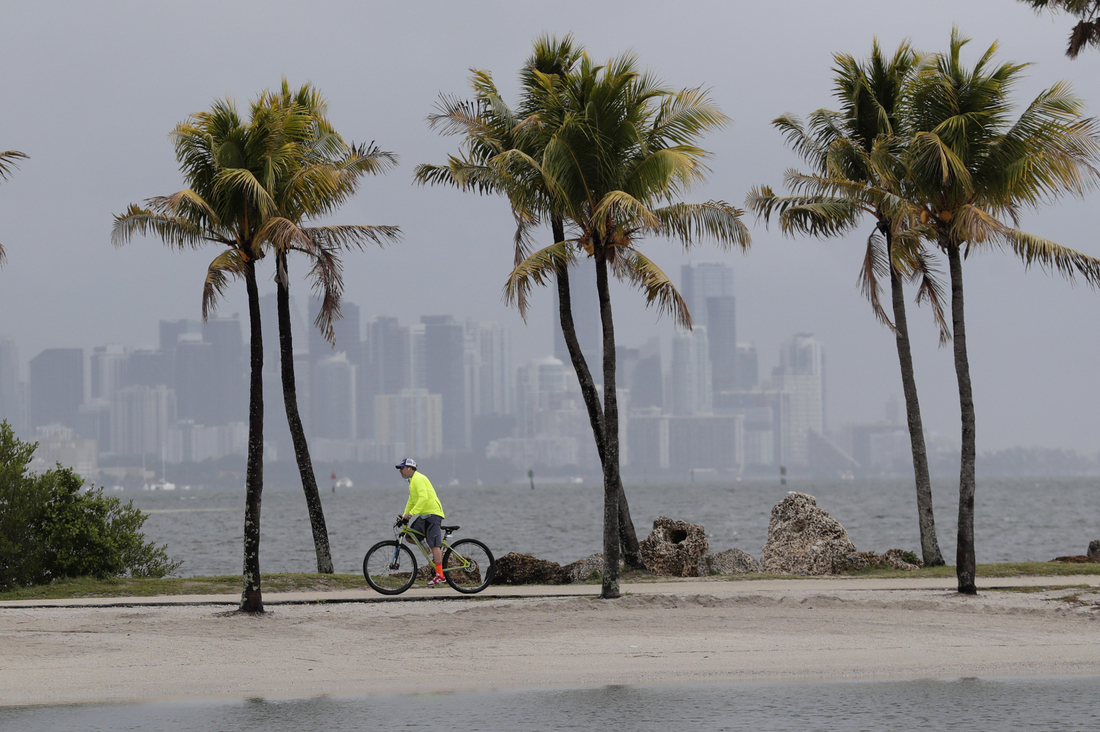
The Miami skyline is shrouded in clouds as a cyclist rides along Biscayne Bay. The National Oceanic and Atmospheric Administration has predicted an unusually active hurricane season this year, with more frequent and intense storms in the Atlantic Ocean. Seas made warmer by climate change are fueling stronger hurricanes, according to the newest research.
Lynne Sladky/AP
hide caption
toggle caption
Lynne Sladky/AP

The Miami skyline is shrouded in clouds as a cyclist rides along Biscayne Bay. The National Oceanic and Atmospheric Administration has predicted an unusually active hurricane season this year, with more frequent and intense storms in the Atlantic Ocean. Seas made warmer by climate change are fueling stronger hurricanes, according to the newest research.
Lynne Sladky/AP
Forecasters predict an active hurricane season
Coastal states from Maine to Texas have been scrambling to revise hurricane emergency plans to take the pandemic into account.
They’re rethinking everything — from evacuation routes and shelters to stockpiling personal protective equipment and communicating new procedures, says North Carolina meteorologist Katie Webster. She coordinates monthly calls with emergency managers through the National Emergency Management Association and is director of the natural hazards branch of the North Carolina Department of Public Safety.
Emergency managers in coastal states have been checking to see if companies they once relied on to supply everything from buses to food and water are still in business, or if alternative arrangements need to be made, she says.
“States will be as ready as they can be,” Webster says.
Florida, with its 8,436 miles of Atlantic and Gulf of Mexico coastline, has been hit hard in recent years. Since 2016, four major hurricanes have menaced the state, including Hurricane Michael, a Category 5 storm that tore through the Panhandle two years ago.
Climate change is intensifying the threats posed by hurricanes. A warmer atmosphere holds more moisture, making hurricanes likely to dump more rain. Sea-level rise elevates destructive storm surges into coastal communities. And hotter ocean waters are fueling stronger hurricanes, according to the newest research.
This season, every major forecasting organization is predicting above-average activity, because of a warm Atlantic Ocean and favorable atmospheric conditions. National Oceanic and Atmospheric Administration scientists, for example, have predicted 13 to 19 named storms, including six to 10 hurricanes and three to six major hurricanes, with wind speeds of 111 miles per hour or more. A normal season would have 12 named storms with six hurricanes, three of which would be major storms.
Meanwhile, as of last Friday, the University of Washington’s Institute for Health Metrics and Evaluation was projecting more than 100 new coronavirus infections a day in Florida by Aug. 1, just as the hurricane season reaches its height.
At a May briefing in Sarasota, Florida Gov. Ron DeSantis noted that the coronavirus spreads most easily when people come into close contact in an enclosed space.
“As you’re looking at sheltering for a hurricane you’v got to keep that in mind,” he says. “I mean if you pile people into a place, under normal circumstances that would be fine. But that would potentially allow the virus to spread if somebody is in fact infected.”
For its part, FEMA has updated its hurricane guide to include material on staying safe in the pandemic — including advice about social distancing, wearing cloth face coverings and following recommended cleaning practices.
Armed with hand sanitizer and masks, Trudie Marzig says she and her husband in Rockledge, Fla., about 50 miles southeast of Orlando, will be ready to evacuate if necessary.
“You have to take care of the immediate danger first, which is the weather issue,” she says. “You can deal with the virus pandemic afterward.”
Nightmare scenario: evacuations in a pandemic
Even without a pandemic, mass evacuations can be logistical nightmares, clogging freeways, causing traffic accidents, and depleting gas stations of fuel. For each storm, officials weigh the pros and cons of evacuation, and this year, they are adding the pandemic to their concerns, says Bryan Koon, a vice president at IEM, an emergency management and security consulting firm, and Florida’s emergency management director under Gov. Rick Scott.
Authorities in hurricane-prone states are rethinking not only when and where to call for evacuations, but how to execute them. In doing so, Koon says, officials have to contend with the vagaries of weather forecasting.
Meteorologists are getting better at forecasting the path hurricanes take toward land and the deadly storm surges they produce, he says. But there’s enough uncertainty to sometimes prompt officials to “over evacuate” as a precaution, says Koon, whose tenure in state government coincided with Hurricane Irma.
To curb the risk of spreading the coronavirus, officials could be more judicious with evacuations, he says, looking closely at factors like flood and storm surge zones and the age and condition of homes.
“We will have to determine whether it is better to have somebody stay in place because they will be dry enough, or their homes are strong enough, or maybe they are in mobile homes or a storm surge zone and the risks are worse for staying in place so you send them somewhere else,” Koon says.
The DeSantis administration is considering stay-at-home orders where homes are newer and sturdier, especially for weaker hurricanes.
And rather than using buses, community leaders are considering ride-sharing services such as Uber to transport low-income evacuees, one car at a time.
The stakes are especially high this year for low-income people, who would continue facing disproportionate risks from the coronavirus during a hurricane, says Abramson, the NYU professor. People get injured and sick during hurricanes but might lack adequate health insurance, he says.
“The people who are most vulnerable in hurricanes, socially and economically, are also vulnerable medically,” he says. “What we are about to see is also a large increase in the number of people who are uninsured, who are about to lose work-related insurance, and can’t pay for their own,” he adds.
Nursing home residents also face unusually high risks this season. Many low-lying facilities have evacuation agreements with facilities on higher ground, but Kristen Knapp of the Florida Health Care Association says this year, nursing homes will have to re-examine these arrangements.
“If you’re a facility that is an evacuation zone and you have positive cases in your building, you may not be able to go to your typical facility that you would go to if they don’t have positive cases in their building,” Knapp says.
Sheltering collides with social distancing
Sheltering large numbers of hurricane evacuees, which is always complicated by size, location and special circumstances, will be even more difficult amid the pandemic.
After Hurricane Irma, for example, some 350,000 evacuees were in shelters, often packed into school gymnasiums or other large venues. That wouldn’t make sense this year during a threatening hurricane, officials say.
Leaders are contemplating sheltering evacuees in hotels and motels left vacant by the economic collapse.
The American Red Cross is already lining up hotels or dormitories, and a higher number of large spaces so evacuees can be spread out. There will be health screening and temperature checks to get into shelters, says Trevor Riggen, a Red Cross senior vice president.
People with temperatures or other virus risk factors will be accommodated in a separate location, with access to medical help, he said.
Food will be served in boxes instead of cafeteria-style, and the Red Cross has already stockpiled face coverings and disinfectants for shelter cleaning, he says.
“We want people to know it will be as safe as possible,” he says.
While the emergency managers are getting ready for the six-month hurricane season, individuals and families need to do their part, this year more than ever, says Jennifer Collins, a geosciences professor at the University of South Florida whose research includes human behavior during hurricane evacuations.
“We definitely can lean on the government to some extent but we have to take personal responsibility as well,” she says. People should make sure they have what they need to shelter in place, for a hurricane and a pandemic, she adds.
Robin Rokobauer of Cocoa Beach considered staying put this year. But she believes she will have to evacuate in order to best protect her mother. She feels fortunate that Brevard County has had a relatively small number of coronavirus cases at some 400, including 12 deaths. Already, she is checking with hotels, looking for those with a kitchenette so that she can prepare meals in the room.
“I hope that we don’t have any” hurricanes, Rokobauer says. “I mean, we’ve been through a lot this year.”
Amy Green covers the environment in Florida for 90.7 WMFE Orlando. James Bruggers covers the Southeast for InsideClimate News. This story was reported and produced as part of InsideClimate News’ National Environmental Reporting Network.