NHL still faces series of intertwined decisions to pull off summer return – Sportsnet.ca

0

With the ball now rolling, they could be playing real live NHL games again in two months.

At least that loomed as the distant hoped-for outcome as the league took a step forward Monday by transitioning to the next phase of its return-to-play protocol.

Nothing has happened quickly since the season was paused March 12 and this is no different: Phase 2, which sees team facilities opened for voluntary small-group workouts, began with just a handful of clubs taking part.

That should grow to roughly two-thirds of the 24 teams tabbed for a potential restart by the end of the week, and will include all of them well in advance of mandatory training camps getting underway — something that won’t happen before July 10.

The truth of the matter is there’s still no ironclad guarantee we get that far. The NHL and NHL Players’ Association haven’t signed off any protocol covering Phase 3, much less established a date for camps to start, and are engaged in discussions on a potential extension of the collective bargaining agreement, which may or may not be needed to see the 2019-20 season concluded amid a pandemic.

Sign up for NHL newsletters

Get the best of our NHL coverage and exclusives delivered directly to your inbox!

So, yeah, there’s a lot being juggled at a time when the Stanley Cup is typically being awarded.

The league continues to press forward through uncertainty, just as it has since the COVID-19 crisis started. It is trying to stage a summer return — how would an Aug. 8 puck drop sound? — and must navigate a series of intertwined decisions in order to pull it off.

As of Monday afternoon, the NHL had still not started narrowing down the list of potential hub cities from 10, according to a source. That should happen in the near future with commissioner Gary Bettman having previously indicated that he’d like to decide on the two hosts somewhere around the middle of June.

Tied to that decision is the status of a mandatory 14-day quarantine period for anyone entering Canada, which stands as a barrier to playing games here. Discussions are ongoing with the federal government about whether that might change, according to deputy commissioner Bill Daly.

“They understand the issue and our timeline, and I expect we will get their definitive views in due course,” said Daly.

Ideally the NHL would like to include a Canadian city in its return-to-play plans to go with Las Vegas, which is widely viewed as the favourite among U.S.-based choices. There’s comfort and familiarity with Toronto after how smoothly things went logistically during the 2016 World Cup of Hockey, and both Edmonton and Vancouver boast low coronavirus infection rates in addition to their amenities.

Jeff Marek and Elliotte Friedman talk to a lot of people around the hockey world, and then they tell listeners all about what they’ve heard and what they think about it.

Even once there’s resolutions on those issues, an overarching agreement will have to be finalized with the players.

The sides are biting things off in chunks. First they agreed on the 24-team format and last week they finalized some of the finer details about how the tournament will work. However, the press release carrying that news Thursday included an important caveat: “The agreement is subject to the NHL and the NHLPA reaching an overall agreement on resuming play.”

That will cover everything from insurance to testing protocols to how life will look inside the bubble and what access, if any, players will have to their families. A new CBA isn’t technically necessary because the current deal runs through 2022 but there have been discussions about ways to transition through the financial challenges brought on by COVID — perhaps with a fixed salary-cap number and capped escrow payments, plus the anticipation of a new lucrative U.S. television rights agreement on the horizon.

As those talks continue, many players remain at their off-season homes awaiting official word about when they’ll be required to report for training camp.

That will be the most significant sign yet that all of this planning might yet bear fruit.

A relatively small number of players are jumping straight into Phase 2 immediately but that shouldn’t overshadow the fact that Monday saw NHLers skating at NHL facilities in Toronto, Edmonton, Vegas and Long Island.

It’s something.

It’s a start.


Source link

Concern as Myanmar Finds COVID-19 Case in Rohingya Who Illegally Crossed Border to Go Home

0

Authorities near Myanmar’s border with Bangladesh have told police to redouble efforts to stop illegal crossings, after a Rohingya refugee tested positive for COVID-19 after sneaking into Rakhine state, lawmakers and local officials said Monday.

Humanitarian aid workers have warned for months that the squalid overcrowded camps housing more than 1.1 million Rohingya refugees in southeastern Bangladesh are hotbeds for a serious outbreak of the virus.

Nearly three-quarters of the refugees in Bangladesh fled Rakhine after they were driven from their villages in a brutal military-led crackdown that began in August 2017. Small numbers are illegally crossing back into Myanmar, some in response to coronavirus concerns in the refugee camps in Bangladesh.

One 31-year-old Rohingya man who illegally had reentered Rakhine’s Maungdaw township from Bangladesh’s Thankhali refugee camp on May 30 along with four family members, was confirmed infected after undergoing a swab test. He is one of three people in Rakhine state who have tested positive for COVID-19.

“It is very concerning for the region during the COVID-19 outbreak period now [that] a Rohingya refugee in Maungdaw has tested positive,” said Maung Ohn, a lawmaker from Maungdaw township, adding that residents are worried about Rohingya refugees illegally crossing the border by boat.

Authorities must secure fencing between the two countries and stop turning a blind eye to illegal ferries transporting refugees from Bangladesh to Myanmar, he said.

“Under the given conditions, the refugees who want to return will cross the border illegally,” said Soe Aung, administrator of Maungdaw district. “When they do, they will dodge the police outposts at the border fencing.”

Local government officials have asked border police to double down on security measures to stop illegal crossings, he added.

Seventeen Rohingya refugees illegally returned to Myanmar after March 30, and settled in Maungdaw and Buthidaung townships, Soe Aung said.

Officials learned about refugees who returned illegally from informants, said Aung Thaung Shwe, a lawmaker from Buthidaung township.

“It is hard to estimate how many returnees have arrived in Maungdaw since we’ve found many of them already in neighboring township Buthidaung,” he said. “It’s not safe for the people in the region.”

Village heads alerted

Government officials told RFA that the refugee repatriation program was temporarily suspended in early April amid the spread of the coronavirus.

It is believed that the refugees are deciding to go back to Myanmar through unofficial channels because of a growing number of COVID-19 cases in the displacement camps in Bangladesh, though RFA could not confirm this.

Authorities have requested that returnees pass through official repatriation camps to have medical screenings before they go to their villages.

Khin Maung, a town elder from Ywa Thit Kay ward of Maungdaw town, said if the returnees deliberately avoid being processed through the official repatriation facility and go directly to villages instead, they risk infecting many people if they are infected.

“We are working to prevent that from happening,” he said. “We have alerted the village heads to inform the authorities immediately if someone who illegally crosses the border has returned to the village.”

Aung Myaing, a displaced Rohingya at a Cox’s Bazaar refugee camp, said most Rohingya are not concerned about the coronavirus because they have received very little information about it.

Only about 700 Rohingya among the hundreds of thousands who fled to Bangladesh after the start of the 2017 violence conflicts have returned to Myanmar through various channels, said Soe Aung.

Myanmar and Bangladesh reached an initial agreement in November 2017 to begin repatriations, but many Rohingya have refused to return out of fear of continued repression and violence directed at them.

Reported by Kyaw Lwin Oo for RFA’s Myanmar Service. Translated by Ye Kaung Myint Maung. Written in English by Roseanne Gerin.


Source link

Anthony Joshua vs Tyson Fury would be ‘massive fight’ anywhere in the world, says Bob Arum

0

Fury’s promoter Frank Warren has suggested talks are ongoing for a fight against Joshua in 2021 with all the world heavyweight titles at stake

Last Updated: 08/06/20 10:29pm


1:00

Ricky Hatton says all obstacles must be overcome to ensure the Anthony Joshua vs Tyson Fury takes place

Ricky Hatton says all obstacles must be overcome to ensure the Anthony Joshua vs Tyson Fury takes place

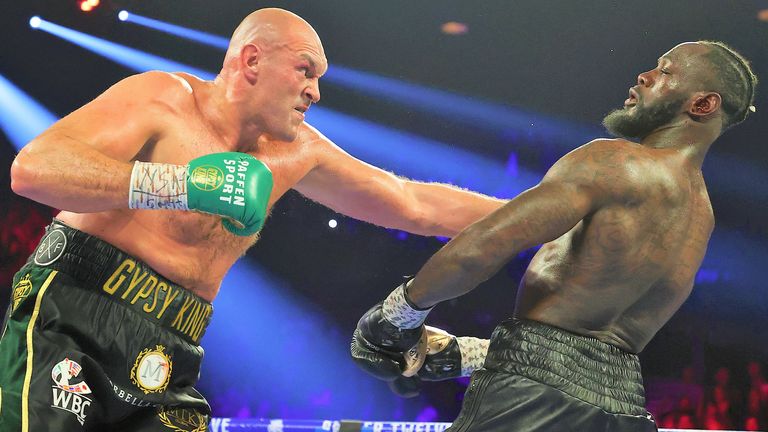
Veteran promoter Bob Arum says a bout between Anthony Joshua and Tyson Fury would be “a massive, massive fight” regardless of where the pair meet.

Fury’s promoter Frank Warren has suggested talks are ongoing for a fight against Joshua in 2021 with all the world heavyweight titles at stake, though a location is yet to be confirmed.

Ricky Hatton has called for a local venue for the potential bout, but Arum – who has predicted his own fighter Kubrat Pulev will beat Joshua before he has a chance to fight Fury – says if British pair do face each other it will be a huge affair no matter where it is hosted.

“Joshua will be able to fight Pulev sometime this year,” Arum said. “I think Pulev is going to beat him, but we’ll have to see. Fury owes Wilder a fight this year and hopefully we’ll get that done.

0:33
Promoter Bob Arum, who represents Tyson Fury, says a third fight against Deontay Wilder could be held in front of fans in Macau in China in November

Promoter Bob Arum, who represents Tyson Fury, says a third fight against Deontay Wilder could be held in front of fans in Macau in China in November

“Next year there’ll be this huge fight with Fury and Joshua, that’s the way the cards turn. It will be a massive, massive fight wherever it takes place. US, UK or someplace elsewhere.”

The 88 year-old said the autonomous region of Macau on the south coast of China is a potential host venue for the third fight between Tyson Fury and Deontay Wilder at the end of the year after the Brit spectacularly stopped his American rival in seven rounds in February to claim the WBC belt.

“Really big fights are going to be hard to put on,” he said. “We have Tyson Fury with Wilder and we hope to do that fight in November or December.

“Whether it’s for a full audience or a limited audience in the United States or put it on in Macau, which may be open for full arenas as early as November. You know, we’re exploring all our options.”

1:35
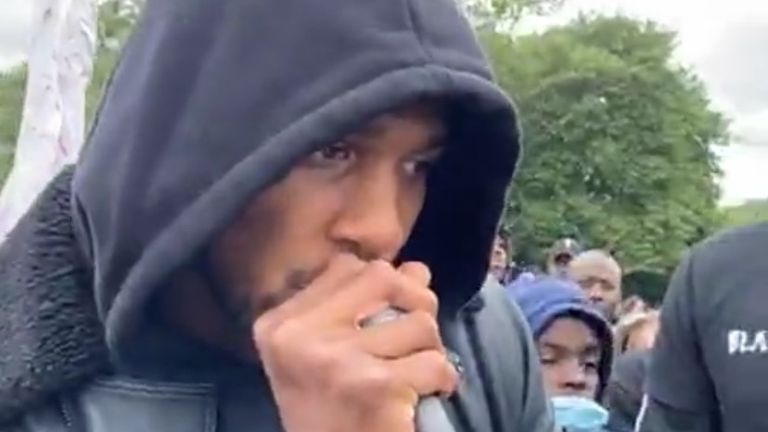
World heavyweight champion Anthony Joshua joined the Black Lives Matter protest in his hometown of Watford. Pictures from Instagram/@anthonyjoshua

World heavyweight champion Anthony Joshua joined the Black Lives Matter protest in his hometown of Watford. Pictures from Instagram/@anthonyjoshua

Fury-Wilder II was the last fight Arum promoted before the enforced shutdown of sport due to the coronavirus pandemic and the American will use the same venue, the MGM Grand, to launch live boxing’s comeback in the USA on Tuesday. He says he has encouraged his boxers to support the Black Lives Matters’ protests at this week’s card in Las Vegas.

“I would certainly encourage them to take a stance with what’s happening,” he said. “My loyalties are to the protesters and effecting change in this country and maybe around the world that’s a long time coming.

“But again, that’s my views and I don’t like to force my views on anybody else, particularly athletes who I’m paying to participate in an event.”


Source link

Tinned Fish, Three Ways

I’m an avid home cook, but preparing three meals a day, as many of us have been doing during lockdown, can be taxing, to say the least. Food shopping becomes an ordeal, rather than a pleasure, and the mere thought of planning ahead may seem too much.

When I’m at a loss, wondering what to cook that is appealing and relatively easy, I scan the nonperishable items in my pantry and take a glance at the fridge and freezer. Often, I come across some forgotten treasure, making a trip to the store unnecessary.

As I rifled through the canned goods assortment recently, it occurred to me that a fish dinner was in the cards. It would not require a fishing pole or a visit to the fishmonger — just a can opener and a few other staple ingredients.

Seafood from a can doesn’t have to be survival fare: Superior preserved products are a delicacy, if your budget allows. It’s worth the investment to pay a little more for high-quality anchovies and Ventresca tuna, and a joy to find them lurking in the cupboard.

Among my bounty was a tin of tinned anchovies, a jar of tuna fillets in oil and a couple of cans of baby clams. I also found a jar of Italian sun-dried tomatoes and a can of Spanish piquillo peppers. With a box of spaghetti, a bit of bacon and a bag of frozen peas, a stellar menu was coming together.

For a mouthwatering snack, there would be crostini, the endlessly variable Italian standby. This version would be simplicity itself: thin slices of toasted day-old baguette or ciabatta, rubbed with garlic, smeared with a dab of chopped sun-dried tomato and topped with a bit of anchovy.

I was so happy to find the piquillo peppers, bright red, roasted and peeled, ready to stuff. Every tapas bar in Spain serves them, sometimes with a filling of creamy salt cod or a slice of sheep’s milk cheese. But a clear favorite for many is piquillos with a filling of seasoned, dressed tuna. They would be my first course.

Finally, for a main, I made a garlicky basil-parsley purée to toss with the clams and spaghetti, and kicked up the flavor with green chile, bacon and peas. The overall effect was very bright and summery.

Of course, you could serve any of these dishes by themselves. Crostini are welcome any time drinks are served. The stuffed peppers could be served as a light lunch, and a big plate of pasta can certainly suffice for a whole meal. But having them together in one festive menu gave us time to linger at the table, enjoying companionship and discussing life’s complexities.

If you have sun-dried tomatoes and anchovies on hand, turn to these little toasts, which are simple to assemble. This intense combination of flavors, both sweet and salty, creates an ideal savory bite. This particular recipe makes eight crostini, enough for four polite diners to have two each before dinner. Scale up if your crowd is a bit more ravenous.

Chopped capers, parsley, red onion, lemon zest and fruity olive oil flavor the tuna mixture that’s then spooned into these sweet piquillo peppers. A few of these make a zesty first course, served with crisp lettuce leaves and hard-cooked egg. (If piquillos are not a possibility, canned roasted bell peppers are a good substitute.)

When you’re far from the sea or the fishmonger, you can reach for canned baby clams as they make a very decent main-course pasta ingredient. There is great variation between different brands of canned clams. Most are mild in flavor and some are not briny tasting at all. I find they always need a bit of perking up and hold up well to aggressive seasoning. (The liquid in the cans, as opposed to bottled clam juice, is usually rather watery and can be discarded.)

Pasta with clams, canned or not, calls for one type of wine: a lively, incisive white without overt oak or tropical fruitiness. This narrows it down to, oh, hundreds of options, right? You can start with the world of dry Italian whites, which doesn’t make it easier. Vermentino from Liguria? Verdicchio from the Marche? Fiano from Campania? And dozens of others, some well known like Frascati, some virtually unknown. You don’t need to stay in Italy. Aligoté from Burgundy is a great pairing for this dish. You could try a Corsican vermentino, which might be spelled vermentinu on the label. You could open a Greek assyrtiko, or a Spanish albariño. Want a red? Sorry, you’re on your own. ERIC ASIMOV

Source link

Supporters of Missing Thai Activist Demand Cambodia Probe His Alleged Kidnapping in Phnom Penh

0

Some 100 supporters of a Thai political activist who was snatched from the streets of Cambodia’s capital in broad daylight protested Monday in front of the country’s embassy in Bangkok, demanding that Phnom Penh investigate his case, while Cambodian officials continued to disavow knowledge of his abduction.

The supporters also accused the Thai government of having orchestrated the kidnapping of Wanchalearm Satsaksit, 37, who had fled to Cambodia from Thailand, where he was wanted by authorities for criticizing the former Thai junta. Wanchalearm was apparently abducted by gunmen in front of his apartment complex in Phnom Penh on Thursday afternoon as he talked to his sister on a phone.

Both Thailand’s government and police force have denied involvement in his disappearance. Thai Deputy Prime Minister Prawit Wongsuwan told reporters Monday that he had no information on the case, but said the government would discuss it with Cambodian authorities.

Speaking to RFA’s Khmer Service, Cambodian Foreign Ministry Spokesperson Koy Koung said his ministry was unable to verify news of Wanchalearm’s abduction.

He said that the Foreign Ministry had received a diplomatic note from the Thai Embassy in Phnom Penh asking Cambodia to investigate the alleged kidnapping but referred the matter to “relevant authorities.”

“This case depends on the relevant competent authorities, particularly the Ministry of the Interior,” he said. “The police can verify whether the reports are true or not.”

Deputy chief of the National Police and director of the Ministry of Interior’s Central Security Department Dy Vichea told RFA on Sunday that he has “no knowledge” of the alleged abduction and referred questions about it to members of the banned opposition Cambodia National Rescue Party (CNRP) in exile who have accused him of being behind Wanchalearm’s disappearance.

International rights groups have called on Cambodian authorities to urgently investigate the case and for Thai authorities to confirm whether Wanchalearm was arrested at their request.

“This would not be the first time that Thai citizens have vanished after expressing their political opinions,” London-based Amnesty International said in a statement last week.

“Wanchalearm is outspoken on social media—his sudden disappearance in a violent incident is deeply alarming.”

Since a 2014 military coup that toppled the elected government of Yingluck Shinawatra, at least 104 people have fled Thailand over fears of prosecution, according to the Thai Lawyers for Human Rights, a local NGO.

At least 98 people were charged with violating the strict royal defamation law known as Lese-Majeste, and 119 others were charged with sedition, according to iLaw, an online legal advocate group. Authorities also have filed charges under the Computer Crimes Act.

In recent years, at least eight Thai activists who fled after the 2014 coup have disappeared from Laos, Cambodia or Vietnam, with the bodies of two of them later found floating in the Mekong River.

Reported by RFA’s Khmer Service. Translated by Sok Ry Sum. Written in English by Joshua Lipes.


Source link

George Floyd protests: ‘Racist’ sign removed from Derbyshire pub after thousands sign petition

0

A “racist” sign has been removed from outside a pub in Derbyshire after thousands demanded it be taken down amid Black Lives Matter protests nationwide.

More than 28,000 people signed a petition calling for the caricature of a black man’s head to be removed from the sign for the Greenman pub in Ashbourne.

Derbyshire Dales District Council said it was being taken down with “immediate effect”.

It comes after anti-racism protesters in Bristol, outraged by the killing of George Floyd in the US, pulled a statue of slave trader Edward Colston off its plinth and threw into the harbour.

The Grade II-listed pub sign, which arches over St John’s Street in the Derbyshire town, was likened to a golliwog – a 19th century rag doll largely considered to be racist – by one protester.

They said: “I think people are ashamed of it. Having it in the middle of the street in a small town is so unwelcoming.”

Matthew Holt, 19, an international relations student from Ashbourne, was among the thousands who signed the petition.

He said: “It seems such an obvious racist sign. I think it’s important we address our history; we can’t change it but this shouldn’t be displayed in the public eye.

“It should be in a museum where we can learn about it with a description to contextualise it.”

But a counter petition, which has accumulated nearly 3,000 signatures, argues the sign is “not even the smallest bit racist”.

Image:
Demonstrators threw a statue of Edward Colston into Bristol Harbour during a Black Lives Matter protest

One signatory, Shaun Redfern, 17, from Ashbourne, said: “Are we supposed to deny our past now and get rid of old artefacts?”

A sign with the words “save me” was seen wrapped around the sign on Monday afternoon.

As Black Lives Matter protests continue across the UK and the rest of the world, there is a growing demand for controversial monuments associated with slavery to be taken down.

:: Listen to the Daily podcast on Apple Podcasts, Google Podcasts, Spotify, Spreaker

There are currently similar petitions in Edinburgh, Cardiff, Oxford and Shrewsbury.

While he said he could not condemn criminal damage to the Colston statue in his city, Bristol Mayor Marvin Rees told Sky News the monument was an “affront” to Black, Asian and minority ethnic residents.

But Home Secretary Priti Patel described protesters’ actions as “utterly disgraceful” and threatened them with criminal charges.

Source link

‘Far too cautious’: Legendary investor misses out on Wall Street rally

The shocking rally in US stocks has claimed another bear: Stan Druckenmiller.

Source by [author_name]

How to Feed Crowds in a Protest or Pandemic? The Sikhs Know

It took the Gurdwara Sahib of Fremont, Calif., just a few days after suspending religious services in March to set up a meal and grocery delivery program, and a drive-through meal pickup system outside the gurdwara.

Cooks wear gloves and masks, and the kitchen is big enough for workers to stand more than six feet from one another. As at most gurdwaras, the menu changes regularly, but is typically Indian and always vegetarian. (Meat is not permitted in gurdwaras.)

While these Sikh volunteers, known as sevadars, are experts in mass-meal preparation, they aren’t as accustomed to spreading the word. The Fremont kitchen has produced 15,000 to 20,000 meals a day on holidays like New Year’s Eve, said Dr. Pritpal Singh, a member of the gurdwara. But now, the gurdwara is serving just 100 to 150 people each day.

Dr. Singh said he hoped that more people in need would come pick up food. “We could do hundreds of thousands of meals if given the task,” he said.

But with the demonstrations unfolding around the country, Sikhs aren’t waiting for people to come to them any longer. On Tuesday, volunteers from the Gurdwara Sahib attended a protest in Fremont and handed out several hundred bottles of water as a show of solidarity.

On a recent Friday, Gurjiv Kaur and Kiren Singh asked the volunteers at their gurdwara, the Khalsa Care Foundation, in the Pacoima neighborhood of Los Angeles, to prepare meals in the community kitchen that they could take to the protest. The next morning, they and others picked up about 700 containers of pasta with a garlic- and onion-laden tomato sauce and 500 bottles of water from the gurdwara, and set up a tent in Pan Pacific Park. Soon, protesters started arriving at the tent with other donations, like medical supplies, snacks and hand sanitizer.

“It is our duty to stand up with others to fight for justice,” said Ms. Kaur, a graduating senior at the University of California, Irvine. “Langar at its core is a revolution — against inequality and the caste system,” the antiquated hereditary class structure in South Asia, which Sikhism has always rejected.

Source link

No, the Jobs Report Wasn’t Rigged. Here’s What Happened.

When the Labor Department reported on Friday that employers had added jobs in May and that the unemployment rate had unexpectedly fallen, economists were surprised.

Others had a different reaction: suspicion.

Social media sites over the weekend lit up with posts, some from Democratic politicians, saying the jobs numbers were misleading at best and possibly manipulated. “The trump folks fudged the figures,” Howard Dean, the former Vermont governor and Democratic national chairman, said on Twitter.

For many, those suspicions seemed confirmed by a note, deep within the report, saying some workers had been improperly counted as employed rather than unemployed. If those workers had been classified correctly, the unemployment rate would have been about 16.4 percent in May, rather than the official rate of 13.3 percent (although it still would have been lower than in April).

But economists across the political spectrum say it would be all but impossible to manipulate the jobs numbers undetected. And while there is no question that the speed and severity of the economic collapse has made gathering and interpreting economic data unusually difficult, they say the Bureau of Labor Statistics — the Labor Department office that produces the jobs report — has done an admirable job both ensuring that the numbers are reliable and publicly identifying potential issues.

“The B.L.S. acted with enormous integrity and transparency,” said Jason Furman, a Harvard economist who led the Council of Economic Advisers under President Barack Obama. “If anything, it’s another example of how honest and by the book they are.”

Moreover, Mr. Furman said, the essence of Friday’s jobs report is the same regardless of the classification issue: The unemployment rate fell somewhat in May from the previous month, but remains higher than at any other point since the Great Depression.

Here are some of the basics behind the numbers.

In its report on Friday, the Bureau of Labor Statistics identified what it called a “misclassification error,” in which some people were mistakenly characterized as employed rather than unemployed. The same issue showed up in data from March and April.

To understand what happened, it helps to know a bit about how the jobs figures are calculated.

The unemployment rate and related statistics are based on a monthly survey of about 60,000 households. Interviewers, who work for the Census Bureau, ask respondents a series of questions about their activity the previous week to figure out whether they should count as employed, unemployed or out of the labor force entirely.

When the coronavirus pandemic began, the Bureau of Labor Statistics decided that anyone who wasn’t working because of virus-related business closings should count as unemployed, with or without a formal layoff notice. But starting in March, the agency noticed that an unusual number of people were being counted as “employed but absent from work” — a category meant to reflect vacation, family leave or other temporary absences.

The bureau estimates that this issue probably affected about five million people in May. If all the potentially misclassified people had been counted as unemployed, the jobless rate would have been about a point higher in March, five points higher in April and three points higher in May.

It’s worth noting that the May report’s other surprising number — a gain of 2.5 million jobs — was based on a separate survey of businesses, and was therefore unaffected by the classification issue.

It isn’t clear why people are still being misclassified three months into the pandemic. The bureau says it and the Census Bureau are “investigating why this misclassification error continues to occur and are taking additional steps to address the issue.”

But Erica Groshen, a Cornell University economist who ran the Bureau of Labor Statistics under Mr. Obama, said it was not surprising that a survey intended to measure the ordinary fluctuations in the job market might struggle to capture the nuances of a pandemic-driven shutdown of a vast portion of the economy.

And once the survey has been completed, the agency is extremely reluctant to make any changes, Ms. Groshen said — in part because doing so would invite charges that the agency was massaging the numbers for political or other reasons.

“That would open up a Pandora’s box of ‘Why don’t you adjust for this or that,’” she said. Instead, she said, the agency highlights unusual issues in the data, allowing economists and other observers to adjust the numbers as they see fit.

“That’s part of the transparency that they’ve built into the process,” she said.

The pandemic has made it more difficult for the government to reach households and businesses to conduct surveys, in part because in-person interviews are suspended. The response rate in the survey of households was 67 percent in May, compared with 83 percent in February, before most of the pandemic-related shutdowns.

The Bureau of Labor Statistics said it was “still able to obtain estimates that met our standards for accuracy and reliability,” but economists say the numbers may be less reliable than usual.

Virus-related disruptions could skew the data in other ways. They have thrown off typical seasonal patterns of hiring and firing, which are ordinarily factored into the results, and have scrambled usual assumptions about how many businesses are being formed or shutting down permanently.

Economists overwhelmingly expected Friday’s report to show a loss of jobs and an increase in the unemployment rate. But that shouldn’t necessarily sow suspicion.

For one thing, economists are notoriously bad at predicting turning points in the economy. They didn’t see the 2008-9 recession coming until it had begun.

  • Updated June 5, 2020

    • How does blood type influence coronavirus?

      A study by European scientists is the first to document a strong statistical link between genetic variations and Covid-19, the illness caused by the coronavirus. Having Type A blood was linked to a 50 percent increase in the likelihood that a patient would need to get oxygen or to go on a ventilator, according to the new study.

    • How many people have lost their jobs due to coronavirus in the U.S.?

      The unemployment rate fell to 13.3 percent in May, the Labor Department said on June 5, an unexpected improvement in the nation’s job market as hiring rebounded faster than economists expected. Economists had forecast the unemployment rate to increase to as much as 20 percent, after it hit 14.7 percent in April, which was the highest since the government began keeping official statistics after World War II. But the unemployment rate dipped instead, with employers adding 2.5 million jobs, after more than 20 million jobs were lost in April.

    • Will protests set off a second viral wave of coronavirus?

      Mass protests against police brutality that have brought thousands of people onto the streets in cities across America are raising the specter of new coronavirus outbreaks, prompting political leaders, physicians and public health experts to warn that the crowds could cause a surge in cases. While many political leaders affirmed the right of protesters to express themselves, they urged the demonstrators to wear face masks and maintain social distancing, both to protect themselves and to prevent further community spread of the virus. Some infectious disease experts were reassured by the fact that the protests were held outdoors, saying the open air settings could mitigate the risk of transmission.

    • How do we start exercising again without hurting ourselves after months of lockdown?

      Exercise researchers and physicians have some blunt advice for those of us aiming to return to regular exercise now: Start slowly and then rev up your workouts, also slowly. American adults tended to be about 12 percent less active after the stay-at-home mandates began in March than they were in January. But there are steps you can take to ease your way back into regular exercise safely. First, “start at no more than 50 percent of the exercise you were doing before Covid,” says Dr. Monica Rho, the chief of musculoskeletal medicine at the Shirley Ryan AbilityLab in Chicago. Thread in some preparatory squats, too, she advises. “When you haven’t been exercising, you lose muscle mass.” Expect some muscle twinges after these preliminary, post-lockdown sessions, especially a day or two later. But sudden or increasing pain during exercise is a clarion call to stop and return home.

    • My state is reopening. Is it safe to go out?

      States are reopening bit by bit. This means that more public spaces are available for use and more and more businesses are being allowed to open again. The federal government is largely leaving the decision up to states, and some state leaders are leaving the decision up to local authorities. Even if you aren’t being told to stay at home, it’s still a good idea to limit trips outside and your interaction with other people.

    • What’s the risk of catching coronavirus from a surface?

      Touching contaminated objects and then infecting ourselves with the germs is not typically how the virus spreads. But it can happen. A number of studies of flu, rhinovirus, coronavirus and other microbes have shown that respiratory illnesses, including the new coronavirus, can spread by touching contaminated surfaces, particularly in places like day care centers, offices and hospitals. But a long chain of events has to happen for the disease to spread that way. The best way to protect yourself from coronavirus — whether it’s surface transmission or close human contact — is still social distancing, washing your hands, not touching your face and wearing masks.

    • What are the symptoms of coronavirus?

      Common symptoms include fever, a dry cough, fatigue and difficulty breathing or shortness of breath. Some of these symptoms overlap with those of the flu, making detection difficult, but runny noses and stuffy sinuses are less common. The C.D.C. has also added chills, muscle pain, sore throat, headache and a new loss of the sense of taste or smell as symptoms to look out for. Most people fall ill five to seven days after exposure, but symptoms may appear in as few as two days or as many as 14 days.

    • How can I protect myself while flying?

      If air travel is unavoidable, there are some steps you can take to protect yourself. Most important: Wash your hands often, and stop touching your face. If possible, choose a window seat. A study from Emory University found that during flu season, the safest place to sit on a plane is by a window, as people sitting in window seats had less contact with potentially sick people. Disinfect hard surfaces. When you get to your seat and your hands are clean, use disinfecting wipes to clean the hard surfaces at your seat like the head and arm rest, the seatbelt buckle, the remote, screen, seat back pocket and the tray table. If the seat is hard and nonporous or leather or pleather, you can wipe that down, too. (Using wipes on upholstered seats could lead to a wet seat and spreading of germs rather than killing them.)

    • Should I wear a mask?

      The C.D.C. has recommended that all Americans wear cloth masks if they go out in public. This is a shift in federal guidance reflecting new concerns that the coronavirus is being spread by infected people who have no symptoms. Until now, the C.D.C., like the W.H.O., has advised that ordinary people don’t need to wear masks unless they are sick and coughing. Part of the reason was to preserve medical-grade masks for health care workers who desperately need them at a time when they are in continuously short supply. Masks don’t replace hand washing and social distancing.

    • What should I do if I feel sick?

      If you’ve been exposed to the coronavirus or think you have, and have a fever or symptoms like a cough or difficulty breathing, call a doctor. They should give you advice on whether you should be tested, how to get tested, and how to seek medical treatment without potentially infecting or exposing others.


In this case, economists thought that job losses continued in May largely because millions of people were filing for unemployment benefits. The data released on Friday agreed: It showed that job losses were elevated in May.

But what unemployment claims didn’t capture was that a significant number of businesses were beginning to rehire workers as the economy reopened, including employers doing so to meet the terms of loans received under the federal Payroll Protection Program. That rehiring went undetected in part because employers didn’t have to post the jobs publicly — they just had to call back workers from layoff or furlough.

“The numbers are real — I just think we got blindsided because we got too focused on claims,” said Ian Shepherdson, chief economist at Pantheon Macroeconomics. He noted that data from private sources, such as air travel and restaurant bookings, began to improve in mid-April, which is consistent with the modest rebound shown in the jobs report.

This isn’t the first time that prominent people have questioned the jobs numbers. In 2012, Jack Welch, the former General Electric chief, implied that “Chicago guys” in the Obama administration had rigged a jobs report to help the president win re-election. As a presidential candidate in 2016, Donald Trump called the unemployment rate, then at 5 percent, “one of the biggest hoaxes in American modern politics.”

But as my colleague Patricia Cohen wrote at the time, there are many protections in place to ensure that the jobs numbers and other economic indicators are kept free of politics. And Ms. Groshen and other economists said they had seen no evidence that has changed under Mr. Trump.

“I have seen no red flags, anything to suggest that the numbers are rigged,” Ms. Groshen said.

The Bureau of Labor Statistics is headed by a political appointee, currently William W. Beach, who previously served as a Republican Senate staff member and an economist at the conservative Heritage Foundation. But the rest of the bureau is staffed by career employees, many predating the Trump administration.

Ms. Groshen and other economists say those employees, whom she called “the most dedicated data nerds on the face of the earth,” would raise alarms if they saw signs of political interference. And there is virtually no way the numbers could be changed without their noticing, she said.


Source link

Virginia Man Who Drove Truck Into Protest Says He’s A White Supremacist: Prosecutor

A Virginia man who drove his pickup truck into a crowd of anti-racism protesters on Sunday is a self-described white supremacist, prosecutors said Monday.

Harry H. Rogers, 36, has been arrested and charged with assault and battery, attempted malicious wounding and felony vandalism after witnesses in Richmond said he drove onto a median, revved his engine and drove into a crowd of protesters.

One person was injured during the incident. The victim was evaluated at the scene and refused further treatment, Henrico County Commonwealth’s Attorney Shannon Taylor said in a statement issued Monday.

“While I am grateful the victim’s injuries do not appear to be serious, an attack on peaceful protesters is heinous and despicable and we will prosecute to the fullest extent of the law,” Taylor said in her statement.

She continued: “The accused, by his own admission and by a cursory glance at social media, is an admitted leader of the Ku Klux Klan and a propagandist for Confederate ideology.”

Taylor said her office is investigating whether hate crime charges are “appropriate” in Rogers’ case. 

Anti-racism protests have erupted nationwide following George Floyd’s death while in police custody in Minneapolis on May 25. On Saturday, a small group of demonstrators in Richmond toppled a statue of former Confederate Gen. Williams Carter Wickham.

Virginia Gov. Ralph Northam (D) announced Thursday plans to remove a state-owned statue of former top Confederate Gen. Robert E. Lee “as soon as possible” from its pedestal on Monument Avenue, where several Confederate monuments stand.

The other Confederate statues on Monument Avenue, which sit on city land, will also be removed, Richmond Mayor Levar Stoney (D) announced last month.

In an interview with The Richmond Times-Dispatch, Rogers’ girlfriend, who asked not to be identified out of safety concerns, said Rogers went to the protest Sunday to “observe” because he was concerned statues might be damaged during the demonstration. He planned to call police if anyone defaced the monuments, Rogers’ girlfriend told the newspaper.

She said Rogers was driving with her 14-year-old son at the time and that he a protester reached through the truck’s window and hit her son.

“He tried to drive over a median to get my son out of danger,” Rogers’ girlfriend told the Times-Dispatch.

Rogers is being held at Henrico County Regional Jail East. His bail has not yet been set, according to jail records.


Source by [author_name]