Bhabhiji Ghar Par Hain: Anita Bhabhi aka Saumya Tandon opens up about her pay cut, delayed salary

Image Source : INSTAGRAM/SAUMYATANDON

Bhabhiji Ghar Par Hain: Anita Bhabhi aka Saumya Tandon opens up about pay cut, delayed salary 

Due to the coronavirus lockdown in the country, the shooting of all entertainment sources like Television, movies, web series, etc came to a halt. This laid a direct impact on the well being of various small-screen television actors who were troubled by delayed payments by the producer, salary cuts, and also detention due to lack of money. We saw how two small-time actors Manmeet Grewal and Preksha Mehta committed suicide committed unemployment. There were many who were seen asking for help due to uncleared due from the makers. Adding to the list is the name of actress Saumya Tandon who is seen playing the lead role of Anita Bhabhi in popular daily soap Bhabhiji Ghar Par Hain. In a recent interview, Saumya opened up about her salary which is being delayed from the side of the makers of the show and how she she has been asked for a pay cut. 

Talking about the same in an interview with Pinkvilla, Saumya revealed, “Our payments are also delayed. My payments are severely delayed. So, the payments are yet to be completely cleared. I don’t distrust them and I am sure they should and they would clear but yes, they are delayed. It is sad. They (actors) have their own rents, parents to look after. It is sad that the payments are delayed. I don’t know what is the reason behind it, a lot of people say that the networks are also not getting money because of no advertisements but nevertheless, this is the payment of work done.”

She said that the actors usually work on a 90 days credit period. She believes that the revenue of the work should be cleared by now. Further, she said that she can still sustain amid this lockdown period but there are many others who cannot. 

Further, talking about the pay cut she said, “I have already been asked for it and these are not actually things which have been finalised. I am still waiting for my payments to be completely cleared and production house to tell me what is the way ahead. I think they are all swimming in the water. The picture will be clear in the next 10 days.”

ALSO READ: Taarak Mehta Ka Ooltah Chashmah: Jethalal aka Dilip Joshi shares his feelings on resumption of shoot


For the unversed, after the announcement of Lockdown 5.0, various state governments have given relaxations on the shooting of entertainment activities. Recently, Maharashtra CM Uddhav Thackeray allowed the shooting in non-containment zones after which many producers geared up with the necessary precautions to be taken while shooting amid COVID-19. 

For all latest news and updates, stay tuned to our Facebook page

More Bollywood stories and picture galleries


Fight against Coronavirus: Full coverage


Source link

Union launches petition for black journalists who say they’ve been barred from covering protests

A newspaper union in Pennsylvania launched a petition Sunday demanding that the Pittsburgh-Post Gazette reverse a “ban” barring black journalists from covering protests over the death of George Floyd.

The Newspaper Guild of Pittsburgh started the petition after a reporter, Alexis Johnson, tweeted several photos last week of a trash-strewn parking lot and joked that they showed “horrifying scenes” from “selfish looters who don’t care about this city!!!!!”

She added that they were actually from a tailgate gathering at a Kenny Chesney concert.

The Post-Gazette removed her from its protest coverage because “they felt I showed bias publicly,” Johnson said on MSNBC’s “AM Joy.”

Johnson said editors talked with other reporters about their social media use, including a white male journalist who was still allowed to cover the protests.

“I was the only one who was told that I couldn’t cover the protests,” she said.

Full coverage of George Floyd’s death and protests around the country

Union representatives filed a grievance in Johnson’s behalf, the guild said, but the managing editor and others at the paper refused to reinstate her. By Friday, other reporters in the newsroom were tweeting support with the hashtag #IStandWithAlexis.

The union said stories about the protest from two reporters who had tweeted support for Johnson then vanished from the newspaper’s website.

“Queries to management were met with silence,” the union said. “To us, the cause and effect is clear.”

A black photojournalist, Michael Santiago, was also barred from covering a demonstration after he tweeted support, he told MSNBC. The union claimed that after managers told several guild members that the protests would no longer be covered, stories scheduled for Saturday were spiked without explanation.

The petition asked the paper to rescind the restrictions and “allow these black journalists to cover the most monumental civil rights movement in more than 50 years.”

Managing Editor Karen Kane didn’t respond to a request for comment Sunday. She declined to comment to The Associated Press, saying the newspaper’s editor couldn’t speak on personnel matters.


Source link

John Bolton Aims To Publish Tell-All White House Memoir In June: Report

Former national security adviser John Bolton plans to publish a tell-all memoir of his days in the Trump administration on June 23 — even though the White House hasn’t yet signed off on it, sources told The Washington Post.

Bolton is already talking to TV networks to line up interviews to promote the book that could blow the lid off the administration, titled “The Room Where It Happened: A White House Memoir,” according to the Post. 

Bolton plans to go ahead with publication whether he gets formal approval from the Trump administration — or not, sources told the newspaper, which described the hefty (592-page) book as “scathing,” “caustic” and “unvarnished.”

Bolton served as national security adviser before he was fired from April 2018 to early September 2019.  He held the post when President Donald Trump pressured Ukraine in a July phone call last year to launch an investigation into his political rival Joe Biden. Trump was holding up military aid to the country at the time. The incident led to Trump’s impeachment.

Bolton has indicated he details Trump’s dealings with Ukraine in the book. He was asked in February during an appearance at Duke University if Trump’s call with Ukraine President Volodymyr Zelensky was “perfect,” as Trump has repeatedly claimed. Bolton responded: “You’ll love Chapter 14″ — though he refrained from offering any details. At that point, the book was slated to be published in mid-March.  

Bolton has complained that the Trump administration officials have “suppressed” publication of his book for months amid a review process of possibly classified information by the National Security Council, the Post noted. Trump has privately called Bolton a “traitor” for writing the memoir and wants publication blocked, claiming all conversations he had with Bolton about national security are classified. 

“I give the guy a break. I give him a job. And then he turns on me,” Trump told during national TV anchors during a lunch in the West Wing in February, the Post reported then. “He’s just making things up.”


Source link

Five ways New Zealand can keep Covid-19 cases at zero | Michael Baker and Nick Wilson

Today, for the first time since 28 February, New Zealand has no active cases of Covid-19.

According to our modelling at the the University of Otago, it is now very likely (well above a 95% chance) New Zealand has completely eliminated the virus. This is in line with modelling by our colleagues at Te Pūnaha Matatini (a research centre based at University of Auckland).

It is also the 17th day since the last new case was reported. New Zealand has a total of 1,154 confirmed cases (combined total of confirmed and probable cases is 1,504) and 22 people have died.

Today’s news is an important milestone and a time to celebrate. But as we continue to rebuild the economy, there are several challenges ahead if New Zealand wants to retain its Covid-19-free status while the pandemic continues elsewhere.

It remains important that good science supports the government’s risk assessment and management. Below, we recommend several ways people can protect themselves. But we also argue New Zealand needs an urgent overhaul of the health system, including the establishment of a new national public health agency for disease prevention and control.

What elimination means

Elimination is defined as the absence of a disease at a national or regional level. Eradication refers to its global extinction (as with smallpox).

Elimination requires a high-performing surveillance system to provide assurance that, should border control fail, any new cases would be quickly found. Agreed definitions are important for public reassurance and as a basis for expanding travel links with other countries that have also achieved elimination.

It is important to remind ourselves that active cases are not the ones we need to worry about. By definition, they have all been identified and placed in isolation and are very unlikely to infect others. The real target of elimination is to stop the unseen cases silently spreading in the community. This is why we need mathematical modelling to tell us that elimination is likely.

Avoiding complacency – and new outbreaks

New Zealand’s decisive elimination strategy appears to have succeeded, but it is easy to become complacent. Many other countries pursuing a containment approach have had new outbreaks, notably Singapore, South Korea and Australia.

New Zealand has spent months expanding its capacities to eliminate Covid-19. But maintaining elimination will be challenging. Airports, seaports and quarantine facilities remain potential sites of transmission from overseas, particularly given the pressure to increase numbers of arrivals.

New Zealand’s move to alert level 1 will end all physical distancing restrictions. If the virus is reintroduced, this creates the potential for outbreaks arising from indoor social gatherings. New Zealand is also moving into winter when respiratory viruses can spread more easily, as is seen with the highly seasonal coronaviruses that cause the common cold.

Five key ways to protect New Zealand’s long-term health

Just as New Zealand prepared for the pandemic, the post-elimination period requires “maximum proactivity”. Here are five key risk management approaches to achieve lasting protection for New Zealand against Covid-19 and other serious public health threats.

1. Establish public use of fabric face masks in specific settings

Health protection relies on multiple barriers to infection or contamination. This is the cornerstone of protecting drinking water, food safety and borders from incursions by biological agents.

With the end of physical distancing, we recommend the government seriously considers making mask wearing mandatory on public transport, on aircraft and at border control and quarantine facilities. Other personal hygiene measures (staying home if sick, washing hands, coughing into elbows) are insufficient when transmission is often from people who appear well and can spread the virus simply by breathing and talking.

The evidence base for the effectiveness of even simple fabric face masks is now strong, according to a recent systematic review published in the Lancet. The World Health Organization has also updated its guidelines to recommend that everyone wear fabric face masks in public areas where there is a risk of transmission. Establishing a culture of using face masks in specific settings in New Zealand will make it easier to expand their use if required in future outbreaks.

2. Improve contact-tracing effectiveness with suitable digital tools

New Zealand’s national system for contact tracing remains a critical back-stop measure to control outbreaks, should border controls fail. But there is significant potential for new digital tools to enhance current processes, albeit with appropriate privacy safeguards built in. To be effective, such digital solutions must have high uptake and support very rapid contact tracing. Downloadable apps appear insufficient and both New Zealand and Singapore are investigating bluetooth-enabled devices which appear to perform better and could be distributed to all residents.

3. Apply a science-based approach to border management

A cautious return to higher levels of inbound and outbound travel is important for economic and humanitarian reasons, but we need to assess the risk carefully. This opening up includes two very different processes. One is a broadening of the current categories of people permitted to enter New Zealand beyond residents, their families and a small number of others. This will typically require the continuation of routine 14-day quarantine, until improved methods are developed.

The other potential expansion is quarantine-free entry, which will be safest from countries that meet similar elimination targets. This process could begin with Pacific Island nations free of Covid-19, notably Samoa and Tonga. It should be possible to extend this arrangement to various Australian states and other jurisdictions such as Fiji and Taiwan when they confirm their elimination status.

4. Establish a dedicated national public health agency

Even before Covid-19 hit New Zealand, it was clear our national public health infrastructure was failing after decades of neglect, fragmentation and erosion. Prominent examples of system failure include the Havelock North campylobacter outbreak in 2016 and the prolonged measles epidemic in 2019. The comprehensive health and disability system review report was delivered to the Minister of Health in March and was widely expected to recommend significant upgrading of public health capacity. This report and its recommendations should now be released.

We also recommend an interim evaluation of the public health response to Covid-19 now, rather than after the pandemic. These reviews would inform the needed upgrade of New Zealand’s public health capacity to manage the ongoing pandemic response and to prepare the country for other serious health threats. A key improvement would be a dedicated national public health agency to lead disease control and prevention. Such an agency could help avoid the need for lockdowns by early detection and action in response to emerging infectious disease threats, as achieved by Taiwan during the current pandemic.

5. Commit to transformational change to avoid major global threats

Covid-19 is having devastating health and social impacts globally. Even if it is brought under control with a vaccine or antivirals, other major health threats remain, including climate change, loss of biological diversity and existential threats (for example, pandemics arising from developments in synthetic biology). These threats need urgent attention. The recovery from lockdown provides an opportunity for a sustained transformation of our economy that addresses wider health, environmental and social goals.

  • Michael Baker and Nick Wilson are professors of public heath at the University of Otago

  • This piece was originally published in The Conversation

Source link

Scholar brought Australian literature to a wider audience

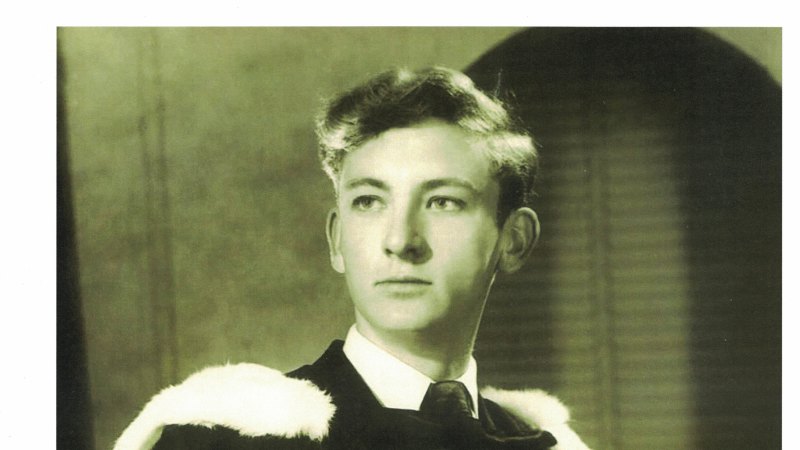
In August 1953, Wilkes married Marie Pauley, who had been a fellow student. He also won an ANU travelling scholarship to Merton College, Oxford. Wilkes wrote his doctoral thesis on late 16th-century poetry, one of his main subjects being Sir Philip Sidney’s friend, Fulke Greville.

Returning to Australia in 1956, Wilkes and his wife settled in Eastwood in Sydney’s north-west, where they had three children. Wilkes re-joined the staff of Sydney University and undertook significant administrative roles. He was also active in the Australian Academy of the Humanities, including as president in 1983-85.

Wilkes was a master of the formal university lecture. He is remembered by students and aspiring academics as providing a model of intelligent explication and judicious evaluation. His academic colleagues recall, too, his dry wit and his helpfulness in times of difficulty, while he inspired loyalty among administrative staff.

Over his career, Wilkes witnessed the heydays of various critical trends, including ructions that divided the department in the 1960s. But as he wrote soon after his retirement, he believed “the corpus of writing we call literature is a figuration of experience that in its range and depth far exceeds [a critic’s] own’’, so that the latter’s aim should be ‘to bring out the singularity, even the uniqueness’ of a text; these ideas had been expressed at length in his Studying Literature (1985).

In the 1950s there was little scholarship offered on Australian writers and many 19th-century texts had never been reprinted. Wilkes changed all that and was instrumental in introducing a Major in Australian literature to Sydney University. Wilkes also served as editor of the literary magazine Southerly in 1963-87. While publishing a significant range of literary criticism, Southerly also featured early work by writers such as Les A. Murray, Jennifer Maiden, Frank Moorhouse, Marion Halligan, Kate Grenville, Michael Wilding, Robert Adamson and Vicki Viidikas.

Wilkes produced the volume on R.D. Fitzgerald (1981) for Oxford University Press’ series Australian Writers and Their Work and edited a collection of essays on Patrick White (1970). Among earlier writers, he revived the work of Charles Harpur, Henry Kendall and Adam Lindsay Gordon in The Colonial Poets (1974), and he produced editions of early poet Charles Tompson and novelist Catherine Helen Spence.

A major focus of Wilkes’ research was Australian poet Christopher Brennan (1870-1932), on whom he published from the early 1950s up till 2008, including a Selected Poems in 1973. He related Brennan’s writing to the European tradition in which he was steeped. Aware that Australian writers of the 19th and early 20th centuries drew on a variety of traditions, Wilkes challenged the common belief that Australian literature of this period was dominated by a nationalist orientation. Such was the argument of his Australian Literature: A Conspectus (1969) and The Stockyard and the Croquet Lawn: Literary Evidence for Australia’s Cultural Development (1981).

In his work on British literature, Wilkes pursued his interest in Fulke Greville, producing editions of Greville’s poetry in 1965 and then of his poetry and drama in 2008. He published on John Milton too, with The Thesis of Paradise Lost (1961). Wilkes was co-editor of the Challis Shakespeare – editions of the plays geared to Australian readers – and edited the plays of Shakespeare’s contemporary Ben Jonson, for Oxford University Press.

Wilkes was energetic in creating avenues for publishing literary criticism, such as the Sydney Studies in Literature series of books. The journal Sydney Studies in English strengthened links with secondary schools, often featuring articles on HSC set texts. For many years Wilkes was involved in setting the syllabus and examinations for HSC English.

Wilkes’s knowledge of Renaissance language made him aware that some uses lost to British English survived in Australian idiom. His Dictionary of Australian Colloquialisms first appeared in 1978 and, unlike similar books, offered actual evidence for uses, with sources encompassing early printed texts through to current newspapers and radio / TV programs. In the Times Literary Supplement idiom expert Eric Partridge called it ‘‘a book not only to be consulted by the learned for its quiet, unobtrusive scholarship but also to be read with delight by the general intelligent public’’. Wilkes had an exchange with Gough Whitlam over the ‘‘Darwin stubby’’. The last of four later editions came out in 2008 as Stunned Mullets & Two-Pot Screamers; Wilkes’s related monograph, Exploring Australian English, appeared in 1986.

Gerry Wilkes died on May 15. He was predeceased by his wife, in January 2004, and his elder sister, Florence, who died in 1977. He is survived by his three children Joanne, David and Geoffrey.

Gerry Wilkes: 1927 – 2020

Joanne Wilkes and Malcolm Brown

Most Viewed in National

Loading

Source by [author_name]

James Bennet resigns from New York Times after Cotton op-ed backlash

0

Sulzberger also said that Jim Dao, a deputy editorial page editor who had publicly taken responsibility as overseeing the editing of the piece, would be stepping off the masthead and reassigned to the newsroom. Katie Kingsbury, another deputy editorial page editor, will oversee the editorial page through the 2020 election.

The tectonic restructuring capped a week of turmoil inside the nation’s paper of record, with staff engaging in debate over the publication of Cotton’s op-ed and grilling The Times’ leadership over the process that led up to it.

“While this has been a painful week across the company, it has sparked urgent and important conversations,” Sulzberger wrote employees in the memo announcing the changes.

Cotton’s piece, published Wednesday with the title “Send In the Troops,” argued the Insurrection Act could be invoked to deploy the military across the country to assist local law enforcement with unrest sparked by the death of George Floyd.

The op-ed was published in The Times’ opinion section, but staffers from both opinion and the newsroom — which operate separate from one another — publicly dissented.

Bennet initially defended running the op-ed, but later said his section was wrong to have published it and blamed a break down in the editorial process for the blunder.

Sulzberger’s announcement that Bennet would depart stunned staffers, people familiar with internal conversations at The Times told CNN Business.

One Times staffer said the episode had prompted meaningful conversations about systemic racial biases and diversity inside the newsroom. The person said such conversations have gone deeper than simply ensuring a diverse staff and have been about larger issues regarding race and The Times’ role in society.

At a town hall with employees on Friday, Sulzberger and Bennet both said that the op-ed process was inadequate for the current moment and had structural problems, a person who was on the call told CNN Business.

“Last week we saw a significant breakdown in our editing processes, not the first we’ve experienced in recent years,” Sulzberger wrote Sunday, referencing other major debacles that had taken place at the opinion section under Bennet’s leadership. “James and I agreed that it would take a new team to lead the department through a period of considerable change.”

Bennet’s tenure had been marked by a series of high-profile blunders.

The Times’ opinion section was left reeling in September after it fumbled a story about an allegation of sexual misconduct against Supreme Court Justice Brett Kavanaugh.

The opinion vertical faced heat last summer for the actions of columnist Bret Stephens.

And last April, the opinion section apologized after publishing an anti-Semitic cartoon in its international edition.

The latest debacle resulted in criticism from Republicans who contended that the newspaper was exhibiting bias against them.

Cotton sharply criticized The Times for saying his op-ed didn’t meet its standards, noting that Bennet had initially defended the op-ed. Cotton told Fox News the newspaper had caved to a “mob of woke kids.”

“My op-ed doesn’t meet the New York Times standards,” Cotton said. “It far exceed their standards which are normally full of left-wing, sophomoric drivel.”

President Trump on Sunday responded to the news by attacking the newspaper in a tweet.

Source link

SP issues notice to its Gorakhpur gen secy for online abuse of woman leader

0

By: Express News Service | Lucknow |

Updated: June 8, 2020 8:18:18 am


“I commented on a Facebook post by Akhileshji. After my comment, multiple accounts started trolling me about my surname and abused me. Some of these profiles were prefixed or suffixed with words such as ‘Yadav’ or ‘Samajwadi’,” said Mishra. (Representational)

The Samajwadi Party (SP) on Sunday issued a notice to its Gorakhpur general secretary Manurojan Yadav for allegedly abusing another party leader on social media and sought his reply on the matter within three days.

Speaking to The Indian Express, Samajwadi Party leader Roli Tiwari Mishra said she has also filed a complaint with the Agra senior superintendent of police (SSP).

Mishra, who lives in Agra, said the abuse started in the comments section of a post by SP chief Akhilesh Yadav on June 5. “I commented on a Facebook post by Akhileshji. After my comment, multiple accounts started trolling me about my surname and abused me. Some of these profiles were prefixed or suffixed with words such as ‘Yadav’ or ‘Samajwadi’,” said Mishra.

“I raised the issue with several senior party leaders and informed Akhileshji and madam Dimple Yadavji. For hours, I was abused by several accounts. Then, I found that one of the accounts was run by Manurojan Yadav,” she said.

“I was told that the party will take strict action against Yadav. Later, he deleted his comments and I was told that he has apologised at the party office. I said that he should apologise in public just like he abused me,” added Mishra.

State SP chief Naresh Uttam Patel on Sunday issued a notice to Yadav saying that his behaviour is anti-party and is affecting the image of the party. “It has been brought to our notice through several sources that on social media, you have been using indecent language… You also used objectionable language against a senior woman party leader,” read the notice.

Party spokesperson Rajendra Choudhary said, “Our party and especially has always told party leaders and workers to maintain decency and especially towards women. We will probe the issue and action will be taken accordingly.”

After the notice was issued, Mishra tweeted a picture of the letter, “…For my respect, the party has taken a first step. I hope to get justice.”

📣 The Indian Express is now on Telegram. Click here to join our channel (@indianexpress) and stay updated with the latest headlines

For all the latest Lucknow News, download Indian Express App.

Source link

Kim Jong Un eyes chemicals, fertilisers to boost N Korea economy

North Korean leader Kim Jong Un attended a meeting of the politburo of the country’s ruling Workers Party, where he discussed the development of the economy, and particularly the chemical industry, but did not address cross-border relations with South Korea, state news agency KCNA reported on Monday.

The two-day meeting comes as the global COVID-19 pandemic places additional pressure on North Korea’s economy, already battered by international sanctions aimed at stopping its nuclear programme.

More:

The meeting discussed “crucial issues arising in further developing the self-sufficient economy of the country and improving the standard of people’s living”, KCNA said.

The 13th political bureau meeting repeatedly stressed that the chemical industry was “a major thrust front of the national economy”, it said.

“He stressed the need to give top priority to increasing the capacity for producing fertiliser,” KCNA said, citing Kim.

After weeks of intense speculation about his health, KCNA reported Kim attended the opening of a fertiliser plant on May 1.

The meeting also emphasised the construction of residential houses as a way to improve North Koreans’ standard of living.

“Pointing out in detail the issues that have to be urgently settled to ensure living conditions of citizens in the city, the Supreme Leader stressed to take strong state measures for ensuring the living conditions of people including the construction of dwelling houses,” KCNA added.

Fewer public appearances

Kim has made an unusually small number of outings in the past months, with his absence from a major holiday prompting speculation about his condition as Pyongyang has stepped up measures against COVID-19.

Images released by KCNA showed Kim smiling and meeting senior officials of his government.

While North Korea says it has no confirmed cases of the novel coronavirus, South Korea’s main intelligence agency has said an outbreak there cannot be ruled out.

Meanwhile, the KCNA report made no mention of inter-Korean issues, after its criticism over activities in South Korea continuing to send leaflets and other anti-Pyongyang material across the border.

On Friday, the North’s United Front Department (UFD) handling inter-Korean affairs warned it could abolish the liaison office in the first in a series of measures that Kim’s sister, Kim Yo Jong had threatened to take unless Seoul stops the sending of such leaflets.

The two Koreas have signed several agreements aimed at reducing cross-border tensions, but few of them have been fulfilled.


SOURCE:
Al Jazeera and news agencies

Source link

Romney Marches With Protesters in Washington

WASHINGTON — Senator Mitt Romney of Utah marched with demonstrators toward the White House on Sunday, appearing to be the first Republican senator to join the thousands across the country protesting the death of George Floyd in police custody.

Mr. Romney shared on Twitter a photograph of himself marching among the crowd, with the caption “Black Lives Matter.”

Mr. Romney, who marched with a group of Christians, told a Washington Post reporter that he had joined the protest to show that “we need to end violence and brutality, and to make sure that people understand that black lives matter.”

In joining the protest, Mr. Romney again found himself at odds with President Trump, who has pushed for a military response to the unrest, and standing apart from most of his party, as when he became the sole Republican senator to vote to remove Mr. Trump from office.

Republicans have largely been vocal in condemning the police officers who have been charged in connection with Mr. Floyd’s death, but few have publicly joined protesters marching across the county. Last week, Representative Will Hurd of Texas, the lone black Republican in the House, joined a peaceful protest, marching alongside Mr. Floyd’s family.

Democrats, by contrast, have made a point of supporting and participating in the rallies. Representative Joyce Beatty of Ohio was hit by pepper spray during a demonstration in her state late last month, while Speaker Nancy Pelosi of California made a trip last week to briefly speak to protesters gathered outside the Capitol.

Senator Ron Wyden of Oregon was seen on Saturday handing out water bottles to protesters marching through Washington, while Representative Alexandria Ocasio-Cortez of New York attended a protest and handed out masks to people walking by.

The visibility of politicians at the protests “does matter to a degree,” said Vania Brown, a protester from Maryland who had come to join the marches in Washington on Sunday. “But right now, I’m skeptical of any political party.”

The civil unrest around the country, coupled with renewed calls to address police brutality against people of color, has amplified pressure on lawmakers — particularly Republicans — to address not only police officers’ use of force, but also racial discrimination and the economic and social disparities that the coronavirus pandemic has further exposed.

Democrats are expected on Monday to unveil sweeping legislation that would make it easier to prosecute police misconduct and recover damages from officers found to have violated civil rights. In the coming weeks, the Senate and the House both plan to hold hearings on proposals to improve policing and counter racial discrimination.

Compared with previous instances in which black men have died after police officers have used excessive force, Republicans have been almost uniformly outraged at the case of Mr. Floyd, who died after a police officer knelt on his neck for nearly nine minutes.

The administration’s move to crack down on demonstrators prompted a rare break with Mr. Trump, as some Republicans moved to distance themselves from the president’s threats to send the military to confront protesters. Senator Lisa Murkowski, Republican of Alaska, went so far as to endorse scathing criticism from Jim Mattis, the former defense secretary, of Mr. Trump’s handling of the protests.

Among Republicans, Mr. Romney in particular has been vocal in condemning the circumstances surrounding Mr. Floyd’s death, saying last month that “the George Floyd murder is abhorrent.”

He has also reflected on how his father, George Romney, participated in a civil rights march in the 1960s as governor of Michigan, quoting him on Twitter and sharing a photo of him at the protest in the 1960s in Detroit.

“Force alone will not eliminate riots,” Mr. Romney quoted his father saying. “We must eliminate the problems from which they stem.”

April Cole, a Capitol Hill resident who had been protesting since noon with her 21-year-old daughter, dismissed Mr. Romney’s joining the march as a political stunt.

“Why does it take us to lose someone for them to show up?” she asked. “We need change.”

But Monique, a Washington native marching near the White House who declined to identify herself further, said Mr. Romney was setting an example for other policymakers, calling him a decent man.

Despite protests early last week that were met with flash-bang explosions, chemical irritants and an aggressive use of military helicopters, a steady stream of people have persisted in marching through the nation’s capitol.

On Sunday, locals were barbecuing in front of the historic St. John’s Episcopal Church, where just days earlier the police had brutally cleared protesters to allow Mr. Trump to pose for photographs.

Bob Marley’s daughter, Makeda Jahnesta Marley, drew a crowd on the north end of Lafayette Park in front the White House on Sunday evening, singing “Redemption Song.”


Source link

Suspect in California ‘ambush’ that left deputy dead is active duty Air Force sergeant

A suspect arrested in the “ambush” killing of a sheriff’s deputy in Santa Cruz, California, is an active duty member of the Air Force, an official said Sunday.

Staff Sgt. Steven Carrillo, who authorities said will face murder charges in the June 6 killing of Sgt. Damon Gutzwiller, 38, was stationed at Travis Air Force Base, northeast of the San Francisco Bay Area, an Air Force spokesman said.

The spokesman, Mike Longoria, said Carillo was a team leader in a specialized unit in the 60th Security Forces Squadron. He was stationed at Travis Air Force Base in June 2018, he said.

Authorities said Carrillo allegedly opened fire on Gutzwiller and other deputies after they responded to a call Saturday about a suspicious van parked in a turnout in the Santa Cruz Mountains.

The caller had seen guns and bomb-making equipment inside, Sheriff Jim Hart said Saturday. Two other officers — including one who was struck by shrapnel from a bomb and hit by a car — were injured in the incident, he said.

Carrillo was allegedly involved in a carjacking before he was shot by deputies and taken into custody. Hart said Carrillo was treated for his injuries and released.

The Associated Press reported that Carrillo’s wife, Monika Leigh Scott Carrillo, who was also in the Air Force, was found dead in 2018 at an off-base hotel while she was stationed in South Carolina. Her death was investigated by the Sumter County Sheriff’s Office, in coordination with the Air Force Office of Special Investigations, and ruled a suicide, the AP reported.

The FBI said Sunday that it is investigating whether the Santa Cruz incident is connected to the May 29 killing of a federal officer in Oakland. Authorities released photos last week of a van believed to be used in the shooting, which left Dave Patrick Underwood, 53, dead.

Source link